“A New Perspective on Investing in Financial Markets”, an interview with Kardanian, a Leading Middle East Trader

Mahan Teymouri

Mahan Teymouri

Tehran, Iran, Nov. 29, 2021 (GLOBE NEWSWIRE) — During the 8 years of my experience in financial markets like Stock, Forex and cryptocurrency, according to the observations, statistics and existing data, I get that most people (about 90{21df340e03e388cc75c411746d1a214f72c176b221768b7ada42b4d751988996}) have been caused so many damages to their initial funds by entering these markets. They have not even earned money but also lost it.

I investigate 440 people, who have been in the markets more than 2 years. They indicated that they get no money and have not a little increase in their funds. But what is the reason of such a failure?

1- Lack of knowledge (not knowing yourself or markets)

Unfortunately, most people trading in the different markets have no idea about their mental and physical situations or even don’t know what works in these days. Unlike the public assumptions, interest and attempt is not enough to be successful in the markets. These are just the basics, there are much more things to know that I just name some the most important ones:

  • Being patient: There is no way to get rich in one night. Markets act like a swamp for those who are not patient. It gets hours, months and years to reach the point that you start making continuous profits.

  • Having enough time: Trading is not a part-time job. You need to spend several hours a day, especially in the beginning, for studying, learning and monitoring the charts in order to identify investing opportunities. If you don’t have much time, it’s better to avoid the markets.

  • Being disciplined: Act like a robot. Don’t get emotional and freaky. If you behave like a robot which has organized mind(programs), no feelings, you’ll be surely successful. Otherwise, you’ll fail with no doubt.

  • Knowing markets in depth: Markets differs in rules and the types of activities. Each market has its own way and identity and it’s necessary to know it in depth ahead. This helps you to get whether your intended market fits your situation and personality or not. For instance, ask yourself if your ideal market is the one in which you can have daily and short-term trades or middle/long-term trades. You can also think of what kind of analysis is needed to be used in this market. Do you know it by heart? Does the working hours of that market match the hours of your country? And etc. These questions cause you to make the best decisions.

2- Letting feelings take control of you

As the researches show, most people give in to their emotions and excitements. Because they don’t want to stay behind, they start trading without any knowledge or experience. This causes them hard failures and losses.

Why think of studying and compensating while you can do it sooner and avoid losses?

3- Wrong information

I told you about the risks of getting into the markets without any knowledge. But you know what is the worse? Being part of the market while you’ve got wrong information. Sometimes people have trained ahead but the things they’ve learned is not correct or enough due to lack of accurate information sources. Many people who work in the field of financial market training, are not qualified and their wrong teachings lead people to a wrong way.

According to my research on 440 traders, this 2nd group suffers more losses than the ones who know nothings about the markets. The first group do what the specialized tell them but the second group act by their incorrect information.

4- Lack of a clear trading plan

More than 90{21df340e03e388cc75c411746d1a214f72c176b221768b7ada42b4d751988996} of the financial markets’ participants don’t have a clear trading plan and it leads them to failures. Having no clear trading plan and strategies will end to irrational behaviors.

These people are doomed to failure due to lack of rules, orders, disciplines and strategies.

I always urge my students to have a written trading plan and check it carefully before entering into any trade. It’s a big help to write down the strategy you have in mind.

5- Lack of attention to trading risks

The most important difference between successful and unsuccessful people is that the successful usually weight the risks of the trade they want to enter, so they avoid emotional and irrational behaviors and also the risky trades with high levels.

On the contrary, the amateurs just think of the profits and as a result, the risk of the trades increases. These people even the best analyzer of them will eventually lose their profits in several small loss-making trades with high risk.

6- Eccentric expectations

Trading is hard and stressful and needs high consideration. Having eccentric expectations will add to this stress and make you distracted. When the markets do not meet your expectations, your attentions will fly away and there is no end to the loop of mistakes.

The path of success is slow and continuous and there is no shortcut. When you get this, your mind will settle down, expectations will fade away and instead focus and work efficiency increase.

7- Addiction to trading

Many traders are involving in a problem called overtrade. They get used to trading again and again with no stop. As a result, they lost their logic and mind orders. Finally, because of low mind efficiency and lack of discipline, they lost so much money.

Their main problem is not being able to filter the trades. They see a chance and rush into it without considering the risks. Most of the times, these traders don’t get successful in spite of their efforts and the number of the trades they do.

These are just some of the reasons why people are not successful in financial markets but also the most important ones that are almost common among all those who have experienced many failures in the markets.

According to what said, I can say on contrary to popular belief in the simplicity of working in financial markets, working in these markets requires precise knowledge, sufficient time, patience and extensive training.

I believe that the philosophy of creating financial markets for real and small people is to make them lose. Their losses will bring profits to the big traders. This is also the main reason for your easy way to the financial markets and your access to a variety of credits and levers.

That’s why I recommend you to study this essay before stepping in the markets and investigate the nature of each. In the first months, use demos to practice until you get enough experienced and find yourself a real and written trade plan and strategy.

After that you’re ready to start trading. Try it with the 10{21df340e03e388cc75c411746d1a214f72c176b221768b7ada42b4d751988996} of your money, the one which will not cause big pain if lost. Examine your trading plan in real market for about 6 months. It is possible to experience many failures during this time but no matter. This is the expenses of getting experienced. For these six months, the purpose is not getting successful and earning money but is not to fail.

I promise if you hold on these 6 months and trade (while controlling your emotions and considering all possible risks) in order to keep the money (even if you earn not a dollar), you will definitely be one of the best traders in future. And after 5 years, you’ll be in a position that many dream of.

For the original news story, please visit https://prdistribution.com/news/a-new-perspective-on-investing-in-financial-markets-an-interview-with-kardanian-a-leading-middle-east-trader.html

CONTACT: Media Company: Mahan Teymouri International Holding & Kaafx, Media Name: Vahid Kardanian, Media Phone: +982143000203, Media Email: Mahanteymouri@gmail.com, Media URL: https://mahanteymouri.com/


Openings & Closings: Business happenings around the area | Business News

Here’s a look at local business changes in the region.

Molinari’s at 322 E. Third St. in south Bethlehem would have celebrated its 10th anniversary Friday, but the restaurant was closed because of a staff shortage. The Italian restaurant said on Facebook that one key staff member is out. Short-staffing in general has been a problem for the restaurant industry. Molinari’s hopes to reopen. Customers should check the restaurant’s social media posts for information.

Over in north Bethlehem, Vincenza’s Italian Pizzeria & Trattoria has opened at 2980 Linden St., in the small strip mall just across from Macada Road. The menu includes pizza, Sicilian pizza and variations such as ziti vodka pizza. Other selections include salads, cheesesteaks, bruschetta, Buffalo wings, stromboli and pasta.

Mirror Beauty Studio has opened at 2002 Hanover Ave. in Allentown, fulfilling the longtime dream of owner Jess Dejesus. The grand opening will be Dec. 3 at 1 p.m., a celebration with drinks, food, raffles and music. “I always wanted to open my own salon and finally made it happen,” said Dejesus, a stylist since 2013. The salon provides style and lash services, and hair botox treatments.

Purr Haus, a boutique for cats and the people who love them, will open Saturday in Emmaus. The 27 S. Seventh St. store (across from the CVS drive-through) will sell pet supplies, cat-themed apparel and home décor, including brands that help support the cat-rescue community. Owner Laurie Mason said she was inspired to go into the business after attending a cat convention in 2018.

“There was a long line outside the convention hall of people eager to get in, and all the vendors were doing brisk business,” she said. “I realized that there was a market for the small-batch cat supplies that were being sold there.”

Mason said in a statement that she is not trying to compete with big pet supply chains. She will instead provide a mix of items for pets and people, including toys, wine glasses, cat beds, handbags and hats for people, and more.

The Ice Cream Lounge in Forks Township has added Ice Cream Lounge & Caribbean Grill nearby in Park Plaza, 1800 Sullivan Trail. The new restaurant has been through a soft opening; check social media posts for hours. Menu items include jerk and curry chicken, island wontons, jerk skewers, with rice and peas or white rice, cabbage, salad and plantains.

The Restaurant at Landis Store Hotel on Baldy Hill Road in Boyertown has closed, according to its website. A Facebook post and a recorded message indicated that retirement led to the closing of the restaurant. The restaurant was known for fine dining in the Berks County countryside.

The Jim Christman Team real estate office at 362 Delaware Ave. in Palmerton is adding new agents, and will hold a grand re-opening Wednesday, Dec. 15, from 3:30 p.m. to 5 p.m. under its new name: The Jim Christman Team Mega Agent Office. Owner Jim Christman said the agency has seen “explosive growth” since it opened in 2012. The current staff includes six licensed agents and two administrative assistants, and the agency is hiring two buyers’ agents. To attend the open house, register with the Carbon County Chamber of Commerce.

Giant Co. is opening three grocery stores in the Philadelphia region — two in the city and a third at 4377 Swamp Road in Doylestown. The new Bucks County store will open at 8 a.m. on Friday, Dec. 10. The new Doylestown Giant will cover 72,500 square feet, and replace the 4357 W. Swamp Rd. store, which will close for good at 5 p.m. on Dec. 9. The new store will be open 6 a.m. to 11 p.m. seven days per week, and employ about 225 full- and part-time workers. Alan Carcifi will continue as store manager in Doylestown.

Giant operates in Pennsylvania, Maryland, West Virginia and Virginia, employing more than 35,000 people at nearly 190 stores, 132 pharmacies, 107 fuel stations and more than 150 online pickup hubs and grocery-delivery services.

Bella’s Bistro has opened at 123 N. Second St. in Easton, providing small batches of healthy pet food. Bella’s refers to its product as “farm to bowl,” preservative-free foods and treats for dogs. “In our kitchen, we use only human-grade, nutrient-dense whole superfoods to make small batches with love,” according to Bella’s website.

No Nonsense Neutering will close its Mahanoy City location on Nov. 29 after seven years. The animal clinic’s Allentown, Reading and Plains locations remain open. No Nonsense said on Facebook that it lost its lease, and it is trying to find a new Schuylkill County location.

Top Wall Street analysts say buy Salesforce & CrowdStrike

Salesforce signage outside office building in New York.

Scott Mlyn | CNBC

With markets up big year-to-date, bulls and bears seem to have completely diverged in their hypotheses on the upcoming end of the fiscal year. Some see a potential for a dot com bubble-esq surge, and others only expect a pullback.  

However, it is of paramount importance for any long-term investor to take into consideration analysis on company fundamentals when picking stocks.  

Therefore, we at TipRanks scrubbed through the noise and found the stocks some of Wall Street’s most accurate professionals have picked as long-term winners. Let’s take a look at what the fundamentals and top analysts have to say.  

CrowdStrike  

With little signs of slowing, one of the fastest growing sectors over the last two years has been cloud computing. All of the new digital enterprise solutions necessitate security, and CrowdStrike Holdings, Inc. (CRWD) has been capitalizing on its in-demand niche. The cybersecurity firm is experiencing elevated levels of enterprise spending on security, a positive metric heading toward its expected earnings release on December 1st. (See CrowdStrike Stock Analysis on TipRanks) 

Alex Henderson of Needham & Co. recently published his hypothesis on the tech company, writing that “CrowdStrike’s platform is delivering a powerful blend of frictionless deployment and trial, exceptional scalability, and these are resulting in rapid growth which we think is sustainable over 50{21df340e03e388cc75c411746d1a214f72c176b221768b7ada42b4d751988996} for the next 3–5 years.” He was confident enough to state that “investors will be rewarded for buying and holding onto these shares.”  

Henderson rated the stock a Buy, and assigned a price target of $340 per share.  

Stock picks and investing trends from CNBC Pro:

Come earnings, the five-star analyst is expecting another impressive quarter and a raise of guidance from CrowdStrike, which he describes as currently succeeding in its field. Meanwhile, increased cyberattacks and high-profile hacks worldwide have increased the urgency and demand for companies like CrowdStrike. 

Concerns over competition recently rattled investors and heavy selling pressure caused the stock to come down to discounted levels. Henderson sees this reaction as overblown as most key indicators are showing strong and robust growth, such as direct consumer sales and the total calculated billings.  

Out of more than 7,000 analysts, TipRanks rates Henderson as #46. His stock picks have been successful 72{21df340e03e388cc75c411746d1a214f72c176b221768b7ada42b4d751988996} of the time, and have returned him an average of 52.2{21df340e03e388cc75c411746d1a214f72c176b221768b7ada42b4d751988996} on each.  

Salesforce 

Another name which quickly became a pandemic winner is Salesforce (CRM), as the enterprise level digital transformation took hold on a global scale. The cloud-based customer relationship management software has seen its valuation gain considerably over the last two years, although recently its shares have had a pullback in price. Some analysts now see a buying opportunity in the tech stock. (See Salesforce.com Website Traffic on TipRanks) 

Brent Thill of Jefferies Group delineated his stance on the stock, asserting that the company is headed toward a probable earnings beat for its November 30 earnings. The analyst identified high levels of customer satisfaction among its users, as well as additional statistics indicating long-term demand for Salesforce’s services.  

Thill rated the stock a Buy, and bullishly raised his price target to $360 from $325. 

According to his data, the analyst reported that 83{21df340e03e388cc75c411746d1a214f72c176b221768b7ada42b4d751988996} of Salesforce customers are seeing productivity in their pipelines. Moreover, there has been healthy acceleration with the partner ecosystem fostered by the company.  

The five-star analyst added that “CRM hit the trifecta of taking a breather on large M&A, focusing on integrating Slack, and delivering more margins.” He is encouraged by the outperformance by the stock in relation to a similar software-based ETF, IGV.  

Financial aggregator website TipRanks currently places Thill at #181 out of over 7,000 analysts. He has been successful 65{21df340e03e388cc75c411746d1a214f72c176b221768b7ada42b4d751988996} of the time, and has returned an average of 36.3{21df340e03e388cc75c411746d1a214f72c176b221768b7ada42b4d751988996}.  

Booking Holdings

Despite a Q3 of persisting COVID-19 levels across Western Europe and the U.S., global travel trends have gained momentum and are expected to take off even more once more restrictions are eased. Well poised to capture this tailwind is Booking Holdings Inc. (BKNG), which has been capitalizing on the industry shift toward self-booking for travel experiences and transportation, and recently reported particularly impressive quarterly earnings. (See Booking Risk Factors on TipRanks) 

Ivan Feinseth of Tigress Financial Partners bullishly wrote that “BKNG’s market-leading position, strengthened by its strong brand equity and diversified global footprint, together with its solid execution ability, technologically advanced platform, and realization of value from its complementary acquisition strategy, will continue to drive a rebound in return on capital.” 

Feinseth rated the stock a Buy, and reiterated his price target of $3,150.  

Booking’s high demand for hotels, flights, and rental vehicles instilled confidence in the five-star analyst. He also noted that the company successfully mitigated impacts from the pandemic’s lows by maintaining a strong balance sheet, which in turn allowed it to invest in new initiatives and innovations.  

Additionally, BKNG’s acquisitions and investments have facilitated an expansion into its “travel ecosystem with recent in ground travel services, integrating ground travel with hotel bookings, and expanding its rental car business to include alternative forms of transportation.” 

Feinseth maintains #50 out of more than 7,000 analysts on TipRanks. He has been successful with his stock picks 75{21df340e03e388cc75c411746d1a214f72c176b221768b7ada42b4d751988996} of the time, and has returned an average of 38.4{21df340e03e388cc75c411746d1a214f72c176b221768b7ada42b4d751988996} per rating.  

Analog Devices  

The global semiconductor shortage has hit many major industries hard, with automotive and smartphone manufacturers scrambling to contain impacts. Meanwhile, many of the firms which design and produce the chips themselves are experiencing high levels of demand and have long backlogs of bookings to fill. Analog Devices, Inc. (ADI) falls into this case, and despite a transitory supply-side obstacle of its own, is now poised to drive ahead with enhanced capacity and elevated pricing for its products. (See Analog Devices Hedge Fund Activity on TipRanks) 

Quinn Bolton of Needham & Co. printed his take, arguing that “through organic development and strategic acquisitions, we believe Analog Devices has built the preeminent franchise in precision analog semiconductors, one of the most attractive segments in the entire semiconductor industry” 

Bolton maintained a Buy rating on the stock, and confidently raised his price target to $205 from $200.  

The five-star analyst explained that the difficulties with the COVID-19 impacted Malaysian shipping routes are largely bypassed, and no longer represent a significant concern for the company. Furthermore, while capacity constraints may weigh down output in the short-term, ADI is ramping up its ability to meet the heavy demand.  

Looking back and past performance, ADI reported a Q3 full of strong earnings and an encouraging guidance raise. Moving forward, orders are remaining at healthy levels and the firm’s path toward growth has gotten clearer. Bolton was boldly bullish on the company, writing that Analog Devices represents “a core holding in any semiconductor portfolio.” 

TipRanks has calculated Bolton to be #1 out of more than 7,000 other financial analysts. His ratings have met success 88{21df340e03e388cc75c411746d1a214f72c176b221768b7ada42b4d751988996} of the time, and he has returned an average of 100.9{21df340e03e388cc75c411746d1a214f72c176b221768b7ada42b4d751988996} on each one.  

Dell 

While the COVID-19 pandemic pushed workforces back to home, Dell Technologies Inc. (DELL) saw its valuation rise as the home office drove computer sales. Now, as those same employees are transitioning back to the office, corporate level purchases are aiding that same metric. The computer technology company recently posted its strong Q3 results, beating Wall Street consensus estimates on revenue and EPS despite a tough comparison from its prior report. (See Dell Technologies Earnings Date & Reports on TipRanks) 

Amit Daryanani of Evercore ISI elaborated that the company is mitigating challenges brought on by the supply crunches and has been strengthening its balance sheet. Dell has experienced a productive level of free cash flow even with its increased capital expenditures.  

Daryanani rated the stock a Buy, and added a price target of $63. This target came slightly raised from his previous at $62.  

The five-star analyst went on to write that the operational leverage provided by Dell’s robust balance sheets should pave the way toward share repurchases in the future.  

Dell has been experiencing expansion across both its infrastructure and networking offerings and its commercial computer product segments. Moving toward Q4, Daryanani is confident that Dell will meet its targets.  

The analyst asserted his bullish stance, stating that he believes “the company is executing well against an incrementally more challenging supply environment and believe their superior supply chain management has been a driver of share gains.” 

Daryanani is currently ranked at #155 out of over 7,000 professional analysts. His stock picks have been correct 73{21df340e03e388cc75c411746d1a214f72c176b221768b7ada42b4d751988996} of the time, and they have returned him an average of 35{21df340e03e388cc75c411746d1a214f72c176b221768b7ada42b4d751988996} per.  

Disclosure: At the time of publication, Brock Ladenheim did not have a position in any of the securities mentioned in this article. 

Disclaimer: The information contained in this article represents the views and opinion of the writer only, and not the views or opinion of Tipranks or its affiliates, and should be considered for informational purposes only. Tipranks makes no warranties about the completeness, accuracy or reliability of such information. Nothing in this article should be taken as a recommendation or solicitation to purchase or sell securities. Nothing in the article constitutes legal, professional, investment and/or financial advice and/or takes into account the specific needs and/or requirements of an individual, nor does any information in the article constitute a comprehensive or complete statement of the matters or subject discussed therein. Tipranks and its affiliates disclaim all liability or responsibility with respect to the content of the article, and any action taken upon the information in the article is at your own and sole risk. The link to this article does not constitute an endorsement or recommendation by Tipranks or its affiliates. Past performance is not indicative of future results, prices or performance. 


Market strategists split on ‘buying opportunity’ after post-Thanksgiving selloff

The Dow Jones Industrial Average’s (^DJI) worst daily plunge of the year sparked a split among market strategists on whether Friday was a good buying opportunity. 

The index closed down more than 900 points, while the broader S&P 500 (^GSPC) average declined 2.27{21df340e03e388cc75c411746d1a214f72c176b221768b7ada42b4d751988996}.

Energy, financials and industrial stocks led the markets lower amid concerns of a new COVID variant first detected in southern Africa. 

“To the extent this is not as big as Delta was ultimately, then I think maybe it’s a little bit of a buying opportunity,” Simeon Hyman, ProShares Global Investment Strategist told Yahoo Finance Live on Friday. “All the economic data of the last month or so was really, really strong—I mean, an all-time high ISM Services… Manufacturing was also high. And retail sales was up 1.7{21df340e03e388cc75c411746d1a214f72c176b221768b7ada42b4d751988996}.”

The Down Jones Industrial Index year-to-date. Friday's selloff was they year's largest single-day drop despite a holiday-shortened session. (Yahoo Finance)

The Down Jones Industrial Index year-to-date. Friday’s selloff was they year’s largest single-day drop despite a holiday-shortened session. (Yahoo Finance)

Other strategists are sounding off warning signs of trouble ahead. 

“I don’t see it as a buying opportunity. I see this as the first leg of a multistep downward move in the S&P “, Ed Budowsky, a Chapwood Investments managing partner, told Yahoo Finance Live (video above). “This new variant is an excuse to sell off the market, because the market is so overpriced.”

Chapwood added that the market “has been 31{21df340e03e388cc75c411746d1a214f72c176b221768b7ada42b4d751988996} overvalued for a number of months. It’s definitely going to be a downward move going into 2022. … You just can not support and justify for a long period of time, this kind of valuation.” said the strategist.

The Dow Jones Industrial average declined more than 1,000 points at one point during Friday’s shortened trading session.

MEXICO CITY, MEXICO - NOVEMBER 25: Actor Rubén Cerda as 'Santa Claus', and Grinch behind performing during lighting of the Christmas tree in Xochimilco, on November 25, 2021 in Xochimilco, Mexico. (Photo by Medios y Media/Getty Images)

Actor Rubén Cerda as ‘Santa Claus’, and Grinch behind performing during lighting of the Christmas tree in Xochimilco, on November 25, 2021 in Xochimilco, Mexico. (Photo by Medios y Media/Getty Images)

Travel-related stocks were among the sectors that slid on Friday over concerns of renewed lockdowns and tighter restrictions. Stay-at-home trades, meanwhile, rebounded: Video calling software-maker Zoom (ZM) was up more than 7{21df340e03e388cc75c411746d1a214f72c176b221768b7ada42b4d751988996}. At-home-fitness company Peloton Interactive (PTON) gained more than 5{21df340e03e388cc75c411746d1a214f72c176b221768b7ada42b4d751988996} during the shortened trading session. 

“I think it’s a reaction to the uncertainty,” BNP Paribas Asset Management Chief Market Strategist and Co-Head Investment Insights Centre Daniel Morris said on Yahoo Finance Live, later adding: “We clearly are going into the winter and it does seem, at this point, anticipating the potential problems as opposed to waiting to see if they’re confirmed.”

Vaccine maker Pfizer (PFE) hit an all-time-high on Friday after a Citi analyst highlighted the company is capable of producing a variant shot in 100 days.

Read the latest financial and business news from Yahoo Finance

Follow Yahoo Finance on Twitter, Instagram, YouTube, Facebook, Flipboard, and LinkedIn

Tricor Group Completes Acquisition of NZGT Holding Company Limited, A Leading Corporate Trustee and Fund Supervisor in New Zealand with NZ$250 Billion in Funds under Supervision

HONG KONG & SINGAPORE & AUCKLAND, New Zealand, November 29, 2021–(BUSINESS WIRE)–Tricor Group (Tricor), Asia’s leading business expansion specialist, has received regulatory approval and completed its acquisition of NZGT Holding Company Limited (NZGT Holdings) together with its wholly owned subsidiaries The New Zealand Guardian Trust Company Limited (Guardian Trust) and Covenant Trustee Services Limited (Covenant) from Complectus Limited on November 25, 2021.

Tricor is the largest pure-play corporate services platform in Asia Pacific, serving over 50,000 client entities across its 21-market footprint. A positive move for Guardian Trust and Covenant, this acquisition will see the group and its New Zealand clients benefit from Tricor’s significant financial backing and global best practices.

Guardian Trust and Covenant are the leading providers of corporate supervisory services with over NZ$250 billion in funds under supervision. Guardian Trust has operated in New Zealand for over 125 years. Guardian Trust and Covenant will continue to grow its team and capabilities through further investment by Tricor Group. Day to day operations remain unchanged.

Tricor’s Global Corporate Trust business will operate and serve clients across five global markets including Hong Kong SAR, Beijing, Singapore, the UK and New Zealand.

Lennard Yong, Tricor Group CEO, said: “I am pleased to welcome Guardian Trust and Covenant to Tricor Group. This acquisition broadens our footprint in ANZ and places Tricor in an enhanced position to better serve our clients. The addition of Guardian Trust and Covenant significantly strengthens Tricor’s global corporate trust practice with market-leading and differentiated trust solutions in New Zealand and across Australasia and Asia-Pacific. We are very grateful for the approval to be stewards of these two leading institutions. Our goal is to support the management team led by Harry Koprivcic and to grow these businesses within their respective markets and to add to our regional corporate trust platform in Asia Pacific.”

David Naphtali and Jonathan Hatch, Co-Managing Directors of Madison Pacific, A Tricor Company, leading the integration of Guardian Trust and Covenant into the Tricor Corporate Trust Business Division, said: “We look forward to working with the fantastic team to bolster the corporate trust solutions we can provide our corporate clients across Asia Pacific and the UK.”

Harry Koprivcic, CEO of NZGT Holdings, said: “As a leading corporate trustee in New Zealand, we are starting a new chapter by becoming part of a large global entity. Enhanced by the capabilities of Tricor, we will continue to deliver exceptional corporate solutions to our clients.”

About Tricor Group

Tricor Group (Tricor) is Asia’s leading business expansion specialist, with global knowledge and local expertise in business, corporate, investor, human resources & payroll, corporate trust & debt services, and governance advisory. Tricor provides the building blocks for clients’ business growth, from incorporation to IPO. Tricor has had a rapid expansion through organic growth and development as well as partnerships, mergers and acquisitions. The Group today has ~50,000 clients globally (including ~20,000 clients in Mainland China), a staff strength of over 2,800 and a network of offices in 47 cities across 21 countries / territories. Our client portfolio includes over 2,000 listed companies in Hong Kong SAR, Mainland China, Singapore and Malaysia, and more than 40{21df340e03e388cc75c411746d1a214f72c176b221768b7ada42b4d751988996} of the Fortune Global 500 companies, as well as a significant share of multinationals and private enterprises operating across international markets.

Visit: www.tricorglobal.com

About Complectus

Complectus was established in 2014 and is the dominant and most innovative fiduciary services group in the New Zealand market.

About Guardian Trust and Covenant

Guardian Trust and Covenant have a market-leading position and are experienced in all aspects of corporate trust work. They are leading providers of corporate trustee services to the New Zealand market. Guardian Trust has been recognized by KangaNews as the leading provider of trustee services by being awarded the New Zealand Trustee of the Year for four years running.

View source version on businesswire.com: https://www.businesswire.com/news/home/20211128005198/en/

Contacts

HONG KONG SAR (GROUP OFFICE)
Sunshine Farzan
Tricor Services Limited
Group Head of Marketing & Communications
Tel: +852 2980 1261
Email: Sunshine.Farzan@hk.tricorglobal.com

NEW ZEALAND
Laura Air
Alexander PR
Group Account Director
Tel: +64 21 259 3242
Email: laura@alexanderpr.co.nz

Analysis: EU adds more pieces to its ‘elusive’ capital market jigsaw

The German share price index DAX graph is pictured at the stock exchange in Frankfurt, Germany, November 9, 2020. REUTERS/Staff/File Photo

Register now for FREE unlimited access to reuters.com

LONDON, Nov 25 (Reuters) – The European Union has moved a step closer to its vision of creating a single capital market across the bloc, a slow moving process but one that is chipping further away at Britain’s status as Europe’s investment banker.

The bloc first began an ambitious – but tortuous – process of ultimately creating a single EU securities market in 2015.

Creating a single market should make it easier for companies to issue and bonds and shares, enabling them to spread risk and be less reliant on just bank loans for funding – the risks of which were highlighted during the euro zone crisis.

Register now for FREE unlimited access to reuters.com

On Thursday, the EU set out proposals to introduce a single ‘consolidated’ set of prices for stocks and bonds listed across the EU and a single portal for corporate information – akin to Wall Street’s Edgar system – analysts say the vision will gain more traction. read more

“Those two for me are key to setting up the whole CMU (capital markets union) effort and when that’s in place you will see a real push to further it. Onwards and upwards,” said Mairead McGuinness, the EU’s financial services chief.

The initial plans for a capital markets union were set out in 2015 by McGuinness’ then British predecessor Jonathan Hill to much fanfare, promising the building blocs would be in place by 2019.

Follow-up measures two years later raised expectations further, but an EU official acknowledged that there remains a perception that CMU is an ‘elusive’ goal.

“Perhaps the mistake of the original version of capital markets union was that it gave the impression that CMU was a legislative project that could be ‘completed’ by passing lots of new regulations,” said William Wright, head of New Financial, a London-based think tank that does research on European capital markets.

“The current version may look less ambitious but is taking a more practical and tangible approach,” Wright said.

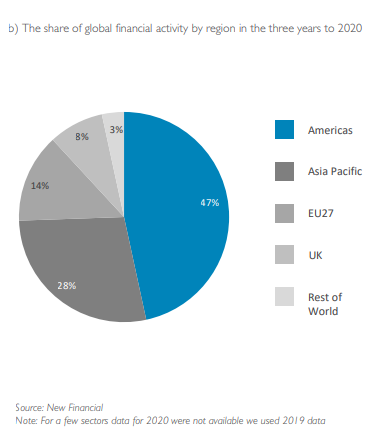
The EU capital market is still little more than a quarter as deep as that of the United States, relative to GDP, with Britain’s twice as deep as the bloc, according to New Financial figures.

Sander Schol, a former banker who is head of EU public affairs at consultants Hanbury Strategy, said the less controversial CMU measures have been approved previously and Brussels’ latest proposals tackle more difficult issues, though rules on even tougher issues that are crucial, such as harmonising insolvency rules, are still missing.

This time round the EU executive, the European Commission, has proposed thornier steps for knitting together national markets by creating an EU tape or record of stock and bond trades by 2024, a step exchanges will lobby hard to water down.

A single EU point of access for information on listed companies to mirror the ‘Edgar’ filings system on Wall Street, is also proposed.

But far tougher reforms like harmonising settlement, taxes on investments and accounting will need tackling to create a truly seamless EU securities market like in the United States, Schol and others said.

“Market participants have asked for harmonisation of settlement and insolvency laws but member states don’t want to change insolvency rules, for example, because if you start tinkering with those then you have to change the legal foundations of each country,” Schol said.

STRATEGIC AUTONOMY

Brexit, the recovery from COVID-19 and the need for massive investments to tackle climate change have added a sense of urgency to CMU that was missing six years ago as Brussels seeks to build “strategic autonomy” in sectors like finance.

Britain’s exit has shown Brussels that the bloc’s markets can largely stand on their own feet after billions of euros in daily trading of shares, interest rate swaps and EU emissions allowances left London for Amsterdam without market disruption.

Previously a relatively small financial centre, the Dutch capital became Europe’s biggest share trading centre immediately after Brexit, although London is now roughly neck and neck. Amsterdam has also attracted 22 public floats and private placements so far this year, raising 10.7 billion euros ($11.99 billion).

There have been 108 floats on the London Stock Exchange which raised 16.1 billion pounds ($21.47 billion), though London is aware of how it trails New York, which has raised $128 billion this year.

London is expected to remain Europe’s top financial centre in coming years and the EU still relies on London for clearing interest rate swap trades worth trillions of euros, but here too Brussels is determined to reduce reliance over coming years.

“One way to think about CMU is as a multi-decade process of laying the important foundations over five to 10 years and then building on them over the next 10 to 20 years: the United States has a 150-year head start and still doesn’t have a full ‘CMU’,” Wright said.

In reality, CMU was never going to happen overnight and remains a work in progress, said McGuinness, already flagging her next batch of measures due next year to include simplifying listing rules, making cross-border payments more efficient, and finally seeking to harmonise aspects of insolvency laws.

New Financial Global CMU Graphic

($1 = 0.8928 euros)

($1 = 0.7497 pounds)

Register now for FREE unlimited access to reuters.com

Reporting by Huw Jones; Editing by Susan Fenton

Our Standards: The Thomson Reuters Trust Principles.