CI Financial will acquire RegentAtlantic, a New York-based RIA with $6 billion in managed assets. The deal will push CI over $100 billion in U.S. assets only two years after its first U.S. acquisition, according to the Canadian financial services firm.
RegentAtlantic has offices in New York City and Morristown, N.J., and offers an array of wealth planning services to a wide range of clients, including focuses on business owners, corporate executives, women on Wall Street, retirees and food and beverage industry entrepreneurs. CI Financial CEO Kurt MacAlpine said RegentAtlantic’s success emanated from its “disciplined wealth management process” that built client loyalty.
Related: CI Financial to Launch U.S. Headquarters in Miami
“RegentAtlantic is a great strategic and cultural fit with the existing firms and leadership within CI Private Wealth and fully supports our vision of building the country’s leading wealth management firm,” MacAlpine said.
As a result of the deal, RegentAtlantic’s leadership will become equity partners in CI Private Wealth, which holds CI’s U.S. wealth management business. Fiduciary Network previously owned RegentAtlantic, originally investing in it in 2007 (Emigrant Bank later acquired Fiduciary Network in 2018, and merged RegentAtlantic with the NYC-based wealth management firm Hillview Capital Advisors the following year).
Related: CI Financial to Acquire $7.5B Gofen and Glossberg
The CI/RegentAtlantic deal is projected to close later this month, and will mark CI’s third RIA affiliate with offices in New York City. The Asset & Wealth Management Investment Banking Group of Raymond James & Associates advised RegentAtlantic during the deal, while Hogan Lovells US served as CI’s advisor.
The acquisition will bring CI’s total U.S. assets past $100 billion to about $105 billion, while the Canadian financial services firm’s total global assets are expected to hit about $291 billion. The firm’s made quick work since first entering the U.S. market in the beginning of 2020 when it acquired a majority stake in the Phoenix, Ariz.-based RIA Surevest Wealth Management, becoming one of the few Canadian wealth management firms operating in the U.S. space at the time.
“The U.S. RIA market—it is a competitive marketplace, but it is also a very accessible marketplace,” MacAlpine said during an earnings call around the time of the Surevest deal. “So, our aspirations for the RIA market are really two-fold. One, it allows us to provide a true cross-border experience for clients that are doing business with CI today. And second, it allows us to participate in this fast growing segment of the market, overall.”
CI Financial proceeded to announce a new acquisition of the $1.6 billion Calif.-based RIA One Capital just several weeks later. In all, the firm has made more than 20 U.S.-based acquisitions in the two years since entering the market. Some of the latest acquisitions include Gofen and Glossberg, a Chicago-based wealth management firm with approximately $7.5 billion in total client assets. In October, CI announced its first deal in the Pacific Northwest, acquiring McCutchen Group, a Seattle-based RIA with about $3.4 billion in AUM.
The firm is also planning to open its new U.S. headquarters in Miami in 2023, announcing in September that it leased 20,000-square-feet of office space in the city’s Bricknell Financial District with available space for core C-suite executives and personnel. According to Miami Mayor Frances Suarez, CI’s purchase made it the largest financial institution to locate its headquarters in South Florida.
“It serves as the next logical step for our expansion plans as we work to build the leading wealth management platform in the country,” MacAlpine said at the time.
Climate-change risk is present in nearly every industry – so ubiquitous, in fact, that investors cannot diversify away from it. That means that investors must learn how to manage the risk in both their equity and fixed-income portfolios.
We spoke with Ognjen Sosa, chief investment officer at Breckinridge Capital Advisors, an asset management firm specializing in investment-grade fixed income and environmental, sustainable and governance, or ESG, integration. The asset manager focused its 2021 issuer engagement program on climate-change risk, speaking with nearly 60 subject matter experts in addition to the routine interactions its analysts have during security research and selection for their fixed-income portfolios. Sosa shares how financial advisors and investors should think about climate-change risk in fixed-income portfolios.
How is climate-change risk a risk multiplier for corporate, municipal and securitized bonds?
Climate risk is sometimes suggestive of higher event risk or a more challenging long-term credit environment.
For example, in the municipal bond market, communities in one coastal state face higher-than-average, climate-driven disaster risks relative to U.S. peers. Right now, most issuers are insulated from disaster risk: The population is growing, most communities have strong reserves, and states’ catastrophe funds and subsidized federal flood insurance insulate many homeowners from material credit risk in the wake of a hurricane or extreme flooding.
But the insurance environment may become less generous. Some communities may become less likely to rebuild certain areas of their tax bases after large storms. Issuers with lower reserves and less ability to finance infrastructure hardening will be more at risk as climate change accelerates.
Corporations face physical climate risks. For instance, the real estate sector has heavy investments in coastal office properties that may be at risk from rising sea levels. Corporations that do not consider climate change may miss out on growth opportunities as the world transitions to a low- or no-carbon future. Utilities that miss out on renewable energy investments may have longer-term growth challenges as fossil fuel power plants decline in utilization.
Energy companies may face rising risks and opportunities related to climate transition as their business model shifts in response to investors and regulators. Large U.S. bank lenders to the energy sector may also face risk and opportunities through better pricing carbon risk and financing green energy.
Securitized bonds also face risks associated with climate change. For mortgage-backed securities, properties backed by underlying mortgage pools are subject to risks from droughts, wildfires or flooding.
How does climate-change risk impact fixed income specifically?
Climate-change risk – in addition to inflation risk, credit risk, default risk and liquidity risk – is another long-term risk for fixed-income investors that should be considered and ideally be priced and managed.
Specifically, climate-change risk can impact creditworthiness and the ability of a borrower to repay fixed obligations as they come due over time. Climate-transition risk can render certain assets stranded or business segments obsolete, which could also impact cash flows, creditworthiness and the ability of an issuer to pay back fixed-income instruments.
How should financial advisors incorporate climate change in their clients’ fixed income portfolios?
Advisors may want to explore with clients their concerns about climate change and their investments.
The advisors can make appropriate recommendations of strategies that reflect a client’s risk tolerance, investing horizons and financial goals while integrating the client’s views on climate risk. For example, strategies that are centered on fossil-fuel-free or values-based themes may align with the investor’s goals.
Finally, monitor and report to clients on the performance of their climate-risk-related allocations. Look for specific data within the selected portfolios that are responsive to the client’s climate-change concerns, as revealed during the initial fact-finding discussions.
Disclosure around climate risk continues to be a challenge for investors and advisors. How can financial advisors address this challenge?
Look for asset managers experienced in climate-related investing. Managers who can explain how their investment process integrates ESG risk analysis and climate-risk considerations typically can point to a repeatable approach to security selection. This also helps to avoid investment approaches that are potentially inauthentic – so-called “greenwashing.”
Select managers who report performance in accordance with climate-related objectives. This can facilitate personalization as the advisor subsequently monitors and discloses performance.
Finally, look for asset managers that demonstrate commitment to sustainability in their own operations. Ask, “Do you produce an annual corporate sustainability report? Do you report according to protocols provided by the United Nations or the Task Force on Climate-Related Financial Disclosures, for example?” These can be additional indicators of commitment.
Firms in Australia’s financial market have continued to be resilient against cyber threats, with improvement rates in cyber resiliency remaining steady, the Australian Securities and Investment Commission (ASIC) reported on Monday.
This finding was published in the corporate regulator’s latest report [PDF], which compiled trends from self-assessment surveys completed by financial markets firms. The report, titled Cyber resilience of firms in Australia’s financial markets: 2020–21, is an update to a similar cyber resilience report published by ASIC two years ago.
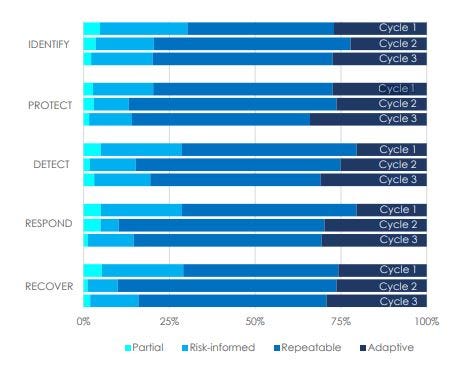
In both 2020 and 2021, ASIC asked participants to reassess their cyber resilience against the National Institute of Standards in Technology (NIST) Cybersecurity Framework. The NIST Framework allows firms to assess cyber resilience against five functions: Identify, protect, detect, respond, and recover, using a maturity scale of where they are now and where they intend to be in 12-18 months.
In the new report, ASIC identified that cyber resiliency among firms operating within Australia’s financial market increased by 1.4{21df340e03e388cc75c411746d1a214f72c176b221768b7ada42b4d751988996} overall, but this fell short of the 14.9{21df340e03e388cc75c411746d1a214f72c176b221768b7ada42b4d751988996} improvement targeted for the period. It was also lower than the 15{21df340e03e388cc75c411746d1a214f72c176b221768b7ada42b4d751988996} improvement that was achieved between 2017 and 2019.
ASIC attributed the shortfall to a combination of reasons including overly ambitious targets, a rise in the cyber threat environment, and disruptions caused by the COVID-19 pandemic, which resulted in organisations directing resources towards enabling secure remote working and ensuring products and services could be delivered to customers as supply chains were burdened with growing cyber activists.
Improvement in cyber resilience preparedness between cycles (by function).
Image: ASIC
Overall, 2021 saw improvements in the management of digital assets, business environment, staff awareness and training, and protective security controls.
“Firms operating in Australia’s markets continue to be resilient against a rapidly changing cyber threat environment. The COVID-19 pandemic has increased opportunities for threat actors to target remote workers, and access remote infrastructure and supply chains critical to the delivery of products and services. However, the response from firms has been robust,” ASIC commissioner Cathie Armour said.
The report said 90{21df340e03e388cc75c411746d1a214f72c176b221768b7ada42b4d751988996} of firms strengthened user and privileged access management, 88{21df340e03e388cc75c411746d1a214f72c176b221768b7ada42b4d751988996} of firms ensured users were trained and aware of cyber risks, and 86{21df340e03e388cc75c411746d1a214f72c176b221768b7ada42b4d751988996} had mature cyber incident response plans in place.
Other key findings from the report included the gap between large firms and small to medium-sized enterprises (SMEs) continued to close, with an overall improvement of 3.5{21df340e03e388cc75c411746d1a214f72c176b221768b7ada42b4d751988996}. In contrast, larger firms reported a slight drop in confidence of 2.2{21df340e03e388cc75c411746d1a214f72c176b221768b7ada42b4d751988996}, ASIC said.
“This comes off a strong base and can be attributed to large firms reassessing their response and recovery capabilities in light of: Increased complexity of their business operating models [and] a significant increase in threats to critical products and services reliant on third parties and supply chains,” the corporate regulator said.
ASIC also highlighted the greatest gaps between larger firms and SMEs continued to be in supply chain risk management where 40{21df340e03e388cc75c411746d1a214f72c176b221768b7ada42b4d751988996} of SMEs indicated weak supply chain risk management practices, but a majority of firms identified that this would be an ongoing priority over the next period.
Investment in cyber resiliency by credit rating agencies increased during the period, ASIC said, triggered by the 2017 Equifax incident, while investment banks continued to set high targets for all NIST Framework categories.
The release of the reports follows ASIC recently putting forward a recommendation for market operators and participants to simulate outages and recovery strategies to improve resiliency. It was off the back of an investigation into the Australian Securities Exchange (ASX) software issues that arose when the refresh of its trade equity platform went live in November last year, causing the exchange to pause trade.
CHARLOTTE, N.C. & CALGARY, Alberta–(BUSINESS WIRE)–InfraSight Software Corporation (InfraSight) and GRID Dynamics, Inc. (GRID) have agreed to integrate InfraSight’s Inframeter™ technology with GRID’s industry-leading Financial Planning & Analysis (FP&A) and Enterprise Performance Management (EPM) solutions.
Inframeter™, an IT Financial Observability Platform:
Works across Hybrid IT and Multi-Cloud investments;
Measures disparate compute, graphics, networking, and storage resources;
Calculates Infrascore™, a metric that represents the collective cost of doing IT work;
Analyzes historical and current data to enhance IT forecasting, budgeting, and resource allocation;
Enables developers to extend its functionality through an open API.
“This partnership brings together complementary platforms to provide greater transparency and more effective IT budgeting and execution for enterprise-scale organizations,” says InfraSight Co-Founder and CEO, Tim Martin. “GRID’s value-add is exceptional, and with GRID, Inframeter is now available in new markets, including Canada.”
EPM Simplification and Operating Leverage
GRID’s portfolio of FP&A and EPM solutions enable finance professionals to simplify corporate planning and budgeting through browser- and Microsoft Excel-based interfaces while leveraging AI and advanced analytics. GRID’s approach focuses on establishing functional Key Performance Indicators (KPIs) and integrating datasets to build a comprehensive single-source-of-truth for financial and operating data.
For customers, the integration of Inframeter™ and GRID’s technology solutions:
Facilitates in-depth visibility and analysis of IT infrastructure consumption costs for CTOs and CIOs, while simplifying cost management for CFOs;
Helps decision-makers better rationalize expenses across disparate IT investments;
Integrates FinOps budgeting and planning with other traditional financial management practices available with broad-scope EPM solutions.
“By layering in detailed on-premise and cloud consumption statistics with financial data, this solution gives customers new insights they have been desperately seeking,” says Rick Clazie, Managing Director of GRID Dynamics.
“For many enterprises, infrastructure cost management is a highly reactive process with adjustments made only after costs have been incurred, often with huge overages,” Clazie says. “Now we can help customers proactively understand how and where utilization affects expense.”
GRID has Certified Inframeter™ Professionals on staff and is deploying the integrated solution for clients. Contact inframeter@grid-dynamics.com or info@infrasightsoftware.com for more details.
InfraSight Software Corporation
Headquartered in Charlotte, NC, InfraSight is the developer of Inframeter™, an IT Financial Observability Platform. Inframeter™ facilitates visibility into IT workload costs and provides enterprise leadership with information they can trust to make financial decisions with confidence. The Inframeter™ platform includes an intuitive executive dashboard and an open API for developers to extend its functionality and produce actionable business outcomes.
Based in Calgary, Alberta, Canada, GRID Dynamics was founded in 2005 and creates tailored Financial Planning & Analysis (FP&A) and Enterprise Performance Management (EPM) solutions for all sizes of organizations. GRID helps organizations gain critical insights into their organizational performance, by designing and mapping KPIs to business objectives, streamlining and facilitating access to critical operating data, and facilitating planning scenarios.
Shares of Ameriprise Financial, Inc. (NYSE:AMP) have earned an average recommendation of “Buy” from the ten analysts that are covering the company, Marketbeat reports. Two investment analysts have rated the stock with a hold recommendation and seven have issued a buy recommendation on the company. The average 12-month price target among brokers that have covered the stock in the last year is $292.10.
A number of research analysts recently weighed in on the company. Morgan Stanley raised their price objective on Ameriprise Financial from $305.00 to $310.00 and gave the company an “equal weight” rating in a research report on Thursday, November 18th. Royal Bank of Canada raised their price objective on Ameriprise Financial from $325.00 to $350.00 and gave the company an “outperform” rating in a research report on Friday, October 29th. Credit Suisse Group raised their price objective on Ameriprise Financial from $317.00 to $348.00 and gave the company an “outperform” rating in a research report on Tuesday, November 2nd. They noted that the move was a valuation call. Finally, Wolfe Research assumed coverage on Ameriprise Financial in a research report on Tuesday, October 12th. They set an “outperform” rating and a $328.00 price objective for the company.
Shares of NYSE:AMP opened at $290.20 on Friday. Ameriprise Financial has a 52-week low of $182.83 and a 52-week high of $312.14. The firm has a market capitalization of $32.47 billion, a P/E ratio of 15.65 and a beta of 1.65. The stock has a 50 day moving average price of $292.90 and a 200-day moving average price of $270.40. The company has a debt-to-equity ratio of 0.88, a quick ratio of 1.13 and a current ratio of 1.13.
(Ad)
This guide will help you evaluate and analyze your trading plan to create a custom options trading strategy tailored to your risk profile and market outlook. Learn how to take your trading to the next level.
Ameriprise Financial (NYSE:AMP) last announced its earnings results on Monday, October 25th. The financial services provider reported $5.91 earnings per share (EPS) for the quarter, topping the consensus estimate of $5.49 by $0.42. Ameriprise Financial had a return on equity of 45.09{21df340e03e388cc75c411746d1a214f72c176b221768b7ada42b4d751988996} and a net margin of 17.39{21df340e03e388cc75c411746d1a214f72c176b221768b7ada42b4d751988996}. The firm had revenue of $3.50 billion during the quarter, compared to analyst estimates of $3.49 billion. During the same quarter in the prior year, the company earned $4.27 EPS. The business’s revenue was up 17.4{21df340e03e388cc75c411746d1a214f72c176b221768b7ada42b4d751988996} compared to the same quarter last year. On average, equities analysts forecast that Ameriprise Financial will post 22.27 EPS for the current fiscal year.
The firm also recently announced a quarterly dividend, which was paid on Friday, November 19th. Shareholders of record on Monday, November 8th were paid a dividend of $1.13 per share. The ex-dividend date was Friday, November 5th. This represents a $4.52 annualized dividend and a yield of 1.56{21df340e03e388cc75c411746d1a214f72c176b221768b7ada42b4d751988996}. Ameriprise Financial’s dividend payout ratio is 24.38{21df340e03e388cc75c411746d1a214f72c176b221768b7ada42b4d751988996}.
In related news, CEO James M. Cracchiolo sold 30,632 shares of Ameriprise Financial stock in a transaction on Friday, October 29th. The stock was sold at an average price of $303.67, for a total transaction of $9,302,019.44. The transaction was disclosed in a filing with the SEC, which is available through the SEC website. Also, CFO Walter Stanley Berman sold 15,986 shares of Ameriprise Financial stock in a transaction on Thursday, October 28th. The shares were sold at an average price of $302.37, for a total value of $4,833,686.82. The disclosure for this sale can be found here. Over the last quarter, insiders have sold 48,118 shares of company stock worth $14,597,751. Company insiders own 1.10{21df340e03e388cc75c411746d1a214f72c176b221768b7ada42b4d751988996} of the company’s stock.
A number of hedge funds and other institutional investors have recently added to or reduced their stakes in AMP. BlackRock Inc. raised its holdings in Ameriprise Financial by 7.4{21df340e03e388cc75c411746d1a214f72c176b221768b7ada42b4d751988996} during the second quarter. BlackRock Inc. now owns 9,616,938 shares of the financial services provider’s stock valued at $2,393,463,000 after acquiring an additional 662,711 shares during the period. Bain Capital Public Equity Management II LLC bought a new stake in Ameriprise Financial during the third quarter valued at about $137,568,000. FMR LLC raised its holdings in Ameriprise Financial by 30.5{21df340e03e388cc75c411746d1a214f72c176b221768b7ada42b4d751988996} during the second quarter. FMR LLC now owns 1,515,762 shares of the financial services provider’s stock valued at $377,243,000 after acquiring an additional 354,421 shares during the period. Amundi bought a new stake in Ameriprise Financial during the second quarter valued at about $82,602,000. Finally, AGF Investments Inc. raised its holdings in Ameriprise Financial by 154.9{21df340e03e388cc75c411746d1a214f72c176b221768b7ada42b4d751988996} during the second quarter. AGF Investments Inc. now owns 389,060 shares of the financial services provider’s stock valued at $96,829,000 after acquiring an additional 236,402 shares during the period. Institutional investors own 81.97{21df340e03e388cc75c411746d1a214f72c176b221768b7ada42b4d751988996} of the company’s stock.
Ameriprise Financial Company Profile
Ameriprise Financial, Inc operates as a holding company. The firm provides financial planning, asset management and insurance services to individuals, businesses and institutions. It operates through the following business segments: Advice & Wealth Management, Asset Management, Retirement & Protection Solutions, and Corporate & Other.
See Also: What are the benefits of investing in REITs?
This instant news alert was generated by narrative science technology and financial data from MarketBeat in order to provide readers with the fastest and most accurate reporting. This story was reviewed by MarketBeat’s editorial team prior to publication. Please send any questions or comments about this story to [email protected]
Should you invest $1,000 in Ameriprise Financial right now?
Before you consider Ameriprise Financial, you’ll want to hear this.
MarketBeat keeps track of Wall Street’s top-rated and best performing research analysts and the stocks they recommend to their clients on a daily basis. MarketBeat has identified the five stocks that top analysts are quietly whispering to their clients to buy now before the broader market catches on… and Ameriprise Financial wasn’t on the list.
While Ameriprise Financial currently has a “Buy” rating among analysts, top-rated analysts believe these five stocks are better buys.
Around the world, the pandemic spurred a significant rise in remote work arrangements. Regardless of industry or business model, remote teams can have significant impacts—both positive and negative—on a company’s overall financial health. In some cases, remote teams require a company to buy new technology in order for employees to accomplish their work. On the other hand, many companies are saving significant amounts of money by not maintaining a physical office—and some are even seeing increased productivity.
As more companies are beginning to make the decision on whether to continue with remote work, head back to the office or settle on an arrangement that combines the two, it’s essential for leaders to carefully consider what’s right for their unique situation. Below, 14 members of Forbes Finance Council share ways your remote team may be impacting your company’s finances.
Members of Forbes Finance Council discuss ways remote teams can impact a company’s financial (and overall) health.
Photos courtesy of the individual members.
1. Increased Procrastination And Competition For Resources
I faced one of the negative effects of remote work: increased procrastination caused by a lack of communication. Additionally, there was a cost increase caused by remote market globalization—more and more businesses began going remote, so they started hiring employees globally. Before the pandemic, we had to compete for resources locally. Now we have to compete globally. – Peter Shubenok, RNDpoint
2. Potential Communications Breakdowns
A lack of communication can create headaches for remote teams. I have worked remotely since 2005, and I have found that increased communication is critical to meeting deadlines and avoiding misunderstandings. – Paul Davis, Strategic Resource Management
Forbes Finance Council is an invitation-only organization for executives in successful accounting, financial planning and wealth management firms. Do I qualify?
3. Higher Travel Costs
As we start coming back to work, remote teams will need to begin meeting up with their broader team at a central location every few months. This will mean that employees who rarely traveled, such as product managers and engineers, will be making four to six trips in a year that they didn’t before. Finance teams need to account for enabling these remote employees to spend time together, along with the associated costs. – Robin Gandhi, TripActions Liquid
4. The Need For A Robust Culture
Working for a remote-first fintech, remote teams are quite literally the lifeblood of our organization. It can be easy to dismiss the concept of culture in remote teams, but when created, supported and pushed to thrive, culture can have a dramatic impact on the financial and overall success of an organization. Happy, engaged employees undisputedly do better work. – Michelle Prohaska, NYMBUS
5. Lower Overhead Costs
Remote work enables companies to remove traditional fixed overhead costs from their financials. Specific expenses, including rent, office supplies, utilities and salaries based on “handcuffed” geographies tied to a central office, can be reduced or eliminated from forward-looking plans. With these savings, management can invest more in R&D or employee learning to drive top-line growth. – John Tytko, Caremerge, Inc.
6. Reduced Need For Physical Expansions
We had considered expanding the physical footprint of our business regionally and nationally before Covid. Then everyone became more comfortable meeting virtually using services such as Zoom. Now, without leaving our office, we’re meeting with clients nationwide. So we’ve expanded our business not through remote teams as much as a remote business model—working with clients in other cities virtually. – Bill Keen, Keen Wealth Advisors
7. More Time Saved For Working And Expense Savings For Employees
Remote workers don’t need to spend money on commuting, eating out, dry cleaning, pet care and so on. On average, Americans spend almost one hour per day in total commute time. If employees capture 100{21df340e03e388cc75c411746d1a214f72c176b221768b7ada42b4d751988996} of their “no-need-to-commute” expense savings but allocate 30 minutes more per day to working—splitting the time savings differential with their employer—they win, and their employers win. – Sean Brown, YCharts
8. Boosted Productivity
A hybrid model with some team members working remotely seems ideal. Less office space and resources are required, and studies have shown that working from home has boosted productivity in many ways. This is also a keen “perk” or benefit in today’s competitive recruiting landscape. Many would even take slightly less pay to be able to work from home. – Leslie Heimer, American Liberty Mortgage | Stockworth
9. Savings On Health Benefits
Offering benefits to a remote team, often scattered across the country, presents its share of unique financial challenges—but also potential savings opportunities. Extra vigilance is required when selecting and structuring benefit offerings. A high-deductible health plan paired with an employer-sponsored health savings account program can realize short- and long-term financial benefits for both the company and its employees. – Tom Torre, Bend Financial
10. Compromised Company Security
When employees are too relaxed about security compliance, it can put your entire company at risk for cyberthreats. To mitigate risk, invest in implementing automated phishing simulations and training videos and set up two-factor authentication. Educating remote teams on cybersecurity is crucial for keeping your company secure from costly threats. – Jody Grunden, Summit CPA Group
11. Access To Global Talent Pool
Remote teams empower companies to access the global talent pool at a fraction of the cost, which in turn drastically reduces recruitment costs—thereby directly impacting the bottom line of organizations that rely heavily on the brainpower of their workforce. – Anil Grandhi, AG FinTax
12. More Focus On Teamwork, Communication And Goals
Remote teams can get the business to focus on teamwork, communication and goals. There are software tools to help you monitor all areas of your business and track the output of employees. This higher level of business monitoring can help focus teams on profitability and customer-centric actions. Trusted employees may be more productive remotely with the time added to the workday and measured output. – Dave Sackett, Visibility Corporation
13. Lower Tax Liability
Among the positive financial aspects of remote teams are the cost savings that come from reduced office spaces and insurance. But other savings include not dishing out huge local payroll taxes in cities such as San Francisco and New York. Utilizing remote teams can also lead to savings for the employees, including the elimination of commuting expenses—plus, they’re not losing any time commuting, which adds to the company’s benefit. – Kurt Kunselman, AccountingSuite™
14. Better Client Engagement
Unlike the days when client meetings meant costly travel and time away for commuting, remote teams can reach clients more frequently for video or call check-ins. Technology such as Zoom meetings also allows you to keep more members of your team engaged. – Sonya Thadhani Mughal, Bailard, Inc.





 Shares of Ameriprise Financial, Inc. (NYSE:AMP) have earned an average recommendation of “Buy” from the ten analysts that are covering the company, Marketbeat reports. Two investment analysts have rated the stock with a hold recommendation and seven have issued a buy recommendation on the company. The average 12-month price target among brokers that have covered the stock in the last year is $292.10.
 /https://specials-images.forbesimg.com/imageserve/61a8da72e2d5f0ccc73925cb/0x0.jpg)