
US to blacklist eight more Chinese companies including dronemaker DJI

The Biden administration will place eight Chinese companies including DJI, the world’s largest commercial drone manufacturer, on an investment blacklist for their alleged involvement in the surveillance of the Uyghur Muslim minority.

The US Treasury will put DJI and the other groups on its “Chinese military-industrial complex companies” blacklist on Thursday, according to two people briefed on the move. US investors are barred from taking financial stakes in the 60 Chinese groups already on the blacklist.

The measure marks the latest effort by US president Joe Biden to punish China for its repression of Uyghurs and other Muslim ethnic minorities in the north-western Xinjiang region.

This week, SenseTime, the facial recognition software company, postponed its planned initial public offering in Hong Kong after the Financial Times reported that the US was set to place the company on the blacklist.

The other Chinese companies that will be blacklisted on Thursday include Megvii, SenseTime’s main rival that last year halted plans to list in Hong Kong after it was put on a separate US blacklist, and Dawning Information Industry, a supercomputer manufacturer that operates cloud computing services in Xinjiang.

Also to be added are CloudWalk Technology, a facial recognition software company, Xiamen Meiya Pico, a cyber security group that works with law enforcement, Yitu Technology, an artificial intelligence company, Leon Technology, a cloud computing company, and NetPosa Technologies, a producer of cloud-based surveillance systems.

Trade Secrets

The FT has revamped Trade Secrets, its must-read daily briefing on the changing face of international trade and globalisation.

Sign up here to understand which countries, companies and technologies are shaping the new global economy.

DJI and Megvii are not publicly traded, but Dawning Information, which is also known as Sugon, is listed in Shanghai, and Leon, NetPosa and Meiya Pico trade in Shenzhen.

All eight companies are already on the commerce department’s “entity list”, which restricts US companies from exporting technology or products from America to the Chinese groups without obtaining a government licence.

The White House did not comment and the Treasury did not respond to a request for comment.

DJI declined to comment. But last year, it said it had “done nothing to justify being placed on the entity list” after it was added to the commerce department’s export blacklist at the end of former president Donald Trump’s term.

Zhao Lijian, foreign ministry spokesman, said: “China has always opposed the US’s generalisation of national security concepts and unreasonable suppression of Chinese companies.” He added that Beijing had presented the “facts and truth” of Xinjiang-related issues. “China will . . . resolutely defend the legitimate rights and interests of Chinese companies,” Zhao said.

The commerce department is also expected to place more than two dozen Chinese companies on the entity list on Thursday, including some involved in biotechnology, according to the people familiar with the pending action. The commerce department did not respond to a request for comment.

The sanctions action comes as the US has maintained a tough stance over China’s policies in Xinjiang, where more than 1m Uyghurs and other minorities have been held in detention camps. The White House last week announced a diplomatic boycott of the 2022 Winter Olympics in Beijing.

The Biden administration on Thursday will also consider tightening rules on US companies selling technology to Semiconductor Manufacturing International Corp, the largest Chinese chip manufacturer. The Trump administration put SMIC on the entity list a year ago, but the decision included a provision that critics said created a loophole that some companies had exploited.

Eric Sayers, head of the Indo-Pacific practice at consultancy Beacon Global Strategies, said Biden was moving into the implementation phase after reviewing many of his predecessor’s technology policies.

“It will be interesting to watch if these targeted but significant steps are just the beginning of a more aggressive approach being driven by the White House or the minimum the inter-agency can muster for now,” said Sayers. “If it’s the former, we could see further restrictions on SMIC and new outbound investment restrictions in the months ahead.”

In another example of Washington’s escalating confrontation with Beijing over Xinjiang, the US House of Representatives unanimously passed a bill on Tuesday that would ban imports from the region unless companies could prove the goods were not produced with forced labour.

The House and Senate earlier reached agreement on a compromise draft of the bill, setting the stage for a vote in the upper chamber of Congress before senators recess for the year-end holidays.

The White House welcomed the agreement over the Uyghur Forced Labor Prevention Act.

Sophie Richardson, China director at Human Rights Watch, called for Biden to “immediately” sign the legislation after it was passed by Congress.

“Beijing and businesses have long banked on a global willingness to put profits ahead of humans’ rights — even in the face of crimes against humanity,” she said. “Congress rightly shifted the burden of proof to Xinjiang authorities and to companies.”

Jewher Ilham, an activist whose father Ilham Tohti, an Uyghur rights advocate, was jailed for life by China on widely criticised charges of separatism, said it was “promising” that Congress had reached a deal to hold companies “accountable for their complicity in the world’s worst forced labour regime”.

Additional reporting by Maiqi Ding in Beijing

Follow Demetri Sevastopulo on Twitter

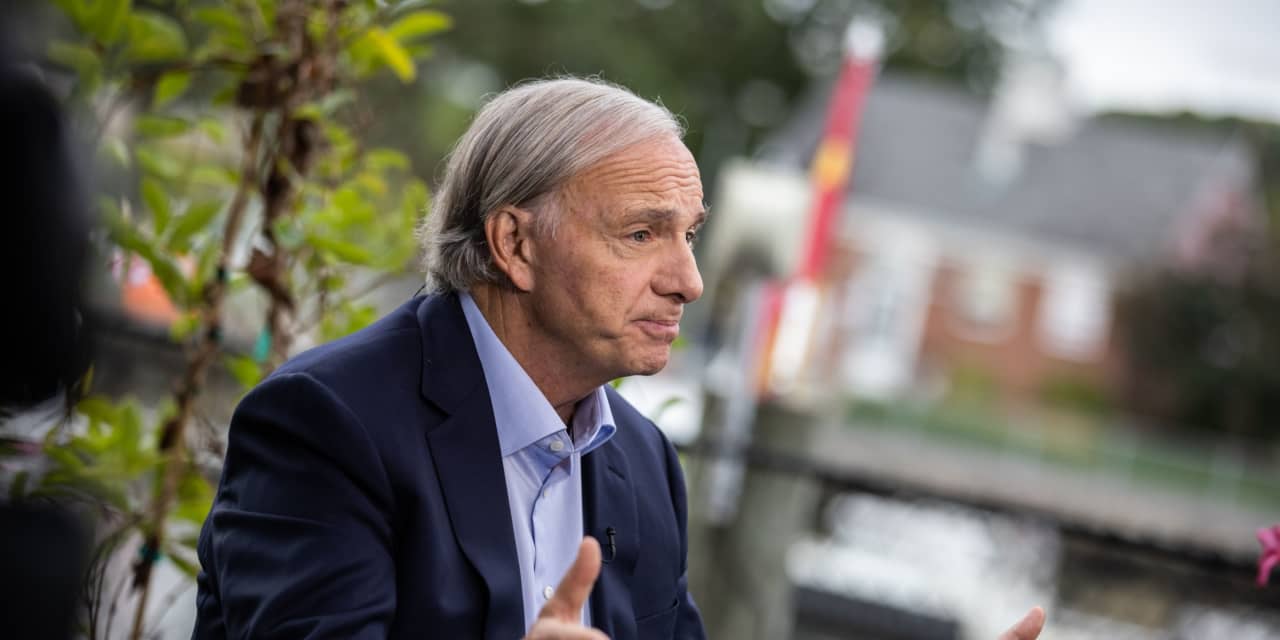
Ray Dalio warns the Fed’s hands are tied and that higher U.S. inflation is sticking around. Democracy, maybe not.

As an investor, Ray Dailo eyes the rearview mirror to see what’s ahead. If this paradox makes sense, then you likely agree with the view of history that “those who cannot remember the past are condemned to repeat it.”

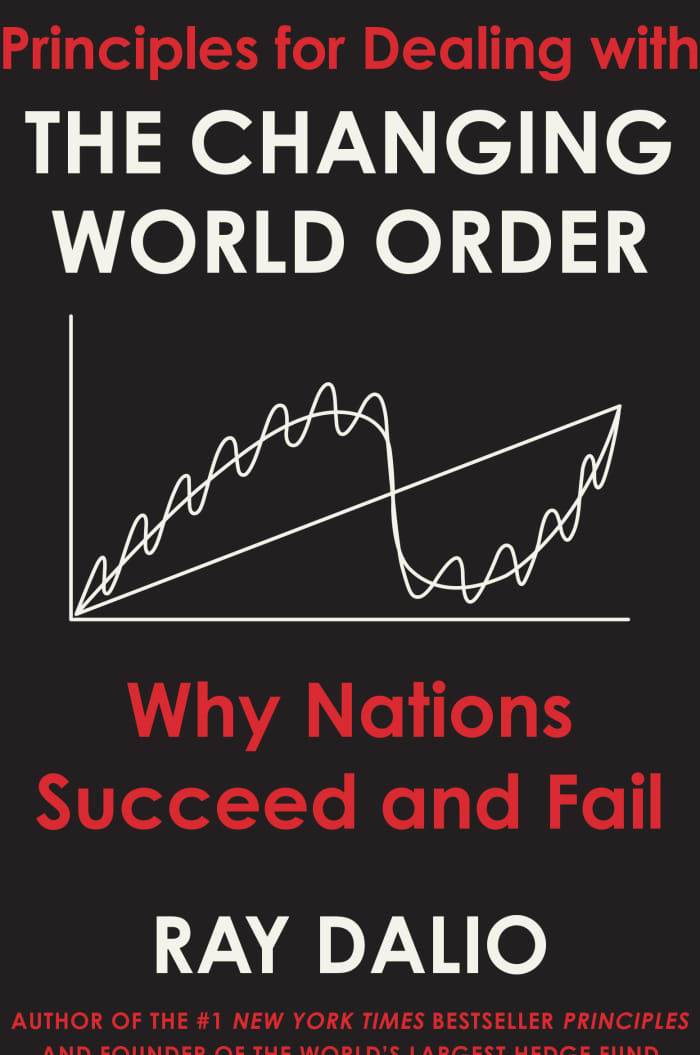
Put another way, it’s hard to know where you’re going if you don’t know where you’ve been. In his latest book, “Principles for Dealing with the Changing World Order: Why Nations Succeed and Fail,” Dalio, the founder and co-chairman of hedge fund Bridgewater Associates, shows investors their future by taking them back in time to study the rise and fall of great countries and powerful currencies. Because the question you never want to ask about either your money or your situation in life is “how did I get here?”

In almost 600 pages of narrative and charts, the book paints Dalio’s interpretation of the tectonic shifts now reshaping global politics and financial markets in ways that loudly echo the past but are yet to be determined — namely the competitive, complex relationship between the U.S. and China.

How the world’s two most-formidable nations coexist — or not — is affecting and will continue to impact not only your wealth and opportunities in the 21st century, but your children’s and their children’s as well. Says Dalio: “[Americans] have to do three things: We have to earn more than we spend by being productive and get our finances in order; we have to work well together economically and politically, and we have to avoid war with China.”

In this interview, which has been edited for clarity and length, Dalio offers insights about the similarities between the current economic and political cycle and previous ones, the disturbing external and internal threats to American democracy and influence, and how to and what to hold in your investment portfolio, including bitcoin, as history unfolds.

MarketWatch: Your new book is the latest in a series where you share your fundamental principles for investing in and living with the world as it is — essentially ways to accept and play the hand you’re dealt. What conditions and circumstances concern the United States right now that you want investors to understand, and why look to the past for answers?

Dalio: In my investing, I learned a lesson that many things that surprised me hadn’t happened in my lifetime but had happened before. The first time that happened was in August 1971 when the U.S. broke its promise to exchange dollars for gold so that it could print a lot of money, which led to the devaluation of the U.S. dollar. I was working on the floor of the New York Stock Exchange. I was surprised that the stock market rose a lot, so I looked into history and I found that same thing happened in March 1933. And I learned why.

As a result of that, I always study what drove major economic and market movements in history. My study of the Great Depression is the reason we anticipated the 2008 financial crisis.

Many people are interested in the news of the day but they’re not interested in the history and lessons of the past. But you won’t understand what’s going on if you just react to the news of the day. My approach has always been like a doctor, that if I haven’t seen many cases of it before, I want to go back and study all the cases in history so I can make decisions today. 

There are three things happening now that I needed to study:

  1. Zero interest rates with the creation of a lot of debt and a lot of money-printing to finance that debt.

  2. The internal conflict between left and right, rich and poor, Democrats and Republicans, which is producing a level of conflict in the U.S. that is the highest since 1900. This also has tax implications. There is an anti-capitalist swing under way that will affect U.S. tax policy, where people live, and how they are with each other.

  3. The rise of a great power to challenge an existing great power and the existing world order. The existing world order began in 1945 and it was the American world order. Now China is rising to challenge the United States.

These things are big. Almost every day we’re going to be talking about these three things and what’s happening with them. The last time that happened was in the 1930-1945 period. They happened many times in history basically for the same reasons in the same way. 

MarketWatch: The political and social divisions in the U.S. affect so much of what Americans take for granted, and maybe it’s because they’re taken for granted that they confront us now. Can this country move forward together?

Dalio: The fundamentals are clear. We have to do three things: We have to earn more than we spend by being productive and get our finances in order; we have to work well together economically and politically, and we have to avoid war with China. When I look at different countries, I judge them based on whether or they have good finances, internal order and external peace.  

‘If the causes people are behind are more important to them than the system, the system is in jeopardy. I worry that’s where the U.S. is now.’

We have the ability to do these things but I worry about us being our own worst enemy. History has shown that if the causes people are behind are more important to them than the system, the system is in jeopardy. I worry that’s where the U.S. is now. 

There is a great polarity, a fight-and-win-at-all-costs mentality. Looking ahead, in the 2022 election we will see the primary battle between the extremists and the moderates in both political parties and probably see moves to greater extremism. In the general election, there is a good chance that neither side will accept being the loser.

This type of fight-to-the-death mentality could lead to some form of “civil war.” What I mean by civil war is a series of battles not resolved by the law or the Constitution, in which power is used instead — including the failure of our democracy to work. 

Also, as I look ahead economically for the U.S. I see a worsening of the situation. Because of all the money that has been pumped out we’re now on a sugar high, but we are beginning to see that inflation will pick up, and the stimulus checks that came in won’t come in at the same rate, causing conditions to worsen. 

It all comes down to a couple of basics. To be successful we have to be financially strong and be good with each other. That’s it.  

MarketWatch: Easier said than done. There doesn’t seem to be much political will right now in Washington or among the U.S. states to work together.

Dalio: I know. In these cases — the French Revolution, the Russian Revolution, the Chinese Revolution, for example — the divides became greater and greater. And then you have to pick a side and fight for that side. We are starting to see this in the U.S. by the movement of Americans to different states. It’s not just a tax issue. It’s a values issue.

Most likely you’re going to see disagreements between the federal government and state governments on the matter of what is states’ rights that probably won’t be all settled legally, so they will be settled through tests of power. There will be places that people won’t want to be because it’ll be threatening. People will want to be with their own kind.

I want individuals to understand the mechanics of this, which is why I wrote the book. For example, I’d like them to see historical cases and fundamental cause-effect relationships to understand what it means to produce a lot of debt and a lot of money, so I wrote a chapter on the value of money.  

MarketWatch: What could this situation mean for U.S. investors? You’re describing a very different America to consider.

Dalio: Right. I want people to be well-informed and worry about what they should worry about.

I have a principle: If you worry, you don’t have to worry. And if you don’t worry, you have to worry. If you worry, you’ll take care of the thing you’re worried about. If people worry about the fighting and they worry about the finances, then they can work together and deal with these things.

‘People think the safest investment is cash but they don’t look at the inflation-adjusted return.’

Financially, the way it works is when the government needs to send out checks, it could either get the money from taxes or from borrowing. If it can’t get all the money it needs from borrowing, the central bank can print the money. That devalues the value of money.

Central banks can create a lot more money and debt, but that won’t raise living standards. I’d like to help people see how money and credit move through the system to drive things. I’d like to show people how money and credit are created and how person who gets the money and credit buys goods, services and financial assets, which makes those things go up in price.

I’d like to help them understand the reasons why cash is so bad in this type of environment. People think the safest investment is cash but they don’t look at the inflation-adjusted return.

Don’t hold cash. It’s better to hold a liquid, diversified portfolio of assets — if it’s balanced. Make sure you’re well-diversified outside of cash — stocks
SPX,
-0.08{21df340e03e388cc75c411746d1a214f72c176b221768b7ada42b4d751988996},
bonds
TMUBMUSD10Y,
1.448{21df340e03e388cc75c411746d1a214f72c176b221768b7ada42b4d751988996},
inflation-indexed bonds, commodities and gold
GLD,
-0.44{21df340e03e388cc75c411746d1a214f72c176b221768b7ada42b4d751988996},
and across many countries, particularly those with stronger income statements and balance sheets. An “all-weather” portfolio has currency diversification, asset class diversification, country diversification and industry diversification.

MarketWatch: So you’re thinking that higher U.S. inflation is not transitory. It’s going to stick.

Dalio: Yes. There’s two types of inflation. There’s inflation when the demand for goods and services rises against the capacity to produce them. That’s normal, cyclical inflation. Then there’s monetary inflation — the creation of a lot of money and credit relative to the quantity of goods and services. The U.S. is having both.

When I look at the country’s financials going forward, what the size of the deficit will be and how much money is produced, that’s a concern. There’s also the risk, or even the probability, that those who are holding cash and bonds will choose to sell those to move into other things. If that happens, the U.S. central bank will have to decide if it raises interest rates, which will hurt the economy — and I don’t believe they can do that in a significant way. It would be bad for the economy, politics and the markets if they tried to rectify that by allowing interest rates to rise. So they’re probably going to have to print more money, and that causes more monetary inflation.

Today it doesn’t cost anything to borrow. Right now if you take out debt, you have practically no interest rate and principal payments can be deferred, so money is essentially free. With the cost of money negative and below the nominal growth rate, it’s very profitable to borrow and invest in anything that can grow at the inflation rate or more. That’s what’s priced into the markets now. And if they change things — raise interest rates to be higher than is priced into the markets — asset prices will go down and there will be more of an economic problem. 

Central bankers, especially the Fed, are between a rock and a hard place. They need to tighten quite a lot to restrain inflation, yet if they do they will hurt the economy.

Central bankers, especially the Fed, are between a rock and a hard place. They need to tighten quite a lot to restrain inflation, yet if they do they will hurt the economy. Imagine what would happen if there was a tightening of monetary policy in the classic way of first causing asset prices to go down and then the economy to contract.

Politically, imagine what that would be like. People are at each other’s throats and they’ve been given a lot of money. I’m afraid of another economic downturn. We can’t even get along on whether we can wear masks or not. You can’t allow another economic downturn. You can’t raise interest rates enough to bite. Interest rates have to be significantly below both the inflation rate and the nominal GDP growth rate.

It’s easy to see what type of policy biases will exist by looking at whether circumstances favor debtors or creditors being favored. High real interest rates will exist when circumstances make it better for the creditor to be helped and credit growth to show while low real rates will exist when central banks want to help debtors and want to stimulate credit growth. 

History shows that when countries need more money and don’t have other ways of getting it that they will produce more money. Producing money doesn’t take money away from anyone so it’s politically easier because it’s a hidden tax. Nobody’s complaining about where the money came from. If you get it through taxes, everybody squawks. History has shown that the easiest way is to print more money and give it out. If instead you tighten, it has consequences.

MarketWatch: Bitcoin and other cryptocurrency also is politicized. Crypto has become a political statement as much as a way to make and lose money.

Dalio: There’s a lot of money chasing all sorts of things, crypto among them. It has been an amazing accomplishment for bitcoin
BTCUSD,
-1.07{21df340e03e388cc75c411746d1a214f72c176b221768b7ada42b4d751988996}
to have achieved what it has done, from writing that program, not being hacked, having it work and having it adopted the way it has been. I believe in the blockchain technology; there’s going to be that revolution, so it has earned credibility.

I’m not an expert on bitcoin, but I think it has some merit as a small portion of a portfolio.

I’m not an expert on bitcoin, but I think it has some merit as a small portion of a portfolio. Bitcoin is like gold, though gold is the well established blue-chip alternative to fiat money. 

However, bitcoin has a number of other issues. If it is a threat to governments, it will probably be outlawed in some places when it becomes relatively attractive. It may not be outlawed in all places. I don’t believe that central banks or major institutions will have a significant amount in it.

I have a little bit of it because I believe a portfolio should start off with, under a worst-case scenario, what assets protect it and make sure it’s diversified. It’s almost a younger generation’s alternative to gold and it has no intrinsic value, but it has imputed value and it has therefore some merit.

More: Can the Federal Reserve taper without causing a tantrum in the markets? So far, so good

Also read: Why it matters that workers feel they matter: Valued employees do a better job for employers and customers

Business News for Dec. 15, 2021

Credit…Alex Welsh for The New York Times

Janice Min, a media executive in Los Angeles, is joining forces with Richard Rushfield, a show-business columnist, to start a new media business that will be spun off from his popular subscription newsletter, The Ankler.

Ms. Min, who transformed The Hollywood Reporter from a struggling trade publication into a successful, large-format glossy, will become the co-owner, chief executive and editor in chief of the newly formed Ankler Media. Mr. Rushfield, the founder of The Ankler, which bills itself as “the newsletter Hollywood loves to hate and hates to love,” will be the company’s editorial director and chief columnist.

“One of the things that really sold me on doing this with Richard is he gave me visibility into the subscriber list, and it’s insane,” Ms. Min said in an interview. “It’s a Who’s Who of power in the entertainment community, and from that base I feel like there is so much potential to exercise that level of influence.”

Mr. Rushfield wrote for BuzzFeed, The Los Angeles Times and Gawker before going solo with a newsletter in 2017, a move he made because he felt there was room for coverage that was “sharper-elbowed, more irreverent and more fun than what was out there,” he said.

The Ankler started as something he wrote to amuse his friends. Eventually, he moved it to the digital newsletter platform Substack, and he now charges $10 a month for a subscription. According to Substack’s public leaderboard, which ranks newsletters by revenue, it is in the platform’s top three business publications.

“So have you met Americans lately or the entertainment consumers of the world?” he wrote in Monday’s edition, on the disappointing box-office results for Steven Spielberg’s big-budget adaptation of “West Side Story.”

“It may shock you to learn that they aren’t versed in the history of midcentury American musical theater,” he continued. “The mass culture as it stands can barely remember who Katy Perry was and won’t take kindly to anyone pointing out to them that entertainment existed in a time before that.”

Ms. Min said she first saw The Ankler’s potential for expansion after reading a post by Mr. Rushfield on the lack of diversity in the executive ranks at film studios, which included screenshots of “About Us” pages that showed mostly white leadership teams.

Over the last 18 months, Ms. Min and Mr. Rushfield discussed ways to expand the newsletter, including with other media companies, before deciding to stick with Substack. They said they planned to keep The Ankler as the flagship and would introduce additional newsletters, as well as podcasts and events, starting in January.

They will also bring on new hires, with the first being Tatiana Siegel, the executive film editor of The Hollywood Reporter, who will join in January to report on the worlds of Hollywood and entertainment.

Ms. Min and Mr. Rushfield said the company would be part of a three-month program run by Y Combinator, a start-up incubator known for its early investments in Airbnb and Reddit. The program gives company founders seed money and business guidance.

A focus of Ankler Media’s coverage will be the clashes between the tech executives now making big decisions in Hollywood and the ones who have been around since moviegoers waited in line to buy tickets.

“That push-pull tension between the people who eat McCarthy Salads at the Polo Lounge with the Silicon Valley algorithm people — that’s a real tension that’s going to drive the next 10, 20, 30 years here,” Ms. Min said.

Planswell Drops Fees For Financial Planning Software

Financial planning software developer Planswell is changing its revenue model and will give its planning technology to advisors for free, the firm announced. It will focus instead on driving revenue through selling advisors business-building services, including marketing automation and lead generation tools, according to CEO Eric Arnold. 

Planswell’s planning software had cost advisors as much as $199 a month, Arnold said. 

The firm currently has about 1,000 paying advisors using the service, according to Arnold, meaning the move will cost the 40-person firm $2.4 million in revenue, assuming a 100{21df340e03e388cc75c411746d1a214f72c176b221768b7ada42b4d751988996} annual renewal rate and no discounting. But Arnold said he is confident that giving away planning for free will increase the number of advisors who will want to use the firm’s costlier business development tools, which start at $450 a month.

The decision has caused consternation in his finance department, Arnold said, but he is convinced the path towards growth involves free financial planning.

Planswell isn’t the first financial software developer to offer free financial planning tools to lure users into paying for other services. Robo advisor Wealthfront started giving away financial planning in 2018. Personal Capital provides free financial planning, including savings and retirement planning, to more than 3.1 million individuals. Of those individuals, more than 30,000 families have converted into paying customers for wealth management services, according to a company spokesperson. Personal Capital was purchased by Empower Retirement, a subsidiary of Montreal-based Power Corporation, in 2020.

For its part, Planswell has created 400,000 financial plans, according to Arnold. The plans, which many advisors use as a lead-generation tool to find clients looking for insurance or more robust investment management, take an average of three minutes for each client to create. The user-led plans can be completed on a desktop or via a mobile device and advisors have the option of using video conferencing to interact with the prospects. More than 66{21df340e03e388cc75c411746d1a214f72c176b221768b7ada42b4d751988996} of its advisor clients are based in the U.S.

But Arnold said the firm was not giving up on its core financial planning software. Because Planswell also does direct-to-consumer planning, it generates its own leads and is able to sell those to advisors.

“We’ve spent millions of dollars building [Planswell’s financial planning software],” said Arnold. “We will continue to invest millions of dollars to make it continue to be the best user experience—and hopefully in the future it’ll be the absolute best in every possible comparable way to other planning software companies.”

Future iterations will include decumulation planning for user accounts and estate planning, as well as expanding to markets beyond Canada and the U.S., said Arnold. The firm will have to do that without the revenue from its core planning tool.

The move comes just a little over a year since Planswell expanded into the U.S. which comes with its own risks, according to at least one other financial planning executive who moved into the U.S. market after launching in Canada.

“In the American space, there’s a lot more players and a lot more things going on all the time,” said Shawn Brayman, founder, president and CEO of Toronto-based financial planning developer PlanPlus, which was acquired by Morningstar last year. “Getting mind share is hard.”

If advisor clients feel like their vendor is just there for a quick buck and not willing to invest in the business of that particular geography, advisors may not be willing to take a chance on a new software vendor. On the other hand, providing a free service can be enticing for the right client, he added.

Arnold refuted the notion that the move means the firm is abandoning planning to become a marketing-tech firm for advisors. “The mission has never changed,” he said. “We want to put actual financial plans in everyone’s hands, for free. We want to spread that around the world.”

Capital One Financial Analysts Lift Earnings Estimates for STAG Industrial, Inc. (NYSE:STAG)

STAG Industrial, Inc. (NYSE:STAG) – Equities researchers at Capital One Financial lifted their FY2021 earnings per share estimates for shares of STAG Industrial in a note issued to investors on Thursday, December 9th. Capital One Financial analyst C. Lucas now anticipates that the real estate investment trust will earn $2.06 per share for the year, up from their prior forecast of $2.05. Capital One Financial also issued estimates for STAG Industrial’s Q1 2022 earnings at $0.53 EPS, Q2 2022 earnings at $0.55 EPS, Q4 2022 earnings at $0.56 EPS, FY2022 earnings at $2.19 EPS, Q1 2023 earnings at $0.56 EPS, Q2 2023 earnings at $0.58 EPS, Q3 2023 earnings at $0.58 EPS, FY2023 earnings at $2.31 EPS, FY2024 earnings at $2.45 EPS and FY2025 earnings at $2.59 EPS. STAG Industrial (NYSE:STAG) last announced its quarterly earnings data on Thursday, October 28th. The real estate investment trust reported $0.30 EPS for the quarter, missing the Zacks’ consensus estimate of $0.51 by ($0.21). STAG Industrial had a return on equity of 7.28{21df340e03e388cc75c411746d1a214f72c176b221768b7ada42b4d751988996} and a net margin of 37.23{21df340e03e388cc75c411746d1a214f72c176b221768b7ada42b4d751988996}. The company had revenue of $142.11 million for the quarter, compared to analysts’ expectations of $140.41 million. During the same quarter in the previous year, the business posted $0.46 EPS. The business’s quarterly revenue was up 19.1{21df340e03e388cc75c411746d1a214f72c176b221768b7ada42b4d751988996} compared to the same quarter last year.

A number of other equities analysts also recently commented on the company. Raymond James lifted their price objective on STAG Industrial from $45.00 to $47.00 and gave the stock an “outperform” rating in a research report on Monday, November 1st. Zacks Investment Research upgraded STAG Industrial from a “hold” rating to a “buy” rating and set a $48.00 price objective on the stock in a research report on Friday, November 26th. Finally, Royal Bank of Canada lifted their price objective on STAG Industrial from $46.00 to $50.00 and gave the stock an “outperform” rating in a research report on Monday, November 8th. One equities research analyst has rated the stock with a hold rating and five have assigned a buy rating to the company’s stock. According to MarketBeat, the stock presently has an average rating of “Buy” and a consensus price target of $43.67.

(Ad)

The global lithium market is projected to surge 500{21df340e03e388cc75c411746d1a214f72c176b221768b7ada42b4d751988996} due to a growing need for lithium-filled batteries. And one junior mining company in a renowned location in South America is in the right place at the right time to capitalize on this megatrend.

Shares of STAG Industrial stock opened at $43.93 on Friday. STAG Industrial has a one year low of $29.40 and a one year high of $45.20. The company has a market cap of $7.46 billion, a price-to-earnings ratio of 34.87, a PEG ratio of 4.11 and a beta of 0.93. The company has a debt-to-equity ratio of 0.65, a quick ratio of 1.57 and a current ratio of 1.57. The business’s 50 day moving average price is $42.85 and its 200 day moving average price is $40.88.

A number of large investors have recently bought and sold shares of the business. Johnson Investment Counsel Inc. raised its holdings in shares of STAG Industrial by 10.1{21df340e03e388cc75c411746d1a214f72c176b221768b7ada42b4d751988996} in the 2nd quarter. Johnson Investment Counsel Inc. now owns 59,984 shares of the real estate investment trust’s stock valued at $2,252,000 after buying an additional 5,500 shares during the period. Kempen Capital Management N.V. raised its holdings in shares of STAG Industrial by 6.0{21df340e03e388cc75c411746d1a214f72c176b221768b7ada42b4d751988996} in the 2nd quarter. Kempen Capital Management N.V. now owns 618,563 shares of the real estate investment trust’s stock valued at $23,153,000 after buying an additional 35,250 shares during the period. H&H Retirement Design & Management INC raised its holdings in shares of STAG Industrial by 5.1{21df340e03e388cc75c411746d1a214f72c176b221768b7ada42b4d751988996} in the 3rd quarter. H&H Retirement Design & Management INC now owns 106,026 shares of the real estate investment trust’s stock valued at $4,328,000 after buying an additional 5,184 shares during the period. Amundi purchased a new stake in shares of STAG Industrial in the 2nd quarter valued at $4,393,000. Finally, M&T Bank Corp raised its holdings in shares of STAG Industrial by 3.3{21df340e03e388cc75c411746d1a214f72c176b221768b7ada42b4d751988996} in the 2nd quarter. M&T Bank Corp now owns 13,169 shares of the real estate investment trust’s stock valued at $493,000 after buying an additional 417 shares during the period. Institutional investors own 85.95{21df340e03e388cc75c411746d1a214f72c176b221768b7ada42b4d751988996} of the company’s stock.

The firm also recently announced a monthly dividend, which will be paid on Tuesday, January 18th. Shareholders of record on Friday, December 31st will be given a $0.1208 dividend. The ex-dividend date of this dividend is Thursday, December 30th. This represents a $1.45 dividend on an annualized basis and a yield of 3.30{21df340e03e388cc75c411746d1a214f72c176b221768b7ada42b4d751988996}. STAG Industrial’s dividend payout ratio is currently 115.08{21df340e03e388cc75c411746d1a214f72c176b221768b7ada42b4d751988996}.

STAG Industrial Company Profile

STAG Industrial, Inc is a real estate investment trust, which focuses on acquisition, ownership and operation of single-tenant, industrial properties throughout the United States. The company was founded by Benjamin S. Butcher on July 21, 2010 and is headquartered in Boston, MA.

Further Reading: Are Wall Street analysts’ stock ratings worth following?

Earnings History and Estimates for STAG Industrial (NYSE:STAG)

This instant news alert was generated by narrative science technology and financial data from MarketBeat in order to provide readers with the fastest and most accurate reporting. This story was reviewed by MarketBeat’s editorial team prior to publication. Please send any questions or comments about this story to [email protected]

Should you invest $1,000 in STAG Industrial right now?

Before you consider STAG Industrial, you’ll want to hear this.

MarketBeat keeps track of Wall Street’s top-rated and best performing research analysts and the stocks they recommend to their clients on a daily basis. MarketBeat has identified the five stocks that top analysts are quietly whispering to their clients to buy now before the broader market catches on… and STAG Industrial wasn’t on the list.

While STAG Industrial currently has a “Buy” rating among analysts, top-rated analysts believe these five stocks are better buys.

View The 5 Stocks Here


Stock futures open slightly higher ahead of Fed decision

Stock futures edged up Tuesday evening as investors looked ahead to the Federal Reserve’s final monetary policy decision of 2021 and weighed the central bank’s potential response to persistent inflationary pressures. 

Contracts on the S&P 500 ticked higher. The blue-chip index closed out Tuesday’s session in the red for a second straight session, with technology stocks leading the way lower. The Nasdaq ended the session down by more than 1{21df340e03e388cc75c411746d1a214f72c176b221768b7ada42b4d751988996}.  

All eyes on Wednesday will be on the Federal Reserve’s monetary policy statement and press conference by Federal Reserve Chair Jerome Powell. Many market participants expect these will set the stage for the Fed to speed the withdrawal of its crisis-era stimulus programs, with the firming economic recovery and soaring inflation suggesting the central bank has room for a more hawkish tilt to policy. Last week’s Consumer Price Index showed the fastest surge in U.S. consumer prices since 1982 on a year-over-year basis. And on Tuesday, the U.S. Producer Price Index jumped by the most on record at a 9.6{21df340e03e388cc75c411746d1a214f72c176b221768b7ada42b4d751988996} year-over-year increase. 

Specifically, many investors anticipate the Fed will ramp up the rate of tapering of its asset-purchasing program, which took place at a rate of $120 billion per month in combined Treasuries and agency mortgage-backed securities from the start of the pandemic through November. Last month, the Fed began dialing back these purchases by $15 billion, and announced another $15 billion reduction for December. 

“We don’t think that the Fed is really going to have any surprises for the markets tomorrow. They’re probably going to announce that they’re going to … accelerate tapering, and that they’ll probably finish that by March. But we think that they’re going to leave themselves lots flexibility around raising interest rates,” Tracie McMillion, Wells Fargo Investment Institute head of global asset allocation strategy, told Yahoo Finance Live on Tuesday. She added she expects just one interest rate hike from the Federal Reserve in the second half of next year. 

Other pundits, however, expect an earlier liftoff on interest rates, which maybe be reflected in the Federal Open Market Committee’s (FOMC) updated Summary of Economic Projections on Wednesday. 

“The announcement of faster tapering after [Wednesday’s] FOMC meeting is a done deal; we’d be astonished by anything other than a plan to complete asset purchases by the end of March at the latest,” wrote Ian Shepherdson, chief economist at Pantheon Macroeconomics, in a note on Tuesday. He expects the Fed to stick to its prior plan of purchasing $90 billion in its asset-purchase program this month, before doubling the rate of tapering from its current $15 billion per month starting in January.

“That would mean purchases drop to $60 billion in January, $30 billion in February, and zero in March, leaving the door open to a rate hike that month if the inflation outlook has not improved, via a clear and sustained increase in the labor force participation rate,” he added. 

A number of strategists noted the trading activity in recent sessions and weeks has reflected the market pricing of a more hawkish Fed. Software and other growth names were some of the biggest laggards in the major indexes during Tuesday’s session. 

“When you have an anticipation of higher interest rates, growth stocks or long-duration growth stocks certainly get hit the hardest,” Art Hogan, national chief market strategist, told Yahoo Finance. Live on Tuesday. “When you do that net present value calculation with a higher interest rate, that implied multiple or ascribed multiple to growth names comes in. So a lot of that’s been priced in. When you think about some of those real growth-y names and momentum names and risk assets, they’ve seen a lot of carnage.”

“What the market is trying to tell us here is that when you set your asset allocation plan for next year, you want to have a barbell approach with growth on one side — you want to have those growth names that are actually valued at a multiple to earnings, not a multiple to revenues or a multiple to cash flows or a multiple to sales,” he added. “We anticipate 2022 is going to be very much like 2021, where you really want to have a balance between growth and value.”

6:24 p.m. ET Tuesday: Stock futures edge up ahead of Fed decision

Here were the main moves in markets as the overnight session kicked off on Tuesday: 

  • S&P 500 futures (ES=F): +2.25 points (+0.05{21df340e03e388cc75c411746d1a214f72c176b221768b7ada42b4d751988996}), to 4,639.25

  • Dow futures (YM=F): +25 points (+0.07{21df340e03e388cc75c411746d1a214f72c176b221768b7ada42b4d751988996}), to 35,577.00

  • Nasdaq futures (NQ=F): +12.25 points (+0.08{21df340e03e388cc75c411746d1a214f72c176b221768b7ada42b4d751988996}) to 15,937.00

NEW YORK, NEW YORK - DECEMBER 13: Traders work on the floor of the New York Stock Exchange (NYSE) on December 13, 2021 in New York City. As investors are still concerned about rising prices due to inflation, the Dow Jones Industrial Average dropped 175 points in Monday morning trading. (Photo by Spencer Platt/Getty Images)

NEW YORK, NEW YORK – DECEMBER 13: Traders work on the floor of the New York Stock Exchange (NYSE) on December 13, 2021 in New York City. As investors are still concerned about rising prices due to inflation, the Dow Jones Industrial Average dropped 175 points in Monday morning trading. (Photo by Spencer Platt/Getty Images)

Emily McCormick is a reporter for Yahoo Finance. Follow her on Twitter