Business News for Dec. 15, 2021

Credit…Alex Welsh for The New York Times

Janice Min, a media executive in Los Angeles, is joining forces with Richard Rushfield, a show-business columnist, to start a new media business that will be spun off from his popular subscription newsletter, The Ankler.

Ms. Min, who transformed The Hollywood Reporter from a struggling trade publication into a successful, large-format glossy, will become the co-owner, chief executive and editor in chief of the newly formed Ankler Media. Mr. Rushfield, the founder of The Ankler, which bills itself as “the newsletter Hollywood loves to hate and hates to love,” will be the company’s editorial director and chief columnist.

“One of the things that really sold me on doing this with Richard is he gave me visibility into the subscriber list, and it’s insane,” Ms. Min said in an interview. “It’s a Who’s Who of power in the entertainment community, and from that base I feel like there is so much potential to exercise that level of influence.”

Mr. Rushfield wrote for BuzzFeed, The Los Angeles Times and Gawker before going solo with a newsletter in 2017, a move he made because he felt there was room for coverage that was “sharper-elbowed, more irreverent and more fun than what was out there,” he said.

The Ankler started as something he wrote to amuse his friends. Eventually, he moved it to the digital newsletter platform Substack, and he now charges $10 a month for a subscription. According to Substack’s public leaderboard, which ranks newsletters by revenue, it is in the platform’s top three business publications.

“So have you met Americans lately or the entertainment consumers of the world?” he wrote in Monday’s edition, on the disappointing box-office results for Steven Spielberg’s big-budget adaptation of “West Side Story.”

“It may shock you to learn that they aren’t versed in the history of midcentury American musical theater,” he continued. “The mass culture as it stands can barely remember who Katy Perry was and won’t take kindly to anyone pointing out to them that entertainment existed in a time before that.”

Ms. Min said she first saw The Ankler’s potential for expansion after reading a post by Mr. Rushfield on the lack of diversity in the executive ranks at film studios, which included screenshots of “About Us” pages that showed mostly white leadership teams.

Over the last 18 months, Ms. Min and Mr. Rushfield discussed ways to expand the newsletter, including with other media companies, before deciding to stick with Substack. They said they planned to keep The Ankler as the flagship and would introduce additional newsletters, as well as podcasts and events, starting in January.

They will also bring on new hires, with the first being Tatiana Siegel, the executive film editor of The Hollywood Reporter, who will join in January to report on the worlds of Hollywood and entertainment.

Ms. Min and Mr. Rushfield said the company would be part of a three-month program run by Y Combinator, a start-up incubator known for its early investments in Airbnb and Reddit. The program gives company founders seed money and business guidance.

A focus of Ankler Media’s coverage will be the clashes between the tech executives now making big decisions in Hollywood and the ones who have been around since moviegoers waited in line to buy tickets.

“That push-pull tension between the people who eat McCarthy Salads at the Polo Lounge with the Silicon Valley algorithm people — that’s a real tension that’s going to drive the next 10, 20, 30 years here,” Ms. Min said.

Jayapal says CBO scores are ‘outdated,’ don’t count ‘wellbeing of planet,’ amid spending bill backlash

Congressional Progressive Caucus Chair Rep. Pramila Jayapal Monday fired Democrats’ latest salvo against a new Congressional Budget Office (CBO) score that rated their massive reconciliation spending bill, calling it “fictional” and arguing the office itself is “outdated.” 

“CBO scores are outdated to start with in terms of what and how they assess. Many new ideas w/out economic data to help generate a score never get scored accurately,” Jayapal, D-Wash., said. “Future savings, inclu (sic) reductions in poverty, wellbeing of planet, don’t get scored.”

“On top of that, if you now tell CBO that they should score not based on what is in the bill but an assumption of what happens if all the programs in the bill get extended for some period of time, that topples all credibility of scores. That’s fictional scoring,” Jayapal added. “GOP asking for score on Build Back Better that extends all the programs to 10 years is completely ridiculous.” 

ACCOUNTING GAMES: DEMOCRATS ARE DOWNPLAYING THE PRICE OF THEIR MASSIVE SPENDING BILL, WATCHDOG SAYS

Jayapal’s comments come as a score of the reconciliation bill released by the agency last week continues to roil Washington, D.C. 

Senate Republicans asked the CBO to score Democrats’ bill as if all its programs would be permanent, resulting in a total price tag of nearly $5 trillion instead of less than $2 trillion. With the revenue raisers included in the bill staying constant, that would mean Democrats’ proposal would add about $3 trillion to the national debt over 10 years. 

The GOP-ordered CBO score tracks with analyses from outside groups like the Committee for a Responsible Federal Budget (CRFB), which argued for weeks that Democrats are using dishonest budgeting gimmicks to reduce the price of their bill. 

“They want to spend $2.4 trillion and buy with that almost $5 trillion worth of stuff. So the way they’re doing that is by making a number of the policies temporary,” CRFB senior vice president Marc Goldwein told Fox News last month. 

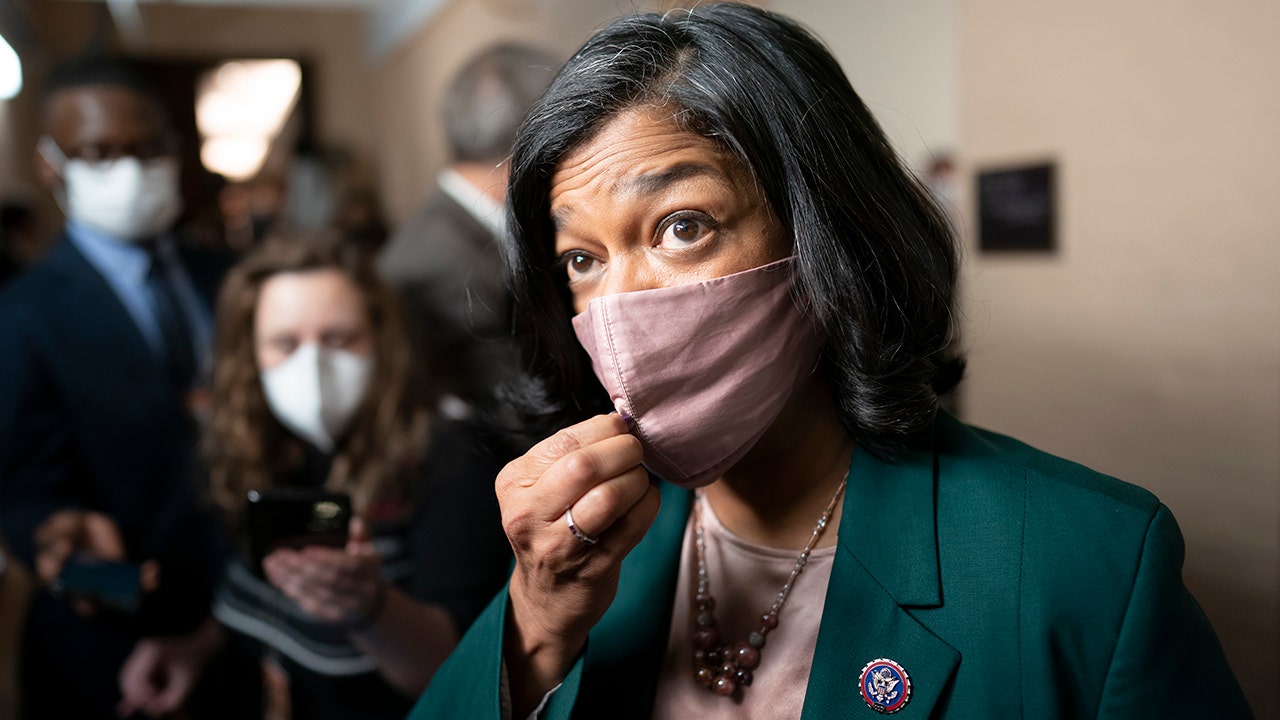
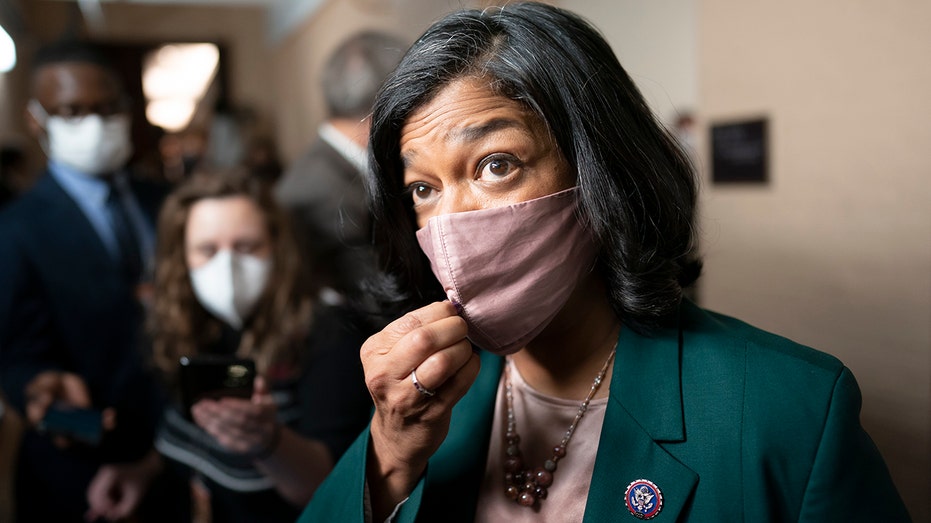
Rep. Pramila Jayapal, D-Wash., chair of the Congressional Progressive Caucus, updates reporters after meeting with Speaker of the House Nancy Pelosi and fellow Democrats as President Joe Biden’s $1.75 trillion domestic policy package remains in limbo (AP Photo/J. Scott Applewhite / AP Newsroom)

BIDEN’S SPENDING BILL COULD ADD $3T TO THE DEFICIT IF MADE PERMANENT, CBO SAYS

These programs count as temporary on the official CBO score for the bill, Goldwein said, but there’s a strong chance many of them get extended by a future Congress after people get used to them, running up the real cost of the bill. 

Jayapal argued this approach to understanding Democrats’ bill is incorrect. 

“Absurd for GOP to assume all programs continue for 10 years. We made tough choices to only fund certain programs for fewer years b/c top line number had to come down,” she said. “It is completely illogical to impute a score on a non-existent bill & shows GOP is just trying to kill it.”

JOE-MANCHIN-REMARKS-WASHINGTON-DC

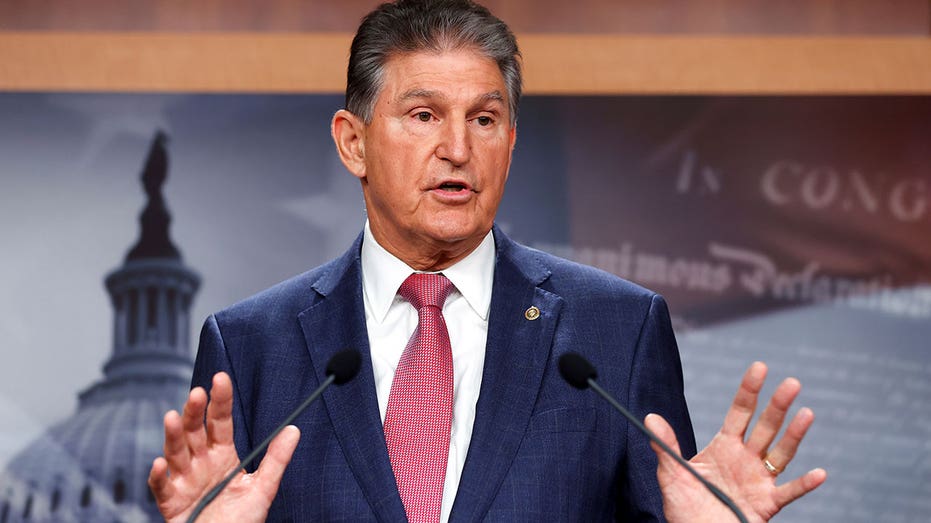
U.S. Senator Joe Manchin (D-WV) delivers remarks to reporters at the U.S. Capitol in Washington, D.C., U.S. November 1, 2021. (REUTERS/Jonathan Ernst / Reuters Photos)

CBO SCORE ‘BLOWS UP’ WHITE HOUSE LIE THAT BUILD BACK VETTER COSTS ZERO DOLLARS: MORABITO

Jayapal suggested that if members of Congress are scoring bills based on counterfactuals and not actual legislative text, maybe the CBO should “score Pentagon spending for the next 100 years, the GOP Tax Scam for 20 years” and more. Jayapal also said the reconciliation bill would save the federal government money over two decades. 

Democrats suggest that if they pass extensions to any of the programs in their reconciliation spending bill they would include additional taxes to pay for them in the future. But they would technically be under no obligation to do so. 

Meanwhile, Republicans are hammering the reconciliation bill as irresponsible federal spending right when Americans are being hit hard by inflation – and they’re leaning on moderate Sens. Joe Manchin, D-W.Va., and Kyrsten Sinema, D-Ariz., to block it. In fact, Sen. Lindsey Graham, R-S.C., said on “Fox News Sunday” it was Manchin’s idea to have the CBO score reconciliation as if it were permanent. 

A screenshot of Sen. Lindsey Graham from America’s Newsroom on November 10, 2021 (Fox News)

GET FOX BUSINESS ON THE GO BY CLICKING HERE

“You know why I wrote a letter to CBO? Because Joe Manchin came to me and he said, ‘I think this bill is full of gimmicks, that these programs won’t go away, Lindsey, and if you score them for 10 years, I think the bill will double,'” Graham said. 

“Well, it didn’t double, it was almost 2.5 times,” Graham added. “So, I hope this will be a showstopper for Build Back Better.” 

Democrats are shooting to pass the reconciliation bill through at least the Senate before the New Year. But with the days before Christmas dwindling, several outstanding policy disagreements and the Senate parliamentarian still combing through the massive bill to ensure it conforms with the Byrd Rule, that timeline appears increasingly likely to slip into next year. 

Fox News’ Megan Henney contributed to this report. 

Food is more expensive than it has been in decades

Restaurant prices spiked 5.8{21df340e03e388cc75c411746d1a214f72c176b221768b7ada42b4d751988996} over the 12 months ending in November without seasonal adjustments, the Bureau of Labor Statistics said Friday. That’s the largest 12-month increase since the year ended January 1982.

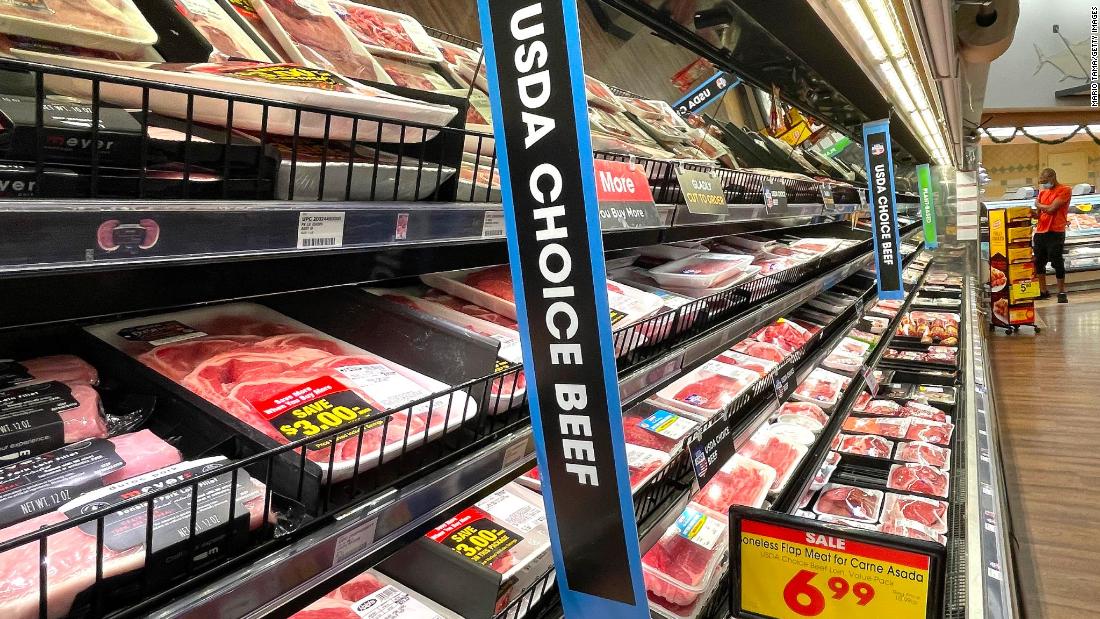
And unfortunately for those hoping to curb spending by turning to home cooking, grocery prices are also at record highs: They jumped 6.4{21df340e03e388cc75c411746d1a214f72c176b221768b7ada42b4d751988996}, the largest 12-month increase since December 2008. Beef had the most dramatic increase with a 20.9{21df340e03e388cc75c411746d1a214f72c176b221768b7ada42b4d751988996} spike in prices.

The sharp increases underscore the fact that restaurants and food makers are not immune to supply chain and labor pressures contributing to pricing increases across the board.

Yet they’ve found customers are willing to spend more. In fact, restaurants have been raising prices as their own food and labor costs rise, and so far, they say, consumers have accepted the hikes.

McDonald’s (MCD) said in October that it expects menu prices to be about 6{21df340e03e388cc75c411746d1a214f72c176b221768b7ada42b4d751988996} higher this year compared to last. The increase “has been pretty well received by customers,” CEO Chris Kempczinski said during an October analyst call. Chipotle also raised prices this year, yet it has seen its same-store restaurant sales grow.

Beyond restaurants, food manufacturers and grocers have faced higher costs for commodities, labor and transportation. Those costs have escalated further in recent months, leading manufacturers to pass some of them on to their retail customers — who in turn charge consumers a portion of those increases.

Higher prices at the grocery store will likely stick around into next year. Major manufacturers like Kraft Heinz (KHC) and Mondelez (MDLZ) have said that they plan to hike prices for their retail customers in early 2022.

That’s all allowed companies to pull back on or eliminate discounts, because demand is strong and they don’t want to run out of their limited supplies.

What got more expensive in November

While some food prices stayed flat or even fell from October to November, other items got more expensive in the period, according to the consumer price index.

Lettuce prices climbed 6.9{21df340e03e388cc75c411746d1a214f72c176b221768b7ada42b4d751988996} and fresh fruit went up 2.2{21df340e03e388cc75c411746d1a214f72c176b221768b7ada42b4d751988996} on a seasonally adjusted basis. Oranges, including tangerines, rose 2.4{21df340e03e388cc75c411746d1a214f72c176b221768b7ada42b4d751988996}. At the opposite end of the spectrum, treats like fresh coffeecakes and donuts jumped 3.5{21df340e03e388cc75c411746d1a214f72c176b221768b7ada42b4d751988996} in price.

Meat prices also continued to tick up: Pork prices grew 2.2{21df340e03e388cc75c411746d1a214f72c176b221768b7ada42b4d751988996}, with breakfast sausages up 2.7{21df340e03e388cc75c411746d1a214f72c176b221768b7ada42b4d751988996} and hot dogs 2.8{21df340e03e388cc75c411746d1a214f72c176b221768b7ada42b4d751988996}. Pork roasts, steaks and ribs rose 3.7{21df340e03e388cc75c411746d1a214f72c176b221768b7ada42b4d751988996}.

Some of these items could get even pricier. Hot dog, sausage and burger makers have warned retailers that they plan to increase prices for some frozen and refrigerated meats in January.
The hikes in food are part of a trend of increasing prices overall. Consumer price inflation, which includes gas prices and other categories, rose by 6.8{21df340e03e388cc75c411746d1a214f72c176b221768b7ada42b4d751988996} in the 12-month period ending in November, hitting its highest level in 39 years.

— CNN Business’ Nathaniel Meyersohn and Anneken Tappe contributed to this report.

New Virus Restrictions in Britain Worry Businesses

LONDON — On Thursday morning, a group of 50 called to cancel their holiday party booked for that evening at Luc’s Brasserie, a French restaurant in the financial district of Britain’s capital. That same morning, a group of 21 canceled their party too, also for Thursday night.

The previous night, Prime Minister Boris Johnson announced that stricter Covid measures were coming, and the impact was immediate for Darrin Jacobs, the owner of Luc’s. There had been a “multitude of cancellations,” he said.

But thanks to a waiting list of reservations, he said, the restaurant was still fully booked until Christmas. And many of the canceled bookings had optimistically rescheduled their celebrations for early next year.

“We won’t lose the business, we’ll just move the business on,” Mr. Jacobs said. But “it’s not easy because we’ve already bought food and moved staff around,” he said.

For months, businesses across Britain have been desperately trying to maneuver around supply chain disruptions, labor shortages and rising costs as they emerged from various stages of lockdown.

Offices reopened, which filled up commuter buses and trains; restaurants and pubs advertised to host holiday parties; and lines grew longer at city center coffee shops.

Now, the emergence of the fast-spreading Omicron variant has unexpectedly dealt those efforts a blow. The government has revived coronavirus restrictions that are likely to weigh on hospitality and travel businesses during the critical holiday season and put a dent in the economy.

“I don’t know where this is going to go next week,” Mr. Jacobs said. “I think this is a tip of the iceberg-type scenario and it may get a lot worse next week and, if that’s the case, we’ll really have to scale it back.”

For now, he’s still cautiously optimistic. But his business relies on people who work in nearby offices and walk to his restaurant in Leadenhall Market, especially several insurance companies. On Thursday, Mr. Jacobs heard that two large companies were closing their offices again.

In England beginning Friday, face masks will be required in most indoor public places including cinemas and theaters. Starting Monday, people who can work from home should. And starting in the middle of next week, passes showing vaccination or a recent negative Covid test will be required for large events and nightclubs, Mr. Johnson announced this week. The rules will be voted on in Parliament next week. Scotland, Wales and Northern Ireland have set their own measures, which are slightly stricter.

“Unless you go to a full or partial lockdown, the effect of the measures themselves will be rather small,” said Paul Mortimer-Lee, the deputy director of the National Institute of Economic and Social Research in London. “What will be hurting the economy is individuals’ responses.” People are likely to take more precautions to protect themselves from the virus, especially by socializing less.

While the rules are relatively light, for some businesses this will be an unwelcome retreat.

Before the Omicron variant was discovered, the British economy was losing some momentum while prices were rising rapidly, putting inflation at its highest level in nearly a decade. Gross domestic product grew 1.3 percent in the third quarter, down from 5.5 percent in the previous three months. And that growth was driven by spending on services, especially in hotels, restaurants and entertainment as the last of the major pandemic restrictions were lifted in the summer. In October, economic expansion slowed sharply, to just 0.1 percent from the previous month.

Now, there are early indications that restaurant reservations are declining and Christmas parties are being canceled.

Restaurants, cafes and shops primarily serving office workers were contending with the lost trade from hybrid working but had at least seen a notable return of workers. Some 70 percent of British workers said they had traveled to work at least some days each week in early December, according to the Office for National Statistics, up from about 50 percent earlier in the year, when the country was under a strict lockdown.

Sales at Pret A Manger, the coffee and sandwich chain whose shops tend to be clustered around office hubs and transport locations, only returned to prepandemic levels about two weeks ago. Now those sales are starting to slip again.

“Christmas has been canceled for many City shops, restaurants, pubs and other businesses that rely on footfall from workers in nearby offices,” Catherine McGuinness, the policy chairwoman of the City of London Corporation, which governs the capital’s financial district, said in a statement.

Her organization will encourage workers and businesses to follow the new rules but said the government needed to lay out a road map for lifting the restrictions again in the new year, Ms. McGuinness said.

The new measures will also complicate the next steps for the Bank of England. Policymakers at the central bank had been preparing to raise interest rates in response to inflation, provided unemployment remained low. Some analysts believed an increase could come as soon as next week. But the potential for Omicron to further slow the economy makes it harder to justify tightening monetary policy.

The extra uncertainty could dampen productivity and employment growth, according to Mr. Mortimer-Lee. It’s likely to make companies more cautious about hiring and investment, especially businesses that rely on face-to-face interactions, like restaurants. Also, high case numbers will keep children out of schools and parents away from their jobs.

“It’s those millions of individual decisions, rather than Boris Johnson’s decision, that’s going to affect the economy,” said Mr. Mortimer-Lee. “And none of it’s going to be good.”

Even before the latest measures, hotels were seeing about a fifth of their corporate bookings canceled, according to UKHospitality, an industry lobby group, after the government required travelers into Britain to take a Covid test within two days of arriving, and isolate until receiving the results. Christmas bookings weren’t as strong as they traditionally are for hospitality businesses in a quarter that usually brings in about 40 percent of the industry’s annual revenue.

And so, the industry is asking for relief from business rates (a type of tax on commercial properties), more grants, rent protection and an extension of the reductions on VAT, a sales tax. “Anything less would prove catastrophic,” Kate Nicholls, the chief executive of UKHospitality, said in a statement.

The latest measures have been particularly disappointing for nightclubs, one of the last businesses allowed to reopen earlier this year. The Night Time Industries Association said Covid passes have been damaging to their industry in the parts of Britain where they were already in place.

Michael Kill, the chief executive of the lobbying group, said businesses were experiencing a “honeymoon period” since reopening in the summer and were trying to rebuild cash reserves before the quieter months at the start of the year.

“We’re now seeing some concern around cancellations and ticket purchases hesitancy,” Mr. Kill said. “These sorts of things that are leaving people in a vulnerable position, because many of them stocked up and purchased and staffed for a busy Christmas period.”

The group accused the government of enacting the changes to draw attention away from public fury over accusations that the prime minister’s staff broke lockdown rules by holding an office party last Christmas.

“It feels that nightclubs and bars have been thrown under the bus by the prime minister for him to save his own skin,” Mr. Kill said in a statement on Wednesday.

Business News for Thursday, Dec. 9, 2021

Employees at a Buffalo-area Starbucks store have voted to form a union, making it the only one of the nearly 9,000 company-owned stores in the United States to be organized and notching an important symbolic victory for labor at a time when workers across the country are expressing frustration with wages and working conditions.

The result, announced on Thursday by the National Labor Relations Board, represents a major challenge to the labor model at the giant coffee retailer, which has argued that its workers enjoy some of the best wages and benefits in the retail and restaurant industry and don’t need a union.

The union was leading in an election at another store, but by a margin smaller than the number of ballots the union was seeking to disqualify through challenges. The challenges must be resolved by the labor agency’s regional director in the coming days or weeks before there is a result. Workers at a third store voted against unionizing, according to the board, though a union lawyer contended that some ballots had been delivered to the agency and not counted.

“Although it’s a small number of workers, the result has huge symbolic importance and symbols are important when it comes to union organizing,” John Logan, a labor studies professor at San Francisco State University, said in an email. “Workers who want to form a union in the United States are forced to take a considerable amount of risk, and it helps if they can see others who have taken that risk and it has paid off.”

The unionized employees, who are joining Workers United, an affiliate of the giant Service Employees International Union, received inquiries throughout the campaign from Starbucks workers across the country who said they were paying close attention and were interested in unionizing as well.

“I don’t think it will stop in Buffalo, whatsoever,” Alexis Rizzo, a worker at one of the stores and a leader in the organizing campaign, said at a news conference after the vote.

Workers cited frustration over understaffing and insufficient training when they filed for union elections at the stores in late August, problems that have dogged the company for years but which appeared to worsen during the pandemic. Such problems are not unique to Starbucks and have been problems for workers across the restaurant and retail industries for many years.

“We continue on as we did today, yesterday and the day before that,” Rossann Williams, Starbucks’s president of retail for North America, said in a letter to employees after the vote. “The vote outcomes will not change our shared purpose or how we will show up for each other.”

The election occurred through mail ballots that were due Wednesday. In November, workers at three more Buffalo-area stores filed the paperwork needed to hold union elections, but it was unclear when votes would take place for those outlets.

Starbucks responded to the union campaign with a sense of urgency. Throughout the fall, out-of-town managers and executives — even Ms. Williams — converged on stores in Buffalo, where they questioned employees about operational challenges and assisted in menial tasks like cleaning bathrooms.

In a video of a meeting in September viewed by The New York Times, a district manager from Arizona told co-workers that the company had asked her to go to Buffalo to help “save it” from unionization.

Several workers who support the union said they found the presence of these officials intimidating and, at times, surreal. They also complained that Starbucks had temporarily closed certain stores in the area, which they found disruptive, and said Starbucks had excessively added staff in at least one of the three stores that held elections. The workers said this had diluted support for unionization at the store.

“As of today we’ve done it in spite of everything that the company has thrown at us and we all know it has been an extensive anti-union campaign by Starbucks corporate,” Michelle Eisen, a barista at the Buffalo location that unionized who also helped lead the campaign, said at the news conference.

Former National Labor Relations Board officials have said that these actions by the company could be interpreted as undermining the “laboratory conditions” that are supposed to prevail during union elections and that they could serve as grounds for throwing out a result. Workers involved in the union campaign and a union lawyer indicated that they might challenge the result at the store where workers voted down the union.

A regional director of the labor board recently overturned a union election at an Amazon warehouse in Alabama on similar grounds.

Starbucks has said that it dispatched out-of-town officials and temporarily closed stores to help solve staffing and training problems and to remodel stores to make them more efficient. The company said that it added staff to deal with an increase in the number of workers calling in sick and that it had taken such steps across the country since the spring, when coronavirus infection rates dropped and stores became busier.

Ms. Williams, the North America president, said in an interview on Wednesday from Buffalo that she did not feel that the run-up to the vote had been especially contentious and that she had spent much of her time there this fall listening to employees (partners, in the company’s words) and addressing “the conditions that partners had pointed out.”

The key issue at the store whose vote was unresolved, near the Buffalo airport, was whether several workers who cast ballots were actually employed at the store. The union argues that they were employed at another store in the area and worked at the airport store for only a short period of time. The company said they were eligible to vote under the labor board’s rules.

The outcome could be important for determining the union’s leverage when it seeks to negotiate a contract. Under the law, an employer is obligated to bargain with a union in good faith, but there is no requirement that it actually agree to a contract, and the consequences of failing to bargain in good faith are limited.

“The incentives to resist bargaining are significant for the employer,” said Kate Andrias, a labor law expert at Columbia Law School. “If workers are able to win a good contract, it sets a precedent.”

Professor Andrias said that the ability to win a contract in such situations often hinged on the amount of economic pressure the union can exert, and that having a second unionized store could help in this regard.

Ms. Eisen, the worker at the store that unionized, said at the news conference that the workers would like to “offer the olive branch to the company and say, ‘Let’s put this behind us.’” She added: “Now is the time, let’s get to the bargaining table as quickly as possible.”

Starbucks has faced other union campaigns over the years, including one in New York City in the 2000s and one in 2019 in Philadelphia, where it fired two employees involved in organizing, a move that a labor board judge found unlawful. The company appealed the ruling and a decision is still pending.

Neither of those campaigns succeeded, but workers are unionized at Starbucks stores owned by other companies that operate them under licensing agreements. And workers at a company-owned store in Canada recently unionized.

A handful of the company’s early stores in Seattle had a union and were represented by the United Food and Commercial Workers in the 1980s. The union was decertified.

Business News for Dec. 9, 2021

WASHINGTON — Lawmakers of both parties came out swinging in a hearing on Wednesday with Adam Mosseri, the head of Instagram, expressing deep skepticism and anger toward the company for not doing enough to protect young users.

In a hearing held by a Senate subcommittee on consumer protection, lawmakers grilled Mr. Mosseri on internal research leaked by a whistle-blower that showed Instagram had a toxic effect on some teenagers. They pressed him to commit to share data with researchers on algorithmic ranking systems and to support legislation for stronger privacy and security protections for children online.

Even Instagram’s announcements this week on new safety tools for children were too little and too late, they said.

“Facebook’s own researchers have been warning management, including yourself, Mr. Mosseri, for years,” said Senator Richard Blumenthal, Democrat of Connecticut and chairman of the subcommittee. “Parents are asking, what is Congress doing to protect our kids and the resounding bipartisan message from this committee is that legislation is coming. We can’t rely on self-policing.”

The hearing is part of a growing effort in Washington to rein in the power of Silicon Valley’s biggest companies. Antitrust regulators are seeking to break up Google and Meta, the parent company of Facebook and Instagram, and lawmakers have introduced dozens of data privacy, speech and competition bills.

Calls for legislative changes have intensified in recent weeks, after a whistle-blower at Facebook leaked internal research that said Instagram led one out of three teenagers to feel worse about their body image and for as many as 16 percent of some teenagers in Britain to have thoughts of suicide. The documents obtained by the whistle-blower, Frances Haugen, often contradicted public statements made by Meta officials, who have long underplayed or rebutted criticism that Instagram harms the mental and emotional well-being of younger users.

“You better tell the truth,” Senator Amy Klobuchar, a Democrat of Minnesota, told Mr. Mosseri. “You’re under oath.”

Mr. Mosseri, 38, was appearing before Congress for the first time. He is a longtime executive at Facebook and is considered a close lieutenant of the company’s chief executive, Mark Zuckerberg. He joined the company in 2008 as a designer and gradually rose in the ranks to run the News Feed, a central feature of the Facebook app. In October 2018, he was named head of Instagram, weeks after the sudden resignations of the app’s founders, Kevin Systrom and Mike Krieger.

He told lawmakers that Instagram often had a positive role in the lives of teenagers, such as by helping them establish connections during difficult times. He tried to direct attention at rivals, noting that more teenagers use TikTok and YouTube. He also acknowledged the skepticism among members of Congress toward Meta.

“I recognize that many in this room have deep reservations about our company,” Mr. Mosseri said. “But I want to assure you that we do have the same goal. We all want teens to be safe online.”

On Tuesday, Instagram announced new safety features for children. Mr. Mosseri mentioned those changes in the hearing, which include tools like a “take a break” function that is meant to help limit time spent online. (TikTok has a similar function that appears when users are spending too much time on the app.)

But Senator Marsha Blackburn of Tennessee, the ranking Republican member of the subcommittee, said even the basic promises of privacy and security from the company had failed users.

This week, her staff set up an experimental account for a fictional 15-year-old and were surprised to find the profile automatically set to public exposure. Instagram says teenage accounts automatically default to the private setting.

Mr. Mosseri acknowledged the error and said Ms. Blackburn’s office exposed a flaw in Instagram’s controls that sets teenage accounts that were created on a web browser — and not on a mobile app — to public. “We will correct that,” Mr. Mosseri said.

Mr. Blumenthal’s office has received hundreds of calls and emails from parents about their negative experiences with Instagram, he has said. One parent recounted how her daughter’s interest in fitness on Instagram led the app to recommend accounts on extreme dieting, eating disorders and self-harm.

Mr. Blumenthal has homed in on the algorithms, which he called “800-pound gorillas in black boxes,” that push such recommendations.

Lawmakers, including Mr. Blumenthal and Ms. Blackburn, have proposed stronger data privacy rules aimed at protecting children and greater enforcement of age restrictions. They have also called for young users to be able to delete information online. Lawmakers have pursued similar legislation before, with little success. Though lawmakers often show bipartisan unity in the hearings, dozens of data privacy bills have been stymied by intense industry lobbying and partisan disagreement over how stringent laws should be.

Senator John Thune, a Republican of South Dakota, has introduced a bill that would force companies to reveal more about their algorithmic ranking system. He asked if Instagram would allow users to rank their content chronologically, instead of through opaque decisions based purely on engagement.

Mr. Mosseri said the company was working on the feature, which could be available next year.

Though Mr. Mosseri repeated his support for regulations, he demurred when asked about specific proposals. He said he hadn’t read a bill introduced by Mr. Blumenthal and other lawmakers that could hold Meta liable for hosting harmful content. He wouldn’t commit to give up completely on the idea of building a version of the Instagram app for users under the age of 13. And he didn’t directly answer questions as to whether victims should be able to sue Meta for hosting sex-trafficking content.

Child advocacy groups said Mr. Mosseri failed to provide any greater assurances that Instagram would prioritize child safety.

“Today’s hearing was just more of the same: evasions, empty promises, and too-little, too-late gestures aimed at forestalling congressional action instead of meaningfully addressing Instagram’s harmful business model and design choices,” said Josh Golin, executive director of Fairplay.

Leaders of the subcommittee said they would hold additional hearings, which may include more executives of Meta. Mr. Blumenthal said Mr. Mosseri’s vague commitment for “directional” support on laws “doesn’t cut it.”

“This industry has said it is in favor of government regulation but they have opposed specific measures with armies of lawyers and lobbyists and tons of money,” Mr. Blumenthal said.