Citadel Securities: how the Wall Street outsider became ‘the Amazon of financial markets’

It was in the late 1980s that Ken Griffin set his sights on what Citadel Securities would eventually become. An early trade with Susquehanna Investment Group paid out less than the young Griffin was expecting. One version of the story has him sitting on the telephone in his Harvard dorm room, complaining to the Susquehanna trader and vowing to start a competing business to change the entire market, according to former employees and acquaintances.

Whether apocryphal, few would dispute that Griffin — the founder of Citadel Securities and its related $35bn hedge fund Citadel — has fulfilled this vow.

The initial ideas that would evolve into Citadel Securities took life in the early 2000s on a separate floor of the hedge fund’s old Chicago headquarters. Since then it has grown into one of the largest trading houses in the world, involved in roughly one in four of all US stock trades and nearly 40 per cent of all those involving individual retail investors.

This year, it took in outside investment for the first time. Venture capitalists Sequoia and Paradigm bought 5 per cent of the company for $1.15bn, valuing it at $22bn. The new investors are expected to advise on expansion into new markets, including cryptocurrencies, and the deal is seen as a precursor to Citadel Securities eventually filing for an initial public offering.

Should it take that path, it would bring it on to the same public equities markets that it now dominates. It would also put it even more firmly in the crosshairs of the Securities and Exchange Commission. The US regulator has homed in on Citadel Securities’ dominance as a market maker, the term for trading houses that sit in between transactions both buying and selling to investors.

Citadel monthly market share ({21df340e03e388cc75c411746d1a214f72c176b221768b7ada42b4d751988996}) G0139X_22X

A public listing would also open it up to the Reddit traders who targeted Citadel Securities in 2021 as they waged a self-styled war against establishment players and financial behemoths.

“What Citadel Securities offers is the value of consistency,” says Chris Nagy, founder of the advocacy group Healthy Markets Association. “They are market dominators. But there is no such thing as a free lunch.”

Yet this colossal enterprise is still far from being a household name and was until recently seen as something of a Wall Street outsider, having pioneered an electronic overhaul of trading which has displaced the traditional banking model of financial markets that preceded it.

“We have accomplished a lot and there has been a lot of winning but I don’t think there is any point where we would say we have won,” says Matt Culek, chief operating officer of Citadel Securities. “There is always more to do, always more to build, always more to achieve.”

Playing to win

When he joined Citadel in 2004, Matthew Andresen was given the book Good To Great by Jim Collins, about how companies excel. Other new starters received Hardball by George Stalk and Robert Lachenauer, which carries the tagline: “are you playing to play, or playing to win?”

It was part of an effort by Griffin to imbue a mentality of relentless, almost military style improvement in his staff, according to multiple past and present employees. Some hated it, contributing to periods of high turnover. For others, Griffin is the ultimate leader.

“A little part of me still misses it,” says Andresen. “Ken has a way of getting more out of you than you knew was there.”

Andresen joined as co-head of a small group with Jason Lehman, which had already begun developing the quantitative and predictive trading tools necessary to become a fully electronic market maker in equity options.

View looking up the steel and glass headquarters of Citadel Investment Group in Chicago. Citadel Securities, headquartered in Chicago, was spun out in 2008 around the time the financial crash nearly sank Citadel hedge fund
Citadel Securities, based in Chicago, was spun out in 2008 around the time the financial crash nearly sank the Citadel hedge fund © Tim Boyle/Bloomberg

The business moved to a sectioned-off room on the 37th floor of Citadel’s headquarters on Dearborn Street in Chicago, separated from the rest of the hedge fund by a double height wall of sheet rock. It is the same office it occupies today, only now it takes up 10 floors and employs 1,200 people globally.

Lehman and Andresen helped build Citadel’s systems, connecting them to major US exchanges on one side, and on the other hundreds of brokerages to connect with investors. The two remain partners today at their own trading company, Headlands Technologies.

“Citadel was always an excellent, world-leading quantitative shop in terms of research acumen,” says Andresen. “What Ken felt had changed was that markets were becoming more electronic and technology driven. Then it’s more about technology and research prowess rather than about knowing people and being part of the club.”

That core thinking remains at Citadel Securities today and has been at the heart of a revolution in the way financial markets function, spreading from derivatives to stocks and currencies and into fixed income, such as US government debt.

Superfast, cheap communications technology has overlapped with a regulatory drive for more competition and transparency. The company’s eager embrace of the changes allowed it to adapt far quicker than the investment banks that once attempted to keep it out of their club.

Matt Andresen sits at a desk with two other men preparing to testify before a House Subcommittee on Capital Markets, Insurance, and Government Sponsored Enterprises, in 2005. Andresen,  who helped build Citadel’s systems, said ‘Ken [Griffin] has a way of getting more out of you than you knew was there’
Matt Andresen, left, who helped build Citadel’s systems, says: ‘Ken [Griffin] has a way of getting more out of you than you knew was there’ © J Carrier/Bloomberg

“The banks have been left behind,” Griffin told a conference in Florida in 2018. “When Citadel [Securities] trades more than Goldman Sachs in the equity market every day by a multiple, that’s a tough place for Goldman Sachs to be.”

Around the time that the 2008 financial crisis almost sank the hedge fund, Citadel Securities was spun off having experienced rapid growth in just a few years.

Peng Zhao, who joined Citadel in the mid-2000s and has run Citadel Securities since 2017, says Griffin’s influence is evident through the culture of the business, even if the founder is no longer involved in the “day to day” running of a company in which — according to regulatory disclosures — he owns a stake of at least 75 per cent.

“We don’t try to be all things to all people and we don’t apologise for that,” says Zhao. “Much of how I approach things, much of how I value things . . . I learned from Ken.”

One way Citadel Securities trades in equity markets is by paying brokers like Robinhood a fee to receive retail investors’ orders, competing with the likes of Virtu — the publicly traded market maker — and Susquehanna to trade those orders at or better than current market prices. It’s a controversial practice known as payment for order flow.

Citadel Securities embrace of technology under founder Ken Griffin (pictured being interviewed in a television studio) allowed it to adapt far quicker to changes in financial markets than the investment banks
Citadel Securities’ embrace of technology under founder Ken Griffin allowed it to adapt far quicker to changes in financial markets than the investment banks © Ryan Muir/The New York Times/Getty

Once the order is received, it offers the market maker unique information unavailable to its rivals. It is able to use this, alongside a broad array of other market data, to compute how best to price trades and maximise profits.

This greater certainty of profitability reduces its risk. With less risk it is able to reduce the cost of trading for retail investors as well, taking less profit on each individual trade so that it can build market share. Many brokers now offer commission-free trading, in part because of the market maker’s ability to still turn a profit from tiny margins.

In 2018, Griffin argued this also created safer markets. “We are able to understand the price of literally thousands of securities simultaneously and where should price be on any one security given the mosaic,” he said. “A number of banks that don’t have the capabilities that we have in artificial intelligence, machine learning, [and] modern predictive analytics can’t maintain price integrity in periods of chaos.”

Yet, some argue that through speed and now dominance Citadel Securities has helped create an unlevel playing field, something Griffin has previously denied. However, even some of its fiercest critics accept that since the company started, US equity trading has been opened up to a broader audience with a lower cost of trading, even if they disagree with how it has been done.

Citadel Securities in numbers

$22bn

Company value based on Sequoia and Paradigm’s purchase of 5{21df340e03e388cc75c411746d1a214f72c176b221768b7ada42b4d751988996} for $1.15bn in January

$6.7bn

In net trading revenues in 2020, according to people familiar with its performance

7.4bn

Trades executed for retail investors in one day in 2021

“It is a win at all costs mentality,” says one industry veteran. “[Griffin] firmly believes the fastest firms should win . . . The problem with that is that any one who is slightly slower loses . . . The fastest firm winning means that you are winning by an asymmetry of information that you gain with that speed.”

S&P Global Ratings noted in December that Citadel Securities’ “complex systems and algorithms” created elevated operational risk, even if it has “strong risk-management capabilities”.

Citadel Securities settled charges with US regulators for $22m in 2017 that it misled brokers over how it priced their trades between 2007 and 2010. In July 2020, US industry watchdog the Financial Industry Regulatory Authority, fined it $700,000 for trading ahead of customer orders. In March 2021 it paid $275,000 for reporting errors and two days after Christmas it paid a further $225,000 — split across 13 exchanges — related to poor risk management resulting in “erroneous trades”. In each case it neither admitted nor denied wrongdoing.

Jamil Nazarali, head of business development at Citadel Securities, says there is a stark difference between Griffin’s willingness to tolerate trading risk compared to regulatory risk. “We have so little tolerance for regulatory risk,” he adds.

Clashing with the ‘Redditors’

Early in February 2020, before Covid-19 had been defined as a pandemic, the S&P 500, America’s benchmark stock index, was trading close to an all-time high. By the end of March, Citadel Securities had set up a quarantined office in the ballroom of the Four Seasons hotel in Palm Beach, Florida in response to the crisis.

The sheer volume of trading — both as markets fell in March and as they rose through the recovery — created a windfall for Citadel Securities, which profits more from the volume of trading rather than the direction it is going in. The company ended 2020 with net trading revenues of more than $6.7bn, according to people familiar with its performance.

Just a few weeks later the company was thrust into the national spotlight. A surge in trading, fuelled initially by retail investors on social media, boosted a handful of unfashionable listed companies. The sheer amount of trading in so-called “meme stocks” such as retailer GameStop and cinema chain AMC caught many brokers off guard. Some, notably Robinhood, were forced to curb trading to cope with the demand flooding their systems.

Private investors, many of whom congregated on sites like Reddit, watched as stock prices fell while they were unable to trade. Their anger turned to the markets’ biggest wholesale broker — Citadel Securities.

Robinhood, founded by Baiju Bhatt and Vlad Tenev (pictured walking down Wall Street),  was forced to curb trading last January to cope with the demand flooding its system during the ‘meme stock’ craze
Robinhood, founded by Baiju Bhatt and Vlad Tenev, curbed trading last January to cope with the demand flooding its system during the ‘meme stock’ craze © Eugene Gologursky/Getty/Robinhood

At a Washington hearing into the “meme stock” episode, Griffin made little secret of his company’s success from the stock market fever. On one day alone, Citadel Securities traded 7.4bn shares for retail investors, more than the entire industry’s average daily volumes in 2019, he said. Citadel Securities ended 2021 with record trading revenues, surpassing 2020, says Culek.

This success helped make it an outsized villain in the minds of retail investors — especially those on sites like Reddit.

Some investors accused brokerages of conspiring with the market maker to prevent them from trading shares. In the aftermath of the meme stock mania, Griffin told the House financial services committee that Citadel Securities had not pressured Robinhood into restricting trading, nor had it had any prior knowledge that the broker was going to do that.

A subsequent SEC report came down on Citadel Securities’ side. Nevertheless it has led to closer attention from Gary Gensler, chair of the SEC, who is concerned over the dominance of Citadel Securities and a few other firms including Virtu, warning that healthy competition in the markets may be at risk.

“Market share by volume traded is not necessarily a proxy for power,” says Culek. “That’s a proxy for winning most frequently in fair competition.”

Gensler, however, appears to be unconvinced. He told the US Senate banking committee in September that payment for order flow, together with exchange rebates, “may present a number of conflicts of interest”. He later hammered home his point telling CNBC that when trading is bought and sent to wholesalers, “they have information that the rest of the market may not have, at least for a short period of time. And even milliseconds matter in these markets”.

Publicly, Griffin appears unmoved by Gensler’s stance. “If you’re going to tell me that by regulatory fiat one of my major items of expense disappears, I’m OK with that,” said Griffin in October, referring to payment for order flow.

“Citadel [Securities] is a convenient piñata,” says Doug Cifu, chief executive of Virtu. He believes much of the interest in the company and Griffin by both retail investors and politicians stems from politics, noting that Griffin is one of the largest Republican donors in the country.

Yet, there may be scope elsewhere for Griffin and Gensler’s interests to align.

Two senators pictured talking to  SEC chair Gary Gensler, right, who told a US Senate banking committee in September that payment for order flow, together with exchange rebates, ‘may present a number of conflicts of interest’
SEC chair Gary Gensler, right, told a US Senate banking committee in September that payment for order flow, together with exchange rebates, ‘may present a number of conflicts of interest’ © Bill Clark/Pool/AP

The deal with venture capital groups Sequoia and Paradigm is seen to be more about strategic direction than the cash involved. Paradigm, for instance, specialises in helping disruptive crypto companies.

Gensler is considering new regulation to bring oversight to the crypto market, and Citadel Securities — despite Griffin being critical of the market in the past — has a record of profiting from regulatory change. “As that regulatory certainty comes we expect to be a major market maker [in crypto],” says Nazarali.

It marks the latest chapter in a story that stretches back 30 years.

Susquehanna declined to comment on the original trade that riled Griffin all those years ago, though Jeff Yass, the company’s founder, made light of it a few years ago, saying that if he had known what Griffin and Citadel Securities would become he would have made sure the young upstart was paid more, according to people familiar with the joke.

“Citadel Securities is the Amazon of the stock and options markets,” says Yass, likening the two for both having high volumes and low prices. “They’ve saved the investing public untold billions of dollars.”

Additional reporting by Miles Kruppa in San Francisco and Eric Platt in New York

Wall Street banks set to report record profits for 2021

Wall Street’s biggest banks this month are established to report report gains for 2021 many thanks to bumper financial investment banking fees and decreased-than-anticipated losses on financial loans throughout the pandemic, with analysts cautioning it may well take many years to repeat these stellar earnings.

Citigroup and JPMorgan Chase are the first large banks to put up fourth-quarter outcomes, reporting on January 14. They are adopted by Goldman Sachs on January 18, and then Morgan Stanley and Financial institution of America on January 19.

Of these, analysts forecast all but Citi will report their maximum-at any time comprehensive-yr gains, according to estimates compiled by Bloomberg and historic earnings knowledge from S&P Money IQ.

“You may have to go all the way out to 2024 before earnings are better than they had been in 2021,” mentioned Matt O’Connor, head of large-cap lender analysis at Deutsche Lender.

Line chart of Net income in $bn showing Large US banks set for record profits in 2021

Yet, the prospect of desire fee rises by the Federal Reserve in 2022 is feeding optimism that banking companies could be set for one more strong 12 months.

“We be expecting lender stocks to keep on to outperform the industry in 2022,” Jason Goldberg, an analyst at Barclays, wrote in a be aware to consumers this week.

Earnings in 2021 were being flattered by releases of reserves banks had established apart to address probable losses from financial loans which they feared could change sour owing to the pandemic.

Losses have so significantly proved far fewer prevalent than feared. Goldman analysts estimate the 7 major financial institutions it addresses, which involve JPMorgan and Lender of The united states, have now launched $36bn of the $50bn they had to begin with allotted in anticipation of mortgage losses.

Financial institutions have also benefited from blockbuster investment banking costs, with world wide mergers and acquisitions in 2021 hitting their greatest degrees because documents.

“People don’t imagine that, notably the cost-based money markets enterprises, these kinds of degrees knowledgeable in 2021 are necessarily regular,” claimed Devin Ryan, an analyst with JMP Securities.

Financial institutions so much have been working with gains to invest in technological know-how, fork out bonuses and obtain again their possess stock.

Right after these kinds of a large yr, investors are questioning regardless of whether 2021 represented “peak earnings” for massive banks, in accordance to Richard Ramsden, banking analyst with Goldman Sachs.

“What buyers are trying to figure out is, has the industry overpriced or underpriced the rate optionality that’s been embedded into lender shares?” Ramsden stated.

Right now the marketplace is pricing in another fantastic yr for banking companies. US lender shares rose 35 for every cent in 2021, according to Deutsche Financial institution analysts, outperforming the S&P 500, and have surged again in the 1st couple times of 2022.

Line chart of {21df340e03e388cc75c411746d1a214f72c176b221768b7ada42b4d751988996} gains showing Banks stocks outperformed broader market in 2021

Traders are betting increasing fascination charges will resuscitate earnings banking institutions make from loans. Financial loan desire, which was sluggish in 2021 amid history amounts of authorities stimulus, has also demonstrated signals of improving, current Fed facts showed.

Analysts predict a greater proportion of earnings from loans rather of the launch of mortgage reduction reserves would garner a much better valuation for lender shares from the market place, even if whole earnings come in lessen for the calendar year.

“It is a honest place that 2022 is variety of a changeover yr wherever underlying earnings are in all probability finding greater but noted earnings are heading down,” O’Connor stated.

Additional desire for loans in a higher amount ecosystem would also allow financial institutions to get a lot more out of the huge foundation of deposits which swelled all through the pandemic. At JPMorgan, the largest US financial institution by property, deposits rose a lot more than 50 for each cent from the stop of 2019 to September 2021 to $2.4tn. 

“When prices start out likely up, reported Keith Horowitz, US banking companies analyst at Citigroup, “that’s when you definitely commence to see the authentic gain of these deposits.”

The most accurate analysts on Wall Street in 2021

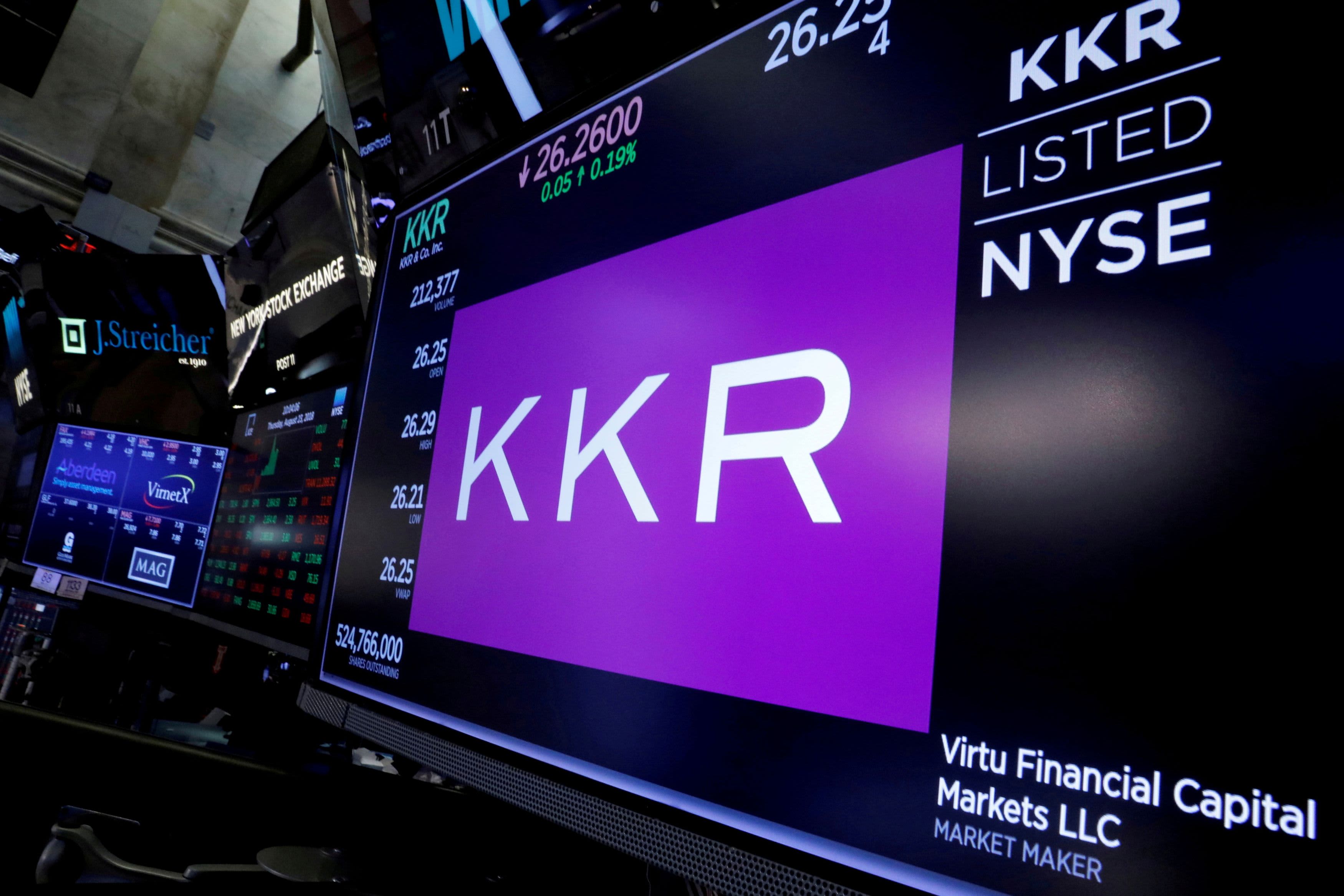
A KKR logo is displayed on the floor of the New York Stock Exchange (NYSE), August 23, 2018.

Brendan McDermid | Reuters

Trading stocks in the capital markets in 2021 has not been an endeavor for the faint of heart.  

The year could be characterized by exciting events like a powerful influx of retail traders, or by various cryptocurrency-linked stocks rising with bitcoin prices, or by an anticipated economic reopening driving optimism.  

On the flip side, traders involved with 2021’s stock market may recall other less fortunate macro trends. They include uncertainty over Federal Reserve policy, semiconductor and component shortages, lack of available labor, and of course, the ongoing shipping logjams affecting the supply chain.  

While 2021 began as an economic reopening story, as new variants emerge and continue to spread across borders, it appears that the theme at end of this year is quite different.  

TipRanks, a financial data aggregation website, provides a multitude of tools for everyday investors to get a grip on both the bigger picture and the daily details. One of TipRanks’ notable features is its analyst pages, which this year have organized over 174,000 stock ratings into a digestible format.  

The top analysts have amassed a collective success rate of 82.7{21df340e03e388cc75c411746d1a214f72c176b221768b7ada42b4d751988996}, as well as an aggregated average return of 13.95{21df340e03e388cc75c411746d1a214f72c176b221768b7ada42b4d751988996} on their stock picks.

These figures are far beyond all the other analysts, who delivered an average success rate of 48.02{21df340e03e388cc75c411746d1a214f72c176b221768b7ada42b4d751988996}, and an average return per rating of 0.16{21df340e03e388cc75c411746d1a214f72c176b221768b7ada42b4d751988996} in 2021.  

To this end, TipRanks compiled a comprehensive list of the five best-performing analysts of 2021. The analysts’ performance was measured by looking at rolling three-month periods, and ordered based on a weighted scale of the analysts’ success and average return rates.  

MKM Partners, John Gerdes  

Topping our list this year is John Gerdes of MKM Partners, who is the acting managing director of the firm. Through his highly accurate stock ratings, Gerdes has achieved the best rank, weighted by his ratings success and average return percentages.

Before joining MKM, Gerdes spent time in up-close contact with the energy sector as a petroleum engineer at Shell (NYSE: RDS.A), before moving into a more finance-related field as an associate and vice president at Jefferies Group. After that, he worked as a managing director for about 19 years at several investment firms, including Canaccord and KLR. 

Gerdes’ strong financial background has no doubt aided in his success rate, which currently sits at 93{21df340e03e388cc75c411746d1a214f72c176b221768b7ada42b4d751988996}. Having said that, being correct on nearly all of one’s stock ratings is only half the battle. The second part is securing a productive average return rate, and Gerdes’ lands at 24.9{21df340e03e388cc75c411746d1a214f72c176b221768b7ada42b4d751988996}.

When examining the most profitable of his many ratings, we identify his impressive end-of-Q3 stance on Devon Energy (NYSE: DVN). From Aug. 9 to Nov. 9, Gerdes stood by his bullish sentiment, and for good reason. The exploratory hydrocarbon company climbed in valuation by 68{21df340e03e388cc75c411746d1a214f72c176b221768b7ada42b4d751988996} during that three-month period, only to peak a bit more soon thereafter. Its momentary run-up fit well into Gerdes’ projections, and the stock has actually declined about 10{21df340e03e388cc75c411746d1a214f72c176b221768b7ada42b4d751988996} to-date since then.  

Despite his impressive quarter, the analyst has remained bullish on DVN. In his most recent report, he cited Devon’s $1 billion share repurchase program, as well as its nearly 5{21df340e03e388cc75c411746d1a214f72c176b221768b7ada42b4d751988996} increase in production of natural gas liquids and other hydrocarbons.  

Moreover, Gerdes explained that “from 2021 through 2026, Devon should generate ~$18.7 billion of free cash flow (FCF), which is two-thirds of the company’s market capitalization.” This kind of high free cash flow can raise operating leverage and provide for a competitive edge over DVN’s peers.  

Gerdes stood by his hypothesis, rating the stock to a buy, and raising his price target to $50 from $49.  

KeyBanc, Leo Mariani  

After 20 years in the energy sector, KeyBanc Capital Market’s managing director and equity research analyst, Leo Mariani, has made it to second place on our 2021 list.  

Before retaining his current title, Mariani worked at several high-profile investment firms. These include Jefferies Group, RBC Capital Markets, and NatAlliance Securities. After graduating from Brown University, he started his professional career as an investment banker at UBS and PaineWebber.  

Leo’s multi-decade experience as a CFA charter holder has allowed him to outperform much of his competition this year. Of his 2021 stock picks, 81{21df340e03e388cc75c411746d1a214f72c176b221768b7ada42b4d751988996} were correct in their projections. When averaged together, they returned 16.2{21df340e03e388cc75c411746d1a214f72c176b221768b7ada42b4d751988996} each.  

Of course, this is an average return, so how did the analyst’s most successful rating turn out? On Jan. 7, 2021, Mariani opened a bullish rating on SM Energy (NYSE: SM). Over the next three months, SM climbed an impressive 110.1{21df340e03e388cc75c411746d1a214f72c176b221768b7ada42b4d751988996}.  

As an exploratory hydrocarbon firm, SM had a rough 2020. Global economic activity ground to a halt due to lockdowns to fight the Covid-19 contagion, and as a result oil and natural gas prices fell off a cliff. From mid-February to mid-March of that year, the stock lost about 85{21df340e03e388cc75c411746d1a214f72c176b221768b7ada42b4d751988996} of its value, only to recover its losses by the time Mariani made his call. Astoundingly, the stock has come back from its early pandemic lows of $1.19, and is now trading around $26.50.  

Throughout SM’s massive bull run, Mariani has maintained a staunch position of optimism. He has yet to downgrade his rating, noting that he still believes in further upside. 

In his most recent published report, the analyst detailed that while the stock’s returns are significantly exposed to the volatility of oil commodity prices, “SM has solid hedge protection in 2021 and 2022, which helps to mitigate commodity price risk.” Moreover, he mentioned that the firm itself has strong and improving liquidity, and he expects it to generate free cash flow in 2022.  

Mariani’s latest rating on the stock was again a buy, and included a price target of $42 per share.  

RBC Capital, Scott Hanold  

Placing third on our list is the managing director of energy research at investment bank RBC Capital Markets.  

Scott Hanold has been involved in the world of finance for over 26 years, starting off as an analyst at U.S. Bank, a stint as an auditor at Allianz, then spending a couple years as a financial analyst at Minnesota-based Musicland Group retailer, and finally settling into a career at RBC in 1999.  

After analyzing his stock ratings, we have determined his success rate to be a remarkable 79{21df340e03e388cc75c411746d1a214f72c176b221768b7ada42b4d751988996}, and his average return per rating to clock in at 18.3{21df340e03e388cc75c411746d1a214f72c176b221768b7ada42b4d751988996}.  

When taking a deeper look, one can see the extent of his stock-selecting successes.

Hanold’s top-performing rating was Callon Petroleum (NYSE: CPE), to which he assigned a bullish buy rating on Jan. 18, 2021. By April 18, Callon had risen a considerable 121.6{21df340e03e388cc75c411746d1a214f72c176b221768b7ada42b4d751988996}. The second highest of the top picks on our list, this return is something any investor would dream about.  

It appears Hanold has taken notice of the run-up in energy prices over the past quarter, and adjusted his trajectory for CPE accordingly. At the time of the opened initial rating, the analyst assigned a price target of $20. This is now well below the current price per share of Callon, which closed trading Thursday at $47.84.

Hanold recently reported on the stock, summarizing that, “A healthy cost structure and efficient maintenance capital program set up robust FCF generation above peers over the next few years. However, with leverage still above the peer average, we anticipate shareholder returns remain a ways off until debt levels become more manageable.” 

Moreover, the stock can become less favorable if poor-performing commodity prices persist, the potential for which is high, given the emergence of new Covid-19 variants.  

As the year wore on, Hanold has stepped back from his bullishness and now maintains a more neutral stance on Callon. He has more recently maintained a hold rating on the stock, and provided a price target of $72.  

Oppenheimer, Chris Kotowski  

Coming in at No. 4 on our list of the top performing analysts for 2021, is Oppenheimer’s managing director and senior analyst of large-cap banks and wealth management firms. Chris Kotowski is no stranger to outperforming the market, as he has been rather successful at his various roles at Oppenheimer and formerly Leerink Swann & Co., now known as SVB Leerink. 

After an initial 11 years at Oppenheimer, the analyst moved to SVB Leerink for five years, eventually returning to the investment bank where he began his career. Since then, Kotowski has been hard at work, and now the fruits of his labor have paid off.

His stock ratings this past year have been successful 85{21df340e03e388cc75c411746d1a214f72c176b221768b7ada42b4d751988996} of the time, and have returned him an average of 10.4{21df340e03e388cc75c411746d1a214f72c176b221768b7ada42b4d751988996} on each one.  

With so many ratings to examine, we delved into his most profitable ones.

Over the three-month period of Jan. 12 to April 12, Kotowski returned more on a rating than the S&P 500 has year-to-date.

To start the year, he assigned a well-advised buy rating to investment firm KKR & Co. (NYSE: KKR), and he did not disappoint. During those 90 days, KKR rose 29{21df340e03e388cc75c411746d1a214f72c176b221768b7ada42b4d751988996}, driving up Kotowski’s average return metric.  

Since his rating, KKR has continued its rise in a steady fashion. The stock closed trading Thursday at $74.77. This price action has thus far been in-line with Kotowski’s current buy rating and price target of $73. 

KKR is considered by Oppenheimer to be an alternative asset manager operating in three key sectors: private equity, real assets, and credit.

This past quarter, Kotowski delivered an updated hypothesis on the asset manager, asserting that, “there is significant upside to distributable earnings over time as there is ample room for the real asset and public market platforms to grow, balance sheet investment to be monetized and positive outlook regarding base management fee growth on funds associated with the next-generation flagships and other associated strategies.” 

Jefferies Group, Randy Giveans  

Landing the fifth and final spot on our list is Randy Giveans, also known as Jefferies’ senior vice president of equity research in the field of energy maritime companies. Giveans’ research has led him to high returns on his stock ratings, not the easiest task considering the difficulties experienced by the shipping industry throughout this past year.  

Before he joined the investment bank, Giveans was employed for three years at Continental Airlines as a financial analyst, eventually being promoted to senior financial analyst for corporate finance.  

Despite this year’s maritime challenges, such as massive shipping logjams at ports, an undersupply of containers, and rising fuel costs, Giveans has been able to carve out a strong success rate of 76{21df340e03e388cc75c411746d1a214f72c176b221768b7ada42b4d751988996} with his maritime stock picks. Additionally, they have resulted in an average return of 22.7{21df340e03e388cc75c411746d1a214f72c176b221768b7ada42b4d751988996}.  

Of all his marine-based choices this year, the most profitable was on Navios Maritime Partners (NYSE: NMM). Initiated back on Jan. 8 and altered three months later on April 8, Giveans netted a whopping 135.50{21df340e03e388cc75c411746d1a214f72c176b221768b7ada42b4d751988996} return on the shipping and seafaring logistics stock. What is particularly impressive is his timing, as its valuation peaked soon thereafter.  

Since then, Giveans has turned to his buy rating on NMM. He most recently reiterated a price target of $52 per share for the tanker vessel owner and operator stock.  

More recently, the stock has seen significant pullback, and thus Giveans has reiterated his buy rating.

In a Dec. 8 report, he wrote that fuel prices should balance out with rising supply, which would help the tanker industry. He elaborated on this hypothesis, adding that, “Management believes 3Q21 likely marked the bottom for the tanker market as there were significant crude and products draws in the US, Asia, and Europe, putting downward pressure on seaborne transport demand and rates.”  

If European gas firms are currently operating with low supply, they will require companies like Navios to replenish their inventories.  

Top Wall Street analysts say buy Rivian and Marvell

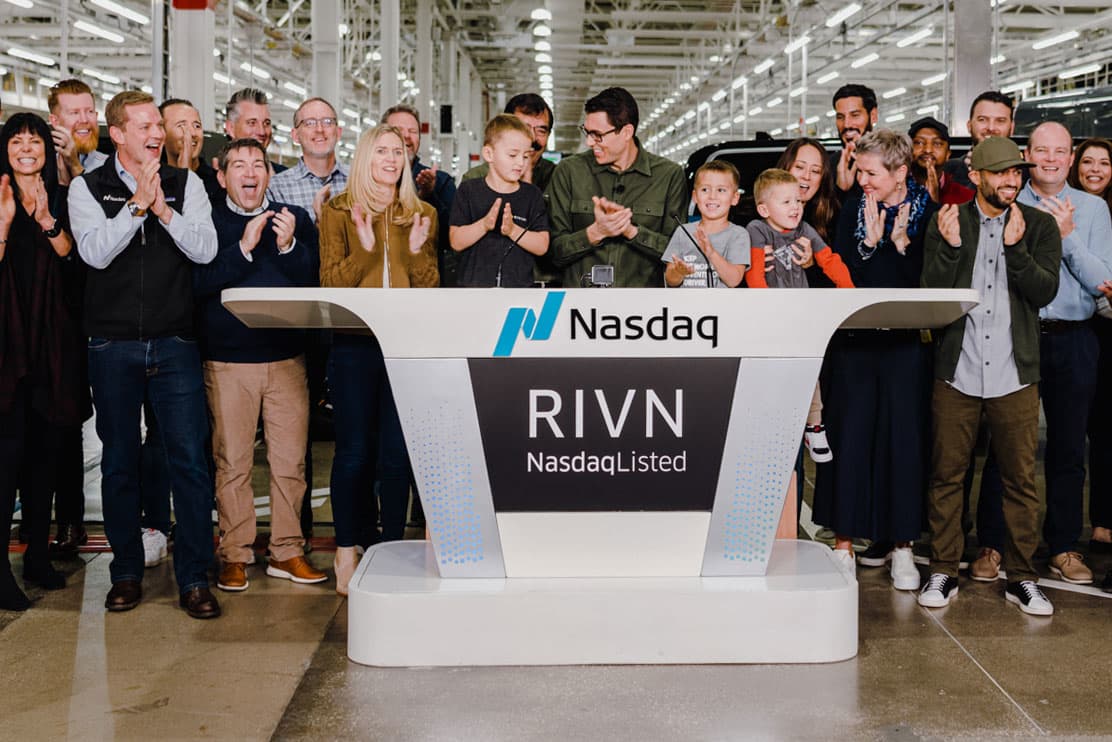
RJ Scaringe and team on opening day at Rivian’s manufacturing campus in Normal, IL.

Source: Rivian

The market volatility in recent weeks is enough to make even the most experienced investors worried, particularly as they contend with the omicron Covid variant and the prospect of tighter monetary policy from the Federal Reserve.

Wall Street’s top analysts are looking past the short-term tumult. These five stocks are potential long-term winners, according to TipRanks, which tracks the best-performing stock pickers.  

Marvell  

While the semiconductor sector has been benefitting greatly from the shift toward data centers and a digital economy, Marvell Technology (MRVL) is poised to capitalize. The semiconductor developer recently smashed its quarterly earnings, and analysts have taken a more bullish stance on its multi-year outlook. (See Marvell Risk Factors on TipRanks) 

Hans Mosesmann of Rosenblatt Securities published an upbeat report on the stock, noting that the firm saw sales growth over 30{21df340e03e388cc75c411746d1a214f72c176b221768b7ada42b4d751988996}, as well as a beat and raise on its guidance. Further, Marvell has mitigated supply chain impacts thus far.  

Mosesmann rated the stock a Buy, and raised his price target to $120 from $100.  

The analyst noted Marvell is experiencing robust demand in “all key infrastructure markets (DC, Carrier, Enterprise/Networking, and Auto/Industrial), with all of them inflecting on new transitions with 5nm-based application-specific integrated circuit/merchant silicon solutions in 2H22.” These chips are precisely what the company focuses on, and their applications are anticipated to “grow sequentially” moving forward, Mosesmann said.  

Calling the stock a “favorite secular idea,” the analyst stated that over the next few years “the company sees a step up and incremental revenue from cloud optimized silicon design wins, the ramp of 5G and increased dollar content, the increase in revenue of Automotive Ethernet conductivity, and the ramp of PAM4 [pulse amplitude modulation with four levels] and ZR products to support strong revenue growth.” 

Financial aggregator TipRanks currently places Mosesmann as No. 6 out of more than 7,000 professional analysts. He has been successful on his stock picks 81{21df340e03e388cc75c411746d1a214f72c176b221768b7ada42b4d751988996} of the time and has returned an average of 79{21df340e03e388cc75c411746d1a214f72c176b221768b7ada42b4d751988996} on each rating.  

Rivian   

The last few years have been revolutionary for the auto industry, as electric vehicle (EV) producers capture the attention of consumers and investors. After going public last month to much fanfare, Rivian Automotive’s stock (RIVN) appears to have calmed down in volatility, and analysts are largely bullish. (See Rivian Stock Analysis on TipRanks) 

Among those analysts is Daniel Ives of Wedbush Securities, who considers Rivian to be an “EV stalwart in the making,” due to its trajectory in capturing a largely unpenetrated market. While other EV makers have mainly focused on sportscars and sedans, Rivian is one of the first to offer luxury SUV and Pickup models.  

Ives rated the stock a Buy and initiated coverage with a price target of $130 per share.  

Relatively little competition stands in the way of RIVN, with only General Motors (GM), Ford (F), and Tesla (TSLA) having produced or announced plans for similar vehicles. When compared with smaller companies, Ives contends that Rivian is “leading the pack.”  

The analyst noted that RIVN is properly vertically integrated, and has tens of thousands of pre-orders ready to provide consistent demand moving forward. Additionally, the company is backed by Amazon and its 100,000-vehicle fleet order, which has given investors confidence.  

Ives believes that “Rivian is set to create a new category in the EV space with its game-changing debuts, a massive Normal, Illinois factory footprint, and create a major brand within the EV market over the next decade.” 

Out of over 7,000 financial analysts giving advice, Ives is considered by TipRanks to be No. 79. His stock ratings have returned correct 69{21df340e03e388cc75c411746d1a214f72c176b221768b7ada42b4d751988996} of the time and have resulted in an average return of 46.3{21df340e03e388cc75c411746d1a214f72c176b221768b7ada42b4d751988996} each.  

Alphabet  

Technology behemoth Alphabet (GOOGL) is one of the world’s most valuable companies, and it has been investing in AI across multiple sectors, ultimately boosting its third-quarter revenue. Further, the persisting macro societal at-home trends have played into the conglomerate’s hands, with little signs of slowing.  

Ivan Feinseth of Tigress Financial Partners said that the strong emphasis on artificial intelligence have benefited Alphabet’s new Pixel 6 smartphone and its general search engine features. He also noted that Apple’s (AAPL) iOS 14.5 privacy changes had minimal impacts on GOOGL’s advertising segment, due in part by the prevalence of the Android operating system. (See Alphabet Website Traffic on TipRanks) 

Feinseth rated the stock a Buy and raised his price target to $3,540 from $3,185.  

Regarding Alphabet’s exploratory innovations, the analyst added that the firm has invested in a “cutting-edge neural network-based natural language search process MUM (Multitask Unified Model), which is a thousand times more powerful than BERT (Bidirectional Encoder Representations from Transformers).” 

Even with its heavy investments, GOOGL has maintained enough of a strong balance sheet to satisfy its shareholders in the near term. The company expanded its $50 billion share repurchasing program to include both classes of stock and has thus far executed on $36.8 billion this year.  

Feinseth is ranked at No. 55 out of more than 7,000 analysts on TipRanks, and has seen success 70{21df340e03e388cc75c411746d1a214f72c176b221768b7ada42b4d751988996} of the time. His ratings have averaged returns of 35.7{21df340e03e388cc75c411746d1a214f72c176b221768b7ada42b4d751988996}.  

SentinelOne  

With more digitization and cloud-based solutions for large enterprises and personal operations, the threat of cyberattacks has also risen. For investors seeking a way to play the cybersecurity space, Alex Henderson of Needham & Co. named SentinelOne (S) “the fastest growing company in our coverage list.”

The security technology firm recently posted impressive quarterly earnings, beating and raising guidance above Wall Street consensus estimates. SentinelOne has been expanding its distribution reach due in part to partnerships with managed security service providers. The company has also made further inroads into more substantial commercial firms. (See SentinelOne News Sentiment on TipRanks) 

Henderson rated the stock a Buy and declared a price target of $82.  

The analyst noted that “the multi-tenant, micro-services based, API-driven platform is particularly well suited to integrate into the operating environment of MSSPs, allowing SentinelOne to service this massive end-market opportunity in a cost-effective manner.” 

This past quarter saw new customers rapidly adopt SentinelOne’s complete product suite, as well as a higher rate of customers renewing their subscriptions.  

However, because the six-month lock-up period for its shares recently ended, the stock may still be affected by increased volatility in the near term. Despite this, Henderson anticipates SentinelOne will continue to benefit from the high popularity of its Cloud Workload service and other new product offerings, ultimately driving long-term upside.  

Out of over 7,000 financial analysts on TipRanks, Henderson is rated as No. 50. His success rate stands at 72{21df340e03e388cc75c411746d1a214f72c176b221768b7ada42b4d751988996}, and his stock ratings have returned him an average of 44.1{21df340e03e388cc75c411746d1a214f72c176b221768b7ada42b4d751988996}.  

Waste Connections  

When a pandemic hits, it affects just about every industry, even waste removal services. However, Waste Connections (WCN) has since pulled its business back to pre-pandemic levels, due in part by a wave of mergers and acquisitions aiding in inorganic growth, a loyal customer base, and strong wage incentives protecting it from an ongoing labor shortage. (See Waste Connections Insider Trading Activity on TipRanks) 

Hamzah Mazari of Jefferies Group elaborated on these positives in his recent report, stating that “WCN was stayed ahead of the curve when it comes to wages and continues to pay their drivers above market, which has helped with retention and employee quality.” Moreover, he does not foresee M&A “cooling off anytime soon.”  

Mazari rated the stock a Buy and decided on a bullish price target of $154 per share.  

The analyst noted that the waste removal firm has been mitigating inflation properly, after hiking its pricing up to 6{21df340e03e388cc75c411746d1a214f72c176b221768b7ada42b4d751988996}, a peak level beyond its previous high in 2008. WCN has a strong installed base in which it has cultivated trust through accountability. This allows the company more pricing-related leverage.  

As far as supply constraint concerns go, Waste Connections has been running a strategy in which it places orders for fleet and equipment far in advance, so as to put itself “at the front of the line.” In regard to the high wages its drivers and employees enjoy, these costs can be reduced in the second half of the next year if gross margins are too tight, thus relieving pressure.  

Financial aggregator TipRanks places Mazari at No. 443 out of over 7,000 analysts. His stock picks have been correct 62{21df340e03e388cc75c411746d1a214f72c176b221768b7ada42b4d751988996} of the time, and they have returned him an average of 39.6{21df340e03e388cc75c411746d1a214f72c176b221768b7ada42b4d751988996} each. 

Broadcom stock jumps as more than half of Street analysts hike price targets

Broadcom Inc. shares were on track for their best day in more than a year and a half Friday after more than half the analysts covering the chip and software company hiked their price targets on the stock following strong results and big plans to return cash to shareholders.

Broadcom
AVGO,
+8.27{21df340e03e388cc75c411746d1a214f72c176b221768b7ada42b4d751988996}
shares were last up 7.4{21df340e03e388cc75c411746d1a214f72c176b221768b7ada42b4d751988996} at $626.36, after touching an intraday high of $644.75, and were on track for their best performing day since April 6, 2020, when they closed up 7.8{21df340e03e388cc75c411746d1a214f72c176b221768b7ada42b4d751988996} at $252.44.

Late Thursday, Broadcom not only topped Wall Street expectations for the quarter and provided a strong outlook but also it announced a $10 billion share buyback it expects to complete in a little more than a year and hiked its dividend 14{21df340e03e388cc75c411746d1a214f72c176b221768b7ada42b4d751988996}. With more than $12 billion in cash on the company’s books and growing, Broadcom Chief Executive Hock Tan told analysts, “It’s just a very logical conclusion for us to not just sit on the cash,” given a lack of recent acquisitions from a company that has been heavily into M&A over the past few years.

Back in July, talks to buy software company SAS Institute Inc. fell apart, and the company hasn’t had a big deal since it closed on the acquisition of Symantec’s enterprise security business two years ago following acquisitions of CA Inc. and Brocade in previous years.

Of the 32 analysts who cover Broadcom, 27 have buy ratings, four have hold ratings, and one has a sell rating. Of those, 18 hiked their price targets, resulting in an average target of $664.72, up from a previous $578.93, according to FactSet data.

Bernstein analyst Stacy Rasgon, who has an outperform rating and hiked his price target to $725 from $560, characterized Broadcom’s report as “What’s not to like here?”

“While enjoying solid upside in their core markets the company has high and, potentially, more stable visibility given how they are proactively managing their bookings and demand as they parse their orders to minimize risks of customer stockpiling,” Rasgon said.

“Cash generation and return is stellar, with enough [free cash flow] to still leave M&A on the table even with the sizeable 2022 buyback (a positive in our opinion as we remain partial to their acquisition strategy),” Rasgon said.

See another $10 billion buyback: Oracle’s stock jumps 10{21df340e03e388cc75c411746d1a214f72c176b221768b7ada42b4d751988996} on sales, earnings beat

Citi Research analyst Christopher Danley, who has a buy rating and raised his price target to $685 from $585, on the basis that “Broadcom continues to see robust demand for its networking and storage products due to strength from the enterprise and cloud end markets.”

Susquehanna Financial analyst Christopher Rolland, who has a positive rating and a $680 price target, said that while near-term result were “as expected,” the company provided “solid guidance as Networking fires on all cylinders,” while “Cloud and Enterprise to accelerate while 5G rides the tide.”

Additionally, Rolland called the buyback and dividend hike results of how “management scours for a decent use of cash.”

Mizuho analyst Vijay Rakesh, who has a buy rating and a $665 price target, said he was surprised by the $10 billion buyback, but had expected more along the lines of $6 billion to $8 billion.

Jefferies analyst Mark Lipacis, who has a buy rating and hiked his price target to $720 from $590, said he estimates that Broadcom will be “returning greater than 100{21df340e03e388cc75c411746d1a214f72c176b221768b7ada42b4d751988996} of net income to shareholders in 2022.” 

“AVGO trades a 35{21df340e03e388cc75c411746d1a214f72c176b221768b7ada42b4d751988996} discount to SOX, has solid visibility, a 2.8{21df340e03e388cc75c411746d1a214f72c176b221768b7ada42b4d751988996} div yield and is entering a capital return cycle,” Lipacis said.

Over the past 12 months, shares of Broadcom have gained 53{21df340e03e388cc75c411746d1a214f72c176b221768b7ada42b4d751988996}. In comparison, the S&P 500 index 
SPX,
+0.95{21df340e03e388cc75c411746d1a214f72c176b221768b7ada42b4d751988996}
has advanced 28{21df340e03e388cc75c411746d1a214f72c176b221768b7ada42b4d751988996}, the tech-heavy Nasdaq Composite Index 
COMP,
+0.73{21df340e03e388cc75c411746d1a214f72c176b221768b7ada42b4d751988996}
has risen 26{21df340e03e388cc75c411746d1a214f72c176b221768b7ada42b4d751988996}, while the PHLX Semiconductor Index 
SOX,
+0.91{21df340e03e388cc75c411746d1a214f72c176b221768b7ada42b4d751988996}
has grown 43{21df340e03e388cc75c411746d1a214f72c176b221768b7ada42b4d751988996} over that time.

Top Wall Street analysts say buy Salesforce & CrowdStrike

Salesforce signage outside office building in New York.

Scott Mlyn | CNBC

With markets up big year-to-date, bulls and bears seem to have completely diverged in their hypotheses on the upcoming end of the fiscal year. Some see a potential for a dot com bubble-esq surge, and others only expect a pullback.  

However, it is of paramount importance for any long-term investor to take into consideration analysis on company fundamentals when picking stocks.  

Therefore, we at TipRanks scrubbed through the noise and found the stocks some of Wall Street’s most accurate professionals have picked as long-term winners. Let’s take a look at what the fundamentals and top analysts have to say.  

CrowdStrike  

With little signs of slowing, one of the fastest growing sectors over the last two years has been cloud computing. All of the new digital enterprise solutions necessitate security, and CrowdStrike Holdings, Inc. (CRWD) has been capitalizing on its in-demand niche. The cybersecurity firm is experiencing elevated levels of enterprise spending on security, a positive metric heading toward its expected earnings release on December 1st. (See CrowdStrike Stock Analysis on TipRanks) 

Alex Henderson of Needham & Co. recently published his hypothesis on the tech company, writing that “CrowdStrike’s platform is delivering a powerful blend of frictionless deployment and trial, exceptional scalability, and these are resulting in rapid growth which we think is sustainable over 50{21df340e03e388cc75c411746d1a214f72c176b221768b7ada42b4d751988996} for the next 3–5 years.” He was confident enough to state that “investors will be rewarded for buying and holding onto these shares.”  

Henderson rated the stock a Buy, and assigned a price target of $340 per share.  

Stock picks and investing trends from CNBC Pro:

Come earnings, the five-star analyst is expecting another impressive quarter and a raise of guidance from CrowdStrike, which he describes as currently succeeding in its field. Meanwhile, increased cyberattacks and high-profile hacks worldwide have increased the urgency and demand for companies like CrowdStrike. 

Concerns over competition recently rattled investors and heavy selling pressure caused the stock to come down to discounted levels. Henderson sees this reaction as overblown as most key indicators are showing strong and robust growth, such as direct consumer sales and the total calculated billings.  

Out of more than 7,000 analysts, TipRanks rates Henderson as #46. His stock picks have been successful 72{21df340e03e388cc75c411746d1a214f72c176b221768b7ada42b4d751988996} of the time, and have returned him an average of 52.2{21df340e03e388cc75c411746d1a214f72c176b221768b7ada42b4d751988996} on each.  

Salesforce 

Another name which quickly became a pandemic winner is Salesforce (CRM), as the enterprise level digital transformation took hold on a global scale. The cloud-based customer relationship management software has seen its valuation gain considerably over the last two years, although recently its shares have had a pullback in price. Some analysts now see a buying opportunity in the tech stock. (See Salesforce.com Website Traffic on TipRanks) 

Brent Thill of Jefferies Group delineated his stance on the stock, asserting that the company is headed toward a probable earnings beat for its November 30 earnings. The analyst identified high levels of customer satisfaction among its users, as well as additional statistics indicating long-term demand for Salesforce’s services.  

Thill rated the stock a Buy, and bullishly raised his price target to $360 from $325. 

According to his data, the analyst reported that 83{21df340e03e388cc75c411746d1a214f72c176b221768b7ada42b4d751988996} of Salesforce customers are seeing productivity in their pipelines. Moreover, there has been healthy acceleration with the partner ecosystem fostered by the company.  

The five-star analyst added that “CRM hit the trifecta of taking a breather on large M&A, focusing on integrating Slack, and delivering more margins.” He is encouraged by the outperformance by the stock in relation to a similar software-based ETF, IGV.  

Financial aggregator website TipRanks currently places Thill at #181 out of over 7,000 analysts. He has been successful 65{21df340e03e388cc75c411746d1a214f72c176b221768b7ada42b4d751988996} of the time, and has returned an average of 36.3{21df340e03e388cc75c411746d1a214f72c176b221768b7ada42b4d751988996}.  

Booking Holdings

Despite a Q3 of persisting COVID-19 levels across Western Europe and the U.S., global travel trends have gained momentum and are expected to take off even more once more restrictions are eased. Well poised to capture this tailwind is Booking Holdings Inc. (BKNG), which has been capitalizing on the industry shift toward self-booking for travel experiences and transportation, and recently reported particularly impressive quarterly earnings. (See Booking Risk Factors on TipRanks) 

Ivan Feinseth of Tigress Financial Partners bullishly wrote that “BKNG’s market-leading position, strengthened by its strong brand equity and diversified global footprint, together with its solid execution ability, technologically advanced platform, and realization of value from its complementary acquisition strategy, will continue to drive a rebound in return on capital.” 

Feinseth rated the stock a Buy, and reiterated his price target of $3,150.  

Booking’s high demand for hotels, flights, and rental vehicles instilled confidence in the five-star analyst. He also noted that the company successfully mitigated impacts from the pandemic’s lows by maintaining a strong balance sheet, which in turn allowed it to invest in new initiatives and innovations.  

Additionally, BKNG’s acquisitions and investments have facilitated an expansion into its “travel ecosystem with recent in ground travel services, integrating ground travel with hotel bookings, and expanding its rental car business to include alternative forms of transportation.” 

Feinseth maintains #50 out of more than 7,000 analysts on TipRanks. He has been successful with his stock picks 75{21df340e03e388cc75c411746d1a214f72c176b221768b7ada42b4d751988996} of the time, and has returned an average of 38.4{21df340e03e388cc75c411746d1a214f72c176b221768b7ada42b4d751988996} per rating.  

Analog Devices  

The global semiconductor shortage has hit many major industries hard, with automotive and smartphone manufacturers scrambling to contain impacts. Meanwhile, many of the firms which design and produce the chips themselves are experiencing high levels of demand and have long backlogs of bookings to fill. Analog Devices, Inc. (ADI) falls into this case, and despite a transitory supply-side obstacle of its own, is now poised to drive ahead with enhanced capacity and elevated pricing for its products. (See Analog Devices Hedge Fund Activity on TipRanks) 

Quinn Bolton of Needham & Co. printed his take, arguing that “through organic development and strategic acquisitions, we believe Analog Devices has built the preeminent franchise in precision analog semiconductors, one of the most attractive segments in the entire semiconductor industry” 

Bolton maintained a Buy rating on the stock, and confidently raised his price target to $205 from $200.  

The five-star analyst explained that the difficulties with the COVID-19 impacted Malaysian shipping routes are largely bypassed, and no longer represent a significant concern for the company. Furthermore, while capacity constraints may weigh down output in the short-term, ADI is ramping up its ability to meet the heavy demand.  

Looking back and past performance, ADI reported a Q3 full of strong earnings and an encouraging guidance raise. Moving forward, orders are remaining at healthy levels and the firm’s path toward growth has gotten clearer. Bolton was boldly bullish on the company, writing that Analog Devices represents “a core holding in any semiconductor portfolio.” 

TipRanks has calculated Bolton to be #1 out of more than 7,000 other financial analysts. His ratings have met success 88{21df340e03e388cc75c411746d1a214f72c176b221768b7ada42b4d751988996} of the time, and he has returned an average of 100.9{21df340e03e388cc75c411746d1a214f72c176b221768b7ada42b4d751988996} on each one.  

Dell 

While the COVID-19 pandemic pushed workforces back to home, Dell Technologies Inc. (DELL) saw its valuation rise as the home office drove computer sales. Now, as those same employees are transitioning back to the office, corporate level purchases are aiding that same metric. The computer technology company recently posted its strong Q3 results, beating Wall Street consensus estimates on revenue and EPS despite a tough comparison from its prior report. (See Dell Technologies Earnings Date & Reports on TipRanks) 

Amit Daryanani of Evercore ISI elaborated that the company is mitigating challenges brought on by the supply crunches and has been strengthening its balance sheet. Dell has experienced a productive level of free cash flow even with its increased capital expenditures.  

Daryanani rated the stock a Buy, and added a price target of $63. This target came slightly raised from his previous at $62.  

The five-star analyst went on to write that the operational leverage provided by Dell’s robust balance sheets should pave the way toward share repurchases in the future.  

Dell has been experiencing expansion across both its infrastructure and networking offerings and its commercial computer product segments. Moving toward Q4, Daryanani is confident that Dell will meet its targets.  

The analyst asserted his bullish stance, stating that he believes “the company is executing well against an incrementally more challenging supply environment and believe their superior supply chain management has been a driver of share gains.” 

Daryanani is currently ranked at #155 out of over 7,000 professional analysts. His stock picks have been correct 73{21df340e03e388cc75c411746d1a214f72c176b221768b7ada42b4d751988996} of the time, and they have returned him an average of 35{21df340e03e388cc75c411746d1a214f72c176b221768b7ada42b4d751988996} per.  

Disclosure: At the time of publication, Brock Ladenheim did not have a position in any of the securities mentioned in this article. 

Disclaimer: The information contained in this article represents the views and opinion of the writer only, and not the views or opinion of Tipranks or its affiliates, and should be considered for informational purposes only. Tipranks makes no warranties about the completeness, accuracy or reliability of such information. Nothing in this article should be taken as a recommendation or solicitation to purchase or sell securities. Nothing in the article constitutes legal, professional, investment and/or financial advice and/or takes into account the specific needs and/or requirements of an individual, nor does any information in the article constitute a comprehensive or complete statement of the matters or subject discussed therein. Tipranks and its affiliates disclaim all liability or responsibility with respect to the content of the article, and any action taken upon the information in the article is at your own and sole risk. The link to this article does not constitute an endorsement or recommendation by Tipranks or its affiliates. Past performance is not indicative of future results, prices or performance.