Independent Digital Ecosystems Are the Future of Wealth Management

Independent Digital Ecosystems Are the Future of Wealth Management

Ask any advisor and they’ll tell you the No. 1 complaint they have about their technology solutions is that they don’t work well together and, as a result, require manual intervention throughout their processes and workflows. Because of this, many firms are running out of capacity, can’t scale and are leaving growth opportunities on the table.

This is not a new phenomenon—and it continues to plague the wealth management space, as it has for decades—despite the many advancements in technology and the efforts by industry leaders to create unified integration environments.

The closest the industry has come to solving this problem was the award-winning efforts from TD Ameritrade Institutional in building its Veo open-architecture system, the first iteration of which launched more than a decade ago. Veo held much promise in sharing APIs directly with advisor technology third-party software vendors to create integrations to the underlying accounts and data needed by the core systems advisors use to process business and service clients. However, due to the continuing consolidation of advisor technology, it looks as if Veo will be phased out with some portions of the platform moved onto Schwab’s systems by 2023. 

What TDAI had created with Veo is what is known in other industries as a “digital ecosystem.” A digital ecosystem is a group of interconnected information technology resources that can function as a unit. Digital ecosystems are made up of suppliers, customers, trading partners, applications, third-party data service providers and all their respective technologies. Interoperability is the key to the ecosystem’s success.

Digital ecosystems are frequently created and controlled by market share leaders and are quickly influencing change in many industries. The integration of business-to-business practices, enterprise applications and data within an ecosystem allows an organization to control new and old technologies, while building automated processes around them in order to consistently grow their businesses and box out competitors.

This approach is a strategy that TDAI was not alone in pursuing. Following that firm, Schwab, Fidelity and Pershing each launched their own initiatives. And Pershing, with its recent announcement of “Pershing X,” has announced another. Others, including technology-fueled TAMPs such as Orion, Envestnet and SS&C, have all attempted through different methods to control the advisor technology ecosystem via acquisitions, strategic partnerships and sales bundles.

The problem with these custodian- and TAMP-led projects is that they are all competitive in nature and proprietary to that platform, designed to aggregate an advisor’s business—which is why they work only with that platform’s accounts and data. It is a popular strategy for attempting to lure business through their technology pipes, build a competitive wedge and attempt to control the advisor desktop. The reality for advisors, however, is that they are independent for a reason and want their technology to be as well—and not dependent on any third party. Advisors also use multiple custodians and TAMPs, have existing technology they have already invested in, and don’t always want or are unable to use the preferred technology partnerships the platforms have preselected for their integrated bundles.

What is needed is a new approach to creating digital ecosystems that advisors can design and host themselves, so that they can own their own data and integrate the systems and tools that best fit their value proposition, customized to their needs. In other words, an independent version of TDAI’s Veo that advisors can own and create for themselves, not dependent on anyone else.

This is what the big institutions do in creating their own technologies that run their businesses and historically have been available only to the mega-firms due to the enormous costs and infrastructure needed to develop and run them. The good news for advisors today, however, is that with new advancements in technology through cloud-native platforms, the ability to create your own digital ecosystem is now feasible at affordable price points, with far greater speed to market and more ability to scale than ever before.

The concept of “integrated digital ecosystems as a service” is a new approach to customizing an advisor’s technology that holds great promise to bring any third-party application into your own ecosystem and customize it to fit your needs.

Through an integrated digital ecosystem, advisors and financial institutions can digitally transform their legacy proprietary applications, antiquated third-party integrations and complex business processes by avoiding costly pitfalls related to failed digital transformation projects and by enabling these firms with a robust technology framework and developer tool set to quickly scale, customize and build a unique and unified cloud-native user experience across the entire wealth management value chain.

Essentially, firms are able to build their own “app stores” that they control, select and can seamlessly bring together in an integrated framework and environment.

Just think of how this can transform your business, enabling you to finally have automated workflows, seamless integrations with your various software solutions, TAMPs and custodians, all customized, owned and controlled by you, the business owner.

You will gain the scale and capacity to grow your firm and ultimately digitally transform your business. Particularly as the industry is becoming more complex, competitive and is consolidating on a daily basis through M&A leaving you with fewer and fewer options. Now is the time to finally own your independent technology destiny.

Stay tuned for the next article in this series where I will provide more detail on the underlying methodologies and technology that powers an integrated digital ecosystem and how you can deploy this powerful technology in your business.

Oleg Tishkevich is CEO and founder of INVENT, a cloud-native technology platform focused on the wealth management industry.

Recent widows need financial guidance after a spouse’s death

Recent widows need financial guidance after a spouse’s death

Anuchit Sirikangwan / EyeEm | EyeEm | Getty Images

You’ve experienced an incredible loss. Now it’s time to think about protecting your future.

Losing a spouse could be one of the most difficult things someone will ever face. However, despite the emotional hardship, a widow can emerge from the loss stronger than ever and more capable of managing their financial future.

It’s evident that money issues can be one of life’s biggest stressors — but it doesn’t have to be. Once you are ready to take control of your financial situation, there may be things you find you need more clarity and instructions on. There may be some bigger questions you have about your financial future, like how to make your money last.

You may also need help settling your spouse’s estate, transferring assets to your name, closing accounts, updating beneficiaries and planning for your future needs. For all of these questions, a financial advisor can help.

More from Advisor Insight:

Here’s a look at other stories impacting the financial advisor business.

Various surveys show that nearly 80{21df340e03e388cc75c411746d1a214f72c176b221768b7ada42b4d751988996} of women will at some point become the sole financial decision-maker in their life. What’s more, many widows will spend several decades controlling their own finances.

To that point, half of all women who become widowed in the U.S. are under age 59. Since the average life expectancy for women is 79, that means those women often find themselves managing their finances by themselves for at least two decades.

While some women enjoy managing their finances on their own, others will prefer working with an advisor. For those seeking guidance on key issues like estate planning, tax planning and long-term financial planning and investing, it’s crucial to work with a financial advisor who understands your unique needs and goals.

A recent study conducted by UBS found that 85{21df340e03e388cc75c411746d1a214f72c176b221768b7ada42b4d751988996} of women manage everyday expenses, but only 23{21df340e03e388cc75c411746d1a214f72c176b221768b7ada42b4d751988996} take the lead when it comes to long-term financial planning. So, even though women are proactive with their day-to-day household finances, they don’t necessarily have experience making long-term financial-planning decisions and managing an investment portfolio.

You may already have an established a relationship with a financial advisor before your spouse’s death. If you like that person, then it’s time to schedule a meeting with them to get “reacquainted” and discuss what your future financial plans are now.

However, you may end up going to another advisor who feels like a better fit. If you do decide to make a change, know that you are not alone. To that point, 80{21df340e03e388cc75c411746d1a214f72c176b221768b7ada42b4d751988996} of widows switch financial advisors within a year of their husband’s death.

Why? Because in many cases, the advisor had a relationship with the deceased spouse and never fully involved the wife in the financial-planning and investing processes.

It’s important to take your time and find a financial advisor you trust and one who understands your specific financial needs and goals.

Truth be told, anyone may call themselves a “financial advisor.” Just because someone says they are a “financial advisor” doesn’t mean that they have any specific education, background, experience or certification which actually qualifies them to give financial advice.

There are advisors, brokers, broker-dealers, certified financial planners, chartered financial analysts, certified investment management analysts, investment advisors and wealth managers, to name a few. To be sure, choosing an advisor can be confusing and overwhelming.

The bottom line is that the financial advisor you choose should be a fiduciary, fee-only advisor.

An investor study by Personal Capital revealed that nearly half of Americans mistakenly believe that all financial advisors are fiduciaries required to act in their client’s best interest at all times. But that’s just not true.

The fiduciary standard is when a financial advisor is legally bound to act in your best interest. Fiduciary advisors must put their clients’ interests before their own.

Others who call themselves advisors are only held to a suitability standard, meaning they only must suggest products that are suitable for you — even if they’re more expensive and earn them a higher commission.

Additionally, fee-only financial advisors earn money from the fees you pay for their services. These fees may be charged as a percentage of the assets they manage for you, as an hourly rate, or as a flat rate. Almost all fee-only advisors are fiduciaries.

Finding the right advisor fit

kali9 | E+ | Getty Images

Regardless of which kind of advisor you choose, you should make sure you know how they earn money. This helps you determine if their recommendations are actually better for you.

In fact, alarm bells should go off if the advisor you are interviewing does not clearly explain how they get compensated. If their fee structure is unclear, ask them to clarify the details.

You should also be on high alert if they propose to meet with you only once a year. A yearly meeting is insufficient, especially after the loss of a spouse. You deserve an advisor who will be available to you through all the ups and downs of the new path you’re forging.

Your relationship with your financial advisor should be a positive one. When you leave your advisor’s office, you should feel heard and know that your goals, priorities and concerns were all taken into account.

Working with a financial professional requires you to be vulnerable about highly personal aspects of your life — especially after losing a spouse.

Remember, you’re paying for your advisor’s time and services just as you would with a doctor or lawyer. You should always feel encouraged to ask questions and empowered with the knowledge that you’re in the driver’s seat of your financial life.

— By Stacy Francis, president and CEO of Francis Financial 

Why these are the worst stocks to own right now: Goldman Sachs

Why these are the worst stocks to own right now: Goldman Sachs

Not every sector of the market is a longer-term buy even with stocks continuing to be on autopilot, warn strategists at Goldman Sachs. 

Some of the worst stocks to own in a U.S. economy trying to claw back from the COVID-19 pandemic are those with high exposure to tight labor markets, which runs the risk of pressuring profit margins as wages are hiked.

“Labor market tightness will remain a challenge during the next few years. Investors should avoid stocks with high labor costs relative to EBIT [earnings before interest and taxes],” says David Kostin, Goldman Sachs chief U.S. equity strategist, in a new research note to clients. 

Several of the companies that fall under this category, per Goldman’s analysis includes IBM (IBM), Raytheon (RTX), HCA Healthcare (HCA), FedEx (FDX) and Dollar General (DG).

On the other hand, Kostin and his team think reopening stocks with cyclical exposure are the better bet at the moment. 

Explains Kostin, “While virus counts are now rising and weighing on reopening stocks, as the winter wave passes, declining virus and inflation headwinds should provide a near-term boost to corporate revenues and margins for the businesses most exposed to these challenges.”

Companies such as Best Buy (BBY), Home Depot (HD), Lowe’s (LOW), D.R. Horton (DHI), KB Home (KBH) and Lennar (LEN) appear positioned for a cyclical upswing, points out Kostin.

In the near-term, however, both high labor exposure stocks and reopening stocks may work well for investors as markets digest recent Federal Reserve news.

Monday morning, President Biden renominated Powell as Fed chief, ending weeks of speculation on the topic. Biden also nominated Lael Brainard to the position of vice chair. Both are seen as monetary policy doves by market participants, hinting the Fed may be inclined to push off interest rate hikes in 2022 even with inflation remaining elevated.

In turn, that would be good for valuation multiples.

Stock markets soared on the news, with the Dow Jones Industrial Average rising by more than 300 points at one point early in Monday’s session.

“With the Fed on hold until mid-year 2022 and bond yields below 2{21df340e03e388cc75c411746d1a214f72c176b221768b7ada42b4d751988996}, equities will remain the asset of choice for both institutional and retail investors,” contends Kostin. 

The closely watched strategist sees the S&P 500 hitting 5,100 by the of 2022, up about 10{21df340e03e388cc75c411746d1a214f72c176b221768b7ada42b4d751988996} from current levels.

Brian Sozzi is an editor-at-large and anchor at Yahoo Finance. Follow Sozzi on Twitter @BrianSozzi and on LinkedIn.

Read the latest financial and business news from Yahoo Finance

Follow Yahoo Finance on Twitter, Instagram, YouTube, Facebook, Flipboard, and LinkedIn

Small Businesses In Finance And Insurance Recovered Best From Pandemic

Small Businesses In Finance And Insurance Recovered Best From Pandemic

In an examination of small business funding trends, the new Biz2Credit Recovery Ranking for 2021 found that businesses in the Financial Services and Insurance industry recovered the fastest from the COVID-19 pandemic compared to other industries.

These companies experienced the greatest strength of recovery from COVID-19 lockdowns because businesses in financial services and insurance had a high demand for expansion capital, but a low level of distress.

The new study identified top recovering industries based on the number of loans approved in PPP Round 1 and PPP Round 2 (Draw 1 only), as well as overall demand for growth capital from small businesses in different economic sectors. The proprietary research examined the industries that experienced a greater degree of recovery from the pandemic and were in a stronger financial position in 2021 relative to 2020.

This new ranking matrix measures the resiliency of businesses across different industries based on their ability to bounce back from the economic shock of the pandemic. The ranking examined number approved from the Paycheck Protection Program and demand for growth capital. The ranking was created to assess the extent of recovery from the COVID-19 pandemic across industries.

• A high percentage means that businesses in a particular industry are recovering well from the pandemic.

• A low percentage means that businesses in a particular industry are recovering poorly from the pandemic.

The ranking is a proprietary measure of demand for financing and an industry’s need for government-provided relief. Companies in the financial services and insurance had high demand for growth capital, but not experience much financial distress as restaurants, hotels, or entertainment venues did. Many of those businesses were completely shut down when local governments imposed restrictions in order to curtail the spread of COVID.

Biz2Credit Recovery Ranking: Top 10 Industries Ranked

  1. Finance and Insurance: 67{21df340e03e388cc75c411746d1a214f72c176b221768b7ada42b4d751988996}
  2. Retail Trade: 56{21df340e03e388cc75c411746d1a214f72c176b221768b7ada42b4d751988996}
  3. Real Estate and Rental Leasing: 53{21df340e03e388cc75c411746d1a214f72c176b221768b7ada42b4d751988996}
  4. Wholesale Trade: 49{21df340e03e388cc75c411746d1a214f72c176b221768b7ada42b4d751988996}
  5. Manufacturing: 48{21df340e03e388cc75c411746d1a214f72c176b221768b7ada42b4d751988996}
  6. Construction: 48{21df340e03e388cc75c411746d1a214f72c176b221768b7ada42b4d751988996}
  7. Professional, Scientific, and Technical Services: 46{21df340e03e388cc75c411746d1a214f72c176b221768b7ada42b4d751988996}
  8. Health Care and Social Assistance: 46{21df340e03e388cc75c411746d1a214f72c176b221768b7ada42b4d751988996}
  9. Information Technology: 45{21df340e03e388cc75c411746d1a214f72c176b221768b7ada42b4d751988996}
  10. Administrative, Support, Waste Management, Other Services: 44{21df340e03e388cc75c411746d1a214f72c176b221768b7ada42b4d751988996}

Higher Credit Demand, Higher Recovery

Industries in this quadrant had a high demand for credit and are better positioned to benefit from access to additional capital. These industries include Finance and Insurance; Retail Trade; Administrative and Support; and Waste Management and Remediation Services.

Lower Credit Demand, Higher Recovery

Industries in this quadrant have been relatively less impacted by the pandemic and are anticipating a recovery without exhibiting high demands for growth capital. Such industries include Real Estate and Rental and Leasing and Services (except Public Administration).

Higher Credit Demand, Lower Recovery

Industries in this quadrant had a high demand for credit but also required considerable assistance from government lending programs, especially PPP. These industries include Information Technology (IT); Professional, Scientific, and Technical Services; Accommodation and Food Services; Health Care and Social Assistance; Wholesale Trade; and Manufacturing.

Lower Credit Demand, Lower Recovery

Industries in this quadrant have been severely impacted by the pandemic and are experiencing a slow recovery, aided in most cases by significant government relief financing. These industries include Construction; Transportation and Warehousing; Educational Services; Arts, Entertainment and Recreation; and Public Administration.

Researchers found that small businesses in particular industries experienced a greater level of recovery from the impacts of the pandemic. Financial and real estate businesses did exceptionally well at recovering from the pandemic. Retail also rebounded financially. Their challenges now are related to the supply chain, rather than consumer demand.

In the study, Biz2Credit analyzed the financial performance of over 200,000 companies that submitted funding requests through the company’s online funding platform. The objective of the study is to identify the top industries for small businesses during the preceding year and to measure the performance of businesses based on their industry affiliation. All companies included in the analysis have less than 250 employees and less than $10 million in annual revenues. The report covered small businesses across the country, from start-ups to established companies.

Bank of America, PayPal, Cisco Systems, Deere and United Airlines

Bank of America, PayPal, Cisco Systems, Deere and United Airlines

For Immediate Release

Chicago, IL – November 22, 2021 – Zacks.com announces the list of stocks featured in the Analyst Blog. Every day the Zacks Equity Research analysts discuss the latest news and events impacting stocks and the financial markets. Stocks recently featured in the blog include: Bank of America Corporation BAC, PayPal Holdings, Inc. PYPL, Cisco Systems, Inc. CSCO, Deere & Company DE and United Airlines Holdings, Inc. UAL.

Here are highlights from Friday’s Analyst Blog:

Top Research Reports for Bank of America, PayPal & Cisco Systems

The Zacks Research Daily presents the best research output of our analyst team. Today’s Research Daily features new research reports on 16 major stocks, including Bank of America, PayPal and Cisco Systems. These research reports have been hand-picked from the roughly 70 reports published by our analyst team today.

You can see all of today’s research reports here >>>

Shares of Bank of America have outperformed the Zacks Banks – Major Regional industry over the past year (+72.8{21df340e03e388cc75c411746d1a214f72c176b221768b7ada42b4d751988996} vs. +54.0{21df340e03e388cc75c411746d1a214f72c176b221768b7ada42b4d751988996}). The Zacks analyst believes the company’s third-quarter 2021 results reflect solid revenue growth, a rise in loan demand, and improving capital markets performance.

Opening of new branches, enhancing digital capabilities and initiatives to manage expenses along with a strong balance sheet and liquidity position will continue supporting its financials. The company will keep enhancing shareholder value through impressive capital deployment activities.

However, lower interest rates and the Federal Reserve’s decision to not change the same in near term are expected to keep hurting the company’s margins and interest income. Normalization of the trading business is likely to hurt fee income growth to some extent.

(You can read the full research report on Bank of America here >>>)

Shares of PayPal have outperformed the Zacks Internet – Software industry over the past year (+4.0{21df340e03e388cc75c411746d1a214f72c176b221768b7ada42b4d751988996} vs. -2.9{21df340e03e388cc75c411746d1a214f72c176b221768b7ada42b4d751988996}). PayPal reported third quarter results wherein both earnings and revenues grew year over year. The Zacks analyst believes that strong growth in total payments volume owing to increasing net new active accounts drove the top line.

Strengthening customer engagement was positive. Also, solid performance by Venmo and merchant services contributed well to the TPV growth. Additionally, the boom in digital payment owing to the coronavirus pandemic, remains a tailwind. Also, solid momentum across peer to peer and PayPal Checkout experiences is a tailwind.

However, intensifying competition in the digital payment market poses a serious risk to the company’s market position. Also, foreign exchange headwinds remain concerns.

(You can read the full research report on PayPal here >>>)

Shares of Cisco Systems have outperformed the Zacks Computer – Networking industry in the year to date period (+19.8{21df340e03e388cc75c411746d1a214f72c176b221768b7ada42b4d751988996} vs. +18.4{21df340e03e388cc75c411746d1a214f72c176b221768b7ada42b4d751988996}). The Zacks analyst believes that Cisco’s performance is benefitting from strength in its switching solutions, especially Catalyst 9000 switches. Ongoing momentum in Webex on account of COVID-19 induced work-from-home demand environment remains noteworthy. Robust adoption of the company’s subscription-based offerings acted as a tailwind.

However, management cautioned that the ongoing component shortages and resultant supply chain issues will continue in the first half of fiscal 2022 and might carry on in the remaining half. Weak demand for servers is an added concern.

(You can read the full research report on Cisco Systems here >>>)

Other noteworthy reports we are featuring today include Deere and United Airlines.

Media Contact

Zacks Investment Research

800-767-3771 ext. 9339

support@zacks.com                                      

https://www.zacks.com                                          


Past performance is no guarantee of future results. Inherent in any investment is the potential for loss. This material is being provided for informational purposes only and nothing herein constitutes investment, legal, accounting or tax advice, or a recommendation to buy, sell or hold a security. No recommendation or advice is being given as to whether any investment is suitable for a particular investor. It should not be assumed that any investments in securities, companies, sectors or markets identified and described were or will be profitable. All information is current as of the date of herein and is subject to change without notice. Any views or opinions expressed may not reflect those of the firm as a whole. Zacks Investment Research does not engage in investment banking, market making or asset management activities of any securities. These returns are from hypothetical portfolios consisting of stocks with Zacks Rank = 1 that were rebalanced monthly with zero transaction costs. These are not the returns of actual portfolios of stocks. The S&P 500 is an unmanaged index. Visit https://www.zacks.com/performance for information about the performance numbers displayed in this press release.

Want the latest recommendations from Zacks Investment Research? Today, you can download 7 Best Stocks for the Next 30 Days. Click to get this free report
 
Bank of America Corporation (BAC) : Free Stock Analysis Report
 
United Airlines Holdings Inc (UAL) : Free Stock Analysis Report
 
Cisco Systems, Inc. (CSCO) : Free Stock Analysis Report
 
Deere & Company (DE) : Free Stock Analysis Report
 
PayPal Holdings, Inc. (PYPL) : Free Stock Analysis Report
 
To read this article on Zacks.com click here.
 
Zacks Investment Research

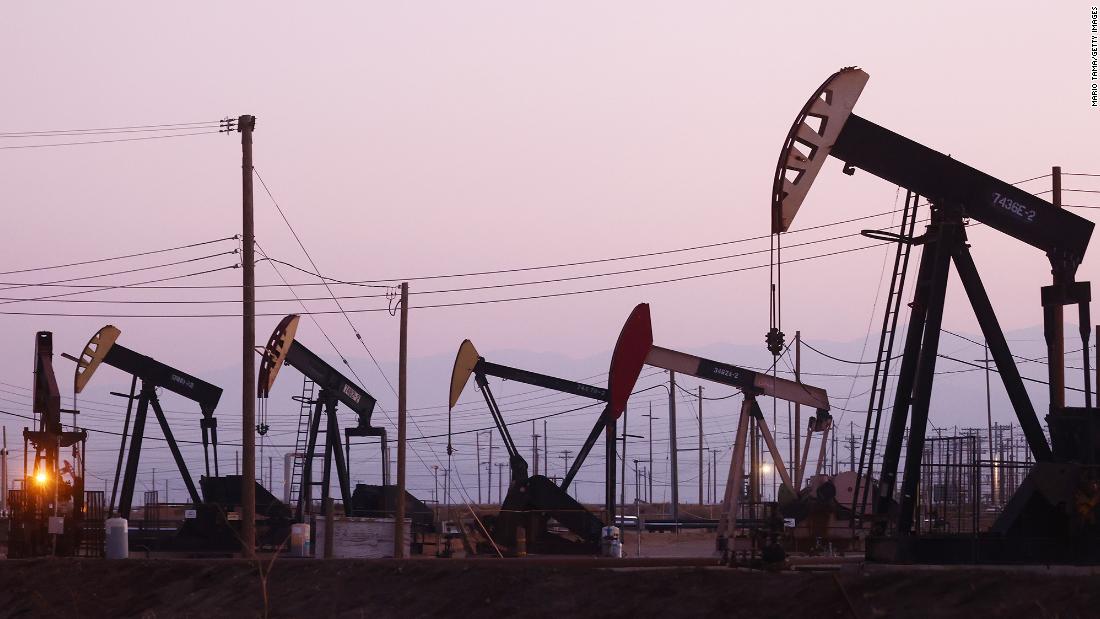
Oil selloff intensifies on Covid fears and risk of US-China intervention

Oil selloff intensifies on Covid fears and risk of US-China intervention
US crude tumbled to a fresh seven-week low on Friday, settling at $76.10 a barrel. The slide is good news for American drivers hurt by the seven-year high in gasoline prices — a crunch that has soured consumers’ views on the US economy.

“We will definitely see some pricing relief on gasoline at the pump,” Tom Kloza, president of the Oil Price Information Service, told CNN on Friday, adding that the relief will be “feather-like as opposed to plunges.”

After a relentless rise, the national average gas price has finally leveled off at $3.41 a gallon, according to AAA. That’s roughly flat from a week ago.

“It looks for now as though the 2021 peaks have been established,” Kloza said.

Lockdown jitters

Unfortunately, one of the catalysts for Friday’s tumble in the market is another ominous development on the Covid front: Austria announced plans Friday to impose a national lockdown, the first in Europe this fall, in a bid to reverse a spike in Covid-19 cases.

The lockdown is raising fears in the oil market of tough new health restrictions elsewhere that will slow the economic comeback and eat into energy demand.

“The demand signals today are overwhelmingly bearish,” Louise Dickson, senior oil markets analyst at Rystad Energy, wrote in a note on Friday. “The risk is real in Europe, especially if Austria’s move to lockdown has a domino effect across the continent. If Germany follows suit, sub-$80 price levels may be here to stay.”

Will China and America team up?

Beyond the lockdown fears, oil markets remain jittery over the specter of the United States and China teaming up to intervene in the previously red-hot energy markets.
Since crashing to negative-$40 a barrel in April 2020, US crude has climbed as much as $125 a barrel because supply simply hasn’t kept up with demand. OPEC and its allies, known as OPEC+, have only gradually increased production. US oil companies haven’t been in a rush to add supply either.

A coordinated release from two of the world’s biggest energy consumers would have a bigger impact than if the Biden administration acted alone to tap the Strategic Petroleum Reserve.

Officials in China put out a statement on Friday suggesting that a release of barrels from the country’s emergency reserve is on the table.

Americans say they hate the economy but act like they love it

“The bureau is pushing forward with crude oil release-related work at the moment,” authorities that oversee China’s strategic oil reserves said in a statement to CNN.

According to a readout published by the White House, US President Joe Biden and Chinese President Xi Jinping discussed during their virtual summit this week the “importance of taking measures to address global energy supplies.”

A coordinated release by the United States and China could also be used as a bargaining tool to get OPEC+ to open up the taps, after months of refusing to do so.

“There is firepower with a concerted effort,” said Robert Yawger, director of energy futures at Mizuho Securities.

‘Short-term fix’

Still, this is not a long-term solution, as releasing barrels from emergency reserves doesn’t solve the underlying supply-demand mismatch. And these emergency reserves hold a finite amount of oil — crude that is typically reserved for supply shocks, not surging demand amid an economic recovery.

Releasing barrels today leaves the reserves with less of buffer for the next crisis, whether it’s a hurricane, a conflict in the Middle East or another supply shock.

Goldman Sachs reiterated in a new report to clients on Thursday that a coordinated release would “only provide a short-term fix to a structural deficit.”

Why the Biden administration is reopening oil and gas leasing in the Gulf of Mexico

The Wall Street bank argued this coordinated release is now “fully priced in,” meaning the impact to markets has already happened.

“In fact, if such a release is confirmed and manages to keep oil prices depressed in the context of low trading activity into year-end, it would create clear upside risks to our 2022 price forecast,” Goldman Sachs strategists wrote.

In other words, at least some on Wall Street are already looking past this emergency intervention — before it even happens — and predicting higher prices ahead.