Stocks and oil drop again, as Omicron’s arrival in the U.S. whips markets.

Stocks on Wall Street slid on Wednesday for a second consecutive session, continuing their tumultuous ride since the discovery of the Omicron variant of the coronavirus last week.

The S&P 500 fell 1.2 percent, as an early gain quickly faded after news that the variant had been detected in the United States. The Nasdaq composite lost 1.8 percent.

Early gains by oil futures also faded. West Texas Intermediate, the U.S. benchmark, fell about 1 percent to $65.57, erasing earlier gains of as much as 5 percent.

Shares of companies likely to be most affected by an increase in pandemic precautions were among the hardest hit. American Airlines fell 8 percent and was one of the worst performers in the S&P 500. United Airlines was down nearly as much, as were the cruise lines like Norwegian and Carnival.

Even as they have cautioned against overreacting to the news of a new variant before much is known about it, several world governments have put in place restrictions on travel — including limits on entry for visitors from southern Africa, where the variant was first detected, and blanket bans on all foreigners.

In the United States, the Centers for Disease Control and Prevention has said it plans to toughen coronavirus testing and screening requirements for international fliers bound for the country. The agency is considering requiring travelers to provide a negative result from a test taken within 24 hours before departure, among other steps, a spokesman said Tuesday night.

Investors also snapped up shares of companies that could benefit from a renewed vigilance to a spreading virus. Clorox rose nearly 2 percent. Quest Diagnostics, a lab company with a fast-growing Covid testing business, rose 1.7 percent. Becton Dickinson and Company, which makes an at-home Covid test, rose 1.9 percent.

As they consider the risk of the Omicron variant, and the potential impact on the global economy as governments again restrict travel and tighten testing requirements, investors are also grappling with a shifting outlook for interest rates.

On Tuesday, the S&P 500 declined 1.9 percent when the head of the Federal Reserve said the central bank might speed up its plan to reduce support for the economy because of high inflation. The back-to-back declines added up to a 3.1 percent drop for the U.S. benchmark index, its worst two-day dive since October 2020.

A measure of volatility in the U.S. stock market surged to its highest since early March on Friday after the Omicron variant was reported by researchers in South Africa. The VIX index has declined a little since then, but it remains above levels seen in the past two months.

Traders had pushed back their expectations about when the Fed might eventually raise interest rates, in light of the news about the variant and some predictions that current vaccines will be less effective against it. But Jerome H. Powell, the Fed chair, said on Tuesday that the risk of higher inflation had increased. If the central bank finishes tapering its bond-buying program sooner than expected, it could also raise interest rates sooner.

Yields on long-term Treasury bonds dropped, suggesting that investors were moving money out of shares and into the safety of government securities as they await more information about the Omicron variant. (Yields on Treasury bonds fall as prices rise.)

The yield on the 10-year Treasury note, often viewed as a barometer of the market’s expectations for economic growth and inflation, dropped to about 1.43 percent, the lowest level in over two months.

The Omicron variant could prolong the bottlenecks and shortages that have caused inflation to run hotter than expected, a risk Fed officials will assess as they “grapple” with how quickly to remove economic support, another Fed official said.

“Clearly, it adds a lot of uncertainty to the outlook,” John C. Williams, president of the Federal Reserve Bank of New York, told The New York Times in an interview that was published on Wednesday.

Credit…Jim Wilson/The New York Times

The payments company Square said on Wednesday that it was changing its name to Block, a nod to one of the main focuses of the company’s chief executive, Jack Dorsey, an enthusiast for cryptocurrency and the blockchain technology it runs on.

Mr. Dorsey said Monday he was stepping down from the helm of his other company, Twitter, a move that many believed was so that he could dedicate more of his attention to cryptocurrency and to Square.

Block will become the name of the “corporate entity,” with Square continuing to be the segment of the company that helps people and businesses process payments, the company said in a news release. The parent company also owns Tidal, a music streaming service, Cash App, a payment service, and a developer platform focused on Bitcoin called TBD54566975. Square said there would be no organizational changes made to the company other than the name change.

“The name has many associated meanings for the company — building blocks, neighborhood blocks and their local businesses, communities coming together at block parties full of music, a blockchain, a section of code, and obstacles to overcome,” the company said in its release. It expects the name change to be official on Dec. 10.

Mr. Dorsey has in recent years grown more fascinated by cryptocurrencies and the promise of decentralization that blockchain technology could allow for. In 2019, he said Twitter would help create a decentralized type of social media in which users could make their own algorithms and moderate their own communities. The only thing in his Twitter bio is “#bitcoin.”

A foray deeper into cryptocurrencies and blockchain could be alluring for Mr. Dorsey, who in his last few years as a social media chief executive spent increasing amounts of time defending Twitter’s role in disseminating misinformation, testifying in front of politicians and receiving frequent criticism from former President Donald J. Trump, who was barred from Twitter shortly after the Jan. 6 attack on the Capitol.

Mr. Dorsey did not reference cryptocurrencies or the blockchain in a brief quote in the news release about his company’s name change, saying only that despite the new name, “our purpose of economic empowerment remains the same. No matter how we grow or change, we will continue to build tools to help increase access to the economy.”

Credit…Mark Blinch/Reuters

Workers at three plants owned by the luxury apparel-maker Canada Goose in Winnipeg, Manitoba, have voted overwhelmingly to unionize, according to results announced by the union on Wednesday.

Workers United, an affiliate of the giant Service Employees International Union, said it would represent about 1,200 additional workers as a result of the election.

Canada Goose, which makes parkas that can cost more than $1,000 and have been worn by celebrities like Daniel Craig and Kate Upton, has union workers at other facilities, including some in Toronto, and has frequently cited its commitment to high environmental and labor standards. But it had long appeared to resist efforts to unionize workers in Winnipeg, part of what the union called an “adversarial relationship.”

The company denied that it sought to block unionization, and both sides agree that it was neutral in recent weeks, in the run-up to the election. The union said 86 percent of those voting backed unionization.

“I want to congratulate the workers of Canada Goose for this amazing victory,” Richard A. Minter, a vice president and international organizing director for Workers United, said in a statement. “I also want to salute the company. No employer wants a union, but Canada Goose management stayed neutral and allowed the workers the right to exercise their democratic vote.”

Reacting to the vote, the company said: “Our goal has always been to support our employees, respecting their right to determine their own representation. We welcome Workers United as the union representative for our employees across our manufacturing facilities in Winnipeg.”

Canada Goose was founded under a different name in the 1950s. It began to raise its profile and emphasize international sales after Dani Reiss, the grandson of its founder, took over as chief executive in 2001. Mr. Reiss committed to keeping production of parkas in Canada.

The private equity firm Bain Capital purchased a majority stake in the company in 2013 and took it public a few years later.

The union vote came after accusations this year that Canada Goose had disciplined two workers who identified themselves as union supporters. Several workers at Canada Goose’s Winnipeg facilities, where the company’s work force is mostly immigrants, also complained of low pay and abusive behavior by managers.

The company has denied the accusations of retaliation and abuse and said that well over half its workers in Winnipeg earned wages above the local minimum of about 12 Canadian dollars (about $9.35).

Workers United is also seeking to organize workers at several Buffalo-area Starbucks stores, three of which are in the middle of a mail-in union election in which ballots are due next week.

Nearly 30 percent of workers are unionized in Canada, compared with about 11 percent in the United States.

Credit…Miguel Riopa/Agence France-Presse — Getty Images

Inditex, the giant Spanish fashion retailer, has appointed Marta Ortega, daughter of the company’s co-founder, as its chairwoman, unexpectedly fast-tracking a generational handover at a time when the fashion sector is facing important supply chain challenges linked to the pandemic, the company said on Tuesday.

Ms. Ortega, 37, will take over in April from Pablo Isla, who has led the company since 2011 and has been widely credited with steering the group’s online and international growth, including into the Chinese market. Inditex sells brands that include Zara, Massimo Dutti, Bershka and Pull & Bear.

Ms. Ortega has spent the past 15 years working for her family’s company, starting as an assistant at Bershka.

“I have always said that I would dedicate my life to building upon my parents’ legacy, looking to the future but learning from the past,” she said in a statement.

Inditex also appointed a new chief executive, Óscar García Maceiras, a former state attorney who joined Inditex in March. The current chief executive, Carlos Crespo, is switching back to his former job, chief operating officer.

Ms. Ortega had long been considered in line to take over from her father, Amancio Ortega, 85, who is regarded as Spain’s richest man and is the majority shareholder in the company.

Inditex shares tumbled more than 5 percent on Tuesday after the appointment was announced. Investors were concerned that the new team of Ms. Ortega and Mr. García Maceiras lacked operational experience at a time when retailers have been struggling with the coronavirus pandemic, as well as its resulting supply bottlenecks.

The share price, however, rebounded on Wednesday, gaining 4.5 percent.

“The timing is not the best,” Kepler, a brokerage, wrote in a note to investors. “We believe that both Marta Ortega and the C.E.O. Óscar Maceiras have a lot to prove when it comes to their ability to run this big monster in the middle of the Covid crisis.”

Inditex was founded by Mr. Ortega and his then-wife, Rosalía Mera, in 1975 in Galicia, in northwestern Spain, where Inditex still makes some of its clothing. The company also produces in other parts of Europe, Asia and Africa, and has more than 6,000 stores worldwide.

Credit…Fabrizio Bensch/Reuters

A new Covid-related downturn would probably cause more severe unemployment in the United States, while in Europe growth would suffer more, the Organization for Economic Cooperation and Development said on Wednesday.

The prediction came as the organization released its latest economic outlook, which reported a fast but uneven recovery from the disruption of the pandemic, emphasizing the stark imbalances in growth between advanced and less developed countries, as well as among the biggest industrial nations. .

Differing policy choices were the primary reason distinguishing the Europe and the United States, said Laurence Boone, the organization’s chief economist. “Europe has been focusing on protecting jobs throughout the crisis, and as a result employment is now already at its pre-crisis level,” she said.

By contrast, the United States has “largely focused on supporting households’ incomes rather than jobs,” she said, resulting in a quicker rebound in gross domestic product.

If the economy were to be walloped again, Ms. Boone said, “in Europe, it would be output that would be hurt more while in the U.S., it would be jobs that would take the hit.” At the start of the pandemic in 2020, Europe’s output fell much more sharply than in the United States.

Ms. Boone said that despite the new coronavirus variant, Omicron, the economic outlook remains “cautiously optimistic.” Global growth this year is expected to come in at 5.6 percent before dropping to 4.5 percent next year and 3.2 percent in 2023, according to the report.

She did warn, however, that Omicron adds to already high levels of uncertainty and could threaten the recovery.

The organization also emphasized that whatever imbalances may exist among countries in North America and Europe, the starkest asymmetries are between advanced and emerging economies, where growth and vaccination rates are lagging far behind.

Ms. Boone noted that the Group of 20 countries have collectively spent $10 trillion in response to the virus, while a scant fraction of that amount has gone to providing vaccinations to poorer countries — even though such support is crucial to the global economy’s recovery.

The organization’s latest forecast echoed concerns about prolonged inflation that were voiced on Tuesday in Washington by Jerome H. Powell, the Federal Reserve chair.

Ms. Boone cautioned that the severity of the pandemic could play out in different ways. More disruptions in the supply chain could aggravate inflation, but a new wave of Covid-related restrictions could instead cut into demand and cause inflation to recede faster.

Rising prices on essentials like food would be particularly burdensome on the poor, the organization said.

Credit…Andrew Kelly/Reuters

The Consumer Financial Protection Bureau said on Wednesday that it would begin closely examining banks that had an outsize reliance on overdraft fees, the much-maligned charges that turn $3 coffees into $38 gotchas.

Overdraft fees ensure that consumers’ bills will be covered and purchases won’t be denied when spending exceeds their account balance. Initially marketed as a convenience, the fees have proliferated over the past quarter-century and have become known as an aggressive way to siphon money from consumers.

They’re a moneymaker: The banking industry collected $15.47 billion in overdraft fees in 2019, according to a report that the consumer bureau released on Wednesday.

Though overdraft revenues dipped in 2020 when Americans received stimulus money, Rohit Chopra, the bureau’s director, said the fees had been steadily rising before the pandemic struck. They remain a major revenue source for many institutions, dwarfing other fees like those for account maintenance and A.T.M. use, he added.

“Large financial institutions are still hooked on exploitative junk fees that can quickly drain a family’s bank account,” Mr. Chopra said in a statement.

The bureau did not identify any banks it may be targeting, but Mr. Chopra said it had asked its examiners to focus on banks that rely heavily on overdraft fees. Banks with “a higher share of frequent overdrafters or a higher average fee burden for overdrafting” should also expect close supervisory attention, he said.

Mr. Chopra said the bureau would take action against banks that violated rules governing overdraft fees and would “seek to uncover the individuals who directed any illegal conduct.”

Some banks have already begun making changes: Just before the bureau’s announcement, Capital One said it would stop charging retail customers overdraft fees early next year, making it the latest bank to either eliminate them or provide less punitive alternatives.

In May, Ally Bank said it would eliminate its $25 overdraft fee, giving customers six days to get in the black again before it potentially limits how they use their accounts. A number of other banks, like Bank of America and PNC, are taking smaller but still notable steps that include grace periods and small short-term loans — if users qualify.

Customers who have already opted into Capital One’s overdraft program will be automatically moved to the no-fee version early next year, fully eradicating the $35 fees. The bank said eliminating them would cost it roughly $150 million in revenue annually.

While Capital One is not among the country’s very biggest banks — JPMorgan Chase, Wells Fargo and Bank of America generated 44 percent of the fees reported in 2019 by banks with assets above $1 billion, according to the consumer bureau — it is large enough for its decision to have some significance, advocates said.

“This move by Capital One will have tremendous benefits for the most vulnerable consumers,” said Lauren Saunders, associate director at the National Consumer Law Center, an advocacy group. It also “puts pressure on the rest of the banking industry to eliminate these predatory fees, which are a back-end way of harming consumers.”

Regulations introduced in 2010 helped curtail some of the worst abuses by requiring banks to receive consumers’ consent to opt into overdraft services on debit transactions and A.T.M. withdrawals, but the practice is still worth billions. From 2015 to 2019, overdraft and related revenue at banks with $1 billion or more in assets increased about 1.7 percent annually to $11.97 billion, according to the bureau’s latest report. But it fell more than a quarter in 2020 to $8.84 billion, a decline credited at least in part to government aid programs in response to the pandemic.

The bureau has already taken action against some banks in recent years. In August, it ordered TD Bank to pay $122 million in penalties and customer restitution. In 2018, TCF National Bank — whose former chief named his boat Overdraftreached a $30 million settlement.

Capital One customers who do not already have overdraft protection will be able to enroll in the no-fee program, but habitual overdrafters may not qualify. In a memo to staff, Richard Fairbank, the bank’s chief executive officer, said customers would need to show a steady pattern of deposits to be granted overdraft protection — and could not have a history of frequent overdrafts.

If a participant’s overdraft balance is not repaid after 56 days, the bank will write it off — the same procedure the bank follows now, according to a spokeswoman. The missed payment will not affect a consumer’s traditional credit score, but it will be reported to a specialty bureau, Early Warning Services, owned by seven of the largest banks.

The bank will continue to allow customers to sign up for automatic no-fee transfers from their Capital One savings or money market accounts to pay for transactions their checking account cannot cover.

A rushed emergency aid program for small companies devastated by the pandemic improperly sent nearly $3.7 billion to recipients prohibited from receiving federal funds, according to a government audit released on Tuesday.

The finding adds to a mountain of evidence chronicling what the Small Business Administration’s inspector general, Hannibal Ware, called an “unprecedented amount of fraud” in the agency’s pandemic relief efforts. In October, Mr. Ware’s office chastised the agency for improperly doling out billions in relief money to self-employed people who made “flawed or illogical” claims of having additional workers on their payroll.

Its Economic Injury Disaster Loan program distributed more than $210 billion last year in loans and grants. The program was organized in a hurry by the Trump administration as millions of businesses temporarily shut down because of the coronavirus and was designed to quickly send out money to help companies keep up on their bills.

But the agency failed to do a legally required check of applicants’ identifying details against the Treasury Department’s Do Not Pay system, according to Tuesday’s report from Mr. Ware’s office.

The Do Not Pay system was set up in 2011 to reduce improper payments to people who are dead, convicted of tax fraud or barred from receiving federal contracts, among other red flags. Mr. Ware found 117,135 applicants who got grants and 75,180 recipients who got loans despite matches in the system indicating a “high likelihood” that the payments were improper.

Isabella Casillas Guzman, who became the agency’s administrator in March, said at a House hearing this month that she had heightened the agency’s fraud controls over its Covid-19 relief programs. “The guardrails did not exist” last year, under the prior administration, she said.

In a response included in Mr. Ware’s report, the Small Business Administration said that on April 6, 2021 — more than a year after the disaster loan program began — it started checking Do Not Pay records before sending out funds. The agency also said it would review the loans and grants previously made to recipients who were flagged as ineligible.

“We agree with the S.B.A. Office of Inspector General that the Trump administration should have applied this risk management tool, and, therefore, the S.B.A. has done just that under the Biden-Harris administration,” Han Nguyen, an agency spokesman, said on Tuesday.

Credit…Travis Dove for The New York Times

The furniture companies that dot Hickory, N.C., in the foothills of the Blue Ridge Mountains, have been presented with an unforeseen opportunity: The pandemic and its ensuing supply chain disruptions have dealt a setback to the factories in China and Southeast Asia that decimated American manufacturing in the 1980s and 1990s with cheaper imports.

At the same time, demand for furniture is very strong.

In theory, that means Hickory’s furniture companies have a shot at building back some of the business that they lost to globalization. Local furniture companies had shed jobs and reinvented themselves in the wake of offshoring, shifting to custom upholstery and handcrafted wood furniture to survive. Now, furniture makers like Hancock & Moore have a backlog of orders. The company is scrambling to hire workers.

Yet the same forces that are making it difficult for overseas manufacturers to sell their goods in the United States — and giving American workers a chance to command higher wages — are also throwing up obstacles, Jeanna Smialek reports for The New York Times.

Many of the companies are dependent on parts from overseas, which have been harder — and more expensive — to obtain. Too few skilled workers are seeking jobs in the industry to fill open positions, and businesses are unsure how long the demand will last, making some reluctant to invest in new factories or to expand to towns with bigger potential labor pools.
READ THE ARTICLE →

Credit…Mike Blake/Reuters
  • The star CNN anchor Chris Cuomo was suspended indefinitely by the network on Tuesday after new details emerged about his efforts to assist his brother, Andrew M. Cuomo, the former governor of New York, as he faced a cascade of sexual harassment accusations that led to the governor’s resignation.

    Chris Cuomo had previously apologized for advising Andrew Cuomo’s senior political aides — a breach of traditional barriers between journalists and lawmakers — but thousands of pages of evidence released on Monday by the New York attorney general, Letitia James, revealed that the anchor’s role had been more intimate and involved than previously known.

    “The documents, which we were not privy to before their public release, raise serious questions,” CNN said in a statement on Tuesday, adding: “As a result, we have suspended Chris indefinitely, pending further evaluation.” READ MORE →

  • For four days, Elizabeth Holmes took the stand to blame others for the alleged fraud at her blood testing start-up, Theranos. On the fifth day, prosecutors tried making one thing clear: She knew.

    Over more than five hours of cross-examination on Tuesday, Robert Leach, the assistant U.S. attorney and lead prosecutor for the case, pointed to text messages, notes and emails with Ms. Holmes — and with her business partner and former boyfriend, Ramesh Balwani — discussing problems with Theranos’s business and technology. Mr. Leach had a common refrain: No one hid anything from Ms. Holmes. As Theranos’s chief executive, he argued, she was to blame.

    It was the culmination of three months of testimony and nearly four years of waiting since Ms. Holmes was indicted on charges of wire fraud and conspiracy to commit wire fraud in 2018. READ MORE →

Credit…Aly Song/Reuters

Electric vehicles are central to the Biden administration’s push for clean energy and a revival of American manufacturing. But as Apple did with gadgets, Tesla is forming stronger ties with China to get closer to both its adroit manufacturing supply chain and huge market of car buyers.

China is poised to become a major player in electric cars, and Tesla and a slew of Chinese electric vehicle upstarts are helping its companies become even more competitive.

Tesla’s huge factory in Shanghai works with local suppliers to make increasingly sophisticated components that are helping them go head-to-head with Western and Japanese auto suppliers.

“China is overtaking its competitors by switching lanes in the car race,” said Patrick Cheng, chief executive of NavInfo, a mapping and autonomous driving technology company in Beijing. “The race used to be about internal combustion engine vehicles. Now it’s the electric cars.”

One hears the word “overtaking” a lot in the Chinese auto industry. Many of its executives and engineers believe that the transition to new-energy vehicles presents a similar opportunity as mobile internet did in the last decade, when Chinese companies created powerful platforms such as the mobile messaging app WeChat and the short video app TikTok.

That’s why the Chinese government has embraced Tesla with open arms. It has offered Mr. Musk’s company cheap land, loans, tax benefits and subsidies. It even allowed Tesla to run its own plant without a local partner, a first for a foreign automaker in China.

Beijing is seeking what the business world calls the catfish effect: Toss an aggressive fish into a pool so that the established denizens will swim harder.

Electric cars could shake up the auto industry — and, by extension, jobs, technology and geopolitical influence. READ THE FULL ARTICLE →

Omicron Unravels Travel Industry’s Plans for a Comeback | Business News

By DAVID KOENIG and YURI KAGEYAMA, Associated Press

Tourism businesses that were just finding their footing after nearly two years of devastation wrought by the COVID-19 pandemic are being rattled again as countries throw up new barriers to travel in an effort to contain the omicron variant.

From shopping districts in Japan and tour guides in the Holy Land to ski resorts in the Alps and airlines the world over, a familiar dread is rising about the renewed restrictions.

Meanwhile, travelers eager to get out there have been thrown back into the old routine of reading up on new requirements and postponing trips.

Abby Moore, a librarian and associate professor at the University of North Carolina, Charlotte, was scheduled to leave for Prague on Wednesday. But the day before her flight, she started having doubts when she saw that Prague had closed its Christmas markets and imposed a city-wide curfew.

Political Cartoons on World Leaders

Political Cartoons

“I wasn’t really concerned about my trip until the Czech Republic started what looked like a mini-lockdown process,” said Moore, who decided to reschedule her travel to March.

Less than a month after significantly easing restrictions for inbound international travel, the U.S. government has banned most foreign nationals who have recently been in any of eight southern African countries. A similar boomerang was seen in Japan and Israel, both of which tightened restrictions shortly after relaxing them.

While it is not clear where the variant emerged, South African scientists identified it last week, and many places have restricted travel from the wider region, including the European Union and Canada.

For all the alarm, little is known about omicron, including whether it is more contagious, causes more serious illness or can evade vaccines.

Still, governments that were slow to react to the first wave of COVID-19 are eager to avoid past mistakes. The World Health Organization says, however, that travel bans are of limited value and will “place a heavy burden on lives and livelihoods.” Other experts say travel restrictions won’t keep variants out but might give countries more time to get people vaccinated.

London-based airline easyJet said Tuesday that renewed travel restrictions already appear to be hurting winter bookings, although CEO Johan Lundgren said the damage is not yet as severe as during previous waves. The CEO of SAS Scandinavian Airlines said winter demand was looking up, but now we “need to figure out what the new variants may mean.”

“In the past year, each new variant has brought a decline in bookings, but then an increase once the surge dissipates,” said Helane Becker, an analyst with financial services firm Cowen. “We expect the same pattern” this time.

Israel’s decision to close the country to foreign visitors is hitting the nation’s tourism industry as it geared up for the Hanukkah and Christmas holidays. The country only opened to tourists in November, after barring most foreign visitors since early last year.

Just over 30,000 tourists entered Israel in the first half of November, compared to 421,000 in November 2019, according to government figures.

Joel Haber, a Jerusalem-based guide, said during a typical Hanukkah holiday his calendar would be chock full of food tours through Jerusalem’s colorful Mahane Yehuda market. Instead, he has just one tour a day.

“Tour operators like me are the first to get hit and the last to emerge and are directly prevented from working by a government decision,” Haber said.

In the West Bank city of Bethlehem, revered by Christians as Jesus’ birthplace, local businesses expected a boost from Christmas tourism. The Bethlehem Hotel, one of the largest in the city, has operated at a fraction of capacity for the past 18 months.

“Everyone who had bookings over the next two weeks has canceled, while others are waiting to see what happens next,” said the hotel’s manager, Michael Mufdi. “I don’t know how much longer we can last, but we are doing our best.”

The pandemic already caused foreign tourism in Japan to shrink from 32 million visitors in 2019 to 4 million last year, a trend that has continued through this year.

As worries surfaced about omicron, Japan on Wednesday tightened its ban on foreign travelers, asking airlines to stop taking new reservations for all flights arriving in the country until the end of December. Prime Minister Fumio Kishida has pushed for avoiding “the worst-case scenario” and reversed a relaxation of travel restrictions that had been in effect just three weeks.

The crowds of Chinese shoppers who used to arrive in Tokyo’s glitzy Ginza district in a stream of buses to snap up luxury items have long disappeared. Restaurants and bars have been forced to restrict hours.

In Asakusa, a quaint part of town filled with souvenir shops, rickshaw drivers, and stalls selling traditional sweets, news of the omicron variant made little difference this week. Vendors say there hasn’t been any business for months except for a few local customers.

Boat charter operator Tokyo Water Taxi started on the city’s waterfront in 2015, when hopes were high for cashing in on the booming tourism trade. With the variant pushing the return of foreign visitors far into the future, the company is trying to look on the bright side.

“It’s growing popular with Tokyo residents, who have lost other ways to entertain themselves,” said company spokeswoman Yuha Inoue.

In Europe, Alpine ski resorts worry about how to keep up with requirements such as ensuring all skiers are vaccinated or recovered from infection and have tested negative for the virus.

Matthias Stauch, head of the German ski lift operators association VDS, said many are small family businesses that lack the staff to perform such checks. Meanwhile, the association is warning about “massive” economic damage to the tourism sector if there is another lockdown.

Travel executives argue that government decisions about restrictions should wait until more is known about omicron, but they admit it’s a difficult call.

“If you wait, by the time you have all the data it’s probably too late to stop community spread because (the virus) is already here,” said Robert Jordan, the incoming CEO at Southwest Airlines. “If you jump ahead, you run the risk of the measures being more impactful than the actual cases.”

About a month ago, Javier Barragan and his husband booked a visit to Paris for later this month. When news of omicron hit, they were concerned but decided to go ahead with the trip.

“The way that it was in the news, there’s a sense of ‘Oh, is this worse? Is this different?’” said Barragan, who lives in New York. France’s health protocols — the couple will have to submit vaccine cards to enter the country — made them feel more comfortable. Also, both got booster shots.

They did, however, buy travel insurance that will cover cancellation for most any reason.

Koenig reported from Dallas and Kageyama from Tokyo. Associated Press writers Mae Anderson and Tali Arbel in New York; Dee-Ann Durbin in Detroit; Tia Goldenberg in Tel Aviv, Israel; Jack Jeffery in Bethlehem, West Bank; Frank Jordans in Berlin; Pan Pylas in London; and Mogomotsi Magome in Johannesburg contributed.

Follow AP’s coverage of the coronavirus pandemic at https://apnews.com/hub/coronavirus-pandemic

Copyright 2021 The Associated Press. All rights reserved. This material may not be published, broadcast, rewritten or redistributed.

Omicron increases inflation uncertainty, the Fed chair will tell lawmakers.

ImageJerome Powell, the chair of the Federal Reserve, in September.
Credit…Stefani Reynolds for The New York Times

Jerome H. Powell, the Federal Reserve chair, will tell lawmakers on Tuesday that inflation is likely to last well into next year and that the new Omicron variant of the coronavirus creates more uncertainty around the economic outlook, according to a copy of his prepared remarks.

The remarks by Mr. Powell, who will testify before the Senate Banking Committee alongside Treasury Secretary Janet L. Yellen, convey a sense of wariness at a time when price increases are running at their fastest pace in three decades.

“It is difficult to predict the persistence and effects of supply constraints, but it now appears that factors pushing inflation upward will linger well into next year,” Mr. Powell plans to say. “In addition, with the rapid improvement in the labor market, slack is diminishing, and wages are rising at a brisk pace.”

Mr. Powell will also address the new variant, which governments and scientists are racing to assess and contain.

“The recent rise in Covid-19 cases and the emergence of the Omicron variant pose downside risks to employment and economic activity and increased uncertainty for inflation,” Mr. Powell said. “Greater concerns about the virus could reduce people’s willingness to work in person, which would slow progress in the labor market and intensify supply-chain disruptions.”

Ms. Yellen will also warn that the path of the recovery depends on the pandemic.

“Of course, the progress of our economic recovery can’t be separated from our progress against the pandemic, and I know that we’re all following the news about the Omicron variant,” Ms. Yellen will say, adding that vaccines continue to be a crucial tool. “We’re still waiting for more data, but what remains true is that our best protection against the virus is the vaccine.”

The Treasury secretary will also urge lawmakers to raise or suspend the nation’s borrowing cap next month. Ms. Yellen has said that the United States could be unable to pay its bills sometime after Dec. 15. At that point, Social Security checks and military paychecks could be delayed and the country would face a deep recession.

“I cannot overstate how critical it is that Congress address this issue,” Ms. Yellen will say. “America must pay its bills on time and in full. If we do not, we will eviscerate our current recovery.”

Much is unknown about the new variant of the coronavirus, but it represents something Fed officials worry about: The possibility that the pandemic will continue to flare up, shutting down factories, roiling supply lines and keeping the economy out of balance. If that happens, as it did with the Delta variant earlier this summer and fall, it could perpetuate high prices.

Inflation has surged in 2021 as strong consumer demand has crashed into the barrier of limited supply. Production line closures, port pileups and parts shortages have kept goods from getting onto shelves and to customers, prompting companies to charge more. At the same time, a dearth of labor in certain industries caused by virus wariness and pandemic-related child-care shortages has been pushing up wages and prices for some services.

It’s too early to know if the new virus strain will contribute to those trends, making inflation last longer than it otherwise would. But the new variant strikes at a delicate moment for monetary policy.

Central bankers are slowing their bond-purchase program, a move that should give them more flexibility to raise interest rates — their more traditional and powerful tool for stoking the economy — if doing so should prove necessary next year.

Several Fed officials have signaled that they may speed up their so-called bond-buying “taper” given how high and how stubborn inflation is proving. Many economists think officials could announce a plan to do so at their meeting in December.

But if the coronavirus again hits the economy, it could make such a decision — and the timing and pace of eventual rate increases — more challenging.

That’s because the Fed balances two goals, controlling inflation and stoking employment, when it sets its policy. A faster and fuller removal of help for the economy might slow down price gains by weighing down demand, but it would likely slow business expansions and hiring in the process.

“We will use our tools both to support the economy and a strong labor market and to prevent higher inflation from becoming entrenched,” Mr. Powell plans to say, after once again acknowledging that the Fed realizes “high inflation imposes significant burdens, especially on those less able to meet the higher costs of essentials like food, housing, and transportation.”

Mr. Powell, whom President Biden plans to reappoint for a second term as Fed chair, will tell lawmakers that the Fed is “committed to our price-stability goal.”

On Monday, Mr. Biden called Omicron “a cause for concern, not a cause for panic,” and his press secretary, Jen Psaki, told reporters that she was not aware of any projections by the administration’s economic team for how the variant might affect hiring, growth and inflation. “It is something obviously we will continue to assess,” she said.

Video

transcript

transcript

Biden Discusses Holiday Shopping Season With Retail Executives

The meeting was part of a larger effort by President Biden to show he is working to combat inflation and ensure a more normal holiday shopping season as the pandemic continues.

“The business leaders we gather here today represent a broad swath of American shopping: brick and mortar and online stores, national and local grocery chains, our nation’s largest retailer and makers and sellers of toys, electronics and health supplies. I want to hear from each of you about what you’re seeing this holiday season, how well-prepared are you to — and to — have products you need on your shelves? In particular, I want to hear about the challenges facing smaller businesses. Small businesses are so important to our communities, they don’t have the same leverage as many of you do. And finally, I want to hear your ideas on how the federal government can continue partnering with you all to keep shelves stocked so American consumers can get what they need.” “First and foremost, I’d like to say that our supply chain has — is strong and robust, and we have ample product inside of our stores for customers to choose from during this holiday.” “We’ll keep working to make sure that we’re in a good and strong position as we go all the way through the season. We do expect it to be strong and there are a few items, as there are every year, where the hottest toys or things like electronics that we wish we had more of. But generally speaking, we’re in good shape and we appreciate the partnership.”

Video player loading
The meeting was part of a larger effort by President Biden to show he is working to combat inflation and ensure a more normal holiday shopping season as the pandemic continues.CreditCredit…Stefani Reynolds for The New York Times

President Biden told executives from some of the nation’s largest retailers on Monday that his administration was committed to partnering with them to untangle supply chains and ensure that American consumers can find everything they want this holiday season, as a surge in shopping tests an already strained global delivery system.

Mr. Biden had planned to speak following his supply-chain meeting with top executives from large grocers, like Food Lion and Kroger, and a range of retailers, like Best Buy and Etsy. But administration officials abruptly canceled his White House remarks less than a half-hour before Mr. Biden had been scheduled to speak, saying the president wanted to spend more time in conversation with the executives. His remarks were rescheduled for Wednesday.

The meeting was part of a larger effort by the president to show he is doing everything he can to combat inflation and ensure a more normal holiday shopping season as Covid-19 continues to persist. Mr. Biden has made a push to unclog ports, address trucker shortages and take other steps to alleviate the pressure created by consumers looking to buy couches, cars and electronics instead of eating out or going to theme parks.

But the White House has limited reach to affect a supply chain that is controlled by private companies and shaped by larger forces, like the pandemic and consumer demand.

Still, top officials tried to reassure a nervous public on Monday that consumers would be able to purchase what they want.

“There are going to be toys on your shelves,” Jen Psaki, the White House press secretary, told reporters after noting that Black Friday sales were up by nearly a third this year in preliminary estimates. “There is going to be food in your grocery stores.”

Shipping costs have begun to recede slightly from stratospheric highs as West Coast ports work to reduce congestion. Officials announced new measures on Monday to incentivize night and weekend container pickup at ports, and they highlighted data showing a continued decline in the backlogs of unloaded containers.

But many trade experts say the supply chain crisis is far from over. Extraordinarily high demand in the United States for products made in Asian factories, combined with a shortage of truckers and warehouse workers, means supply chain issues are likely to be long-lived.

Phil Levy, the chief economist at Flexport, a freight forwarder, said that the organization’s data “does not show things getting much better. Not yet.”

He said the dramatic increase in demand in the United States for goods had created a backlog of orders that will take months to fulfill. Congestion could even persist through next year, he said, unless an early end to the pandemic or a market crash suddenly encourages Americans to curtail their spending.

While companies of all sizes continue to face shipping delays and elevated transportation costs, most major retailers have said they expect their shelves to be fully stocked during the holidays. Companies have gone to extraordinary measures to procure goods in time for the holidays, including chartering their own vessels and shipping products by air instead of by sea.

In a letter sent to Mr. Biden on Monday, the Retail Industry Leaders Association, which represents major retailers like Best Buy, CVS, Food Lion and Walmart, urged the administration to “facilitate a few additional short-term steps” to keep goods moving through ports, like improving restrictive appointment systems for truckers and requiring ports and ocean carriers to accept the return of empty containers, as well as making longer term investments in port infrastructure.

Judah Levine, the head of research at Freightos, an online freight marketplace, said that the ports of Los Angeles and Long Beach had started to show signs of easing congestion and had been using “sweeper” ships to help reposition empty containers around the port.

Cargo prices from Asia to the United States have also receded in the past few weeks, according to Freightos, but those prices are still nearly quadruple what they were at the same time last year.

Credit…Amr Alfiky for The New York Times

Britain’s independent data privacy authority on Monday fined the facial recognition company Clearview AI 17 million pounds, or $22.6 million, for failing to comply with the nation’s data protection laws.

The Information Commissioner’s Office said it fined Clearview AI for failing to inform British residents that it was collecting billions of photos from sites including Facebook, Instagram and LinkedIn to build its facial recognition software. The I.C.O. ordered the company to stop processing the personal data of people in Britain and to delete their existing information.

Clearview AI can contest the fine and the data breach allegations, according to the I.C.O., which said it will make a final decision on the penalty by mid-2022. The I.C.O. said Clearview had been used by various British agencies. BuzzFeed News previously reported on leaked data that listed various British government agencies and police departments as having run searches with the facial recognition software.

“I have significant concerns that personal data was processed in a way that nobody in the U.K. will have expected,” Elizabeth Denham, Britain’s information commissioner, said in a statement.

In a statement, Clearview AI said the I.C.O.’s assertions were incorrect and that the company was considering an appeal. Clearview only “provides publicly available information from the internet to law enforcement agencies,” Kelly Hagedorn, a lawyer for the company, said in the statement.

“My company and I have acted in the best interests of the U.K. and their people by assisting law enforcement in solving heinous crimes against children, seniors and other victims of unscrupulous acts,” Hoan Ton-That, Clearview AI’s chief executive, said in a separate statement.

The fine is the first that Clearview AI has faced, according to the company. If it remains unchanged, the penalty would amount to nearly 60 percent of the $38 million in funding that Clearview AI has raised from investors. In July, the company raised $30 million.

Earlier this year, a Swedish regulator fined the country’s police authority 250,000 euros for its use of Clearview, citing data privacy violations.

This month, an Australian regulator also said the company had violated local privacy laws. The Office of the Australian Office Commissioner ordered Clearview AI to stop collecting data on its residents and to destroy data previously collected in the country. Canada also declared Clearview AI illegal in February.

Clearview AI recently ranked high on a federal test of facial recognition software.

Correction: 

An earlier version of this article misattributed a statement from Clearview AI reacting to assertions by the Information Commissioner’s Office. The statement was from Kelly Hagedorn, a lawyer for the company, not from Lisa Linden, a Clearview AI spokeswoman.

Correction: 

An earlier version of this article misstated Clearview AI’s history of penalties. A Swedish regulator fined the country’s police authority for its use of Clearview. It did not fine Clearview AI.

Global markets steadied on Monday, with stocks on Wall Street and oil prices gaining, as investors contemplated more carefully the knowns and unknowns of a new Covid-19 variant.

The S&P 500 rose 1.3 percent, rebounding from a 2.3 percent drop on Friday. That was its worst day since February and came after initial news of the discovery in southern Africa of the new variant, called Omicron. The World Health Organization labeled it a “variant of concern,” its most serious category.

Shares of companies in industries that had been bouncing back in recent months, like airlines and other travel firms, took big hits as governments reintroduced limits on movement across borders. Oil prices plunged on concerns about the economic toll of potential restrictions, while government bond yields fell amid an investor flight to the relative safety of sovereign debt.

On Monday, with quick answers about the threat from Omicron hard to come by, investors seemed less focused on potential disaster, and some of Friday’s moves were undone. While the new variant might turn out to be more contagious and vaccine resistant, it could also prove to be less dangerous to the health of the vaccinated or previously infected. Scientists haven’t come to firm conclusions, and it could take up to two weeks before the tests of current vaccines on the new variant have results. And Covid-related stock market drops are getting milder and shorter.

When the virus first emerged in early 2020, the S&P 500 fell for a month and a half before recovering. In October 2020, a resurgence of cases led to a drop of 5.6 percent over a few days, but markets had rebounded within a week. In July of this year, the emergence of the Delta variant triggered a one-day slide of 1.6 percent that was recouped within a few days.

“We don’t know how dangerous it is to health, though early reports that it isn’t very dangerous, while downplayed by the cautious experts, are very seductive,” Kit Juckes, a strategist at Société Générale, wrote in a note to clients. “Against that backdrop, some of Friday’s madness has been reversed, but only part of it.”

Stocks in Europe also rose on Monday, with the Stoxx Europe 600 closing 0.7 percent higher. The FTSE 100 in Britain rose 0.9 percent, while stock indexes in France and Spain were also higher.

Futures of the two major oil benchmarks, Brent crude and West Texas Intermediate, gained 1 percent and 2.6 percent. With crude oil rebounding, shares of energy companies also climbed. Enphase Energy was up 3.8 percent, while Diamondback Energy gained about 2.3 percent.

Government bond yields also climbed. The yield on 10-year Treasury notes rose 4 basis points, or 0.04 percentage points, to 1.52 percent. On Friday, the yield had dropped 16 basis points, the steepest one-day fall since late March 2020. Concerns over newly imposed travel restrictions mostly eased on Monday, with travel and leisure stocks trading higher as President Biden said on Monday that the administration’s plan to combat Covid in the winter did not does not include “shutdowns or lockdowns,” and would instead rely on more testing, vaccinations and boosters.

Royal Caribbean Group rose 2.8 percent on Monday, while Norwegian Cruise Line was up 0.8 percent. Shares of United Airlines also rose. Moderna, the vaccine maker, rallied more than 10 percent.

Not every market rebounded, however. With Japan sealing its borders just days after reopening to short-term business travelers and international students, shares in Asia tumbled. The Nikkei 225 fell 1.6 percent, while stocks in Hong Kong fell 1 percent.

Carlos Tejada and Stephen Gandel contributed reporting.

Credit…Karsten Moran for The New York Times

The Black Friday weekend was a success for retailers, but reflected challenges in the supply chain and the prevalence of early deals in October, which prompted customers to spread out their spending.

Shoppers were clearly more comfortable going into stores than they were last year, but in-store visits were still well off prepandemic levels. Foot traffic soared about 48 percent from last year, though remained down about 28 percent from 2019, according to data from Sensormatic Solutions. The peak time for in-store shopping was 1 p.m. to 3 p.m. on Friday, the firm said. Many retailers remained closed on Thanksgiving Day after closing for the day in 2020, reversing a yearslong trend of being open on the holiday.

Customers spent about $8.9 billion online on Black Friday, slightly less than in 2020, and $5.1 billion on Thanksgiving, which was on par with last year, according to Adobe Analytics data, which covers more than one trillion visits to U.S. retail sites. It was the first time Adobe saw a decrease on big shopping days since it first began reporting e-commerce data in 2012. But consumers spent far more between Nov. 1 and Nov. 28.

Hot products included denim, where loosefitting jeans have fueled sales, going-out apparel including dresses, beauty and fragrances, cozy sweaters, and comfortable athleisure and tailored clothes, according to analysts at Cowen & Co.

Cyber Monday discounts were expected to be weaker in part because of the supply chain issues from factory shutdowns to port backups, which have plagued retailers in recent months and were highlighted on earnings calls last week from Gap and Nordstrom.

Credit…Philip Cheung for The New York Times

LOS ANGELES — About 49 percent of prepandemic moviegoers are no longer buying tickets. Some of them, roughly 8 percent, have likely been lost forever. To win back the rest, multiplex owners must “urgently” rethink pricing and customer perks in addition to focusing on coronavirus safety.

Those were some of the takeaways from a new study on the state of the American movie theater business, which was troubled before the pandemic — attendance declining, streaming services proliferating — and has struggled to rebound from coronavirus-forced closings in 2020. Over the weekend, ticket sales in the United States and Canada stood at roughly $96 million, compared to $181 million over the same period in 2019.

The study, published online on Monday, was self-commissioned by the Quorum, a film research company led by David Herrin, the former head of research for United Talent Agency; Cultique, a consultancy run by the longtime brand strategist Linda Ong; and Fanthropology, which describes itself as a research, strategy and creative agency. They intend to run the survey once a quarter.

“The research clearly shows that theaters are suffering because the pandemic intensified, accelerated, amplified all of the nascent trends that were already underway,” Ms. Ong said. “That is the definition of a perfect storm — not that various problems exist at the same time, but that they have an intensifying effect on each other.”

The nascent trends? Rising ticket and concession prices. Decreasing “experiential value,” including the perception that moviegoing has become a hassle. The run-down state of shopping malls, which house many theaters. A generational shift toward streaming, gaming and other smartphone-based entertainment. “Before, maybe you went every now and again — overlooking the drawbacks,” Mr. Herrin said. “Now you add safety concerns to that mix, and you suddenly become a former filmgoer.”

The research companies surveyed 2,528 people who visited a movie theater in 2019. (Some bought a ticket once a week, while others went once a month. Others went “several” times a year.) About 51 percent of respondents said they had bought tickets in recent months, with some drawn by cinema-chain rewards programs. They are largely white men ages 25 to 45 who live in cities, according to Mr. Herrin. “Once you get outside of that demographic, you’re really starting to lose people,” he said.

The 49 percent no longer buying tickets were more likely to be in favor of a vaccine mandate for attendees. This group, predominantly female, was also more likely to be concerned about price and value, Mr. Herrin said. Still, he noted that roughly a third were “hopeful” about returning to theaters at some point. Among the changes most likely to bring them back: lower prices for classic concessions, newer seats, policing the usage of phones during films.

“There needs to be a sense of urgency,” Mr. Herrin said. “I don’t know how large a window there is for exhibition to win these people back,” he added, using Hollywood jargon for the multiplex business.

The “likely losts,” as the study identifies 8 percent of respondents who said they have not bought a ticket during the pandemic and can’t see themselves returning, are lower-income consumers. The group has a large proportion of Hispanic, Black and Asian women, the researchers noted.

Although there is a lot we don’t know about the Omicron variant, business leaders are wearily asking themselves the same questions they did during previous surges of the coronavirus, the DealBook newsletter reports.

  • Will there be new lockdowns or vaccine mandates? Some jumped on the Omicron variant as an opportunity to urge airlines to require proof of vaccination and testing for passengers. The variant could also put pressure on companies reluctant to impose vaccine mandates on employees. As for government measures, Dr. Anthony Fauci told ABC News it was “too early to say” whether there needed to be new lockdowns or mandates.

  • What does this mean for conferences and in-person gatherings? There’s a full lineup of events this winter, with organizers hoping to get back on track after previous cancellations and postponements. In early January, CES is scheduled to return to Las Vegas in-person, while the World Economic Forum in Davos is set to take place in person later that month. The Beijing Winter Olympics in February will allow spectators, though only from mainland China. South by Southwest in Austin, Texas, is set to return in-person in March. In Britain, new rules come into effect on Tuesday that require all travelers to isolate on arrival until they receive a negative test result; similar policies elsewhere would make attending conferences and other gatherings more difficult, a potential setback for airlines that were just starting to see a rebound.

  • Are workers ever going back to the office? Beyond the immediate question about office holiday parties, there’s the bigger question about the fate of offices next year and beyond. Many companies have already set and delayed their return dates multiple times. Several, including Wells Fargo, Google and Facebook parent Meta, are planning to bring their workers back to the office in January. Will they postpone a return date again or simply order workers back? Is the prospect of a prolonged pandemic enough to persuade some companies to switch to a permanent form of flexibility or will they continue to muddle through with imperfect hybrid setups?

Credit…Amir Cohen/Reuters

For months, airline travel has been steadily rebounding, and Sunday was the busiest travel day at U.S. airports since February 2020. But the discovery of the Omicron coronavirus variant threatens to derail the industry’s recovery, as the Delta variant did this summer.

Several nations, including the United States, have barred visitors from South Africa and a handful of neighboring countries. Japan, Morocco and Israel have barred all incoming foreign visitors, while the Philippines has banned visitors from southern Africa and several European countries.

The tightening of restrictions has drawn criticism from the travel sector. In a statement last week, Willie Walsh, the head of the International Air Transport Association, a global trade association, called for “safe alternatives to border closures and quarantine.” Over the weekend, the U.S. Travel Association urged the Biden administration to rethink its ban.

“Covid variants are of concern, but closed borders have not prevented their presence in the United States while vaccinations have proven incredibly durable,” Tori Emerson Barnes, executive vice president for public affairs and policy, said in a statement. “With a vaccine and testing requirement in place to enter the U.S., we continue to believe that assessing an individual’s risk and health status is the best way to welcome qualified global travelers into the United States.”

For U.S. airlines, the rebound in international travel has been slower than that for travel within the United States. But President Biden’s decision to ease longstanding restrictions on foreign travelers this month promised to stimulate that recovery. It isn’t yet clear whether or how the Omicron variant will affect travel demand, but if travel bans proliferate and concerns over the variant continue to spread, hopes for an accelerated international rebound could be dashed again.

Only two U.S. carriers, Delta Air Lines and United Airlines, fly out of southern Africa. Both have said that they are not yet planning to adjust their schedules in response to the administration’s ban, which took effect on Monday and does not apply to American citizens or lawful permanent residents. Delta operates three weekly flights between Atlanta and Johannesburg. United operates five flights a week between Newark and Johannesburg, and it has not changed its plans to restart flights between Newark and Cape Town on Wednesday.

No major American airline has announced any substantive changes to procedures because of the variant. And all passengers flying into the United States must provide proof of a negative coronavirus test, with noncitizens also required to be fully vaccinated.

Within the United States, air travel has nearly recovered, even with many businesses still wary of sending employees on work trips. The number of people screened at airport security checkpoints over the past week was down only 12 percent from the same week in 2019, according to the Transportation Security Administration.

The industry easily handled the crush of travelers over the holiday week, avoiding the disruptions that lasted for days at some airlines in recent months. In the seven days ending Sunday, there were fewer than 600 cancellations, accounting for less than 0.5 percent of all scheduled domestic flights, according to FlightAware, an aviation data provider.

Credit…Anna Liminowicz for The New York Times

Hoping to alleviate long lines at gas stations, empty shelves in grocery stores and a Christmas without mince pies, the United Kingdom’s Department for Transport began to recruit truck drivers overseas in October.

Official figures have not been released, but in mid-October, Oliver Dowden, a co-chairman of the Conservative Party, said on a radio show that a “relatively limited” number of applications had been received, and a little more than 20 had been approved.

So rather than a source of instant relief, the visa offer has become an informal measure of the appeal of post-Brexit, late-pandemic Britain, David Segal reports for The New York Times.

Some drivers who have worked in Britain said the country had become more xenophobic since Brexit, which took effect in January 2020. The campaign to leave the European Union was championed loudest by the United Kingdom Independence Party, whose leader, Nigel Farage, pushed for a law that would ensure “British jobs for British workers.” In 2013, he warned of a “Romanian crime wave.”

The British government estimates that it needs 100,000 more drivers. This raises the question of why the Department for Transport has made a mere 5,000 temporary visas available. In Parliament, politicians from opposition parties contend that the low figure reflects ambivalence in the Conservative government. READ THE ARTICLE →

Solar panels and electric car batteries rely on cobalt, a metal abundant in the Democratic Republic of Congo and rare elsewhere. The United States had long recognized the Central African nation’s strategic importance, yet recent administrations have done little to maintain ties, leaving China to step in.

A New York Times investigation, “Race to the Future,” examines the global demand for raw materials as the clean energy revolution takes off. Places like the Democratic Republic of Congo, which produces two-thirds of the world’s supply of cobalt, are stepping into the kinds of roles once played by Saudi Arabia and other oil-rich nations. The race to secure supplies could have far-reaching implications for the shared goal of protecting the planet.

Read the investigation:

  • Global Rivalries: The competition for cobalt, used in electric cars, has set off a power struggle between China and the United States in Congo.

  • How the U.S. Lost Ground to China: Americans failed to safeguard decades of investments in Congo, essentially surrendering resources to China.

  • Key Takeaways: The Times dispatched reporters across three continents drawn into the fight. Here are some findings from their investigation.

  • Hunter Biden’s Business Ties: A firm co-founded by the president’s son facilitated the sale of a cobalt mine in Congo to a Chinese company. Here are the deal’s details.

  • How Electric Car Batteries Are Made: It all starts with prized minerals and metals like cobalt.

  • Jack Dorsey will step down as chief executive of Twitter, the social media site he co-founded in 2006 The social media pioneer, whose name has become synonymous with the company, will be replaced by Twitter’s chief technology officer, Parag Agrawal. Mr. Dorsey, who is also the chief executive of the payments company Square, was fired from the top job at Twitter in 2008 but returned in 2015. Shares of Twitter rose on Monday. READ MORE →

Labor market snapshot: On Friday, the Labor Department will release its report on jobs in November. The most recent report showed that the economy added more than 500,000 jobs in October after months of disappointing job figures. Still, 4.2 million fewer Americans were working in October than before pandemic lockdowns.

Theranos trial: Elizabeth Holmes, the founder of the blood testing start-up Theranos, will continue to testify as she defends herself against fraud charges. In three days of testimony last week, she painted herself as someone whose best intentions were misinterpreted.

Cyber Monday and Giving Tuesday: Americans returned to in-person shopping with gusto on Black Friday. But as Wirecutter notes, many shopping deals will extend through today, known as Cyber Monday. And for those who are more inclined to spend on charitable causes, there’s Giving Tuesday.

Openings & Closings: Business happenings around the area | Business News

Here’s a look at local business changes in the region.

Molinari’s at 322 E. Third St. in south Bethlehem would have celebrated its 10th anniversary Friday, but the restaurant was closed because of a staff shortage. The Italian restaurant said on Facebook that one key staff member is out. Short-staffing in general has been a problem for the restaurant industry. Molinari’s hopes to reopen. Customers should check the restaurant’s social media posts for information.

Over in north Bethlehem, Vincenza’s Italian Pizzeria & Trattoria has opened at 2980 Linden St., in the small strip mall just across from Macada Road. The menu includes pizza, Sicilian pizza and variations such as ziti vodka pizza. Other selections include salads, cheesesteaks, bruschetta, Buffalo wings, stromboli and pasta.

Mirror Beauty Studio has opened at 2002 Hanover Ave. in Allentown, fulfilling the longtime dream of owner Jess Dejesus. The grand opening will be Dec. 3 at 1 p.m., a celebration with drinks, food, raffles and music. “I always wanted to open my own salon and finally made it happen,” said Dejesus, a stylist since 2013. The salon provides style and lash services, and hair botox treatments.

Purr Haus, a boutique for cats and the people who love them, will open Saturday in Emmaus. The 27 S. Seventh St. store (across from the CVS drive-through) will sell pet supplies, cat-themed apparel and home décor, including brands that help support the cat-rescue community. Owner Laurie Mason said she was inspired to go into the business after attending a cat convention in 2018.

“There was a long line outside the convention hall of people eager to get in, and all the vendors were doing brisk business,” she said. “I realized that there was a market for the small-batch cat supplies that were being sold there.”

Mason said in a statement that she is not trying to compete with big pet supply chains. She will instead provide a mix of items for pets and people, including toys, wine glasses, cat beds, handbags and hats for people, and more.

The Ice Cream Lounge in Forks Township has added Ice Cream Lounge & Caribbean Grill nearby in Park Plaza, 1800 Sullivan Trail. The new restaurant has been through a soft opening; check social media posts for hours. Menu items include jerk and curry chicken, island wontons, jerk skewers, with rice and peas or white rice, cabbage, salad and plantains.

The Restaurant at Landis Store Hotel on Baldy Hill Road in Boyertown has closed, according to its website. A Facebook post and a recorded message indicated that retirement led to the closing of the restaurant. The restaurant was known for fine dining in the Berks County countryside.

The Jim Christman Team real estate office at 362 Delaware Ave. in Palmerton is adding new agents, and will hold a grand re-opening Wednesday, Dec. 15, from 3:30 p.m. to 5 p.m. under its new name: The Jim Christman Team Mega Agent Office. Owner Jim Christman said the agency has seen “explosive growth” since it opened in 2012. The current staff includes six licensed agents and two administrative assistants, and the agency is hiring two buyers’ agents. To attend the open house, register with the Carbon County Chamber of Commerce.

Giant Co. is opening three grocery stores in the Philadelphia region — two in the city and a third at 4377 Swamp Road in Doylestown. The new Bucks County store will open at 8 a.m. on Friday, Dec. 10. The new Doylestown Giant will cover 72,500 square feet, and replace the 4357 W. Swamp Rd. store, which will close for good at 5 p.m. on Dec. 9. The new store will be open 6 a.m. to 11 p.m. seven days per week, and employ about 225 full- and part-time workers. Alan Carcifi will continue as store manager in Doylestown.

Giant operates in Pennsylvania, Maryland, West Virginia and Virginia, employing more than 35,000 people at nearly 190 stores, 132 pharmacies, 107 fuel stations and more than 150 online pickup hubs and grocery-delivery services.

Bella’s Bistro has opened at 123 N. Second St. in Easton, providing small batches of healthy pet food. Bella’s refers to its product as “farm to bowl,” preservative-free foods and treats for dogs. “In our kitchen, we use only human-grade, nutrient-dense whole superfoods to make small batches with love,” according to Bella’s website.

No Nonsense Neutering will close its Mahanoy City location on Nov. 29 after seven years. The animal clinic’s Allentown, Reading and Plains locations remain open. No Nonsense said on Facebook that it lost its lease, and it is trying to find a new Schuylkill County location.

A Q&A with 3 longtime Lancaster County small business owners | Local News

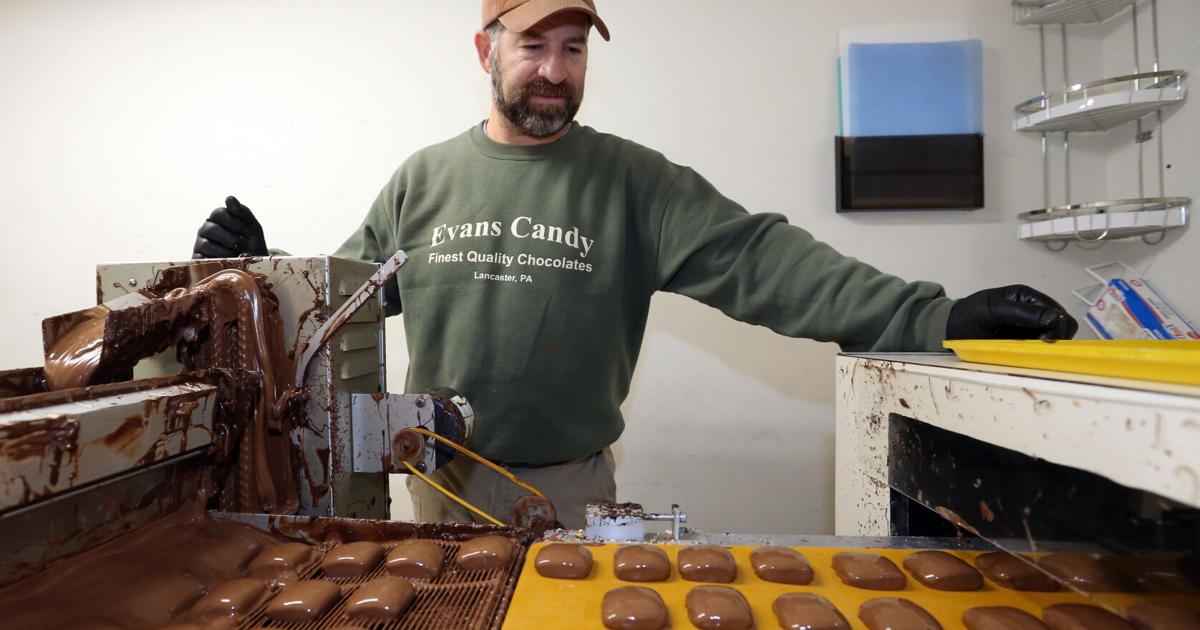
Steve Evans describes his business as one that just keeps getting sweeter. 

Since taking the helm of Evans Candy from his parents in 1995, Evans says the business that cranks out a variety of treats off Willow Street Pike south of Lancaster has seen steady year-over-year growth to the point where it’s now quadrupled.

Corporate clients have a lot to do with that. Evans started expanding that part of the business in the early 2000s. His parents – who started making chocolate at home when Evans was young – might get the occasional order from companies buying 30 or 40 boxes for employees. Now companies are ordering in the hundreds for both employees and customers.

“That has been helped by technology. We can do more personalization … (and options that) we can offer businesses either on the chocolate or on the box,” Evans says. “So that has a lot of appeal.”

The Easter rush on the other hand is almost entirely individuals looking to fill some baskets. 

“Almond bark is huge. Chocolate covered pretzels are huge,” he says. Add all the peanut butter-and-chocolate combinations and those are the top seller, he says, but adds that caramel combinations as a group would be a close second.

The workforce shifts a bit with the season but 12 is a typical number, he says.

“It would be a joy to see it remain in the family. We’re working in that direction, though it’s not always foreseeable – all the ins and outs and twists and turns that come along,” Evans says. “I have four of my own children and we have a number of other family involved in the business. I can certainly see it continuing and I would be hopeful for that.”

Here’s how Evans fielded our questions for the longtimers. 

Anything about the pandemic that made it feel like Evans Candy was a new business again? Supply chain comes to mind. You can’t always count on products … so when it’s there, you buy more and figure out ways to store it … And when something’s not there week after week? You’ve got to come up with an alternative …. We’ve been able to navigate the challenges very well. But they’re there. 

Trickiest year for the business pre-pandemic? That’s one of the joys of this business. It comes with a fair amount of predictability, actually. But … as the business grew, I needed somebody to help me oversee production and to have enough skill sets to handle all the different products that we make. Finding the person to fit that role – that would have been one of the bigger challenges. But we have that now. 

Adjective that best describes the climate for small businesses in Lancaster County? Strong. We have enjoyed a really good resurgence of people buying local. They’ll come in and tell us, “We love your product but we’re also really happy to be here to support local. We’re your friends. We’re your neighbors. We’re part of your church. We’re part of the circle of people that you know.” I think that’s one of the beneficial side effects of the pandemic. It kind of brought about a better awareness of all the little shops that are actually close by. When you’re in the business of life and flying from point A to point B, and back to work, and the kids are having school activities, you don’t always stop and look at what’s around you…. And I think by having this slowed-down time, people did take the time to notice. Just a theory. 

Moment you knew you made the right move taking the business? Within the first year or two really. I’d been working with chocolate since I was 4. So that wasn’t too much of a change. The logistics of the business were an adjustment. … But my dad was there to help guide me through. He was great. He told me, “I’m not going to look over your shoulder. You’re calling the shots. I’ll give you advice and my thoughts but I’m not going to question your decisions.”

Best piece of advice for new businesses? Be willing to roll up those sleeves and do what it takes. Get very hands-on with it. There are a lot of long hours. In time, that can pay off. But it’s not going to be glorious at first.

Elizabethtown Sporting Goods

The next time you’re at the kid’s ballgame have a look at the uniforms out on the field. There’s a chance someone with Elizabethtown Sporting Goods put the team logos on those.

ESG has been around for 45-plus years, says Mitch Gibson, whose family bought into the business as owners around 2001. ESG sells customized corporate apparel, organizational clothing, and sports equipment and uniforms. 

Customer or team logos are added to attire via ESG’s three embroidery machines, one automatic screen printing press and two manual presses. Hunting down the right items to put into those machines has lately been a challenge given current supply chain problems.

“I do all the ordering. It used to take me maybe an hour a day. Now it’s about three hours,” Gibson says. “Luckily, we have lots of vendors that we can pull from.” 

Gibson’s business is reliant on a textile industry that in recent decades moved much of its remaining domestic production from the southern United States to plants overseas. 

“Nothing’s made in the U.S. anymore. If it’s coming from Central America, we’re seeing that stock get replenished a little quicker,” he says. “But if it’s coming from China, like hats? This summer it was almost impossible to find hats in certain colors.” 

Gibson says he just keeps looking. 

“Our thing is to be transparent and just make it a good customer atmosphere so that you feel like we care,” he says. “Because we do.” 

Anything about the pandemic that made it feel like you were a new business again? I would say yes. We had to streamline some processes and really reevaluate just how to do business with customers not being able to come in. Thank goodness for the restaurants and landscaping industry because the sports side of it was nonexistent. … A lot of the restaurants wanted to sell shirts because customers were trying to help them out, which helped us as well. …  (That seems to be continuing.) I just did an order for a Manheim restaurant where they’ve been selling lots of shirts. There are two or three down in Lancaster that just ordered a few hundred. They’re in about every three or four months. It can’t all be for their staff. … The sports numbers aren’t back to where they were pre-pandemic. Little Leagues? We do quite a few. I would say their numbers are probably down 10{21df340e03e388cc75c411746d1a214f72c176b221768b7ada42b4d751988996} or 20{21df340e03e388cc75c411746d1a214f72c176b221768b7ada42b4d751988996} at least. It’s just one of those things. We’ll print whatever you need. But they’re seeing it on their end, too. Certain families are not comfortable with whatever their choice is. Or kids aren’t interested. I don’t know. 

Trickiest year for the business pre-pandemic? I’d probably say 2019. We had a quarter-owner that decided to go out on his own. 

Moment you knew you made the right move getting into this business? Probably since my son has been born. The flexibility this offers has been great. … He’s 7. He tried some soccer and he wants to do football next year so it looks like I will be coaching that. We’ll see how that goes. 

Adjective that best describes the climate for small businesses in Lancaster County? Competitive. That’s not just in this business but in general. I’ve seen a lot of competing businesses. It just seems like if ever somebody’s not holding their end up to the customers, you can usually find somebody else to meet your needs. 

Best piece of advice for new businesses? Plan.

Russell Locksmith-Safesmith

Doug Russell was once a kid who loved magic. 

“I did stage magic right up into college. I was into Houdini and lock boxes and strait jackets and all that crazy stuff,” he says. “Then I went to college to be a surgeon.”

After a year he realized he hated college and got a job with a locksmith. 

“My poor parents. I’m not sure my mother ever got over it but my father did,” says Russell, who is now 69. “He got to see his name … on a business. He was very proud of me.” 

That business is Russell Locksmith–Safesmith on Queen Street in Lancaster. Russell opened his company in the mid-’80s after moving into digs where another locksmith had been. 

Among his more glamourous jobs are vault doors – which are what tend to make it onto the business’s Facebook page. Russell says he’s glad he’s had a chance to delve in that business seeing how banks more typically contract with a large national company. 

Master locks for landlords are a big part of his business. So are walk-in customers looking for one or two keys. It seems to Russell some people have made a hobby of losing their keys.

He has no interest in getting involved in electronic car fobs. Another locksmith in town is skilled at those, he says. That’s Bill Neff, who Russell says was in Boy Scouts with him back in the day. 

Russell says he recently made a major investment in equipment that will help him and his staff with locks for which numbers must be keyed in. 

The kind you turn are the ones for which Russell appears to have a particular knack. That comes, he says, from realizing that each lock has its own personality – and also from spending hundreds of hours sitting in front of ones he never got open. 

“You can’t teach experience,” Russell says. “You’ve got to be out there working to get better.” 

Anything about the pandemic that made it feel like you were a new business again? Not really. We did close the shop for a couple months but we do a lot of work for … (a) hospital and all of their facilities. So we were still doing that and some business for real estate. It wasn’t as bad for us as it was for a lot of others. Like the restaurants. I felt so badly for them … We were blessed that we pulled through. It wasn’t like we were making 100{21df340e03e388cc75c411746d1a214f72c176b221768b7ada42b4d751988996} of what we normally do but it was enough. 

Trickiest year for the business pre-pandemic? I bought the shop in 1985 from … (a locksmith) who had a couple key machines. Nothing great but enough to get me going initially. In the beginning, I was selling soda and candy and anything to make a buck for the family. And of course, it was only me. So anytime I had a service call I’d have to lock the shop up. So the first years were hard. But I was much younger and had the energy to expend … Now there are three of us working here. We’ve been together, oh, probably 25 years … . I often hear all these stories about employees and scheduling problems and I’m glad I don’t have to worry about that. I’ve got the best guys and we just work well together. 

Moment you knew you made the right move opening the business? I just basically always had the God-given talent to figure this stuff out. 

Adjective that best describes the climate for small businesses in Lancaster County? Difficult. If you’re in the trades you can always find work. … But I can’t imagine what it’s like for anyone who can’t go out and do service calls and not worry so much about what’s happening in the shop. 

Best piece of advice for new businesses? Love what you do and work hard at it.

Business Beat: Asian market expands | Business Beat

Pacific Asian Market opened its second location in Longview earlier this month at 2305 Gilmer Road.

The first Longview store, 1432 McCann Road in Brookwood Village Shopping Center, remains open.

Romel Igaya and his wife, Esusana, own the stores. Alongside business partners, they also own a similar grocery store in Tyler.

The stores are open 9:30 a.m. to 7 p.m. Monday through Saturday and 1 to 6 p.m. Sunday.

Mall adds new stores

The holiday shopping season kicked off at Longview Mall this past week with the opening of two new stores: EntertainMART and Red Barn Farms.

EntertainMART, near JC Penny, buys and sells vintage items, as well as some new merchandise: Blu-rays; DVDs; retro and new video games; consoles and accessories; comic books; sports and collectible game cards; books; knives and swords; and more.

“We kind of try to take the spot of Hastings,” said EntertainMart Assistant Manager Garrett Hopkins, referring to a now closed chain of stores that featured, among other things, new and used books, CDs, Blu-rays and DVDs as well as collectible items.

EntertainMART also offers a service to repair CDs and DVDs with scratches, for instance, which people previously might have thought had to be trashed.

“We’ve never had a store like this in the mall,” Longview Mall General Manager Kelly Overby said.

Red Barn Farms, near Center Court, features gifts such as signature foods and candles that the store manufactures in Jacksonville, as well as hand-sewn stuffed animals, goat milk soaps and purses. Owner Brad Juneau said many of the items in the store are crafted in the Amish community in Nappanee, Indiana.

His merchandise spills out into two kiosks just outside the store, with Juneau describing his merchandise as “unique” items that can’t be found on Amazon.

Downtown grand opening

The new Visit Longview Marketplace will celebrate its grand opening starting at 4:30 p.m. Monday.

Visit Longview, the city’s convention and visitors bureau, previously was at City Hall but moved downtown to increase visibility and foot traffic. In addition to housing the convention and visitors bureau, the new location at 109 W. Tyler St. also is home to the Main Street program and a retail shop featuring Longview and Texas merchandise, including T-shirts; postcards; mugs; shot glasses; a small selection of pet supplies; playing cards; jewelry; buttons; tote bags; ornaments; Texas-shaped cookie cutters; snacks from Heartisans Marketplace; local honey from Piney Woods Bee Company; and spices and barbecue sauce from Bodacious.

Perfect Catering will serve appetizers, beer and wine from 5 to 7 p.m.