Oil selloff intensifies on Covid fears and risk of US-China intervention

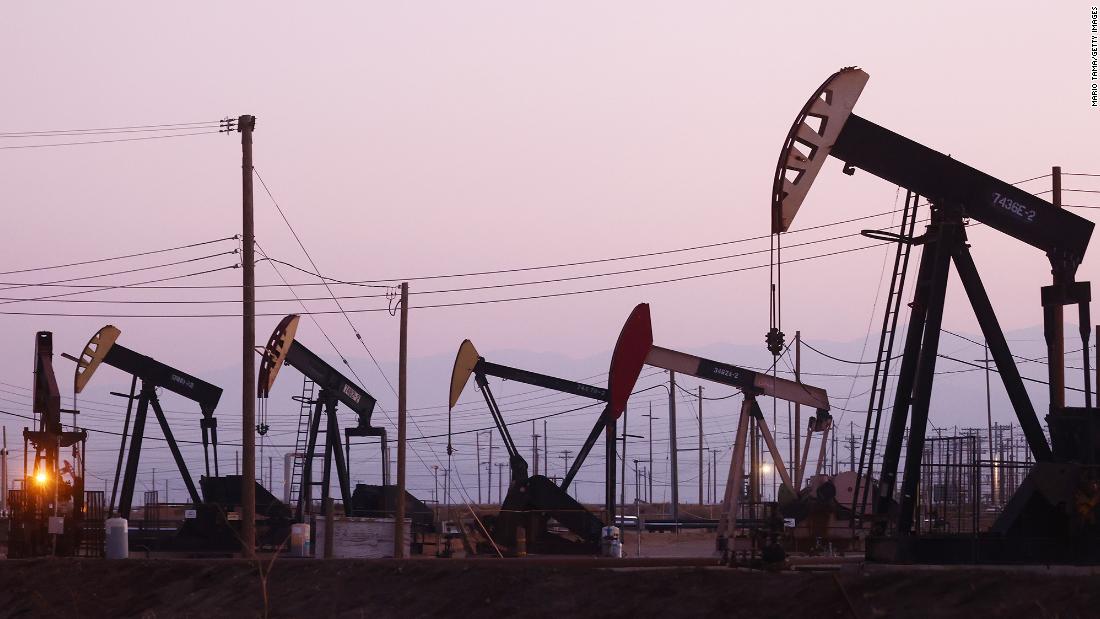
US crude tumbled to a fresh seven-week low on Friday, settling at $76.10 a barrel. The slide is good news for American drivers hurt by the seven-year high in gasoline prices — a crunch that has soured consumers’ views on the US economy.

“We will definitely see some pricing relief on gasoline at the pump,” Tom Kloza, president of the Oil Price Information Service, told CNN on Friday, adding that the relief will be “feather-like as opposed to plunges.”

After a relentless rise, the national average gas price has finally leveled off at $3.41 a gallon, according to AAA. That’s roughly flat from a week ago.

“It looks for now as though the 2021 peaks have been established,” Kloza said.

Lockdown jitters

Unfortunately, one of the catalysts for Friday’s tumble in the market is another ominous development on the Covid front: Austria announced plans Friday to impose a national lockdown, the first in Europe this fall, in a bid to reverse a spike in Covid-19 cases.

The lockdown is raising fears in the oil market of tough new health restrictions elsewhere that will slow the economic comeback and eat into energy demand.

“The demand signals today are overwhelmingly bearish,” Louise Dickson, senior oil markets analyst at Rystad Energy, wrote in a note on Friday. “The risk is real in Europe, especially if Austria’s move to lockdown has a domino effect across the continent. If Germany follows suit, sub-$80 price levels may be here to stay.”

Will China and America team up?

Beyond the lockdown fears, oil markets remain jittery over the specter of the United States and China teaming up to intervene in the previously red-hot energy markets.
Since crashing to negative-$40 a barrel in April 2020, US crude has climbed as much as $125 a barrel because supply simply hasn’t kept up with demand. OPEC and its allies, known as OPEC+, have only gradually increased production. US oil companies haven’t been in a rush to add supply either.

A coordinated release from two of the world’s biggest energy consumers would have a bigger impact than if the Biden administration acted alone to tap the Strategic Petroleum Reserve.

Officials in China put out a statement on Friday suggesting that a release of barrels from the country’s emergency reserve is on the table.

Americans say they hate the economy but act like they love it

“The bureau is pushing forward with crude oil release-related work at the moment,” authorities that oversee China’s strategic oil reserves said in a statement to CNN.

According to a readout published by the White House, US President Joe Biden and Chinese President Xi Jinping discussed during their virtual summit this week the “importance of taking measures to address global energy supplies.”

A coordinated release by the United States and China could also be used as a bargaining tool to get OPEC+ to open up the taps, after months of refusing to do so.

“There is firepower with a concerted effort,” said Robert Yawger, director of energy futures at Mizuho Securities.

‘Short-term fix’

Still, this is not a long-term solution, as releasing barrels from emergency reserves doesn’t solve the underlying supply-demand mismatch. And these emergency reserves hold a finite amount of oil — crude that is typically reserved for supply shocks, not surging demand amid an economic recovery.

Releasing barrels today leaves the reserves with less of buffer for the next crisis, whether it’s a hurricane, a conflict in the Middle East or another supply shock.

Goldman Sachs reiterated in a new report to clients on Thursday that a coordinated release would “only provide a short-term fix to a structural deficit.”

Why the Biden administration is reopening oil and gas leasing in the Gulf of Mexico

The Wall Street bank argued this coordinated release is now “fully priced in,” meaning the impact to markets has already happened.

“In fact, if such a release is confirmed and manages to keep oil prices depressed in the context of low trading activity into year-end, it would create clear upside risks to our 2022 price forecast,” Goldman Sachs strategists wrote.

In other words, at least some on Wall Street are already looking past this emergency intervention — before it even happens — and predicting higher prices ahead.

The Fed’s inflation miscalculations risk hurting the poor

The writer is president of Queens’ College, Cambridge and an adviser to Allianz and Gramercy

After again, a greatly watched inflation information launch surprises on the upside. As soon as again, the fundamental drivers of inflation continue on to broaden. When all over again, it is the most susceptible segments of the population that are strike most difficult.

And the moment all over again, those people who all yr prolonged have been characterising this inflation episode as “transitory” seem hesitant to revisit their convictions inspite of continuously contradictory data.

At 1 degree, this hesitancy ought to not arrive as a massive shock provided the usual behavioural traps: in this circumstance, they involve inappropriate framing, affirmation biases, narrative inertia, and resistance to a loss of face. However, its persistence in the facial area of continuously contradictory info significantly boosts the chance of if not-avoidable economic, economic, institutional and social harm.

According to the facts unveiled on Wednesday, US client selling prices rose .9 for every cent in October by itself, properly earlier mentioned the median forecast of .6 for each cent. This took the annual inflation fee to 6.2 per cent, once more previously mentioned the 5.9 for each cent consensus expectation and the maximum in 31 years.

Such unusually significant inflation is probable to continue on in the months forward presented price raises already in the pipeline. This 7 days on your own, the indices of producer costs in China and the US registered rises of 13.5 for every cent and 8.6 for every cent respectively.

Wage will increase are also going higher and, judging by the recent corporate earnings time, several corporations are getting ready for the underlying motorists — from supply chain disruptions, insufficient truck capability and clogged ports to substantial freight rates and labour shortages — to final into next calendar year.

It is not surprising that the run of recent months of persistently superior inflation has begun to modify conduct. Wage calls for are going up throughout a lot more sectors, as is the menace of strikes. Companies are experience additional at ease about lifting their selling prices offered sturdy need. There are even indications of buyers bringing ahead purchases.

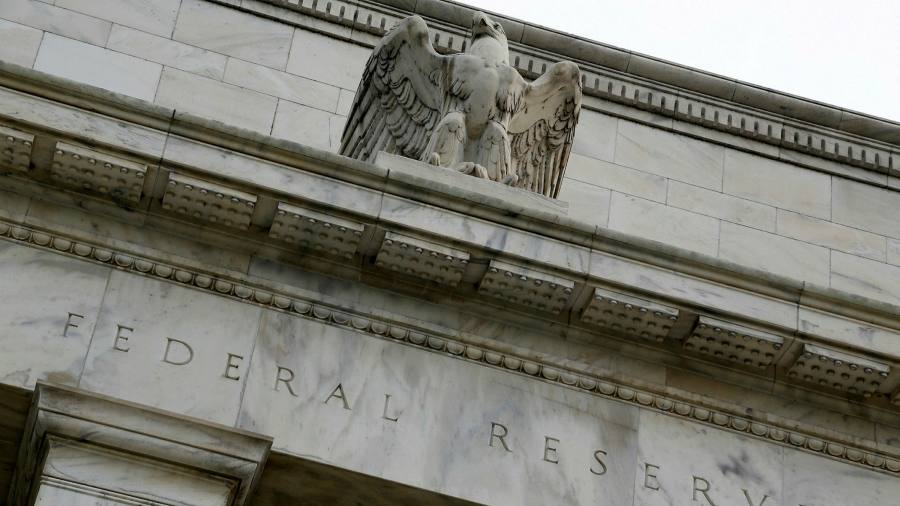
Inspite of the trifecta of persistently higher-than-anticipated inflation, more price rises in the pipeline and shifting behaviour, the inflation narrative is proving particularly sluggish to evolve at the US Federal Reserve. With that, monetary coverage carries on to drop powering realities on the floor.

The lack of a credible central lender voice on inflation also leaves marketplaces in somewhat of a muddled center. Witness the higher volatility in authorities bond marketplaces that is taking care of to whipsaw even the most refined and seasoned traders.

Fed hesitancy is a materials chance to economic and social wellbeing. I say this in the entire awareness that a lessening of the unexpected emergency-stage monetary coverage stimulus will not fix supply chain disruptions and labour shortages, the two main results in of accelerating charge-push inflation.

However the ongoing sidelining of the inflation threat by the Fed dangers creating issues even worse by de-anchoring inflationary expectations because of to the persistence of really loose financial policy, record quick economic ailments (according to the weekly Goldman Sachs index of them), and the absence of suitable ahead plan advice.

It will also bolster the look at that the Fed is captive to economical markets, in particular presented its rather lax regulatory stance, and insensitive to the continuous worsening in inequality.

There is a large amount at stake here. The afterwards the Fed is in easing its foot off the financial stimulus accelerator, the bigger the probability that it will have to hit the brakes far more aggressively down the road. This would unnecessarily undermine an economic recovery that desires to be potent, inclusive and sustainable.

By undermining macro-financial steadiness, this would also make inexperienced financing and other local climate initiatives more challenging to abide by up on, and spot a lot more obstructions in the path of the Biden administration’s ambitious economic agenda. Inflation will go on to strike very low-money homes specifically really hard. Currently, surging foods and petrol selling prices are having significant chunks out from house budgets.

The adverse hazard situation is also having much more worrisome. The extra the Fed falls driving, the increased the menace of it getting a driver of 3 of 4 simultaneous contractionary forces in the middle of subsequent yr if not earlier: better interest prices, economic market place instability, a reduction in the true price of family personal savings and the erosion of fiscal stimulus.

Need to these materialise collectively — and the likelihood is climbing — the US economy would stop up in an otherwise-avoidable economic downturn, also dragging down development fees in the rest of the globe. While this would deliver down inflation, it would do so at a large price tag.

This week’s inflation figures amplify an alarm bell that has been ringing for a whilst. Let us hope that, this time all over, the alarm prompts the Fed into taking added monetary steps, beginning with an acceleration next thirty day period in the timetable for the tapering of large-scale asset buys.

The superior information is that there is however a window for an powerful monetary plan adjustment. The lousy news is that the window has narrowed and is starting to be uncomfortably little. Failure to act instantly would transform the Fed’s increasingly discredited “transitory” characterisation from one of the worst inflation calls in a long time to also a huge coverage slip-up with popular and needless destruction, notably for the most susceptible segments of culture.

 

IMF Sees Risk of ‘Sizable’ Selloffs in Stocks, Housing Market

(Bloomberg) — The Worldwide Financial Fund warned of the possibility of sudden and steep declines in world wide fairness costs and dwelling values as the Federal Reserve and other central banks withdraw the help they’ve supplied for the duration of the pandemic.

Most Read from Bloomberg

Ultra-easy financial plan has led to “pockets of sector exuberance and increasing monetary leverage” that could unwind in disorderly approaches and place the financial recovery at possibility as credit rating tightens, the IMF mentioned on Tuesday in its semi-yearly Money Stability Report.

“Shocks could be coming from the central banks on their own for the reason that they are tightening far more speedily than earlier expected,” Tobias Adrian, director of the Financial and Cash Markets Department at the IMF, said in an interview. “We fret that we could see a offer-off of sizable magnitude, supplied the stage of stretched valuations.”

Complicating the central banks’ calculus, he said, is the emergence of inflation pressures “unlike just about anything we have observed just before.”

Whilst the IMF agrees with the Fed and other central banking institutions that the burst of inflation will most likely show short term, “there’s quite a bit of uncertainty” close to that forecast, Adrian mentioned. That raises “some dilemma marks” about how plan makers would respond to a money-marketplace meltdown.

Below are some of the monetary security risks highlighted in the IMF report:

Inventory Marketplaces

“Equity rate misalignments” are widespread as the run-up around the last 18 months has left shares elevated relative to economic fundamentals.

Charges could slide “substantially in the party of a unexpected reassessment of the financial outlook or unexpected plan modifications.”

Housing Markets

“Downside risks to property costs surface to be important. In a worst-case situation, the home selling price drop more than the up coming three several years is estimated to be about 14{21df340e03e388cc75c411746d1a214f72c176b221768b7ada42b4d751988996} in advanced economies and 22{21df340e03e388cc75c411746d1a214f72c176b221768b7ada42b4d751988996} in emerging markets.”

A person silver lining: When property values appear about as stretched as they did ahead of the 2007-08 fiscal disaster, the banking technique is in much improved condition than it was back then. in accordance to the Fund.

Cryptocurrencies

Although the crypto asset market has mushroomed to much more than $2 trillion, it is however smaller when in contrast with international inventory and bond marketplaces and does not yet pose a risk to the general stability of the entire world financial program.

But regulation is urgently essential, especially of stablecoins, to mitigate versus this sort of potential risks in the foreseeable future. “With limited or inadequate disclosure and oversight, the crypto ecosystem is exposed to purchaser fraud and current market integrity challenges,” the IMF claimed.

Most Examine from Bloomberg Businessweek

©2021 Bloomberg L.P.