
Attitudes begin to shift regarding monetary policy, economic growth, and stock prices

Attitudes begin to shift regarding monetary policy, economic growth, and stock prices

This post was originally published on TKer.co

Stocks declined, with the S&P 500 falling 1.1{21df340e03e388cc75c411746d1a214f72c176b221768b7ada42b4d751988996} last week. The index is now up 6.5{21df340e03e388cc75c411746d1a214f72c176b221768b7ada42b4d751988996} year to date, up 14.4{21df340e03e388cc75c411746d1a214f72c176b221768b7ada42b4d751988996} from its October 12 closing low of 3,577.03, and down 14.7{21df340e03e388cc75c411746d1a214f72c176b221768b7ada42b4d751988996} from its January 3, 2022 closing high of 4,796.56.

Over the past two weeks or so, it seems attitudes have begun to shift favorably regarding monetary policy, economic growth, and the trajectory of stock prices.

1. The Fed acknowledges inflation is coming down 🦅

In May of last year, Fed Chair Jerome Powell warned “there could be some pain involved in restoring price stability.” A month later, we learned inflation was unexpectedly heating up again. And then on June 15, the Fed announced an eye-popping 75-basis-point interest rate hike, the largest increase the central bank made in a single announcement since 1994.

Back then, I explained how these dynamics presented a conundrum for the stock market as market beatings would continue until inflation improved in the Fed’s eyes.

Fast forward to February 1, following several months of cooling inflation data, when Powell said at the conclusion of the Fed’s monetary policy meeting: “We can now say, I think, for the first time that the disinflationary process has started. We can see that.“ (Emphasis added.)

The consumer price index has cooled significantly, signaling disinflation. (Source: BLS via <a data-i13n="cpos:1;pos:1" href="https://fred.stlouisfed.org/series/PCEPILFE#0" rel="nofollow noopener" target="_blank" data-ylk="slk:FRED;cpos:1;pos:1" class="link ">FRED</a>)
The consumer price index has cooled significantly, signaling disinflation. (Source: BLS via FRED)

“Powell cited the word ‘disinflation’ 13 times in this press conference,” Tom Lee, head of research at Fundstrat Global Advisors, wrote that day in a note to clients. “This is a major change in language and tone and shows that the Fed is now officially recognizing the growing disinflation forces underway. In [the December press conference], ‘disinflation’ was used ZERO times by Powell.”

This is a pretty big deal for the stock market, as prices tend to bottom in the weeks and months before major bullish developments. If this less hawkish tone from the Fed holds, then it’s possible the October 12 low for the S&P 500 was the beginning of the next bull market.

1

“In our view, Chair Powell is placing more weight on an ‘immaculate disinflation’ scenario, where inflation pressures subside without some softening in labor market conditions, including higher unemployment,” Michael Gapen, U.S. economist at BofA, wrote on Tuesday. “This stands in contrast to the Powell from Jackson Hole, Wyoming, last August, who leaned strongly into doing whatever it takes to bring inflation down and emphasized that inflation was unlikely to subside without some ‘pain’ in labor markets.”

As long as the inflation numbers continue to trend on the cooler side, the Fed seems likely to keep its less hawkish tone.

For more, read: TKer’s 2022 word of the year: ‘Pain’ 🥊, When the Fed-sponsored market beatings will end 📈, and The market beatings will continue until inflation improves 🥊.

Upgrade to paid

2. The economy is less likely to go into recession 💪

I can’t pinpoint exactly when the consensus among economists was that the U.S. was due for a recession. The worries certainly intensified after we learned GDP growth was negative in Q1 of last year, and they got a whole lot worse when we learned growth was negative in Q2 as well.

For more on how recessions are and aren’t defined, read: You call this a recession? 🤨.

Over this period, I’ve been skeptical of the idea that the U.S. was destined for a downturn given the massive economic tailwinds I couldn’t stop thinking about and still can’t stop thinking about.

Coming into 2023, the baseline expectation for many Wall Street firms was that the U.S. would enter a recession at some point during the year.

But after the robust January jobs report and expansionary January ISM Services survey earlier this month, sentiment among economists has shifted a bit.

On Monday, Goldman Sachs economist Jan Hatzius published a note titled, “Receding Recession Risk,“ in which he lowered the odds of the U.S. entering a recession in the next 12 months to 25{21df340e03e388cc75c411746d1a214f72c176b221768b7ada42b4d751988996} from 35{21df340e03e388cc75c411746d1a214f72c176b221768b7ada42b4d751988996}.

“Continued strength in the labor market and early signs of improvement in the business surveys suggest that the risk of a near-term slump has diminished notably,“ Hatzius wrote.

On Wednesday, we learned the Atlanta Fed’s GDPNow model saw real GDP growth climbing at a 2.2{21df340e03e388cc75c411746d1a214f72c176b221768b7ada42b4d751988996} rate in Q1. This metric is up considerably from its initial estimate of 0.7{21df340e03e388cc75c411746d1a214f72c176b221768b7ada42b4d751988996} growth as of January 27.

Recent economic data suggests economic growth is much stronger than forecasters expect. (Source: <a data-i13n="cpos:1;pos:1" href="https://www.atlantafed.org/-/media/documents/cqer/researchcq/gdpnow/RealGDPTrackingSlides.pdf" rel="nofollow noopener" target="_blank" data-ylk="slk:Atlanta Fed;cpos:1;pos:1" class="link ">Atlanta Fed</a>)
Recent economic data suggests economic growth is much stronger than forecasters expect. (Source: Atlanta Fed)

On Thursday, The New York Times published an article from Jeanna Smialek titled: “What Recession? Some Economists See Chances of a Growth Rebound.“ The title speaks for itself.

On Sunday, The Wall Street Journal published an article from Nick Timiraos titled: “Hard or Soft Landing? Some Economists See Neither if Growth Accelerates.“ It addresses the same themes.

All that said, it could take a few more weeks of resilient economic data before more economists officially revise their forecasts to the upside.

For more, read: 9 reasons to be optimistic about the economy and markets 💪 and The bullish ‘goldilocks’ soft landing scenario that everyone wants 😀.

Share

3. The stock market might not crater in the first half 📉

Many prominent Wall Street strategists warned that the S&P 500 was likely to sell-off sharply during the early part of 2023 before recovering at least some of those losses later in the year. This was driven by the expectation that expectations for earnings would continue to get revised lower.

But there were at least three issues with all this: 1) stocks often rise in years when earnings fall, 2) stocks usually bottom before earnings bottom, and 3) when many people expect stocks to sell-off for the same reason, then that information is likely to be already priced into the market.

The S&P 500 is up 6.5{21df340e03e388cc75c411746d1a214f72c176b221768b7ada42b4d751988996} in 2023 so far, and the index has spent much of this period higher than where it started the year.

At least one top strategist has abandoned his call for an early sell-off. Here’s Goldman Sachs’ David Kostin in a Feb. 3 note to clients (emphasis added):

Recent macro developments have strengthened our economists’ confidence in a soft landing and reduced equity downside risk in the near term. Outside the US, the growth picture in China has brightened following an earlier-than-expected reopening and Europe is now on track to avoid a recession following a warmer-than-expected winter. In addition, Fed Chair Powell this week did little to push back on the easing of financial conditions. Our rates strategists’ expected path of Treasuries suggest little near-term upside to yields. We therefore believe the risk of a substantial drawdown in the near term has diminished, barring unforeseen data surprises. We raise our 3-month S&P 500 price target to 4,000 (-3{21df340e03e388cc75c411746d1a214f72c176b221768b7ada42b4d751988996} from today) from 3,600. As shown this week, still-light institutional investor positioning points to the risk of a chase that would see the market temporarily overshoot our S&P 500 target of 4,000.

Most of the S&P 500 have announced quarterly financial results in recent weeks, and based on what they’ve revealed, it looks like the outlook for earnings may not be as grim as previously anticipated.

“[W]e see no recession ahead in the broad economy — or in earnings — but a soft landing,” Ed Yardeni, president of Yardeni Research, said on Tuesday (h/t Carl Quintanilla). “We are currently estimating that S&P 500 operating earnings will be up 4.7{21df340e03e388cc75c411746d1a214f72c176b221768b7ada42b4d751988996} this year to $225 per share and 11.1{21df340e03e388cc75c411746d1a214f72c176b221768b7ada42b4d751988996} next year to $250.”

S&P 500 earnings are expected to grow in 2023 and 2024. (Source: Yardeni Research via <a data-i13n="cpos:1;pos:1" href="https://twitter.com/carlquintanilla/status/1622909989697339398/photo/1" rel="nofollow noopener" target="_blank" data-ylk="slk:@CarlQuintanilla;cpos:1;pos:1" class="link ">@CarlQuintanilla</a>)
S&P 500 earnings are expected to grow in 2023 and 2024. (Source: Yardeni Research via @CarlQuintanilla)

The S&P 500 is currently trading above most strategists’ year-end target for the index. Should these gains hold and perhaps improve, we could soon see some strategists revise up their targets.

For more, read: Wall Street’s 2023 outlook for stocks 🔭, Stocks often rise in years when earnings fall 🤯, One of the most frequently cited risks to stocks in 2023 is ‘overstated’ 😑, and Everyone’s talking about a near-term sell-off. A contrarian signal?

What to make of all this

Not everyone thinks resilient economic growth is unambiguously good news.

“With very strong job growth, a higher labor force participation rate, and a decline in the unemployment rate to the lowest level since 1969, it is beginning to look more like a ‘no landing’ scenario,” Apollo’s Torsten Slok wrote in a February 4 note. “Under the no landing scenario the economy does not slow down, and upside risks to inflation are coming back after the initial decline in inflation driven by supply chain improvements.”

Renewed concerns about inflation could force the Fed to get more hawkish, which puts economic growth and rising stock prices at risk. In other words, good news could become bad news once again. For more on this dynamic, read: Your guide to ‘good news is bad news’ and ‘bad news is good news’ 🙃.

But if there’s one thing we’ve learned in recent months, it’s that we can simultaneously have consecutive months of healthy job growth and inflation readings that come in cool. For more on this dynamic, read: The bullish ‘goldilocks’ soft landing scenario that everyone wants 😀.

As always, time will tell what actually happens. But for the time being, the optimists appear to be triumphing over the pessimists as inflation, economic growth, and stock prices have been trending favorably in recent months.

More from TKer:

Share

That’s interesting! 💡

Did you know cricket is the second most watched sport in the world? And it’s emerging in the U.S. in a big way. From JohnWallStreet:

American Cricket Enterprises (ACE), the entity operating Major League Cricket (MLC), has raised more than $100 million. ACE founders Sameer Mehta, Vijay Srinivasan, Satyan Gajwani and Vineet Jain — and the balance of company investors — are betting the league will be able to draw the sport’s top players and attract interest from fans around the globe, becoming a staple of the cricket calendar in the process. If it can, club valuations will “grow like a hockey stick,” Sanjay Govil (chairman, Infinite Computer Solutions and CEO, Zyter Inc.) said. Govil owns the team in Washington D.C. Dallas, San Francisco, Los Angeles, New York City and Seattle will also have clubs playing in the inaugural ’23 season, which is slated to take place from June 13-30.

Reviewing the macro crosscurrents 🔀

There were a few notable data points from last week to consider:

⛓️ Supply chains continue to improve. The New York Fed’s Global Supply Chain Pressure Index

2

— a composite of various supply chain indicators — fell in January and is hovering at levels seen in late 2020. It’s way down from its December 2021 supply chain crisis high.

(Source: <a data-i13n="cpos:1;pos:1" href="https://www.newyorkfed.org/research/policy/gscpi#/interactive" rel="nofollow noopener" target="_blank" data-ylk="slk:NY Fed;cpos:1;pos:1" class="link ">NY Fed</a>)

📈 Inventory levels are up. According to Census Bureau data released Tuesday, wholesale inventories climbed 0.1{21df340e03e388cc75c411746d1a214f72c176b221768b7ada42b4d751988996} to $932.9 billion in December. The inventories/sales ratio was 1.36, up significantly from 1.24 the previous year.

For more on supply chains and inventory levels, read: “We can stop calling it a supply chain crisis ⛓,“ “9 reasons to be optimistic about the economy and markets 💪, “and “The bullish ‘goldilocks’ soft landing scenario that everyone wants 😀.

👍 Consumer sentiment is improving. From the University of Michigan February Survey of Consumers: “After three consecutive months of increases, sentiment is now 6{21df340e03e388cc75c411746d1a214f72c176b221768b7ada42b4d751988996} above a year ago but still 14{21df340e03e388cc75c411746d1a214f72c176b221768b7ada42b4d751988996} below two years ago, prior to the current inflationary episode. Overall, high prices continue to weigh on consumers despite the recent moderation in inflation, and sentiment remains more than 22{21df340e03e388cc75c411746d1a214f72c176b221768b7ada42b4d751988996} below its historical average since 1978.“

(Source: University of Michigan via <a data-i13n="cpos:1;pos:1" href="https://twitter.com/M_McDonough/status/1624062147427794944/" rel="nofollow noopener" target="_blank" data-ylk="slk:@M_McDonough;cpos:1;pos:1" class="link ">@M_McDonough</a>)

🛍️ Consumers are spending. From BofA: “We saw signs of strengthening in consumer spending in both retail and services in January, accelerating from December. Total Bank of America credit and debit card spending per household was up 5.1{21df340e03e388cc75c411746d1a214f72c176b221768b7ada42b4d751988996} YoY in January, vs. 2.2{21df340e03e388cc75c411746d1a214f72c176b221768b7ada42b4d751988996} YoY in December. On a month-over-month (MoM) seasonally adjusted (SA) basis, total card spending per household was up 1.7{21df340e03e388cc75c411746d1a214f72c176b221768b7ada42b4d751988996}, more than reversing the 1.4{21df340e03e388cc75c411746d1a214f72c176b221768b7ada42b4d751988996} MoM decline in December.“

(Source: <a data-i13n="cpos:1;pos:1" href="https://business.bofa.com/content/dam/flagship/bank-of-america-institute/economic-insights/consumer-checkpoint-february-2023.pdf" rel="nofollow noopener" target="_blank" data-ylk="slk:BofA;cpos:1;pos:1" class="link ">BofA</a>)

🍻 They’re buying cheap beer. From FreightWaves’ Rachel Premack: “…Beer became suddenly pricey at the end of last year. Beer prices at retail, which doesn’t include bars or restaurants, popped 7{21df340e03e388cc75c411746d1a214f72c176b221768b7ada42b4d751988996} during the last 13 weeks of 2022… That price increase is showing up in how people are buying brews, said Dave Williams, vice president of Bump Williams Consulting. People are increasingly buying, say, 12-packs over 30-packs or even single servings of beer. They’re trading down too — snagging the more economic Keystone over comparatively pricey Coors. That explains why the “below premium” segment was the only one to see an increase in demand in January compared to January 2022, according to the National Beer Wholesalers Association’s Beer Purchasers’ Index…”

(Source: <a data-i13n="cpos:1;pos:1" href="https://www.freightwaves.com/news/what-crappy-beer-demand-tells-us-about-the-economy" rel="nofollow noopener" target="_blank" data-ylk="slk:FreightWaves;cpos:1;pos:1" class="link ">FreightWaves</a>)

💳 Consumers are taking on more debt, but levels are manageable. According to Federal Reserve data, total revolving consumer credit outstanding increased to $1.196 trillion in December. Revolving credit consists mostly of credit card loans.

(Source: Federal Reserve via <a data-i13n="cpos:1;pos:1" href="https://fred.stlouisfed.org/series/REVOLSL#" rel="nofollow noopener" target="_blank" data-ylk="slk:FRED;cpos:1;pos:1" class="link ">FRED</a>)
(Source: Federal Reserve via FRED)

While the aggregate borrowing seems high, they’re much more reasonable when you look at consumer finances more holistically. From BofA: “On the savings side, Bank of America internal data suggests median household savings and checking balances across income groups have been trending down since April 2022, with the lowest income group (<$50k) seeing the steepest drawdown. But deposits remain above 2019 levels (Exhibit 6) for all income cohorts.“

(Source: <a data-i13n="cpos:1;pos:1" href="https://business.bofa.com/content/dam/flagship/bank-of-america-institute/economic-insights/consumer-checkpoint-february-2023.pdf" rel="nofollow noopener" target="_blank" data-ylk="slk:BofA;cpos:1;pos:1" class="link ">BofA</a>)

💳 No, they are not maxing out their credit cards. From BofA: “Lower income consumers appear to still have some level of comfort in terms of their financial constraints. On the one hand, the ratio of median household card spending to median deposit balances (spending-to-savings ratio) remained lower than in 2019 for households with an annual income of less than <$150k (Exhibit 7). This suggests this cohort’s spending would not need to be reduced too much for the spending-to-savings ratio to return to 2019 levels. On the other hand, the Bank of America credit card utilization rate also remained lower than in 2019 across income groups (Exhibit 8).“

(Source: <a data-i13n="cpos:1;pos:1" href="https://business.bofa.com/content/dam/flagship/bank-of-america-institute/economic-insights/consumer-checkpoint-february-2023.pdf" rel="nofollow noopener" target="_blank" data-ylk="slk:BofA;cpos:1;pos:1" class="link ">BofA</a>)

For more on this, read: Consumer finances are in remarkably good shape 💰

💵 Consumers are getting more on their savings accounts. From Semafor’s Liz Hoffman: “The average savings account rate has quintupled since last January to 0.33{21df340e03e388cc75c411746d1a214f72c176b221768b7ada42b4d751988996}, according to data from the U.S. Federal Deposit Insurance Corporation…“

(Source: <a data-i13n="cpos:1;pos:1" href="https://www.semafor.com/newsletter/02/09/2023/national-security-worries-force-forbes-to-look-for-a-us-investor" rel="nofollow noopener" target="_blank" data-ylk="slk:Semafor;cpos:1;pos:1" class="link ">Semafor</a>)

🤔 Low union participation helps explain low wage growth. From UBS: ““Wage growth is slowing noticeably along multiple measures even with a decades low unemployment rate. Why? … One reason could be low bargaining power for workers… The share of unionized workers among private employees fell to 6{21df340e03e388cc75c411746d1a214f72c176b221768b7ada42b4d751988996} in 2022, according to the BLS.”

💰 Wall Street is busy. From Bloomberg on Tuesday: “About seven IPOs are expected to raise a combined $900 million and begin trading by Friday [Feb. 10], making for the busiest week since October’s $990 million listing by Intel Corp.’s self-driving technology unit Mobileye Global Inc., according to data compiled by Bloomberg. [Last] week’s debuts include solar power equipment maker Nextracker Inc., which plans to raise as much as $535 million in what would be the year’s biggest deal yet. Enlight Renewable Energy Ltd., which is already public in Israel, plans to add a listing on the Nasdaq.“

(Source: <a data-i13n="cpos:1;pos:1" href="https://www.bloomberg.com/news/articles/2023-02-07/ipo-market-warms-up-with-busiest-us-trading-week-since-october" rel="nofollow noopener" target="_blank" data-ylk="slk:Bloomberg;cpos:1;pos:1" class="link ">Bloomberg</a>)

And it’s not just IPOs. There were numerous reports of dealmaking activity last week involving some big names (link).

(via <a data-i13n="cpos:1;pos:1" href="https://twitter.com/SamRo/status/1622907207896469505" rel="nofollow noopener" target="_blank" data-ylk="slk:@SamRo;cpos:1;pos:1" class="link ">@SamRo</a>)

📉 👎 Big companies announce layoffs. On Monday, Bloomberg reported that Dell Technologies would be “eliminating about 6,650.“ On Tuesday, Zoom announced it would “say goodbye to around 1,300 hardworking, talented colleagues.“ On Wednesday, Disney announced it would be “reducing our workforce by approximately 7,000 jobs.“ On Thursday, News Corp announced “an expected 5{21df340e03e388cc75c411746d1a214f72c176b221768b7ada42b4d751988996} headcount reduction, or around 1,250 positions,” and Axios reported that Yahoo would lay off “more than 1,600 people.”

Here’s UBS economist Paul Donovan offering some perspective: “Another company—Disney this time — has announced headcount reductions. We get US initial jobless claims data [Thursday], and the macroeconomic data does not match the high profile press releases of job losses. A major reason is that large companies are not that important economically — smaller businesses matter most to labor markets. Smaller businesses tend to have underemployment rather than unemployment. It is quite hard to fire 10{21df340e03e388cc75c411746d1a214f72c176b221768b7ada42b4d751988996} of a three-person company.“

For more on this, read: Making sense of conflicting news on the labor market 🤔.

⚠️ More big layoff announcements to come? Goldman Sachs economists think it’s possible. From a research note published Monday: “…on the negative side, there could be additional layoff announcements yet to come from other large companies, as roughly 15{21df340e03e388cc75c411746d1a214f72c176b221768b7ada42b4d751988996} of companies in the S&P 500 have seen headcount increases of 40{21df340e03e388cc75c411746d1a214f72c176b221768b7ada42b4d751988996} or more since the start of the pandemic (Exhibit 4), and only one-fifth of them have announced layoffs so far.“

(Source: Goldman Sachs)

(Source: Goldman Sachs)

But: “…on the positive side, similar to the rebalancing seen so far in the broader labor market, even these companies that have announced layoffs have reduced their total demand for workers overwhelmingly by reducing job openings rather than by conducting layoffs.“ For more on job openings, read: How job openings explain everything in the economy and the markets right now 📋.

Also: “…Exhibit 7 shows that most industries (8 out of 11) have reemployment rates above pre-pandemic levels, including the information sector (the sector of most major tech companies), and that all of them have reemployment rates that are above the recent expansion average.”

(Source: Goldman Sachs)

(Source: Goldman Sachs)

I’ve started an informal thread on Twitter tracking anecdotes of companies hiring (Link).

For more on hiring, read: That’s a lot of hiring 🍾 and You should not be surprised by the strength of the labor market 💪.

💼 Unemployment claims remain low. Initial claims for unemployment benefits climbed to 196,000 during the week ending Feb. 4, up from 183,000 the week prior. While the number is up from its six-decade low of 166,000 in March, it remains near levels seen during periods of economic expansion.

(Source: DOL via <a data-i13n="cpos:1;pos:1" href="https://fred.stlouisfed.org/series/ICSA#" rel="nofollow noopener" target="_blank" data-ylk="slk:FRED;cpos:1;pos:1" class="link ">FRED</a>)

For more on low unemployment, read: 9 reasons to be optimistic about the economy and markets 💪.

🏠 On work from home #WFH. From Stanford professor Nick Bloom: “Data on 4,000 U.S. firms #WFH policies: 1) 50{21df340e03e388cc75c411746d1a214f72c176b221768b7ada42b4d751988996} of firms are fully on-site, like food-service, accommodation and retail, 2) 40{21df340e03e388cc75c411746d1a214f72c176b221768b7ada42b4d751988996} combine #WFH and in person days in various ways: min-days, anchor days, employee choice etc, 3) 8{21df340e03e388cc75c411746d1a214f72c176b221768b7ada42b4d751988996} are fully remote“

(Source: <a data-i13n="cpos:1;pos:1" href="https://twitter.com/I_Am_NickBloom/status/1622910542485549057/" rel="nofollow noopener" target="_blank" data-ylk="slk:@I_Am_NickBloom;cpos:1;pos:1" class="link ">@I_Am_NickBloom</a>)

Putting it all together 🤔

We’re getting a lot of evidence that we may get the bullish “Goldilocks” soft landing scenario where inflation cools to manageable levels without the economy having to sink into recession.

And the Federal Reserve has recently adopted a less hawkish tone, acknowledging on February 1 that “for the first time that the disinflationary process has started.“

Nevertheless, inflation still has to come down more before the Fed is comfortable with price levels. So we should expect the central bank to continue to tighten monetary policy, which means we should be prepared for tighter financial conditions (e.g. higher interest rates, tighter lending standards, and lower stock valuations). All of this means the market beatings may continue and the risk the economy sinks into a recession will be elevated.

It’s important to remember that while recession risks are elevated, consumers are coming from a very strong financial position. Unemployed people are getting jobs. Those with jobs are getting raises. And many still have excess savings to tap into. Indeed, strong spending data confirms this financial resilience. So it’s too early to sound the alarm from a consumption perspective.

At this point, any downturn is unlikely to turn into economic calamity given that the financial health of consumers and businesses remains very strong.

As always, long-term investors should remember that recessions and bear markets are just part of the deal when you enter the stock market with the aim of generating long-term returns. While markets have had a terrible year, the long-run outlook for stocks remains positive.

For more on how the macro story is evolving, check out the previous TKer macro crosscurrents »

For more on why this is an unusually unfavorable environment for the stock market, read: The market beatings will continue until inflation improves 🥊 »

For a closer look at where we are and how we got here, read: The complicated mess of the markets and economy, explained 🧩 »

This post was originally published on TKer.co

Sam Ro is the founder of TKer.co. Follow him on Twitter at @SamRo

Click here for the latest stock market news and in-depth analysis, including events that move stocks

Read the latest financial and business news from Yahoo Finance

Download the Yahoo Finance app for Apple or Android

Follow Yahoo Finance on Twitter, Facebook, Instagram, Flipboard, LinkedIn, and YouTube
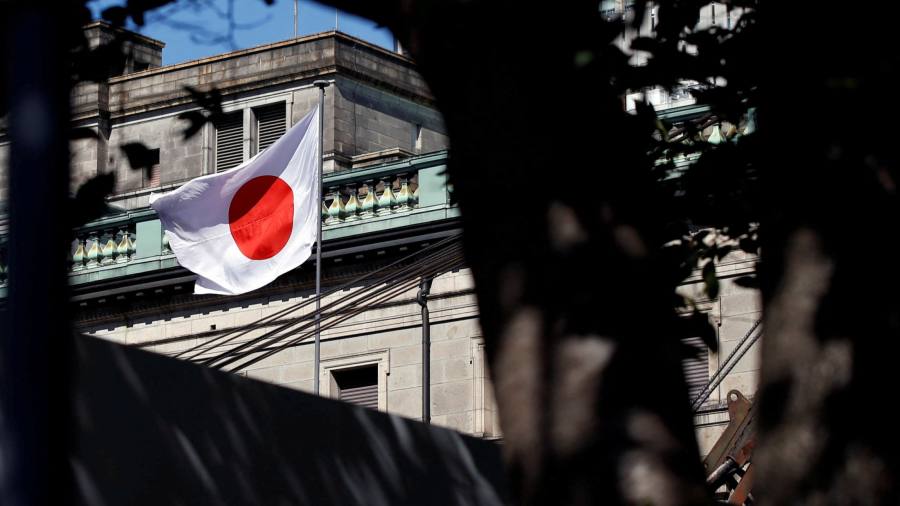
IMF warns of market impact of abrupt Bank of Japan policy change

IMF warns of market impact of abrupt Bank of Japan policy change

The IMF has warned that an abrupt modify in Japan’s ultra-free monetary regime would have “meaningful spillover” results on world-wide economical marketplaces, underscoring the have to have for the Financial institution of Japan to clearly converse about its long term plan.

In an interview, Gita Gopinath, the IMF’s initial deputy handling director, named on the BoJ to get a versatile tactic to managing yields on governing administration bonds as she warned of “significant upside risks” to inflation in the around phrase.

She extra that Asia’s most innovative economic system was at “a sensitive juncture”. The BoJ, which will have a new governor in April, has come below raising marketplace strain to change away from its very long-standing easing measures as Japan’s main inflation fee has risen to a 41-year higher of 4 for each cent. It faces the problem of sustaining its accommodative financial stance to obtain its inflation focus on although preventing overshooting and turmoil in currency and bond marketplaces.

“We even now imagine that it is critical for monetary coverage to continue being remarkably accommodative at this point. Generate curve control is a element of that toolkit,” Gopinath reported all through her go to to evaluate Japan’s economic system.

“In the close to time period, we see important upside hazards to inflation. The maximize in flexibility [in managing the yield curve] would aid.”

The central bank marginally raised the cap on yields on 10-yr Japanese governing administration bonds in December, but it has built no further adjustments to its significant easing steps, arguing that cost raises have not led to a increase in wages that would empower it to durably accomplish its 2 per cent inflation target.

The IMF advised the BoJ could take into consideration three choices to let flexibility in lengthy-term JGB yields: widen the 10-calendar year band all around the yield target and/or increase the 10-yr concentrate on shorten the produce curve goal or change to a quantity focus on of JGB buys. 

“In the situation that major upside inflation risks materialise, financial stimulus withdrawal will have to be a great deal more robust,” it explained in a assertion.

More time expression, on the other hand, the IMF expects Japan’s core inflation, which excludes volatile food costs, to peak in the initial quarter of this calendar year and gradually decrease to underneath 2 for every cent by the conclusion of 2024. It expects expansion of 1.8 for each cent in 2023 to gradual to .9 per cent in 2024.

“We however believe that there are not plenty of indicators that this will direct to inflation remaining durably at the 2 for each cent focus on,” Gopinath stated.

In December, the BoJ stunned buyers by saying it would make it possible for 10-yr governing administration bond yields to fluctuate by .5 share details earlier mentioned or down below its target of zero, replacing the preceding band of .25 points. Very last week, it released an expanded programme of loans to banking institutions to stabilise the generate curve.

All through a plan meeting last 7 days, BoJ board customers also claimed the central lender desired to continue on with its present YCC policy, noting that it would consider time to sustainably obtain its inflation target.

“The financial institution should diligently clarify that it needs to continue with monetary easing, that its accommodative policy stance has not been altered, and that it will acquire time to achieve the rate steadiness concentrate on of 2 for each cent in a sustainable and secure fashion because wage boosts have not yet turn into comprehensive-fledged,” board members claimed in accordance to a summary of opinions at the conference introduced on Thursday.

New Research on the Impact of Modern Monetary Policy on Equity Markets During the Covid-19 Pandemic Wins 2022 Graham and Dodd Award of Excellence

New Research on the Impact of Modern Monetary Policy on Equity Markets During the Covid-19 Pandemic Wins 2022 Graham and Dodd Award of Excellence

Released in the Money Analysts Journal, the successful exploration addresses the substantial impact of the most intense unconventional US financial coverage on report.

NEW YORK, Jan. 23, 2023 /PRNewswire/ — CFA Institute, the world wide association of expenditure pros, announces the winners of the 2022 Graham and Dodd Awards of Excellence. These prestigious awards are bestowed per year for the most effective investigate articles released in the Money Analysts Journal, the flagship publication of CFA Institute, and understand the contribution of the content articles to the exercise of investment decision administration. The awards are named in honor of Benjamin Graham and David L. Dodd for their enduring contributions to the industry of investment assessment.

The 2022 winner of the Graham and Dodd Major Award is Free Marketplaces to Fed Marketplaces: How Contemporary Monetary Coverage Impacts Equity Markets, Economical Analysts Journal, by Tālis J. Putniņš, Professor of Finance at the College Engineering of Sydney and the Stockholm School of Economics in Riga.

The analysis addresses the considerable influence of the most aggressive US financial policy on history when the Federal Reserve (the Fed) doubled its balance sheet throughout the COVID-19 pandemic. The investigate discovers a solid relationship involving the Fed’s harmony sheet and inventory current market price ranges it finds that the Fed responds far more strongly (by way of its asset buys) to negative stock industry returns, whilst the inventory industry is additional sensitive to the Fed’s equilibrium sheet contractions than it is to equilibrium sheet expansions. The investigation finds that the timing of the current market reactions counsel that the stock market place mainly responds to understood harmony-sheet improvements, as opposed to announcement consequences that would imply an earlier response. Even more, the Fed’s stability sheet expansion for the duration of COVID-19 describes at least just one-3rd of the stock market’s rebound subsequent its crash in March 2020.

The investigation will aid asset supervisors product the steps of the Fed to superior realize the effects of present-day monetary plan on portfolio threat and return. The writer exhibits that, specially in instances of macroeconomic dislocation, the bilateral feedback between asset markets and monetary authorities is of very first-order importance to traders and policymakers.

The 2022 winner of the Graham and Dodd Scroll Award is Which Company ESG News Does the Market Respond To?, Economical Analysts Journal, by George Serafeim and Aaron Yoon. Professor Serafeim is the Charles M. Williams Professor of Company Administration at Harvard Enterprise School wherever he co-potential customers the Weather and Sustainability Influence AI Lab Professor Yoon is Assistant Professor of Accounting and Facts Administration at Northwestern University – Kellogg Faculty of Management.

The article analyzes a special dataset that creates an ESG information sentiment rating by tracking everyday ESG information throughout additional than 3,000 firms and examines no matter whether and how traders react to the launch of distinctive ESG-connected info. The study located that prices react only to marketplace-unique economically product ESG information, and that the cost response is more substantial for ESG news that is optimistic, has obtained more news protection, and is connected to social money challenges.

Margaret Franklin, CFA, President and CEO, CFA Institute, responses:

“For a lot more than 60 many years, the Graham and Dodd Awards have regarded a decide on amount of Money Analyst Journal articles for their excellent contribution to the world-wide overall body of demanding and peer-reviewed expenditure investigation. I’m thrilled by the caliber of exploration that these annual awards carry on to surface area. These successful articles are a meaningful addition to our collective knowledge as market practitioners. I remarkably commend them to those who have a deep fascination and curiosity about the working of financial investment markets.”

William Goetzmann, Executive Editor of Fiscal Analysts Journal, feedback:

“The recipients of this year’s Graham and Dodd awards impressed the Economical Analysts Journal editorial group and panel of judges with investigation that is modern, actionable, perfectly-published, well timed, and of curiosity to both investment practitioners and academia. These is effective produce crucial info-abundant learnings and observations about marketplaces, trader conduct, and monetary coverage, during a single of the most difficult financial periods in modern-day history.”

The study articles or blog posts for present and earlier winners can be accessed right here.

For further facts, remember to make contact with pr@cfainstitute.org.

Notes to Editors

About the Graham and Dodd Awards of Excellence
The Graham and Dodd Awards of Excellence comprise a Top Award for the most effective write-up and up to two Scroll Awards. Winners are picked out by a two-phase range approach: Initially, all customers of the Economic Analysts Journal Editorial Board and Advisory Council are invited to vote, making a shortlist of exploration articles or blog posts released in the Economical Analysts Journal throughout the calendar year. Second, the Graham and Dodd Awards of Excellence operating team, assembled from the CFA Institute leadership, Board of Governors, and Monetary Analysts Journal editorial workforce, collectively decides the award winners from the shortlist.

About the Fiscal Analysts Journal
The CFA Institute Economic Analyst Journal is the top practitioner journal for the investment administration community. Considering the fact that its founding in 1945, the journal has innovative the understanding and comprehending of the practice of investment administration as a result of the publication of peer-reviewed and practitioner-related investigate. The Financial Analysts Journal is released 4 times for each 12 months and is a gain of CFA Institute membership, which contains more than 190,000 CFA charterholders serving in roles which include expense management, exploration, and consulting. Much more than 3,200 economical establishments and university libraries all over the world have membership access. The Taylor & Francis Press Go gives journalists with no cost access to Fiscal Analyst Journal content articles.

About CFA Institute
CFA Institute is the global association of expense industry experts that sets the standard for professional excellence and qualifications. The organization is a champion of moral conduct in investment marketplaces and a highly regarded supply of expertise in the world-wide money group. Our goal is to develop an ecosystem wherever investors’ interests appear initially, marketplaces perform at their ideal, and economies mature. There are much more than 190,000 CFA charterholders worldwide in 160 marketplaces. CFA Institute has nine places of work throughout the world and 160 regional societies. For far more details, pay a visit to www.cfainstitute.org or comply with us on Linkedin and Twitter at @CFAInstitute.

Cision

Cision

See first written content:https://www.prnewswire.com/news-releases/new-investigation-on-the-effects-of-modern-day-financial-plan-on-fairness-markets-all through-the-covid-19-pandemic-wins-2022-graham-and-dodd-award-of-excellence-301727687.html

Resource CFA Institute

Why Japan’s shock policy shift didn’t ‘freak out’ US markets: Morning Brief

Why Japan’s shock policy shift didn’t ‘freak out’ US markets: Morning Brief

This post first appeared in the Morning Brief. Get the Morning Transient sent immediately to your inbox each Monday to Friday by 6:30 a.m. ET. Subscribe

Wednesday, December 21, 2022

Today’s e-newsletter is by Julie Hyman, anchor and correspondent at Yahoo Finance. Follow Julie on Twitter @juleshyman. Study this and additional market news on the go with Yahoo Finance Application.

Traders confronted a person far more surprise late Monday to cap off a unstable calendar year: a shock modify in financial plan from the Lender of Japan.

The BoJ introduced a tweak to its yield curve manage plan, expressing it will now make it possible for the produce on 10-year government bonds to increase to about .5{21df340e03e388cc75c411746d1a214f72c176b221768b7ada42b4d751988996}, up from a past cap of .25{21df340e03e388cc75c411746d1a214f72c176b221768b7ada42b4d751988996}. The central financial institution is however concentrating on a {21df340e03e388cc75c411746d1a214f72c176b221768b7ada42b4d751988996} level on its 10-year bond and taken care of a -.1{21df340e03e388cc75c411746d1a214f72c176b221768b7ada42b4d751988996} benchmark fascination level.

A “nasty early Xmas surprise,” the Wall Avenue Journal dubbed it. “Bank of Japan stuns markets,” the Fiscal Situations blared. Bloomberg Information called it a “shocker.”

In fact, currency and fees marketplaces reacted accordingly, with the Japanese yen (JPY=X) surging 4{21df340e03e388cc75c411746d1a214f72c176b221768b7ada42b4d751988996} versus the U.S. dollar, and the U.S. 10-calendar year Treasury yield leaping by far more than 10 foundation points.

For marketplaces, the major deal is the Financial institution of Japan hadn’t joined the world wide central lender tightening get together right up until now, and its job of sustaining very low-and-secure financial policy has been one particular of the longest-standing in the world.

BoJ Governor Haruhiko Kuroda mentioned in a push meeting next the final decision that this transfer however doesn’t sign tightening, but relatively a continuation of the bank’s generate curve handle policy. Kuroda is owing to step down from his post in April.

Bank of Japan Governor Haruhiko Kuroda attends a news conference in Tokyo, Japan in this photo provided by Kyodo on December 20, 2022. Mandatory credit Kyodo/via REUTERS ATTENTION EDITORS - THIS IMAGE WAS PROVIDED BY A THIRD PARTY. MANDATORY CREDIT. JAPAN OUT. NO COMMERCIAL OR EDITORIAL SALES IN JAPAN

Lender of Japan Governor Haruhiko Kuroda attends a news convention in Tokyo, Japan in this image supplied by Kyodo on December 20, 2022. By means of Reuters

Amidst all the excitement, U.S. stocks mainly shrugged.

“The modest go increased in Japanese fees is significant for Fx markets, but it will not have any impact on the condition of the U.S. economic outlook,” wrote Torsten Slok, main economist at Apollo International Management, in a note to traders.

A single of the considerations with a probable rise in charges in Japan is that Japanese investors would pull income from international belongings amid the prospect for far better returns at residence.

Slok implies the result would be negligible, nevertheless, with Japanese holdings of U.S. extensive-term Treasury bonds accounting for just 5{21df340e03e388cc75c411746d1a214f72c176b221768b7ada42b4d751988996} of the total. For U.S. company bonds and U.S. equities, Japanese holdings comprise just 2{21df340e03e388cc75c411746d1a214f72c176b221768b7ada42b4d751988996} and 1{21df340e03e388cc75c411746d1a214f72c176b221768b7ada42b4d751988996} of the total, respectively.

A further chance when there is a industry shock is that it could cause some kind of “blowup,” stated Steve Sosnick, main strategist at Interactive Brokers.

In certain, those using a “carry trade” could have been susceptible pursuing the Financial institution of Japan’s announcement. As Sosnick defined in a site publish, “The trade consists of borrowing a very low yielding forex — normally the yen — and working with the proceeds to order increased yielding fixed earnings property or to finance speculation in equities and other possibility belongings. In principle, individuals who had the carry trade on ought to be finding clobbered with the yen increasing substantially.”

But there was no proof of that clobbering in the industry, he explained, possibly since the yen had previously been shifting higher, or maybe because hedge cash ended up repositioning into the end of the 12 months.

In truth, the increase in the yen could in fact end up becoming good news for U.S. stocks, creating this “terrible early Christmas shock” a person to the upside.

Considering that it attained its superior compared to the yen on Oct 20 of this calendar year, the greenback has fallen by about 12{21df340e03e388cc75c411746d1a214f72c176b221768b7ada42b4d751988996}. That kind of go tends to presage a inventory rally, analysts at Bespoke Expenditure Team wrote in a observe on Tuesday.

Wanting at other situations when the yen rallied by at the very least 10{21df340e03e388cc75c411746d1a214f72c176b221768b7ada42b4d751988996} versus the greenback more than a two-thirty day period time period, Bespoke found shares were being larger a calendar year afterwards in each individual occasion given that 1978, and experienced only risen by fewer than double-digits two times.

“One thirty day period later, the S&P 500 was only higher 62{21df340e03e388cc75c411746d1a214f72c176b221768b7ada42b4d751988996} of the time, but three, six, and twelve months later on, U.S. stocks rallied 85{21df340e03e388cc75c411746d1a214f72c176b221768b7ada42b4d751988996} of the time,” they explained.

“When the headline hit, my response was almost certainly like a great deal of other people’s reaction, which was – whoa!” Sosnick reported. “It was shocking, but ultimately not a reason to freak out.”

What to Watch Today

Economic system

  • 7:00 a.m. ET: MBA House loan Programs, 7 days ended Dec. 16 (3.2{21df340e03e388cc75c411746d1a214f72c176b221768b7ada42b4d751988996} through prior week)

  • 8:30 a.m. ET: Latest Account Equilibrium, Q3 (-$222. billion expected, -$251.1 billion throughout prior thirty day period)

  • 10:00 a.m. ET: Existing Property Gross sales, November (4.20 million expected, 4.43 million throughout prior thirty day period)

  • 10:00 a.m. ET: Current House Income, month-in excess of-thirty day period, November (-5.2{21df340e03e388cc75c411746d1a214f72c176b221768b7ada42b4d751988996} anticipated, -5.9{21df340e03e388cc75c411746d1a214f72c176b221768b7ada42b4d751988996} for the duration of prior month)

  • 10:00 a.m. ET: Conference Board Purchaser Self confidence, December (101. predicted, 100.2 in the course of prior month)

  • 10:00 a.m. ET: Convention Board Current Predicament, November (137.4 in the course of prior month)

  • 10:00 a.m. ET: Convention Board Anticipations, November (75.4 during prior thirty day period)

Earnings

  • Micron Technological innovation (MU), Cintas (CTAS), MillerKnoll (MLKN), Rite Support (RAD), Toro (TTC), Carnival Cruises (CCL)

Click below for the most recent inventory sector news and in-depth investigation, like situations that go stocks

Read through the latest fiscal and organization information from Yahoo Finance

Download the Yahoo Finance app for Apple or Android

Follow Yahoo Finance on Twitter, Facebook, Instagram, Flipboard, LinkedIn, and YouTube

Why the Bank of Japan’s surprise policy twist rattled global markets

Why the Bank of Japan’s surprise policy twist rattled global markets

Anchors aweigh?

The Bank of Japan sent shock waves through world wide economical markets Tuesday, correctly loosening a cap on 10-year authorities bond yields in a surprise transfer observed as potentially pointing the way to a broader tightening by the previous big world wide central financial institution to maintain an ultraloose monetary coverage.

Analysts and economists debated the significance of the shift. But the marketplace response showed international investors were being rattled by the probable for the Bank of Japan to at some point give up its part as the previous remaining reduced-fee anchor.

“The fact that investors see today’s go as heralding a more substantial shift is evident from the market place reaction,” stated Jim Reid, strategist at Deutsche Bank, in a be aware.

The BOJ, at a regular coverage assembly, mentioned the produce on the 10-year Japanese governing administration bond could rise as large as .5{21df340e03e388cc75c411746d1a214f72c176b221768b7ada42b4d751988996} from a preceding cap of .25{21df340e03e388cc75c411746d1a214f72c176b221768b7ada42b4d751988996}. The central bank, as aspect of a plan recognized as generate curve manage, has maintained a target assortment about zero for the benchmark authorities bond generate considering that 2016 and employed that as a resource to maintain in general current market curiosity premiums minimal.

For its part, the BOJ did not cite inflation as a reason for the shift, as an alternative highlighting problems about the functioning of the govt bond marketplace.

The yen soared, strengthening by additional than 3{21df340e03e388cc75c411746d1a214f72c176b221768b7ada42b4d751988996} versus the U.S. dollar
USDJPY,
+.02{21df340e03e388cc75c411746d1a214f72c176b221768b7ada42b4d751988996},
whilst yields on 10-year Japanese govt bonds
TMBMKJP-10Y,
.448{21df340e03e388cc75c411746d1a214f72c176b221768b7ada42b4d751988996}
were being up 16 foundation points at .413{21df340e03e388cc75c411746d1a214f72c176b221768b7ada42b4d751988996}, after hitting their highest level considering the fact that 2015. U.S. Treasury yields
TMUBMUSD10Y,
3.711{21df340e03e388cc75c411746d1a214f72c176b221768b7ada42b4d751988996}
 spiked as world wide bond yields rose. The greenback weakened broadly as opposed to major rivals, with the ICE U.S. Greenback Index
DXY,
+.01{21df340e03e388cc75c411746d1a214f72c176b221768b7ada42b4d751988996}
down .7{21df340e03e388cc75c411746d1a214f72c176b221768b7ada42b4d751988996}.

The widening differential between Japanese and other created current market curiosity prices experienced translated into a steep selloff by the yen this calendar year, with the currency hitting a multidecade low as opposed to the U.S. dollar previously this calendar year.

Fairness markets in Asia felt the heat from soaring yields, with Japan’s Nikkei 225
NIK,
-.89{21df340e03e388cc75c411746d1a214f72c176b221768b7ada42b4d751988996}
falling additional than 2{21df340e03e388cc75c411746d1a214f72c176b221768b7ada42b4d751988996}. Shares in Europe and the U.S. observed a additional subdued reaction, with U.S. stocks shook off modest early losses to end a little bit higher as the Dow Jones Industrial Typical
DJIA,
+.28{21df340e03e388cc75c411746d1a214f72c176b221768b7ada42b4d751988996},
S&P 500
SPX,
+.10{21df340e03e388cc75c411746d1a214f72c176b221768b7ada42b4d751988996}
and Nasdaq Composite
COMP,
+.01{21df340e03e388cc75c411746d1a214f72c176b221768b7ada42b4d751988996}
snapped a 4-day losing streak.

Speculation all-around a broader shift in policy has been mounting.

The U.S. Treasury market place felt ripples in Monday’s session immediately after the Kyodo Information agency over the weekend reported that Japan’s Prime Minister Fumio Kishida was on the lookout to make the country’s 2{21df340e03e388cc75c411746d1a214f72c176b221768b7ada42b4d751988996} inflation goal much more flexible. The report explained that Kishida, as before long as up coming spring, could discuss information of how to revise the government’s ten years-extended accord with the BOJ on the 2{21df340e03e388cc75c411746d1a214f72c176b221768b7ada42b4d751988996} goal following a new central-financial institution governor succeeds Haruhiko Kuroda, whose term ends in April.

The Lender of Japan has put in massively in its effort to retain the cap on the 10-yr yield as worldwide bond yields jumped this 12 months in reaction to policy tightening by other major central banking institutions, observed Robin Brooks, chief economist at the Institute of Worldwide Finance, on Twitter. That tension may well intensify “because marketplaces scent blood,” he explained.

Although prospects for a transfer were being being built into expectations for 2023, there was a prevalent view that very little was probable to materialize in the ultimate months of Kuroda’s phrase as governor, said Adam Cole, main currency strategist at RBC Capital Marketplaces, in a take note.

He observed that other areas of policy, which include forward advice and the coverage balance amount, were still left unchanged and the statement performed up the current market working role of the band widening, rather than characterizing it as a tightening of financial plan.

“But coming in illiquid problems, the market place response has been sharp. In the in close proximity to-term, we would not stand in the way of JPY toughness and note that positioning, even though significantly diminished in current months, was nonetheless web prolonged USD/JPY heading into the choice and covering of these JPY shorts might have JPY increased nevertheless,” he wrote.

Financial markets bet on an end to China’s “zero-covid” policy

Financial markets bet on an end to China’s “zero-covid” policy

Is China about to abandon its struggle with covid-19? Judging by modern moves in the marketplaces, you might imagine so. Rumours that China experienced assembled a reopening committee influenced a major rally in the country’s shares, the offshore yuan and even the value of copper in the early days of this month. A social-media information that assisted flow into the concept was subsequently dubbed the “trillion-dollar” tweet.

If nothing at all else, the market movements have been a reminder of the charges of China’s “zero-covid” approach, which requires mass testing and recurrent lockdowns to stamp out the condition. Handful of procedures are so economically damaging that mere rumours of their repeal can generate so much wealth so speedily. A reopening could lift the benefit of China’s shares by 20{21df340e03e388cc75c411746d1a214f72c176b221768b7ada42b4d751988996} or $2.6trn, according to Goldman Sachs, a lender. Mainly because China is the only large overall economy continue to inclined to lockdowns, it is the final option for buyers to profit from a reopening rally. These have a tendency to transpire early and rapidly, which is why buyers chance leaping the gun.

Optimists stage out China is using modest actions to grow to be extra open up. Its aviation regulator has far more than doubled the intercontinental flights planned for the following number of months, compared with a 12 months back. China might shorten the quarantine for incoming travellers, and abandon the “circuit-breaker” which suspends airlines that carry in contaminated passengers. Global sports activities are returning. Shanghai, eerily silent through its lockdown in April and May perhaps, will listen to the growl of racing cars and trucks when Method One particular returns in April 2023.

In September China authorized an inhalable vaccine that is now becoming utilized in 14 cities. At a private conference on November 4th, a former formal at China’s Centre for Illness Control and Prevention, explained “substantive changes” in the country’s method were being very likely in the next six months, according to Reuters, a news company.

But if China is preparing to exit, preparations will be lengthy. It will very first want to suppress compact but widespread outbreaks in above 100 metropolitan areas, including Guangzhou, the money of Guangdong, a province with a gdp as huge as South Korea’s. It will then want to continue to keep a lid on bacterial infections by means of winter, so as not to overtax its hospitals. And it will presumably acquire no big conclusions until finally new officials are set up at the Nationwide People’s Congress in March.

Just before it can reopen with any assurance, China will also need to stockpile antiviral medicines. It will also have to build extra intensive-treatment units and, crucially, elevate the vaccination price among the its elderly.

The vaccination amount is a “leading indicator” of reopening, reckons Citigroup, a different bank. The share of persons aged 60 or over who have obtained a booster shot arrived at 66{21df340e03e388cc75c411746d1a214f72c176b221768b7ada42b4d751988996} earlier this year, right before receiving caught. Some ponder if China is waiting around for additional successful homegrown jabs in advance of renewing its immunisation drive.

It is also attainable Chinese officers do not want to prod the elderly to get one more jab until they know reopening is on the way. The protection conferred by even the finest photographs wanes. So there are dangers in vaccinating men and women much too shortly as very well as far too minor. As it transpires, the proportion of boosted elderly elevated to 68.5{21df340e03e388cc75c411746d1a214f72c176b221768b7ada42b4d751988996} in November. If it continues to climb, speculation about a reopening will intensify.

The economic system could improve by 5.5-6{21df340e03e388cc75c411746d1a214f72c176b221768b7ada42b4d751988996} in the function of an orderly reopening, in accordance to the Economist Intelligence Device, our sister business. Grimmer eventualities are achievable: a chaotic conclude to the “zero-covid” regime could trigger the economic climate to shrink for a quarter, ahead of a subsequent recovery. For this cause, each time it begins, the tempo of reopening is most likely to be careful.

Despite the fact that quite a few will sense relief as controls are calm, other individuals will be concerned. It will choose a lot more than an write-up in the People’s Every day to dispel the stigma the sickness now carries, this means customer self confidence may well increase slowly. On November 6th, vaccinated rivals took section in the Beijing marathon, the 1st for two years, functioning about 26 miles from Tiananmen Sq. to the Olympic stadium. The route to reopening could be just as arduous.

For much more expert examination of the biggest tales in economics, finance and marketplaces, sign up to Cash Talks, our weekly subscriber-only newsletter.