Legendary stock picker Peter Lynch made a remarkably prescient market observation in 1994

Legendary stock picker Peter Lynch made a remarkably prescient market observation in 1994

A version of this post was originally published on TKer.co.

Peter Lynch, the legendary stock picker who ran Fidelity’s market-beating Magellan Fund for 13 years, made a prescient observation in a speech he gave to the National Press Club back in October 7, 1994.

It comes from the 38-minute mark of this video (via @DividendGrowth):

Some event will come out of left field, and the market will go down, or the market will go up. Volatility will occur. Markets will continue to have these ups and downs. … Basic corporate profits have grown about 8{21df340e03e388cc75c411746d1a214f72c176b221768b7ada42b4d751988996} a year historically. So, corporate profits double about every nine years. The stock market ought to double about every nine years. So I think — the market is about 3,800 today, or 3,700 — I’m pretty convinced the next 3,800 points will be up; it won’t be down. The next 500 points, the next 600 points — I don’t know which way they’ll go. So, the market ought to double in the next eight or nine years. They’ll double again in eight or nine years after that. Because profits go up 8{21df340e03e388cc75c411746d1a214f72c176b221768b7ada42b4d751988996} a year, and stocks will follow. That’s all there is to it.

Peter Lynch (Source: CSPAN)

When he says “the market,” Lynch is referring the Dow Jones Industrial Average, which closed at 3,797 on the day he gave the talk.

If you compound that by an 8{21df340e03e388cc75c411746d1a214f72c176b221768b7ada42b4d751988996} growth rate over 27.5 years, which would get you to present day, then you get 31,520.

The Dow closed Friday at 34,861, which is pretty darn close. For context, a 7{21df340e03e388cc75c411746d1a214f72c176b221768b7ada42b4d751988996} growth rate would’ve gotten you to 24,405 and a 9{21df340e03e388cc75c411746d1a214f72c176b221768b7ada42b4d751988996} rate would’ve gotten you to 40,613.

If you did this exercise with the S&P 500, which closed at 455 on the day of Lynch’s talk, then you’d get 3,778 assuming an 8{21df340e03e388cc75c411746d1a214f72c176b221768b7ada42b4d751988996} compound annual growth rate. The S&P closed Friday at 4,543. (A 9{21df340e03e388cc75c411746d1a214f72c176b221768b7ada42b4d751988996} rate would’ve gotten you to 4,867.)

According to S&P Dow Jones Indices, S&P 500 earnings per share (EPS) were $30.11 for the 12 months ending Q3 1994, around the time Lynch gave that speech. If you compounded that by 8{21df340e03e388cc75c411746d1a214f72c176b221768b7ada42b4d751988996} over 27.5 years, you’d get $250. S&P Dow Jones Indices estimates EPS for the 12 months ending March 2022 was actually $211, which is close. (They estimate S&P EPS will be $246 in 2023.)

Lynch was not predicting the precise point of the market in March 2022. He was talking about how markets trend over longer-term periods while acknowledging short-term volatility. If you allow him some margin of error to account for unpredictable short-term swings, then you may be able to better appreciate how his thoughts speak to some fundamental market truths we often talk about here at TKer.

I think three elements of what Lynch said are critical for investors to understand.

1: ‘Some event will come out of left field and the market will go down or the market will go up. Volatility will occur.’

This relates to TKer stock market truth No. 8: “The most destabilizing risks are the ones people aren’t talking about.“

Russia’s invasion of Ukraine is a good example. For investors, a conflict between Russia and Ukraine had not been a concern, so markets weren’t prepared for it. This would explain why stocks went into a deep correction amid the initial news and buildup.

With these types of unforeseen events, prices will swing wildly as markets digest every positive and negative development as the situation unfolds.

This stands in contrast to the risks everyone has been talking about, like inflation and tighter monetary policy. These risks had investors concerned for months before those fears were confirmed, and the actual news eventually had a limited effect on market volatility.

2: ‘I’m pretty convinced the next 3,800 points will be up; it won’t be down. The next 500 points, the next 600 points — I don’t know which way they’ll go.‘

Over time, the stock market’s biggest moves will be to the upside (which relates to TKer stock market truth No. 4), and the long game is undefeated (which is TKer stock market truth No. 1.) But you can certainly get smoked in the short term (TKer stock market truth No. 2).

As we discuss frequently here on TKer, big sell-offs are actually pretty normal. The S&P 500 experiences an average max drawdown (i.e., the biggest intra-year sell-off) of 14{21df340e03e388cc75c411746d1a214f72c176b221768b7ada42b4d751988996} a year.

For what it’s worth, the current market correction has seen the S&P 500 fall 12{21df340e03e388cc75c411746d1a214f72c176b221768b7ada42b4d751988996} from its high of 2022, which is less bad than average.

Lynch’s comment speaks to the advantage of a long-term investment horizon, which is a valuable edge most investors have.

Share

3: ‘Profits go up 8{21df340e03e388cc75c411746d1a214f72c176b221768b7ada42b4d751988996} a year, and stocks will follow. That’s all there is to it.’

The stock market has historically usually gone up because earnings have usually gone up. That’s because earnings are the most important driver of stock prices, which is TKer stock market truth No. 5.

Check out this chart of S&P 500 earnings since 1986, courtesy of Yardeni Research. It’s on a logarithmic scale, which smooths out the curve you get when growth is compounding at a steady rate over time.

There’s some short term noise. But over time, earnings have been going up and to the right.

Jurrien Timmer, director of global macro at Fidelity Investments, recently shared a chart showing the tight relationship between earnings and stock prices.

Stock prices are on the y-axis, accompanied by earnings on the x-axis. The data goes back all the way to 1871. The r-squared of 0.9686 in this linear regression is very close to 1, which means earnings do an extremely good job of explaining how stock prices behave.

In other words, stocks go where profits go.

“That’s all there is to it,” Lynch said.

More from TKer:

Rearview 🪞

📈 Stocks rally: The S&P 500 climbed 1.8{21df340e03e388cc75c411746d1a214f72c176b221768b7ada42b4d751988996} last week. It’s now up 8.9{21df340e03e388cc75c411746d1a214f72c176b221768b7ada42b4d751988996} from its March 8 closing low of 4,170, but still down 4.7{21df340e03e388cc75c411746d1a214f72c176b221768b7ada42b4d751988996} since the beginning of the year. For more on big rallies amid market down turns, read this and this.

📈 U.S. economic growth accelerates: The S&P Global Flash U.S. PMI, an index of private sector activity, rose to an 8-month high of 58.5 in March. (Note: Any reading above 50 signals expansion.) From S&P Global chief business economist Chris Williamson: “The pace of U.S. economic growth accelerated sharply in March as COVID-19 containment measures were relaxed to the lowest since the pandemic began, offsetting a drag from growing concerns about the Ukraine War. Output across both manufacturing and services rose at a rate not seen since last June with inflows of new business surging at a rate not witnessed since the strong rebound of the economy seen in the second quarter of last year.”

🧳 Lowest unemployment claims in decades: Initial claims for unemployment insurance benefits are at the lowest level since September 6, 1969, with the latest weekly tally sitting at 187,000. For more on the strength of the labor market, read this.

😤 But consumer sentiment sours: Despite strong labor market prospects, sentiment continues to be weak — largely due to inflation. The University of Michigan’s index of consumer sentiment fell to 59.4 in March, its lowest level since August 2011. From the survey’s chief economist Richard Curtin: “Inflation was mentioned throughout the survey, whether the questions referred to personal finances, prospects for the economy, or assessments of buying conditions. When asked to explain changes in their finances in their own words, more consumers mentioned reduced living standards due to rising inflation than any other time except during the two worst recessions in the past fifty years: from March 1979 to April 1981, and from May to October 2008. Moreover, 32{21df340e03e388cc75c411746d1a214f72c176b221768b7ada42b4d751988996} of all consumers expected their overall financial position to worsen in the year ahead, the highest recorded level since the surveys started in the mid-1940s.“ For more on sentiment, read this.

🛍 But consumers are still spending: Despite inflationary pressures and other worries, consumers are still spending. Nike, General Mills, and Olive Garden-parent Darden Restaurants all confirmed strong sales during the three months ending in February. For more on what’s powering spending, read this.

🏘 Mortgage rates are surging: The average 30-year fixed-rate mortgage carried a 4.42{21df340e03e388cc75c411746d1a214f72c176b221768b7ada42b4d751988996} rate, the highest since January 2019. From Freddie Mac: “Rising inflation, escalating geopolitical uncertainty and the Federal Reserve’s actions are driving rates higher and weakening consumers’ purchasing power. In short, the rise in mortgage rates, combined with continued house price appreciation, is increasing monthly mortgage payments and quickly affecting homebuyers’ ability to keep up with the market.“

📉 Pending home sales fall: The pending home sales index fell 4.1{21df340e03e388cc75c411746d1a214f72c176b221768b7ada42b4d751988996} in February. “Pending transactions diminished in February mainly due to the low number of homes for sale,” Lawrence Yun, chief economist at the National Association of Realtors, said on Friday. “Buyer demand is still intense, but it’s as simple as ‘one cannot buy what is not for sale.'”

🏛 The Fed’s ready to get aggressive: In its effort to cool inflation, Fed Chair Jerome Powell said the central bank is prepared to get aggressive with tightening monetary policy. Here’s Yahoo Finance’s Brian Cheung: “Powell joked that ‘nothing’ could stop the Fed from a double bump in interest rates (50 basis points, instead of 25 basis points) at the central bank’s next policy-setting meeting in the first week of May. A 50 basis point increase out of a single meeting has not been done since 2000, but Powell emphasized that the Fed is not committed to a specific path.“ For more on tighter monetary policy, read this and this.

Up the road 🛣

The highlight of the week will be the March jobs report on Friday. Economists estimate that U.S. employers added 475,00 jobs during the month. From Wells Fargo economists: “Job growth has been surprisingly strong and steady in recent months, with nonfarm payrolls growing an average of 582K the past three months. The resilient pace of hiring has been facilitated by workers flowing back into the labor force, as constraints around COVID have eased and financial needs have risen.“

A version of this post was originally published on TKer.co.

Read the latest financial and business news from Yahoo Finance

Follow Yahoo Finance on Twitter, Facebook, Instagram, Flipboard, LinkedIn, and YouTube
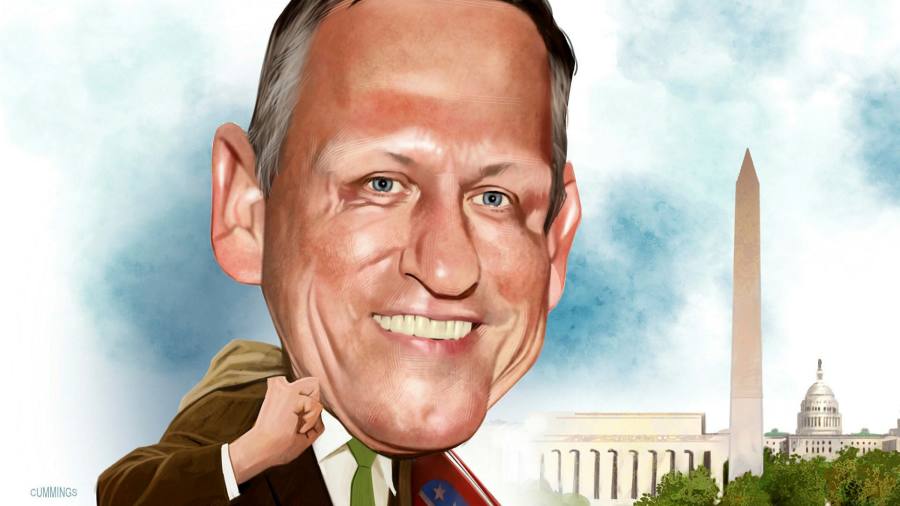
Peter Thiel, the contrarian tech investor turns to politics

Is Washington completely ready for Peter Thiel’s radical brand of anti-establishment wondering?

One particular of the most effective Silicon Valley traders and business owners of the very last two many years, Thiel this week disclosed that he was stepping down after 17 years on the board of Facebook (or Meta, as it is now identified). The departure, according to one particular man or woman who knows him, was created to give the social network’s first outdoors trader much more liberty to expand his political influence, when defending Meta from any backlash.

Thiel’s own backing for Donald Trump in 2016 still left lots of in liberal-leaning Silicon Valley aghast and — together with a individual fortune that Forbes puts at $2.6bn — has fuelled expectation that he is about to emerge as a impressive new force in rightwing politics.

“It’s a false narrative,” complains a single ally — from an establishment which has extended uncovered it hassle-free to solid Thiel as a political manipulator. “They will need some type of bogeyman on the correct.”

Yet the Meta break up appears to sign a watershed. Thiel moved his base to Los Angeles in 2018 after tiring of what he claimed was Silicon Valley’s waning ambition and spends more time in his New York, Washington and Miami households.

Thiel has often relished the component of contrarian outsider. Born in Germany and brought up in California, he did not comply with the typical route to the tech industry’s top. A philosophy diploma was followed by an early lawful career, whilst his entrepreneurial endeavours have been interspersed with a time period at a hedge fund.

His business ventures involved founding PayPal (in which he was also CEO) and Palantir, a info analytics business whose get the job done for the national stability institution has very long antagonised civil liberties activists. Together the way, Thiel grew to become a voluble exponent of a strand of libertarianism that pervades Silicon Valley. Zero to A person, his handbook for budding founders, depicts such business owners as Randian heroes.

Blake Masters, his co-writer and head of Thiel’s private foundation, is contesting the Arizona Republican Senate principal, backed by $10mn of Thiel’s cash. Thiel has thrown the same total powering JD Vance, author of Hillbilly Elegy and formerly at the Thiel-founded Mithril Cash, in a Senate seat race in Ohio. These splashy contributions, amongst others, have made him the third-major backer of federal candidates in this year’s elections.

Thiel has a deep desire in demanding typical considering, according to people who have worked with him. At dinners at the residence he shares with his husband Matt Danzeisen and their daughter, “you’d commit three and a 50 {21df340e03e388cc75c411746d1a214f72c176b221768b7ada42b4d751988996} several hours debating the strangest things”, one states. A regular topic: if there was an alien invasion, how would you access diplomatic typical floor?

Powering all this lie deep private beliefs. Thiel is a committed Christian, and his worldview was formed by French philosopher René Girard, who he examined less than at Stanford College. According to Girard’s mimetic theory, most people’s needs are copied from other individuals, a routine that in the long run prospects to conflict. Only genuine originality — in Thiel’s watch, fuelled by technological innovation innovation — can have humanity beyond these harmful boundaries.

“It’s a Plato/Socrates thing,” claims 1 ally. “Everyone who is close to [Thiel] is familiar with Girard inside and out.” Ironically, that hints at an intellectual conformity that Thiel detests. Taking a cue from Girard, he has lengthy argued that tech start-ups have offered up on innovation and choose to copy just about every other. And in Washington, suggests an acquaintance, “He seems at the Republican get together and claims, ‘This institution is frozen in time’.”

Whether his sufficient money can alter just about anything is an open concern. “Thiel is selecting up wherever the Tea Celebration still left off, putting bets on outsider candidates to shake up the party,” says Republican donor Dan Eberhart, main executive of Canary, a drilling company.

In the long run, his impact will count on his “ability to evaluate, identify and recruit talent that can earn races”, claims David Tamasi, a veteran Republican fundraiser and lobbyist. “If he has a pair of losses, how are folks heading to look at his political acumen for talent?”

The record so far is blended. Thiel backed Kris Kobach, a controversial anti-immigration Senate prospect who shed a Republican primary contest in 2020. He was also a huge funder of Josh Hawley, the polarising Missouri senator and Trump supporter who ousted Democrat Claire McCaskill in 2018.

Thiel’s influence on rightwing considering may conclusion up remaining as critical as his revenue. Allies and foes alike say his interest in tips sets him aside from the ordinary operate of super-donors. His attacks on Google, which he accuses of anti-aggressive conduct and cosying up to China, have gained him not likely assistance from some on the remaining. Matt Stoller, an antitrust pro, credits Thiel with serving to to seed an unusual distrust of corporate electrical power in Republican circles.

Like some others, nevertheless, Stoller detects inconsistencies in Thiel’s thinking. These involve assistance for an expanded federal government role in spots these kinds of as antitrust and standing up to China — tips which sit uncomfortably together with his need to curtail the Federal Reserve’s ability.

An ally retorts, nonetheless, that to glance for a consistent ideology is to absolutely misunderstand the person: “He just would like people today with concepts who are inclined to problem issues.”

Thiel’s favoured candidates may well split by in this political cycle. But aged 54 and freed of quite a few of his Silicon Valley obligations, there could be numerous much more elections to arrive.

richard.waters@ft.com, lauren.fedor@ft.com

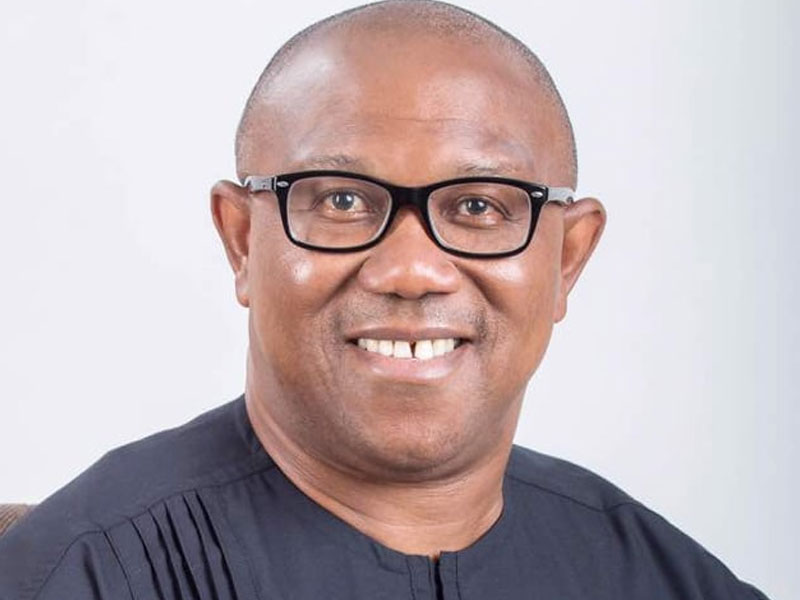
Inside Peter Obi’s secret businesses — and how he broke the law

Peter Obi, the ex-governor of Anambra State in Southeastern Nigeria, is widely regarded in Nigeria as an advocate of good governance, openness, and transparency.

In addition to speeches on his governance records and statistics-laden prescriptions for Nigeria’s development, he likes to talk about how hugely successful he became in business before diving into politics.

In speeches and in printed literature, Mr Obi is never shy, reeling out his numerous business affiliations and accomplishments. On his website, for example, the former governor said he “was chairman of Next International Nigeria Ltd, then chairman and director of Guardian Express Mortgage Bank Ltd, Guardian Express Bank Plc, Future View Securities Ltd, Paymaster Nigeria Ltd, Chams Nigeria Ltd, Data Corp Ltd and Card Centre Ltd.”

On that same platform, the former governor also described himself as the youngest board chairperson ever appointed by Fidelity Bank Plc, a 34-year old Nigerian lender listed on the Nigerian Stock Exchange.

But beyond the facade of priggish speeches and appearances, an investigation by PREMIUM TIMES has now shown that Mr Obi is not entirely transparent in his affairs as he likes Nigerians to believe.

The investigation is part of the global International Consortium of Investigative Journalists (ICIJ)-led Pandora Papers project.

The project saw 600 journalists from 150 news organisations around the world poring through a trove of 11.9 million confidential files, contextualising information, tracking down sources and analysing public records and other documents.

Pandora Papers. [PHOTO: ICIJ-Inkyfada-Tayma Ben Ahmed]

The leaked files were retrieved from some offshore services firms around the world that set up shell companies and other offshore entities for clients, many of them influential politicians, businesspersons and criminals, seeking to conceal their financial dealings.

The two-year collaboration has so far revealed the financial secrets of not less than 35 current and former world leaders, more than 330 public officials in more than 91 countries and territories.

Mr Obi is one of the individuals whose hidden business activities was thrown open by the project. Indeed, he has a number of secret business dealings and relationships that he has for years kept to his chest. These are businesses he clandestinely set up and operated overseas, including in notorious tax and secrecy havens in ways that breached Nigerian laws.

PREMIUM TIMES contacted Mr Obi with written questions and had an in-person interview with him weeks ahead of this publication.

The former governor admitted that he did not declare these companies and the funds and properties they hold in his asset declaration filings with the Code of Conduct Bureau, the Nigerian government agency that deals with the issues of corruption, conflict of interest, and abuse of office by public servants.

He said he was unaware that the law expected him to declare assets or companies he jointly owns with his family members or anyone else.

The Pandora Papers, the biggest cross-border collaboration of journalists in history, is an investigation into a vast amount of previously hidden offshore companies, exposing secret assets, covert deals and hidden fortunes of the super-rich – among them more than 130 billionaires – and the powerful, including more 30 world leaders and hundreds of former and serving public officials across the world.

The confidential documents also feature a global cast of fugitives, convicts, celebrities, football stars and others, including judges, tax officials, spy chiefs and mayors.

The leaked records came from 14 offshore services firms from around the world that set up shell companies and other offshore nooks for clients like Mr Obi, who seek to shroud their financial activities, often suspicious, in secrecy.

Code-of-Conduct-Tribunal-HQ
Code of Conduct Tribunal HQ


Peter Obi, his daughter and a secret business

Mr Obi has two children- a daughter, Gabriella Nwamaka Frances Obi, and a son, Gregory Peter Oseloka Obi. Sometime in 2010, more than four years after he became governor, the politician developed an appetite to set up his first discreet company in the British Virgin Island. He named the company Gabriella Investments Limited, after his daughter

To set up what has now become a convoluted business structure, Mr Obi first approached Acces International, a secrecy enabler in Monaco, France, to help him incorporate an offshore entity in one of the world’s most notorious tax havens noted for providing conduits for wealthy and privileged corrupt political elites to hide stolen cash to avoid the attention of tax authorities.

Tax havens are politically and economically stable offshore jurisdictions or countries with extensive laws and systems that provide little or no tax obligations, but enable high secrecy and privacy protection for foreign individuals and businesses.

Mr Obi also paid Acces International to provide nominee directors for the company. Nominee directors are residents of tax havens paid to sit on boards of companies to hide the identities of real owners of offshore firms.

So, after accepting a brief from the then governor or his representatives, Acces International officials headed to the British Virgin Island, a notorious tax haven, where it contracted a local registered agent – Aleman Cordero Galindo & Lee Trust (BVI) Limited (Alcogal) — to set up Gabriella Investments Limited for Mr Obi.

The 36-year old Alcogal is a Panamanian law firm that went on to open overseas subsidiaries offering company formation and registered agent services in BVI, Seychelles, Belize, and Bahamas, and the preparation of corporate documentation in relation to the companies formed. It also provides trust services through its subsidiary trust companies in Panama, BVI, and Belize.

After extensive documentation, Gabriella Investment Limited was born on November 17, 2010, with registration number 1615538. Two figureheads – Antony Janse Van Vuuren and Lance Lawson — were appointed its first directors while ultimate control resided with Mr Obi.

On the same day the company was incorporated, the nominee directors met and issued 50,000 shares of Gabriella Investment in favour of Hill International Holding Corporation, a shell International Business Company operating under the laws of Belize, another tax haven. The director of the company is Mr Van Vuuren, also one of the directors of Gabriella Investment.

It is unclear what businesses Mr Obi transacted with the entities but in some communications, they were sometimes referred to as investment vehicles. Mr Obi told PREMIUM TIMES the offshore entity is the holding company for most of his assets and that the business structure he adapted was to enable him to avoid excessive taxation.

“I am sure you too will not like to pay inheritance tax if you can avoid it,” he told the reporters who interviewed him.

The Memorandum of Incorporation of Gabriella Investment said it was set up to carry on or undertake any business or activity, including trading of any commodities or goods, to do any act or enter into any transactions.

Recalibrating the structure and bringing family under the umbrella

Mr Obi has since rearranged his offshore businesses. First, he renamed Gabriella Investment. Beginning February 10, 2017, the company became known as PMGG Investments Limited in what is a combination of the first letters of the first names of Mr Obi’s nuclear family. P for Peter (ex-governor), M for Margaret (the ex-governor’s wife), G for Gabriella (the ex-governor’s daughter) and G for Gregory (the ex-governor’s son).

Mr Obi has also now created a trust known as The Gabriella Settlement, an entity also registered in the BVI. According to Fidelity Investments, a trust is a fiduciary arrangement that allows a third party, or trustee, to hold assets on behalf of a beneficiary or beneficiaries. Experts believe that trusts are traditionally used for minimising taxes even though they can offer other estate plan benefits as well.

By the current structuring of Mr Obi’s wealth and offshore businesses, The Gabriella Settlement, which appears to hold all or a majority of his assets, is the sole shareholder of PMGG Investments.

In turn, a New Zealander entity, Granite Trust Company Limited is the sole trustee of The Gabriella Settlement. Sam Access International, the Monaco-based secrecy enabler Mr Obi first hired in 2010 to set up his offshore structure, was until August 23, 2019, the sole shareholder of Granite Trust.

FIRS Headquarters
FIRS Headquarters

Antony Janse Van Vuuren, who has acted as a consistent and perpetual director for almost all of Mr Obi-related offshore entities popped up again, making the filing that brought in another Monaco-based company, Rhone Acces Sam as the sole shareholder of Granite Trust. However, Rhone Trust and Fiduciary S.A., a Swiss entity, is the ultimate holding company for Granite Trust.

Mr Peter Obi and his Man Friday

A central and recurring figure in former Governor Obi’s network of offshore companies and on whom the politician appears to place immense trust is Antony Janse Van Vuuren, a 70-year old South African based in the principality of Monaco in France. Experts in Illicit Financial Flows consider Monaco a tax haven because of its generous tax laws and policies.

According to KPMG Multi Family Office, the principality of roughly 30,000 inhabitants does not charge wealth tax, property tax, investment income tax, and capital gains tax. It also does not tax dividends and directors’ fees and unless they are French nationals, resident individuals are not subject to personal income tax while inheritance tax is zero per cent for spouses and direct beneficiaries. It is unclear if it was this mouth-watering tax regime that attracted Mr Obi to Monaco.

What is however clear is that, in 2010, four years after he became governor, the politician or his representatives hired Monaco-based Acces International, where Mr Van Vuuren has been partner and director for 25 years, to help him create a secret and intricate scheme for managing his assets. Mr Obi told PREMIUM TIMES that British Lloyds Bank’s advice informed his offshore structure decision.

From Monaco in France to Tortola in the BVI, to Wellington in New Zealand, and to Geneva in Switzerland, Mr Van Vuuren has travelled around the world running business errands for Mr Obi and taking major decisions on his behalf.

While Mr Obi stays comfortably behind the curtain, the South African has remained the face of the ex-governor’s companies and the assets they hold. For the past decade, he is the politician’s number one business arranger in the offshore world as well as the custodian of the politician’s business-related documents and correspondences.

Mr Van Vuuren, a veteran nominee director for possibly tens or hundreds of shell companies, attended the University of KwaZulu-Natal, where he graduated in 1967 with a Bachelor of Commerce, Accounting and Business Management. He also obtained an MBA from Durham University in 1977.

A History of Playing Offshore

A 1991 leaked incorporation document reveals a certain Peter Obi and two other individuals – Donatus Ogbogu and Uche Okagbue – to have incorporated Beauchamp Investments Limited in Barbados.

The firm was incorporated as an international business company on August 20, 1991, with registration number 7305. The setting up of the company was handled at the time by a certain Peter L. Chase. What businesses the company does and what assets it holds remain unclear. Mr Obi denied knowledge of the firm as well as of Messrs Ogbogu and Okagbue. He said the individual who incorporated Beauchamp was possibly another businessman who happened to bear a similar name as him.

However, Next International (UK) Limited, another of the former governor’s overseas companies, was incorporated on May 16, 1996, in London. Mr Obi and his wife, Margaret, were listed as directors while Next International (Nigeria) Limited (with 999 ordinary shares) and Mr Obi (with one ordinary share) were listed as shareholders.

The exact businesses the company undertook in its 25-year history remained unclear, although, on March 8, 2001, the firm reported taking a mortgage from Lloyds TSB Bank Plc for a property on 53 Clyde Road, Croydon.

Breaking the Law: Number 1

In Nigeria, a person is statutorily obligated to withdraw from engaging in or directing a private business, except if it is farming, upon becoming a public officer, Section Six (6) of the Code of Conduct Bureau and Tribunal Act stipulates.

However, our investigation, based on records obtained from the UK Companies House shows that Mr Obi continued to be a director of Next International (UK) Limited for 14 months after becoming the governor of Anambra State, thereby breaking Nigeria’s law. The politician resigned from the company on May 16, 2008, 14 months after he assumed duties as Anambra governor. He took office on March 17, 2006.


READ ALSO: Pandora Papers: An offshore data tsunami


Mr Obi did not dispute the records PREMIUM TIMES cited but he claimed he “resigned immediately” by handing his wife his resignation letter. He suggested that his company might have failed to effect the changes on time or the UK Companies House did not immediately document his exit. But the UK companies registry said Mr Obi indeed resigned on May 16, 2008, and that it received his notice of resignation for electronic filing on June 16, 2008.

Breaking the law: Number 2

Nigerian public officers are required to declare “immediately after taking office and thereafter all” their properties, assets, and liabilities and those of his (or her) unmarried children under the age of eighteen years,” Nigeria’s 1999 Constitution stipulates (Section 11, Part of the Fifth Schedule).

PREMIUM TIMES investigation also found that Mr Obi breached this constitutional provision on assets declaration. We can authoritatively report that Mr Obi did not declare to the Code of Conduct Bureau the companies he tucked away in offshore secrecy havens.

Mr Obi caused to be created for him a structure of secrecy that had previously, until the Pandora Papers investigation, meant he could continue to hold foreign assets in a way that breaches Nigeria’s law without the knowledge of authorities in the country. In an extra layer of secrecy, Mr Obi used paid nominees as directors, while he remains the ultimate beneficial owner, making it nearly impossible to discover his interests in those companies but we obtained rare incorporation documents proving his link.

Otherwise, Mr Obi could have forever hoped to continue to hold the assets, that he did not declare when he had a statutory obligation to do so as a governor, without any authority or the public calling him to account.

In his response, Mr Obi ridiculously suggested that those offshore companies and assets are jointly owned with his family members and that he was not under obligation to declare companies jointly owned. “I don’t declare what is owned with others,” Mr Obi told PREMIUM TIMES. “If my family owns something I won’t declare it. I didn’t declare anything I jointly owed with anyone.”

This is contrary to the position of the Constitution, which specifies the declaration of all assets, whether jointly or partly owned, PREMIUM TIMES’ reporters told Mr Obi. He said he was not aware of that provision of the law.

Nevertheless, leaked records show Mr Obi is the sole ultimate beneficial owner of the offshore companies. So he did not even jointly own it with anyone.

In that case, Mr Obi has violated Nigeria’s Code of Conduct law and, if authorities decide to act appropriately, he could be arraigned before the Code of Conduct Tribunal, a special court that tries public officers for any contravention of the Code of Conduct for Nigerian public officers as spelt out in the Fifth Schedule of the Nigerian constitution.

The Code of Conduct Bureau (CCB) and the Code of Conduct Tribunal (CCT) were established to enforce “a high standard of morality in the conduct of government business, and to ensure that the actions and behaviour of public officers conform to the highest standards of public morality and accountability.”

Breaking the law: Number 3

The former governor could be charged with failing to declare his offshore holdings and their associated assets and operating foreign accounts while being a public officer.

The Nigerian constitution and the Code of Conduct Bureau and Tribunal Act forbid a public officer from maintaining or operating a bank account outside Nigeria. However, as a governor, Mr. Obi continued to operate and maintain foreign accounts, including with Lloyds TSB.


READ ALSO: Pandora Papers: Global investigation exposes secrets of some of Nigeria’s rich and powerful


Mr. Obi told PREMIUM TIMES that he received the advice to create an offshore structure from Lloyds TSB, which then introduced him to intermediaries who helped him to set up com where he continued to operate a foreign account as a governor.

The offences violate sections of the Fifth Schedule of the Constitution of the Federal Republic of Nigeria 1999, as amended.

Asked if he is concerned that Nigerians would be disappointed at him following our finding of his opaque and lawless dealings as a governor, Mr Obi said he was more concerned about his U.K. and U.S. schools alumni network, his business and foreign creditors. He insisted that he served well as Anambra governor and Nigerians already have their opinions about him.

The former governor could be charged for failing to declare the company and its associated assets and perhaps operating foreign accounts while being a public officer.

Mr Obi told PREMIUM TIMES that he received the advice to create an offshore structure from Lloyds where he continued to operate a foreign account as a governor.

The offences violate sections of the Fifth Schedule of the Constitution of the Federal Republic of Nigeria 1999, as amended.

Mr Obi and missed tax opportunity

In June 2017, the federal government launched the Voluntary Assets and Income Disclosure Scheme (VAIDS), an initiative seeking voluntary disclosure of previously undeclared assets and income with a view to paying all outstanding liabilities. The VAIDS offered a nine-month window and incentives that included immunity from prosecution for tax evasion and undeclared assets, which would have benefited people like Mr Obi.

A key objective of the VAIDS was curbing illicit financial flows and tax evasion, which commonly feature the use of offshore holdings to shift taxes from where they are earned to havens where little or no taxes are paid.

The government in 2017 said defaulting individuals and corporate bodies who failed to take advantage of the VAIDS would be subject to criminal prosecution.

A number of Nigerian public officials with previously undeclared assets tucked away overseas participated in the VAIDS and got clearance certificates. Mr. Obi shunned the scheme and continued with his opaque business dealings in breach of the law.

Support PREMIUM TIMES’ journalism of integrity and credibility

Good journalism costs a lot of money. Yet only good journalism can ensure the possibility of a good society, an accountable democracy, and a transparent government.

For continued free access to the best investigative journalism in the country we ask you to consider making a modest support to this noble endeavour.

By contributing to PREMIUM TIMES, you are helping to sustain a journalism of relevance and ensuring it remains free and available to all.

Donate


TEXT AD: To advertise here . Call Willie +2347088095401…


PT Mag Campaign AD