Xinjiang: IFC, World Bank Group member, accused of lending money to companies allegedly linked to forced labor in China

Xinjiang: IFC, World Bank Group member, accused of lending money to companies allegedly linked to forced labor in China

The report, titled “Financing and Genocide: Development Finance and the Crisis in the Uyghur Region,” presents evidence that in recent years the IFC has loaned money to four Chinese companies that have been linked to forced labor and land expropriation in the region, along with environmental damage and the destruction of indigenous cultural heritage sites.

According to public disclosures, the four companies named in the report — Chenguang Biotech Group, Camel Group, Century Sunshine and Jointown Pharmaceutical Group — have received loans and equity investments from the IFC valued at $439 million. Including loans sourced from institutional investors via the IFC, that figure rises to around $485 million.

The loans could contravene the IFC’s own internal guidelines — known as its Performance Standards — which function entirely to “prevent IFC from financing projects that will have adverse environmental and social impacts that jeopardize [its] development aims,” according to the report.
Solar panels are key to Biden's energy plan. But the global supply chain may rely on forced labor from China

CNN Business was granted exclusive, advance access to the report, which was led by the Helena Kennedy Centre for International Justice at Sheffield Hallam University in the United Kingdom and published by the Atlantic Council, a Washington-based think tank.

The Helena Kennedy Center for International Justice researches modern day slavery, gender-based violence and hate crime and has previously published reports alleging the use of forced labor in Xinjiang to produce cotton and solar panels. They say the four named companies are not the only businesses receiving IFC funds in the region.

“I think it’s clear that the IFC needs to divest from all their investments in the Uyghur region,” said report author Laura Murphy, a professor in Human Rights and Contemporary Slavery at Sheffield Hallam University, who added that it is “incumbent on the IFC based on their own standards that they ensure that their clients are not involved in forced labor.”

In a statement, an IFC spokesperson told CNN the corporation has “strong environment, social and governance (ESG) standards” that are diligently applied during the life of the investment and are considered a model for development finance worldwide.

“We do not tolerate discrimination or forced labor under any circumstances,” the spokesperson said. “Whenever such serious allegations are brought to our attention, we work to verify and address them with our clients with urgency.”

Beijing responded to the report on Thursday, saying it was “false” and “full of lies and groundless accusations.”

“It is understood that the organization has no staff in Xinjiang. There was no field investigation, no real research, no evidence to back up the report,” Foreign Ministry spokesperson Wang Wenbin said in a briefing.

“The Chinese government attaches great importance to the protection of human rights and workers’ rights and interests. For some time now, certain countries have been hyping up social lies and extending their reach to multilateral development institutions,” Wang added.

CNN sought comment from the four Chinese companies named in the report but did not receive a response. The report’s authors also said they attempted to contact them but did not receive a response.
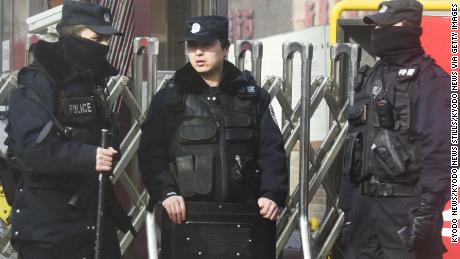
Police officers patrolling the Xinjiang Uyghur Autonomous Region of China in 2018.

‘Punished with internment’

Xinjiang has become a geopolitical hotspot because of the breadth of human rights abuses alleged to have taken place in the region, including what some Western governments have called the “genocide” of Uyghurs and other minorities.

The US State Department has estimated that since 2017 up to two million members of religious and ethnic minorities have been imprisoned in a shadowy network of internment camps.

China has described the facilities as “vocational training centers” where people learn job skills, Chinese language and laws, and officials declared in 2019 that such centers — also aimed at deradicalizing local Muslims — had been closed down. They also claimed that the original detainees had graduated but that people were still enrolling to gain new skills.

Western governments and human rights organizations have alleged that minorities in the region have been subjected to forced labor through job creation schemes run by the Chinese government to achieve “poverty alleviation.”

Workers who have participated in those job programs have told CNN that if they did not take the jobs they were offered, for a fraction of the usual rate of pay, they were warned they would be sent to camps.

“The Chinese government has embarked on a massive campaign which they deem to be poverty alleviation,” said Murphy of Sheffield Hallam. “These programs are often non-consensual, and people who refuse can be punished with internment.”

China has consistently denied all allegations of human rights abuses in Xinjiang and told CNN in a statement prior to publication that claims of forced labor were lies created to smear its reputation.

“China has repeatedly emphasized that the so-called issues of ‘forced labor’ and ‘repression’ against ethnic minorities are huge lies concocted by anti-China forces in the US and the West. They are entirely baseless. Such attempts to attack and smear China based on lies and disinformation are bound to fail,” the statement said.

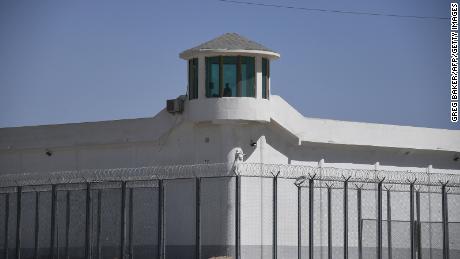
A watchtower at a high-security facility near what is believed to be a re-education camp on the outskirts of Hotan, Xinjiang.

Concerns raised about IFC outcomes

It is part of the World Bank Group and says it provided roughly $31.5 billion in loans and other financial assistance — including nearly $12 billion in “fragile, conflict-affected, and poverty-stricken countries” — last fiscal year to private companies and financial institutions in emerging and developing economies around the world.

The IFC spokesperson told CNN its mission is to “fight poverty by helping the private sector thrive.” “In doing so, we create jobs and raise living standards, especially for the poor and vulnerable,” the spokesperson said.

But its investments have been criticized for years by charities that accuse the IFC of sometimes causing more harm than good by failing to carry out due diligence.

In 2015, Oxfam International published a report compiled with input from several NGOs that claimed the IFC sent billions of dollars in “out of control” investments to third parties that caused “human rights abuses around the world.”

IFC said at the time that it was working with its clients to resolve issues raised by Oxfam and other civil society organizations and that it valued any insights into those concerns. The organization also said that it took additional efforts to train its staff and be more selective about its clients and was strengthening oversight and supervision.

The World Bank Group had been acknowledging concerns even prior to that report. In 2013, the organization’s Independent Evaluation Group highlighted declining “outcome ratings” for IFC-financed projects and advised the IFC to focus on “supervision” and “enhancing the quality of projects” through “intensified efforts.”

CNN approached the World Bank Group for comment about the Helena Kennedy Centre’s findings, and a spokesperson directed CNN to the IFC’s response.
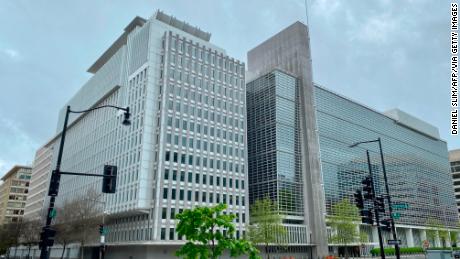
The World Bank headquarters in Washington, D.C.

Alleged connections to forced labor

The four Chinese companies with ties to Xinjiang named in the Helena Kennedy Centre report work in sectors ranging from food to pharmaceuticals and energy. Using corporate documents, stock exchange filings, Chinese state media reports, IFC disclosures and satellite imagery, the report claims these companies have ties to parts of the region where allegations of forced labor are rampant.

In some cases, the report says these companies have participated in state-endorsed “labor transfer” or “poverty alleviation” schemes, which international human rights organizations and foreign governments have for years claimed perpetuate forced labor in the region.

CNN has independently verified that the four companies named in the Helena Kennedy Centre report have all received loans from the IFC in recent years. At least two of those loans, made to Camel Group and Jointown Pharmaceutical, have been used to finance projects in Xinjiang. Because the firms are all publicly traded on Chinese stock exchanges, corporate filings detail some of their dealings in the region. Chinese state media reports also explain some of their work, while the IFC’s own records shed some light on the organization’s involvement in providing financing to these firms.

One company, Chenguang Biotech Group, makes food additives, natural dyes and pigments, and sources its raw materials primarily from India and Xinjiang. In Xinjiang, the company is involved in the production of marigolds.

The IFC, which loaned Chenguang $40 million in 2019 so the company could increase production, conducted an assessment that found the company’s risk of being implicated in forced labor with respect to marigold growers to be “low” and that overall “the risks in Chenguang’s primary supply chain are low to medium.”

But according to the Helena Kennedy Centre report, Chenguang sources some of its workforce from “coercive” state-sponsored labor and land transfer programs.

The report claims that in some cases farmers have no say in whether to participate in major farming projects, or what they want to plant. Companies, too, are under pressure to support state programs.

Citing an official press release, the report said that, in one case, the paramilitary organization Xinjiang Production and Construction Corps (XPCC), which controls the region economically and politically, conducted “ideological work” on those who expressed reluctance about changing their farming methods, which the report described as a method of “coercing” minorities.

Those people are encouraged by government agencies to “relinquish their land, change their crops, alter their farming methods, work for cooperatives or large-scale farms that have expropriated their lands, or move to factory labor,” the report said.

Another company, the battery maker Camel Group, received nearly $36 million in funding from the IFC in July 2019 to expand its battery recycling operations in parts of China, including Xinjiang, according to IFC documents. Chinese corporate records also show the company has at least two subsidiaries in the region.

An IFC risk assessment did acknowledge “potentially significant adverse environmental or societal risks” on account of smelting waste lead but added that Camel promised the organization it would promote the hiring of more local minority residents in Xinjiang. IFC also assessed that “no forced labor practices” are used by Camel Group and that its battery suppliers are subject to quarterly audits by the company to ensure they are complaint with child and forced labor inspections.

However, the Helena Kennedy Centre report cited government press releases that it says show Camel has benefited from state-sponsored labor transfer programs. In July 2017, according to one government release, 165 laborers were taken across Xinjiang for a 10-day long “closed pre-job training,” which the report authors say was an indication that their movements were restricted.

During that time, according to a government press release, the participants received “military and ideological training,” and “were required to sing patriotic songs” and learn Mandarin Chinese — measures that human rights organizations worry can lead to the erasure of culture for Uyghurs, ethnic Kazakhs and Kyrgyz in Xinjiang. Those groups speak languages closer to Turkish than Mandarin Chinese.

Before the laborers were dispatched to their assigned companies — one of which was Camel — they were made to attend a flag-raising ceremony, affirm their loyalty to the ruling Chinese Communist Party and pledge to “make due contributions to national security, national unity, social stability and harmony,” according to the government press release.

A third company, the fertilizer and materials firm Century Sunshine Group, received $165 million from the IFC between 2014 and 2016, according to IFC documents. That figure includes $125 million to upgrade a fertilizer manufacturing facility in Jiangsu province, north of Shanghai on China’s eastern coast. As of December 2020, IFC had roughly a 17{21df340e03e388cc75c411746d1a214f72c176b221768b7ada42b4d751988996} stake in the company, according to an annual report from Century Sunshine.

Century Sunshine also has ties to Xinjiang. The report cited local state-run media from December 2017 that said the company’s Xinjiang subsidiary took in 10 rural laborers from a township in eastern Xinjiang through state-sponsored labor transfer programs. Two years later, that same subsidiary was one of nine firms that participated in a state-backed labor recruitment event that encouraged off-season farmers to work for industrial manufacturing facilities in the area — an event involving labor transfer the report’s authors said was at “high risk”of violating standards for labor and working conditions.

The final company implicated in the report, Jointown Pharmaceutical, received nearly $200 million in debt financing from the IFC in the last few years, according to IFC documents. IFC assessed their investments in Jointown Pharmaceutical as having “limited” environmental or social risks.

The company — which distributes personal protection equipment, medical devices and pharmaceutical drugs — received nearly $150 million in July 2019 to build distribution centers and upgrade four warehouses in middle and western China, including Xinjiang. In October 2020, Jointown Pharmaceutical received another $50 million to buy pharmaceutical products and expand distribution because of the Covid-19 pandemic.

Like Camel and Century Sunshine, the Helena Kennedy Centre report alleges that Jointown Pharmaceutical has participated in Xinjiang-related labor transfer programs. The report cited an article published in December 2020 by the Xinjiang Food and Drug Administration on its official WeChat account that said Jointown Pharmaceutical acknowledged receiving “more than 200” workers “transferred” from southern Xinjiang and other remote and underdeveloped prefectures through the labor programs.

The report also said that Jointown Pharmaceutical has “many” facilities in Xinjiang that are located next to buildings identified as internment camps by the Australian Strategy Policy Institute, a Canberra-based think tank. One of Jointown Pharmaceutical’s facilities in the regional capital of Urumqi, for example, is in one of the city’s “largest prison districts,” according to the report.

Efforts to monitor investments in Xinjiang

While travel to Xinjiang by foreign organizations has become almost impossible in recent years, the Helena Kennedy Centre report says the IFC paid a one-day visit to the region in 2019, during the height of the government crackdown there.

Report co-author Kendyl Salcito, the Executive Director of human rights research non-profit NomoGaia, told CNN she spoke via phone to an IFC representative who went on the trip. The employee told Salcito that their group was temporarily detained by police three times within a roughly 24-hour period, adding that the atmosphere was very uncomfortable and they wanted to leave quickly.

The IFC continued to fund projects in the region after that visit, as seen in IFC documents reviewed by the report authors and by CNN. In November 2020, Salcito said, the IFC told her that it did not have alternative arrangements for monitoring projects there.

The IFC did not respond to CNN’s questions about Salcito’s account of the trip. However, the spokesperson told CNN that in the last two years the IFC has dedicated more resources to supervising companies it works with in Xinjiang.

“While accessing projects on the ground has been more difficult for all development actors in the last two years due to the Covid-19 pandemic and travel restrictions, IFC has dedicated more resources to supervising the companies we work with regarding adherence to our ESG standards. These standards are legally binding, include protections for workers, communities, and the environment, and expressly prohibit discrimination and the use of forced labor,” the spokesperson said.
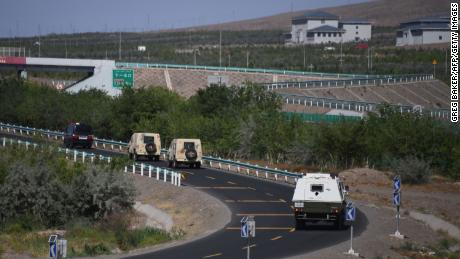
Paramilitary police vehicles on a road in Artux in China's northwest Xinjiang region in June, 2019.

The IFC has taken some steps to withdraw from the region. It ceased its relationships with three other Chinese firms that “were engaged or sourcing from companies engaged in repression in the Uyghur Region,” according to the report.

The IFC did not respond to CNN’s questions about why it chose to divest those companies and not others.

In 2020, the IFC told Salcito in email exchanges viewed by CNN that the Chinese companies it works with assured the organization they did not use any forced labor. The IFC did not respond to CNN’s questions about that correspondence. The Helena Kennedy Centre report authors say that form of self-reporting is wholly insufficient.

“The continued willingness to provide financing in the region, without any direct oversight, indicates that its investment strategy in the region continues to overlook the ongoing crimes against humanity and Performance Standards violations that render the IFC’s investments complicit,” the report said.

A lack of due diligence

Multinational corporations have for years found it difficult to perform due diligence on their supply chains linked to Xinjiang because of limited access, surveillance and the threat of government interference. That makes the use of publicly available records and satellite imagery all the more important in determining whether a firm has ties to forced labor in the region.
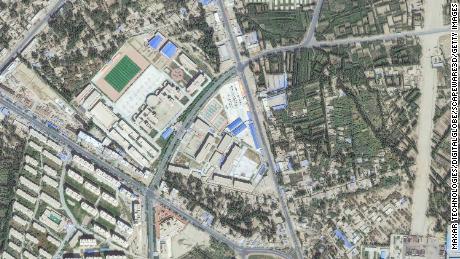
Satellite images, for example, have shown that detention facilities are often built up simultaneously alongside factories and business parks, which human rights activists say is a clear indication that factory workers are being drawn from the prison or camp population.
Maxar satellite imagery of a re-education internment camp in
Hotan, Xinjiang, China.

Some companies, investors and other organizations have pulled out of the region because of the difficulties in auditing activity there. Many international auditors will no longer certify products made in Xinjiang, and the Fair Labor Association — a Washington-based non-profit whose members include multinational corporations and Ivy League universities — has banned its members from sourcing from Xinjiang due to an inability to gather accurate information, or to verify if workers there are under duress.

“The underlying problem in the Uyghur region is the political repression is so great, we’re of the view that no company can do adequate human rights due diligence,” said Sophie Richardson, China Director of Human Rights Watch. “Where [a company] can’t do adequate human rights due diligence, it should withdraw.”

Foreign governments have also been piling pressure on companies. In December, US President Joe Biden signed into law new rules that will effectively ban imports of products made in Xinjiang.

Washington is also leading a diplomatic boycott of the Beijing Winter Olympics, which conclude Sunday. In December, White House Press Secretary Jen Psaki said that the United States would not continue do “business as usual” and participate in the “fanfare” of the Games because of the “ongoing genocide and crimes against humanity in Xinjiang.”

But activists also point out that governments that work with the IFC should also review their funding plans. The United States, after all, has plowed more than $23 billion over the last 20 years into the World Bank Group, and as of June 2021 was the largest IFC shareholder with a stake of about 21{21df340e03e388cc75c411746d1a214f72c176b221768b7ada42b4d751988996}.

That funding has increased during the pandemic: In March 2020, the World Bank Group announced that the US government authorized a $5.5 billion capital increase for the IFC as part of the Coronavirus Aid, Relief, and Economic Security Act.

In a statement to CNN, the US Treasury Department said that it “works closely with other parts of the United States government to strongly condemn and respond to the atrocities taking place in Xinjiang.”

It said the government had pressed multilateral development banks (MDBs) — including the IFC — to strengthen their safeguards so projects “do not inadvertently support companies that participate in or benefit from forced labor.”

The statement added: “The US has been — and will continue to be -— a lead voice on this issue in all the MDBs and will continue working with other shareholder countries to make companies with alleged linkages to forced labor practices ineligible for MDB investments.”

World Bank’s IFC division linked to forced labor in China, report says

World Bank’s IFC division linked to forced labor in China, report says

The Intercontinental Finance Company (IFC), a Earth Bank device that gets funding from governments all over the world and lends to the personal sector in creating countries, presented $486 million in funding to the providers in current many years, in spite of its general public pledge to uphold human and labor legal rights, the scientists stated.

“Significant evidence implies that several of IFC’s clientele are active participants in the implementation of [China’s] marketing campaign of repression from the Uyghurs, which include as a result of forced labor,” concluded the report, which was revealed in conjunction with the Atlantic Council.

At minimum two of the companies stated in the report evidently export to the United States and Europe.

Western governments and human rights groups have long accused Chinese authorities of waging a campaign of repression in Xinjiang versus Uyghurs and other ethnic minorities via extrajudicial detention, land confiscation and other signifies. Beijing has denied the accusations.

“Even as governments all over the world condemn what is going on in Xinjiang … our taxpayer pounds are actively underwriting the corporations contributing to these atrocities,” Laura T. Murphy, professor of human legal rights and up to date slavery at Britain’s Sheffield Hallam College and one of the report’s authors, reported during a presentation Thursday.

The IFC declined to tackle the researchers’ specific findings, which had been to start with reported by CNN. In an emailed statement, the lending human body said it “takes allegations of compelled labor and bad treatment of susceptible groups quite seriously.”

“We do not tolerate discrimination or pressured labor underneath any conditions. Any time these types of severe allegations are brought to our awareness, we get the job done to confirm and address them with our purchasers with urgency,” the assertion mentioned.

The report focuses on 4 businesses with substantial operations in Xinjiang, a massive, arid region in northwestern China. The businesses acknowledged personnel by means of point out-run “labor transfer” and “poverty alleviation” courses that coerce Xinjiang residents, normally from poor, rural areas, to acknowledge positions that are from time to time several hours from their homes, the scientists stated.

The Chinese organizations could not quickly be attained for comment.

Camel Group, a company of batteries for cars, obtained a $36 million loan from the IFC in 2019 for a battery-recycling facility, according to the report and IFC disclosures.

Two yrs before, the business approved personnel from a point out-sponsored system that transferred laborers from southern Xinjiang to workplaces extra than 620 miles away, in the northern element of Xinjiang, the report said.

The workers have been submitted to a 10-day, condition-operate instruction session that they ended up not permitted to leave, in which they acquired ideological training and ended up essential to sing patriotic music, according to the report, which cites a neighborhood authorities publish on social media.

Then there was a “handover ceremony” through which the employees were dispatched to businesses, which includes Camel Group, according to the report.

The researchers also targeted on Century Sunshine Team Holdings, a fertilizer company that has received a selection of IFC loans more than the years, which include a $125 million financial loan approved in 2015. The enterprise exports some of its items to Europe and the United States, according to the report.

In 2017, a subsidiary of the firm accepted 10 laborers who experienced been transferred from rural regions via a condition-sponsored “poverty alleviation” software, according to the scientists, who cite an short article revealed by the neighborhood metropolis federal government.

Jointown Pharmaceutical Team, a maker and distributor, is explained in the report as owning acquired extra than 200 personnel from southern Xinjiang by means of a point out-sponsored labor-transfer plan. Company reps gave Chinese media this data at an event in December 2020, in accordance to the report, which cites an article printed by a Xinjiang govt company.

Chenguang Biotech Group, which generates plant-based extracts and food additives, gained a $40 million bank loan from the IFC in 2019. In accordance to Chinese state media cited by the researchers, the company’s amenities in Xinjiang recruited staff by way of state-operate poverty-alleviation and labor-transfer techniques.

“These labor recruitment courses are usually state-sponsored and coercive assignments of impoverished people today in small-talent/low-wage jobs, often from their will,” the report claims.

The business also benefited from a point out-operate exertion that directed an full village of Xinjiang farmers to hand their land around to a cooperative, which then grew marigolds and other crops for the business, the report explained.

“Villagers are not specified the chance to reject these conditions or keep their lands,” the scientists wrote.

Pei-Lin Wu contributed to this report.

Asian Stocks Follow Wall St Higher With China, Korea Closed | Business News

By JOE McDONALD, AP Organization Writer

BEIJING (AP) — Inventory price ranges in Tokyo and Sydney adopted Wall Street larger Wednesday whilst China, South Korea and Southeast Asian marketplaces have been closed for the Lunar New Yr.

Wall Street’s benchmark S&P 500 index attained .7{21df340e03e388cc75c411746d1a214f72c176b221768b7ada42b4d751988996} on Tuesday, boosted by gains for power and tech stocks in a late burst of buying.

The Nikkei 225 in Tokyo rose 1.6{21df340e03e388cc75c411746d1a214f72c176b221768b7ada42b4d751988996} to 27,497.60 and Sydney’s S&P-ASX 200 included 1.2{21df340e03e388cc75c411746d1a214f72c176b221768b7ada42b4d751988996} to 7,089.90.

New Zealand and Jakarta also attained.

Political Cartoons

New Zealand on Wednesday documented a document-low unemployment price of 3.2{21df340e03e388cc75c411746d1a214f72c176b221768b7ada42b4d751988996}. Finance Minister Grant Robertson stated it was an “extremely positive” consequence and proof that enterprises were being continuing to hire people regardless of pandemic setbacks.

But political opponents claimed the authentic fee was about double the headline figure, which they claimed was was skewed mainly because it did not count folks who weren’t actively searching for function. The Data New Zealand determine was seasonally modified for the quarter ending December and was the lowest considering the fact that current history-keeping started in 1986.

U.S. stocks are coming off their worst month considering that early in the pandemic just about two yrs ago.

Traders are making an attempt to figure out how the overall economy and company earnings will be impacted by future Federal Reserve amount hikes, supposed to neat inflation that has surged to a 4-ten years high.

On Tuesday, the S&P 500 rose to 4,546.54. It is 5.2{21df340e03e388cc75c411746d1a214f72c176b221768b7ada42b4d751988996} below the Jan. 3 all-time significant.

The Dow Jones Industrial Ordinary obtained .8{21df340e03e388cc75c411746d1a214f72c176b221768b7ada42b4d751988996} to 35,405.24. The Nasdaq composite added .7{21df340e03e388cc75c411746d1a214f72c176b221768b7ada42b4d751988996} to 14,346.

Exxon Mobil rose 6.4{21df340e03e388cc75c411746d1a214f72c176b221768b7ada42b4d751988996} right after the firm noted strong fourth quarter revenue. Hewlett Packard Company rose 2.9{21df340e03e388cc75c411746d1a214f72c176b221768b7ada42b4d751988996}.

The virus pandemic is however a lingering threat and each and every new variant could provide a surge of scenarios that threatens corporations and customer exercise.

Fed officials mentioned in mid-December designs to wind down bond purchases and other stimulus that is boosting prices would be accelerated to interesting inflation.

Buyers have stored spending in spite of price tag rises, but forecasters retail purchases could possibly weaken and crimp economic progress.

Traders be expecting the Fed to hike rates at the very least four occasions this yr, starting off in March.

On Friday, the Labor Section reports U.S. employment for January.

In strength marketplaces, benchmark U.S. crude attained 13 cents to $88.33 for each barrel in electronic trading on the New York Mercantile Exchange. The contract rose 5 cents on Tuesday to $88.20. Brent crude, the price tag foundation for intercontinental oils, additional 18 cents to $89.34 per barrel in London. It fell 10 cents the former session to $89.16.

The greenback edged up to 114.73 yen from Tuesday’s 114.71 yen. The euro rose to $1.1277 from $1.1254.

Copyright 2022 The Associated Press. All legal rights reserved. This materials may well not be released, broadcast, rewritten or redistributed.

China Notifies Firms of Tougher Investment Rules for Big Tech

SINGAPORE—China has notified some companies of new policies that would require the country’s largest online firms to search for acceptance for financial commitment offers, a system that is probable to control domestic technological innovation giants from escalating even even bigger via acquisitions, according to men and women acquainted with the issue.

The country’s prime world wide web regulator, the Cyberspace Administration of China, not long ago explained to some corporations that it would establish a new mechanism that calls for world wide web companies to receive formal acceptance for investment decision discounts if they have 100 million consumers or more or have posted income in the previous yr of at the very least 10 billion yuan, equal to $1.57 billion, the folks explained.

The regulator notified some firms of the rules this week, some of the people explained. The guidelines are even now underneath assessment and could alter, people today common with the issue stated.

The shift to create new demands arrives just after a calendar year of clampdowns on the country’s internet sector and could guide to improved regulatory scrutiny into these types of bargains and even block world-wide-web companies from creating particular investments, the folks said.

The new rules currently being planned would have an affect on China’s most important technological innovation providers, like

Tencent Holdings Ltd.

,

Alibaba Group Holding Ltd.

and ByteDance Ltd., each and every of whose solutions boast more than 1 billion active users.

The Cyberspace Administration of China, on its official account on social media WeChat, claimed that it hasn’t publicly introduced any new policies. Tencent and Alibaba didn’t respond to requests for comment.

A spokesperson for Beijing-centered ByteDance, which operates the hit quick-video mobile platform TikTok, stated Wednesday that the firm was dismantling the strategic expenditure staff, which serves as its corporate enterprise-money arm.

Chinese tech shares preferred among the U.S. buyers have tumbled amid the country’s regulatory crackdown on technology companies. WSJ points out some of the new hazards traders experience when obtaining shares of companies like Didi or Tencent. Photo Composite: Michelle Inez Simon

People acquainted with the make a difference reported that the decision was manufactured in reaction to the new regulations and that dozens of employees in the team had been remaining possibly transferred to other positions or laid off.

Questioned regardless of whether the selection arrived in reaction to the new procedures staying planned, the spokesperson stated it was manufactured earlier this year to “strengthen the coordination between strategic investigation and the small business.”

For a long time, quite a few Chinese technologies organizations have developed greater by means of attaining startups that could offer the technological know-how pieces they are missing—a comparable approach utilised by some American counterparts.

In latest decades, Chinese leaders—who have criticized “the disorderly growth of capital” in the country—have greater scrutiny into the country’s online sector, which they see as much too large and potent. Amongst their worries have been the companies’ grip on information of billions of people today, which officials considered could lead to manipulation of public viewpoint or pose cybersecurity challenges.

Beijing has been beefing up antitrust restrictions and enforcement. Final calendar year, China established up a new antimonopoly bureau and the legislature proposed harder amendments to the country’s antitrust legislation. Regulators hit Alibaba with a report $2.8 billion antitrust high-quality.

Regulators also consistently fined several tech providers more than expenditure deals. Beijing stated the businesses didn’t appropriately report earlier acquisitions and fined them each and every 500,000 yuan, equivalent to about $77,000.

In July, China’s antitrust regulator blocked Tencent’s bid to mix the country’s two largest recreation-streaming platforms, its very first public intervention to halt a merger in the know-how sector.

In the meantime on Wednesday, China’s major financial planner issued rules on the web industry, demanding that investments by internet-platform companies into money corporations be strictly regulated.

In current months, some tech giants have been unwinding their company investments.

In December, Tencent lose most of its stake in

JD.com Inc.,

one of the greatest Chinese e-commerce organizations, a move analysts reported may possibly have been a reaction to pitfalls posed by an aggressive regulatory stance by China’s government. Tencent declined to remark then.

Tencent also slash its stake in Southeast Asian world-wide-web corporation Sea Ltd. previously this month.

In September, Alibaba offered its stakes in a point out-owned broadcaster. The transfer followed a Chinese government’s request to Alibaba to dispose of its media assets amid worries about the engineering giant’s sway around community view in the nation, as described by The Wall Road Journal.

The most current rules would also have to have large tech companies to acquire approval from cybersecurity regulators before an preliminary general public presenting, whether or not that is in or exterior of China, the persons claimed.

The prepared modify follows a revision of a cybersecurity review in July that companies keeping individual facts from at least a single million buyers must implement for these a evaluation in advance of international listings.

Generate to Keith Zhai at keith.zhai@wsj.com

Corrections & Amplifications
The Cyberspace Administration of China recently informed some providers that it would build a new mechanism that necessitates specific internet organizations to receive official acceptance for expense discounts. An previously edition of this report incorrectly claimed that the CAC experienced a short while ago set up the system. (Corrected on Jan. 19)

Copyright ©2022 Dow Jones & Enterprise, Inc. All Legal rights Reserved. 87990cbe856818d5eddac44c7b1cdeb8

Power Corporation Group of Companies Consolidates Interest in China Asset Management Co., Ltd. Under IGM Financial

Readers are referred to the section “Forward-Looking Statements” at the end of this release. All figures are expressed in Canadian dollars.

  • Power continues to simplify corporate structure

  • Power Corporation sells its 13.9{21df340e03e388cc75c411746d1a214f72c176b221768b7ada42b4d751988996} interest in ChinaAMC to IGM Financial

  • Transaction to be partially funded through sale by IGM of common shares of Great-West Lifeco to Power Corporation

  • Further opportunity to support Power share buyback program

MONTRÉAL, Jan. 5, 2022 /CNW Telbec/ – Power Corporation of Canada (Power Corporation or Power) (TSX: POW) today announced that it has entered into an agreement under which the Power Corporation group of companies’ current combined 27.8{21df340e03e388cc75c411746d1a214f72c176b221768b7ada42b4d751988996} equity ownership stake in China Asset Management Co., Ltd. (ChinaAMC) will be consolidated at IGM Financial Inc. (IGM) (TSX: IGM). Under the agreement, Power will sell its 13.9{21df340e03e388cc75c411746d1a214f72c176b221768b7ada42b4d751988996} ownership stake to Mackenzie Financial Corporation, a wholly owned subsidiary of IGM, for aggregate consideration of $1.15 billion in cash. Power shareholders will continue to participate in ChinaAMC through Power’s 64.3{21df340e03e388cc75c411746d1a214f72c176b221768b7ada42b4d751988996} economic interest in IGM.

To partially fund the transaction, IGM has agreed to sell 15,200,662 Great-West Lifeco Inc. (Great-West Lifeco) (TSX: GWO) common shares to a subsidiary of Power Financial Corporation (Power Financial or PFC), for aggregate consideration of $575 million, representing a price of $37.83 per share which is equivalent to the 5-day volume-weighted average price of the Great-West Lifeco common shares as at the close of business on January 5, 2022 (the Great-West Lifeco Share Transfer).

“We continue to execute on our strategy to simplify and streamline Power and to deliver value for our shareholders,” said R. Jeffrey Orr, President and Chief Executive Officer of Power Corporation. “We look forward to continued participation in ChinaAMC through our ownership of IGM. We also believe this is an attractive opportunity to both increase our ownership in Great-West Lifeco and support our share buyback initiatives.”

Power Corporation expects to return a portion of the net cash proceeds from the transaction to its shareholders, after factoring in the purchase of Great-West Lifeco common shares, through share repurchases over time pursuant to a normal course issuer bid of Power. The transaction is expected to be accretive to Power’s net asset value.

Timing and Regulatory Approvals

The sale of Power’s interest in ChinaAMC will be subject to, among other things, approval by the China Securities Regulatory Commission and by certain other Chinese regulatory authorities.

The acquisition by Power of the Great-West Lifeco common shares is conditional on the closing of the sale of the ChinaAMC shares.

The transactions are expected to close in the first half of 2022.

Advisors

BMO Capital Markets and Morgan Stanley are acting as financial advisors to Power. Blake, Cassels & Graydon LLP, and Baker McKenzie are acting as Power’s legal advisors.

Early Warning Disclosure

PFC currently beneficially owns, including through its controlling interest in IGM, an aggregate of 657,587,165 Great-West Lifeco common shares, representing approximately 70.7{21df340e03e388cc75c411746d1a214f72c176b221768b7ada42b4d751988996} of the issued and outstanding Great-West Lifeco common shares (69.1{21df340e03e388cc75c411746d1a214f72c176b221768b7ada42b4d751988996} on an economic basis). Excluding Great-West Lifeco common shares beneficially owned by IGM, PFC currently owns 620,250,032 Great-West Lifeco common shares, representing approximately 66.7{21df340e03e388cc75c411746d1a214f72c176b221768b7ada42b4d751988996} of the issued and outstanding Great-West Lifeco common shares.

On closing of the Great-West Lifeco Share Transfer, PFC will indirectly acquire 15,200,662 additional Great-West Lifeco common shares (representing approximately 1.6{21df340e03e388cc75c411746d1a214f72c176b221768b7ada42b4d751988996} of the issued and outstanding Great-West Lifeco common shares) such that PFC will beneficially own an aggregate of 635,450,694 Great-West Lifeco common shares, excluding those beneficially owned by IGM, representing 68.3{21df340e03e388cc75c411746d1a214f72c176b221768b7ada42b4d751988996} of the issued and outstanding Great-West Lifeco common shares. The Great-West Lifeco Share Transfer will not impact the aggregate beneficial ownership of Great-West Lifeco common shares by PFC, which shall remain at 70.7{21df340e03e388cc75c411746d1a214f72c176b221768b7ada42b4d751988996} of the issued and outstanding Great-West Lifeco common shares (including indirect beneficial ownership through its controlling interest in IGM). PFC’s economic interest will increase to 69.8{21df340e03e388cc75c411746d1a214f72c176b221768b7ada42b4d751988996}. PFC and its subsidiaries will continue to own, in the aggregate, voting securities representing approximately 65{21df340e03e388cc75c411746d1a214f72c176b221768b7ada42b4d751988996} of the votes attached to all voting securities of Great-West Lifeco.

PFC holds the Great-West Lifeco common shares for investment purposes and, in accordance with applicable securities laws, may increase or decrease its investment in Great-West Lifeco depending on market conditions and then relevant factors. PFC relies on Part 5 of National Instrument 62-103 in respect of aggregation relief relating to any securities that may be held by Great-West Lifeco and its subsidiaries, IGM and its subsidiaries, and any investment fund managed by entities within the Power Corporation group of companies.

About Power Corporation

Power Corporation is an international management and holding company that focuses on financial services in North America, Europe and Asia. Its core holdings are leading insurance, retirement, wealth management and investment businesses, including a portfolio of alternative asset investment platforms. To learn more, visit www.PowerCorporation.com.

Power Financial, a wholly owned subsidiary of Power Corporation of Canada, is an international management and holding company with interests in financial services and asset management businesses in Canada, the United States and Europe. It also has significant holdings in a portfolio of global companies based in Europe. PFC is continued under the Canada Business Corporations Act and its head office is located at 751 Victoria Square, Montréal, Quebec H2Y 2J3. To learn more, visit www.PowerFinancial.com.

About China Asset Management Co., Ltd

Founded in 1998 as one of the first fund management companies in China, China Asset Management Co., Ltd. (ChinaAMC) has maintained a market leading position in China’s asset management industry with total AUM of approximately RMB¥1.607 trillion ($309 billion) at June 30, 2021. The company currently serves over 75,000 institutional clients and 184 million retail investors. ChinaAMC boasts one of the industry’s strongest investment teams with over 250 dedicated investment professionals. CITIC Securities is the largest shareholder of ChinaAMC. To learn more, visit fund.chinaamc.com for more information.

About IGM Financial Inc.

IGM Financial Inc. is one of Canada’s leading diversified wealth and asset management companies with approximately $270 billion in total assets under management and advisement at November 30, 2021. The company provides a broad range of financial planning and investment management services to help more than two million Canadians meet their financial goals. Its activities are carried out principally through IG Wealth Management, Mackenzie Investments and Investment Planning Counsel. To learn more, visit www.igmfinancial.com.

About Great-West Lifeco Inc.

Great-West Lifeco Inc. is an international financial services holding company with interests in life insurance, health insurance, retirement and investment services, asset management and reinsurance businesses. It operates in Canada, the United States and Europe under the brands Canada Life, Empower Retirement, Putnam Investments, and Irish Life. To learn more, visit www.greatwestlifeco.com.

Forward-Looking Statements

Certain statements in this news release, other than statements of historical fact, are forward-looking statements based on certain assumptions and reflect Power’s and PFC’s current expectations, or with respect to disclosure regarding Power’s and PFC’s public subsidiaries, reflects such subsidiaries’ disclosed current expectations as disclosed in their respective MD&A. Forward-looking statements are provided for the purposes of assisting the reader in understanding the Power’s and PFC’s financial performance, financial position and cash flows as at and for the periods ended on certain dates and to present information about management’s current expectations and plans relating to the future and the reader is cautioned that such statements may not be appropriate for other purposes. These statements include, without limitation, statements regarding the anticipated benefits of the disposition of Power’s equity ownership stake in ChinaAMC and the Great-West Lifeco Share Transfer, the timing of the completion of the disposition of Power’s equity ownership stake in ChinaAMC and the Great-West Lifeco Share Transfer, the timing for the receipt of the required regulatory and other approvals, the interest of PFC in Great-West Lifeco following the Great-West Lifeco Share Transfer, repurchases pursuant to a normal course issuer bid of Power, and the effect of the disposition of Power’s equity ownership stake in ChinaAMC and the Great-West Lifeco Share Transfer on Power’s and PFC’s future operations, financial conditions and share price performance. Forward-looking statements include statements that are predictive in nature, depend upon or refer to future events or conditions, or include words such as “expects”, “anticipates”, “plans”, “believes”, “estimates”, “seeks”, “intends”, “targets”, “projects”, “forecasts” or negative versions thereof and other similar expressions, or future or conditional verbs such as “may”, “will”, “should”, “would” and “could”.

By its nature, this information is subject to inherent risks and uncertainties that may be general or specific and which give rise to the possibility that expectations, forecasts, predictions, projections or conclusions will not prove to be accurate, that assumptions may not be correct and that objectives, strategic goals and priorities will not be achieved. A variety of factors, many of which are beyond Power’s and PFC’s and their respective subsidiaries’ control, affect the operations, performance and results of Power and PFC and their respective subsidiaries and their businesses, and could cause actual results to differ materially from current expectations of estimated or anticipated events or results. These factors include, but are not limited to: the impact or unanticipated impact of general economic, political and market factors in North America and internationally, fluctuations in interest rates, inflation and foreign exchange rates, monetary policies, business investment and the health of local and global equity and capital markets, management of market liquidity and funding risks, risks related to investments in private companies and illiquid securities, risks associated with financial instruments, changes in accounting policies and methods used to report financial condition (including uncertainties associated with significant judgments, estimates and assumptions), the effect of applying future accounting changes, business competition, operational and reputational risks, technological changes, cybersecurity risks, changes in government regulation and legislation, changes in tax laws, unexpected judicial or regulatory proceedings, catastrophic events, man-made disasters, terrorist attacks, wars and other conflicts, or an outbreak of a public health pandemic or other public health crises (such as COVID-19), Power’s and PFC’s and their respective subsidiaries’ ability to complete strategic transactions, integrate acquisitions and implement other growth strategies, the disposition of Power’s equity ownership stake in ChinaAMC and the Great-West Lifeco Share Transfer not occurring as expected, including failure of any condition to the disposition of Power’s equity ownership stake in ChinaAMC and the Great-West Lifeco Share Transfer, or the failure to achieve the anticipated benefits of the disposition of Power’s equity ownership stake in ChinaAMC and the Great-West Lifeco Share Transfer and Power’s or PFC’s and their respective subsidiaries’ success in anticipating and managing the foregoing factors.

The reader is cautioned to consider these and other factors, uncertainties and potential events carefully and not to put undue reliance on forward-looking statements. Information contained in forward-looking statements is based upon certain material assumptions that were applied in drawing a conclusion or making a forecast or projection, including management’s perceptions of historical trends, current conditions and expected future developments, that the required approvals for the disposition of Power’s equity ownership stake in ChinaAMC will be received, as well as other considerations that are believed to be appropriate in the circumstances, including the availability of cash to complete purchases under normal course issuer bid, and that the list of factors in the preceding paragraph, collectively, are not expected to have a material impact on Power or PFC and their respective subsidiaries. While each of Power and PFC consider these assumptions to be reasonable based on information currently available to management, they may prove to be incorrect.

Other than as specifically required by applicable Canadian law, each of Power and PFC undertakes no obligation to update any forward-looking statement to reflect events or circumstances after the date on which such statement is made, or to reflect the occurrence of unanticipated events, whether as a result of new information, future events or results, or otherwise.

Additional information about the risks and uncertainties of Power’s and PFC’s business and material factors or assumptions on which information contained in forward-looking statements is based is provided in their disclosure materials, including each of Power Corporation’s most recent Management’s Discussion and Analysis and Annual Information Form, filed with the securities regulatory authorities in Canada available at www.sedar.com.

Non-IFRS Financial Measures and Presentation

This press release presents and discusses a financial measure which is not in accordance with International Financial Reporting Standards (IFRS). Net Asset Value presents the fair value of the net assets of Power, expressed on a per share basis. Net Asset Value presents the fair value of the net assets of Power and is used to assist in assessing value, on a per share basis. This non-IFRS financial measure does not have a standard meaning and may not be comparable to similar measures used by other entities. Reconciliations of the Net Asset Value and the non-IFRS basis of presentation with the presentation reported in accordance with IFRS are included in Power’s most recent Management’s Discussion and Analysis.

SOURCE Power Corporation of Canada

Cision

Cision

View original content: http://www.newswire.ca/en/releases/archive/January2022/05/c8420.html

‘China is uninvestable,’ says Bond king Jeffrey Gundlach

Buyers might want to consider 2 times about placing their income to work in China, contends DoubleLine founder Jeffrey Gundlach. 

“China is uninvestible, in my impression, at this level,” the bond king explained to Yahoo Finance in an interview at his California estate. “I have hardly ever invested in China lengthy or quick. Why is that? I really don’t rely on the facts. I don’t rely on the romance in between the United States and China anymore. I imagine that investments in China could be confiscated. I believe you can find a chance of that.”

Gundlach’s opinions arrived forward of DoubleLine’s third yearly Roundtable Prime investor function on Tuesday.

Some of Gundlach’s issues on China played out in grand fashion previous yr. 

The ongoing crackdown on the operations of major Chinese world-wide-web providers such as Didi by the authorities has rocked buyers in the area. The clamping down on the country’s largest tech names has now led to a tightening of listing demands by the Chinese authorities. 

To that conclusion, Didi designs to delist from the New York Stock Trade later this year not too long just after a disastrous IPO (in big section for the reason that of Chinese authorities). 

DoubleLine founder Jeffrey Gundlach (right) tells Yahoo Finance investors need to carefully watch the yield curve.

DoubleLine founder Jeffrey Gundlach (right) tells Yahoo Finance China is uninvestable.

Meanwhile, the long get to of China’s government also hammered soon after-faculty tutoring companies this sort of as TAL Training Team — shares of the identify plunged about 95{21df340e03e388cc75c411746d1a214f72c176b221768b7ada42b4d751988996} in 2021. 

All of this is in addition to China’s ongoing fight towards the increase of cryptocurrencies. 

The investing headwinds in the region demonstrate up in how the country’s crucial indexes done in 2021. 

For instance, the Golden Dragon Index — which tracks the performance of mid- and huge-cap Chinese shares — plunged about 49{21df340e03e388cc75c411746d1a214f72c176b221768b7ada42b4d751988996} in 2021. The Wall Road Journal points out the overall worth of China’s onshore stocks rose 20{21df340e03e388cc75c411746d1a214f72c176b221768b7ada42b4d751988996} in 2021, underperforming the S&P 500’s advance. 

Gundlach is progressively additional optimistic on rising markets, minus China (which he doesn’t consider is an rising market any more). 

“I form of think the next transfer, the major shift is to enter emerging marketplaces. We’ve been in zero rising market equities this total time. And, we have been underweight until very just lately rising industry financial debt as effectively,” additional Gundlach.

Brian Sozzi is an editor-at-large and anchor at Yahoo Finance. Abide by Sozzi on Twitter @BrianSozzi and on LinkedIn.

Abide by Yahoo Finance on Twitter, Facebook, Instagram, Flipboard, LinkedIn, YouTube, and reddit