Hong Kong’s reopening boosts optimism in wealth management

Hong Kong’s reopening boosts optimism in wealth management
Chief Executive of UBS Hong Kong Amy Lo poses for a photograph
© Anthony Kwan

Amy Lo has just returned from a business trip to the Chinese commercial hub of Shenzhen and is full of optimism. The Hong Kong-based private banker has enjoyed her first outing to mainland China in three years, after tough Covid-19 restrictions left the territory isolated and sent its economy into recession.

“Now that the [border] is open . . . I have a lot of requests for meetings,” says Lo, who co-runs Asia Pacific wealth management at UBS, one of the most profitable arms at the Swiss bank.

Lo — who is also head of UBS Hong Kong and has more than 30 years of experience in the private banking sector — says that, apart from allowing work trips to restart, the lifting of restrictions permits wealthy clients from mainland China, south-east Asia, US, and Europe to return to the territory.

Hong Kong, which was forced to follow a version of Beijing’s zero-Covid policies involving one of the world’s longest border closures, suffered a 3.5 per cent economic contraction last year as the territory battled its most serious Covid outbreak.

It resumed quarantine-free travel with the rest of the world only late last year and did not reopen its borders with mainland China until February, after Beijing’s abrupt U-turn on Covid curbs.

But, as well as giving Hong Kong a boost, the return to normal business life has revived competition with the city’s biggest regional rival — Singapore — to be Asia’s financial hub.

The south-east Asian nation stole a march on Hong Kong by reopening its doors to the world months earlier and reported 3.6 per cent growth in its gross domestic product in 2022.

Other numbers tell a similar story. Singapore’s airport arrivals are back up 70 per cent of their pre-pandemic levels, while Hong Kong’s are little over half the 2019 figure. Many Chinese billionaires migrated to Singapore during the pandemic and some foreign banks moved to relocate staff from Hong Kong to the city-state.

Yet, when it comes to wealth management, Lo says Hong Kong still has a significant competitive edge through its geographical closeness to mainland China — as well as a bigger capital market than many of its regional peers. Hurun, a research group that tracks the wealth of China’s richest individuals, identified nearly 138,000 families with a net worth of more than 100mn yuan ($14.5mn) as of 2022, in a report earlier this month.

Travellers queue to check-in for their flight departure at Singapore Changi airport
Singapore’s Changi airport. The city-state’s workforce grew by about 230,000 people in 2022. © Roslan Rahman/AFP via Getty Images

Travelers on the skybridge at Hong Kong International Airport
Hong Kong welcomed more than a million visitors in February, for the first time in a single month since 2020 though still only a quarter of pre-pandemic levels. © Lam Yik/Bloomberg

Hong Kong is also ahead in stock exchange terms: the city’s bourse has a market capitalisation of more than $4.5tn, and hosted 89 initial public offerings last year, compared with Singapore’s total market value of about $650bn with just 15 new listings in 2022.

In terms of the wealth pool, Singapore is well behind. Hong Kong had 67 billionaires — individuals with a net worth of at least $1bn — with cumulative wealth of $383bn last year, according to a UBS global billionaires report released in December. That compares with Singapore’s 26 billionaires, with $107bn. Both saw a dip in the number of billionaires, and in total billionaire wealth, year on year.

The “past few years were tough” for the wealth management sector in Hong Kong due to Covid and the border closure, acknowledges Lo, who is married to Hong Kong’s health secretary Lo Chung-mau — author of the city’s Covid policies. But, with all travel restrictions and a 945-day mask mandate now scrapped, she maintains “Hong Kong is back”.

Lo, who began her banking career in Hong Kong at a private bank in the 1980s, before working in wealth management at UBS from the mid-1990s, has held various senior positions in the Asia Pacific region — such as head of global family office and head of ultra-high net worth.

“A question I asked every one of the clients when they came back here was: Did you see anything different?” she says. “They said: ‘Oh, [Hong Kong] is very busy!’ They are also surprised . . . They said: ‘Wow, it is very normal, back to normal now’.”

John Lee, Hong Kong’s chief executive
John Lee, Hong Kong’s chief executive, has introduced incentives to attract family offices to the city. © Li Zhihua/China News Service/VCG via Getty Images

John Lee, who was appointed Hong Kong’s chief executive by Beijing in July last year, has recently been pushing for new incentives to resuscitate the city’s economy. Fresh measures for family offices with assets under management of more than $31mn — including a profits tax exemption — plus a new investment migration scheme to lure rich individuals are on the table. And a promotional campaign called “Hello Hong Kong” gave cash vouchers to visitors and 500,000 free air tickets to travellers, in an attempt to entice tourists back.

Some of those incentives have proven effective. The city welcomed more than a million visitors in February, for the first time in a single month since 2020 — although that is only a quarter of pre-pandemic levels. Last week, Hong Kong also attracted dozens of top family offices from mainland China, the Middle East, the US and Europe in an “invite only” summit — all part of a government push to have them set up their regional headquarters in the territory.

It is a push that is needed to help the city catch up. Singapore had an estimated 1,500 family offices by the end of 2022 with a relatively loose tax incentive threshold of at least $7.5mn in fund size. Hong Kong’s goal is to attract “no less than 200 family offices” to expand or set up in the city by 2025.

Lo insists both Hong Kong and Singapore are “important hubs in Asia”, and that growth does not have to come “at the expense of one another”. She adds: “Hong Kong still has the appeal, especially for some of the Chinese families, for the proximity reason.”

As both places reopen to the world, Lo says “it becomes a level playing field”: Hong Kong being the gateway into mainland China, while Singapore opens the door to south-east Asia investment opportunities.

Roughly 40 per cent of the assets under management in Hong Kong’s private wealth management industry now come from mainland China — up from about 35 per cent in 2019 — according to a report by KPMG and the Private Wealth Management Association in Hong Kong, last year. It surveyed 36 financial institutions and more than 200 wealthy clients in the city.

Tourists from mainland China walk along the harbour front in Hong Kong
Tourists on Hong Kong’s harbour front. The city recently ran a campaign called ‘Hello Hong Kong’ to attract visitors back. © Peter Parks/AFP via Getty Images

That suggests a future competitive edge over Singapore, as the mainland Chinese market has been “the biggest growth opportunity for the industry”, Lo says.

However, some high-net-worth individuals are becoming concerned about the geopolitical tensions in the region, Lo acknowledges. Hong Kong, following Beijing’s imposition of a national security law prompted by the 2019 protests, has cracked down on dissidents. Financial services industry executives are alarmed that opposition leaders have been jailed or have fled the city, and business figures — such as media tycoon and vocal Chinese Communist party critic Jimmy Lai — have been arrested.

“With the national security law and all that, it’s causing a lot of anxiety. But I don’t think any of them are giving up on Hong Kong,” noted entrepreneur Yenn Wong, speaking to the FT a few months ago. She added that, among the rich people that she knew, “everyone might be setting up second bases, or everyone may be having back-up plans”.

Unease around the Taiwan Strait amid ongoing US-China political tensions have also created uncertainties over the stability of the city’s financial system.

Singapore, in contrast, presents a more stable environment, as the city-state maintains a low-profile stance on the geopolitical situation. Lo acknowledges that challenges, including the US-China tensions, and admits that “in the short term, the geopolitical volatility will not go away”. But she adds: “If you look at it, this is not just a regional issue. You have also the Ukraine situation, right?”

“Looking back on Hong Kong history, Hong Kong has been very resilient,” she argues. “We had the 1997 [handover of the city from Britain to China], the Sars [epidemic], and also, in the past, similar kinds of [geopolitical] tensions.”

On top of this has come the global banking turmoil stemming from the collapse of Silicon Valley Bank and UBS’s emergency takeover of Credit Suisse.

Faced with these challenges, Lo has one key piece of advice for wealthy clients: always diversify geographically and by asset class. Alternative investments, such as hedge funds and commodities, have been of growing interest among family offices, she says.

Lo also says that interest in virtual assets among younger clients “will not go away” despite the collapse of crypto exchange FTX. Overall, though, asset allocation to cryptocurrencies is limited.

Meanwhile, more clients, in particular younger people in wealthy families, have been increasingly interested in allocating more of their funds to ESG investments and contributing to philanthropy, post-Covid.

Competition for talent is another challenge, says Lo. According to government data, Singapore’s workforce grew by about 230,000 people in 2022, while Hong Kong has lost some 140,000 workers in the past two years — a talent exodus prompted by the pandemic and Beijing’s tightening political control of the city.

At UBS’s Hong Kong branch, a “small number of colleagues” did relocate to places including Singapore during the pandemic, says Lo. But the branch saw a small net expansion in its team last year, including in wealth management. Lo says the bank has been “selectively hiring.”

Recruiting experienced staff in sustainable finance in the region is hard work, according to Lo. “We don’t have enough ESG talent,” she says.

Lo would like to attract people from the large pool of talent in Europe, where ESG has a much longer history, but acknowledges that this could prove difficult.

Still, she believes that the growth of business in Asia, including in wealth management, will create opportunities to entice colleagues and new recruits from Europe and elsewhere in the long run. She says: “When the soil is fertile, people will come here to farm.”

This article is part of FT Wealth, a section providing in-depth coverage of philanthropy, entrepreneurs, family offices, as well as alternative and impact investment


Capital One Financial Analysts Cut Earnings Estimates for Matador Resources (NYSE:MTDR)

Capital One Financial Analysts Cut Earnings Estimates for Matador Resources (NYSE:MTDR)

→ Fed’s Shocking New Plan to Control Your Money (From Weiss Ratings)

Matador Resources (NYSE:MTDR – Get Rating) – Investment analysts at Capital One Financial lowered their Q1 2023 EPS estimates for Matador Resources in a research note issued on Monday, March 27th. Capital One Financial analyst P. Johnston now forecasts that the energy company will post earnings per share of $1.26 for the quarter, down from their prior forecast of $1.36. The consensus estimate for Matador Resources’ current full-year earnings is $8.68 per share.

Matador Resources (NYSE:MTDR – Get Rating) last announced its earnings results on Wednesday, February 22nd. The energy company reported $2.08 earnings per share for the quarter, topping analysts’ consensus estimates of $1.95 by $0.13. Matador Resources had a net margin of 39.71{21df340e03e388cc75c411746d1a214f72c176b221768b7ada42b4d751988996} and a return on equity of 44.14{21df340e03e388cc75c411746d1a214f72c176b221768b7ada42b4d751988996}. The business had revenue of $707.48 million during the quarter, compared to the consensus estimate of $651.11 million. During the same quarter last year, the firm earned $1.26 earnings per share.

MTDR has been the subject of a number of other research reports. Raymond James lowered their target price on shares of Matador Resources from $78.00 to $57.00 in a research note on Monday. KeyCorp reduced their price target on shares of Matador Resources from $73.00 to $67.00 in a report on Monday, February 27th. Truist Financial reduced their price target on shares of Matador Resources from $79.00 to $68.00 and set a “buy” rating for the company in a report on Thursday, February 23rd. Royal Bank of Canada restated an “outperform” rating and issued a $78.00 price target on shares of Matador Resources in a report on Thursday, February 23rd. Finally, Mizuho reduced their price target on shares of Matador Resources from $72.00 to $66.00 in a report on Friday, March 10th. Two investment analysts have rated the stock with a hold rating and eight have assigned a buy rating to the company’s stock. According to MarketBeat.com, Matador Resources has an average rating of “Moderate Buy” and an average target price of $68.63.

Matador Resources Price Performance

Shares of NYSE MTDR opened at $46.90 on Wednesday. Matador Resources has a twelve month low of $41.17 and a twelve month high of $73.78. The firm has a fifty day simple moving average of $56.74 and a 200 day simple moving average of $59.30. The company has a market capitalization of $5.58 billion, a PE ratio of 4.63 and a beta of 3.55. The company has a quick ratio of 1.83, a current ratio of 1.86 and a debt-to-equity ratio of 0.35.

Matador Resources Increases Dividend

The firm also recently disclosed a quarterly dividend, which was paid on Thursday, March 9th. Stockholders of record on Monday, February 27th were issued a dividend of $0.15 per share. This is a boost from Matador Resources’s previous quarterly dividend of $0.10. This represents a $0.60 dividend on an annualized basis and a dividend yield of 1.28{21df340e03e388cc75c411746d1a214f72c176b221768b7ada42b4d751988996}. The ex-dividend date of this dividend was Friday, February 24th. Matador Resources’s dividend payout ratio (DPR) is currently 5.92{21df340e03e388cc75c411746d1a214f72c176b221768b7ada42b4d751988996}.

Insider Activity

In other Matador Resources news, CEO Joseph Wm Foran acquired 2,000 shares of Matador Resources stock in a transaction dated Wednesday, March 15th. The stock was purchased at an average cost of $44.75 per share, for a total transaction of $89,500.00. Following the completion of the acquisition, the chief executive officer now directly owns 173,468 shares of the company’s stock, valued at $7,762,693. The transaction was disclosed in a legal filing with the SEC, which is accessible through this hyperlink. In other news, CEO Joseph Wm Foran purchased 2,000 shares of the business’s stock in a transaction that occurred on Wednesday, March 15th. The shares were acquired at an average cost of $44.75 per share, for a total transaction of $89,500.00. Following the completion of the acquisition, the chief executive officer now owns 173,468 shares in the company, valued at $7,762,693. The acquisition was disclosed in a document filed with the Securities & Exchange Commission, which can be accessed through this hyperlink. Also, Director Timothy E. Parker purchased 4,500 shares of the business’s stock in a transaction that occurred on Thursday, March 16th. The shares were purchased at an average price of $43.52 per share, for a total transaction of $195,840.00. Following the completion of the acquisition, the director now owns 71,636 shares of the company’s stock, valued at approximately $3,117,598.72. The disclosure for this purchase can be found here. Insiders acquired 10,300 shares of company stock worth $465,035 over the last three months. 5.60{21df340e03e388cc75c411746d1a214f72c176b221768b7ada42b4d751988996} of the stock is currently owned by insiders.

Institutional Inflows and Outflows

Several hedge funds and other institutional investors have recently added to or reduced their stakes in MTDR. Fifth Third Bancorp grew its position in shares of Matador Resources by 104.5{21df340e03e388cc75c411746d1a214f72c176b221768b7ada42b4d751988996} during the 3rd quarter. Fifth Third Bancorp now owns 677 shares of the energy company’s stock valued at $33,000 after acquiring an additional 346 shares during the period. Money Concepts Capital Corp grew its holdings in Matador Resources by 202.6{21df340e03e388cc75c411746d1a214f72c176b221768b7ada42b4d751988996} during the fourth quarter. Money Concepts Capital Corp now owns 690 shares of the energy company’s stock valued at $39,000 after purchasing an additional 462 shares during the period. Rockefeller Capital Management L.P. increased its position in Matador Resources by 46.7{21df340e03e388cc75c411746d1a214f72c176b221768b7ada42b4d751988996} in the fourth quarter. Rockefeller Capital Management L.P. now owns 760 shares of the energy company’s stock worth $42,000 after buying an additional 242 shares during the last quarter. EverSource Wealth Advisors LLC increased its position in Matador Resources by 144.6{21df340e03e388cc75c411746d1a214f72c176b221768b7ada42b4d751988996} in the third quarter. EverSource Wealth Advisors LLC now owns 1,118 shares of the energy company’s stock worth $55,000 after buying an additional 661 shares during the last quarter. Finally, FourThought Financial LLC increased its position in Matador Resources by 79.3{21df340e03e388cc75c411746d1a214f72c176b221768b7ada42b4d751988996} in the third quarter. FourThought Financial LLC now owns 1,133 shares of the energy company’s stock worth $55,000 after buying an additional 501 shares during the last quarter. 87.00{21df340e03e388cc75c411746d1a214f72c176b221768b7ada42b4d751988996} of the stock is currently owned by hedge funds and other institutional investors.

About Matador Resources

(Get Rating)

Matador Resources Co is a holding company, which engages in the exploration, development, production, and acquisition of oil and natural gas resources. It operates through the following segments: Exploration and Production, Midstream, and Corporate. The Exploration and Production segment focuses on the exploration, development, production, and acquisition of oil and liquids-rich portion of the Wolfcamp and Bone Spring.

Read More

Earnings History and Estimates for Matador Resources (NYSE:MTDR)

This instant news alert was generated by narrative science technology and financial data from MarketBeat in order to provide readers with the fastest and most accurate reporting. This story was reviewed by MarketBeat’s editorial team prior to publication. Please send any questions or comments about this story to contact@marketbeat.com.

Before you consider Matador Resources, you’ll want to hear this.

MarketBeat keeps track of Wall Street’s top-rated and best performing research analysts and the stocks they recommend to their clients on a daily basis. MarketBeat has identified the five stocks that top analysts are quietly whispering to their clients to buy now before the broader market catches on… and Matador Resources wasn’t on the list.

While Matador Resources currently has a “Moderate Buy” rating among analysts, top-rated analysts believe these five stocks are better buys.

View The Five Stocks Here

7 Stocks to Buy And Hold Forever Cover

Fox News CEO said correspondent’s fact-check of Trump’s election lies was ‘bad for business,’ new emails show

Fox News CEO said correspondent’s fact-check of Trump’s election lies was ‘bad for business,’ new emails show


CNN
 — 

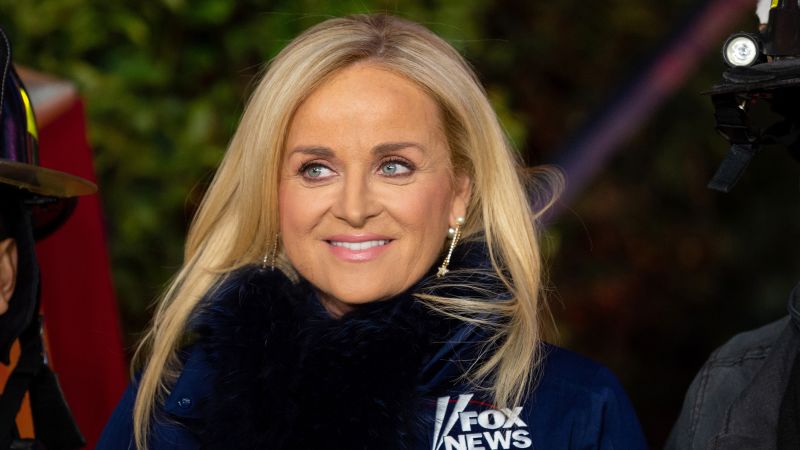
Fox News CEO Suzanne Scott sounded the alarm within the organization about the financial fallout that the proper-wing community would undergo if it continued aggressively fact-examining then-President Donald Trump’s lies after the 2020 election, in accordance to messages that grew to become community Wednesday.

In just one instance, Scott emailed Meade Cooper, government vice president of primary time programming, and expressed annoyance immediately after correspondent Eric Shawn appeared on Martha MacCallum’s show and reality-checked Trump and a Sean Hannity guest.

“This has to stop now,” Scott mentioned in a December 2, 2020, message.

“This is bad for company and there is a lack of comprehending what is occurring in these reveals,” Scott added. “The audience is furious and we are just feeding them product. Undesirable for company.”

A Fox News spokesperson advised CNN that Scott was not having issue with the fact-examining, but mentioned the make any difference was about “one host calling out an additional,” seemingly referring to the actuality that MacCallum and Shawn actuality-checked a visitor that appeared on Hannity’s demonstrate.

The e-mail to Cooper was unveiled as portion of Dominion Voting Systems’ $1.6 billion defamation lawsuit from Fox News. Like various documents made public Wednesday, the electronic mail experienced formerly been redacted in earlier court filings. The new e-mails were incorporated in a presentation that Dominion showed at a hearing past 7 days in Wilmington, Delaware. The voting technological know-how company publicly produced the whole slideshow Wednesday, per a courtroom buy. Fox News, which denies any wrongdoing, has accused Dominion of cherry-picking email messages to current a self-serving narrative about what the ideal-wing network did right after the 2020 election.

“These files once all over again reveal Dominion’s ongoing reliance on cherry-picked quotes with out context to make headlines in purchase to distract from the details of this scenario,” a Fox spokesperson explained in a statement. “The foundational appropriate to a free of charge push is at stake and we will keep on to fiercely advocate for the 1st Modification in preserving the position of information corporations to protect the information.”

In an additional e-mail created by Scott, zinging correspondent Kristin Fisher, who now performs at CNN, for her intended “dismissive tone” in November 2020 just after the presidential contest, the Fox News chief disclosed that the organization experienced “lost 25k subs from FOX Nation,” its streaming service.

02 fox dominion emails

In before courtroom filings, the details about the Fox Country subscriptions experienced been redacted.

The messages underscore the stress that gripped Fox News in the wake of the 2020 election when its viewers rebelled in opposition to the channel for precisely contacting the election for President Joe Biden.

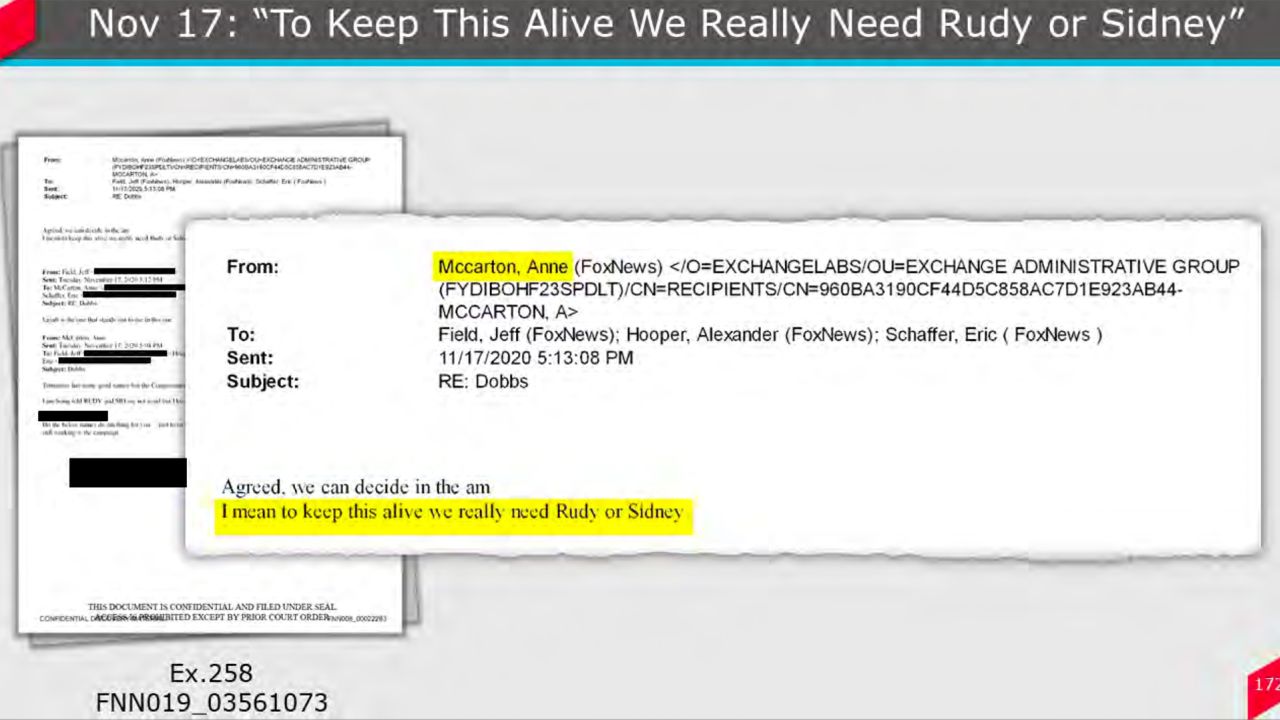
Other newly unveiled e-mail confirmed community producers discussing how putting Trump legal professionals Rudy Giuliani and Sidney Powell on the air inflated scores. At the time, Powell, Giuliani and host Lou Dobbs were advertising debunked conspiracy theories that Dominion had rigged the 2020 election by flipping thousands and thousands of votes.

fox dominion email

“Any working day with Rudy and Sidney is certain gold!” the Dobbs producer wrote. In a further email, another Dobbs producer wrote, “to retain this alive, we really require Rudy or Sidney.”

The complete e mail chains are not publicly out there.

Editor’s note: This tale has been up to date to make clear that Fox Information CEO Suzanne Scott was zinging Kristin Fisher’s supposedly “dismissive tone” in a 2020 email, not host Dana Perino’s. The exchange Scott was referring to happened when Fisher was on Perino’s display.

A $3 Trillion Threat to Global Financial Markets Looms in Japan

A  Trillion Threat to Global Financial Markets Looms in Japan

(Bloomberg) — Financial institution of Japan Governor Haruhiko Kuroda improved the program of world-wide markets when he unleashed a $3.4 trillion firehose of Japanese cash on the financial investment earth. Now Kazuo Ueda is possible to dismantle his legacy, environment the phase for a movement reversal that risks sending shockwaves by way of the international financial state.

Most Go through from Bloomberg

Just about a 7 days ahead of a momentous management modify at the BOJ, investors are gearing up for the seemingly inescapable finish to a 10 years of ultra-low fascination charges that punished domestic savers and despatched a wall of money overseas. The exodus accelerated following Kuroda moved to suppress bond yields in 2016, culminating in a mountain of offshore investments well worth extra than two-thirds Japan’s economy.

All this dangers unraveling less than the new governor Ueda, who may possibly have little alternative but to finish the world’s boldest effortless-funds experiment just as soaring curiosity fees somewhere else are by now jolting the worldwide banking sector and threatening economical balance. The stakes are tremendous: Japanese buyers are the major international holders of US government bonds and own every thing from Brazilian credit card debt to European power stations to bundles of risky loans stateside.

An boost in Japan’s borrowing expenses threatens to amplify the swings in world wide bond marketplaces, which are becoming rocked by the Federal Reserve’s year-very long campaign to fight inflation and the new hazard of a credit rating crunch. From this backdrop, tighter financial plan by the BOJ is likely to intensify scrutiny of its country’s creditors in the wake of the latest bank turmoil in the US and Europe.

A transform in policy in Japan is “an more force that is not currently being appreciated” and “all G-3 economies in a single way or the other will be reducing their stability sheets and tightening policy” when it transpires, mentioned Jean Boivin, head of the BlackRock Expense Institute and former Deputy Governor of the Bank of Canada. “When you handle a selling price and loosen the grip, it can be complicated and messy. We think it is a significant offer what takes place future.”

The circulation reversal is previously underway. Japanese investors sold a document total of abroad financial debt last yr as local yields rose on speculation that the BOJ would normalize policy.

Kuroda included gas to the hearth final December when he relaxed the central bank’s grip on yields by a fraction. In just hours, Japanese federal government bonds plunged and the yen skyrocketed, jolting anything from Treasuries to the Australian dollar.

“You’ve by now found the start of that income being repatriated again to Japan,” said Jeffrey Atherton, portfolio manager at Guy GLG, element of Person Group, the world’s most important publicly traded hedge fund. “It would be logical for them to carry the income dwelling and not to just take the foreign trade threat,” claimed Atherton, who operates the Japan CoreAlpha Fairness Fund which is beaten about 94{21df340e03e388cc75c411746d1a214f72c176b221768b7ada42b4d751988996} of its friends in the earlier year.

Coming Home

Bets for a shift in BOJ coverage have eased in the latest days as the upheaval in the banking sector raises the prospect that coverage makers may prioritize economic security. Investor scrutiny of Japanese lenders’ harmony sheets has grown, on worry they may possibly echo some of the stresses that have floored a number of regional US financial institutions.

But market participants assume chatter on BOJ tweaks to resume when tensions dissipate.

Why Japanese Financial institutions Are Well Put to Endure Banking Disaster

Ueda, the to start with at any time educational to captain the BOJ, is largely anticipated to speed up the pace of plan tightening sometime afterwards this yr. Portion of that might include things like further loosening the central bank’s management on yields and unwinding a titanic bond-getting application developed to suppress borrowing costs and enhance Japan’s moribund economic system.

The BOJ has bought 465 trillion yen ($3.55 trillion) of Japanese govt bonds considering that Kuroda carried out quantitative easing a 10 years in the past, in accordance to central lender data, depressing yields and fueling unparalleled distortions in the sovereign financial debt current market. As a final result, area funds sold 206 trillion yen of the securities in the course of the interval to request greater returns in other places.

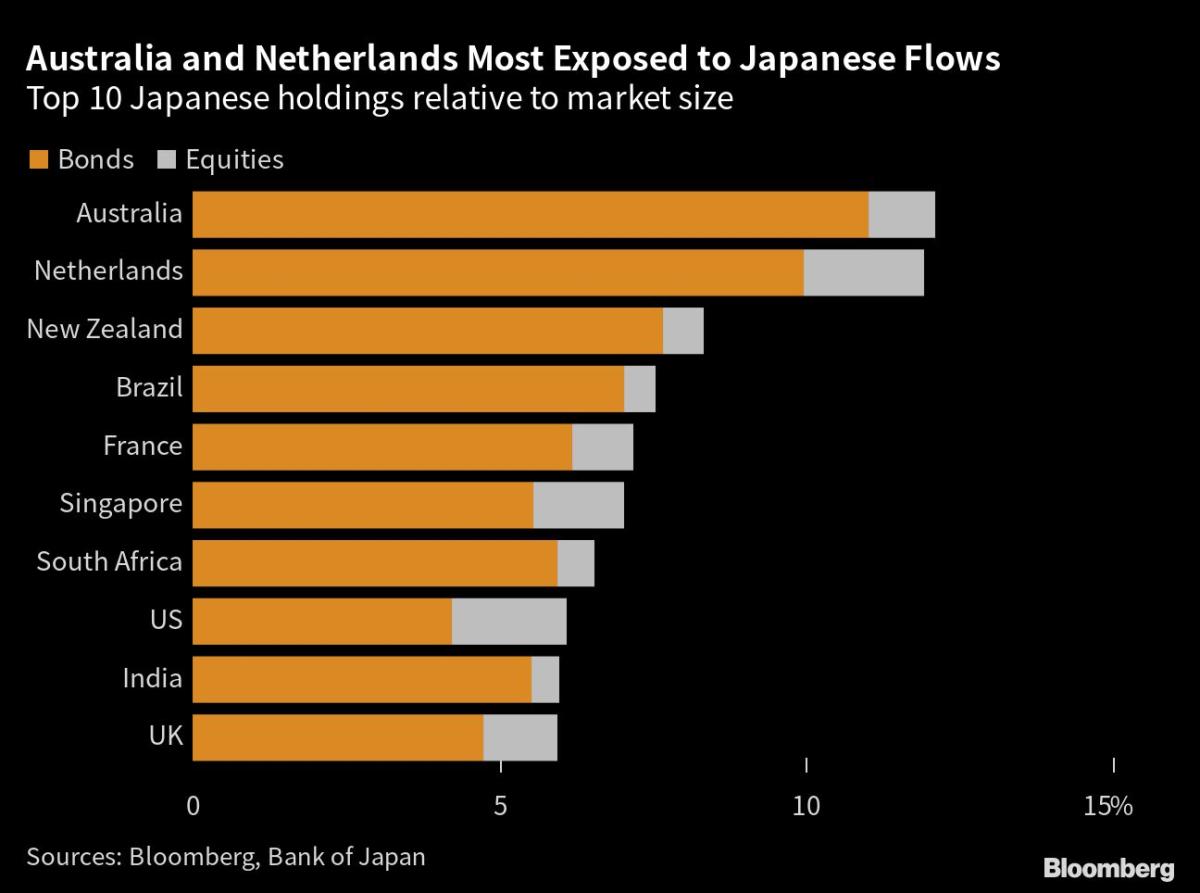
The shift was so seismic that Japanese buyers turned the largest holders of Treasuries exterior the US as perfectly as owners of about 10{21df340e03e388cc75c411746d1a214f72c176b221768b7ada42b4d751988996} of Australian debt and Dutch bonds. They also individual 8{21df340e03e388cc75c411746d1a214f72c176b221768b7ada42b4d751988996} of New Zealand’s securities and 7{21df340e03e388cc75c411746d1a214f72c176b221768b7ada42b4d751988996} of Brazil’s credit card debt, calculations by Bloomberg demonstrate.

The reach extends to stocks, with Japanese investors obtaining splashed out 54.1 trillion yen on worldwide shares since April 2013. Their holdings of equities are equivalent to involving 1{21df340e03e388cc75c411746d1a214f72c176b221768b7ada42b4d751988996} and 2{21df340e03e388cc75c411746d1a214f72c176b221768b7ada42b4d751988996} of the inventory marketplaces in the US, Netherlands, Singapore and the United kingdom.

Japan’s ultra-minimal charges had been a big reason the yen tumbled to a 32-calendar year reduced previous 12 months, and it has been a top possibility for revenue-searching for carry traders to fund buys of currencies ranging from Brazil’s serious to the Indonesian rupiah.

“Almost undoubtedly it contributed to a substantial drop of the yen, a huge dysfunctioning of the Japanese bond marketplace,” previous British isles govt minister and Goldman Sachs Team Inc. chief economist Jim O’Neill explained of Kuroda’s insurance policies. “Much of what transpired in Kuroda’s time will partially or fully reverse” ought to his successor go after coverage normalization, even though the banking crisis might bring about authorities to move forward a lot more cautiously, he added.

The forex has pulled again from final year’s lows, served by a look at that normalization is inevitable.

Include to that equation previous year’s historic world wide bond losses, and Japanese traders have even additional explanation to flock property, according to Akira Takei, a 36-calendar year industry veteran and dollars supervisor at Asset Management 1 Co.

“Japanese credit card debt investors have had negative encounters outdoors the state in the previous year due to the fact a significant soar in yields pressured them to slice losses, so lots of of them even really do not want to see overseas bonds,” stated Tokyo-based Takei, whose organization oversees $460 billion. “They are now considering that not all funds have to be invested overseas but can be invested locally.”

The incoming president of Dai-ichi Lifestyle Holdings Inc., one of Japan’s major institutional investors, verified it was shifting far more income to domestic bonds from foreign securities, right after aggressive US fee hikes built it highly-priced to hedge towards forex risks.

To be guaranteed, couple are geared up to go all out in betting Ueda will rock the boat when he gets into place of work.

A current Bloomberg survey confirmed 41{21df340e03e388cc75c411746d1a214f72c176b221768b7ada42b4d751988996} of BOJ watchers see a tightening action taking place in June, up from 26{21df340e03e388cc75c411746d1a214f72c176b221768b7ada42b4d751988996} in February, even though former Japan Vice Finance Minister Eisuke Sakakibara explained the BOJ may possibly raise costs by Oct.

A summary of views from the BOJ’s March 9-10 conference showed the central financial institution remains cautious about executing a policy pivot in advance of achieving its inflation concentrate on. And that was even soon after Japan’s inflation accelerated over and above 4{21df340e03e388cc75c411746d1a214f72c176b221768b7ada42b4d751988996} to set a contemporary four-ten years large.

The up coming central bank meeting, Ueda’s first, is scheduled to acquire put April 27-28.

Richard Clarida, who served as Vice Chairman at the Federal Reserve from 2018 to 2022, arguably has much more perception than most soon after possessing identified “straight shooter” Kuroda for a long time and weighed Japan’s affect on US and world wide financial plan.

“Markets expect very early under Ueda that yield-curve management is dismantled,” explained Clarida, who is now world-wide financial advisor at Pacific Investment decision Management Co. From here Ueda “may want to go in the way to shrink the equilibrium sheet or reinvest the redemptions, but that is not a single for working day 1,” he stated, introducing Japan’s tightening would be a “historic moment” for markets although it could not be a “driver of global bonds.”

Gradual Shift

Some other market watchers have extra modest anticipations of what will materialize as soon as the BOJ rolls again its stimulus method.

Ayako Sera, a current market strategist at Sumitomo Mitsui Belief Lender Ltd., sees the US-Japan fee gap persisting to a degree as the Fed is unlikely to provide significant level cuts if inflation stays higher and the BOJ is not anticipated to elevate premiums significantly in the in close proximity to expression.

“It’s essential to evaluate any tweaks and outlooks of the BOJ’s entire monetary plan offer when wondering about their implication on the cross-border fund flows,” she mentioned.

Ryosuke Oshima, deputy normal supervisor of item promotion team at Mitsubishi UFJ Kokusai Asset Administration Co. in Tokyo, is eyeing yield concentrations as a potential result in for a change in flows.

“There may possibly be some hunger for bond funds when the charges go greater, like 1{21df340e03e388cc75c411746d1a214f72c176b221768b7ada42b4d751988996} for the 10-year yield,” he said. “But on the lookout at the knowledge, it is not likely they reverse all their expenditure back house instantly.”

For some others like 36-calendar year markets veteran Rajeev De Mello, it is probable only a issue of time prior to Ueda has to act and the outcomes may have international repercussions.

“I thoroughly agree with the consensus that the BOJ will tighten — they’ll want to end this plan as shortly as attainable,” stated De Mello, a income manager at GAMA Asset Management in Geneva. “It arrives down to central bank trustworthiness, it comes down to inflation circumstances being increasingly fulfilled now — normalization will come to Japan.”

–With aid from Winnie Hsu, Ayai Tomisawa, Hideyuki Sano, Yumi Teso, Emily Cadman and Jane Pong.

Most Examine from Bloomberg Businessweek

©2023 Bloomberg L.P.

US consumer finance chief calls for better risk management at banks, fintechs

US consumer finance chief calls for better risk management at banks, fintechs

March 28 (Reuters) – The modern failures of mid-dimension U.S. loan providers show the need to have for far more sturdy risk management at banking companies and fintechs, together with improved regulation, the head of the major consumer money watchdog company reported on Tuesday.

Client Economical Protection Bureau Director Rohit Chopra explained to a gathering of retail bankers in Las Vegas that regulators ended up wanting at liquidity, desire-price hazard administration, cash frameworks, resolution setting up and tension testing.

“It will be superior for the business to have some genuine conversations with by itself about what is the way for the regulatory framework to not make this style of threat,” Chopra explained.

As head of the CFPB, Chopra also sits on the board of the Federal Deposit Insurance plan Company, which took over unsuccessful Silicon Valley Lender earlier this thirty day period. He also serves on the Fiscal Steadiness Oversight Council, created in the wake of the 2008 crash.

“It was rapidly and furious,” Chopra mentioned of SVB’s implosion. While the scramble by shoppers to go their funds has subsided, “there is certainly no query it has been a dramatic movement of funds,” he mentioned.

The slide of SVB is “a distinct details position that $100 billion greenback banks can seriously trigger a great deal of systemic possibility and ultimately contagion across the economic technique,” he explained.

Lawmakers and lobbyists have sparred in latest times in excess of who to blame for the collapse of Silicon Valley Bank. Some blame too much possibility-taking by financial institution leadership, a failure of regulatory supervision, or a 2018 rollback of vital oversight provisions enacted as aspect of the 2010 Dodd-Frank Wall Street reform laws.

Chopra, 41, is a protege of Democratic U.S. Senator Elizabeth Warren and a key figure in the Biden administration’s present course of progressive money and economic regulators.

He is regarded for his deft coverage messaging and firm calls for company accountability. In a 3-year stint on the Federal Trade Fee, he recognized himself as an intense buyer advocate.

As member of the Democratic minority, he advocated for penalizing person executives fairly than only amassing a lot more fines.

U.S. President Joe Biden stated on Tuesday he has done what is achievable to handle the banking crisis with out there authorities but that it is “not around still.”

Chopra also explained to bankers he was involved about the buildup of threat in so-named non-financial institution monetary companies, these types of as fintechs or crypto businesses, many of which are overseen by his company.

“No one particular really thinks that there is no non-bank that could supply the same variety of contagion or similar type of systemic outcome,” stated Chopra. “A main disruption or failure of a large mortgage servicer, definitely gives me a nightmare.”

Chopra’s existence at the Consumer Bankers Association’s once-a-year confab was a scarce chance for facetime with an marketplace where by some attendees took umbrage with Chopra’s fashion and general public remarks, notably concerning the Biden administration’s wider marketing campaign in opposition to “junk service fees.”

Brian Johnson, a former CFPB in the course of President Donald Trump’s administration, told attendees that Chopra experienced been applying the CFPB as a “bully pulpit” to generate adjust in sector behavior.

Chopra has tried out to speed up rule variations via community statements, as regulation adjustments and enforcement steps take for a longer time to deliver final results, said Yolanda McGill, Zest AI vice president and previous CFPB lawyer.

Susan Seaman, a companion at Husch Blackwell LLP, clients have been achieving out to critique their service fees. “Persons are taking proactive steps,” she mentioned. “Purchasers want to be prepared to protect their insurance policies.”

Reporting by Nupur Anand and Tatiana Bautzer Producing by Douglas Gillison Modifying by Lananh Nguyen and Sam Holmes

Our Requirements: The Thomson Reuters Believe in Ideas.

Do Analysts Think You Should Buy?

Do Analysts Think You Should Buy?
Information Property

Tuesday, March 28, 2023 02:24 PM | InvestorsObserver Analysts

Pointed out in this article

Do Analysts Think You Should Buy?

Wall Avenue is positive on Brighthouse Monetary Inc (BHF). On typical, analysts give BHF a Hold score. The common price tag focus on is $52.428, which usually means analysts assume the stock to increase by 24.53{21df340e03e388cc75c411746d1a214f72c176b221768b7ada42b4d751988996} over the following twelve months.

That normal position earns BHF an Analyst Score of 4, which is superior than 4{21df340e03e388cc75c411746d1a214f72c176b221768b7ada42b4d751988996} of shares dependent on info compiled by InvestorsObserver.

Overall Score - 2.7
Wall Street analysts are score BHF a Hold today. Obtain out what this means to you and get the relaxation of the rankings on BHF!

Why are Analyst Ratings Crucial?

Analysts know the inner workings of the providers they follow much better than everyone but the companies’ administration. You can master a great deal about a organization from finding out the economic statements, but analysts check with issues on convention phone calls and realize the intricacies of every single of the firms they protect. Analysts realize how bad temperature in one particular part of the entire world can disrupt supply chains, or disrupt procuring styles. This lets traders make selections in advance of a quarterly report that could be worse than anticipated.

InvestorsObserver aggregates the rankings of all the analysts masking a supplied inventory, takes the regular of individuals rankings and then percentile ranks the averages. That presents a stage of granularity that is drastically far better than just the three ranges offered by conventional buy/keep/sell ratings.

What is Taking place With Brighthouse Economical Inc Stock Currently?

Brighthouse Fiscal Inc (BHF) stock is investing at $42.10 as of 2:23 PM on Tuesday, Mar 28, a decline of -$.56, or -1.32{21df340e03e388cc75c411746d1a214f72c176b221768b7ada42b4d751988996} from the earlier closing price tag of $42.66. The inventory has traded among $41.87 and $42.61 so considerably currently. Volume currently is below ordinary. So considerably 278,666 shares have traded in contrast to ordinary volume of 617,912 shares.

Simply click Right here to get the complete Inventory Report for Brighthouse Monetary Inc inventory.

You May possibly Also Like