Stock market news live updates: December 14, 2021

Markets edged lower in early trading Tuesday following declines in yesterday’s session as investors tune in for on a prolific week in Washington that includes the Federal Reserve’s final policy-setting meeting of 2021, set to commence today, and the release of new prints on retail sales, housing starts and other economic data.

All three major U.S. indexes were down amid figures from the Department of Labor that showed wholesale prices soared by a record 9.6{21df340e03e388cc75c411746d1a214f72c176b221768b7ada42b4d751988996} in November from a year earlier, the fastest annual pace on record for the indicator.

Traders are awaiting a decision from the Fed on how quickly the central bank will tighten monetary policy amid a backdrop of fresh inflation numbers that reflected the fastest annual increase in nearly four decades. The Labor Department’s Consumer Price Index (CPI) soared 6.8{21df340e03e388cc75c411746d1a214f72c176b221768b7ada42b4d751988996} in November compared to last year, according to figures published last week.

The Federal Open Market Committee (FOMC) is scheduled to hold its two-day policy-setting meeting starting on Tuesday, followed by the release of the monetary policy statement and remarks from Federal Reserve Chair Jerome Powell Wednesday. An updated Summary of Economic Projections outlining individual members’ outlooks for economic conditions and interest rates is set to accompany the statement.

The Fed has been under pressure to control rising inflation levels, as investors watch for clues of a faster taper that could set the stage for earlier rate hikes.

“Because inflation expectations do appear to be adaptive, our view is that the longer inflation stays elevated, the greater the risk that consumers adjust their behaviors in a way that contributes to persistently elevated inflation” wrote PIMCO economist Tiffany Wilding in a recent note to clients.

“We believe the Fed will want to manage this risk by shortening the time over which it winds down its purchases of U.S. Treasuries and agency mortgage-backed securities (MBS), aiming to end the program in March 2022, while also signaling a June rate hike is likely,” said Wilding.

PIMCO managing director and portfolio manager Sonali Pier also separately told Yahoo Finance Live that the firm expects to see two hikes in 2022, three hikes in 2023, and potentially four in 2024, with the Fed trying to bring the policy rate to neutral.

“Amid proliferating signs of solid growth and a robust job market, various measures depict a deeply troubled economy,” wrote Oxford Economics senior economist Bob Schwartz in a new report. “Households are downbeat, according to sentiment surveys, and the so-called ‘misery index‘ that adds together inflation and unemployment hovers around recession levels.”

Markets await a trove of fresh economic data this week. November retail sales, out on Wednesday, are expected to rise by 0.8{21df340e03e388cc75c411746d1a214f72c176b221768b7ada42b4d751988996}, according to Bloomberg consensus estimates. And November housing starts are forecasted to see a month-over-month increase of 3.3{21df340e03e388cc75c411746d1a214f72c176b221768b7ada42b4d751988996}.

Meanwhile, Morgan Stanley projects the U.S. unemployment rate will drop to 3{21df340e03e388cc75c411746d1a214f72c176b221768b7ada42b4d751988996} in 2022.

“It’s stunning to see how much the rate has fallen in the last five months,” Morgan chief U.S. economist Michael Feroli told Yahoo Finance Live. “We expect that pace of decline to slow, but it doesn’t take much to get below 4{21df340e03e388cc75c411746d1a214f72c176b221768b7ada42b4d751988996}, even with a tick up in the labor participation rate which has been depressed over the last year and a half.”

12:05 p.m. ET: Microsoft posts biggest drop since 2020

Shares of Microsoft (MSFT) were down more than 4{21df340e03e388cc75c411746d1a214f72c176b221768b7ada42b4d751988996} in midday trading, contributing to the Dow’s losses as the broader markets edged lower.

The software giant posted its biggest drop since last October, according to Bloomberg data, adding to yesterday’s loss of nearly 1{21df340e03e388cc75c411746d1a214f72c176b221768b7ada42b4d751988996} at close.

Separately, J.P. Morgan released fresh research on Tuesday that said investors overlook Microsoft’s leading position in data management. Data platform solutions contributed to about 12{21df340e03e388cc75c411746d1a214f72c176b221768b7ada42b4d751988996} of Microsoft’s total revenue in 1H21, up from roughly 10{21df340e03e388cc75c411746d1a214f72c176b221768b7ada42b4d751988996} in 2017, according to the bank’s note, which also said much of the company’s growth is driven by cloud data platforms that grew from about 3{21df340e03e388cc75c411746d1a214f72c176b221768b7ada42b4d751988996} of total revenue to about 7{21df340e03e388cc75c411746d1a214f72c176b221768b7ada42b4d751988996} in the same time period. J.P. Morgan expects this to be a key source of upside heading into 2022.

Microsoft had a year of stunning numbers that made it Yahoo Finance’s company of the year. The tech heavy weight passed a $2 trillion market capitalization in June and reported a $176 billion surge in revenue — a nearly 20{21df340e03e388cc75c411746d1a214f72c176b221768b7ada42b4d751988996} year-over-year increase.

11:13 a.m. ET: Dow reverses comeback, shedding more than 100 points

Here were the main moves in markets as of 11:13 a.m. ET:

  • S&P 500 (^GSPC): -52.68 (-1.13{21df340e03e388cc75c411746d1a214f72c176b221768b7ada42b4d751988996}) to 4,616.29

  • Dow (^DJI): -121.43 (-0.34{21df340e03e388cc75c411746d1a214f72c176b221768b7ada42b4d751988996}) to 35,529.52

  • Nasdaq (^IXIC): -279.60 (-1.81{21df340e03e388cc75c411746d1a214f72c176b221768b7ada42b4d751988996}) to 15,133.68

  • Crude (CL=F): -$1.00 (-1.40{21df340e03e388cc75c411746d1a214f72c176b221768b7ada42b4d751988996}) to $70.29 a barrel

  • Gold (GC=F): -$12.10 (-0.68{21df340e03e388cc75c411746d1a214f72c176b221768b7ada42b4d751988996}) to $1,776.20 per ounce

  • 10-year Treasury (^TNX): +2.6 bps to yield 1.4500{21df340e03e388cc75c411746d1a214f72c176b221768b7ada42b4d751988996}

11:01 a.m. ET: Meme-stock darling AMC extends decline

Shares of AMC Entertainment Holdings Inc. (AMC) were down 2.19{21df340e03e388cc75c411746d1a214f72c176b221768b7ada42b4d751988996}, trading at $22.73 a piece, though recouping some losses after falling as much as 11{21df340e03e388cc75c411746d1a214f72c176b221768b7ada42b4d751988996} at the open. The company was hit hard in Monday’s sell-off along with other retail favorites, including Bed Bath & Beyond Inc. (BBY) and Tesla (TSLA).

The losses come as investors expect a rollback of pandemic-era stimulus by the Federal Reserve, putting risky assets and tech companies under pressure.

Retail investors comprise 20{21df340e03e388cc75c411746d1a214f72c176b221768b7ada42b4d751988996}-30{21df340e03e388cc75c411746d1a214f72c176b221768b7ada42b4d751988996} of trading volume, according to research from J.P. Morgan—a change from last year when these traders were seen as small-time market players.

10:17 a.m. ET: Dow turns green following tumble

Here were the main moves in markets as of 10:17 a.m. ET:

  • S&P 500 (^GSPC): -32.00 (-0.69{21df340e03e388cc75c411746d1a214f72c176b221768b7ada42b4d751988996}) to 4,636.97

  • Dow (^DJI): +16.28 (+0.05{21df340e03e388cc75c411746d1a214f72c176b221768b7ada42b4d751988996}) to 35,667.23

  • Nasdaq (^IXIC): -200.53 (-1.30{21df340e03e388cc75c411746d1a214f72c176b221768b7ada42b4d751988996}) to 15,212.75

  • Crude (CL=F): -$0.72 (-1.01{21df340e03e388cc75c411746d1a214f72c176b221768b7ada42b4d751988996}) to $70.57 a barrel

  • Gold (GC=F): -$13.10 (-0.73{21df340e03e388cc75c411746d1a214f72c176b221768b7ada42b4d751988996}) to $1,775.20 per ounce

  • 10-year Treasury (^TNX): +3.9 bps to yield 1.4630{21df340e03e388cc75c411746d1a214f72c176b221768b7ada42b4d751988996}

9:30 a.m. ET: Markets open lower ahead of Fed decision

Here were the main moves in markets as of 9:30 a.m. ET:

  • S&P 500 (^GSPC): -36.88 (-0.79{21df340e03e388cc75c411746d1a214f72c176b221768b7ada42b4d751988996}) to 4,632.09

  • Dow (^DJI): -141.06 (-0.40{21df340e03e388cc75c411746d1a214f72c176b221768b7ada42b4d751988996}) to 35,509.89

  • Nasdaq (^IXIC): -217.32 (-1.39{21df340e03e388cc75c411746d1a214f72c176b221768b7ada42b4d751988996}) to 15,413.28

  • Crude (CL=F): -$0.92 (-1.29{21df340e03e388cc75c411746d1a214f72c176b221768b7ada42b4d751988996}) to $70.37 a barrel

  • Gold (GC=F): -$20.90 (-1.17{21df340e03e388cc75c411746d1a214f72c176b221768b7ada42b4d751988996}) to $1,767.40 per ounce

  • 10-year Treasury (^TNX): +2.7 bps to yield 1.4510{21df340e03e388cc75c411746d1a214f72c176b221768b7ada42b4d751988996}

9:05 a.m. ET: Stock futures tick down

Here were the main moves in futures trading Tuesday morning:

  • S&P 500 futures (ES=F): -28.50 points (-0.64{21df340e03e388cc75c411746d1a214f72c176b221768b7ada42b4d751988996}), to 4,640.25

  • Dow futures (YM=F): -100 points (-0.28{21df340e03e388cc75c411746d1a214f72c176b221768b7ada42b4d751988996}), to 35,545

  • Nasdaq futures (NQ=F): -170 points (-1.06{21df340e03e388cc75c411746d1a214f72c176b221768b7ada42b4d751988996}) to 15,912

8:48 a.m. ET: Wholesale inflation surges 9.6{21df340e03e388cc75c411746d1a214f72c176b221768b7ada42b4d751988996}

Wholesale prices soared by a record 9.6{21df340e03e388cc75c411746d1a214f72c176b221768b7ada42b4d751988996} in November from a year earlier, the fastest annual pace on record for the indicator and a sign inflation pressures are likely to persist well into 2022.

The Labor Department reported Tuesday that its producer price index rose 0.8{21df340e03e388cc75c411746d1a214f72c176b221768b7ada42b4d751988996} in November after a 0.6{21df340e03e388cc75c411746d1a214f72c176b221768b7ada42b4d751988996} monthly gain in October. The figure, which measures inflation before it reaches consumers, marked the highest monthly reading in four months.

Food prices jumped 1.2{21df340e03e388cc75c411746d1a214f72c176b221768b7ada42b4d751988996} in November after falling 0.3{21df340e03e388cc75c411746d1a214f72c176b221768b7ada42b4d751988996} in October. Energy prices were up 2.6{21df340e03e388cc75c411746d1a214f72c176b221768b7ada42b4d751988996} after a 5.3{21df340e03e388cc75c411746d1a214f72c176b221768b7ada42b4d751988996} percent rise October.

7:07 a.m. ET: Stock futures mixed

Here were the main moves in markets in early trading Tuesday:

  • S&P 500 futures (ES=F): -8.25 points (-0.18{21df340e03e388cc75c411746d1a214f72c176b221768b7ada42b4d751988996}), to 4,660.5

  • Dow futures (YM=F): +22.00 points (0.06{21df340e03e388cc75c411746d1a214f72c176b221768b7ada42b4d751988996}), to 35,667

  • Nasdaq futures (NQ=F): -85.25 points (0.53{21df340e03e388cc75c411746d1a214f72c176b221768b7ada42b4d751988996}) to 15,996.75

6:00 p.m. Monday ET: Stock futures edge higher

Here were the main moves in markets in late trading on Monday:

  • S&P 500 futures (ES=F): +5.50 points (0.12{21df340e03e388cc75c411746d1a214f72c176b221768b7ada42b4d751988996}), to 4,674.25

  • Dow futures (YM=F): +46.00 points (0.13{21df340e03e388cc75c411746d1a214f72c176b221768b7ada42b4d751988996}), to 35,691

  • Nasdaq futures (NQ=F): +10.75 points (0.07{21df340e03e388cc75c411746d1a214f72c176b221768b7ada42b4d751988996}) to 16,092.75

Alexandra Semenova is a reporter for Yahoo Finance. Follow her on Twitter @alexandraandnyc

Read the latest financial and business news from Yahoo Finance

Follow Yahoo Finance on Twitter, Instagram, YouTube, Facebook, Flipboard, and LinkedIn

City or real economy: who are the financial markets for?

The indirect benefits that effective financial markets can create by improving overall economic performance vastly exceed any direct benefits that the financial services sector produces through its revenue and employment. The primary goal of financial regulation should therefore be to bring about effective financial markets. But there is now no regulator responsible for the overall effectiveness of the UK’s financial services sector. Kevin R. James suggests a way for the Treasury to correct this market effectiveness underlap. 


After the last financial crisis, the Treasury directed the Financial Conduct Authority to “Make financial markets work well”. But it neglected to specify who exactly the markets should work well for. This is the issue that the Treasury’s ongoing Future Framework Review of financial regulation must now resolve to ensure that the UK has the financial system it needs to thrive in the post-Brexit world.

The Treasury has two options. It can define “working well” from the perspective of the City and aim to make London the world’s leading international financial centre. Or it can define “working well” from the perspective of the people and firms in the real economy and focus on making financial markets effective from that perspective.

A City strategy could realistically achieve its goal (the CityUK has a plan), and making London the world’s leading IFC would indeed be fantastic for the financial services sector. If finance was a typical industry, then a City strategy would definitely make sense.

But finance is not a typical industry. Financial markets create benefits primarily through their impact on overall economic performance rather than by creating profits and jobs in the financial services sector. For example, economic research finds that effective financial markets enable non-financial firms to pursue productivity improving strategies and also contribute to financial stability. The benefits of improving the performance of the 93{21df340e03e388cc75c411746d1a214f72c176b221768b7ada42b4d751988996} of the economy not in the financial services sector vastly exceed any benefits that increasing London’s share of global financial business would create. It follows that making financial markets work well from the perspective of the real economy should be the principal goal of the financial regulatory system.

Yet no regulator is responsible for the effectiveness of the financial system as a whole, as is easily seen from the fact that no regulator produces anything even remotely comparable to the FPC’s Financial Stability Report for the subject of market effectiveness. So, just as the UK had a financial stability underlap in its regulatory architecture before the last financial crisis, it now has a market effectiveness underlap.

The FCA is the natural institution to take the lead on market effectiveness. The Treasury is therefore proposing to take a few small steps to address the market effectiveness underlap problem by giving the FCA a secondary objective to promote growth. But this is not sufficient. This secondary objective will in practice do little more than require the poor person tasked with showing that Policy X passes the CBA test to tack on a pro forma paragraph indicating that Policy X is also good for growth.

To enhance market effectiveness, the Treasury must design a regulatory architecture that forces the FCA to actively seek out opportunities to improve market performance. The FCA is not now geared up to do this as it aims to deal (at pace) with risks to markets as they are. But no amount of data about risks to markets as they are will enable the FCA to identify and exploit opportunities to make markets work better.

Eliminating the regulatory system’s market effectiveness underlap therefore demands a more radical approach. I propose that the Treasury create a Financial Policy Committee for Effectiveness (FPCEff) based at the FCA to complement the FPC for Stability based at the Bank (with the FPC for Stability having the final say in event of a conflict).

FPCEff will be chaired by the FCA’s CEO and will consist of inside members, representatives from other financial regulators and the government (the PRA, the Pension Regulator, the Financial Reporting Council, HMT, and BEIS), and outside members to bring in broader financial market expertise. FPCEff’s mandate will be to think strategically about how to improve financial market effectiveness from the perspective of the real economy. To equip the committee to do its job, FPCEff will have a staff drawn from the regulatory community to provide the analytical depth and research capabilities needed to drive the effectiveness agenda forward. While FPCEff’s exact legal powers will need to be worked out, an institution along these lines will have the mandate, incentives, and capabilities required to give the UK the effective financial markets it needs to support a successful post-Brexit economy.

Creating a regulatory body tasked with taking a strategic approach to improving financial market effectiveness is precisely the sort of bold reform that Brexit both makes possible and demands (if it is to be an economic success). The Future Framework Review is the perfect opportunity to pursue it.

Carpe diem, HMT!

♣♣♣

Notes:

  • This blog post expresses the views of its authors, not the position of LSE Business Review or the London School of Economics.
  • Featured image by Lachlan Gowen on Unsplash  
  • When you leave a comment, you’re agreeing to our Comment Policy.

Why bitcoin may face another 20{21df340e03e388cc75c411746d1a214f72c176b221768b7ada42b4d751988996} plunge in coming weeks, as ‘risk is heightened,’ says prominent technical analyst: ‘We’re watching $37,000.’

Hello, there! I’m stepping in this week for MarketWatch’s crypto reporter Frances Yue.

I’ll walk you through the latest and greatest in digital assets this week so far, as we enter the week before an important meeting of the Federal Reserve and consider its possible impact on bitcoin and other crypto, if any. We’ll also talk about the whipsawing weekend that was and what to expect from here.

Send tips, or feedback, and find us on Twitter at @mdecambre or @FrancesYue_.

But most important, sign up here to get Distributed Ledger delivered fresh to your inbox weekly!

Crypto movers
Biggest Gainers

Price

{21df340e03e388cc75c411746d1a214f72c176b221768b7ada42b4d751988996} 7-day Return

Near Protocol (NEAR)

$9.24

12.42

Terra (LUNA)

$67.26

6.95

BitTorrent (BTT)

$0.003313

5.57

UNUS SED LEO (LEO)

$3.70

4.3

Huobi Token (HT)

$9.86

2.54

Source: CoinMarketCap.com of the top 100 as of Dec. 9

Biggest Decliners

Price

{21df340e03e388cc75c411746d1a214f72c176b221768b7ada42b4d751988996} 7-day Return

Kadena (KDA)

$10.48

-36.83

Qtum (QTUM)

$10.01

-33.26

THORChain (RUNE)

$7.13

-32.39

Fantom (FTM)

$1.45

-30.50

THETA (THETA)

$4.44

-30.26

Source: CoinMarketCap.com of the top 100 as of Dec. 9

After the crypto crash?

MarketWatch’s Distributed Ledger spoke to Katie Stockton, founder of technical analysis firm Fairfield Strategies, about the crash in crypto over the past weekend. The declines took bitcoin
BTCUSD
to around $42,000 and Ether
ETHUSD
on the Ethereum blockchain to around $3,500 before those digital assets bounced back.

Although Fairlead is fairly bullish long term, over the next six months or so, on the crypto sector, including bitcoin and Ether, Stockton said that some considerable damage had been done to the uptrend in the short to intermediate-term, based on her analysis.

A short-term breakdown in trend was confirmed on Sunday, when bitcoin failed to return to its recent support at $53,000 based on the September high and now that it is hanging well below that level—it was trading at $47,702 on CoinDesk, down 5.6{21df340e03e388cc75c411746d1a214f72c176b221768b7ada42b4d751988996}—another support level of $44,000 needs to be the next point to monitor, with the $37,000 serving as secondary technical support area.

“We feel that risk is heightened near term and even over the next two months or so,” Stockton said.

The popular analyst who uses chart models and gauges of momentum to forecast moves in assets from stocks to crypto said that she feels that the support level for bitcoin at $44,000 will likely be breached and the secondary support level, which defines the recent uptrend in bitcoin, will be a pivotal area for investors to watch in recent trade.

So is there cause to worry about another flash crash? Stockton says that it’s impossible to know for sure but believes that much of the tumble that took place in the wee hours of last Saturday are likely flushed out of the system since it was underpinned by unwinding in derivatives.

Certainly the bulls are hoping that is the case.

Crypto goes to Washington

MarketWatch’s Chris Matthews covered a highly anticipated testimony from some of the biggest names in crypto in front of Washington lawmakers.

Crypto execs, including those from popular digital-asset exchange Coinbase Global Inc.
COIN,
made the case that their technologies hold promise for the future, and that the growth of their more than $2 trillion industry shouldn’t be impeded by wrongheaded legislation.

The nascent industry is hoping to push Congress to create a new regulatory framework for digital assets that could help them avoid a costly showdown with the U.S. Securities and Exchange Commission.

“A successful policy framework would allow crypto platforms to offer both spot and derivatives trading on crypto assets under one unified system, with one rule book and one technology platform to manage risks related to all trading activity in customer accounts,” said Sam Bankman-Fried, CEO of FTX, told the House Financial Services Hearing on crypto markets.

Officials from Circle Internet Financial Ltd., issuer of a stablecoin crypto, bitcoin-mining firm Bitfury Group Ltd., cryptocurrency-payments system, Stellar Development Foundation, and blockchain firm Paxos Trust Co. also testified.

The Wall Street Journal reported that one of the main concerns among those lawmakers wary of crypto is that its rapid growth poses a threat to financial stability, is rife with fraud and manipulation, and isn’t environmentally friendly since mining virtual coins uses lots of real energy.

Crypto shares

In crypto-related company trading, shares of Coinbase Global Inc. traded down 9{21df340e03e388cc75c411746d1a214f72c176b221768b7ada42b4d751988996} to $287 Thursday afternoon. It was down 1.6{21df340e03e388cc75c411746d1a214f72c176b221768b7ada42b4d751988996} for the past five trading sessions. Michael Saylor’s MicroStrategy Inc.
MSTR
 traded 6.4{21df340e03e388cc75c411746d1a214f72c176b221768b7ada42b4d751988996} lower on Thursday to $595.58, and was down 5.5{21df340e03e388cc75c411746d1a214f72c176b221768b7ada42b4d751988996} over the past five days.

Mining company Riot Blockchain Inc.
RIOT
shares fell 9.1{21df340e03e388cc75c411746d1a214f72c176b221768b7ada42b4d751988996} to $26, contributing to an 6.9{21df340e03e388cc75c411746d1a214f72c176b221768b7ada42b4d751988996} loss over the past five days. Shares of Marathon Digital Holdings Inc.
MARA
were down nearly 11{21df340e03e388cc75c411746d1a214f72c176b221768b7ada42b4d751988996} to 41.72, but were up 0.3{21df340e03e388cc75c411746d1a214f72c176b221768b7ada42b4d751988996} over the past five days. Another miner Ebang International Holdings Inc
EBON.
fell 7{21df340e03e388cc75c411746d1a214f72c176b221768b7ada42b4d751988996} to $1.33, but was up 2.4{21df340e03e388cc75c411746d1a214f72c176b221768b7ada42b4d751988996} over the past five days.

Overstock.com Inc
OSTK.
 traded down 3.6{21df340e03e388cc75c411746d1a214f72c176b221768b7ada42b4d751988996} to $78.57. The shares went down 2.6{21df340e03e388cc75c411746d1a214f72c176b221768b7ada42b4d751988996} over the five-session period.

Square Inc.’s shares
SQ
fell 4.1{21df340e03e388cc75c411746d1a214f72c176b221768b7ada42b4d751988996} to $186.85, paring its week-to-date gain to 3.1{21df340e03e388cc75c411746d1a214f72c176b221768b7ada42b4d751988996}. Tesla Inc.’s shares
TSLA
 traded down 5{21df340e03e388cc75c411746d1a214f72c176b221768b7ada42b4d751988996} to $1,015, trading flat for the week.

PayPal Holdings Inc.
PYPL
 fell 2.1{21df340e03e388cc75c411746d1a214f72c176b221768b7ada42b4d751988996} to $192.72, while it recorded a 4.8{21df340e03e388cc75c411746d1a214f72c176b221768b7ada42b4d751988996} gain over the five-session stretch. NVIDIA Corp.
NVDA
meanwhile, slumped 3{21df340e03e388cc75c411746d1a214f72c176b221768b7ada42b4d751988996} to $308.72, but was looking at a 0.6{21df340e03e388cc75c411746d1a214f72c176b221768b7ada42b4d751988996} advance over the past five days.

Advanced Micro Devices Inc.
AMD
 was off 4.3{21df340e03e388cc75c411746d1a214f72c176b221768b7ada42b4d751988996} to $139.04 and logged a 3.5{21df340e03e388cc75c411746d1a214f72c176b221768b7ada42b4d751988996} loss over the past five trading days, as of Thursday afternoon.

In the fund space, ProShares Bitcoin Strategy ETF
BITO
were 6.1{21df340e03e388cc75c411746d1a214f72c176b221768b7ada42b4d751988996} lower to $30.29 Thursday, and was down nearly 11{21df340e03e388cc75c411746d1a214f72c176b221768b7ada42b4d751988996} for the week thus far, while Valkyrie Bitcoin Strategy ETF
BTF
was down 5.9{21df340e03e388cc75c411746d1a214f72c176b221768b7ada42b4d751988996}, with a week-to-date skid of nearly 11{21df340e03e388cc75c411746d1a214f72c176b221768b7ada42b4d751988996}. VanEck Bitcoin Strategy ETF
XBTF
fell 6.4{21df340e03e388cc75c411746d1a214f72c176b221768b7ada42b4d751988996} and was showing a nearly 11{21df340e03e388cc75c411746d1a214f72c176b221768b7ada42b4d751988996} weekly drop, as of Thursday afternoon.

Grayscale Bitcoin Trust
GBTC
 was trading to $37.44, off 7.1{21df340e03e388cc75c411746d1a214f72c176b221768b7ada42b4d751988996} late-afternoon Thursday, heading for a weekly loss of 10.5{21df340e03e388cc75c411746d1a214f72c176b221768b7ada42b4d751988996}.

Read: Grayscale Investment wants its largest bitcoin trust to be an ETF. A miscue briefly made its wish come true.

Must reads

Hottest U.S. inflation rate in almost 40 years brings sigh of relief in some corners of financial markets

The hottest U.S. consumer inflation reading in almost 40 years is bringing a surprising sigh of relief in certain corners of the financial markets, where some were expecting a headline year-over-year number closer to 7{21df340e03e388cc75c411746d1a214f72c176b221768b7ada42b4d751988996}.

The relief was evident in investors’ appetite for U.S. Treasuries Friday morning after the government’s consumer price index report, which showed the headline year-on-year reading at 6.8{21df340e03e388cc75c411746d1a214f72c176b221768b7ada42b4d751988996} for November. While undoubtedly high, the reading dodged the 7{21df340e03e388cc75c411746d1a214f72c176b221768b7ada42b4d751988996} level that a few saw as a risk, raising hope that inflation may be in the process of topping out.

Read: Traders see next U.S. CPI reading close to 7{21df340e03e388cc75c411746d1a214f72c176b221768b7ada42b4d751988996} as volatile markets try to shake off omicron and Federal Reserve’s hawkish pivot

While the CPI print was high, “some folks on Wall Street were expecting an even higher number” and the core CPI number, which excludes volatile items, “was in line with expectations,” said Tim Holland, chief investment officer of Orion Advisor Solutions.

“The two points above have many thinking that we are close to, if not at, peak inflation,” Holland wrote in an e-mail to MarketWatch. “That strikes us as a reasonable view, which would point us towards lower inflation going forward, which would support / justify little to no movement in yields.”

Want intel on all the news moving markets? Sign up for our daily Need to Know newsletter. Use this link to subscribe.

Fixed income tends to be the asset class that gets hit hardest by rising inflation, which erodes the fixed value of bonds. Ordinarily, investors would be selling off Treasuries in response to a higher inflation print, which would lead to higher yields. Instead, ongoing demand for U.S. government debt, whether domestically or from abroad, pushed bond prices higher and yields lower Friday, as investors turn their attention to next Wednesday’s policy update from the Federal Reserve.

On Friday, yields fell across the curve, with the exception of 1-month and 2-month bill rates. The 10-year yield
TMUBMUSD10Y,
1.478{21df340e03e388cc75c411746d1a214f72c176b221768b7ada42b4d751988996}
slipped to around 1.45{21df340e03e388cc75c411746d1a214f72c176b221768b7ada42b4d751988996} and the 30-year
TMUBMUSD30Y,
1.872{21df340e03e388cc75c411746d1a214f72c176b221768b7ada42b4d751988996}
dropped to 1.84{21df340e03e388cc75c411746d1a214f72c176b221768b7ada42b4d751988996}, remaining near historically low levels.

Surprisingly, the 2-year yield, which reflects expectations for the near-term path of Fed policy, fell by the most, to around 0.64{21df340e03e388cc75c411746d1a214f72c176b221768b7ada42b4d751988996} which is still not far from the highest levels of the year. The move is counterintuitive because investors are expecting the Fed to proceed with a faster pace of tapering bond purchases, in order to have greater flexibility to hike interest rates sooner next year and combat inflation.

Meanwhile, equity investors brushed off the inflation print at first before all three U.S. stock benchmark indexes started giving up their earlier gains.

Gennadiy Goldberg, a senior US rates strategist for TD Securities, says the market pays less attention to the headline year-on-year figure than it does to the monthly numbers. “Yields are declining because month-over-month inflation didn’t come in as high as expected, and a lot of Fed tightening has already been priced in — with almost three rate hikes expected for 2022,” Goldberg said via phone.

“If you look at the long end and the pricing for rates in overnight-indexed swaps, the long-run terminal rate is just 1.5{21df340e03e388cc75c411746d1a214f72c176b221768b7ada42b4d751988996},” below the 2.5{21df340e03e388cc75c411746d1a214f72c176b221768b7ada42b4d751988996} seen by Fed officials in September, he said. “That’s an indication that the market could be penciling in some policy error.”

The market fever hasn’t broken

A feeling of unreality still pervades financial markets. Investors who take fiduciary duties seriously still exist — but they’re seemingly outnumbered by people who see investing as a fun get-rich-quick game.

Why it matters: The post-pandemic return to some kind of pre-pandemic “normal” has yet to arrive, and as a result there’s a lot of worry about the disruption and volatility that could accompany such a transition. The markets, so far, have done an excellent job of climbing that wall of worry.

The big picture: The defining characteristic of the pandemic era has been feverishness. The initial weeks of uncertainty and isolation felt like a fever dream, with time dilating and reality warping. After that, the whole country entered a particularly febrile state, as the Black Lives Matter movement and the 2020 presidential election ratcheted up the nation’s emotional temperature to unsustainable levels.

  • Markets have not been immune. In some ways, they’re the last bastion of delirium, in a country where vaccines and a boring president have allowed much of the country to feel some semblance of normality.
  • Money has become something to play with for fun and profit. There are even now hundreds of play currencies, some of which are worth hundreds of billions of dollars, for people who find government-issued money too constrained.
  • The decadence is increasingly offensive to anybody living paycheck to paycheck, or even just people brought up to respect the value of a dollar.

Be smart: The strength of the economic rebound from the March 2020 recession came as a surprise to almost everyone — and helped to create windfall gains in everything from NFTs to mega-cap stocks.

  • Get-rich-quick fever has reached unprecedented levels over the past 18 months, encompassing everything from GameStop and Dogecoin to SPACs and even Spider-Man tickets. One company became a unicorn by persuading individual investors to buy securitized art.

Financial shenanigans are everywhere you look; Bloomberg’s Matt Levine, for instance, has a masterful dissection of the $1 billion private investment in Donald Trump’s barely-existent new social-media company — a classic greater-fool trade which doesn’t need to be based on any underlying value at all.

What they’re saying: Pollster Bruce Mehlman cites “extreme expectations” as the number one risk facing the U.S. in 2022. “Lack of realism and perspective is itself a major risk,” he tells Axios. “It undermines the rationality-based cooperation essential for the nation and its institutions to succeed as designed.”

The bottom line: The occasional crypto crash doesn’t mean the fever has broken. It just means the game is still exciting.

Opinion: This surprising investing strategy crushes the stock market without examining a single financial metric

I am not a professional stock picker, but over the past decade my portfolio has beaten the stock market by a factor of three to one.

Unlike Peter Lynch, who advocated investing in the makers of products you love and who, in my estimation, stands out as one of the greatest of all stock pickers, I did not examine a single financial metric to build my portfolio. Instead, I simply ranked competitors in each industry based on customer love and then bet on the winner.

My portfolio has performed so well because the market undervalues the economic power of customer love. When customers feel loved, they come back for more and refer their friends. This is the economic flywheel that drives sustainable prosperity, and companies built on it generate surprising levels of profitable growth.

To measure customer love, I used the Net Promoter Score (NPS) that I created 20 years ago. It captures how likely a customer is to recommend a product or service to a friend or colleague. I relied on the market to incorporate all financial insights into the current stock price.

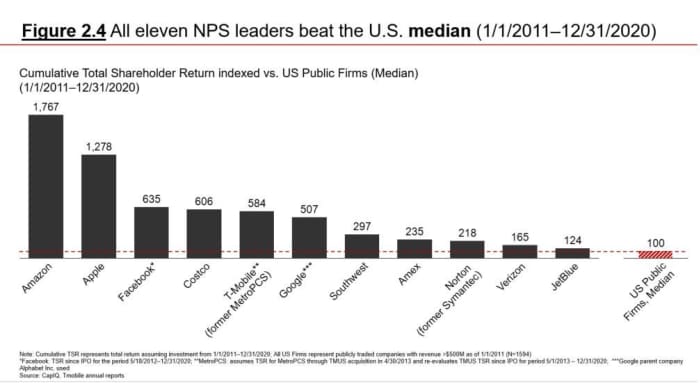
My buy-and-hold investing portfolio started with the 11 public NPS leaders profiled in my 2010 book, “The Ultimate Question 2.0“: Amazon
AMZN,
+0.43{21df340e03e388cc75c411746d1a214f72c176b221768b7ada42b4d751988996},
Meta Platforms (formerly Facebook)
FB,
+2.70{21df340e03e388cc75c411746d1a214f72c176b221768b7ada42b4d751988996},
Apple
AAPL,
+2.06{21df340e03e388cc75c411746d1a214f72c176b221768b7ada42b4d751988996},
Costco Wholesale
COST,
-2.52{21df340e03e388cc75c411746d1a214f72c176b221768b7ada42b4d751988996},
Google parent Alphabet
GOOG,
+0.20{21df340e03e388cc75c411746d1a214f72c176b221768b7ada42b4d751988996}

GOOGL,
+0.14{21df340e03e388cc75c411746d1a214f72c176b221768b7ada42b4d751988996},
Southwest Airlines
LUV,
+1.33{21df340e03e388cc75c411746d1a214f72c176b221768b7ada42b4d751988996},
American Express
AXP,
+1.47{21df340e03e388cc75c411746d1a214f72c176b221768b7ada42b4d751988996},
JetBlue Airways
JBLU,
+3.62{21df340e03e388cc75c411746d1a214f72c176b221768b7ada42b4d751988996},
Verizon Communications
VZ,
-0.81{21df340e03e388cc75c411746d1a214f72c176b221768b7ada42b4d751988996},
T-Mobile US
TMUS,
-2.36{21df340e03e388cc75c411746d1a214f72c176b221768b7ada42b4d751988996},
NortonLifeLock
NLOK,
-1.25{21df340e03e388cc75c411746d1a214f72c176b221768b7ada42b4d751988996}
and Metro PCS Communications (which merged with T-Mobile in 2013).

In hindsight some of those stocks look like no-brainers, but back when the book was written they were anything but. Amazon had a market cap below eBay’s. T-Mobile was considered by many to be the weakest player in mobile telephony.

In the years since, however, this group’s extraordinary customer focus has paid off. From Jan. 1, 2011 to Dec. 31, 2020 these stocks outperformed Vanguard’s Total Stock Market Index exchange-traded fund
VTI,
+0.35{21df340e03e388cc75c411746d1a214f72c176b221768b7ada42b4d751988996}
by a factor of 2.8 to 1. (This performance is market-cap weighted and rebalanced quarterly akin to VTI’s rebalancing).


Fred Reichheld

Since then, Bain & Co., where I have worked since 1977, has applied NPS to a long list of industries, and created NPS Prism, a data benchmarking service that ranks competitor NPS on an apples-to-apples basis. As we X-ray more industries, we continue to uncover new NPS leaders, among them Texas Roadhouse
TXRH,
+2.91{21df340e03e388cc75c411746d1a214f72c176b221768b7ada42b4d751988996},
Discover Financial
DFS,
-0.41{21df340e03e388cc75c411746d1a214f72c176b221768b7ada42b4d751988996},
Tesla
TSLA,
+1.40{21df340e03e388cc75c411746d1a214f72c176b221768b7ada42b4d751988996},
Chewy
CHWY,
+0.77{21df340e03e388cc75c411746d1a214f72c176b221768b7ada42b4d751988996}
and FirstService
FSV,
-0.69{21df340e03e388cc75c411746d1a214f72c176b221768b7ada42b4d751988996}.
 

I serve on the board of directors at FirstService, a real-estate services company whose social media handle #FirstServeOthers provides a hint about its corporate philosophy. Over the 25 years since the IPO, its annual total shareholder return has been just under 22{21df340e03e388cc75c411746d1a214f72c176b221768b7ada42b4d751988996}, a better record than all but seven of the 2,800 firms with revenues of at least $100 million at the time of their NASDAQ listing. 

For a long time, like many great customer-focused organizations, it remained below investors’ radar screens. One reason: GAAP accounting is woefully lacking at measuring customer centricity. It doesn’t even require organizations to report the number of customers they serve, let alone how many are returning, increasing purchases, or referring friends and family. 

This makes it hard to find comparable data. I first discovered online pet supply retailer Chewy when its self-reported NPS appeared in its IPO documents. Chewy does a tremendous job tapping into the special emotional tie between owner and pet, with things like the hand-painted pet portraits the company mails as surprise thank-yous to customers, who, delighted, then post them, along with glowing testimonials, across social media.

By our calculations Chewy’s NPS beats Amazon’s by 24 points in its category — an extraordinary performance. Chewy’s own numbers are slightly different from ours, however, and the inconsistency of self-reported numbers is one reason we developed a new metric called earned growth rate. It measures the revenue growth generated by returning customers and their referrals by combining net revenue retention (NRR), the back-for-more battle-tested statistic used in the software-as-a-service (SaaS) industry among others, with earned new customers (ENC), measuring how much new customer spending is earned through referrals rather than bought through promotional channels.

NPS exemplar First Republic Bank
FRC,
-0.43{21df340e03e388cc75c411746d1a214f72c176b221768b7ada42b4d751988996}
has in the past earned 82{21df340e03e388cc75c411746d1a214f72c176b221768b7ada42b4d751988996} of its deposit growth, with 50{21df340e03e388cc75c411746d1a214f72c176b221768b7ada42b4d751988996} coming from existing customers and another 32{21df340e03e388cc75c411746d1a214f72c176b221768b7ada42b4d751988996} from referrals. Warby Parker
WRBY,
-2.38{21df340e03e388cc75c411746d1a214f72c176b221768b7ada42b4d751988996},
the direct-to-consumer pioneer in prescription eyeglasses, earns almost 90{21df340e03e388cc75c411746d1a214f72c176b221768b7ada42b4d751988996} of its new customers through referrals.

You can use this calculator to estimate your company’s earned growth rate.


Abingdon Press

In addition to these metrics, it’s also possible to spot NPS leaders by their common features.  

  1. They apply the Golden Rule – love thy neighbor as thyself. This often means eschewing bad profits. Discover Card, for example, never sells receivables to collection agencies.

  2. They empower their front-line employees to serve customers in creative ways. Companies like Chewy that give employees the freedom to serve customers with empathy and creativity engender trust in and loyalty to their companies.

  3. They integrate in-store and online customer feedback. Technology-rich companies like Warby Parker augment direct feedback with digital signals from customers and front-line employees to guide decision-making—crucial in helping companies respond to holiday shopping trends this season.

  4. They make customers their primary purpose. By going the extra mile to provide a customer with an experience that’s not just good, but remarkable, companies can play a part in enriching their lives beyond the product they offer.

I have spent most of my 44-year career focused on understanding the role that loyalty plays in building great organizations and helping leaders inspire their teams to embrace a mission of purposeful service enriching the lives of customers and colleagues. That is the right way—and the best way—to win in business and the stock market. 

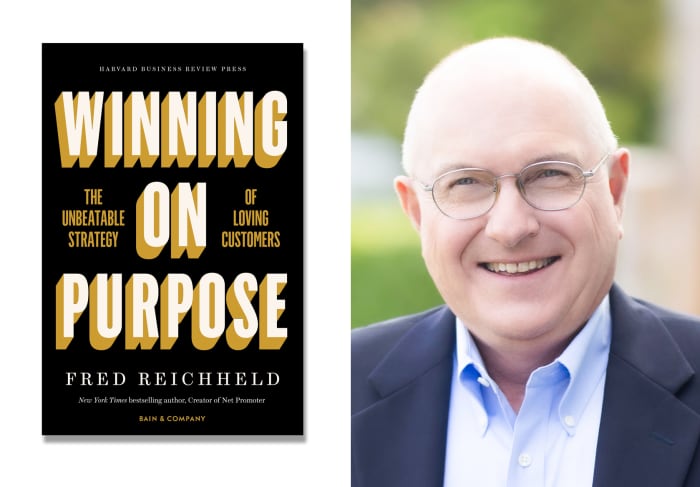
Fred Reichheld is the creator of the Net Promoter system of management and the author of “Winning on Purpose: The Unbeatable Strategy of Loving Customers” (together with Darci Darnell and Maureen Burns), among other books.