Horizon Technology Finance Provides Fourth Quarter 2021 Portfolio Update

FARMINGTON, Conn., Jan. 12, 2022 /PRNewswire/ — Horizon Technology Finance Corporation (NASDAQ: HRZN) (“HRZN” or the “Company”), a leading specialty finance company that provides capital in the form of secured loans to venture capital backed companies in the technology, life science, healthcare information and services, and sustainability industries, today provided its portfolio update for the fourth quarter ended December 31, 2021 and an update on the lending platform (“Horizon Platform”) of Horizon Technology Finance Management LLC (“HTFM”), its investment adviser.

“We had another exceptional quarter, closing $118 million of loans originated through our lending platform, including $80 million of loans for HRZN,” said Gerald A. Michaud, President of HTFM. “For the year, the Horizon Platform originated over $425 million in new loans, including a record-high $297 million for the HRZN portfolio.”

“In addition, the committed backlog originated by the Horizon Platform grew to $153 million of debt investments, including $125 million in HRZN commitments, while the Horizon Platform maintained a considerable pipeline of new investment opportunities at the end of 2021,” added Mr. Michaud. “This positions the Horizon Platform and HRZN for additional growth in 2022 and further evidences the increasing power of the Horizon brand to attract unique, diverse and transformative companies.”

“Also in the fourth quarter, HRZN received $55 million in loan prepayments – validating our predictive pricing strategy and providing HRZN with additional fee income and accelerated interest income. Entering 2022, we are excited by the opportunity to further grow the Horizon Platform and HRZN loan portfolio and to deliver more value to HRZN’s shareholders,” concluded Mr. Michaud.

Fourth Quarter 2021 Portfolio Update

Originations

During the fourth quarter of 2021, a total of $118.2 million of loans funded through the Horizon Platform, including 17 loans totaling $79.9 million funded by HRZN as follows:

  • $12.5 million to a new portfolio company, Interior Define, Inc., an e-commerce platform that designs, sells and markets customized furniture direct to consumers.
  • $8.5 million to an existing portfolio company, Branded Online, Inc. (d/b/a Nogin), a company offering commerce-as-a-service to consumer and lifestyle brands.
  • $7.5 million to a new portfolio company, GreenLight Biosciences, Inc., a biopharmaceutical company focused on developing ribonucleic acid (RNA) solutions for human health and agricultural challenges.
  • $7.5 million to a new portfolio company, IMV Inc. (NASDAQ: IMV), a clinical-stage biopharmaceutical company developing a new class of cancer immunotherapies and infectious disease vaccines.
  • $7.0 million to a new portfolio company, an online platform offering high quality used cars to consumers on a subscription basis.
  • $5.0 million to a new portfolio company, a builder of conservation memorial forests that offer sustainable alternatives to cemeteries.
  • $5.0 million to an existing portfolio company, Emalex Biosciences, Inc., a clinical-stage biopharmaceutical company focused on developing treatments for central nervous system movement disorders and fluency disorders.
  • $5.0 million to an existing portfolio company, Supply Network Visibility Holdings LLC (d/b/a Everstream Analytics), a provider of supply chain risk management software.
  • $5.0 million to an existing portfolio company, Provivi, Inc., a developer of cost-effective natural crop protection products which utilize pheromones to disrupt the typical insect mating cycle.
  • $5.0 million to an existing portfolio company, Ceribell, Inc., a developer of an FDA-cleared rapid response electroencephalography (EEG) medical device, which measures the amount of electrical activity in different regions of the brain in order to diagnose seizures.
  • $3.5 million to a new portfolio company, a family experience creator that combines play, media and merchandise designed to inspire and engage families.
  • $2.5 million to an existing portfolio company, a developer of technology that can identify microbes in order to accelerate treatment and improve public health.
  • $2.5 million to a new portfolio company, a data platform that enables marketers to build personalized digital experiences and 1-to-1 marketing campaigns by focusing on behavioral data.
  • $1.25 million to an existing portfolio company, Unagi, Inc., a developer of premium portable electric scooters that are offered for sale and on an affordable monthly subscription program.
  • $1.0 million to an existing portfolio company, Alula, Inc., a designer and manufacturer of security systems sold exclusively to professional distributors and dealers.
  • $1.0 million to an existing company, InfoBionic, Inc., a developer of an FDA-cleared SaaS remote monitoring system to help treat cardiac arrhythmia.

Liquidity Events

HRZN experienced liquidity events from seven portfolio companies in the fourth quarter of 2021, including principal prepayments of $55.0 million and receipt of warrant and equity proceeds totaling $0.4 million, compared to $50.4 million of principal prepayments and $1.6 million of warrant proceeds during the third quarter of 2021: 

  • In October, Getaround, Inc. prepaid its outstanding principal balance of $25.0 million on its venture loan, plus interest, end-of-term payment and prepayment fee.  HRZN continues to hold warrants in the company.
  • In October, Topia Mobility, Inc. prepaid its outstanding principal balance of $10.0 million on its venture loan, plus interest, end-of-term payment and prepayment fee.  HRZN continues to hold warrants in the company.
  • In October, HRZN received warrant proceeds of $0.1 million from its investment in Education Elements, Inc.
  • In November, CVRx, Inc. prepaid its outstanding principal balance of $20.0 million on its venture loan, plus interest, end-of-term payment and prepayment fee.  HRZN continues to hold warrants in the company.
  • In November, MVI (ABC), LLC (assignee of Stereovision Inc.) paid its outstanding principal balance of $3.5 million on its venture loan, plus interest. 
  • In December, HRZN received $7.0 million from the sale of its debt investment in Betabrand Corporation.  
  • In December, HRZN received cash proceeds of $0.3 million from the sale of shares in Qualtrics International Inc., which HRZN received in connection with the sale of Clarabridge, Inc.

Principal Payments Received

During the fourth quarter of 2021, HRZN received regularly scheduled principal payments on investments totaling $2.9 million, compared to regularly scheduled principal payments totaling $3.2 million during the third quarter of 2021.

Commitments

During the quarter ended December 31, 2021, HRZN closed new loan commitments totaling $114.9 million to 10 companies, compared to new loan commitments of $91.0 million to 11 companies in the third quarter of 2021. HTFM’s other managed funds, during the quarter, closed new loan commitments totaling $38.8 million of unfunded loan approvals and commitments.

Pipeline and Term Sheets

As of December 31, 2021, HRZN’s unfunded loan approvals and commitments (“Committed Backlog”) were $124.5 million to 23 companies. This compares to a Committed Backlog of $100.6 million to 21 companies as of September 30, 2021. HRZN’s portfolio companies have discretion whether to draw down such commitments and the right of a portfolio company to draw down its commitment is often subject to achievement of specific milestones and other conditions to borrowing.  Accordingly, there is no assurance that any or all of these transactions will be funded by HRZN. HTFM’s other managed funds ended the quarter with a total of $28.0 million of unfunded loan approvals and commitments.

During the quarter, HTFM received signed term sheets that are in the approval process, which may result in the Horizon Platform providing up to an aggregate of $135 million of new debt investments.  These opportunities are subject to underwriting conditions including, but not limited to, the completion of due diligence, negotiation of definitive documentation and investment committee approval, as well as compliance with HTFM’s allocation policy. Accordingly, there is no assurance that any or all of these transactions will be completed or funded by HRZN.

Capital Markets Activity – Warrant and Equity Portfolio

As of December 31, 2021, HRZN held a portfolio of warrant and equity positions in 77 portfolio companies, including 64 private companies, which provides the potential for future additional returns to HRZN’s shareholders.

About Horizon Technology Finance

Horizon Technology Finance Corporation (NASDAQ: HRZN) is a leading specialty finance company that provides capital in the form of secured loans to venture capital backed companies in the technology, life science, healthcare information and services, and sustainability industries. The investment objective of HRZN is to maximize its investment portfolio’s return by generating current income from the debt investments it makes and capital appreciation from the warrants it receives when making such debt investments. Horizon Technology Finance Management LLC is headquartered in Farmington, Connecticut, with a regional office in Pleasanton, California, and investment professionals located in Portland, Maine, Austin, Texas, and Reston, Virginia. To learn more, please visit www.horizontechfinance.com.

Forward-Looking Statements

 Statements included herein may constitute “forward-looking statements” within the meaning of the Private Securities Litigation Reform Act of 1995. Statements other than statements of historical facts included in this press release may constitute forward-looking statements and are not guarantees of future performance, condition or results and involve a number of risks and uncertainties. Actual results may differ materially from those in the forward-looking statements as a result of a number of factors, including those described from time to time in Horizon’s filings with the Securities and Exchange Commission. Horizon undertakes no duty to update any forward-looking statement made herein. All forward-looking statements speak only as of the date of this press release.

Contacts:

Investor Relations:
ICR
Garrett Edson
[email protected]
(860) 284-6450

Media Relations:
ICR
Chris Gillick
[email protected] 
(646) 677-1819

SOURCE Horizon Technology Finance Corporation

Tesla leading auto world’s ‘biggest transformation since the 1950s’: Wedbush’s Ives

Tesla (TSLA) potent rally this week factors to a lot more gains in advance, in accordance to Wedbush, with the U.S. electric auto maker primed to renovate the vehicle business following ending 2021 on a robust notice.

Better-than anticipated fourth quarter shipping figures spurred traders to continue being bullish on Tesla’s stock, while the electric powered auto (EV) maker’s new Gigafactory in Austin, Texas preps for output this thirty day period. 

“We’re looking at, it truly is a $5 trillion industry opportunity in conditions of EV and it truly is the most important transformation to the automobile marketplace because the 1950s,” Dan Ives, Wedbush’s senior equity analyst, instructed Yahoo Finance on Tuesday.

However, Tesla’s bull situation heading forward “carries on to be growing supply,” he additional. “Based on all of our work in and all around Austin, we think starting off following week we’re likely to get into the early phases of what I consider are autos rolling off the plant,” Ives stated.

When there’s been no official announcement of the Austin manufacturing facility opening, all eyes are there and on Berlin, prospects some analysts perspective could expand capacity for the EV manufacturer. Wall Street is expecting an update on the company’s convention call afterwards on this thirty day period.

“When you seem at Austin in particular, it is really been really sleek in terms of the build out,” Ives claimed.

“Hiring has been incredibly strong around the previous couple of months, and that is why Musk has manufactured this kind of a guess on Austin in terms of that remaining truly the golden jewel of the ecosystem,” the analyst included.

Tesla walks a ‘tight rope’

Tesla Inc CEO Elon Musk and Grace Tao, Tesla's vice president for external relations, attend a delivery ceremony for the electric vehicle (EV) maker's China-made Model 3 cars in Shanghai, China January 7, 2020. Picture taken January 7, 2020. REUTERS/Aly Song

Tesla Inc CEO Elon Musk and Grace Tao, Tesla’s vice president for external relations, show up at a supply ceremony for the electric powered vehicle (EV) maker’s China-built Product 3 automobiles in Shanghai, China January 7, 2020. Picture taken January 7, 2020. REUTERS/Aly Tune

Meanwhile, Tesla’s gross sales quantities for December in China showed a different history month of deliveries. The data affirm that nearly half of Tesla’s record yr of creation and deliveries came from GigaFactory Shanghai.

Tesla sold 70,847 China-designed vehicles in December, the best month to month fee due to the fact it begun production in Shanghai in 2019, info from the China Passenger Automobile Affiliation (CPCA) confirmed on Tuesday. Only 245 models were exported to other marketplaces.

The automaker, which has been able to surmount provide chain woes skilled by rivals to write-up document quarterly deliveries, has observed a altering tide in China just after recent backlash more than the company’s showroom in China’s Xinjiang– a area at the heart of U.S. genocide allegations.

Like other analysts, Ives thinks China continues to be a expansion opportunity for Tesla, expecting China to be “over 40{21df340e03e388cc75c411746d1a214f72c176b221768b7ada42b4d751988996} of deliveries for Tesla in 2022.”

China’s EV marketplace is dominated by domestic brands, such as BYD and Wuling – a local marque that’s part of Normal Motors (GM). In accordance to Shanghai-based mostly consultancy Automobility, Tesla is only the international brand in the top rated 10.

“It’s a restricted rope in phrases of China,” Ives said. “But if you glimpse at what’s happening proper now, the China development tale is essentially accelerating for Tesla 2022, and that we consider is well worth about $500 per share of the story. It’s a thing we imagine is underestimated by the Road.”

Wedbush maintains an “outperform” score on the stock, with a $1,400 price tag target and bull cost focus on of $1,800.

And whilst a lot more competitors leap into the EV room, Ives argued it truly is “not a zero sum game” for Tesla.

“Ford’s gonna be successful at GM, Lucid, VW in Europe and of system, NIO in China, but overall in EV land is Tesla’s entire world,” the analyst discussed. “Everybody else is paying out hire at this position and that is what we’re seeing” in the near time period, Ives extra.

Dani Romero is a reporter for Yahoo Finance. Comply with her on Twitter: @daniromerotv

Read through the latest fiscal and organization news from Yahoo Finance

Follow Yahoo Finance on Twitter, Instagram, YouTube, Fb, Flipboard, and LinkedIn

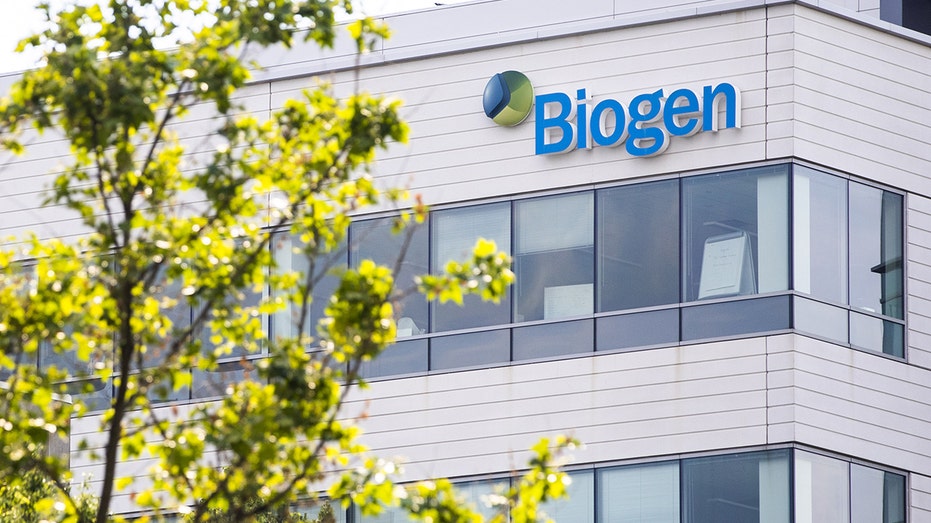
Medicare limits coverage of Biogen’s $28,000-a-year Alzheimer’s drug

Medicare said Tuesday it will limit coverage of a $28,000-a-year Alzheimer’s drug whose benefits have been widely questioned, a major development in the nation’s tug-of-war over the fair value of new medicines that offer tantalizing possibilities but come with prohibitive prices.

The initial determination from the Centers for Medicare and Medicaid Services means that for Medicare to pay, patients taking Biogen’s Aduhelm medication will have to be part of clinical trials to assess the drug’s effectiveness in slowing the progression of early-stage dementia as well as its safety. Medicare’s national coverage determination would become final by April 11, following a public comment period and further evaluation by the agency.

GET FOX BUSINESS ON THE GO BY CLICKING HERE

“Alzheimer’s disease is a devastating illness that has touched the lives of millions of American families,” Medicare administrator Chiquita Brooks-LaSure said in a statement. “CMS has been and remains committed to providing the American public with a clear, trusted, evidence-based decision that is made only after a thorough analysis of public feedback on the benefits and risks of coverage for Medicare patients.”

FILE – The Biogen Inc., headquarters is shown March 11, 2020, in Cambridge, Mass. (AP Photo/Steven Senne, File) ((AP Photo/Steven Senne, File) / AP Newsroom)

The requirement for clinical studies applies to the entire class of drugs of which Aduhelm is a pioneer, monoclonal antibodies that work against amyloid, a kind of protein that forms plaques characteristic of Alzheimer’s disease.

Biogen sharply disapproved of Medicare’s decision. The company said in a statement that the decision “denies the daily burden of people living with Alzheimer’s disease.” Randomized clinical trials “will exclude almost all patients who may benefit.” The company said clinical trials can take months to years to set up and “hundreds of Alzheimer’s patients…are progressing each day from mild to moderate disease stages, where treatment may no longer be an option.”

The Alzheimer’s Association called it ” shocking discrimination against everyone with Alzheimer’s disease,” but Vermont Independent Sen. Bernie Sanders applauded the decision as “an important step forward” in efforts to curb “outrageous” drug prices.

MEDICARE TOLD TO REASSESS PREMIUM HIKE AFTER PRICE SLASHED ON BIOGEN ALZHEIMER’S DRUG

Biogen’s initial launch price of $56,000 a year for Aduhelm led to an increase of nearly $22 in Medicare’s monthly “Part B” premium for outpatient care, the largest ever in dollar terms but not percentage-wise. Medicare attributed about half of this year’s increase to contingency planning for Aduhelm. Faced with skepticism over its medication, Biogen recently slashed the price to $28,200, but Medicare enrollees were already on the hook for the $170.10 premium. Health and Human Services Secretary Xavier Becerra has directed Medicare to reassess the premium increase.

Aduhelm biogen

This image provided by Biogen on Monday, June 7, 2021 shows a vial and packaging for the drug Aduhelm. On Monday, June 7, 2021, the Food and Drug Administration approved Aduhelm, the first new medication for Alzheimer’s disease in nearly 20 years. (Biogen via AP / AP Newsroom)

Medicare officials stressed Tuesday that they did not take cost into account in the coverage decision, but rather whether Aduhelm is “reasonable and necessary” for treating Alzheimer’s patients enrolled in the program. “While there may be the potential for promise with this treatment, there is also the potential for harm,” said Dr. Lee Fleisher, Medicare’s chief medical officer. “This harm may range from headaches, dizziness, and falls, to other potentially serious complications such as brain bleeds.” Clinical trials will attempt to determine the balance of risks and benefits, he said.

Medicare’s payment rates will be determined through a different process, officials said. The program will pay drug costs and other services for patients in agency-approved trials.

Nonetheless, the high price of Aduhelm and the fact that most of the 6 million Americans with Alzheimer’s are old enough to be covered by Medicare stretched the limits.

BIOGEN CUTS PRICE FOR ALZHEIMER’S DRUG ADUHELM BY HALF

“Biogen came to market with an eye-popping price tag,” said Tricia Neuman, a Medicare expert with the nonpartisan Kaiser Family Foundation. “Even after they slashed their drug’s price in half, it is still more than $28,000, which is not insignificant. At that price, it is clearly an issue for the Medicare program, premiums and out-of-pocket costs.”

Aduhelm has sparked controversy since its approval by the Food and Drug Administration last June, which came against the recommendation of the agency’s outside advisers.

Biogen alzheimer's

Biogen Inc. headquarters in Cambridge, Massachusetts, U.S., on Monday, June 7, 2021. Photographer: Adam Glanzman/Bloomberg via Getty Images (Adam Glanzman/Bloomberg via Getty Images / Getty Images)

The medicine, administered by IV in a doctor’s office, hasn’t been shown to reverse or significantly slow Alzheimer’s. But the FDA said that its ability to reduce clumps of plaque in the brain is likely to slow dementia.

Many experts say there is little evidence to support that claim. And a federal watchdog and congressional investigators are conducting separate probes into how FDA reviewed the medication. Of particular concern are several undocumented meetings between FDA reviewers and company executives in the run-up to the drug’s approval.

Biogen has defended its medication and pricing. But in announcing the price cut days before the Christmas holidays, the company acknowledged that cost had become a stumbling block.

SAMSUNG BIOLOGICS SAYS REPORT ON BIOGEN DEAL TALKS UNTRUE

“Too many patients are not being offered the choice of Aduhelm due to financial considerations and are thus progressing beyond the point of benefitting from the first treatment to address an underlying pathology of Alzheimer’s disease,” CEO Michel Vounatsos said at the time. “We recognize that this challenge must be addressed in a way that is perceived to be sustainable for the U.S. healthcare system.”

Some insurers have balked at paying for the drug, while several medical centers across the country have been either slow to decide on using it or said they weren’t planning to prescribe it for now.

Biogen’s Vounatsos said this week that the company now has about 220 sites treating patients with Aduhelm. In October, the company said a total of 120 sites had infused at least one patient.

Ticker Security Last Change Change {21df340e03e388cc75c411746d1a214f72c176b221768b7ada42b4d751988996}
BIIB BIOGEN INC. 241.52 +6.21 +2.64{21df340e03e388cc75c411746d1a214f72c176b221768b7ada42b4d751988996}

Biogen said in June, shortly after the FDA approval, that about 900 sites in the U.S. have the equipment and expertise to immediately begin giving the drug, which requires monthly infusion.

The FDA has said Aduhelm is appropriate for patients with mild symptoms or early-stage Alzheimer’s. But that agency has asked Biogen for more research.

Because the drug is administered in a doctor’s office, Medicare pays for it under its Part B outpatient benefit, which is partly financed by enrollee premiums.

CLICK HERE TO READ MORE ON FOX BUSINESS

The financial impact of high-cost drugs tends to fall most heavily on patients with serious diseases such as cancer, rheumatoid arthritis or multiple sclerosis. But with Aduhelm, the pain would be spread among Medicare recipients generally, not just Alzheimer’s patients needing the drug. That turned the drug into a case study of how one pricey treatment can swing the needle on government spending and impact household budgets.

Alzheimer’s is a progressive neurological disease with no known cure. The vast majority of U.S. patients are old enough to qualify for Medicare, which covers more than 60 million people, including those 65 and older, and disabled people under 65.

Wealth management analytics transformation | McKinsey

The wealth management industry is typically seen as embodying old-fashioned values and providing discrete, tailored services. These attributes remain valuable parts of the business, but for many clients, they are no longer sufficient. In a highly connected world, people want faster and more convenient offerings and a cutting-edge digital experience. Amid rising competition, established wealth managers need to keep pace with new offerings as they retain the values that set them apart.


Wealth managers are unlikely to be able to serve modern clients effectively without a digitized operating model. This will support advisory and non-advisory activities and service everchanging investment preferences. Some leading managers are building modular data and IT architectures, which enable smart decision-making, personalization at scale, and more extensive product offerings.


The changes are also helping them meet their regulatory obligations, boosting the productivity of relationship managers (RMs), and lifting compressed margins.

For wealth managers interested in pursuing these benefits, this article lays out the potential of deploying advanced analytics and offers a playbook of measures that wealth managers should consider including in a digital transformation.

The case for advanced analytics

Meeting the needs of today’s customers requires a business model that is at the same time efficient and adaptable to individual clients. Wealth managers are finding success with two approaches:

  • Serve clients across the wealth continuum on a flat-fee advisory basis. Instead of the still-prevalent product-focused model, wealth managers need to build in pricing flexibility aligned to clients’ needs at every stage of their lives. An increasingly common pricing model is for clients to negotiate a flat fee based on the value of their investments. To maintain revenues with this model, wealth managers need to create new efficiencies and ensure RMs are more productive, which means spending more time with clients.
  • Embrace personalization aligned to client life stages and goals. Today’s customers are increasingly dissatisfied with a one-size-fits-all service model, so wealth managers should consider transitioning to needs-based personalization. This requires RMs to get comfortable with a wider range of solutions, from the simplest products to complex higher-yielding investments (private markets, venture capital, pre-IPO, and structured products). In addition, RMs must be equipped to help clients make complex investment decisions, supported by analytics.

In today’s context, each of these goals is achievable only with advanced capabilities in data and analytics, especially targeting relationship management.

Focus on relationship management

Modernization can be game changing when it targets the role of RMs. Based on conversations with industry participants, we estimate that RMs typically spend 60 to 70 percent of their time on non-revenue-generating activities, amid rising regulatory and compliance obligations (Exhibit 1). One reason is that most still work with legacy IT systems or even spreadsheets. As clients demand more engagement and remote channel options, that needs to change.


Relationship managers spend 60 to 70 percent of their time on non-advisory activities.


We strive to provide individuals with disabilities equal access to our website. If you would like information about this content we will be happy to work with you. Please email us at: McKinsey_Website_Accessibility@mckinsey.com


A few leading wealth managers are using technology to provide RMs with the tools to serve clients more efficiently and effectively. Some have taken a zero-based approach, rebuilding their tech stacks and embracing advanced analytics to inform more personalized services. By providing targeted solutions, these firms have been able to boost revenues and reduce operational costs.

Clear benefits of being more client focused

The benefits of digitization are relevant in most markets, but the potential to leverage digitization to achieve a significant performance uplift is especially great in regions where wealth managers have not yet seized the opportunity. In Asia, for example, many wealth managers still need to fully embrace digital ways of working (Exhibit 2). We estimate that IT-based transformations could create some $40 billion to $45 billion of incremental value for wealth managers serving high-net-worth individuals in Asia, equating to roughly 25 basis points on a wealth pool of $17 trillion.


Technology and analytics adoption rates in wealth management are low overall in Asia.


We strive to provide individuals with disabilities equal access to our website. If you would like information about this content we will be happy to work with you. Please email us at: McKinsey_Website_Accessibility@mckinsey.com


Drilling down in the potential gains from data and analytics, we see benefits in three key areas: acquisition and onboarding, engagement and deepening of client relationships, and servicing and retention.

Acquisition and onboarding. Basic acquisition and onboarding applications include client discovery, risk profiling, account opening, and onboarding. RMs and investment teams can use analytics for lead generation, share-of-wallet modeling, and automated proposals. There are also multiple applications in investment management, risk, and compliance, including social-profile checking, anti-money-laundering and know your customer, and fraud protection.


Engagement and deepening. Client-focused applications include personalized research, portfolio management, and notifications. RMs and investment teams can implement client clustering, propensity modeling, recommendation engines, and digital performance management (see sidebar “How analytics creates sustainable impact: Two examples from Asia”). In investment management, risk, and compliance, there are opportunities to de-bias investment decisions, data analysis, and trade execution.

Servicing and retention. Client-related applications include portfolio simulations and optimization, as well as self-execution of trades. RMs can leverage applications such as churn predictors and work planners, while investment management, risk, and compliance can scale up portfolio planning and trade surveillance.

A playbook for analytics-driven wealth management

Early success stories are encouraging, but they are the exception rather than the rule. More often, firms have started the transformation journey but have faltered along the way. Common reasons include a lack of ownership at senior levels and budgetary or strategic restraints that prevent project teams from executing effectively.

The challenges of transforming service models are significant but not insurmountable. Indeed, as analytics use cases become more pervasive, implementation at scale becomes more achievable. In the following paragraphs, we present five ingredients of an analytics-based transformation (Exhibit 3). These can be supported by strong leadership, a rigorous focus on outcomes, and a willingness to embrace new ways of working. Indeed, managers who execute effectively will get ahead of the competition and be much more adept in meeting client needs.


An analytics-based transformation has five key elements.


We strive to provide individuals with disabilities equal access to our website. If you would like information about this content we will be happy to work with you. Please email us at: McKinsey_Website_Accessibility@mckinsey.com


Set a leadership vision

Analytics-driven transformations are often restricted to narrow silos occupied by a few committed experts. As a result, applications fail to pick up enough momentum to make a real difference to performance. Conversely, if support for change programs comes from the top and is guided by an outcomes-driven approach, the business can break away from entrenched operating norms and reset for structural change. With that in mind, executive teams should communicate a vision that can be cascaded through the business. They should also create a safe environment, or sandbox, for business lines to experiment before scaling.

Plot the change journey

Wealth managers have applied advanced analytics to achieving different objectives. Some have found that the application of advanced analytics to business problems delivers significant value and enables them to make better decisions faster and more consistently. Others are using data and advanced analytics to improve sales and marketing, inform investment decision-making, and boost RM productivity.

Any plan for data-driven change must fit the organization’s business model. Implementation will vary based on the technical feasibility, data accuracy and accessibility, time to impact, scalability, and availability of funds. The first few use cases will set the mood and direction, so careful thought is required ahead of action.

One common impediment to scaling is the lack of a single metric to describe impact, which makes it hard for tech teams to communicate benefits. Still, there are workarounds. Financial key performance indicators (KPIs) can show flows across key mandates or volumes of advisory, rather than execution-driven assets under management. Nonfinancial metrics can focus on cross-sell ratios, increased client retention, number of RMs trained, or adoption rates for solutions. Other helpful evaluations include customer satisfaction scores, new trust-based RM-client relationships, time to market, and cultural shifts. Progress on these measures will boost organizational conviction that transformation is beneficial.

Build a strong foundation, leading with technology

Data and technology together form the backbone that supports analytics-led transformation. A strong analytics backbone requires a rigorous standard of data management, coupled with informed decisions about the IT applications and systems to employ.


Wealth managers are routinely in touch with their clients offline. These interactions elicit significant information about client preferences and requirements, but the information is often stored on paper or in RMs’ heads. To mine this knowledge fully, wealth managers must capture it digitally and convert it into a structured format that can be processed to create insights and personalized services (see sidebar “A digital approach to client-centric servicing”). In doing so, they need to put systems in place to ingest, store, and organize the data in line with regulatory obligations while ensuring the data are accurate, available, and accessible.

On the technology side, some leading wealth managers use natural-language processing to analyze text and voice data and identify personalized triggers and insights. Others are building feedback loops across channels to train artificial intelligence algorithms. Technologies can also be applied to processes: robotic process automation, for example, can replace routine manual labor and mental processing in regulatory compliance, risk assessment, reporting, and query management.

Deployment of data-driven decision-making requires scalable, adaptable, and resilient core technology components—a unified data and technology stack that connects across IT activities.


This will enable managers to adopt a tech-first approach to designing customer journeys.

In building data and IT architecture, wealth managers require a basic tool kit with four key components:

  1. a rationalized IT stack to create a common front-and back-end platform and a unified resource for mobile and web applications
  2. a scalable data platform with modular data pipelines and application-programming-interface (API)-based microservices for building and deploying analytics solutions at scale
  3. a semi-autonomous lab environment to enable experimentation, coupled with an at-scale factory environment for production of analytics solutions
  4. a highly scalable distributed network on the cloud to respond to variable demand for data storage and processing

In parallel to assembling these components, banks must consolidate data from across geographies and business lines. This will enable analysts to elicit insights based on the maximum amount of information. Some leading players first experiment in a sandbox environment and work with external partners to acquire the necessary skills, after which they scale up incrementally.

Build the team and prioritize change management

It is not easy to scale and sustain analytics impact. Organizational silos and cultural resistance are common inhibiting factors, while the vital role that RMs play in forming and maintaining relationships must be adapted to the new environment. Indeed, RMs must be front and center of the transformation process. For this, organizations need effective team building and change management.

Team building. A productive approach to team building is to create cross-functional squads with a range of talents (Exhibit 4). Product owners and designers should be responsible for ensuring that the team meets the needs of its clients (RMs or end clients) and stays focused on delivering value. Data scientists and data engineers implement use cases and check that insights are generated as data are ingested—a minimal-viable-product (MVP) approach. IT architects and software engineers, meanwhile, build the slick interfaces and back-end systems that deliver insights to clients across channels.


An analytics-based transformation requires cross-functional teams.


We strive to provide individuals with disabilities equal access to our website. If you would like information about this content we will be happy to work with you. Please email us at: McKinsey_Website_Accessibility@mckinsey.com


A core objective should be to explore analytics and AI use cases that boost RM productivity (see sidebar “How three Asian wealth managers engaged clients and boosted RM productivity”). To that end, the squad should embed business and channel management teams so that ideas are aligned with RM client services. Several firms have found that involving RMs and other domain experts in squads leads to significant improvements in data interpretation and modeling.

In many cases, assembling productive squads will require new talent. In particular, banks will need data scientists to be responsible for building analytics software and data engineers to scope and build data pipelines and data architecture. Translators, who act as conduits between the business and technology teams, will be critical for ensuring that squads understand business needs. Finally, squads need IT skill sets to ensure that analytics and digital solutions are compatible with core data and technology stacks.

The best approach to talent acquisition is to take baby steps: get one squad right, foster RM adoption, and then gradually expand capabilities as use cases multiply and are scaled up. Some of the required skill sets are in high demand, so outsourcing may be a realistic early option. In the longer term, however, it makes sense to build internally.

Change management. Relationship managers should be encouraged to embrace analytics and convinced that new applications lead to better services and higher levels of performance. Change management strategies can help. Examples include creating teams of “influencers,” running capability-building sessions, developing change narratives that generate widespread excitement, redefining roles, and aligning performance with financial or nonfinancial awards.

Institutionalize new ways of working

Analytics-driven transformation at scale should be predicated on collaboration, team self-steering, and an iterative approach to problem-solving—elements of the so-called agile approach, which originated in software development. In running agile sprints, it pays to keep business needs in sight, accepting that failure is part of the process. Two-week sprints are usually sufficient to get pilots up and running, and the aim should be to produce an MVP with every sprint.

Wealth managers can apply these basic principles via four process disciplines:

  • Inspect and adapt. Daily check-ins will ensure that teams identify roadblocks, such as product backlogs, and maintain their focus on goals.
  • Engage end users. Sprint reviews with end users, stakeholders, and sponsors enable teams to gather feedback and bake in recommendations.
  • Embed a sense of unity and purpose. Teams should hold retrospectives to incorporate learnings.
  • Institutionalize support infrastructure. Agile tooling (for example, Confluence, Jira, and Zeplin) will facilitate experimentation and support remote working where necessary.

Organizations using agile operating models must embrace flexible learning. This is a departure from traditional waterfall-based approaches, in which decision-making occurs at the beginning of each project. In agile, capability building and a relentless focus on change management will be vital elements of optimizing the program. To cement the relationship between innovation and growth, leading firms also assign KPIs to application rollouts, and they reward decision makers based on the value created.


Most wealth managers would say they have already embarked on an analytics journey; many have begun deploying digital applications in various aspects of their businesses. Often, however, the whole system is less than the sum of its parts, and people remain attached to established ways of working. To make a leap forward, wealth managers should commit to bold agendas that will support the scaling up of analytics-driven approaches.

Which jobs pay more in Florida than in the rest of the U.S.?

If you happen to be a massage therapist in Port St. Lucie or a financial analyst in Indian River County, there’s not a lot of improved locations for you to be, according to a nationwide career study. 

U.S. Information & Entire world Report looked at the five metro places nationally that compensated most effective for every of 200 work opportunities, applying federal labor studies and other details. San Francisco and San Jose showed up on pretty much half of individuals positions, primary the country.

But the Treasure Coastline had a few entries, joining other Florida metro regions. 

“Florida’s financial competitiveness is truly powerful,” said Edie Ousley, a former vice president for the Florida Chamber of Commerce. She is now spokeswoman for the American Council of Engineering Corporations of Florida and the Florida Engineering Culture.

Just 22{21df340e03e388cc75c411746d1a214f72c176b221768b7ada42b4d751988996} give themselves high scores on financial wellness

Damir Khabirov | iStock | Getty Photos

How higher would you rating oneself when it will come to experience cozy with your present-day financial situation?

If you’re like most, you would not give oneself pretty significant marks, according to a survey from TIAA.

The fiscal expert services enterprise set out to consider Americans’ economical wellness – described as possessing the signifies to get care of your family members, not worrying about funds or financial debt, or emotion prepared to manage sudden life activities.

Just 22{21df340e03e388cc75c411746d1a214f72c176b221768b7ada42b4d751988996} of respondents ages 18 and up gave them selves the optimum scores — a 9 or 10 on a scale of 1 to 10.

Far more from Own Finance:
What to know about your 2022 Medicare charges
How to attraction profits-connected Medicare rates
Critical concerns if you want a Medigap coverage

In the meantime, 21{21df340e03e388cc75c411746d1a214f72c176b221768b7ada42b4d751988996} of respondents gave on their own the least expensive scores of 1 to 4.

Those people who are most probably to come to feel confident in their monetary situations incorporate males and wealthy, more mature and retired folks.

“People in america are telling us that their self-described monetary wellness is low, and they are suffering from a higher diploma of economical worry,” mentioned Snezana Zlatar, senior taking care of director and head of fiscal wellness information and innovation at TIAA.

The on the net survey was performed in between Oct. 22 and Nov. 3 of final year. It bundled 3,008 respondents.

In the previous two years, 37{21df340e03e388cc75c411746d1a214f72c176b221768b7ada42b4d751988996} of respondents claimed their economic wellness has increased, 42{21df340e03e388cc75c411746d1a214f72c176b221768b7ada42b4d751988996} stated it stayed the same and 21{21df340e03e388cc75c411746d1a214f72c176b221768b7ada42b4d751988996} reported it experienced decreased.

There are holes in people’s planning, even for people with the best money wellness scores, the study found.

When 7 in 10 said they have a budget, just about 25{21df340e03e388cc75c411746d1a214f72c176b221768b7ada42b4d751988996} reported they stick to a comprehensive budget.

Just 38{21df340e03e388cc75c411746d1a214f72c176b221768b7ada42b4d751988996} have a written money program and only 16{21df340e03e388cc75c411746d1a214f72c176b221768b7ada42b4d751988996} of individuals had made just one with a expert.

Most people today — 78{21df340e03e388cc75c411746d1a214f72c176b221768b7ada42b4d751988996} — reported they have an unexpected emergency fund. But less than 50 {21df340e03e388cc75c411746d1a214f72c176b221768b7ada42b4d751988996} of respondents claimed that dollars would be ample to go over 6 months’ of charges.

In the meantime, 6 in 10 explained they have possibly some or a good deal of strain when it arrives to their finances.

Amid increasing level of competition for office talent, several people are hunting to their employers to assist shore up their economic self confidence.

Folks who participated in employer-provided money wellness applications were being much more possible to give them selves higher financial wellness scores, the survey located.

Still only about 50 {21df340e03e388cc75c411746d1a214f72c176b221768b7ada42b4d751988996} of staff report possessing entry to economical wellness enable by way of their employer.

When they are provided, those people means are generally underutilized, the study located.

Help with saving for retirement was the most common place dealt with by businesses. Nevertheless though 31{21df340e03e388cc75c411746d1a214f72c176b221768b7ada42b4d751988996} of providers supply guidance in this space, just 20{21df340e03e388cc75c411746d1a214f72c176b221768b7ada42b4d751988996} of employees surveyed explained they experienced taken benefit of those courses.