
How homeowners can make sense of the climate finance

How homeowners can make sense of the climate finance

Solar panels create electricity on the roof of a house in Rockport, Massachusetts, U.S., June 6, 2022. Picture taken with a drone. 

Brian Snyder | Reuters

When Josh Hurwitz decided to put solar power on his Connecticut house, he had three big reasons: To cut his carbon footprint, to eventually store electricity in a solar-powered battery in case of blackouts, and – crucially – to save money.

Now he’s on track to pay for his system in six years, then save tens of thousands of dollars in the 15 years after that, while giving himself a hedge against utility-rate inflation. It’s working so well, he’s preparing to add a Tesla-made battery to let him store the power he makes. Central to the deal: Tax credits and other benefits from both the state of Connecticut and from Washington, D.C., he says.

“You have to make the money work,” Hurwitz said. “You can have the best of intentions, but if the numbers don’t work it doesn’t make sense to do it.” 

Hurwitz’s experience points up one benefit of the Inflation Reduction Act that passed in August: Its extension and expansion of tax credits to promote the spread of home-based solar power systems. Adoption is expected to grow 26 percent faster because of the law, which extends tax credits that had been set to expire by 2024 through 2035, says a report by Wood Mackenzie and the Solar Energy Industry Association. 

Those credits will cover 30 percent of the cost of the system – and, for the first time, there’s a 30 percent credit for batteries that can store newly-produced power for use when it’s needed.

“The main thing the law does is give the industry, and consumers, assurance that the tax credits will be there today, tomorrow and for the next 10 years,” said Warren Leon, executive director of the Clean Energy States Alliance, a bipartisan coalition of state government energy agencies. “Rooftop solar is still expensive enough to require some subsidies.”

California’s solar energy net metering decision

Certainty has been the thing that’s hard to come by in solar, where frequent policy changes make the market a “solar coaster,” as one industry executive put it. Just as the expanded federal tax credits were taking effect, California on Dec. 15 slashed another big incentive allowing homeowners to sell excess solar energy generated by their systems back to the grid at attractive rates, scrambling the math anew in the largest U.S. state and its biggest solar-power market — though the changes do not take effect until next April.

Put the state and federal changes together, and Wood Mackenzie thinks the California solar market will actually shrink sharply in 2024, down by as much as 39{21df340e03e388cc75c411746d1a214f72c176b221768b7ada42b4d751988996}. Before the Inflation Reduction Act incentives were factored in, the consulting firm forecast a 50{21df340e03e388cc75c411746d1a214f72c176b221768b7ada42b4d751988996} drop with the California policy shift. Residential solar is coming off a historic quarter, with 1.57 GW installed, a 43{21df340e03e388cc75c411746d1a214f72c176b221768b7ada42b4d751988996} increase year over year, and California a little over one-third of the total, according to Wood Mackenzie.

This roofing company says it's figured out how to make solar shingles affordable

For potential switchers, tax credits can quickly recover part of the up-front cost of going green. Hurwitz took the federal tax credit for his system when he installed it in 2020, and is preparing to add a battery now that it, too, comes with tax credits. Some contractors offer deals where they absorb the upfront cost – and claim the credit – in exchange for agreements to lease back the system. 

Combined with savings on power homeowners don’t  buy from utilities, the tax credits can make rooftop solar systems pay for themselves within as little as five years – and save $25,000 or more, after recovering the initial investment, within two decades.  

“Will this growth have legs? Absolutely,” said Veronica Zhang, portfolio manager of the Van Eck Environmental Sustainability Fund, a green fund not exclusively focused on solar. “With utility rates going up, it’s a good time to move if you were thinking about it in the first place.”

How to calculate installation costs and benefits

Here is how the numbers work.

Nationally, the cost for solar in 2022 ranges from $16,870 to $23,170, after the tax credit, for a 10-kilowatt system, the size for which quotes are sought most often on EnergySage, a Boston-based quote-comparison site for solar panels and batteries. Most households can use a system of six or seven kilowatts, EnergySage spokesman Nick Liberati said. A 10-12 kilowatt battery costs about $13,000 more, he added.

There’s a significant variation in those numbers by region, and by the size and other factors specific to the house, EnergySage CEO Vikram Aggarwal said. In New Jersey, for example, a 7-kilowatt system costs on average $20,510 before the credit and $15,177 after it. In Houston, it’s about $1,000 less. In Chicago, that system is close to $2,000 more than in New Jersey. A more robust 10-kilowatt system costs more than $31,000 before the credit around Chicago, but $26,500 in Tampa, Fla. All of these average prices are as quoted by EnergySage. 

The effectiveness of the system may also vary because of things specific to the house, including the placement of trees on or near the property, as we found out when we asked EnergySage’s online bid-solicitation system to look at specific homes.

The bids for one suburban Chicago house ranged as low as $19,096 after the federal credit and as high as $30,676.

Offsetting those costs are electricity savings and state tax breaks that recover the cost of the system in as little as 4.5 years, according to the bids. Contractors claimed that power savings and state incentives could save as much as another $27,625 over 20 years, on top of the capital cost.

Alternatively, consumers can finance the system but still own it themselves – we were quoted interest rates of 2.99 to 8.99 percent. That eliminates consumers’ up-front cost, but cuts into the savings as some of the avoided utility costs go to pay off interest, Aggarwal said. 

The key to maximizing savings is to know the specific regulations in your state – and get help understanding often-complex contracts, said Hurwitz, who is a physician.

Energy storage and excess power

Some states have more generous subsidies than others, and more pro-consumer rules mandating that utilities pay higher prices for excess power that home solar systems create during peak production hours, or even extract from homeowners’ batteries.

California had among the most generous rules of all until this week. But state utility regulators agreed to let utilities pay much less for excess power they are required to buy, after power companies argued that the rates were too high, and raised power prices for other customers.

Wood Mackenzie said the details of California’s decision made it look less onerous than the firm had expected. EnergySage says the payback period for California systems without a battery will be 10 years instead of six after the new rules take effect in April. Savings in the years afterward will be about 60 percent less, the company estimates. Systems with a battery, which pay for themselves after 10 years, will be little affected because their owners keep most of their excess power instead of selling it to the utility, according to EnergySage. 

“The new [California rules] certainly elongate current payback periods for solar and solar-plus-storage, but not by as much as the previous proposal,” Wood Mackenzie said in the Dec. 16 report. “By 2024, the real impacts of the IRA will begin to come to fruition.”

The more expensive power is from a local utility, the more sense home solar will make. And some contractors will back claims about power savings with agreements to pay part of your utility bill if the systems don’t produce as much energy as promised. 

“You have to do your homework before you sign,” Hurwitz said. “But energy costs always go up. That’s another hidden incentive.”
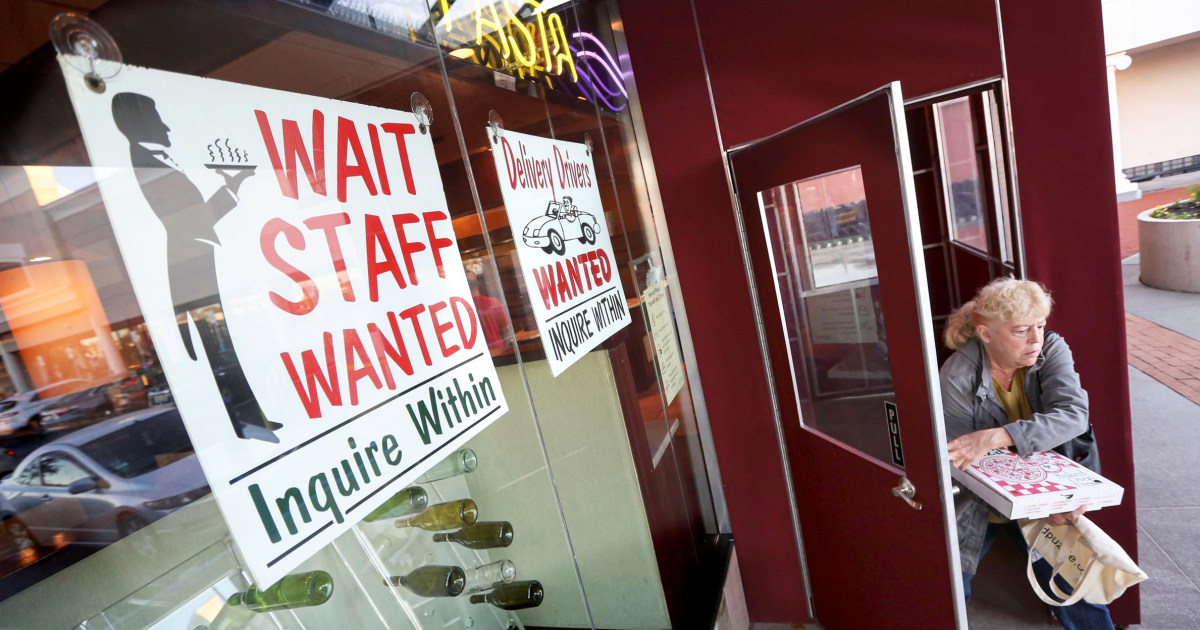
A sense of pessimism rises as inflation becomes the main concern for small-business owners

A sense of pessimism rises as inflation becomes the main concern for small-business owners

Little-enterprise homeowners are a lot more pessimistic about the financial state than they have been in decades, in accordance to the Smaller Small business Optimism Index launched Tuesday by the Countrywide Federation of Independent Organization.

The index was down by 2.4 points in March, the 3rd month-to-month fall in a row. And the share of company entrepreneurs who feel things will get superior around the upcoming six months fell to the lowest amount in the survey’s 48-calendar year history. 

30-a single {21df340e03e388cc75c411746d1a214f72c176b221768b7ada42b4d751988996} of owners pointed to inflation as the single major issue dealing with their organizations, up by 5 points from February, the highest looking through considering that the initially quarter of 1981. 

Mounting costs are now regarded as a worse challenge than the labor scarcity. 

“Their outlook has undoubtedly soured more than the final three months,” reported Holly Wade, the executive director of the National Federation of Impartial Organization. “They proceed to see inflation as this enormous obstacle they have to navigate.”

And it is having even larger.

The Shopper Price Index, a crucial evaluate of the inflation amount, rose to 8.5 {21df340e03e388cc75c411746d1a214f72c176b221768b7ada42b4d751988996} in March, up from 7.9 {21df340e03e388cc75c411746d1a214f72c176b221768b7ada42b4d751988996} in February and fueled in large element by growing gasoline prices, in accordance to details introduced Tuesday by the Bureau for Labor Figures.

It is the initial time modest-company owners have faced this kind of a sustained period of time of runaway rate increases, and the feeling of staying in uncharted territory contributes to their downbeat expectations, Wade said.

“Most little-company homeowners have in no way seasoned nearly anything remotely near to this. Incredibly several compact organizations that are open now were being open in the late ’70s and early ’80s,” she stated. “Their earnings dollars are getting stretched quite thin suitable now.”

And in some scenarios, they are disappearing fully. 

Bianca Jackson, who owns BrickRose Exchange, an occasion area in Baltimore, explained her charges for supplies and uncooked resources have risen “astronomically” since the starting of the 12 months. 

In January, she signed a contract to host a little wedding ceremony in March. “Even inside of these two months, there have been large variations amongst what we quoted and what the true price was,” she explained. Flowers price tag double, when decorating provides and rentals ended up up by as significantly as 20 per cent. 

When the party was about, “I ran all the numbers, and we actually finished up with $25,” Jackson said. 

While inflation may perhaps have surpassed labor as the biggest headache for business homeowners, the labor sector is holding on as a really near 2nd. Virtually 50 {21df340e03e388cc75c411746d1a214f72c176b221768b7ada42b4d751988996} the organization owners responding to the organization federation’s study reported that they had work openings they could not fill in March. 

Provide chain troubles are not permitting up, either. Forty {21df340e03e388cc75c411746d1a214f72c176b221768b7ada42b4d751988996} of owners explained provide chain disruptions have experienced a important effect on their companies, an increase around February. 

“There are no lights at the finish of the tunnel that they can see but,” Wade said.

Insiders Sense a Bottom in These 2 Stocks; Analysts Say ‘Buy’

Latest market place volatility is plenty of to make your head spin, and can induce a great deal of confusion for retail buyers trying to find a reliable sector tactic. It is tempting to search to the industry experts, but that raises another concern: which authorities are the very best to observe?

Adhering to the insiders, the corporate officers who reside and breathe with an within see of the stock’s deeper workings, is 1 of the practical techniques for obtaining stock marketplace bargains. Insiders never trade flippantly – they commonly have deep individual stakes in their company’s fortunes, and so, when they make bulk trades in their possess inventory, traders must spend close awareness.

Traders can look to these moves, employing TipRanks’ Insiders Very hot Shares instrument. We’ve employed that resource to do just that, come across a couple of stocks whose selling price has dropped lately – and that fall has coincided with some ‘informative buy’ insider trades. Let’s take a closer seem.

Hims & Hers Wellbeing (HIMS)

The increasing prevalence of electronic connections has blended with increased desire for healthcare solutions to build the telehealth marketplace as the relationship involving the two. Him & Hers is a health care business in the telehealth specialized niche, featuring customers entry to certified professional medical gurus, prescription medication, and recommendations for in excess of-the-counter medicines by means of on-line connections. The company’s greatest recognized solutions are generic remedies for sexual dysfunction, together with OTC solutions for men’s and women’s hair reduction.

This company has been creating moves to expand and strengthen its made available solutions. At the stop of November, Him & Hers announced a partnership with Uber to make on-desire delivery accessible for most of the company’s own treatment items in significant city regions across the US. Customers can obtain the provider by way of the Uber Eats app. And, in mid-December, the corporation announced a key growth of its Professional medical Advisory board, a transfer that will facilitate the enlargement of companies into the psychological wellness and principal care verticals.

The Q3 economic effects clearly show the development likely of the telehealth area of interest. Him & Hers noted quarterly revenue of $74.2 million, up 79{21df340e03e388cc75c411746d1a214f72c176b221768b7ada42b4d751988996} year-above-yr, a end result that defeat the Street’s anticipations. The stable revenue growth was driven by a 95{21df340e03e388cc75c411746d1a214f72c176b221768b7ada42b4d751988996} yoy maximize in subscriptions, to a complete of 551,000. In light of these success, the business revised its full-calendar year profits assistance upwards, to the $263 million to $265 million assortment. This represents an maximize of $9 million at the midpoint.

Inspite of the seem results claimed, HIMS shares are considerably down this yr. The shares peaked in February, and have missing 73{21df340e03e388cc75c411746d1a214f72c176b221768b7ada42b4d751988996} because then.

The fall in share cost has not discouraged Andrew Dudum, the founder and CEO of Hims & Hers, from increasing his keeping. On December 13, Dudum bought 81,100 shares, paying $480,000.

The business CEO is not the only lover below. In protection for Piper Sandler, 5-star analyst Sean Wieland writes: “FY21 earnings is now projected to develop 77{21df340e03e388cc75c411746d1a214f72c176b221768b7ada42b4d751988996} y/y, at the midpoint, and HIMS endorsed a 30{21df340e03e388cc75c411746d1a214f72c176b221768b7ada42b4d751988996} baseline development charge for FY22, which is ~2x what we experienced been modeling… HIMS is dominating the dollars-pay, small-to-mid acuity DTC markets for sexual wellbeing, dermatology and hair reduction. The corporation is executing constantly and with strategic acuity…. we feel the stock is undervalued.”

In line with these responses, Wieland presents HIMS an Overweight (i.e. Acquire) rating, with a price concentrate on of $12 that indicates an 86{21df340e03e388cc75c411746d1a214f72c176b221768b7ada42b4d751988996} upside for the coming 12 months. (To enjoy Wieland’s track document, simply click right here)

Overall, with 2 Acquire ratings and 1 Keep assigned in the very last a few months, the term on the Street is that HIMS is a Moderate Invest in. Not to point out the $10.67 average price concentrate on brings the upside probable to ~66{21df340e03e388cc75c411746d1a214f72c176b221768b7ada42b4d751988996}. (See HIMS inventory forecast on TipRanks)

Joby Aviation (JOBY)

Now let’s get speculative. New corporations are usually popping up, supplying new systems or methods, or some new twist on one thing old. Joby Aviation does each, as it functions to create and commercialize a interesting concept. The organization is performing on electrically powered vertical takeoff and landing (eVTOL) aircraft. The California-based mostly company’s mentioned target is to deliver a commercially viable city air taxi. Joby has created quite a few remotely operated drones to reveal the technologies, and has worked in collaboration with NASA. A full-sized prototype is below tests, and is predicted to acquire its form certification in 2023.

Joby’s aircraft concept attributes 8 electrically run tilt-rotor propeller engines arrayed on the primary edges of the wings and tail. The style and design is supposed to optimize effectiveness and help boost the change absent from fossil gas-driven vehicles. The concept plane underneath improvement will have a pilot and have room for 4 travellers as well as luggage. A single total battery charge will allow for a vary of 150 miles at speeds up to 200 mph.

In August of this yr, Joby entered the general public markets as a result of a SPAC transaction with Reinvent Technologies Companions. The SPAC offer brought Joby far more than $1 billion. Given that then, nevertheless, the stock turned south and is now off 48{21df340e03e388cc75c411746d1a214f72c176b221768b7ada42b4d751988996} from its peak.

The business has no profits stream as still, but did report assembly many crucial milestones in Q3. Amongst these were being a 154 mile flight of the manufacturing prototype, the longest flight by an eVTOL aircraft, and the carry out of acoustic tests with NASA, as portion of a method that evaluated the electrical aircraft’s sound profile. The latter is an critical element of certifying the plane to fly in city places.

On the insider entrance, Joby observed a couple of educational buys this 7 days. JoeBen Bevirt, CEO and founder, purchased 85,000 shares for $792,860, whilst Paul Sciarra, of the Board of Administrators, expended more than $1.47 million to invest in 229,500 shares of the organization.

JPMorgan analyst Kristine Liwag is also a lover of JOBY. She premiums the inventory an Obese (i.e. Purchase) and sets a $16 cost goal, indicating self esteem in a robust 129{21df340e03e388cc75c411746d1a214f72c176b221768b7ada42b4d751988996} upside for the subsequent 12 months. (To enjoy Liwag’s keep track of report, click on listed here)

Describing her bullish stance, Liwag says, “The most important intention we are focused on is the certification of the Joby aircraft as the FAA commences confirmatory tests of some elements which will be utilised on the plane… The business now has ~$1.3bn in Dollars and Quick-time period investments on the balance sheet which we see as sufficient cash to get the Joby plane accredited. We see the measures Joby has taken in the quarter positively as the organization designed strides in producing, Section 135 certification, and in-property tests of unique components and methods of the Joby plane.”

Liwag is at the moment the only analyst following JOBY. It will be intriguing to see whether other analysts comply with in Liwag’s footsteps and chime in with JOBY assessments soon. (See JOBY stock investigation on TipRanks)

To find very good strategies for shares buying and selling at eye-catching valuations, take a look at TipRanks’ Best Shares to Buy, a newly released instrument that unites all of TipRanks’ fairness insights.

Disclaimer: The views expressed in this posting are entirely these of the highlighted analysts. The information is intended to be employed for informational applications only. It is quite vital to do your individual evaluation before earning any financial commitment.