

Canadians’ Confidence up Seven Points From 2020

  • End of year Index stands at 57, compared to 50 in 2020

  • Women still lag men but appear to be turning the corner

  • Western recovery- Alberta and BC make significant gains

WINNIPEG, MB, Nov. 26, 2021 /CNW/ – According to the 2021 edition of the IG Financial Confidence Index (“the Index”), Canadians’ confidence is on the rise as the country gradually emerges from the COVID-19 pandemic. However, while people are feeling better about their current financial situation, there is apprehension about their future and concerns about where the country could be headed in the year ahead.

IG Wealth Management Logo (CNW Group/IG Wealth Management)

IG Wealth Management Logo (CNW Group/IG Wealth Management)

The Index, commissioned by IG Wealth Management (“IG”) and conducted in partnership with Ipsos Canada, tracks and reports on Canadians’ overall financial confidence through ten survey questions, which account for short-term and long-term financial considerations. The study found that Canadians’ overall financial confidence at the end of the year stands at 57. This represents a 14 per cent increase over the same period in 2020 (50) and is up 3 points since mid-2021. Key findings include:

  • Fifty-six percent of respondents reported being comfortable making a major purchase (versus 50 per cent in the mid-year study).

  • Almost 60 per cent are feeling good about the economic conditions in their community (versus 47 per cent mid-year).

  • Sixty per cent stated that their personal income increased in the last few months.

However, despite this positive perception of their current financial situation, Canadians coast-to-coast reported being concerned about the year ahead:

  • Just a quarter of respondents are feeling confident that the Canadian economy will improve and only 22 per cent feel the stock market will build on 2021 gains.

  • Similarly, only 14 per cent believe inflation will abate in 2022 and 12 per cent think housing affordability will get better.

“It’s great news that Canadians are feeling a renewed sense of confidence as we close the year,” said Damon Murchison, President & CEO, IG Wealth Management. “People are more secure as the economy starts to fully re-open, Covid-19 cases decline and we return to a certain degree of normalcy.”

Mr. Murchison continued, “However, we’re also seeing apprehension about the future. Inflation and housing affordability are real concerns for many. It’s a perfect time to work with an advisor to either revisit or create a holistic financial plan that not only addresses the present, but also helps ensure you’re well insulated for what could come.” According to the study, 80 per cent of Canadians who consulted with a financial planning professional over the last year expressed confidence in their short- and long-term financial situations (versus less than 60 per cent who did not).

Signs of a “She-Covery” and Western Canada Rebound?

The study revealed some optimistic findings among women and those in the West (Alberta and BC):

  • While women continue to lag men in financial confidence (54 versus 59), their Index number is up 3 points versus the mid-year finding.

  • The provinces of Alberta and BC are up significantly since Spring 2021 (5 points), reporting the biggest gains among the provinces.

“There’s no question that women were hit disproportionately hard by the pandemic- both in terms of their participation in the workforce and the extra pressures they’ve faced versus men when it comes to taking care of children and elderly family members,” noted Mr. Murchison. “This is especially true among lower income and racialized women. While we still have a long way to go, it’s encouraging that the Index seems to be showing a positive trend.”

Mr. Murchison closed by noting that the rebound in Western confidence can largely be attributed to a decrease and stabilization of reported Covid-19 cases and an increase in energy prices. “Over the last three years we’ve seen Alberta in particular lag other regions. Albertans seem to be rebounding, which is great news.”

The IG Financial Confidence Index is part of IG Wealth Management’s community program, IG Empower Your Tomorrow, launched in 2018. The program is dedicated to building the financial confidence of Canadians, especially those that need it most including: Indigenous Peoples, Newcomers, Seniors and Youth. Working with community partners and charities along with employees and clients, IG Wealth Management develops and executes seminars and workshops focused on increasing the financial confidence of these key groups, including the award-winning Money & Youth program which for more than 20 years has been helping high school students, teachers and parents with financial literacy.

Visit IG Empower Your Tomorrow to learn more about the various initiatives IG Wealth Management currently supports.

About IG Wealth Management
Founded in 1926, IG Wealth Management is a national leader in delivering personalized financial solutions to Canadians through a network of advisors located across Canada. In addition to an exclusive family of mutual funds and other investment vehicles, IG offers a wide range of other financial services. IG Wealth Management has $116.5 billion in assets under advisement as of October 31, 2021 and is a member of the IGM Financial Inc. (TSX: IGM) group of companies. IGM Financial is one of Canada’s leading diversified wealth and asset management companies with approximately $271 billion in total assets under management and advisement as of October 31, 2021.

About the IG Financial Confidence Index
The 2021 results presented in this summary report are from an Ipsos survey conducted online from October 8th to October 14th, 2021. A total sample of 2,601 respondents from across Canada participated in the survey. Weighting was applied to the total sample by age, gender, region and education level to ensure that the composition of the final sample is representative of Canada’s adult population according to the latest census data from Statistics Canada. Since an online sample is not considered probabilistic, Ipsos does not apply a margin of error to this survey. The precision of non-probabilistic Ipsos surveys is measured using a credibility interval. The credibility interval for a survey of 2,601 respondents is ±2.3 percentage points, 19 times out of 20. The credibility interval will be wider among subsets of the population.

SOURCE IG Wealth Management

Cision

Cision

View original content to download multimedia: http://www.newswire.ca/en/releases/archive/November2021/26/c5715.html
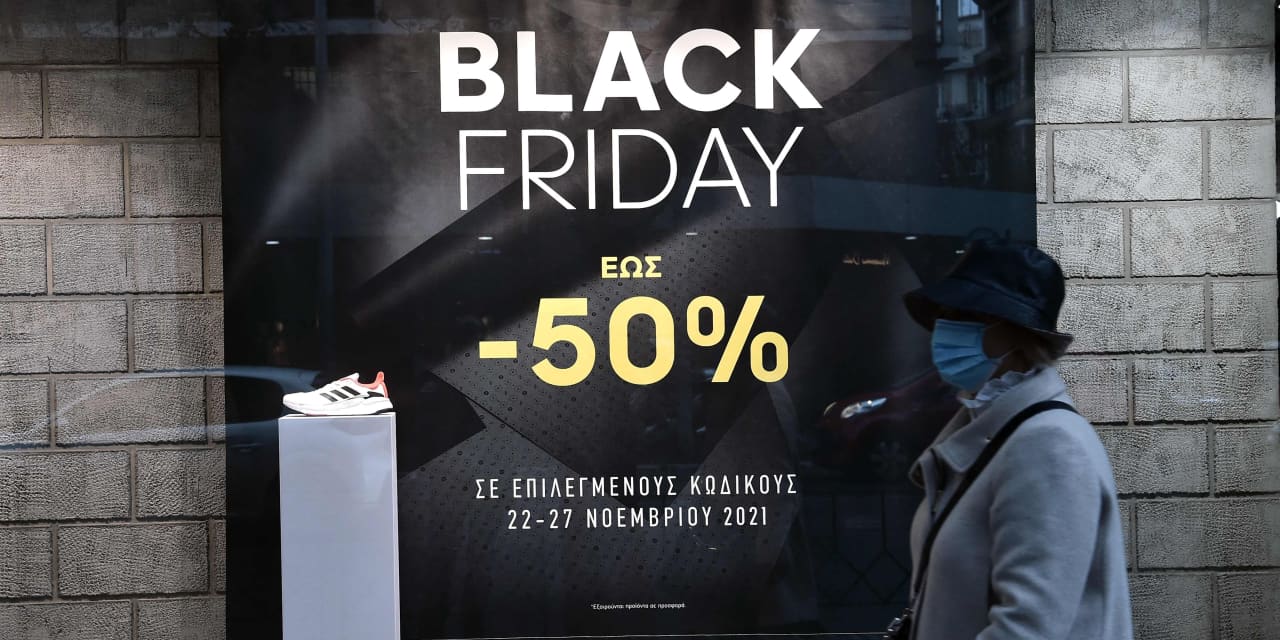
Dow plunges 905 points in Black Friday selloff, books worst day in over a year as WHO declares new COVID ‘variant of concern’

U.S. stock benchmarks suffered withering losses on Friday as stock and commodity markets plunged, after scientists detected a new COVID variant in South Africa that could be to blame for a recent sharp surge in cases, especially in Europe.

U.S. markets were closed for Thanksgiving on Thursday and ended at 1 p.m. Eastern Time on Friday, three hours earlier than usual, and bond market trading ends at 2 p.m., an hour earlier than is typical.

How are stock-index futures trading?
  • The S&P 500
    SPX,
    -2.27{21df340e03e388cc75c411746d1a214f72c176b221768b7ada42b4d751988996}
    fell 106.84 points, or 2.3{21df340e03e388cc75c411746d1a214f72c176b221768b7ada42b4d751988996}, to 4,594.62.

  • The Dow Jones Industrial Average
    DJIA,
    -2.53{21df340e03e388cc75c411746d1a214f72c176b221768b7ada42b4d751988996}
    slumped 905.04 points, or 2.5{21df340e03e388cc75c411746d1a214f72c176b221768b7ada42b4d751988996}, to 34,899.34, with the index logging the worst daily drop since Oct. 28, 2020, according to FactSet data.

  • The decline for the Dow saw it mark its first close below its 50-day moving average at 35,261.93 since Oct. 14.

  • The Nasdaq Composite Index COMP declined 353.57 points, or 2.2{21df340e03e388cc75c411746d1a214f72c176b221768b7ada42b4d751988996}, to15,491.66.

  • The decline for the S&P 500, Dow and Nasdaq Composite posted their worst Black Friday performance since 1950.

On Wednesday, the Dow industrials
DJIA,
-2.53{21df340e03e388cc75c411746d1a214f72c176b221768b7ada42b4d751988996}
fell 9.42 points to finish nearly flat at 35,804.38. The S&P 500
SPX,
-2.27{21df340e03e388cc75c411746d1a214f72c176b221768b7ada42b4d751988996}
slipped 0.2{21df340e03e388cc75c411746d1a214f72c176b221768b7ada42b4d751988996} to close at 4,701.46, just 0.1{21df340e03e388cc75c411746d1a214f72c176b221768b7ada42b4d751988996} below its Nov. 18 record close of 4,704.54, according to Dow Jones Market Data. The Nasdaq Composite Index
COMP,
-2.23{21df340e03e388cc75c411746d1a214f72c176b221768b7ada42b4d751988996}
rose 0.4{21df340e03e388cc75c411746d1a214f72c176b221768b7ada42b4d751988996} to 15,84.23.

What’s driving the market?

It was an ugly day for stock investors during a thinly traded Black Friday session, which was susceptible to big swings on alarming news from public health officials who were assessing a new variant of the coronavirus that causes COVID-19.

Late in the session, the World Health Organization’s technical advisory group assigned the B. 1.1.529 variant of the virus the Greek letter omicron and declared it a “variant of concern,” as it did with the delta variant.

Fear of a new variant overshadowed the usual focus on U.S. Black Friday shopping day, which puts the focus on retailers as consumers shop for bargains.

Particularly notable about the variant is the “large number of mutations, some of which are concerning,” the WHO group said in a statement. The mutations could make omicron more resistant to the current batch of vaccines.  

The discovery of the new COVID strain was announced on Friday by South Africa’s health minister Joe Phaahla. He said scientists were concerned because of its high number of mutations and the dramatic surge in infections the country had seen over the past four or five days.

“The pandemic and COVID variants remain one of the biggest risks to markets, and are likely to continue to inject volatility over the next year(s),” wrote Keith Lerner, co-chief investment officer and chief market strategist at Truist Advisory Services, in a Friday note. “It’s hard to say at this point how lasting or impactful this latest variant will be for markets,” the analyst wrote. 

The omicron strain has been detected in Botswana and in Hong Kong in travelers who had visited South Africa.

“The one bull in the China shop that could truly derail the global recovery has always been a new strain of Covid-19 that swept the world and caused the reimposition of mass social retractions,” said Jeffrey Halley, senior market analyst, at OANDA, in a note. “All we know so far is the B. 1.1.529 is heavily mutated but markets are taking no chances.”

“Just when you thought Covid was being controlled in a holiday shortened week,” said Sam Stovall, chief investment strategist at CFRA Research, in emailed comments.

‘It makes sense to have a market significant correction given the high level of uncertainty.’


— Jay Hatfield, CEO and portfolio manager at Infrastructure Capital Management

Trading around the Thanksgiving holiday is often associated with lower trading volumes as traders typically wait until Monday to return to work. There was no U.S. economic data on the calendar for Friday.

After new cases stabilized at 200 a day, South Africa reported more than 1,200 on Wednesday and 2,465 on Thursday.

The U.K. government is banning flights from South Africa along with five other African nations, effective Friday.

“Predictably, energy, travel related and financials are the leading decliners and treasuries are rallying,” wrote Jay Hatfield, CEO and portfolio manager at Infrastructure Capital Management, in emailed comments on Friday.

“It makes sense to have a market significant correction given the high level of uncertainty,” the money manager wrote.

“At this stage very little is known,” Deutsche Bank strategists, led by Jim Reid, told clients in a note. “Mutations are often less severe so we shouldn’t jump to conclusions but there is clearly a lot of concern about this one. Also South Africa is one of the world leaders in sequencing so we are more likely to see this sort of news originate from there than many countries. Suffice to say at this stage no one in markets will have any idea which way this will go.”

Read: Facing the biggest inflation surge in 30 years, shoppers expect to spend a lot more this holiday season

Which companies are in focus?
  • Drugmaker stocks were on the rise, including Pfizer PFE advanced by 6.1{21df340e03e388cc75c411746d1a214f72c176b221768b7ada42b4d751988996}, and Moderna MRNA stock rallied by about 21{21df340e03e388cc75c411746d1a214f72c176b221768b7ada42b4d751988996}.

  • Travel-related stocks were on the backfoot: Expedia EXPE fell nearly 9,5{21df340e03e388cc75c411746d1a214f72c176b221768b7ada42b4d751988996}

  • Shares of airliners and cruise ships Delta Air Lines DAL, fell 8.3{21df340e03e388cc75c411746d1a214f72c176b221768b7ada42b4d751988996}, Norwegian Cruise NCLH, down 11.4{21df340e03e388cc75c411746d1a214f72c176b221768b7ada42b4d751988996}, and Royal Caribbean RCL shares slid 13{21df340e03e388cc75c411746d1a214f72c176b221768b7ada42b4d751988996}, United Airlines UAL declined 9.6{21df340e03e388cc75c411746d1a214f72c176b221768b7ada42b4d751988996}, Southwest Airlines LUV shares dropped 4.3{21df340e03e388cc75c411746d1a214f72c176b221768b7ada42b4d751988996}, American Airlines’s AAL stock slumped 8.8{21df340e03e388cc75c411746d1a214f72c176b221768b7ada42b4d751988996}.

  • Meanwhile, shares of companies associated with the stay-at-home trade were set to rise, including Netflix NFLX rose 1.1{21df340e03e388cc75c411746d1a214f72c176b221768b7ada42b4d751988996} and Peloton Interactive Inc.
    PTON,
    +5.67{21df340e03e388cc75c411746d1a214f72c176b221768b7ada42b4d751988996}
    advanced 3.4{21df340e03e388cc75c411746d1a214f72c176b221768b7ada42b4d751988996}, while Zoom Video Communications Inc. shares
    ZM,
    +5.72{21df340e03e388cc75c411746d1a214f72c176b221768b7ada42b4d751988996}
    rallied 5.7{21df340e03e388cc75c411746d1a214f72c176b221768b7ada42b4d751988996}.

How are other markets faring?
  • The 10-year Treasury note TMUBMUSD10Y retreated by more than 10 basis points to ell to around 1.54{21df340e03e388cc75c411746d1a214f72c176b221768b7ada42b4d751988996}, versus 1.644{21df340e03e388cc75c411746d1a214f72c176b221768b7ada42b4d751988996} on Wednesday at 3 p.m. ET. The bond market was closed on Thursday in observance of U.S.

  • The ICE U.S. Dollar Index DXY, a measure of the currency against a basket of six major rivals, was down 0.7{21df340e03e388cc75c411746d1a214f72c176b221768b7ada42b4d751988996}.

  • Gold futures for December delivery GCZ21 rose less than 0.1{21df340e03e388cc75c411746d1a214f72c176b221768b7ada42b4d751988996} to trade at $1,785.30 an ounce. U.S. oil futures CLF22 traded off more than 12{21df340e03e388cc75c411746d1a214f72c176b221768b7ada42b4d751988996} at around $68.27 a barrel.

  • The Stoxx Europe 600 SXXP closed 3.7{21df340e03e388cc75c411746d1a214f72c176b221768b7ada42b4d751988996} lower, and London’s FTSE 100 index UKX also gave up 3.6{21df340e03e388cc75c411746d1a214f72c176b221768b7ada42b4d751988996}.

  • In Asia, the Shanghai Composite SHCOMP finished off 0.5{21df340e03e388cc75c411746d1a214f72c176b221768b7ada42b4d751988996} higher, while the Hang Seng Index HSI lost 2.7{21df340e03e388cc75c411746d1a214f72c176b221768b7ada42b4d751988996} in Hong Kong. China’s CSI 300 000300 declined 0.7{21df340e03e388cc75c411746d1a214f72c176b221768b7ada42b4d751988996} and Japan’s Nikkei 225 NIK finished 2.5{21df340e03e388cc75c411746d1a214f72c176b221768b7ada42b4d751988996} lower.

Dow sinks 800 points as new COVID variant fans lockdown fears

U.S. stocks plunged on Friday, with global markets rattled by a new coronavirus variant discovered in South Africa, which fanned concerns that new growth-crushing lockdowns could be imposed if the variant spreads widely.

Trading volumes were low due to the Thanksgiving holiday in the U.S., which may have exacerbated the volatility. 

However, major benchmarks fell sharply during the holiday-shortened session, with the Dow (^DJI) diving by more than 900 points — logging its worst day of the year and its third worst Thanksgiving selloff ever. Meanwhile, S&P 500 (^GSPC) sank by over 2{21df340e03e388cc75c411746d1a214f72c176b221768b7ada42b4d751988996}, its biggest drop since February, and the Nasdaq (^IXIC) also fell sharply, but its losses were partly contained by a rally in stay-at-home stocks.

A new coronavirus variant has been discovered in South Africa, leading to an emergency session of the World Health Organization. Dubbed “Omicron,” scientists say the new B.1.1.529 strain is a concern, because it harbors a large number of mutations found in other variants — including the fast-spreading Delta variant that exploded over much of the summer — and it seems to be rapidly spreading.

While there’s no evidence yet, health officials are worried that the mutating variant could dilute or resist the efficacy of vaccines.

“It goes without saying that it’s still too early to say exactly how big a threat the new B.1.1.529 strain poses to the global economy,” Neil Shearing, Group Chief Economist at Capital Economics, said in a note.

Still, “the lesson from the past couple of years is that it’s the restrictions that are imposed in response to the virus – rather than the virus itself – that causes the bulk of the economic damage. So, the key question is how governments will respond in the event that the B.1.1.529 strain spreads,” Shearling wrote.

“That in turn will hinge on the extent to which it escapes the vaccines and, importantly, causes strains in national healthcare systems,” he added — underscoring that governments in the U.S. and U.K. had taken a “learn to live with the virus” approach, and thus are far less likely than other regions to impose new restrictions.

BioNTech (BNTX) said on Friday it expects more data on the new coronavirus variant in South Africa within two weeks to help its shots should be reworked, and that the company and Pfizer (PFE) — its vaccine partner — could redesign its vaccine within 6 weeks, with an aim to distribute it within 100 days.

Pfizer surged as much as 8{21df340e03e388cc75c411746d1a214f72c176b221768b7ada42b4d751988996} to record, signaling that the new variant could create demand for the vaccine.

While fears of COVID-19 dominated investors’ attention for much of 2020 and 2021, Pfizer confirms it could make variant vaccine in 100 days with the ability to make four billion doses in the first 12 months, according to Citi analyst Andrew Baum.

Travel and leisure-related stocks were among those hit the hardest early Friday, with Carnival Corp (CCL) and Royal Caribbean (RCL) down by 10{21df340e03e388cc75c411746d1a214f72c176b221768b7ada42b4d751988996} in premarket trading. United Airlines (UAL), Delta Air Lines (DAL) and American Airlines were down each 7{21df340e03e388cc75c411746d1a214f72c176b221768b7ada42b4d751988996} each. Boeing slipped 6{21df340e03e388cc75c411746d1a214f72c176b221768b7ada42b4d751988996}. Marriott International and Hilton Worldwide fell more than 5{21df340e03e388cc75c411746d1a214f72c176b221768b7ada42b4d751988996}.

Travel platform Expedia (EXPE) was the fifth-worst performer in the S&P 500, dropping by 11{21df340e03e388cc75c411746d1a214f72c176b221768b7ada42b4d751988996} during the shortened trading day, while home sharing site Airbnb (ABNB) was down more than 5{21df340e03e388cc75c411746d1a214f72c176b221768b7ada42b4d751988996}.

On the flip side, stay-at-home stocks gained Zoom (ZM) up 9{21df340e03e388cc75c411746d1a214f72c176b221768b7ada42b4d751988996}, while Netflix (NFLX) bounded higher by 2{21df340e03e388cc75c411746d1a214f72c176b221768b7ada42b4d751988996}.

Oil prices also swooned to the lowest levels in more than two months Friday sparking fears about a slowdown in demand.

U.S. oil dropped 10{21df340e03e388cc75c411746d1a214f72c176b221768b7ada42b4d751988996} its the worst day since April 2020, with U.S. crude futures down 6.2{21df340e03e388cc75c411746d1a214f72c176b221768b7ada42b4d751988996} to $73.57 per barrel on perceived fears of falling demand amid the new variant.

Bond yields have also fallen as the market’s inflation fears temporarily gave way to the desire for safe-haven assets. The yield on the benchmark 10-year U.S. Treasury note was down to 1.53{21df340e03e388cc75c411746d1a214f72c176b221768b7ada42b4d751988996} after closing at 1.63{21df340e03e388cc75c411746d1a214f72c176b221768b7ada42b4d751988996} on Wednesday.

“We’re still in a place where yields are so low that the safe haven of bonds isn’t as safe as it looks,” ProShares’ Simeon Hyman told Yahoo Finance Live on Friday. “You’re making not that much today on that little bit of rally in treasuries, so it’s a tough spot.”

Banks, which benefit from the higher interest rates, were broadly weaker as bond yields declined. Bank of America sinks 5.8{21df340e03e388cc75c411746d1a214f72c176b221768b7ada42b4d751988996}, Wells Fargo drops 6.3{21df340e03e388cc75c411746d1a214f72c176b221768b7ada42b4d751988996}, Citigroup loses 4.8{21df340e03e388cc75c411746d1a214f72c176b221768b7ada42b4d751988996}, JPMorgan declines 4.7{21df340e03e388cc75c411746d1a214f72c176b221768b7ada42b4d751988996}, Goldman Sachs sheds 3.9{21df340e03e388cc75c411746d1a214f72c176b221768b7ada42b4d751988996} and Morgan Stanley tumbled 4.9{21df340e03e388cc75c411746d1a214f72c176b221768b7ada42b4d751988996}

__

1:00 p.m. ET: Stocks slump on Black Friday, as new variant spooks investors

Here were the main moves in markets as of 1:00 p.m. ET:

  • S&P 500 (^GSPC): -106.65 (-2.27{21df340e03e388cc75c411746d1a214f72c176b221768b7ada42b4d751988996}) to 4,594.81

  • Dow (^DJI): -903.59 (-2.52{21df340e03e388cc75c411746d1a214f72c176b221768b7ada42b4d751988996}) to 34,900.79

  • Nasdaq (^IXIC): -353.57 (-2.23{21df340e03e388cc75c411746d1a214f72c176b221768b7ada42b4d751988996}) to 15,491.66

  • Crude (CL=F): +$9.73 (-12.41{21df340e03e388cc75c411746d1a214f72c176b221768b7ada42b4d751988996}) to $68.66 a barrel

  • Gold (GC=F): -$1.10 (-0.06{21df340e03e388cc75c411746d1a214f72c176b221768b7ada42b4d751988996}) to $1,785.40 per ounce

  • 10-year Treasury (^TNX): -1.4 bps to yield 1.54{21df340e03e388cc75c411746d1a214f72c176b221768b7ada42b4d751988996}

11:15 a.m. ET: Carnival, travel slumps on fears of South African Covid variant

Cruise lines stocks continues to retreat as covid fears swelled. Carnival Corp (CCL) shed more than 12{21df340e03e388cc75c411746d1a214f72c176b221768b7ada42b4d751988996}, while Royal Caribbean (RCL) sunk more than 11{21df340e03e388cc75c411746d1a214f72c176b221768b7ada42b4d751988996}. 

11:10 a.m. ET: Stocks slump midday

Here’s where markets were trading midday: 

  • S&P 500 (^GSPC): -93.46 (-1.99{21df340e03e388cc75c411746d1a214f72c176b221768b7ada42b4d751988996}) to 4,608.00

  • Dow (^DJI): -913.69 (-2.55{21df340e03e388cc75c411746d1a214f72c176b221768b7ada42b4d751988996}) to 34,890.69

  • Nasdaq (^IXIC): -318.08 (-2.02{21df340e03e388cc75c411746d1a214f72c176b221768b7ada42b4d751988996}) to 15,523.46

  • Crude (CL=F): -$9.24 (-11.79{21df340e03e388cc75c411746d1a214f72c176b221768b7ada42b4d751988996}) to $69.15 a barrel

  • Gold (GC=F): $13.30 (0.75{21df340e03e388cc75c411746d1a214f72c176b221768b7ada42b4d751988996}) to $1,797.60 per ounce

  • 10-year Treasury (^TNX): -1.49 bps to yield 1.5{21df340e03e388cc75c411746d1a214f72c176b221768b7ada42b4d751988996}

10:30 a.m. ET: The end of the interest rate differential play?

Friday’s decidedly risk-off tone is calling into question the level of aggressiveness with which the Federal Reserve may pull back on its stimulus. Only a day ago, some thought the rapid surge in prices could prompt the Fed to speed up a taper — or even hike rates faster. 

What a difference a day makes. Marc Chandler at Bannockburn Global FX, pointed out in a research note that the rise of a new variant is scrambling Fed expectations versus the European Central Bank and the Bank of Japan: 

The dollar’s rally has been fueled by the prospect of a divergence of monetary policy that favored the Fed over the ECB and BOJ. Indeed, since the November 10 surprise jump in the October CPI to above 6{21df340e03e388cc75c411746d1a214f72c176b221768b7ada42b4d751988996}, we had emphasized the likelihood that the Fed would have to taper quicker to give it the flexibility to lift rates earlier if needed. Since then, 4-5 Fed officials and several large banks have also underscored this possibility. However, this scenario is being called into question today, which is evident in the swaps markets and the Fed funds futures.

9:30 a.m. ET: Stocks open sink 

Here’s where markets were trading just before the opening bell:

  • S&P 500 (^GSPC): -66.85 (-1.42{21df340e03e388cc75c411746d1a214f72c176b221768b7ada42b4d751988996}) to 4,634.61

  • Dow (^DJI): -848.78 (-2.37{21df340e03e388cc75c411746d1a214f72c176b221768b7ada42b4d751988996}) to 34,955.60

  • Nasdaq (^IXIC): -133.91 (-0.83{21df340e03e388cc75c411746d1a214f72c176b221768b7ada42b4d751988996}) to 15,708.01

  • Crude (CL=F): -$5.34 (-6.81{21df340e03e388cc75c411746d1a214f72c176b221768b7ada42b4d751988996}) to $73.05 a barrel

  • Gold (GC=F): $21.20 (1.19{21df340e03e388cc75c411746d1a214f72c176b221768b7ada42b4d751988996}) to $1,805.50 per ounce

  • 10-year Treasury (^TNX): -1.52 bps to yield 1.5{21df340e03e388cc75c411746d1a214f72c176b221768b7ada42b4d751988996}

7:55 a.m. ET Friday: Stock futures tumble 

Here’s where markets were trading Friday morning: 

  • S&P 500 futures (ES=F): 4,623.25, -75.75 (-1.61{21df340e03e388cc75c411746d1a214f72c176b221768b7ada42b4d751988996})

  • Dow futures (YM=F): 34,973.00, -776.00 (-2.17{21df340e03e388cc75c411746d1a214f72c176b221768b7ada42b4d751988996})

  • Nasdaq futures (NQ=F): 16,224.50, -141.50 (-0.86{21df340e03e388cc75c411746d1a214f72c176b221768b7ada42b4d751988996})

NEW YORK, NEW YORK - SEPTEMBER 30: Traders work on the floor of the New York Stock Exchange (NYSE) on September 30, 2021 in New York City. In afternoon trading the Dow was down over 250 points as investors continue to worry about inflation, wages and supply chain issues. (Photo by Spencer Platt/Getty Images)

NEW YORK, NEW YORK – SEPTEMBER 30: Traders work on the floor of the New York Stock Exchange (NYSE) on September 30, 2021 in New York City. In afternoon trading the Dow was down over 250 points as investors continue to worry about inflation, wages and supply chain issues. (Photo by Spencer Platt/Getty Images)