

Xinjiang: IFC, World Bank Group member, accused of lending money to companies allegedly linked to forced labor in China

Xinjiang: IFC, World Bank Group member, accused of lending money to companies allegedly linked to forced labor in China

The report, titled “Financing and Genocide: Development Finance and the Crisis in the Uyghur Region,” presents evidence that in recent years the IFC has loaned money to four Chinese companies that have been linked to forced labor and land expropriation in the region, along with environmental damage and the destruction of indigenous cultural heritage sites.

According to public disclosures, the four companies named in the report — Chenguang Biotech Group, Camel Group, Century Sunshine and Jointown Pharmaceutical Group — have received loans and equity investments from the IFC valued at $439 million. Including loans sourced from institutional investors via the IFC, that figure rises to around $485 million.

The loans could contravene the IFC’s own internal guidelines — known as its Performance Standards — which function entirely to “prevent IFC from financing projects that will have adverse environmental and social impacts that jeopardize [its] development aims,” according to the report.
Solar panels are key to Biden's energy plan. But the global supply chain may rely on forced labor from China

CNN Business was granted exclusive, advance access to the report, which was led by the Helena Kennedy Centre for International Justice at Sheffield Hallam University in the United Kingdom and published by the Atlantic Council, a Washington-based think tank.

The Helena Kennedy Center for International Justice researches modern day slavery, gender-based violence and hate crime and has previously published reports alleging the use of forced labor in Xinjiang to produce cotton and solar panels. They say the four named companies are not the only businesses receiving IFC funds in the region.

“I think it’s clear that the IFC needs to divest from all their investments in the Uyghur region,” said report author Laura Murphy, a professor in Human Rights and Contemporary Slavery at Sheffield Hallam University, who added that it is “incumbent on the IFC based on their own standards that they ensure that their clients are not involved in forced labor.”

In a statement, an IFC spokesperson told CNN the corporation has “strong environment, social and governance (ESG) standards” that are diligently applied during the life of the investment and are considered a model for development finance worldwide.

“We do not tolerate discrimination or forced labor under any circumstances,” the spokesperson said. “Whenever such serious allegations are brought to our attention, we work to verify and address them with our clients with urgency.”

Beijing responded to the report on Thursday, saying it was “false” and “full of lies and groundless accusations.”

“It is understood that the organization has no staff in Xinjiang. There was no field investigation, no real research, no evidence to back up the report,” Foreign Ministry spokesperson Wang Wenbin said in a briefing.

“The Chinese government attaches great importance to the protection of human rights and workers’ rights and interests. For some time now, certain countries have been hyping up social lies and extending their reach to multilateral development institutions,” Wang added.

CNN sought comment from the four Chinese companies named in the report but did not receive a response. The report’s authors also said they attempted to contact them but did not receive a response.

Police officers patrolling the Xinjiang Uyghur Autonomous Region of China in 2018.

‘Punished with internment’

Xinjiang has become a geopolitical hotspot because of the breadth of human rights abuses alleged to have taken place in the region, including what some Western governments have called the “genocide” of Uyghurs and other minorities.

The US State Department has estimated that since 2017 up to two million members of religious and ethnic minorities have been imprisoned in a shadowy network of internment camps.

China has described the facilities as “vocational training centers” where people learn job skills, Chinese language and laws, and officials declared in 2019 that such centers — also aimed at deradicalizing local Muslims — had been closed down. They also claimed that the original detainees had graduated but that people were still enrolling to gain new skills.

Western governments and human rights organizations have alleged that minorities in the region have been subjected to forced labor through job creation schemes run by the Chinese government to achieve “poverty alleviation.”

Workers who have participated in those job programs have told CNN that if they did not take the jobs they were offered, for a fraction of the usual rate of pay, they were warned they would be sent to camps.

“The Chinese government has embarked on a massive campaign which they deem to be poverty alleviation,” said Murphy of Sheffield Hallam. “These programs are often non-consensual, and people who refuse can be punished with internment.”

China has consistently denied all allegations of human rights abuses in Xinjiang and told CNN in a statement prior to publication that claims of forced labor were lies created to smear its reputation.

“China has repeatedly emphasized that the so-called issues of ‘forced labor’ and ‘repression’ against ethnic minorities are huge lies concocted by anti-China forces in the US and the West. They are entirely baseless. Such attempts to attack and smear China based on lies and disinformation are bound to fail,” the statement said.

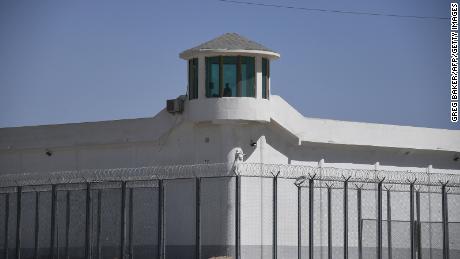
A watchtower at a high-security facility near what is believed to be a re-education camp on the outskirts of Hotan, Xinjiang.

Concerns raised about IFC outcomes

It is part of the World Bank Group and says it provided roughly $31.5 billion in loans and other financial assistance — including nearly $12 billion in “fragile, conflict-affected, and poverty-stricken countries” — last fiscal year to private companies and financial institutions in emerging and developing economies around the world.

The IFC spokesperson told CNN its mission is to “fight poverty by helping the private sector thrive.” “In doing so, we create jobs and raise living standards, especially for the poor and vulnerable,” the spokesperson said.

But its investments have been criticized for years by charities that accuse the IFC of sometimes causing more harm than good by failing to carry out due diligence.

In 2015, Oxfam International published a report compiled with input from several NGOs that claimed the IFC sent billions of dollars in “out of control” investments to third parties that caused “human rights abuses around the world.”

IFC said at the time that it was working with its clients to resolve issues raised by Oxfam and other civil society organizations and that it valued any insights into those concerns. The organization also said that it took additional efforts to train its staff and be more selective about its clients and was strengthening oversight and supervision.

The World Bank Group had been acknowledging concerns even prior to that report. In 2013, the organization’s Independent Evaluation Group highlighted declining “outcome ratings” for IFC-financed projects and advised the IFC to focus on “supervision” and “enhancing the quality of projects” through “intensified efforts.”

CNN approached the World Bank Group for comment about the Helena Kennedy Centre’s findings, and a spokesperson directed CNN to the IFC’s response.
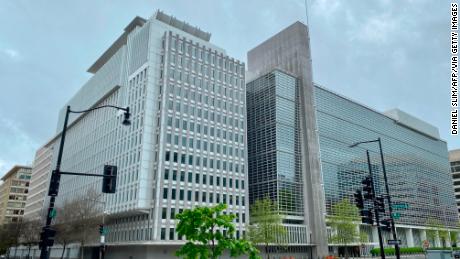
The World Bank headquarters in Washington, D.C.

Alleged connections to forced labor

The four Chinese companies with ties to Xinjiang named in the Helena Kennedy Centre report work in sectors ranging from food to pharmaceuticals and energy. Using corporate documents, stock exchange filings, Chinese state media reports, IFC disclosures and satellite imagery, the report claims these companies have ties to parts of the region where allegations of forced labor are rampant.

In some cases, the report says these companies have participated in state-endorsed “labor transfer” or “poverty alleviation” schemes, which international human rights organizations and foreign governments have for years claimed perpetuate forced labor in the region.

CNN has independently verified that the four companies named in the Helena Kennedy Centre report have all received loans from the IFC in recent years. At least two of those loans, made to Camel Group and Jointown Pharmaceutical, have been used to finance projects in Xinjiang. Because the firms are all publicly traded on Chinese stock exchanges, corporate filings detail some of their dealings in the region. Chinese state media reports also explain some of their work, while the IFC’s own records shed some light on the organization’s involvement in providing financing to these firms.

One company, Chenguang Biotech Group, makes food additives, natural dyes and pigments, and sources its raw materials primarily from India and Xinjiang. In Xinjiang, the company is involved in the production of marigolds.

The IFC, which loaned Chenguang $40 million in 2019 so the company could increase production, conducted an assessment that found the company’s risk of being implicated in forced labor with respect to marigold growers to be “low” and that overall “the risks in Chenguang’s primary supply chain are low to medium.”

But according to the Helena Kennedy Centre report, Chenguang sources some of its workforce from “coercive” state-sponsored labor and land transfer programs.

The report claims that in some cases farmers have no say in whether to participate in major farming projects, or what they want to plant. Companies, too, are under pressure to support state programs.

Citing an official press release, the report said that, in one case, the paramilitary organization Xinjiang Production and Construction Corps (XPCC), which controls the region economically and politically, conducted “ideological work” on those who expressed reluctance about changing their farming methods, which the report described as a method of “coercing” minorities.

Those people are encouraged by government agencies to “relinquish their land, change their crops, alter their farming methods, work for cooperatives or large-scale farms that have expropriated their lands, or move to factory labor,” the report said.

Another company, the battery maker Camel Group, received nearly $36 million in funding from the IFC in July 2019 to expand its battery recycling operations in parts of China, including Xinjiang, according to IFC documents. Chinese corporate records also show the company has at least two subsidiaries in the region.

An IFC risk assessment did acknowledge “potentially significant adverse environmental or societal risks” on account of smelting waste lead but added that Camel promised the organization it would promote the hiring of more local minority residents in Xinjiang. IFC also assessed that “no forced labor practices” are used by Camel Group and that its battery suppliers are subject to quarterly audits by the company to ensure they are complaint with child and forced labor inspections.

However, the Helena Kennedy Centre report cited government press releases that it says show Camel has benefited from state-sponsored labor transfer programs. In July 2017, according to one government release, 165 laborers were taken across Xinjiang for a 10-day long “closed pre-job training,” which the report authors say was an indication that their movements were restricted.

During that time, according to a government press release, the participants received “military and ideological training,” and “were required to sing patriotic songs” and learn Mandarin Chinese — measures that human rights organizations worry can lead to the erasure of culture for Uyghurs, ethnic Kazakhs and Kyrgyz in Xinjiang. Those groups speak languages closer to Turkish than Mandarin Chinese.

Before the laborers were dispatched to their assigned companies — one of which was Camel — they were made to attend a flag-raising ceremony, affirm their loyalty to the ruling Chinese Communist Party and pledge to “make due contributions to national security, national unity, social stability and harmony,” according to the government press release.

A third company, the fertilizer and materials firm Century Sunshine Group, received $165 million from the IFC between 2014 and 2016, according to IFC documents. That figure includes $125 million to upgrade a fertilizer manufacturing facility in Jiangsu province, north of Shanghai on China’s eastern coast. As of December 2020, IFC had roughly a 17{21df340e03e388cc75c411746d1a214f72c176b221768b7ada42b4d751988996} stake in the company, according to an annual report from Century Sunshine.

Century Sunshine also has ties to Xinjiang. The report cited local state-run media from December 2017 that said the company’s Xinjiang subsidiary took in 10 rural laborers from a township in eastern Xinjiang through state-sponsored labor transfer programs. Two years later, that same subsidiary was one of nine firms that participated in a state-backed labor recruitment event that encouraged off-season farmers to work for industrial manufacturing facilities in the area — an event involving labor transfer the report’s authors said was at “high risk”of violating standards for labor and working conditions.

The final company implicated in the report, Jointown Pharmaceutical, received nearly $200 million in debt financing from the IFC in the last few years, according to IFC documents. IFC assessed their investments in Jointown Pharmaceutical as having “limited” environmental or social risks.

The company — which distributes personal protection equipment, medical devices and pharmaceutical drugs — received nearly $150 million in July 2019 to build distribution centers and upgrade four warehouses in middle and western China, including Xinjiang. In October 2020, Jointown Pharmaceutical received another $50 million to buy pharmaceutical products and expand distribution because of the Covid-19 pandemic.

Like Camel and Century Sunshine, the Helena Kennedy Centre report alleges that Jointown Pharmaceutical has participated in Xinjiang-related labor transfer programs. The report cited an article published in December 2020 by the Xinjiang Food and Drug Administration on its official WeChat account that said Jointown Pharmaceutical acknowledged receiving “more than 200” workers “transferred” from southern Xinjiang and other remote and underdeveloped prefectures through the labor programs.

The report also said that Jointown Pharmaceutical has “many” facilities in Xinjiang that are located next to buildings identified as internment camps by the Australian Strategy Policy Institute, a Canberra-based think tank. One of Jointown Pharmaceutical’s facilities in the regional capital of Urumqi, for example, is in one of the city’s “largest prison districts,” according to the report.

Efforts to monitor investments in Xinjiang

While travel to Xinjiang by foreign organizations has become almost impossible in recent years, the Helena Kennedy Centre report says the IFC paid a one-day visit to the region in 2019, during the height of the government crackdown there.

Report co-author Kendyl Salcito, the Executive Director of human rights research non-profit NomoGaia, told CNN she spoke via phone to an IFC representative who went on the trip. The employee told Salcito that their group was temporarily detained by police three times within a roughly 24-hour period, adding that the atmosphere was very uncomfortable and they wanted to leave quickly.

The IFC continued to fund projects in the region after that visit, as seen in IFC documents reviewed by the report authors and by CNN. In November 2020, Salcito said, the IFC told her that it did not have alternative arrangements for monitoring projects there.

The IFC did not respond to CNN’s questions about Salcito’s account of the trip. However, the spokesperson told CNN that in the last two years the IFC has dedicated more resources to supervising companies it works with in Xinjiang.

“While accessing projects on the ground has been more difficult for all development actors in the last two years due to the Covid-19 pandemic and travel restrictions, IFC has dedicated more resources to supervising the companies we work with regarding adherence to our ESG standards. These standards are legally binding, include protections for workers, communities, and the environment, and expressly prohibit discrimination and the use of forced labor,” the spokesperson said.
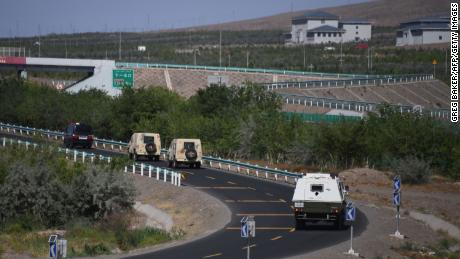
Paramilitary police vehicles on a road in Artux in China's northwest Xinjiang region in June, 2019.

The IFC has taken some steps to withdraw from the region. It ceased its relationships with three other Chinese firms that “were engaged or sourcing from companies engaged in repression in the Uyghur Region,” according to the report.

The IFC did not respond to CNN’s questions about why it chose to divest those companies and not others.

In 2020, the IFC told Salcito in email exchanges viewed by CNN that the Chinese companies it works with assured the organization they did not use any forced labor. The IFC did not respond to CNN’s questions about that correspondence. The Helena Kennedy Centre report authors say that form of self-reporting is wholly insufficient.

“The continued willingness to provide financing in the region, without any direct oversight, indicates that its investment strategy in the region continues to overlook the ongoing crimes against humanity and Performance Standards violations that render the IFC’s investments complicit,” the report said.

A lack of due diligence

Multinational corporations have for years found it difficult to perform due diligence on their supply chains linked to Xinjiang because of limited access, surveillance and the threat of government interference. That makes the use of publicly available records and satellite imagery all the more important in determining whether a firm has ties to forced labor in the region.
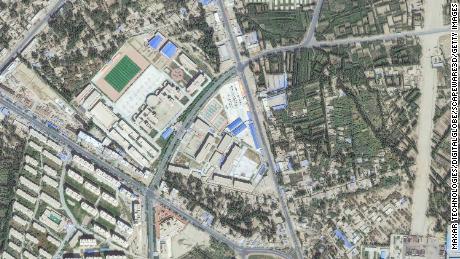
Satellite images, for example, have shown that detention facilities are often built up simultaneously alongside factories and business parks, which human rights activists say is a clear indication that factory workers are being drawn from the prison or camp population.
Maxar satellite imagery of a re-education internment camp in
Hotan, Xinjiang, China.

Some companies, investors and other organizations have pulled out of the region because of the difficulties in auditing activity there. Many international auditors will no longer certify products made in Xinjiang, and the Fair Labor Association — a Washington-based non-profit whose members include multinational corporations and Ivy League universities — has banned its members from sourcing from Xinjiang due to an inability to gather accurate information, or to verify if workers there are under duress.

“The underlying problem in the Uyghur region is the political repression is so great, we’re of the view that no company can do adequate human rights due diligence,” said Sophie Richardson, China Director of Human Rights Watch. “Where [a company] can’t do adequate human rights due diligence, it should withdraw.”

Foreign governments have also been piling pressure on companies. In December, US President Joe Biden signed into law new rules that will effectively ban imports of products made in Xinjiang.

Washington is also leading a diplomatic boycott of the Beijing Winter Olympics, which conclude Sunday. In December, White House Press Secretary Jen Psaki said that the United States would not continue do “business as usual” and participate in the “fanfare” of the Games because of the “ongoing genocide and crimes against humanity in Xinjiang.”

But activists also point out that governments that work with the IFC should also review their funding plans. The United States, after all, has plowed more than $23 billion over the last 20 years into the World Bank Group, and as of June 2021 was the largest IFC shareholder with a stake of about 21{21df340e03e388cc75c411746d1a214f72c176b221768b7ada42b4d751988996}.

That funding has increased during the pandemic: In March 2020, the World Bank Group announced that the US government authorized a $5.5 billion capital increase for the IFC as part of the Coronavirus Aid, Relief, and Economic Security Act.

In a statement to CNN, the US Treasury Department said that it “works closely with other parts of the United States government to strongly condemn and respond to the atrocities taking place in Xinjiang.”

It said the government had pressed multilateral development banks (MDBs) — including the IFC — to strengthen their safeguards so projects “do not inadvertently support companies that participate in or benefit from forced labor.”

The statement added: “The US has been — and will continue to be -— a lead voice on this issue in all the MDBs and will continue working with other shareholder countries to make companies with alleged linkages to forced labor practices ineligible for MDB investments.”

GoFundMe backtracks on redistributing money for Canadian truckers, under threat of fraud investigation

Facing a probable fraud investigation by the point out of Florida, GoFundMe reversed a determination to redistribute funds provided by countless numbers of donors to the Canadian “Liberty Convoy” protesting COVID-19 polices.

On Friday, the crowdfunding system GoFundMe froze the convoy’s official campaign, professing law enforcement confident the company that the convoy experienced grow to be violent and unlawful.

GoFundMe encouraged donors to submit a refund form, and claimed that any funds not adequately returned to donors would be donated to a charity picked by the Liberty Convoy.

Within just several hours, even so, GoFundMe walked again the refund programs, instead saying it would be refunding donors mechanically.

Florida Gov. Ron DeSantis reported that he would “investigate” the firm, accusing them of fraud.

“GoFundMe supports tranquil protests and we consider that was the intention of the Freedom Convoy 2022 fundraiser when it was to start with made. We now have proof from law enforcement that the beforehand tranquil demonstration has develop into an occupation, with law enforcement experiences of violence and other illegal activity,” GoFundMe announced. There has been minimal to no experiences of documented violence at the protest.

CANADIAN PASTOR WHO DEFIED COVID BAN BY Holding Providers SINGS ‘AMAZING GRACE’ AT US BORDER

GoFundMe also drew the ire of Texas Attorney General Ken Paxton, who mentioned on social media that he would be launching a fraud investigation.

“Patriotic Texans donated to Canadian truckers’ worthy trigger employing GoFundMe. This BLM-backing business went woke, froze the resources, & failed to produce Texans’ money,” Paxton explained. “Right now I assembled a group to examine their prospective fraud & deception. Texas donors will get Justice!”

The GoFundMe web page to assistance the “Liberty Convoy” of Canadian truckers was approaching $10 million as of Monday night, which is more dollars than the important federal political parties of Canada raised in the course of the last quarter of 2021.

The past truck blocking the southbound lane moves right after a breakthrough resolved the deadlock where anti-COVID-19 vaccine mandate demonstrators blocked the highway at the chaotic U.S. border crossing in Coutts, Alberta, Wednesday, Feb. 2, 2022.  (Jeff McIntosh /The Canadian Press by means of AP / AP Newsroom)

“Our current federal government is implementing guidelines and mandates that are destroying the basis of our organizations, industries and livelihoods,” go through the convoy’s GoFundMe webpage. “We are a peaceful place that has assisted safeguard nations across the globe from tyrannical governments who oppressed their individuals, and now it appears it is occurring listed here.”

The corporation additionally cited the team of trucks’ evolution from convoy to stationary protest in Ottawa as the cause for the campaign’s termination. 

Truckers stage to in which their sleeper cab was egged while they take part in a protest in opposition to COVID-19 restrictions in Ottawa, on Friday, Feb. 4, 2022. (Justin Tang /The Canadian Press via AP / AP Newsroom)

“Organizers provided a crystal clear distribution strategy for the initial $1M that was produced earlier this week and confirmed funds would be employed only for individuals who traveled to Ottawa to take part in a tranquil protest. Supplied how this situation has progressed, no further funds will be straight distributed to the Freedom Convoy organizers — we will do the job with organizers to deliver all remaining resources to credible and founded charities picked by the Flexibility Convoy 2022 organizers and verified by GoFundMe.”

Click on Right here TO GET THE FOX Information App 

GoFundMe confronted fast backlash for the announcement with tens of countless numbers of opinions on their social media posts about the cancellation.

A protester carries vacant cans for gas as a protest towards COVID-19 limits continues into its 2nd 7 days, in Ottawa, on Friday, Feb. 4, 2022. (Justin Tang /The Canadian Push via AP / AP Newsroom)

Critics of the firm’s haphazard cancellation include things like Tesla CEO Elon Musk, who questioned whether or not there is a “double-standard,” given earlier fundraisers for lawful money in protection of antifa users and felony protesters.

FOX Business’ Jon Brown contributed to this report.

here’s who’s better at making money in financial markets

Artificial intelligence (AI) has now carefully matched or even surpassed people in what had been formerly regarded as unattainable parts. These consist of chess, arcade game titles, Go, self-driving vehicles, protein folding and substantially far more. This fast technological progress has also experienced a large effect on the financial providers sector. Much more and more CEOs in the sector declare (explicitly or implicitly) that they run “technology organizations with a banking license”.


You can listen to much more articles from The Conversation, narrated by Noa, in this article.


There is also a swift emergence and expansion of the fiscal know-how field (fintech), the place engineering startups progressively obstacle established monetary establishments in places this kind of as retail banking, pensions or particular investments. As this sort of, AI usually appears in driving-the-scenes procedures these kinds of as cybersecurity, anti-dollars laundering, know-your-shopper checks or chatbots.

Among the so several effective cases, just one looks conspicuously absent: AI earning cash in monetary marketplaces. Whilst easy algorithms are typically used by traders, device finding out or AI algorithms are much fewer normal in expense selection-building. But as machine discovering is dependent on analysing substantial information sets and finding styles in them, and economical marketplaces producing tremendous quantities of data, it would seem an apparent match. In a new research, revealed in the Global Journal of Info Science and Analytics, we have shed some mild on whether or not AI is any superior than individuals at generating dollars.

Some specialist financial commitment firms named quant (which stands for ‘quantative’) hedge cash declare that they make use of AI in their expenditure conclusion-producing process. Nonetheless, they do not release official efficiency information. Also, irrespective of some of them controlling billions of bucks, they remain niche and little relative to the dimensions of the much larger financial investment market.

On the other hand, academic investigate has regularly described very correct monetary forecasts based on device-mastering algorithms. These could in principle translate into highly effective mainstream investment strategies for the economical industry. And but, that doens’t seem to be to be taking place.

What is the cause for this discrepancy? Is it entrenched supervisor tradition, or is it something relevant to practicalities of serious-globe investing?

AI’s economic forecasts

We analysed 27 peer-reviewed reports by educational scientists released between 2000 and 2018. These explain diverse sorts of stock market forecasting experiments applying device-finding out algorithms. We needed to decide regardless of whether these forecasting methods could be replicated in the real world.

Our immediate observation was that most of the experiments ran a number of variations (in intense situations, up to hundreds) of their expenditure design in parallel. In practically all the situations, the authors presented their best-carrying out model as the key products of their experiment – indicating the ideal outcome was cherry-picked and all the sub-exceptional effects have been dismissed. This strategy would not do the job in authentic-earth expenditure management, exactly where any specified approach can be executed only when, and its result is unambiguous profit or loss – there is no undoing of outcomes.

Working multiple variants, and then presenting the most thriving one particular as agent, would be deceptive in the finance sector and perhaps regarded as illegal. For illustration, if we operate 3 variants of the identical technique, with 1 getting rid of -40{21df340e03e388cc75c411746d1a214f72c176b221768b7ada42b4d751988996}, the other 1 shedding -20{21df340e03e388cc75c411746d1a214f72c176b221768b7ada42b4d751988996}, and the 3rd one particular getting 20{21df340e03e388cc75c411746d1a214f72c176b221768b7ada42b4d751988996}, and then only showcase the 20{21df340e03e388cc75c411746d1a214f72c176b221768b7ada42b4d751988996} acquire, plainly this single outcome misrepresents the performance of the fund. Just just one edition of an algorithm should be examined, which would be representative of a real-planet investment decision setup and for that reason far more practical.

Versions in the papers we reviewed achieved a really high level of accuracy, about 95{21df340e03e388cc75c411746d1a214f72c176b221768b7ada42b4d751988996} – a mark of huge achievements in lots of areas of existence. But in current market forecasting, if an algorithm is mistaken 5{21df340e03e388cc75c411746d1a214f72c176b221768b7ada42b4d751988996} of the time, it could continue to be a authentic difficulty. It may well be catastrophically mistaken somewhat than marginally mistaken – not only wiping out the profit, but the full underlying capital.

Image of people working in finance.
Traders do not use AI a lot.
Rawpixel.com/Shutterstock

We also pointed out that most AI algorithms appeared to be “black boxes”, with no transparency on how they labored. In the real earth, this is not possible to encourage investors’ self-assurance. It is also probably to be an situation from a regulatory perspective. What is a lot more, most experiments did not account for buying and selling costs. Nevertheless these have been decreasing for a long time, they’re not zero, and could make the difference involving earnings and reduction.

None of the experiments we looked at gave any consideration to existing economical regulations, these as the EU lawful directive MIFID II or company ethics. The experiments them selves did not have interaction in any unethical functions – they did not seek out to manipulate the current market – but they lacked a structure aspect explicitly guaranteeing that they had been ethical. In our watch, machine understanding and AI algorithms in expenditure conclusion-creating must notice two sets of ethical criteria: generating the AI moral per se, and building expense choice-generating ethical, factoring in environmental, social and governance concerns. This would end the AI from investing in organizations that might harm modern society, for case in point.

All this indicates that the AIs described in the academic experiments were unfeasible in the actual world of fiscal field.

Are individuals improved?

We also required to assess the AI’s achievements with those of human financial commitment specialists. If AI could commit as perfectly as or much better than human beings, then that could herald a massive reduction in careers.

We discovered that the handful of AI-powered funds whose effectiveness facts had been disclosed on publicly offered industry facts sources typically underperformed in the current market. As such, we concluded that there is currently a incredibly potent scenario in favour of human analysts and supervisors. Despite all their imperfections, empirical evidence strongly implies humans are at present in advance of AI. This may well be partly because of the efficient mental shortcuts individuals just take when we have to make quick choices beneath uncertainty.

In the potential, this may possibly improve, but we continue to will need proof prior to switching to AI. And in the fast long run, we believe that, alternatively of pinning individuals in opposition to AI, we should merge the two. This would indicate embedding AI in conclusion-aid and analytical instruments, but leaving the final investment decision final decision to a human crew.

Where stock investors should consider putting their money in 2022

Jose Luis Pelaez Inc | DigitalVision | Getty Pictures

Coming off quite a few many years of outsized gains in the inventory sector, traders may well be hoping 2022 is like deja vu all over again.

Really don’t depend on it. Although foreseeable future effectiveness is unattainable to predict with certainty, a lot of fiscal advisors assume returns will arrive back again down to Earth.

“We have been telling shoppers to assume a lackluster calendar year in the inventory current market and in portfolios in basic, with lingering elevated inflation, slower financial progress and interest rate hikes,” reported certified financial planner Shon Anderson, president and chief prosperity strategist for Anderson Monetary Tactics in Dayton, Ohio.

So significantly this calendar year, the S&P 500 Index — a broad measure of how U.S. organizations are faring — has posted a complete return (value gains furthermore dividends) of about 29.2{21df340e03e388cc75c411746d1a214f72c176b221768b7ada42b4d751988996}. Which is on the heels of 18.4{21df340e03e388cc75c411746d1a214f72c176b221768b7ada42b4d751988996} in 2020 and around 31.5{21df340e03e388cc75c411746d1a214f72c176b221768b7ada42b4d751988996} in 2019 (and a loss of extra than 4{21df340e03e388cc75c411746d1a214f72c176b221768b7ada42b4d751988996} in 2018). In excess of time, the yearly typical is about 10{21df340e03e388cc75c411746d1a214f72c176b221768b7ada42b4d751988996}.

Additional from Particular Finance:
Calendar year-conclude revenue moves to make in advance of 2022
How to location and correct your shelling out problem
Below are ideas for paying much less at the pump

The Dow Jones Industrial Regular has a overall return so far this yr of 21.1{21df340e03e388cc75c411746d1a214f72c176b221768b7ada42b4d751988996}, pursuing 9.72{21df340e03e388cc75c411746d1a214f72c176b221768b7ada42b4d751988996} in 2020 and around 25.3{21df340e03e388cc75c411746d1a214f72c176b221768b7ada42b4d751988996} in 2019 (and a reduction of 5.6{21df340e03e388cc75c411746d1a214f72c176b221768b7ada42b4d751988996} in 2018). The tech-laden Nasdaq Composite index, meanwhile, has posted a 23.2{21df340e03e388cc75c411746d1a214f72c176b221768b7ada42b4d751988996} achieve so far this 12 months, immediately after 44.9{21df340e03e388cc75c411746d1a214f72c176b221768b7ada42b4d751988996} in 2020 and about 36.7{21df340e03e388cc75c411746d1a214f72c176b221768b7ada42b4d751988996} in 2019 (and a reduction of 2.84{21df340e03e388cc75c411746d1a214f72c176b221768b7ada42b4d751988996} in 2018).

Though 2022 may well conclusion with lessen returns — i.e., one-digit gains, potentially — the economic system is predicted to continue on to extend, albeit at a slower speed than before in the yr. In the third quarter, gross domestic product — which actions all financial exercise — grew at an annual speed of 2.3{21df340e03e388cc75c411746d1a214f72c176b221768b7ada42b4d751988996}, in accordance to the Bureau of Labor Figures. That arrived on the heels of 6.5{21df340e03e388cc75c411746d1a214f72c176b221768b7ada42b4d751988996} yearly development in the 2nd quarter, and 6.4{21df340e03e388cc75c411746d1a214f72c176b221768b7ada42b4d751988996} in the very first quarter.

With that slower development as a backdrop, coupled with persisting inflation and the Federal Reserve’s latest expectations that fascination fee hikes are on their way next year, there may perhaps be specified industries or market sectors that outperform other individuals. 

“The surroundings is suitable for remaining more careful and defensive … but there are continue to alternatives to make income,” mentioned CFP Matthew McKay, an investment decision analyst with Briaud Financial Advisors in College Station, Texas.

“Typically this is an environment where by utilities, health and fitness care and purchaser staples can outperform, frequently talking,” McKay mentioned.

Worldwide shares — in  both made markets and rising marketplaces — also may perhaps outperform, he said.

“Hunting at the next 50 percent of the 12 months, quite a few nations around the world need to change up advancement yr around year, which would be pretty positive for these two wide markets, specially specified the acceptable multiples they are priced at,” McKay said.

Genuine estate financial investment trusts could also do much better than the broader market place, Anderson claimed. REITs, as they’re termed, are companies that very own and/or run attributes such as office properties, searching malls, condominium complexes and warehouses. 

“Specially for REITs, we consider there is far more possibility in the information facilities, self-storage and wellness-treatment [facilities],” Anderson explained. 

Shares linked to household setting up may well also be a location of power, claimed Joseph Veranth, main investment officer and portfolio manager at Dana Investment decision Advisors in Waukesha, Wisconsin. 

“There is nonetheless big pent-up need for housing,” Veranth claimed. Between his beloved picks are homebuilder D.R. Horton and Fortune Brands Home & Security, whose solutions contain individuals related to plumbing, cabinetry, outdoor and residence safety.

Industrial stocks may perhaps also reward from a sturdy economic system and from a lot more currently being invested on infrastructure or defense, reported CFP Barry Glassman, founder and president of Glassman Wealth Expert services in Vienna, Virginia. Typically, companies in that sector manufacture and distribute items utilised by industries this kind of as construction, engineering, aerospace and defense, or they may well be involved in transportation and logistics companies.

In addition, Glassman reported, his agency is concentrating on complete shareholder return — that is, hunting at stocks with constant dividend payouts, as properly as stock buybacks. The latter typically triggers a company’s share value to rise due to the fact fewer shares are on the industry as soon as the buyback comes about.

“I won’t be able to think about the S&P continuing its amazing 3-12 months operate but even if the index does not do as nicely, I assume there are stocks that could do improved,” Glassman said. “I believe what will rule is profitability and security of earnings.”

Inventory picks and investing traits from CNBC Pro:

Gaining financial literacy can help Hispanics save and invest money

Whether it is conserving for retirement or constructing wealth, Hispanics are lagging at the rear of. They could also be being away from conventional bank accounts.

A variety of experiences highlight the disparities, which include 1 from the St. Louis Federal Reserve that located Hispanic and Latino families had just $38,000 of median wealth in 2019, amounting to 21 cents for every single dollar of white household prosperity.

In the meantime, a lot more than two-thirds of Hispanic homes usually are not saving nearly anything via employer-sponsored plans, like 401(k)s and only 8{21df340e03e388cc75c411746d1a214f72c176b221768b7ada42b4d751988996} report possessing an person retirement account or equivalent system, a report from Morningstar found. In excess of 12{21df340e03e388cc75c411746d1a214f72c176b221768b7ada42b4d751988996} of Hispanic homes you should not have bank accounts, according to the Federal Deposit Coverage Corp.

Whilst the difficulty of the prosperity hole requirements to be dealt with, getting monetary literacy can go a prolonged way toward economic stability, indicates Yanely Espinal, director of academic outreach at Future Gen Private Finance.

Hispanics have lessen stages of financial literacy than whites, in accordance to the TIAA Institute-GFLEC Personal Finance Index. Hispanics correctly answered 41{21df340e03e388cc75c411746d1a214f72c176b221768b7ada42b4d751988996} of the inquiries, in contrast to 55{21df340e03e388cc75c411746d1a214f72c176b221768b7ada42b4d751988996} of whites.

“For my mother and father, and quite a few other Spanish-talking immigrants, a absence of economical literacy effects in obtaining slim credit rating files with very poor/no credit rating scores, no know-how or possession of retirement accounts or brokerage accounts, and disappointment with traditional banking,” claimed Espinal, whose mothers and fathers immigrated to the U.S. from the Dominican Republic.

The Covid-19 pandemic made it clear that Latino and Hispanic personnel are overrepresented in minimal-wage do the job environments, she noted. When minimal money are getting break up quite a few techniques, folks are forced to prioritize small-phrase fiscal desires about extended term targets, she mentioned.

More from Devote in You:
Four harmful beliefs about cash you may perhaps have uncovered in childhood
Your monetary wrap-up: 4 savvy revenue moves to make prior to calendar year-stop
The December little one tax credit history payment may perhaps be the past

“This results in repeating cycles of financial wrestle,” said Espinal, a member of the CNBC Invest in You Fiscal Wellness Council.

“Discovering about custodial Roth IRAs and custodial brokerage accounts for Hispanic and Latinx youth, and serving to family members recognize the gains of setting up early with 529 Higher education Financial savings Designs are unbelievably impressive ways to change the narrative.”

To that close, CNBC Devote in You is collaborating with Telemundo to convey Spanish-speaking People in america our Cash 101 e-newsletter in Spanish. (Simply click in this article to indication up for Dinero 101.)

The publication, from CNBC Senior Particular Finance Correspondent Sharon Epperson, is an 8-7 days training course to fiscal literacy, and involves assist with earning a funds, conserving for retirement and developing an emergency fund. By signing up for the system, you will also get reward newsletters to enable you navigate economical worries through the pandemic.

Not only will you attain financial know-how, you can use the facts to open up discussions among family members.

“Culturally, funds discussions are one thing most Latino people really don’t have,” claimed Louis Barajas, a certified fiscal planner who performs with the Latino community in East Los Angeles.

He urges men and women to read through up and communicate up if they never realize one thing.

“It really is about not getting ashamed, not emotion responsible, not emotion ashamed, not sensation shy to say, ‘I will not fully grasp, can you you should explain it to me,'” he explained.

Indicator UP: Dinero 101 is an 8-week learning class to fiscal independence, delivered weekly to your inbox (Spanish version), or if you want to acquire the English model Income 101, click on in this article.

Disclosure: NBCUniversal and Comcast Ventures are investors in Acorns.

7 Ways to Enjoy Retirement With Less Worry Over Money


Happy retiree couple dancing in kitchen


iStock / Getty Images

For decades, through career and family ups and downs, you have relentlessly saved and invested for retirement. Yet, you dread the thought of running out of money. Many people do.

A recent study by Zety of more than 800 individuals showed that 47 percent feared retirement more than illness and poor health, and 40 percent more than death. Some concern is warranted. A study by the Boston College Center for Retirement Research’s National Retirement Risk Index (NRRI), conducted before the COVID-19 pandemic, indicated that 50 percent of households may lack the funds to continue their standard of living once work stops. That number is now 55 percent.

But let’s say the numbers in your portfolio show that things are good. Now that you are retired, or are nearing that point, it’s time to start spending a little to enjoy life more. It’s time to create a list of things you have dreamed of doing.

Not convinced? Mark Wilson, a certified financial planner (CFP) at MILE Wealth Management in Irvine, California, is not surprised. Regardless of their ample savings, some of his clients picture the worst possible scenario down the road — they are poor, homeless and living under a bridge. “There is no reason to be stressed, and we help them understand that,” he says. “Numbers and logic help some to see their situation more clearly; others feel better knowing that we will protect them from that bridge.”

Now or maybe never

Realistically, the time for fun may be short. Many folks in their mid-60s have an ailment that limits their mobility, says James Shagawat, a CFP at AdvicePeriod in Paramus, New Jersey. “By the time some people let themselves spend on dining out, vacations, charitable giving, or their children and grandchildren, they are no longer in the physical condition to enjoy it.”

Patti Black, a CFP at Bridgeworth Wealth Management, LLC, in Birmingham, Alabama, has two clients in their 90s with $2.7 million in investments. Still, they worry about a shortfall and becoming dependent on their kids. “The wife wishes they could travel with the family, but now, their physical health and the pandemic are making this difficult. It is sad to hear her express that longing.”

If you or your partner are having trouble letting go, a financial planning professional can help. You can find a qualified financial planner with the Financial Planning Association’s PlannerSearch tool. In the meantime, consider these tips from experts around the country. They emphasize that the transition from saver to spender may require time and different approaches.

1. Review your family history

Understanding your relationship with money is a first step toward learning to spend appropriately, says Byrke Sestok, a CFP at Rightirement Wealth Partners in Harrison, New York. “Many baby boomers’ parents grew up through the Great Depression, so they were raised to believe that everything could be gone tomorrow. Having plenty in reserve is a handed-down script.” Sestok suggests finding a planner who can help you see the roots of your emotions about money, so you can work through issues that challenge the pursuit of your goals.

2. Work with your partner

Spouses or partners will have their own feelings about retirement, as well spending versus saving. The transition into retirement can put a major strain on a relationship, says Danielle Harrison, who is a CFP, and a certified financial therapist (FT) at Harrison Financial Planning in Columbia, Missouri. “I like to see couples work with a holistic CFP, who can look at all aspects of their situation, and create projections that can help put their minds at ease.” For more help, she suggests working with an FT who can help them talk about their fears. Otherwise, it may not be possible to move forward. “It can be helpful for partners to hear the other person’s stories.”

3. Create a safe and practical plan

Kristin Sullivan, a CFP at Sullivan Financial Planning in Denver, says a planner can determine how much you can safely withdraw from investments in the next year. You divide that figure by 12 and have that amount automatically transferred to your checking account each month. “If you designate that these withdrawals be made two weeks after your Social Security check comes, it will be like getting paid from a job again.”

​To help her clients adopt more of a spending mindset, Linda Farinola, a CFP at Princeton Financial Group in Princeton, New Jersey, also suggests creating a budget for regular living expenses, starting small when it comes to spending, and making a list of what you would like to do. “Revisit this plan each year to make sure that things are still on track for the long term,” she says.​