

Listen Now: Listen and subscribe to Morningstar’s The Long View from your mobile device: Apple Podcasts | Spotify | Google Play | Stitcher
On this week’s episode, we’ll feature some of our favorite clips from interviews we’ve done with financial planners, advisors, and retirement researchers over the past year. In next week’s episode, we’ll include some of our favorite excerpts from our interviews with portfolio managers and other investment specialists.
“Nick Maggiulli: ‘The Biggest Lie in Personal Finance,’” The Long View podcast, Morningstar.com, April 12, 2022.
“Justin Fitzpatrick: ‘Retirees Have a Superpower,’” The Long View podcast, Morningstar.com, July 12, 2022.
“Dana Anspach: How to Build an All-Weather Retirement Plan,” The Long View podcast, Morningstar.com, Oct. 18, 2022.
“Jamie Hopkins: A Framework for Financial Freedom,” The Long View podcast, Morningstar.com, Dec. 6, 2022.
“Wade Pfau: The Risks of Retirement Today,” The Long View podcast, Morningstar.com, Aug. 2, 2022.
“Jill Schlesinger: ‘What Are You Going to Do With Your Life?’” The Long View podcast, Morningstar.com, Feb. 15, 2022.
“Roger Whitney: ‘Retirement Planning Is Not Financial Planning,’” The Long View podcast, Morningstar.com, Nov. 8, 2022.
“Clark Howard: Financial Well-Being Starts With Being a Smart Consumer,” The Long View podcast, Morningstar.com, March 1, 2022.
“JL Collins: The Case for Simplicity,” The Long View podcast, Morningstar.com, April 5, 2022.
“Ilyce Glink: The State of the U.S. Residential Real Estate Market,” The Long View podcast, Morningstar.com, June 28, 2022.
“Farnoosh Torabi: ‘Money Is Meaningless Without Goals,’” The Long View podcast, Morningstar.com, Sept. 13, 2022.
“Paula Pant: A Different Path to Financial Independence,” The Long View podcast, Morningstar.com, Jan. 18, 2022.
“Julien and Kiersten Saunders: ‘How Much Is Enough?’” The Long View podcast, Morningstar.com, Oct. 25, 2022.
“Joe Saul-Sehy: What Is Your Growing Season?” The Long View podcast, Morningstar.com, Aug. 16, 2022.
“Jordan Grumet: A Hospice Doctor Shares Lessons About Work, Money, and Life,” The Long View podcast, Morningstar.com, July 26, 2022.
Transcript
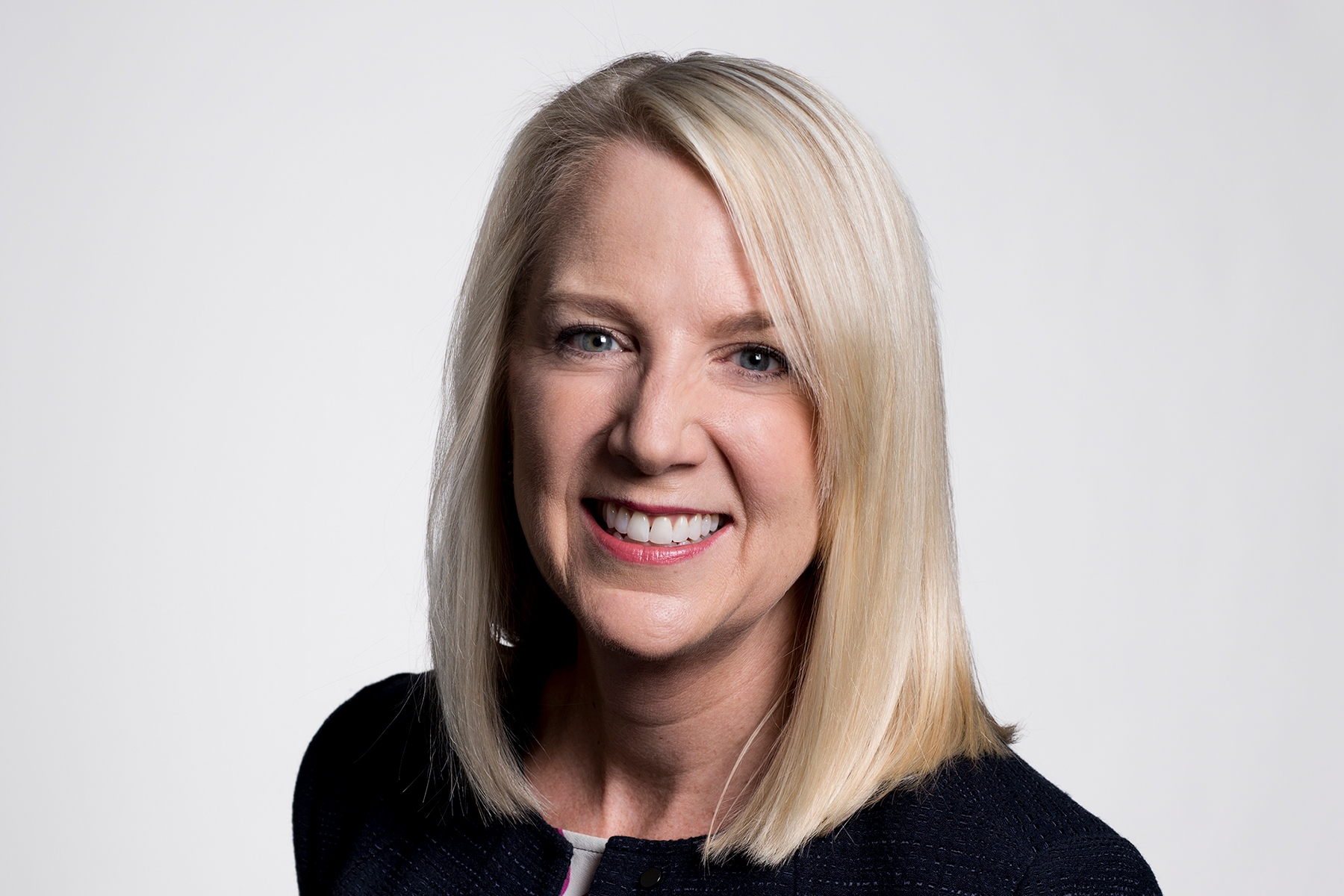
Christine Benz: Hi, and welcome to The Long View. I’m Christine Benz, director of personal finance and retirement planning for Morningstar.
On this week’s episode, we’ll feature some of our favorite clips from interviews we’ve done with financial planners, advisors, and retirement researchers over the past year. In next week’s episode, we’ll include some of our favorite excerpts from our interviews with portfolio managers and other investment specialists.
One of the most disconcerting aspects of this past year was the specter of stocks and bonds going down simultaneously. We asked author and Ritholtz’s chief operating officer, Nick Maggiulli, to share his thoughts.
Nick Maggiulli: I can’t remember the exact number. I think it’s something like negative 0.3— that’s the long-term correlation between stocks and bonds. So, it’s negative, which means when stocks go down, bonds generally go up, but it’s not negative 1. It’s not like every time stocks drop, bonds go up. It is negative and it’s slightly negative. But because of that, it means there are going to be periods, like this period now, where stocks and bonds decline together.
Let’s just say that bonds and stocks hit zero correlation, that would just mean stocks fall and you have no idea what’s going to happen to bonds. So, the negative, let’s say, 0.3 or whatever that estimate is, it says generally bonds will help you out when stocks are falling, but that’s not always true. And it also changed over time. Even during March 2020 and the COVID crash, there were days when stocks and bonds declined together. But for the most part, bonds held their value and increased a little bit despite having some crash days.
So, I’m not as worried about that. Obviously, it’s tough right now. Yields are coming back up, so bonds are now actually creating some income when they weren’t really creating much before. But obviously, inflation is high as well. So, it’s tough to be a bond investor now, and I understand that, but I still own bonds, I still own some bonds. And I think it’s prudent for anyone who is trying to control risk to own some bonds. I know it’s not great. It’s not a great situation we’re in right now, but we don’t really have many other choices if you want to control some risk.
Benz: We also went deep on retirement planning on the podcast over the past year. Specifically, we talked about the implications of high inflation and bad market returns for new retirees. Justin Fitzpatrick from retirement software provider Income Lab sounded a positive note, pointing out that retirees can course-correct to adjust to changing market conditions.
Justin Fitzpatrick: The doomsaying for retirees is, I think, a little misleading. Retirees kind of have a superpower. The fact is, they’re not running hedge funds. Living through retirement, funding retirement is not like investing for the short term. You’re really funding relatively small expenses relative to the overall decades of spending. So, you’re funding those slowly over time. And then, the other part of the superpower is the ability to adjust and adjust not just to current spending, but maybe make changes to other goals, legacy goals, specific spending goals for the future, and then continue adjusting as you learn over time. Those two things together—the fact that those liabilities are slow and often steady and the fact that retirees can adjust—actually makes risk in retirement very different from the kinds of things that retirees might hear day to day, short-term news cycle about bear markets, and spikes in inflation, and so on. Not that those things are never important, but they have a really different level of importance for retirees than they would for people with a shorter-term horizon.
Benz: Financial advisor and author Dana Anspach argued that holding a component of safe assets can help retirees ride out a rough period like 2022.
Dana Anspach: Traditionally, we will build an asset allocation. Most people listening are probably familiar with that term. And a lot of withdrawal strategies have you take what’s called a systematic withdrawal. So, you’re withdrawing proportionately from each asset class as you need cash. We like to do something different. It sometimes goes by the term asset liability matching, time segmentation, bucketing would be another word for it, where we’re laying out the cash flows that you need by account—meaning, there might be his IRA, her IRA, a trust account, there might be a deferred comp plan. There is, of course, other things that are coming in. It could be Social Security and a pension. So, we have this timeline that ultimately tells us here’s how much needs to come out of each account in each year. And that gives us a job description for that account. Maybe I have one spouse’s retirement account and they might be the younger spouse and they’re not going to start taking distributions till 72, and they might be currently age 60. Well, that account could be allocated very differently than, let’s say, a spouse who is age 70 who is going to start taking distributions from their 401(k) or IRA in two years.
And so, the first thing we do is lay out those cash flows by account. And then, we decide how many years of cash flow we want to have covered by stable, secure investments like a CD that would mature, a Treasury bill that would mature, an agency bond that would mature, something that’s very highly rated because we don’t want to take any risk with that part of the portfolio. We want the client to be able to enter retirement and look out and that word runway comes from— we describe it as you have this runway where you know for five to eight years if we got a bear market, you wouldn’t have to sell a single equity holding. You would have these safe investments maturing and your cash flows would be covered.
We’ve often heard this term bucketing. I think of this as a bucketing strategy. Just the technical term would be asset-liability matching. You have a liability, the amount of cash flow that needs to come out of this particular account in this particular year to fund your spending, your lifestyle, and we’re going to buy a particular asset, a CD, or a bond, or an agency bond that matures that particular year in that amount so that we know that that liability is covered. So, to me, bucketing is a very similar term. It means the same thing. Some people think in simpler terms you have your cash bucket, your midterm bucket, and your long-term bucket. We’re just getting more granular with it.
Benz: We asked Jamie Hopkins, who’s an author and also managing partner of Wealth Solutions at Carson Wealth, to discuss whether 2022 was the epitome of the sequence risk that retirement researchers so often discuss, specifically the fact that inflation has increased, at the same time, portfolio balances are down.
Jamie Hopkins: Sequence of inflation, to me, matters a lot. Wade and I have talked about that recently. The reason is a high inflation early in retirement or life, I guess possibly too, permanently increases your cost over the life. You would rather have high inflation in the last couple years of your life than the first couple of years of retirement, because let’s say we even get back to 3{21df340e03e388cc75c411746d1a214f72c176b221768b7ada42b4d751988996} inflation—we’re wrapping 3{21df340e03e388cc75c411746d1a214f72c176b221768b7ada42b4d751988996} on an already higher starting number. So, that is a risk.
I think the one flip side of the inflation numbers are—we’re not very good at predicting any of that. It’s always like, well, inflation is scary. Yeah. Even where we are today is lower than what the entire 1970s were as a decade, like average. So, it’s high in comparison to where we have been. It is lower than a lot of Europe. I used to bring up when I taught in the RICP, Brazil I think in 1990 or 1991, had 32,000{21df340e03e388cc75c411746d1a214f72c176b221768b7ada42b4d751988996} inflation in one year, and my joke was, you’d want to pay for dinner before rather than after. But we’re not experiencing things like that. We’re experiencing high inflation for us, but we are not experiencing yet—and maybe inflation has already started to peak here, but we’re not experiencing … The Netherlands in Europe, their inflation is higher. We’re not experiencing the worst inflation we’ve ever seen in the history of the world. But it does decrease, especially retirees who can’t move their income as much—they really do see that decline in purchasing power over time, which I usually say, inflation is not for retirees usually a one or two-year problem; it’s a 30-year problem that that compounding over time is the really scary part and does it end up depleting somebody’s purchasing power in 15, 20, 25 years to the point where they can’t live the life they want to live?
Benz: In our conversation with retirement researcher Wade Pfau, we asked him about the interplay between safe withdrawal rates and investment portfolio balances and inflation for people who are retired.
Wade Pfau: There’s this idea of a safe withdrawal rate paradox, and it’s something I talked about with research I did 10 years ago on this idea of a safe savings rate that, yes, everything else being the same, those retiring July 1 should have better prospects for the future than those retiring Jan. 1, because since then the markets are down in the ballpark of 20{21df340e03e388cc75c411746d1a214f72c176b221768b7ada42b4d751988996}. So, whatever the “safe withdrawal rate” was on Jan. 1, it should simply be higher today than it was on Jan. 1. But at the same time, that doesn’t necessarily mean that people’s overall retirements are in better shape today just because they’re also now dealing with lower portfolio balances. So, maybe they could use a higher withdrawal rate today than they could have used at the start of the year, but that’s on a lower portfolio balance. And so, overall, it’s not necessarily the case that they’re any better off. And indeed, we did talk about inflation and the fact that inflation is higher now.
The markets are not really pricing in this idea of high inflation over the long term. We anticipate still inflation will get back under 3{21df340e03e388cc75c411746d1a214f72c176b221768b7ada42b4d751988996} again in the not-too-distant future. But it’s high now and that certainly is creating additional pressures, and it does mean that if the market was down 20{21df340e03e388cc75c411746d1a214f72c176b221768b7ada42b4d751988996} and inflation is 10{21df340e03e388cc75c411746d1a214f72c176b221768b7ada42b4d751988996}, really in purchasing-power terms, the market is down by even more. So, certainly, that is a concern today as well.
Benz: Podcaster, author, and CBS News correspondent Jill Schlesinger noted that overspending early in retirement is one of the most frequent pitfalls she has observed with actual investors.
Jill Schlesinger: I’m sure you’re in this situation often where you’re with a friend, and you start talking about someone who you know who’s died young. You’re like, “That friend, I can’t believe she died, just 50 years old. I’ll tell you what, when I’m retired, I’m not going to wait around to do stuff. I’m going to do it all. Like you never know what could happen next.” Which is true. However, the big mistake that I think people don’t recognize in retirement is they spend way too much money early in their retirement. That, to me, is a huge risk, because you’re no longer earning income.
And so, when I talk to folks and I’m trying to give them advice, I say, how much money do you need to spend? “Well, I need to spend $80,000 a year in retirement.” I’m like, great, that works. “But we’d really like to take two great, huge trips every year.” OK, how much is that? Another $50,000. Oh, wait a minute. $80,000 to $130,000 is a very different number, right? I think what I had seen is the desire for people to justify their decisions by saying you never know what can happen. And I get to be the total Debbie Downer, which I call myself “the dream crusher” sometimes. And I say, it’s terrible. And then, I say, well, OK, it is true, you don’t know what’s going to happen. But what is the other way? I got a 98-year-old mother-in-law, 98! You don’t know how long you’re going to live. And I’ll tell you what, you soak up all that money in the first 10 years—let’s call it from 60 to 70—living large, you could live another 20 years. And it’s a similar conversation that I have with people about just helping their own kids out or paying for a college education you can’t really afford. I said, imagine if you’re 80 and you got to ask your kids for help. That’s happening a lot now.
Benz: At the other extreme, financial advisor, podcaster, and author Roger Whitney noted that many people need to be convinced to spend and make other changes in retirement in order to live their best lives.
Roger Whitney: We have two big retirement crises. One is the people that haven’t done or weren’t able to do, for whatever reasons, prepare for retirement, and they’re behind the eight ball. So, that’s the crisis that we talk about and that we know about, and that’s real. There is also a crisis for people that have done everything right or had the fortune to have things go more their way to be in a position where they have lots of choices. And they have a crisis, too, and that’s generally the kind of people that would listen to, say, my podcast or your podcast, because they’re actively engaged in thinking about this stuff. And their crisis doesn’t sound really that important relative to the first crisis. I don’t think we talk about it a lot, but I know in the countless one-on-one conversations I have is that they are in a position where they have lots of choices to create a life that is meaningful and to have an impact on the world. They know it intellectually when they run the numbers. But they can’t do it because they’re worried about recession, interest rate, long-term care, the future. So, there’s this second crisis of confidence with people that actually have the most options, not simply to a great life for themselves, but also to have an impact on the world in the way they use their assets. But they don’t feel like they can because they’re just as worried as everybody else, and I find that very interesting. That was very surprising to me as I have walked this journey and talking to so many people.
Benz: One question that comes up a lot in the realm of retirement planning is mortgage paydown. We asked consumer advocate Clark Howard to share his thoughts.
Clark Howard: When I talk to somebody who’s, let’s say, around 50, and they’re moving to a new home, and they’re asking me about the interest rates on 30-year mortgages, I pretty much am ready to have my blood pressure checked, because that means, if you at 50 are taking out a new mortgage, you still have it at age 80. And that’s no way to live. When you cycle into a home in the core years of middle age, I want you to take out a 15-year loan, I want you to be mortgage-debt-free so that you have wiggle room, you have freedom in retirement to be retired. Very few people, unless they’re in a job where they make a great deal of money and they’ve been just fantastic savers, or they’re the tiny percent of people who get a wonderful employer-provided pension, very few people have as much cash flow in retirement as they had preretirement when they were still working full time at their chosen job or profession.
So, I want people to be mortgage-debt-free in retirement, but I don’t want you to do it at sacrifice of everything else. I will talk to people who are several years from retirement, and they’ve stopped saving any money for retirement and everything they’re doing is devoted to this single-minded goal of being mortgage-debt-free. But the issue with that is that you can’t eat your house. So, if you have not generated money and savings that you can draw on in retirement, it’s fantastic you own your house free and clear, but you still have a significant cash flow problem. So, it is all based on where the person is financially at the point they’re asking me the question. And the question you posed to me, I get most often from people about mid-50s or so. That’s when they’re asking me, “What do I do? I got this mortgage and I want to be able to retire at blah blah blah age. Should I just do everything I can to pay off the mortgage?” And the answer is, it really depends on me going through a series of questions with them about everything else they’ve done and everything they’ve got that they’ve saved.
Benz: Financial blogger and author JL Collins argued that for a lot of people, homeownership might not be a great idea after all. His blog post about homeownership is one of his most popular and controversial.
JL Collins: Homeownership is the American religion, as James Altucher has said a number of years ago, and that’s not an accident, that’s by design. During the 1930s, in the Depression, the government made a concerted effort to help people get into homes, because they were concerned about political unrest. And the feeling was that if people owned their own home, they’d be more settled, they’d be less likely to be restive. So, there has long been a push in this country to own your own home. It’s the American tradition.
And there are a lot of stories, kind of like the meme stocks, of people who buy houses, and the house goes up dramatically, and they do very well. And the media loves those stories. They tend not to talk about the Detroits of the world. So, there are lots of times when people buy houses. And if you bought a house 20 years ago in San Francisco, you have a great story about how you made a ton of money. If you bought a house 20 years ago in Detroit, you’d probably have a very different story.
Twenty years from now, it may be that if you bought a house in Detroit, maybe this is the new renaissance city, and you’ll be the one who has done very well. And maybe if you bought a house today in San Francisco, 20 years from now, for some reason San Francisco declines and becomes the next Detroit. I’m not predicting either of those things to be clear, just as an example. So, anyway, there are always times when houses can be made to look like the best thing that you’ve ever done. But the truth is that houses more commonly don’t rise in value much over inflation, and sometimes they struggle to do that. They are always a drain on your financial resources, not just with the mortgage, but with the taxes and with the maintenance. People rarely buy a house without wanting to upgrade it. So, that’s a new expense and tends to be a big one. You’re going to furnish it and most people when they buy a house are buying bigger space than what they were renting. And all of those companies that supply those things like furniture, and realtors, and mortgage companies, and appliance companies, all these people have a motivation to maintain the idea that owning a house is the best possible thing you could do.
I’m not against homeownership. I’ve owned houses most of my adult life. But I view them as a lifestyle choice, not an investment choice. I view them as an expensive indulgence, if you will. And there’s nothing wrong with indulgences. That’s one of the reasons we work hard and save and invest money. But I think that if you are young and your goal is to achieve financial independence, one of the key things you want to do is keep your housing expenses as low as possible. And with very rare exception, renting is far more powerful than homeownership and your lower monthly costs in that apartment over owning that house with all the expenses that come with it invested in index funds over time will probably make you much wealthier.
Benz: We asked real estate expert Ilyce Glink about the impact of rising interest rates on the housing market.
Ilyce Glink: I think we’ve hit a wall, frankly, in a number of markets. It’s not that it’s completely stopped. If you’re a high-earning customer and buyer, you want to buy a house, and you’re going to spend a $1 million, $2 million, going up to 5.5{21df340e03e388cc75c411746d1a214f72c176b221768b7ada42b4d751988996} or 6{21df340e03e388cc75c411746d1a214f72c176b221768b7ada42b4d751988996} probably isn’t going to kill you. The problem is, for anybody who is on the lower-wage scale or who doesn’t have perfect credit, when we quote these interest rates of 6{21df340e03e388cc75c411746d1a214f72c176b221768b7ada42b4d751988996} for a 30-year fixed-rate loan, we’re talking about people who have 760, 800, 850 credit scores, the perfect credit score, but the average American only has a 700, and that means that if you’ve got a 700 credit score, your actual interest rate can be a third to a half point higher than what you’re hearing quoted for everybody else. So, I would say to you that mortgage interest rates rising have a direct cooling effect. It’s already happened. We’re now seeing housing prices start to come down. Asking prices are coming down. The number of people who are in bidding wars is coming down. It’s really having a direct effect.
Benz: We also discussed the concerns of younger investors on the podcast. We asked author and podcaster Farnoosh Torabi whether it might be easier to get younger investors excited about investing if the discussion revolved around financial freedom rather than retirement.
Farnoosh Torabi: But I do think that the rising generation and talking more like the younger millennials and Gen Z, they have a different financial love language. They’re not super-excited about retirement because, yes, it is abstract and they are in touch with reality. They know that maybe you’re not going to retire at 65 because you graduated in a recession, or you have student loan debt and that’s going to keep you behind for some time, and that goal post of retiring at 65 is not necessarily what’s in your cards. But that doesn’t mean that they don’t want to save or should save or invest for their future.
So, I do think that the better message, what really resonates with them and me, frankly, is this idea of affording yourself options in the future. Who doesn’t want options and who doesn’t want to have money in the future to afford those options? And I think that there is some merit to refocusing the message and maybe using the words that really hit this demographic where it means something. I see on social media a lot of times the terms like affording your freedom, financial freedom. For women, sometimes, too, I know what really resonates with them is this concept of having financial agency and power, and money for them is a tool to ultimately break through barriers. And while there may be some systems and laws that don’t work in your favor as a woman, as a person of color, money, while it doesn’t solve all the problems and doesn’t get rid of all the “isms” in the world, it certainly can be a tool for your advancement, your protection, your power, your ability to get out of bad situations. And these are the words, these are the terms that I think really feel more realistic to the current generation.
If you’re a marketer, like a financial company, I think you need to be paying attention to that because that’s how I see a lot of the, we call them, fin-fluencers, the financial influencers, online are connecting to their audience. They’re talking about quitting their jobs and retiring on their own terms and this idea of FIRE—financial independence, retire early—which has many meanings to many people, I’ve learned. It’s not just like you have to have all of the money saved by 40 and then you’re sitting on a beach. No. It could even mean that you’re working for an employer, but you have so much money of your own that you could quit if you wanted to, you could take two years off if you wanted to. You have suddenly this financial license to do what you want to do that you helped to afford for yourself—there’s a lot of power to that. And I think that you’re right, that message is resonating, and I think it would benefit anyone who wants to help advance this generation to a place of more financial independence and wealth—those are the words to use.
Benz: In a similar vein, we asked podcaster and blogger Paula Pant about the evolution of the FIRE movement—that’s the financial independence, retire early movement.
Paula Pant: If I could wave a magic wand and get rid of the RE piece, Retire Early, and keep only the FI component, I would love to do that. If you break the concepts apart, if you separate that conceptually from the RE, FI, financial independence, is the concept of having sufficient investments such that you feel a sense of safety or a personal satisfaction. So, I defined financial independence as the point at which your potential passive income, typically through investments, is enough.
How much is enough is a very personal question. There are some people who would define enough as it’s enough for a bare-bones safety net existence, such that if the worst were to happen, if some black swan event took place in your life, you would know that you would be OK, you could cover your basic bills. For some people, that’s their barometer of enough. For other people, they want a higher threshold. They want enough such that they could live a luxurious life and to take European vacations every year. So, that question of how much is enough is certainly an open-ended question among everyone. Every person has a different personalized answer. But the idea that your potential passive income, typically through investments, is enough, that is the core concept of financial independence.
There’s nothing within that concept that necessitates quitting your job. So, a person could reach financial independence and know that they have enough, and then, from that point forward, there are a multitude of options that they could pursue in terms of how they manage their time and energy. One possible option would be to retire or to quit work or to make a midlife career change. Certainly, that’s one of many options on the table. But frankly, they could do anything. They could go back to school. They could join the circus. They could become a professional scuba diver. If you think about it, the idea of overemphasizing one of many options to such a degree that it becomes baked in and often conflated with the precursor to having those options, I think that’s the inherent problem in associating the FI with the RE together. And when you split them apart, you find the FI is the foundation, it’s the precursor, and the RE is just one of a multitude of choices.
Benz: We tackled the topic of financial independence with Julien and Kiersten Saunders, who have achieved financial independence and blog and podcast about their journey. We asked them about how social media affects financial wellness and happiness.
Julien Saunders: Getting off the social media treadmill is probably one of the best things that you can do, because you’re absolutely right, it sucks you in and it shows you a very curated and mostly false way of life in thinking and even now we’re finding ourselves spending as little time as possible aimlessly surfing social media because there’s just not a lot of value there. And I think also given our platform, we really want to represent something else. We want to be a real-world example and social media algorithms don’t really cater to that. They want to see the sexy stuff, and the sizzle and all of those things. So, I think if you’re listening out there and you’re thinking that this isn’t something that you enjoy, I think honestly, consider joining the group of people who actually just decided that they don’t want to do it anymore and just continue to opt out, because it can be very enticing and it’s only getting better or worse. The algorithm is getting better at feeding you things that you don’t want or need, but it’s worse for a lot of people who are spending time there.
Kiersten Saunders: At the same time, there’s the other side of that coin, where social media allows you to find community in ways that you wouldn’t be able to do locally. And so, for a lot of us who are pursuing countercultural means of financial progress, it’s the only way that you can connect with like-minded individuals through hashtags and communities. I’d offer that piece of advice. You absolutely want to heed Julien’s caution and treat social media like the recreational drug that it is, but while recognizing that through the power of hashtags and challenges and communities, you can also find your next biggest supporter. We tend to lean on our friends and family and expect them to support every endeavor of our lives. But when it comes to money, sometimes that’s not possible and you haven’t met your biggest cheerleader yet or your accountability partner. So, I would encourage you to use social media for that—to join a couple of communities, tweak the algorithms, tell them you’re interested in money nerd stuff and the kinds of content that you want to see, and then, let it work for you.
Benz: We’ve talked to several guests over the years about the financial advice industry and what people should look for in a financial advisor. Joe Saul-Sehy made the point that the best type of advice is holistic and not just focused on investments.
Joe Saul-Sehy: Somebody will say, well, my financial advisor got me X percent. If you’ve a financial advisor and you’re talking about the percentage return that your advisor “got you,” I think number one, you’re using your advisor wrong and B, you’re mixing up two different things, which is, just investing and doing a really comprehensive financial plan. Because often, a comprehensive financial plan means saving you money. As an example—and this is a big part of what I loved about being a financial planner—was taking this idea that the insurance industry loves of talking about do I need insurance or not, and making that a bigger conversation, which encompasses insurance, certainly, but it is wider and that’s, what risks am I taking and how do I mitigate those risks? And maybe that involves insurance and maybe it doesn’t.
A good financial planner will help you look at your risk management situation. I’ll give you an example. The best risk management that you can have is having an emergency fund. Because if you have an emergency fund, the threat of you having a short-term disability, you can handle that with your emergency fund. You don’t have to buy short-term disability coverage. If you are willing to take these risks, you can raise the deductible on your homeowners insurance, you can raise your deductible on your car insurance because you are now self-insuring. Maybe this helps solve some of the long-term disability issues and also means you buy less life insurance as you build assets. So, a good advisor often saves you money in places—or not even an advisor, frankly. It doesn’t have to be an advisor. It’s just a good financial plan. A good financial plan will often save you money, and instead of just looking at investments, I think if we look much more holistically, I think we’ll do a good job.
And even, Christine, when we look at investing, I don’t think we tether investing to goals enough, which is another reason why our investments often aren’t sticky. They don’t stick, and we make bad decisions with investments because we’re so busy with the fear of missing out on X investment that we’ll change them out versus stick with the ones we have. So, an analogy that I like being a farm boy from West Michigan is that every investment has a growing season. And if you go into the investment knowing that this investment, or this mix of investments, meets your season, then you’re more likely to plant at the right time and you’re much more likely to pull it out at the right time to harvest that investment at the right time.
Benz: Finally, we had a deep conversation with author and hospice doctor Jordan Grumet, who does a blog and podcast about financial independence and has also spent a lot of time talking to dying patients about their greatest achievements and their biggest regrets.
Jordan Grumet: I think it’s really easy to confuse achievement and wealth with meaning and purpose, and I think we do it often. And part of the reason is I think it’s low-hanging fruit. I think it’s really simple to say I will feel good about life when I get to this job level. Or it’s really easy to say I will be OK once I reach this net worth. I like to call that low-hanging fruit. They’re easy goals. Maybe not easy to achieve, but at least easy to map out. And we know what to do. If you want to make more money, you can work harder, you can get as many promotions as possible, you can side hustle, you can invest in the stock market. There’s all sorts of things you can do. What’s really hard is to face the fact that time is finite and that we have a limited time on this earth, and there are some goals that really are deeper than those things like money and achievements, and those goals we may or may not achieve them, and that scares the heck out of us.
So, I think a lot of us put these easier goals ahead of the other more difficult goals because it feels better and it causes less anxiety, which is OK to some extent, because accumulating wealth and achieving a lot of things, for instance, in the workplace is not bad. But ultimately, one thing I’ve really learned from the dying is when all of a sudden you’re told you only have six months to live, a lot of those low-hanging fruit goals disappear, and you start asking yourself the much deeper questions like what did I want to do with my life, and did I achieve that? I think we’re really scared of facing that until we’re pushed to. And I think it’s important that we start thinking about these things way more early in our trajectory. In fact, I would suggest that we should start thinking about meaning and purpose first and then start building our financial goals and structure around that to achieve some of those things.
Benz: Thanks to all of our wonderful guests for sharing their insights over the past year. And thanks to you for listening. From all of us here at The Long View, we wish you all the best in 2023.
Disclaimer: This recording is for informational purposes only and should not be considered investment advice. Opinions expressed are as of the date of recording. Such opinions are subject to change. The views and opinions of guests on this program are not necessarily those of Morningstar, Inc. and its affiliates. Morningstar and its affiliates are not affiliated with this guest or his or her business affiliates unless otherwise stated. Morningstar does not guarantee the accuracy, or the completeness of the data presented herein. Jeff Ptak is an employee of Morningstar Research Services LLC. Morningstar Research Services is a subsidiary of Morningstar, Inc. and is registered with and governed by the U.S. Securities and Exchange Commission. Morningstar Research Services shall not be responsible for any trading decisions, damages or other losses resulting from or related to the information, data analysis, or opinions, or their use. Past performance is not a guarantee of future results. All investments are subject to investment risk, including possible loss of principal. Individuals should seriously consider if an investment is suitable for them by referencing their own financial position, investment objectives and risk profile before making any investment decision.