What banking turmoil could mean for business and consumer lending activity

What banking turmoil could mean for business and consumer lending activity

A version of this post was originally published on TKer.co

Stocks climbed last week, with the S&P 500 rising 0.8{21df340e03e388cc75c411746d1a214f72c176b221768b7ada42b4d751988996}. The index is now up 7.8{21df340e03e388cc75c411746d1a214f72c176b221768b7ada42b4d751988996} year to date, up 15.7{21df340e03e388cc75c411746d1a214f72c176b221768b7ada42b4d751988996} from its October 12 closing low of 3,577.03, and down 13.7{21df340e03e388cc75c411746d1a214f72c176b221768b7ada42b4d751988996} from its January 3, 2022 closing high of 4,796.56.

Concerns about the banking system have been top of mind in recent weeks.

The worries specifically pertain to what banking turmoil means for business and consumer lending activity.

“The banking situation is distinct from 2008 as it has involved far fewer financial players and fewer issues that need to be resolved, but financial conditions will likely tighten as lenders become more conservative, and we do not know if this will slow consumer spending,” JPMorgan CEO Jamie Dimon said on Friday.

FILE - JPMorgan Chase & Company Chairman and CEO Jamie Dimon testifies at a Senate Banking Committee annual Wall Street oversight hearing, Sept. 22, 2022, on Capitol Hill in Washington. Dimon told investors Tuesday, April 4, 2023, that government and banks should work to adjust industry regulations following the collapse of Silicon Valley Bank and Signature Bank last month, saying that the financial system needs to be adjusted so one bank's failure does not “cause undo panic and financial harm.” (AP Photo/Jacquelyn Martin, File)

FILE – JPMorgan Chase & Company Chairman and CEO Jamie Dimon testifies at a Senate Banking Committee annual Wall Street oversight hearing, Sept. 22, 2022, on Capitol Hill in Washington. (AP Photo/Jacquelyn Martin, File)

The availability of loans and the cost of those loans are critical for consumer and business activity alike. Read more about that here and here.

While we have yet to fully understand how these financial conditions are evolving, the early survey data have been less than encouraging.

The Dallas Fed’s March Banking Conditions Survey — which covers banks in Texas, New Mexico, and Louisiana — suggests things aren’t looking great from the banking side. From the report (emphasis added):

Loan demand declined for the fifth period in a row as bankers in the March survey reported worsening business activity. Loan volumes fell, driven largely by a sharp contraction in consumer loans. Loan nonperformance increased slightly overall, with the only notable rise over the past six weeks coming from consumer lending. Credit standards and terms continued to tighten sharply, and marked rises in loan pricing were also noted over the reporting period. Banking outlooks continued to deteriorate, with contacts expecting a contraction in loan demand and business activity and an increase in nonperforming loans over the next six months. Some contacts cited waning consumer confidence from recent financial instability as a concern.

Small businesses have taken notice. Here’s the NFIB’s March Small Business Economic Trends report (emphasis added):

Two percent of owners reported that all their borrowing needs were not satisfied (down 1 point). Twenty-nine percent reported all credit needs met (up 4 points) and 59{21df340e03e388cc75c411746d1a214f72c176b221768b7ada42b4d751988996} said they were not interested in a loan (down 3 points). A net 9{21df340e03e388cc75c411746d1a214f72c176b221768b7ada42b4d751988996} reported their last loan was harder to get than in previous attempts (up 4 points). Three percent reported that financing was their top business problem (up 1 point). A net 26{21df340e03e388cc75c411746d1a214f72c176b221768b7ada42b4d751988996} of owners reported paying a higher rate on their most recent loan, up 2 points from February. The average rate paid on short maturity loans was 7.8{21df340e03e388cc75c411746d1a214f72c176b221768b7ada42b4d751988996}, 0.1 percentage points below February’s highest level (also in November) since March 2008. Thirty percent of all owners reported borrowing on a regular basis (unchanged).

(Source: NFIB)

Consumers noticed too. Here’s The New York Fed’s March Survey of Consumer Expectations:

Perceptions of credit access compared to a year ago deteriorated in March, with the share of households reporting it is harder to obtain credit than one year ago rising and reaching a series high…

Consumers don’t expect the situation to get better either. From the New York Fed:

…Respondents were more pessimistic about future credit availability as well, with the share of households expecting it will be harder to obtain credit a year from now also rising.

“We believe that the tightening supply of credit for households should reduce consumer spending and hence price pressures in the future,” Nomura senior economist Aichi Amemiya wrote on Monday.

And as you’ll see in TKer’s review of the macro crosscurrents below, March data on spending and prices have already cooled.

Zooming out

The degree to which lending standards tighten and costs go up will determine how severely consumers and businesses are impacted by what’s been happening in the banking system.

Because we have yet to fully understand all of this, we certainly can’t rule out the possibility things could turn out okay, especially as it’s been a while since we’ve heard about another major bank dealing with financial issues.

And while the odds of a recession may be up, the economy continues to be bolstered by some big tailwinds — including the fact that consumer and business finances are in great shape.

New data from BofA last week show consumers continue to have a lot of borrowing capacity.

“The good news is that consumers still have financial buffers as suggested by lower credit card utilization rates compared to 2019,” BofA analysts wrote.

To Ameniya’s point about price pressures, keep in mind that the tighter credit conditions stemming from the banking turmoil are arguably in line with the Federal Reserve’s efforts to lower inflation.

All that said, any development regarding borrowing and lending bears watching as the stakes are high.

“The U.S. economy continues to be on generally healthy footings — consumers are still spending and have strong balance sheets, and businesses are in good shape,” Dimon said. “However, the storm clouds that we have been monitoring for the past year remain on the horizon, and the banking industry turmoil adds to these risks.”

Related from TKer:

Reviewing the macro crosscurrents 🔀

There were a few notable data points from last week to consider:

🎈 Inflation cools. The Consumer Price Index (CPI) in March was up 5.0{21df340e03e388cc75c411746d1a214f72c176b221768b7ada42b4d751988996} from a year ago, down from 6.0{21df340e03e388cc75c411746d1a214f72c176b221768b7ada42b4d751988996} in February. This was the smallest annual increase since May 2021. Adjusted for food and energy prices, core CPI was up 5.6{21df340e03e388cc75c411746d1a214f72c176b221768b7ada42b4d751988996}, up marginally from 5.5{21df340e03e388cc75c411746d1a214f72c176b221768b7ada42b4d751988996} the month prior.

On a month-over-month basis, CPI was up 0.1{21df340e03e388cc75c411746d1a214f72c176b221768b7ada42b4d751988996} as food prices were flat and energy prices fell 3.5{21df340e03e388cc75c411746d1a214f72c176b221768b7ada42b4d751988996} during the period. Core CPI was up 0.4{21df340e03e388cc75c411746d1a214f72c176b221768b7ada42b4d751988996}, down from 0.5{21df340e03e388cc75c411746d1a214f72c176b221768b7ada42b4d751988996} the month prior.

If you annualize the three-month trend in the monthly figures, CPI is rising at a 3.8{21df340e03e388cc75c411746d1a214f72c176b221768b7ada42b4d751988996} rate and core CPI is climbing at a 5.1{21df340e03e388cc75c411746d1a214f72c176b221768b7ada42b4d751988996} rate.

The bottom line is that while inflation rates have been trending lower, they continue to be above the Federal Reserve’s target rate of 2{21df340e03e388cc75c411746d1a214f72c176b221768b7ada42b4d751988996}.

For more on the implications of cooling inflation, read: The bullish ‘goldilocks’ soft landing scenario that everyone wants 😀.

🤷🏻‍♂️ Consumers’ outlook for inflation gets worse. From the New York Fed’s March Survey of Consumer Expectations: “Median inflation expectations increased by 0.5 percentage point at the one-year-ahead horizon to 4.7{21df340e03e388cc75c411746d1a214f72c176b221768b7ada42b4d751988996}, marking the first increase in the series since October 2022. Median inflation expectations increased by 0.1 percentage point at the three-year-ahead horizon to 2.8{21df340e03e388cc75c411746d1a214f72c176b221768b7ada42b4d751988996}, but decreased by 0.1 percentage point at the five-year-ahead horizon to 2.5{21df340e03e388cc75c411746d1a214f72c176b221768b7ada42b4d751988996}.”

Similarly, the University of Michigan’s April Survey of Consumers found: “Year-ahead inflation expectations rose from 3.6{21df340e03e388cc75c411746d1a214f72c176b221768b7ada42b4d751988996} in March to 4.6{21df340e03e388cc75c411746d1a214f72c176b221768b7ada42b4d751988996} in April. These expectations have been seesawing for four consecutive months, alternating between increases and decreases.”

(Source: University of Michigan)

💼 Unemployment claims rise. Initial claims for unemployment benefits — the most up-to-date of the major labor market stats — climbed to 239,000 during the week ending April 8, up from 228,000 the week prior. While the number remains near levels seen during periods of economic expansion, it has been creeping higher.

From JPMorgan’s Michael Hanson: “A rising trajectory in claims took hold last month, and the four-week moving average has moved up to 240,000, a level roughly 10{21df340e03e388cc75c411746d1a214f72c176b221768b7ada42b4d751988996} above the 4Q22 average. As initial claims often are an early indication of a sharp break in economic activity, this move up bears watching. A stabilization in initial claims close to its current level would be consistent with a forecasted downshift in US growth this quarter and next. A sustained move well above 250k in the coming months would send a signal that the economy is sliding into recession.”

💼 Small business hiring plans cool. From the NFIB’s March Small Business Economic Trends report: “Owners’ plans to fill open positions remain elevated, with a seasonally adjusted net 15{21df340e03e388cc75c411746d1a214f72c176b221768b7ada42b4d751988996} planning to create new jobs in the next three months, down 2 points from February and 17 points below its record high reading of 32 reached in August 2021.”

(Source: NFIB)

Still, most companies are struggling to fill open positions. From the NFIB: “Overall, 59{21df340e03e388cc75c411746d1a214f72c176b221768b7ada42b4d751988996} reported hiring or trying to hire in March, down 1 point from February. Fifty-three percent (90{21df340e03e388cc75c411746d1a214f72c176b221768b7ada42b4d751988996} of those hiring or trying to hire) of owners reported few or no qualified applicants for the positions they were trying to fill (down 1 point). Twenty-six percent of owners reported few qualified applicants for their open positions (down 4 points) and 27{21df340e03e388cc75c411746d1a214f72c176b221768b7ada42b4d751988996} reported none (up 3 points).”

(Source: NFIB)

For more on low unemployment, read: The labor market is simultaneously hot 🔥, cooling 🧊, and kinda problematic 😵‍💫.

🛍️ Spending cools, but it’s not collapsing. According to Census Bureau data, retail sales in March declined 1.0{21df340e03e388cc75c411746d1a214f72c176b221768b7ada42b4d751988996} to $691.7 billion.

Excluding autos and gas, sales were down a modest 0.3{21df340e03e388cc75c411746d1a214f72c176b221768b7ada42b4d751988996} as gains in online retail, health and personal care, restaurants and bars, and sporting goods were more than offset by declines in department stores, electronics, building materials, clothes, and furniture.

From Capital Economics’ Paul Ashworth: “Overall, not quite as bad as we had expected. Thanks to the strong January, first-quarter real consumption growth should be close to 4.5{21df340e03e388cc75c411746d1a214f72c176b221768b7ada42b4d751988996}, with GDP growth at 1.8{21df340e03e388cc75c411746d1a214f72c176b221768b7ada42b4d751988996}, which might be enough to persuade the Fed to hike by a final 25bp in early May.”

🏭 Industrial activity picks up. Industrial production rose 0.4{21df340e03e388cc75c411746d1a214f72c176b221768b7ada42b4d751988996} in March as an 8.4{21df340e03e388cc75c411746d1a214f72c176b221768b7ada42b4d751988996} jump in utilities more than offset a 0.5{21df340e03e388cc75c411746d1a214f72c176b221768b7ada42b4d751988996} decline in manufacturing output.

(Source: Federal Reserve)

🏛️ Fed official says work not yet done. From Federal Reserve Governor Christopher Waller’s speech on Friday: “Because financial conditions have not significantly tightened, the labor market continues to be strong and quite tight, and inflation is far above target, so monetary policy needs to be tightened further.”

WASHINGTON, DC - FEBRUARY 13: Christopher Waller testifies before the Senate Banking, Housing and Urban Affairs Committee during a hearing on their nomination to be member-designate on the Federal Reserve Board of Governors on February 13, 2020 in Washington, DC. (Photo by Sarah Silbiger/Getty Images)

WASHINGTON, DC – FEBRUARY 13: Christopher Waller testifies before the Senate Banking, Housing and Urban Affairs Committee during a hearing on their nomination to be member-designate on the Federal Reserve Board of Governors on February 13, 2020 in Washington, DC. (Photo by Sarah Silbiger/Getty Images)

📈 Near-term GDP growth estimates remain rosy. The Atlanta Fed’s GDPNow model sees real GDP growth climbing at a 2.5{21df340e03e388cc75c411746d1a214f72c176b221768b7ada42b4d751988996} rate in Q1. While the model’s estimate is off its high, it’s nevertheless up considerably from its initial estimate of 0.7{21df340e03e388cc75c411746d1a214f72c176b221768b7ada42b4d751988996} growth as of January 27.

Putting it all together 🤔

Despite recent banking tumult, we continue to get evidence that we could see a bullish “Goldilocks” soft landing scenario where inflation cools to manageable levels without the economy having to sink into recession.

The Federal Reserve recently adopted a less hawkish tone, acknowledging on February 1 that “for the first time that the disinflationary process has started.” And on March 22, the Fed signaled that the end of interest rate hikes is near.

In any case, inflation still has to come down more before the Fed is comfortable with price levels. So we should expect the central bank to keep monetary policy tight, which means we should be prepared for tighter financial conditions (e.g. higher interest rates, tighter lending standards, and lower stock valuations).

All of this means the market beatings may continue for the time being, and the risk the economy sinks into a recession will be relatively elevated.

At the same time, it’s important to remember that while recession risks are elevated, consumers are coming from a very strong financial position. Unemployed people are getting jobs. Those with jobs are getting raises. And many still have excess savings to tap into. Indeed, strong spending data confirms this financial resilience. So it’s too early to sound the alarm from a consumption perspective.

At this point, any downturn is unlikely to turn into economic calamity given that the financial health of consumers and businesses remains very strong.

And as always, long-term investors should remember that recessions and bear markets are just part of the deal when you enter the stock market with the aim of generating long-term returns. While markets have had a pretty rough couple of years, the long-run outlook for stocks remains positive.

TKer’s best insights about the stock market 📈

Here’s a roundup of some of TKer’s most talked-about paid and free newsletters about the stock market. All of the headlines are hyperlinked to the archived pieces.

10 truths about the stock market 📈

The stock market can be an intimidating place: It’s real money on the line, there’s an overwhelming amount of information, and people have lost fortunes in it very quickly. But it’s also a place where thoughtful investors have long accumulated a lot of wealth. The primary difference between those two outlooks is related to misconceptions about the stock market that can lead people to make poor investment decisions.

Stomach-churning stock market sell-offs are normal🎢

Investors should always be mentally prepared for some big sell-offs in the stock market. It’s part of the deal when you invest in an asset class that is sensitive to the constant flow of good and bad news. Since 1950, the S&P 500 has seen an average annual max drawdown (i.e., the biggest intra-year sell-off) of 14{21df340e03e388cc75c411746d1a214f72c176b221768b7ada42b4d751988996}.

How stocks performed when the yield curve inverted ⚠️

There’ve been lots of talk about the “yield curve inversion,” with media outlets playing up that this bond market phenomenon may be signaling a recession. Admittedly, yield curve inversions have a pretty good track record of being followed by recessions, and recessions usually come with significant market sell-offs. But experts also caution against concluding that inverted yield curves are bulletproof leading indicators.

How the stock market performed around recessions 📉📈

Every recession in history was different. And the range of stock performance around them varied greatly. There are two things worth noting. First, recessions have always been accompanied by a significant drawdown in stock prices. Second, the stock market bottomed and inflected upward long before recessions ended.

In the stock market, time pays

Since 1928, the S&P 500 generated a positive total return more than 89{21df340e03e388cc75c411746d1a214f72c176b221768b7ada42b4d751988996} of the time over all five-year periods. Those are pretty good odds. When you extend the timeframe to 20 years, you’ll see that there’s never been a period where the S&P 500 didn’t generate a positive return.

(Source: Bespoke Investment Group via TKer)

The makeup of the S&P 500 is constantly changing 🔀

Passive investing is a concept usually associated with buying and holding a fund that tracks an index. And no passive investment strategy has attracted as much attention as buying an S&P 500 index fund. However, the S&P 500 — an index of 500 of the largest U.S. companies — is anything but a static set of 500 stocks.

(Source: S&P Dow Jones indices via TKer)

The key driver of stock prices: Earnings💰

For investors, anything you can ever learn about a company matters only if it also tells you something about earnings. That’s because long-term moves in a stock can ultimately be explained by the underlying company’s earnings, expectations for earnings, and uncertainty about those expectations for earnings. Over time, the relationship between stock prices and earnings have a very tight statistical relationship.

When the Fed-sponsored market beatings could end 📈

At some point in the future, we’ll learn a new bull market in stocks has begun. Before we can get there, the Federal Reserve will likely have to take its foot off the neck of financial markets. If history is a guide, then the market should bottom weeks or months before we get that signal from the Fed.

What a strong dollar means for stocks 👑

While a strong dollar may be great news for Americans vacationing abroad and U.S. businesses importing goods from overseas, it’s a headwind for multinational U.S.-based corporations doing business in non-U.S. markets.

(Source: FactSet via TKer)

Economy ≠ Stock Market 🤷‍♂️

The stock market sorta reflects the economy. But also, not really. The S&P 500 is more about the manufacture and sale of goods. U.S. GDP is more about providing services.

Stanley Druckenmiller’s No. 1 piece of advice for novice investors 🧐

…you don’t want to buy them when earnings are great, because what are they doing when their earnings are great? They go out and expand capacity. Three or four years later, there’s overcapacity and they’re losing money. What about when they’re losing money? Well, then they’ve stopped building capacity. So three or four years later, capacity will have shrunk and their profit margins will be way up. So, you always have to sort of imagine the world the way it’s going to be in 18 to 24 months as opposed to now. If you buy it now, you’re buying into every single fad every single moment. Whereas if you envision the future, you’re trying to imagine how that might be reflected differently in security prices.

Peter Lynch made a remarkably prescient market observation in 1994 🎯

Some event will come out of left field, and the market will go down, or the market will go up. Volatility will occur. Markets will continue to have these ups and downs. … Basic corporate profits have grown about 8{21df340e03e388cc75c411746d1a214f72c176b221768b7ada42b4d751988996} a year historically. So, corporate profits double about every nine years. The stock market ought to double about every nine years… The next 500 points, the next 600 points — I don’t know which way they’ll go… They’ll double again in eight or nine years after that. Because profits go up 8{21df340e03e388cc75c411746d1a214f72c176b221768b7ada42b4d751988996} a year, and stocks will follow. That’s all there is to it.

Warren Buffett’s ‘fourth law of motion’ 📉

Long ago, Sir Isaac Newton gave us three laws of motion, which were the work of genius. But Sir Isaac’s talents didn’t extend to investing: He lost a bundle in the South Sea Bubble, explaining later, “I can calculate the movement of the stars, but not the madness of men.” If he had not been traumatized by this loss, Sir Isaac might well have gone on to discover the Fourth Law of Motion: For investors as a whole, returns decrease as motion increases.

‘Past performance is no guarantee of future results,’ charted 📊

S&P Dow Jones Indices found that funds beat their benchmark in a given year are rarely able to continue outperforming in subsequent years. According to their research, 29{21df340e03e388cc75c411746d1a214f72c176b221768b7ada42b4d751988996} of 791 large-cap equity funds that beat the S&P 500 in 2019. Of those funds, 75{21df340e03e388cc75c411746d1a214f72c176b221768b7ada42b4d751988996} beat the benchmark again in 2020. But only 9.1{21df340e03e388cc75c411746d1a214f72c176b221768b7ada42b4d751988996}, or 21 funds, were able to extend that outperformance streak into 2021.

One stat shows how hard it is to pick market-beating stocks 🎲

Picking stocks in an attempt to beat market averages is an incredibly challenging and sometimes money-losing effort. In fact, most professional stock pickers aren’t able to do this on a consistent basis. One of the reasons for this is that most stocks don’t deliver above-average returns. According to S&P Dow Jones Indices, only 22{21df340e03e388cc75c411746d1a214f72c176b221768b7ada42b4d751988996} of the stocks in the S&P 500 outperformed the index itself from 2000 to 2020. Over that period, the S&P 500 gained 322{21df340e03e388cc75c411746d1a214f72c176b221768b7ada42b4d751988996}, while the median stock rose by just 63{21df340e03e388cc75c411746d1a214f72c176b221768b7ada42b4d751988996}.

A version of this post was originally published on TKer.co

Click here for the latest stock market news and in-depth analysis, including events that move stocks

Read the latest financial and business news from Yahoo Finance
Court ruling on payday lending could impact mortgage markets

Court ruling on payday lending could impact mortgage markets

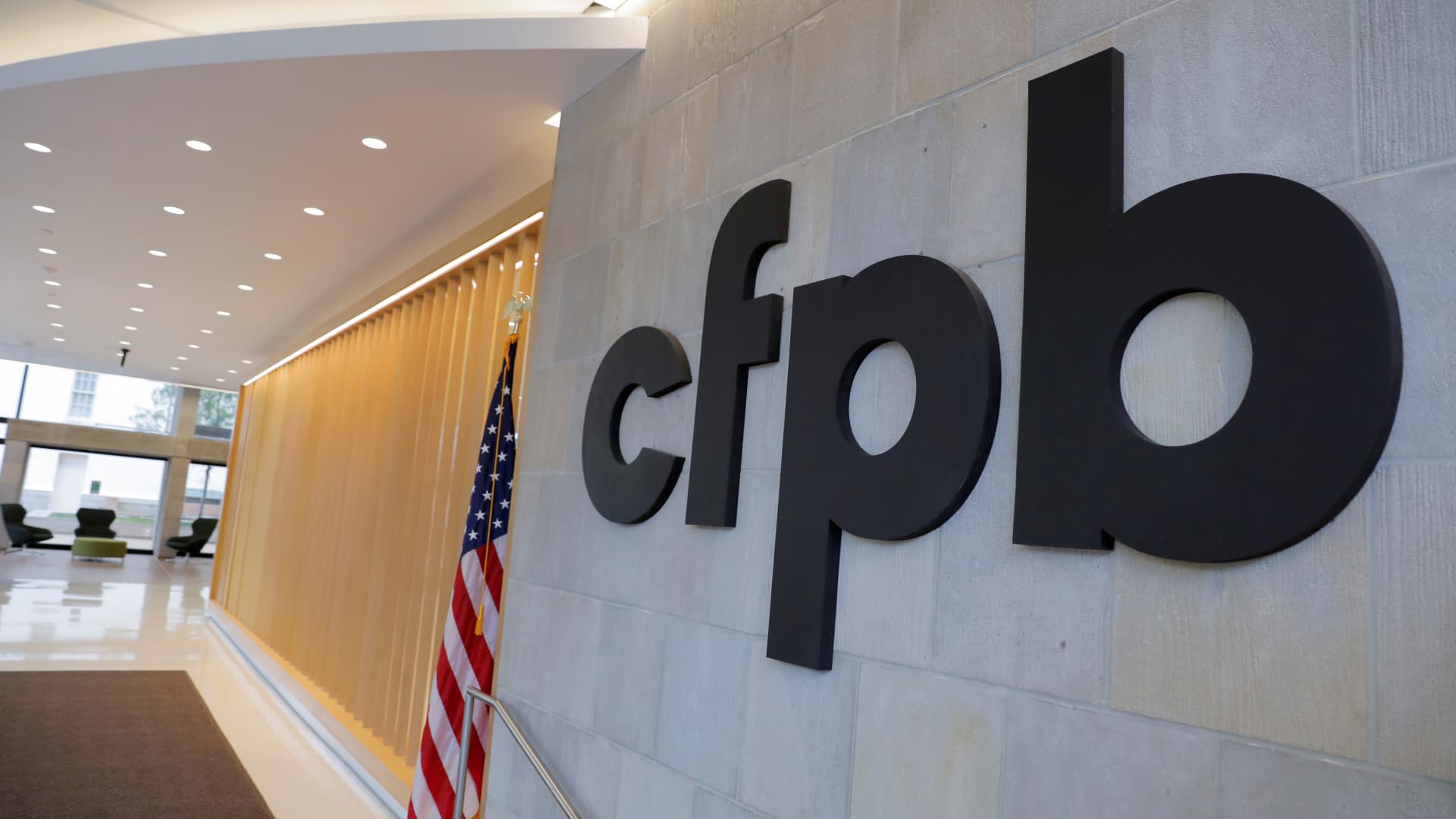
Signage at the Shopper Economical Defense Bureau (CFPB) headquarters in Washington, D.C.

Andrew Kelly | Reuters

A courtroom tossed out a regulation penned by the Customer Economical Security Bureau for payday loan providers past week, expressing the agency’s funding was unconstitutional and that it, therefore, lacked the ability to control the market.

The U.S. Court docket of Appeals for the Fifth Circuit voided a CFPB rule that prohibited payday creditors from debiting the accounts of customers who skip a payment without having their consent initial. Though the ruling applied just to that regulation, fiscal company lawyers say it muddies the agency’s authority and has the possible to upend all of its regulations.

“The Fifth Circuit’s ruling perhaps phone calls into issue each individual one rule, assistance and buy that the CFPB has issued — as they all trace their origins to the CFPB’s unconstitutional self-funding composition,” regulatory lawyers Anthony DiResta and Luis Garcia of Holland & Knight wrote in a note to clients Tuesday.

Home loan principles at threat

If the agency’s lawful authority is undermined, it could have a profound influence on residence lending markets — an industry that is susceptible to disruption when rules are murky, in particular as interest rates rise.

“Nearly anything that disrupts the house loan marketplace is potentially likely to make it even more difficult for homebuyers to qualify for a financial loan,” mentioned Patricia McCoy, a professor of legislation at Boston University.

McCoy points to Ga soon after the point out handed a regulation in 2002 intended to protect individuals from predatory financial loans by permitting them to find punitive damages from the mortgage originator and whoever bought the loan. That extended the likely damages to the Wall Avenue financial institutions as well as mortgage investors Fannie Mae and Freddie Mac.

Leading credit score-ranking companies refused to rate household mortgage loan-backed securities pools that contains loans that originated in Ga, which had a chilling effect on the MBS sector. Fannie and Freddie, which acquire home loans and deal them as securities to provide to traders, stopped acquiring mortgages in the state. The future year, the Georgia legislature altered the law, pulling again the liability provisions.

“The Fifth Circuit’s selection threatens to paralyze mortgage loan lending in Mississippi, Louisiana, and Texas mainly because creditors will drop certainty about what law applies to potential home loans that they make,” McCoy explained, referring to the states inside the Fifth Circuit. She was component of the first management staff at the CFPB for the duration of the Obama administration.

Recognized just after the 2008 economic disaster, the CFPB established a series of regulations for the mortgage sector, together with standards for a ‘qualified mortgage’ centered on a borrower’s skill to repay a bank loan. Individuals two policies give mortgage traders and loan providers legal defense from debtors who assert they have been deceived into taking out a loan they couldn’t manage so extended as it meets that standard.

Attraction probably

If the Fifth Circuit choice is upheld, it could contact into concern those people lengthy-standing home loan principles.

Numerous legal observers assume the decision will ultimately get appealed to the Supreme Courtroom. Though the substantial courtroom is not demanded to consider a case, this just one raises sizeable constitutional queries. It could be a yearslong system, which may perhaps see other worries to the CFPB’s authority stopped or delayed until finally the scenario is solved.

An appeal would take some time to engage in out. The Mortgage Bankers Affiliation has been advising its members that the ruling is currently limited to the CFPB’s payday-lending rule.

“We do like to settle regulations that give us some safe harbors for the way that we make home loans and we don’t want that to all go absent,” Mortgage loan Bankers Association president and CEO Robert Broeksmit claimed Monday at the trade association’s once-a-year conference. However, he vowed to continue to keep combating what he termed the bureau’s regulatory overreach. “Now is no time to make you use a lot more attorneys to test to comprehend what the bureau is executing.”

Even though sector groups have submitted lawsuits from quite a few CFPB regulations, getting rid of the skill-to-repay and certified-property finance loan rules would be “devastating,” reported Richard Andreano, an lawyer who potential customers the mortgage loan practice group at law business Ballard Spahr.

“The reduction of the CFPB home finance loan regulations and the result on the marketplace would be catastrophic,” said Andreano. He thinks the probable repercussions would indicate both the courtroom or Congress would correct the circumstance ahead of it would have an effects. “But it adds uncertainty, clearly, if you’re in the home loan company now,” he stated.

Impact on securitizations

The protections supplied by the potential-to-repay and skilled-property finance loan guidelines also utilize to the property finance loan bond industry, where dwelling loans are packaged into securities and bought to buyers. With no set pointers, the ruling raises inquiries about how credit rating raters and mortgage bond buyers would take care of the financial loans.

“They do not want any financial loans in their loan swimming pools that have a heightened risk of damages publicity simply because that publicity would lengthen to the investors who acquire the securitized bonds,” explained McCoy.

S&P International Scores and Moody’s Investors Support did not remark, but Fitch Rankings stated it will be observing for any alterations that would have an immediate result on the mortgage market.

“Originators and servicers in the house loan marketplace are subject to the guidelines and regulations of a myriad of governing bodies at the condition and federal amount,” said Roelof Slump, who operates operational chance for structured finance at Fitch. “Probable adjustments in how the CFPB are funded are not likely to have an speedy impact on the mortgage loan sector.”

How the CFPB is funded, by the Federal Reserve instead of Congress, is the root of the problem. The style was intentional — to hold the agency absolutely free from political force. The court, even so, mentioned the funding was unconstitutional since the company failed to answer to the folks or Congress.

“I believe that the court’s selection on illegality of the CFPB funding system is correct as is it is governance construction,” explained Bill Isaac, previous head of the Federal Deposit Insurance Corp., who ran the financial institution regulator in the course of the personal savings and financial loan disaster of the 1980s. “What that suggests in phrases of the legality of earlier steps by the CFPB is challenging to forecast.”

No speedy resolve

Andreano expects the courts will find an interim solution, but that Congress will eventually require to improve the CFPB funding framework, “I do see there staying a resolve, but I consider the lobbyists are heading to be extremely active for fairly some time.”

Jaret Seiberg, controlling director at Cowen Washington Investigation Group, instructed traders earlier this 7 days that if Republicans acquire command of 1 or the two houses of Congress in the Nov. 8 elections, that could complicate initiatives to resolve the agency’s funding.

In reality, he stated the GOP could try out to defund it entirely.

“We value market frustrations with CFPB, but a defunded company could be worse as the guidelines would nevertheless implement, but assistance and secure harbors that fiscal firms depend upon as defenses to litigation may perhaps come to be invalid,” he wrote.

The CFPB, meanwhile, claimed the ruling will never quit it from policing buyer lenders.

“The CFPB will keep on to have out its statutory mission enforcing federal legislation and preserving Us residents from predatory economical establishments. Illegal techniques are even now unlawful, and the CFPB is heading to maintain corporations accountable when they split the legislation,” the company said in a statement.

Xinjiang: IFC, World Bank Group member, accused of lending money to companies allegedly linked to forced labor in China

Xinjiang: IFC, World Bank Group member, accused of lending money to companies allegedly linked to forced labor in China

The report, titled “Financing and Genocide: Development Finance and the Crisis in the Uyghur Region,” presents evidence that in recent years the IFC has loaned money to four Chinese companies that have been linked to forced labor and land expropriation in the region, along with environmental damage and the destruction of indigenous cultural heritage sites.

According to public disclosures, the four companies named in the report — Chenguang Biotech Group, Camel Group, Century Sunshine and Jointown Pharmaceutical Group — have received loans and equity investments from the IFC valued at $439 million. Including loans sourced from institutional investors via the IFC, that figure rises to around $485 million.

The loans could contravene the IFC’s own internal guidelines — known as its Performance Standards — which function entirely to “prevent IFC from financing projects that will have adverse environmental and social impacts that jeopardize [its] development aims,” according to the report.

Solar panels are key to Biden's energy plan. But the global supply chain may rely on forced labor from China

CNN Business was granted exclusive, advance access to the report, which was led by the Helena Kennedy Centre for International Justice at Sheffield Hallam University in the United Kingdom and published by the Atlantic Council, a Washington-based think tank.

The Helena Kennedy Center for International Justice researches modern day slavery, gender-based violence and hate crime and has previously published reports alleging the use of forced labor in Xinjiang to produce cotton and solar panels. They say the four named companies are not the only businesses receiving IFC funds in the region.

“I think it’s clear that the IFC needs to divest from all their investments in the Uyghur region,” said report author Laura Murphy, a professor in Human Rights and Contemporary Slavery at Sheffield Hallam University, who added that it is “incumbent on the IFC based on their own standards that they ensure that their clients are not involved in forced labor.”

In a statement, an IFC spokesperson told CNN the corporation has “strong environment, social and governance (ESG) standards” that are diligently applied during the life of the investment and are considered a model for development finance worldwide.

“We do not tolerate discrimination or forced labor under any circumstances,” the spokesperson said. “Whenever such serious allegations are brought to our attention, we work to verify and address them with our clients with urgency.”

Beijing responded to the report on Thursday, saying it was “false” and “full of lies and groundless accusations.”

“It is understood that the organization has no staff in Xinjiang. There was no field investigation, no real research, no evidence to back up the report,” Foreign Ministry spokesperson Wang Wenbin said in a briefing.

“The Chinese government attaches great importance to the protection of human rights and workers’ rights and interests. For some time now, certain countries have been hyping up social lies and extending their reach to multilateral development institutions,” Wang added.

CNN sought comment from the four Chinese companies named in the report but did not receive a response. The report’s authors also said they attempted to contact them but did not receive a response.

Police officers patrolling the Xinjiang Uyghur Autonomous Region of China in 2018.

‘Punished with internment’

Xinjiang has become a geopolitical hotspot because of the breadth of human rights abuses alleged to have taken place in the region, including what some Western governments have called the “genocide” of Uyghurs and other minorities.

The US State Department has estimated that since 2017 up to two million members of religious and ethnic minorities have been imprisoned in a shadowy network of internment camps.

China has described the facilities as “vocational training centers” where people learn job skills, Chinese language and laws, and officials declared in 2019 that such centers — also aimed at deradicalizing local Muslims — had been closed down. They also claimed that the original detainees had graduated but that people were still enrolling to gain new skills.

Western governments and human rights organizations have alleged that minorities in the region have been subjected to forced labor through job creation schemes run by the Chinese government to achieve “poverty alleviation.”

Workers who have participated in those job programs have told CNN that if they did not take the jobs they were offered, for a fraction of the usual rate of pay, they were warned they would be sent to camps.

“The Chinese government has embarked on a massive campaign which they deem to be poverty alleviation,” said Murphy of Sheffield Hallam. “These programs are often non-consensual, and people who refuse can be punished with internment.”

China has consistently denied all allegations of human rights abuses in Xinjiang and told CNN in a statement prior to publication that claims of forced labor were lies created to smear its reputation.

“China has repeatedly emphasized that the so-called issues of ‘forced labor’ and ‘repression’ against ethnic minorities are huge lies concocted by anti-China forces in the US and the West. They are entirely baseless. Such attempts to attack and smear China based on lies and disinformation are bound to fail,” the statement said.

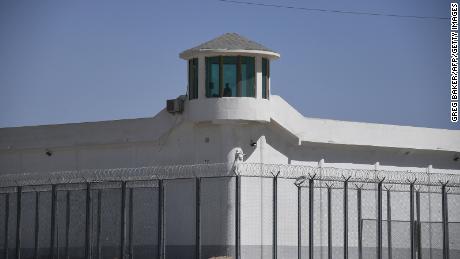
A watchtower at a high-security facility near what is believed to be a re-education camp on the outskirts of Hotan, Xinjiang.

Concerns raised about IFC outcomes

It is part of the World Bank Group and says it provided roughly $31.5 billion in loans and other financial assistance — including nearly $12 billion in “fragile, conflict-affected, and poverty-stricken countries” — last fiscal year to private companies and financial institutions in emerging and developing economies around the world.

The IFC spokesperson told CNN its mission is to “fight poverty by helping the private sector thrive.” “In doing so, we create jobs and raise living standards, especially for the poor and vulnerable,” the spokesperson said.

But its investments have been criticized for years by charities that accuse the IFC of sometimes causing more harm than good by failing to carry out due diligence.

In 2015, Oxfam International published a report compiled with input from several NGOs that claimed the IFC sent billions of dollars in “out of control” investments to third parties that caused “human rights abuses around the world.”

IFC said at the time that it was working with its clients to resolve issues raised by Oxfam and other civil society organizations and that it valued any insights into those concerns. The organization also said that it took additional efforts to train its staff and be more selective about its clients and was strengthening oversight and supervision.

The World Bank Group had been acknowledging concerns even prior to that report. In 2013, the organization’s Independent Evaluation Group highlighted declining “outcome ratings” for IFC-financed projects and advised the IFC to focus on “supervision” and “enhancing the quality of projects” through “intensified efforts.”

CNN approached the World Bank Group for comment about the Helena Kennedy Centre’s findings, and a spokesperson directed CNN to the IFC’s response.

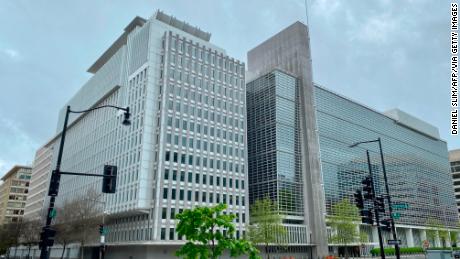
The World Bank headquarters in Washington, D.C.

Alleged connections to forced labor

The four Chinese companies with ties to Xinjiang named in the Helena Kennedy Centre report work in sectors ranging from food to pharmaceuticals and energy. Using corporate documents, stock exchange filings, Chinese state media reports, IFC disclosures and satellite imagery, the report claims these companies have ties to parts of the region where allegations of forced labor are rampant.

In some cases, the report says these companies have participated in state-endorsed “labor transfer” or “poverty alleviation” schemes, which international human rights organizations and foreign governments have for years claimed perpetuate forced labor in the region.

CNN has independently verified that the four companies named in the Helena Kennedy Centre report have all received loans from the IFC in recent years. At least two of those loans, made to Camel Group and Jointown Pharmaceutical, have been used to finance projects in Xinjiang. Because the firms are all publicly traded on Chinese stock exchanges, corporate filings detail some of their dealings in the region. Chinese state media reports also explain some of their work, while the IFC’s own records shed some light on the organization’s involvement in providing financing to these firms.

One company, Chenguang Biotech Group, makes food additives, natural dyes and pigments, and sources its raw materials primarily from India and Xinjiang. In Xinjiang, the company is involved in the production of marigolds.

The IFC, which loaned Chenguang $40 million in 2019 so the company could increase production, conducted an assessment that found the company’s risk of being implicated in forced labor with respect to marigold growers to be “low” and that overall “the risks in Chenguang’s primary supply chain are low to medium.”

But according to the Helena Kennedy Centre report, Chenguang sources some of its workforce from “coercive” state-sponsored labor and land transfer programs.

The report claims that in some cases farmers have no say in whether to participate in major farming projects, or what they want to plant. Companies, too, are under pressure to support state programs.

Citing an official press release, the report said that, in one case, the paramilitary organization Xinjiang Production and Construction Corps (XPCC), which controls the region economically and politically, conducted “ideological work” on those who expressed reluctance about changing their farming methods, which the report described as a method of “coercing” minorities.

Those people are encouraged by government agencies to “relinquish their land, change their crops, alter their farming methods, work for cooperatives or large-scale farms that have expropriated their lands, or move to factory labor,” the report said.

Another company, the battery maker Camel Group, received nearly $36 million in funding from the IFC in July 2019 to expand its battery recycling operations in parts of China, including Xinjiang, according to IFC documents. Chinese corporate records also show the company has at least two subsidiaries in the region.

An IFC risk assessment did acknowledge “potentially significant adverse environmental or societal risks” on account of smelting waste lead but added that Camel promised the organization it would promote the hiring of more local minority residents in Xinjiang. IFC also assessed that “no forced labor practices” are used by Camel Group and that its battery suppliers are subject to quarterly audits by the company to ensure they are complaint with child and forced labor inspections.

However, the Helena Kennedy Centre report cited government press releases that it says show Camel has benefited from state-sponsored labor transfer programs. In July 2017, according to one government release, 165 laborers were taken across Xinjiang for a 10-day long “closed pre-job training,” which the report authors say was an indication that their movements were restricted.

During that time, according to a government press release, the participants received “military and ideological training,” and “were required to sing patriotic songs” and learn Mandarin Chinese — measures that human rights organizations worry can lead to the erasure of culture for Uyghurs, ethnic Kazakhs and Kyrgyz in Xinjiang. Those groups speak languages closer to Turkish than Mandarin Chinese.

Before the laborers were dispatched to their assigned companies — one of which was Camel — they were made to attend a flag-raising ceremony, affirm their loyalty to the ruling Chinese Communist Party and pledge to “make due contributions to national security, national unity, social stability and harmony,” according to the government press release.

A third company, the fertilizer and materials firm Century Sunshine Group, received $165 million from the IFC between 2014 and 2016, according to IFC documents. That figure includes $125 million to upgrade a fertilizer manufacturing facility in Jiangsu province, north of Shanghai on China’s eastern coast. As of December 2020, IFC had roughly a 17{21df340e03e388cc75c411746d1a214f72c176b221768b7ada42b4d751988996} stake in the company, according to an annual report from Century Sunshine.

Century Sunshine also has ties to Xinjiang. The report cited local state-run media from December 2017 that said the company’s Xinjiang subsidiary took in 10 rural laborers from a township in eastern Xinjiang through state-sponsored labor transfer programs. Two years later, that same subsidiary was one of nine firms that participated in a state-backed labor recruitment event that encouraged off-season farmers to work for industrial manufacturing facilities in the area — an event involving labor transfer the report’s authors said was at “high risk”of violating standards for labor and working conditions.

The final company implicated in the report, Jointown Pharmaceutical, received nearly $200 million in debt financing from the IFC in the last few years, according to IFC documents. IFC assessed their investments in Jointown Pharmaceutical as having “limited” environmental or social risks.

The company — which distributes personal protection equipment, medical devices and pharmaceutical drugs — received nearly $150 million in July 2019 to build distribution centers and upgrade four warehouses in middle and western China, including Xinjiang. In October 2020, Jointown Pharmaceutical received another $50 million to buy pharmaceutical products and expand distribution because of the Covid-19 pandemic.

Like Camel and Century Sunshine, the Helena Kennedy Centre report alleges that Jointown Pharmaceutical has participated in Xinjiang-related labor transfer programs. The report cited an article published in December 2020 by the Xinjiang Food and Drug Administration on its official WeChat account that said Jointown Pharmaceutical acknowledged receiving “more than 200” workers “transferred” from southern Xinjiang and other remote and underdeveloped prefectures through the labor programs.

The report also said that Jointown Pharmaceutical has “many” facilities in Xinjiang that are located next to buildings identified as internment camps by the Australian Strategy Policy Institute, a Canberra-based think tank. One of Jointown Pharmaceutical’s facilities in the regional capital of Urumqi, for example, is in one of the city’s “largest prison districts,” according to the report.

Efforts to monitor investments in Xinjiang

While travel to Xinjiang by foreign organizations has become almost impossible in recent years, the Helena Kennedy Centre report says the IFC paid a one-day visit to the region in 2019, during the height of the government crackdown there.

Report co-author Kendyl Salcito, the Executive Director of human rights research non-profit NomoGaia, told CNN she spoke via phone to an IFC representative who went on the trip. The employee told Salcito that their group was temporarily detained by police three times within a roughly 24-hour period, adding that the atmosphere was very uncomfortable and they wanted to leave quickly.

The IFC continued to fund projects in the region after that visit, as seen in IFC documents reviewed by the report authors and by CNN. In November 2020, Salcito said, the IFC told her that it did not have alternative arrangements for monitoring projects there.

The IFC did not respond to CNN’s questions about Salcito’s account of the trip. However, the spokesperson told CNN that in the last two years the IFC has dedicated more resources to supervising companies it works with in Xinjiang.

“While accessing projects on the ground has been more difficult for all development actors in the last two years due to the Covid-19 pandemic and travel restrictions, IFC has dedicated more resources to supervising the companies we work with regarding adherence to our ESG standards. These standards are legally binding, include protections for workers, communities, and the environment, and expressly prohibit discrimination and the use of forced labor,” the spokesperson said.

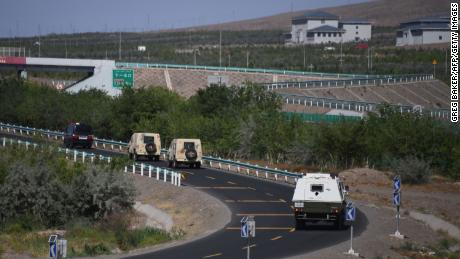
Paramilitary police vehicles on a road in Artux in China's northwest Xinjiang region in June, 2019.

The IFC has taken some steps to withdraw from the region. It ceased its relationships with three other Chinese firms that “were engaged or sourcing from companies engaged in repression in the Uyghur Region,” according to the report.

The IFC did not respond to CNN’s questions about why it chose to divest those companies and not others.

In 2020, the IFC told Salcito in email exchanges viewed by CNN that the Chinese companies it works with assured the organization they did not use any forced labor. The IFC did not respond to CNN’s questions about that correspondence. The Helena Kennedy Centre report authors say that form of self-reporting is wholly insufficient.

“The continued willingness to provide financing in the region, without any direct oversight, indicates that its investment strategy in the region continues to overlook the ongoing crimes against humanity and Performance Standards violations that render the IFC’s investments complicit,” the report said.

A lack of due diligence

Multinational corporations have for years found it difficult to perform due diligence on their supply chains linked to Xinjiang because of limited access, surveillance and the threat of government interference. That makes the use of publicly available records and satellite imagery all the more important in determining whether a firm has ties to forced labor in the region.

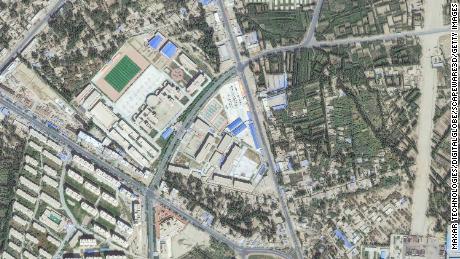
Satellite images, for example, have shown that detention facilities are often built up simultaneously alongside factories and business parks, which human rights activists say is a clear indication that factory workers are being drawn from the prison or camp population.
Maxar satellite imagery of a re-education internment camp in
Hotan, Xinjiang, China.

Some companies, investors and other organizations have pulled out of the region because of the difficulties in auditing activity there. Many international auditors will no longer certify products made in Xinjiang, and the Fair Labor Association — a Washington-based non-profit whose members include multinational corporations and Ivy League universities — has banned its members from sourcing from Xinjiang due to an inability to gather accurate information, or to verify if workers there are under duress.

“The underlying problem in the Uyghur region is the political repression is so great, we’re of the view that no company can do adequate human rights due diligence,” said Sophie Richardson, China Director of Human Rights Watch. “Where [a company] can’t do adequate human rights due diligence, it should withdraw.”

Foreign governments have also been piling pressure on companies. In December, US President Joe Biden signed into law new rules that will effectively ban imports of products made in Xinjiang.

Washington is also leading a diplomatic boycott of the Beijing Winter Olympics, which conclude Sunday. In December, White House Press Secretary Jen Psaki said that the United States would not continue do “business as usual” and participate in the “fanfare” of the Games because of the “ongoing genocide and crimes against humanity in Xinjiang.”

But activists also point out that governments that work with the IFC should also review their funding plans. The United States, after all, has plowed more than $23 billion over the last 20 years into the World Bank Group, and as of June 2021 was the largest IFC shareholder with a stake of about 21{21df340e03e388cc75c411746d1a214f72c176b221768b7ada42b4d751988996}.

That funding has increased during the pandemic: In March 2020, the World Bank Group announced that the US government authorized a $5.5 billion capital increase for the IFC as part of the Coronavirus Aid, Relief, and Economic Security Act.

In a statement to CNN, the US Treasury Department said that it “works closely with other parts of the United States government to strongly condemn and respond to the atrocities taking place in Xinjiang.”

It said the government had pressed multilateral development banks (MDBs) — including the IFC — to strengthen their safeguards so projects “do not inadvertently support companies that participate in or benefit from forced labor.”

The statement added: “The US has been — and will continue to be -— a lead voice on this issue in all the MDBs and will continue working with other shareholder countries to make companies with alleged linkages to forced labor practices ineligible for MDB investments.”