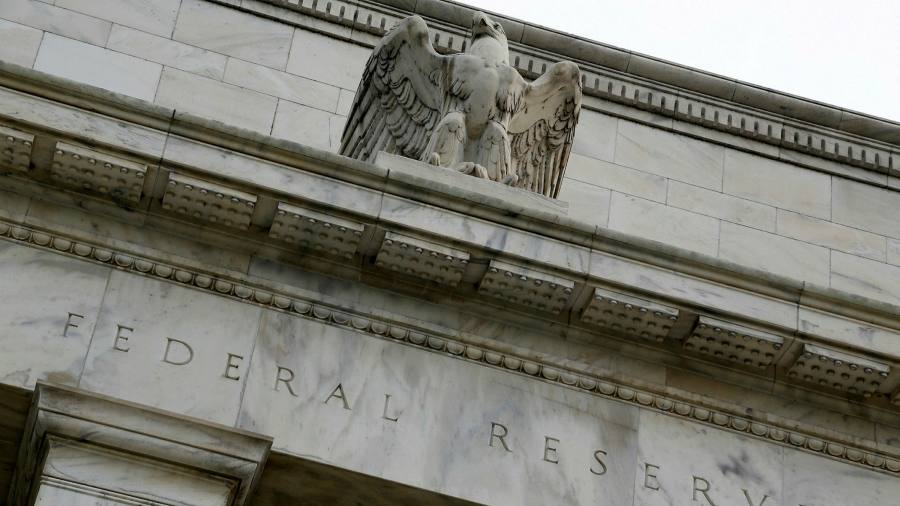
Jerome H. Powell, the Federal Reserve chair, will tell lawmakers on Tuesday that inflation is likely to last well into next year and that the new Omicron variant of the coronavirus creates more uncertainty around the economic outlook, according to a copy of his prepared remarks.
The remarks by Mr. Powell, who will testify before the Senate Banking Committee alongside Treasury Secretary Janet L. Yellen, convey a sense of wariness at a time when price increases are running at their fastest pace in three decades.
“It is difficult to predict the persistence and effects of supply constraints, but it now appears that factors pushing inflation upward will linger well into next year,” Mr. Powell plans to say. “In addition, with the rapid improvement in the labor market, slack is diminishing, and wages are rising at a brisk pace.”
Mr. Powell will also address the new variant, which governments and scientists are racing to assess and contain.
“The recent rise in Covid-19 cases and the emergence of the Omicron variant pose downside risks to employment and economic activity and increased uncertainty for inflation,” Mr. Powell said. “Greater concerns about the virus could reduce people’s willingness to work in person, which would slow progress in the labor market and intensify supply-chain disruptions.”
Ms. Yellen will also warn that the path of the recovery depends on the pandemic.
“Of course, the progress of our economic recovery can’t be separated from our progress against the pandemic, and I know that we’re all following the news about the Omicron variant,” Ms. Yellen will say, adding that vaccines continue to be a crucial tool. “We’re still waiting for more data, but what remains true is that our best protection against the virus is the vaccine.”
The Treasury secretary will also urge lawmakers to raise or suspend the nation’s borrowing cap next month. Ms. Yellen has said that the United States could be unable to pay its bills sometime after Dec. 15. At that point, Social Security checks and military paychecks could be delayed and the country would face a deep recession.
“I cannot overstate how critical it is that Congress address this issue,” Ms. Yellen will say. “America must pay its bills on time and in full. If we do not, we will eviscerate our current recovery.”
Much is unknown about the new variant of the coronavirus, but it represents something Fed officials worry about: The possibility that the pandemic will continue to flare up, shutting down factories, roiling supply lines and keeping the economy out of balance. If that happens, as it did with the Delta variant earlier this summer and fall, it could perpetuate high prices.
Inflation has surged in 2021 as strong consumer demand has crashed into the barrier of limited supply. Production line closures, port pileups and parts shortages have kept goods from getting onto shelves and to customers, prompting companies to charge more. At the same time, a dearth of labor in certain industries caused by virus wariness and pandemic-related child-care shortages has been pushing up wages and prices for some services.
It’s too early to know if the new virus strain will contribute to those trends, making inflation last longer than it otherwise would. But the new variant strikes at a delicate moment for monetary policy.
Central bankers are slowing their bond-purchase program, a move that should give them more flexibility to raise interest rates — their more traditional and powerful tool for stoking the economy — if doing so should prove necessary next year.
Several Fed officials have signaled that they may speed up their so-called bond-buying “taper” given how high and how stubborn inflation is proving. Many economists think officials could announce a plan to do so at their meeting in December.
But if the coronavirus again hits the economy, it could make such a decision — and the timing and pace of eventual rate increases — more challenging.
That’s because the Fed balances two goals, controlling inflation and stoking employment, when it sets its policy. A faster and fuller removal of help for the economy might slow down price gains by weighing down demand, but it would likely slow business expansions and hiring in the process.
“We will use our tools both to support the economy and a strong labor market and to prevent higher inflation from becoming entrenched,” Mr. Powell plans to say, after once again acknowledging that the Fed realizes “high inflation imposes significant burdens, especially on those less able to meet the higher costs of essentials like food, housing, and transportation.”
Mr. Powell, whom President Biden plans to reappoint for a second term as Fed chair, will tell lawmakers that the Fed is “committed to our price-stability goal.”
On Monday, Mr. Biden called Omicron “a cause for concern, not a cause for panic,” and his press secretary, Jen Psaki, told reporters that she was not aware of any projections by the administration’s economic team for how the variant might affect hiring, growth and inflation. “It is something obviously we will continue to assess,” she said.
transcript
transcript
Biden Discusses Holiday Shopping Season With Retail Executives
The meeting was part of a larger effort by President Biden to show he is working to combat inflation and ensure a more normal holiday shopping season as the pandemic continues.
-
“The business leaders we gather here today represent a broad swath of American shopping: brick and mortar and online stores, national and local grocery chains, our nation’s largest retailer and makers and sellers of toys, electronics and health supplies. I want to hear from each of you about what you’re seeing this holiday season, how well-prepared are you to — and to — have products you need on your shelves? In particular, I want to hear about the challenges facing smaller businesses. Small businesses are so important to our communities, they don’t have the same leverage as many of you do. And finally, I want to hear your ideas on how the federal government can continue partnering with you all to keep shelves stocked so American consumers can get what they need.” “First and foremost, I’d like to say that our supply chain has — is strong and robust, and we have ample product inside of our stores for customers to choose from during this holiday.” “We’ll keep working to make sure that we’re in a good and strong position as we go all the way through the season. We do expect it to be strong and there are a few items, as there are every year, where the hottest toys or things like electronics that we wish we had more of. But generally speaking, we’re in good shape and we appreciate the partnership.”

President Biden told executives from some of the nation’s largest retailers on Monday that his administration was committed to partnering with them to untangle supply chains and ensure that American consumers can find everything they want this holiday season, as a surge in shopping tests an already strained global delivery system.
Mr. Biden had planned to speak following his supply-chain meeting with top executives from large grocers, like Food Lion and Kroger, and a range of retailers, like Best Buy and Etsy. But administration officials abruptly canceled his White House remarks less than a half-hour before Mr. Biden had been scheduled to speak, saying the president wanted to spend more time in conversation with the executives. His remarks were rescheduled for Wednesday.
The meeting was part of a larger effort by the president to show he is doing everything he can to combat inflation and ensure a more normal holiday shopping season as Covid-19 continues to persist. Mr. Biden has made a push to unclog ports, address trucker shortages and take other steps to alleviate the pressure created by consumers looking to buy couches, cars and electronics instead of eating out or going to theme parks.
But the White House has limited reach to affect a supply chain that is controlled by private companies and shaped by larger forces, like the pandemic and consumer demand.
Still, top officials tried to reassure a nervous public on Monday that consumers would be able to purchase what they want.
“There are going to be toys on your shelves,” Jen Psaki, the White House press secretary, told reporters after noting that Black Friday sales were up by nearly a third this year in preliminary estimates. “There is going to be food in your grocery stores.”
Shipping costs have begun to recede slightly from stratospheric highs as West Coast ports work to reduce congestion. Officials announced new measures on Monday to incentivize night and weekend container pickup at ports, and they highlighted data showing a continued decline in the backlogs of unloaded containers.
But many trade experts say the supply chain crisis is far from over. Extraordinarily high demand in the United States for products made in Asian factories, combined with a shortage of truckers and warehouse workers, means supply chain issues are likely to be long-lived.
Phil Levy, the chief economist at Flexport, a freight forwarder, said that the organization’s data “does not show things getting much better. Not yet.”
He said the dramatic increase in demand in the United States for goods had created a backlog of orders that will take months to fulfill. Congestion could even persist through next year, he said, unless an early end to the pandemic or a market crash suddenly encourages Americans to curtail their spending.
While companies of all sizes continue to face shipping delays and elevated transportation costs, most major retailers have said they expect their shelves to be fully stocked during the holidays. Companies have gone to extraordinary measures to procure goods in time for the holidays, including chartering their own vessels and shipping products by air instead of by sea.
In a letter sent to Mr. Biden on Monday, the Retail Industry Leaders Association, which represents major retailers like Best Buy, CVS, Food Lion and Walmart, urged the administration to “facilitate a few additional short-term steps” to keep goods moving through ports, like improving restrictive appointment systems for truckers and requiring ports and ocean carriers to accept the return of empty containers, as well as making longer term investments in port infrastructure.
Judah Levine, the head of research at Freightos, an online freight marketplace, said that the ports of Los Angeles and Long Beach had started to show signs of easing congestion and had been using “sweeper” ships to help reposition empty containers around the port.
Cargo prices from Asia to the United States have also receded in the past few weeks, according to Freightos, but those prices are still nearly quadruple what they were at the same time last year.
Britain’s independent data privacy authority on Monday fined the facial recognition company Clearview AI 17 million pounds, or $22.6 million, for failing to comply with the nation’s data protection laws.
The Information Commissioner’s Office said it fined Clearview AI for failing to inform British residents that it was collecting billions of photos from sites including Facebook, Instagram and LinkedIn to build its facial recognition software. The I.C.O. ordered the company to stop processing the personal data of people in Britain and to delete their existing information.
Clearview AI can contest the fine and the data breach allegations, according to the I.C.O., which said it will make a final decision on the penalty by mid-2022. The I.C.O. said Clearview had been used by various British agencies. BuzzFeed News previously reported on leaked data that listed various British government agencies and police departments as having run searches with the facial recognition software.
“I have significant concerns that personal data was processed in a way that nobody in the U.K. will have expected,” Elizabeth Denham, Britain’s information commissioner, said in a statement.
In a statement, Clearview AI said the I.C.O.’s assertions were incorrect and that the company was considering an appeal. Clearview only “provides publicly available information from the internet to law enforcement agencies,” Kelly Hagedorn, a lawyer for the company, said in the statement.
“My company and I have acted in the best interests of the U.K. and their people by assisting law enforcement in solving heinous crimes against children, seniors and other victims of unscrupulous acts,” Hoan Ton-That, Clearview AI’s chief executive, said in a separate statement.
The fine is the first that Clearview AI has faced, according to the company. If it remains unchanged, the penalty would amount to nearly 60 percent of the $38 million in funding that Clearview AI has raised from investors. In July, the company raised $30 million.
Earlier this year, a Swedish regulator fined the country’s police authority 250,000 euros for its use of Clearview, citing data privacy violations.
This month, an Australian regulator also said the company had violated local privacy laws. The Office of the Australian Office Commissioner ordered Clearview AI to stop collecting data on its residents and to destroy data previously collected in the country. Canada also declared Clearview AI illegal in February.
Clearview AI recently ranked high on a federal test of facial recognition software.
An earlier version of this article misattributed a statement from Clearview AI reacting to assertions by the Information Commissioner’s Office. The statement was from Kelly Hagedorn, a lawyer for the company, not from Lisa Linden, a Clearview AI spokeswoman.
An earlier version of this article misstated Clearview AI’s history of penalties. A Swedish regulator fined the country’s police authority for its use of Clearview. It did not fine Clearview AI.
Global markets steadied on Monday, with stocks on Wall Street and oil prices gaining, as investors contemplated more carefully the knowns and unknowns of a new Covid-19 variant.
The S&P 500 rose 1.3 percent, rebounding from a 2.3 percent drop on Friday. That was its worst day since February and came after initial news of the discovery in southern Africa of the new variant, called Omicron. The World Health Organization labeled it a “variant of concern,” its most serious category.
Shares of companies in industries that had been bouncing back in recent months, like airlines and other travel firms, took big hits as governments reintroduced limits on movement across borders. Oil prices plunged on concerns about the economic toll of potential restrictions, while government bond yields fell amid an investor flight to the relative safety of sovereign debt.
On Monday, with quick answers about the threat from Omicron hard to come by, investors seemed less focused on potential disaster, and some of Friday’s moves were undone. While the new variant might turn out to be more contagious and vaccine resistant, it could also prove to be less dangerous to the health of the vaccinated or previously infected. Scientists haven’t come to firm conclusions, and it could take up to two weeks before the tests of current vaccines on the new variant have results. And Covid-related stock market drops are getting milder and shorter.
When the virus first emerged in early 2020, the S&P 500 fell for a month and a half before recovering. In October 2020, a resurgence of cases led to a drop of 5.6 percent over a few days, but markets had rebounded within a week. In July of this year, the emergence of the Delta variant triggered a one-day slide of 1.6 percent that was recouped within a few days.
“We don’t know how dangerous it is to health, though early reports that it isn’t very dangerous, while downplayed by the cautious experts, are very seductive,” Kit Juckes, a strategist at Société Générale, wrote in a note to clients. “Against that backdrop, some of Friday’s madness has been reversed, but only part of it.”
Stocks in Europe also rose on Monday, with the Stoxx Europe 600 closing 0.7 percent higher. The FTSE 100 in Britain rose 0.9 percent, while stock indexes in France and Spain were also higher.
Futures of the two major oil benchmarks, Brent crude and West Texas Intermediate, gained 1 percent and 2.6 percent. With crude oil rebounding, shares of energy companies also climbed. Enphase Energy was up 3.8 percent, while Diamondback Energy gained about 2.3 percent.
Government bond yields also climbed. The yield on 10-year Treasury notes rose 4 basis points, or 0.04 percentage points, to 1.52 percent. On Friday, the yield had dropped 16 basis points, the steepest one-day fall since late March 2020. Concerns over newly imposed travel restrictions mostly eased on Monday, with travel and leisure stocks trading higher as President Biden said on Monday that the administration’s plan to combat Covid in the winter did not does not include “shutdowns or lockdowns,” and would instead rely on more testing, vaccinations and boosters.
Royal Caribbean Group rose 2.8 percent on Monday, while Norwegian Cruise Line was up 0.8 percent. Shares of United Airlines also rose. Moderna, the vaccine maker, rallied more than 10 percent.
Not every market rebounded, however. With Japan sealing its borders just days after reopening to short-term business travelers and international students, shares in Asia tumbled. The Nikkei 225 fell 1.6 percent, while stocks in Hong Kong fell 1 percent.
Carlos Tejada and Stephen Gandel contributed reporting.
The Black Friday weekend was a success for retailers, but reflected challenges in the supply chain and the prevalence of early deals in October, which prompted customers to spread out their spending.
Shoppers were clearly more comfortable going into stores than they were last year, but in-store visits were still well off prepandemic levels. Foot traffic soared about 48 percent from last year, though remained down about 28 percent from 2019, according to data from Sensormatic Solutions. The peak time for in-store shopping was 1 p.m. to 3 p.m. on Friday, the firm said. Many retailers remained closed on Thanksgiving Day after closing for the day in 2020, reversing a yearslong trend of being open on the holiday.
Customers spent about $8.9 billion online on Black Friday, slightly less than in 2020, and $5.1 billion on Thanksgiving, which was on par with last year, according to Adobe Analytics data, which covers more than one trillion visits to U.S. retail sites. It was the first time Adobe saw a decrease on big shopping days since it first began reporting e-commerce data in 2012. But consumers spent far more between Nov. 1 and Nov. 28.
Hot products included denim, where loosefitting jeans have fueled sales, going-out apparel including dresses, beauty and fragrances, cozy sweaters, and comfortable athleisure and tailored clothes, according to analysts at Cowen & Co.
Cyber Monday discounts were expected to be weaker in part because of the supply chain issues from factory shutdowns to port backups, which have plagued retailers in recent months and were highlighted on earnings calls last week from Gap and Nordstrom.
LOS ANGELES — About 49 percent of prepandemic moviegoers are no longer buying tickets. Some of them, roughly 8 percent, have likely been lost forever. To win back the rest, multiplex owners must “urgently” rethink pricing and customer perks in addition to focusing on coronavirus safety.
Those were some of the takeaways from a new study on the state of the American movie theater business, which was troubled before the pandemic — attendance declining, streaming services proliferating — and has struggled to rebound from coronavirus-forced closings in 2020. Over the weekend, ticket sales in the United States and Canada stood at roughly $96 million, compared to $181 million over the same period in 2019.
The study, published online on Monday, was self-commissioned by the Quorum, a film research company led by David Herrin, the former head of research for United Talent Agency; Cultique, a consultancy run by the longtime brand strategist Linda Ong; and Fanthropology, which describes itself as a research, strategy and creative agency. They intend to run the survey once a quarter.
“The research clearly shows that theaters are suffering because the pandemic intensified, accelerated, amplified all of the nascent trends that were already underway,” Ms. Ong said. “That is the definition of a perfect storm — not that various problems exist at the same time, but that they have an intensifying effect on each other.”
The nascent trends? Rising ticket and concession prices. Decreasing “experiential value,” including the perception that moviegoing has become a hassle. The run-down state of shopping malls, which house many theaters. A generational shift toward streaming, gaming and other smartphone-based entertainment. “Before, maybe you went every now and again — overlooking the drawbacks,” Mr. Herrin said. “Now you add safety concerns to that mix, and you suddenly become a former filmgoer.”
The research companies surveyed 2,528 people who visited a movie theater in 2019. (Some bought a ticket once a week, while others went once a month. Others went “several” times a year.) About 51 percent of respondents said they had bought tickets in recent months, with some drawn by cinema-chain rewards programs. They are largely white men ages 25 to 45 who live in cities, according to Mr. Herrin. “Once you get outside of that demographic, you’re really starting to lose people,” he said.
The 49 percent no longer buying tickets were more likely to be in favor of a vaccine mandate for attendees. This group, predominantly female, was also more likely to be concerned about price and value, Mr. Herrin said. Still, he noted that roughly a third were “hopeful” about returning to theaters at some point. Among the changes most likely to bring them back: lower prices for classic concessions, newer seats, policing the usage of phones during films.
“There needs to be a sense of urgency,” Mr. Herrin said. “I don’t know how large a window there is for exhibition to win these people back,” he added, using Hollywood jargon for the multiplex business.
The “likely losts,” as the study identifies 8 percent of respondents who said they have not bought a ticket during the pandemic and can’t see themselves returning, are lower-income consumers. The group has a large proportion of Hispanic, Black and Asian women, the researchers noted.
Although there is a lot we don’t know about the Omicron variant, business leaders are wearily asking themselves the same questions they did during previous surges of the coronavirus, the DealBook newsletter reports.
-
Will there be new lockdowns or vaccine mandates? Some jumped on the Omicron variant as an opportunity to urge airlines to require proof of vaccination and testing for passengers. The variant could also put pressure on companies reluctant to impose vaccine mandates on employees. As for government measures, Dr. Anthony Fauci told ABC News it was “too early to say” whether there needed to be new lockdowns or mandates.
-
What does this mean for conferences and in-person gatherings? There’s a full lineup of events this winter, with organizers hoping to get back on track after previous cancellations and postponements. In early January, CES is scheduled to return to Las Vegas in-person, while the World Economic Forum in Davos is set to take place in person later that month. The Beijing Winter Olympics in February will allow spectators, though only from mainland China. South by Southwest in Austin, Texas, is set to return in-person in March. In Britain, new rules come into effect on Tuesday that require all travelers to isolate on arrival until they receive a negative test result; similar policies elsewhere would make attending conferences and other gatherings more difficult, a potential setback for airlines that were just starting to see a rebound.
-
Are workers ever going back to the office? Beyond the immediate question about office holiday parties, there’s the bigger question about the fate of offices next year and beyond. Many companies have already set and delayed their return dates multiple times. Several, including Wells Fargo, Google and Facebook parent Meta, are planning to bring their workers back to the office in January. Will they postpone a return date again or simply order workers back? Is the prospect of a prolonged pandemic enough to persuade some companies to switch to a permanent form of flexibility or will they continue to muddle through with imperfect hybrid setups?
For months, airline travel has been steadily rebounding, and Sunday was the busiest travel day at U.S. airports since February 2020. But the discovery of the Omicron coronavirus variant threatens to derail the industry’s recovery, as the Delta variant did this summer.
Several nations, including the United States, have barred visitors from South Africa and a handful of neighboring countries. Japan, Morocco and Israel have barred all incoming foreign visitors, while the Philippines has banned visitors from southern Africa and several European countries.
The tightening of restrictions has drawn criticism from the travel sector. In a statement last week, Willie Walsh, the head of the International Air Transport Association, a global trade association, called for “safe alternatives to border closures and quarantine.” Over the weekend, the U.S. Travel Association urged the Biden administration to rethink its ban.
“Covid variants are of concern, but closed borders have not prevented their presence in the United States while vaccinations have proven incredibly durable,” Tori Emerson Barnes, executive vice president for public affairs and policy, said in a statement. “With a vaccine and testing requirement in place to enter the U.S., we continue to believe that assessing an individual’s risk and health status is the best way to welcome qualified global travelers into the United States.”
For U.S. airlines, the rebound in international travel has been slower than that for travel within the United States. But President Biden’s decision to ease longstanding restrictions on foreign travelers this month promised to stimulate that recovery. It isn’t yet clear whether or how the Omicron variant will affect travel demand, but if travel bans proliferate and concerns over the variant continue to spread, hopes for an accelerated international rebound could be dashed again.
Only two U.S. carriers, Delta Air Lines and United Airlines, fly out of southern Africa. Both have said that they are not yet planning to adjust their schedules in response to the administration’s ban, which took effect on Monday and does not apply to American citizens or lawful permanent residents. Delta operates three weekly flights between Atlanta and Johannesburg. United operates five flights a week between Newark and Johannesburg, and it has not changed its plans to restart flights between Newark and Cape Town on Wednesday.
No major American airline has announced any substantive changes to procedures because of the variant. And all passengers flying into the United States must provide proof of a negative coronavirus test, with noncitizens also required to be fully vaccinated.
Within the United States, air travel has nearly recovered, even with many businesses still wary of sending employees on work trips. The number of people screened at airport security checkpoints over the past week was down only 12 percent from the same week in 2019, according to the Transportation Security Administration.
The industry easily handled the crush of travelers over the holiday week, avoiding the disruptions that lasted for days at some airlines in recent months. In the seven days ending Sunday, there were fewer than 600 cancellations, accounting for less than 0.5 percent of all scheduled domestic flights, according to FlightAware, an aviation data provider.
Hoping to alleviate long lines at gas stations, empty shelves in grocery stores and a Christmas without mince pies, the United Kingdom’s Department for Transport began to recruit truck drivers overseas in October.
Official figures have not been released, but in mid-October, Oliver Dowden, a co-chairman of the Conservative Party, said on a radio show that a “relatively limited” number of applications had been received, and a little more than 20 had been approved.
So rather than a source of instant relief, the visa offer has become an informal measure of the appeal of post-Brexit, late-pandemic Britain, David Segal reports for The New York Times.
Some drivers who have worked in Britain said the country had become more xenophobic since Brexit, which took effect in January 2020. The campaign to leave the European Union was championed loudest by the United Kingdom Independence Party, whose leader, Nigel Farage, pushed for a law that would ensure “British jobs for British workers.” In 2013, he warned of a “Romanian crime wave.”
The British government estimates that it needs 100,000 more drivers. This raises the question of why the Department for Transport has made a mere 5,000 temporary visas available. In Parliament, politicians from opposition parties contend that the low figure reflects ambivalence in the Conservative government. READ THE ARTICLE →
Solar panels and electric car batteries rely on cobalt, a metal abundant in the Democratic Republic of Congo and rare elsewhere. The United States had long recognized the Central African nation’s strategic importance, yet recent administrations have done little to maintain ties, leaving China to step in.
A New York Times investigation, “Race to the Future,” examines the global demand for raw materials as the clean energy revolution takes off. Places like the Democratic Republic of Congo, which produces two-thirds of the world’s supply of cobalt, are stepping into the kinds of roles once played by Saudi Arabia and other oil-rich nations. The race to secure supplies could have far-reaching implications for the shared goal of protecting the planet.
Read the investigation:
-
Global Rivalries: The competition for cobalt, used in electric cars, has set off a power struggle between China and the United States in Congo.
-
How the U.S. Lost Ground to China: Americans failed to safeguard decades of investments in Congo, essentially surrendering resources to China.
-
Key Takeaways: The Times dispatched reporters across three continents drawn into the fight. Here are some findings from their investigation.
-
Hunter Biden’s Business Ties: A firm co-founded by the president’s son facilitated the sale of a cobalt mine in Congo to a Chinese company. Here are the deal’s details.
-
How Electric Car Batteries Are Made: It all starts with prized minerals and metals like cobalt.
-
Jack Dorsey will step down as chief executive of Twitter, the social media site he co-founded in 2006 The social media pioneer, whose name has become synonymous with the company, will be replaced by Twitter’s chief technology officer, Parag Agrawal. Mr. Dorsey, who is also the chief executive of the payments company Square, was fired from the top job at Twitter in 2008 but returned in 2015. Shares of Twitter rose on Monday. READ MORE →
Labor market snapshot: On Friday, the Labor Department will release its report on jobs in November. The most recent report showed that the economy added more than 500,000 jobs in October after months of disappointing job figures. Still, 4.2 million fewer Americans were working in October than before pandemic lockdowns.
Theranos trial: Elizabeth Holmes, the founder of the blood testing start-up Theranos, will continue to testify as she defends herself against fraud charges. In three days of testimony last week, she painted herself as someone whose best intentions were misinterpreted.
Cyber Monday and Giving Tuesday: Americans returned to in-person shopping with gusto on Black Friday. But as Wirecutter notes, many shopping deals will extend through today, known as Cyber Monday. And for those who are more inclined to spend on charitable causes, there’s Giving Tuesday.