
What is happening in financial markets and could there be a global crisis? | Economics

What is happening in financial markets and could there be a global crisis? | Economics

The global banking system is reeling from a series of shocks over the past week, prompted by the collapse of California’s Silicon Valley Bank. That has stoked fears that this is the start of another banking crisis, posing big questions for central banks as they try to fight inflation while ensuring financial stability.

What is happening in financial markets?

Severe stresses in the global financial system have become apparent in the past week. In the US, Silicon Valley Bank’s (SVB) collapse last Friday was the first domino to fall, followed by New York’s Signature Bank on Sunday. Wall Street’s biggest lenders clubbing together to rescue First Republic Bank after its shares crashed, pumping $30bn (£25bn) into it. In Europe, the Swiss National Bank was forced to offer a £44.5bn lifeline to Credit Suisse. Although there were specific problems at SVB and Credit Suisse, there is evidence of wider distress.

Every week, the Federal Reserve, the US’s central bank, provides details of the emergency help it has provided to American banks over the past seven days. In the last week, this rose from $15bn to $318bn – well in excess of the $130bn at the start of the Covid-19 pandemic and not far short of the $437bn at the height of the banking crisis after the bankruptcy of Lehman Brothers in 2008.

So are we in for a repeat of the global financial crisis of 2008?

It is too early to say at this stage, but there are reasons to be hopeful that a repeat can be avoided. First, banks are in better financial shape than they were in 2008, when many were operating with only small amounts of capital to cover the losses resulting from the meltdown in the US sub-prime mortgage market.

Second, in 2008 the entire global financial system froze up because nobody knew how big the losses were and which banks were most heavily exposed. As yet, there is no sign of that, and banks are forced to report regularly on the quality of their asset portfolios, also undergoing severe stress tests.

Finally, central banks such as the Federal Reserve and the European Central Bank have set up lines of credit designed to provide help to banks with cashflow problems. All that said, the global financial crisis, or GFC, started on a small scale and quickly escalated. What is more, it is clear banks – and other financial institutions – are nursing serious losses. One lesson from 2008 is that confidence can evaporate fast.

Why are the banks making losses?

Central banks responded to the GFC in two ways: they slashed interest rates and pumped money into the banking system through the process known as quantitative easing (QE). In effect, central banks bought bonds – mostly issued by governments – and exchanged them for cash that found its way into the economy. A further round of interest rate cuts and QE occurred at the start of the Covid pandemic.

Central banks have reversed course due to rising inflation. They have raised interest rates and started to sell bonds. Bond prices rose as a result of the QE programmes but have fallen sharply over the past year as QE has been unwound. The aggressive action by central banks has left commercial banks nursing big and unexpected losses. SVB had invested heavily in long-dated US government bonds, but as rates rose sharply the value of its bond prices fell. When customers started demanding their cash back, that forced SVB to sell bonds at a heavy loss, blowing a hole in its balance sheet.

skip past newsletter promotion

What happens next?

Central banks are in a bind because there is a tension between their two main functions: to keep inflation low and maintain financial stability. Raising interest rates and reversing QE are designed to slow down growth and so bring inflation down, but even though the ECB went ahead with a planned interest rate rise on Thursday the cost of doing so is that some banks are struggling to cope with the tougher conditions.

Financial markets now assume interest rates will peak sooner and at a lower level than they did before the crisis at SVB blew up, and will be waiting to see how the Fed and the Bank of England respond with interest rate decisions next week. The case for not raising borrowing costs further is that only a fraction of the effect of the higher interest rates of the past year has so far been felt, and that commercial banks are already responding to the problems at SVB and elsewhere by reducing their lending. Risks of recession have markedly increased in the past week.
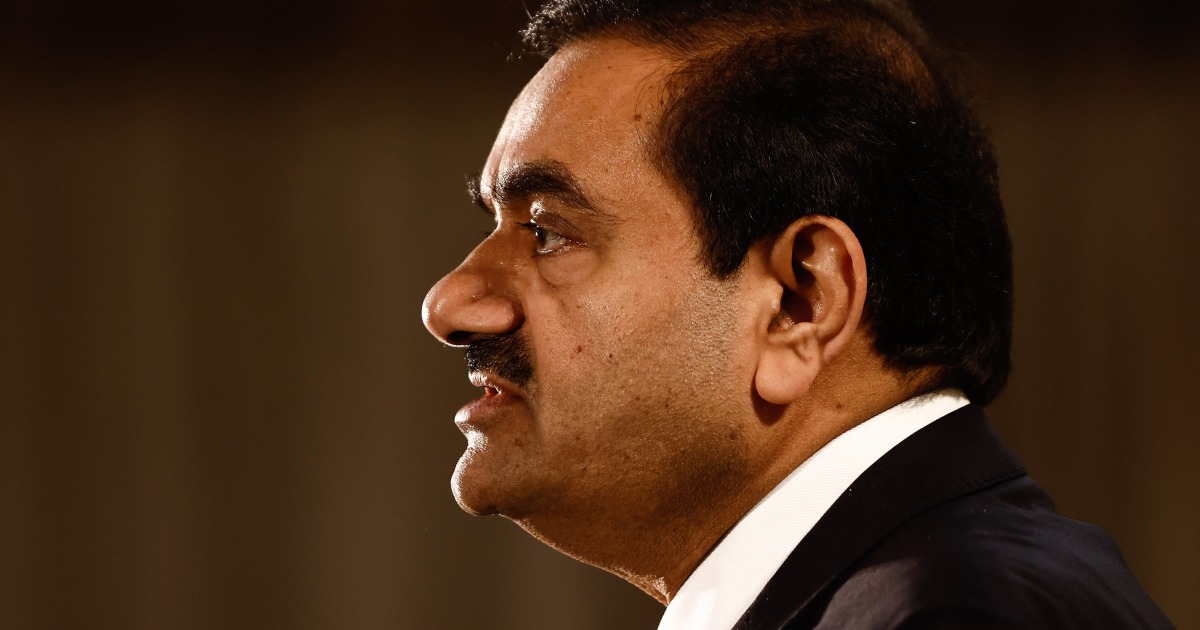
What’s happening with Adani Group? Hindenburg’s fraud claims explained

What’s happening with Adani Group? Hindenburg’s fraud claims explained

Gautam Adani rose from faculty dropout to develop into Asia’s richest man — but now he is observed his empire rocked by a week of turmoil.

The Indian tycoon has dropped his title, and tens of billions in individual wealth, in a subject of days soon after a U.S.-based mostly limited-offering business accused him of “the biggest con in company history.”

Adani dismissed the allegations and accused the short-seller, Hindenburg, of a “calculated attack” on his nation.

But the statements have activated a meltdown for his company and sent shockwaves by means of the marketplaces.

On Thursday, Adani abandoned his flagship firm’s planned inventory supplying as his conglomerate’s losses topped $100 billion, deepening worries about a potential broader effect on India’s overall economy.

Here’s what to know.

What are the accusations?

Hindenburg Exploration published a report on Jan. 24 expressing the Adani Group, one particular of India’s largest conglomerates, experienced “engaged in a brazen stock manipulation and accounting fraud plan above the program of decades.”

The report was revealed days ahead of the prepared $2.5 billion share sale by Adani Enterprises, the conglomerate’s flagship organization. 

In addition to accounting fraud, Hindenburg also accused the Adani Group of getting associated in billions of dollars’ well worth of “suspicious dealings with its chairman’s brother, Vinod Adani, and his labyrinth of offshore shell entities,” which it claims the organization utilized for stock manipulation.

Hindenburg has a track document of exposing alleged company wrongdoing although placing bets from these providers, a procedure also identified as limited selling. Hindenburg disclosed that it held brief positions in Adani’s firms by means of belongings traded in the United States and non-Indian-traded derivative instruments, which specialists reported positioned it to gain from a fall in share rates.

The report, which Hindenburg explained was primarily based on interviews with previous executives and exploration from hundreds of documents, raised concerns about large credit card debt and the things to do of prime executives and concluded that seven of Adani’s firms have been overvalued.

Adani, the Indian billionaire whose business empire was rocked by allegations of fraud by short seller Hindenburg Research, said his company will make more investments in Israel.
Gautam Adani’s investments span pretty much every single sphere of Indian everyday living, earning him a family name.Kobi Wolf / Bloomberg through Getty Visuals

What has Adani said?

Adani’s business strike back at Hindenburg, threatening lawful motion and accusing it of sabotaging the share sale.

“The volatility in Indian inventory marketplaces developed by the report is of great issue and has led to unwelcome anguish for Indian citizens,” the conglomerate explained in a assertion last week.

In one more 413-web page response a few days afterwards, Adani dismissed Hindenburg’s accusations as baseless, calling the brief-vendor the “Madoffs of Manhattan.”

“This is not just an unwarranted assault on any precise company but a calculated attack on India, the independence, integrity and high-quality of Indian institutions, and the growth story and ambition of India,” Adani’s assertion said.

Hindenburg replied that only about 30 of those webpages resolved challenges lifted in its report, and that Adani had not answered 62 of its 88 inquiries.

“India’s upcoming is being held back again by the Adani Group, which has draped itself in the Indian flag though systematically looting the country,” the investigation team reported. “We also feel that fraud is fraud, even when it’s perpetrated by 1 of the wealthiest persons in the globe.”

Hindenburg Analysis and the Adani Group did not reply to a ask for for further comment.

How lousy has the hurt been?

Though Adani denied the allegations, the report resulted in a mass selloff of shares in the Adani Group’s stated corporations, which in accordance to Bloomberg have shed $107 billion in worth.

Adani himself has misplaced $48.5 billion of his $120 billion fortune, in accordance to the Bloomberg Billionaires Index, where by he has fallen from 3rd on the checklist to 13th. He has also slipped a single location down below his rival and fellow Indian tycoon Mukesh Ambani, the chairman of Reliance Industries.

The record domestic share sale experienced been viewed as a evaluate of market place confidence in Adani right after the report, and it to begin with experienced adequate investor help to move forward on Tuesday. But the conglomerate named it off late Wednesday, citing “market volatility.”

“This final decision will not have any influence on our existing functions as very well as our future ideas,” Adani claimed in a recorded video address aiming to tranquil investors that was released Thursday, his to start with public comments due to the fact the crisis began.

Adani mentioned the decision to scrap the share providing was produced “to insulate the buyers from prospective losses.”

“For me, the curiosity of my buyers is paramount and every little thing else is secondary,” he said.

“We will keep on to focus on well timed executions and delivery of initiatives,” he reported.

But the problems might have been finished. Considering the fact that Hindenburg’s report was released on Jan. 24, Adani Team firms have misplaced virtually fifty percent their blended sector worth.

“Unless Adani is ready to regain the self confidence of institutional buyers, shares will be in freefall,” Avinash Gorakshakar, head of investigate at Mumbai-dependent Profitmart Securities, instructed Reuters.

The great American ‘homewashing’ is happening under our noses

The great American ‘homewashing’ is happening under our noses

This is about a $1 trillion government-sponsored enterprise built upon a myth — the myth of the American home. It is also about reform on the way. 

We have become familiar with the term “greenwashing,” defined by Investopedia as: “The act of providing the public or investors with misleading or outright false information about the environmental impact of a company’s products and operations.” 

“Homewashing” is the same concept, except the object of the deception is housing rather than the environment.

The most prominent purveyor of homewashing is the massive government-sponsored enterprise known as the Federal Home Loan Banks. There are 11 regional FHLBs from Boston to San Francisco and points in between. They and their 6,500 member institutions follow a simple business model.


Black Friday and Cyber Monday deals from BestReviews:


The FHLBs borrow at a deep discount due to their government status. They then pass part of the government subsidized discount on to their members in the form of low-cost advances. As of Sept. 30, the FHLBs had over $1 trillion in taxpayer-subsidized debt outstanding. Subsidized advances to members stood at $655 billion, an 86 percent increase over year-end levels. 

It is all based on a myth.

The first part of the myth is that the subsidized advances to members are used for housing. This was the original purpose of the FHLBs when they were created by Congress in 1932.

In truth, the FHLBs’ subsidized advances can be and are used for anything the members wish to use the funds for. This was confirmed by the Government Accountability Office many years ago when it found: “Another challenge facing the system is that there is limited empirical information on the extent to which FHLBank advances and other services benefit housing and community finance.” Yet, the myth persists, presumably because the words “Home” and “Loan” are misleadingly embedded in the names of all 11 FHLBs.

The second part of the myth has to do with affordable housing and community development. By statute, the FHLBs are required to set aside a small portion of their earnings for this purpose. However, when one contrasts the taxpayers’ estimated $6.3 billion taxpayer subsidy of the FHLBs with their paltry contributions to affordable housing and community development, the payout looks like this: 

Source: The combination of taxpayer-subsidized borrowing costs and their exemption from federal, state and local taxes.

This disconnect would embarrass the most egregious greenwashers in the market today.

What it says is that for every $20 of taxpayer support for the FHLBs, only $1 is set aside for affordable housing. The other $19 goes directly to the FHLBs and indirectly to the FHLBs’ members. It is worth noting here that each of the CEOs of the 11 FHLBs receives million-dollar pay packages. This is for distributing a government benefit to their members.

Homewashing is even more pervasive than greenwashing. Greenwashing scammers only target investors. Every taxpayer is the victim of the FHLBs’ homewashing. Every taxpayer contributes to the FHLBs’ estimated $6.3 billion subsidy.

But it gets worse. 

Banks that take advances from their FHLBs, that is most banks, do so in lieu of paying higher interest rates to their own customers. You’ve probably asked, “How can banks get away with paying on average 0.19 percent on savings accounts when the yield on 1-year treasuries is 4.75 percent?” The answer lies largely with the FHLBs. 

In sum, taxpayers’ dollars support the FHLBs in exchange for which the taxpayers receive little to no benefit. Meanwhile, the FHLBs suppress the taxpayers’ returns on their bank accounts thus enhancing bank profits.

Bankers think this is a fine arrangement and it should be left alone. “Don’t mess with success,” the American Bankers Association has warned the public.

Luckily, the scales are falling from the eyes of taxpayers, banks, savers, housing advocates and, most importantly, the FHLBs’ regulator, the Federal Housing Finance Agency. Its launch of a centennial review of the FHLBs, dubbed “FHLBanks at 100: Focusing on the Future,” sends a clear message that the housing myth can no longer be used as a cover for this elaborate corporate welfare scheme.

The stakes are extremely high, and the result is uncertain. One thing is certain, however. Stripped of their homewashing mythology, the FHLBs presents a unique opportunity for addressing some of the nation’s real financial challenges.  

Cornelius Hurley was an independent director of the Federal Home Loan Bank of Boston from 2007 to 2021. He teaches financial services law at Boston University School of Law.