Sri Lanka’s misery should be warning to us all on global food, fuel and finance crisis: UNDP |

Sri Lanka’s misery should be warning to us all on global food, fuel and finance crisis: UNDP |

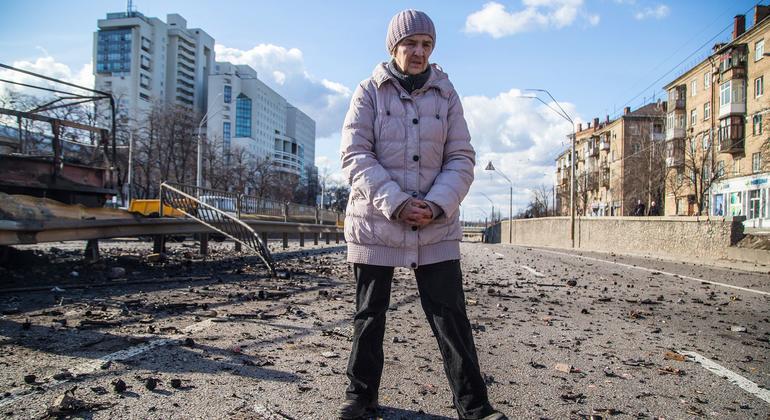
“We’re witnessing a tragic series of events that are unfolding in Sri Lanka right now that should be a warning to anyone who thinks that, you know, it is up to countries themselves to figure out how to deal with this crisis,” said Achim Steiner, Administrator of the UN Development Programme (UNDP), in reference to the South Asian nation’s debt default last month – the first in its history.

“That default essentially means the country is no longer able to pay – or not only service – its debt, but actually to import fundamental parts of what keeps an economy alive, whether it is petrol or it is diesel, whether it is fuel, whether it is medicines,” Mr. Steiner added.

The warning came as new data from the UN Food and Agriculture Organization (FAO) indicated that the number of people affected by hunger globally rose to 828 million in 2021, an increase of about 46 million since 2020, and 150 million since the outbreak of coronavirus.

‘Shock after shock’

Speaking at a virtual briefing at UN Geneva to flag a series of policy recommendations that countries could follow to withstand the global food, fuel and finance crisis, UNDP Senior Economist George Gray Molina noted that many countries had faced 36 months of “shock after shock after shock”: first COVID-19, then Russia’s invasion of Ukraine on 24 February, the latter in particular shaking global food and energy supplies and sparking an inflationary surge.

“With COVID, what we saw is effects that worked through labour markets, lockdowns, and income, that was slowly cumulative but had a strong impact over time,” said Mr Molina. “Official estimates are about 125 million people falling into poverty over about 18 months…what we found right now is that three months of inflation have drawn about 71 million people into poverty.”

Failure to take decisive and radical action by governments risked sparking widespread unrest, UNDP chief Steiner suggested.

Pain on the streets

“Very quickly, we might see also with the troubling economic outlook a situation where for many countries the patience and the ability of people to cope with this reality runs out. And as I’ve often said, when politics moves out of our parliaments, out of government, onto the streets, we are in a fundamentally different situation. We are very vulnerable at this moment to see these kinds of developments happen in many more countries.”


Following the start of the war, FAO has enacted a Rapid Response Plan to provide agricultural assistance and ensure food security to those most affected by the conflict. .

Outlining some of the finance policy recommendations that are detailed in the new UNDP report – Tackling The Cost-Of-Living Crisis: Policy Responses to Mitigate Poverty and Vulnerability around the World – Mr. Steiner insisted that it might be possible for some countries to tackle runaway inflation without resorting to the “blunt instrument” of raising interest rates.

“There is potential through the multilateral investment banks for example by paying in more capital, to allow them to provide through targeted lending and crisis-response measures,” he said, adding that the International Monetary Fund (IMF) could also be involved in this process.

There were “ways and means by which countries can address more specifically their needs”, the UNDP Administrator continued, that did “not necessarily have to be in contradiction to the inflationary pressure measures” now being put in place by central banks.

‘Drastic’ speed

According to the UNDP report, the impact of the global food, fuel and finance crisis on global poverty has been “drastically faster” than the shock of the COVID-19 pandemic.

Analysis of 159 developing countries globally indicated that price spikes in key commodities were already having “immediate and devastating impacts on the poorest households.

Clear hotspots have emerged in the Balkans, the Caspian Sea region and Sub-Saharan Africa (in particular the Sahel region), according to UNDP.

Global Crisis Response Group

This report also zooms in on the insights provided by the two briefs of the UN Secretary-General’s Global Crisis Response Group on the ripple effects of the war in Ukraine. 

Key to the global recovery will be the recognition that it is in everyone’s interest to help countries that are grappling with depleted fiscal reserves and high levels of sovereign debt, as well as rising interest rates on global financial markets, Mr. Steiner insisted.

“Unprecedented price surges mean that for many people across the world, the food that they could afford yesterday is no longer attainable today,” says UNDP Administrator, Achim Steiner. “This cost-of-living crisis is tipping millions of people into poverty and even starvation at breathtaking speed and with that, the threat of increased social unrest grows by the day.”

Among the UNDP report’s strongest takeaways is the warning that “entire developing countries” risk decoupling from the global economy permanently.

Internationally-agreed measures “can take the wind out of this vicious economic cycle” and save lives and livelihoods, insisted Mr. Steiner, whose agency also recommended “targeted cash transfers” as being more equitable and cost-effective than blanket energy subsidies, which “disproportionately benefit wealthier people”.

But seismic shifts in the international financial system will also be necessary to ensure that low and middle-income countries can recover, the UNDP Administrator suggested. “You also have to be smarter about it and the IMF originally put together some of the responses to COVID; most developing countries at the end of the day did not dare to borrow against those measures because immediately the rating agencies would downgrade them.”

Four Reasons Why Every Finance Company Should Embrace Open Finance

Four Reasons Why Every Finance Company Should Embrace Open Finance

Brett Allred is Main Product or service Officer at MX.

Do you don’t forget your to start with compact disc? For me, it was Throwing Copper, the 3rd studio album by Dwell. It was the very first of a lot of. At the time, CD gamers became the norm, and my binder of CDs grew to become a teenage treasure.

A handful of yrs later, Sony introduced the very first transportable MP3 participant. It was video game-changing. But the songs sector wouldn’t allow for you to transfer new music. Music compression technology and increasing bandwidth made music sharing feasible but it wasn’t sanctioned. Effectively, it was a shut ecosystem.

In 1999, Napster delivered a way to rip CDs and transfer songs about the world-wide-web. For a long time, the music market fought in opposition to this, but individuals continued to do it mainly because it was the best way to get electronic new music.

Eventually, the audio marketplace recognized it was superior off signing up for the digital audio revolution. A pinnacle minute in digital tunes background was when the Beatles at last acquiesced and allowed their tunes to be offered on iTunes.

There are a good deal of parallels in between the tunes marketplace then and the finance sector now. Your economical info is considerably like your old CD library. Each individual of your accounts is in a different spot and, while there are possibilities to bring it all alongside one another into one particular perspective, it is complicated, inconsistent and is not supported or approved by monetary account suppliers.

We stay in a shut financial ecosystem in which sharing data implies scraping web-sites, the equal of ripping CDs. We are in the Napster age of monetary facts sharing.

It is time to evolve as an industry! Just like the songs marketplace evolved and was eventually ready to profit from audio sharing, fiscal account suppliers need to have to evolve and benefit from person-permissioned details sharing. It’s what we contact open finance—the potential for consumers to access their monetary information and allow sanctioned sharing with the fintech programs they want to use. This will usher in a new period of customized financial encounters, unbelievable innovation and massive industry collaboration to aid automate monetary administration.

Right here are 4 explanations why each monetary account service provider need to embrace person-permissioned knowledge sharing and adopt open up finance:

1. Reduced Fraud And Security Pitfalls

The frequent way to digitally entry financial information calls for customers to share their on-line banking username and password with a third party that will scrape the on the net banking site for facts. Most customers really do not recognize they are handing out their credentials to a person in addition to the lender, nevertheless they even now assume their accounts to be guarded and secure. Open up-finance APIs remove the challenges related with monitor scraping and credential sharing.

2. Achieve Real-Time Insights And Actionable Info

When economic facts is shared vs . scraped, financial account suppliers can get serious-time visibility into what is happening in the monetary ecosystem—where data is going, who it is remaining shared with and how it is remaining employed. This qualified prospects to much better knowing customers’ desires and uncovering new use cases and alternatives.

3. Decrease Infrastructure Fees

More scraping implies extra visitors hitting servers. Dependent on my practical experience, I imagine as a lot as 60{21df340e03e388cc75c411746d1a214f72c176b221768b7ada42b4d751988996} of on the net banking traffic will come from scraping and not precise people. By leveraging open-finance greatest practices, you can considerably lower this load and get much more exact website analytics from on the web banking. Open up-finance APIs are far much more effective and value-effective.

4. Improve Purchaser Pleasure

As more economic facts is shared, corporations can achieve improved visibility and larger insights into their customers’ behaviors and requires. This enables them to produce greater, much more customized ordeals and drive better amounts of buyer satisfaction and loyalty. In addition, open up finance makes the capacity for customers to seamlessly link to their favourite fintech apps to deal with their cash. Our study shows 72{21df340e03e388cc75c411746d1a214f72c176b221768b7ada42b4d751988996} of people would take into account switching their bank or credit score union if it couldn’t hook up to regularly utilised fintech apps.

To get begun on your route to open up finance, here are a handful of 1st methods you can take:

• For Fiscal Providers: Acknowledge that your info is possible already becoming scraped by other suppliers and third parties—and get actions to make that data sharing knowledge more secure and a lot more frictionless for consumers. Explore how your group acquires, works by using and shares knowledge these days, and create your path ahead to allow harmless and seamless facts sharing tomorrow. This could signify creating new abilities internally or getting a knowledge associate to aid your open up-finance journey.

• For Individuals: Look at your fiscal accounts and acquire advantage of the possibility to website link other accounts inside just one application or look at. This will assist give you a additional entire photo of your finances in a one area, making it less complicated to handle and function toward your financial plans.

Bottom line? It is time for the monetary field to evolve and embrace fiscal information sharing. Let’s give the purchaser what they want: extra option, additional independence and far more innovation.


Forbes Technology Council is an invitation-only local community for environment-course CIOs, CTOs and technological know-how executives. Do I qualify?


Argentina’s crisis deepens as finance minister quits

Argentina’s crisis deepens as finance minister quits

Argentina has been plunged into further more disaster following finance minister Martín Guzmán give up suddenly amid a break up within just the ruling Peronist coalition, unnerving investors already anxious about spiralling inflation and dire general public funds.

Guzmán, who experienced led negotiations with the IMF and non-public sector debtors, introduced his resignation on Twitter on Saturday night. He published a 7-web page letter in which he cited “political settlement within the governing coalition” as a important aspect for his successor — a reference to governing administration infighting.

An ally of President Alberto Fernández, Guzmán is the most up-to-date and most senior of 4 cupboard members to stage down in new months. His departure dealt a further blow to the president, who is experiencing dismal poll ratings, inflation forecast to exceed 70 per cent this year and sovereign bond charges in distressed territory.

The minister experienced occur under hefty pressure from the extra radical wing of the Peronist coalition, led by Cristina Fernández de Kirchner, Argentina’s powerful vice-president and former chief. The Kirchneristas have continuously criticised a deal with the IMF to restructure $44bn of financial debt, which Guzmán negotiated. They as an alternative want greater paying and much more authorities intervention to beat inflation and poverty.

Political commentators pointed out that Guzmán announced his departure as Fernández de Kirchner was talking at a rally in memory of Juan Domingo Perón, the common who founded the eponymous political motion. “Perón utilized his pen to support the men and women,” she claimed, hailing his signature welfare programmes. She also denied that the budget deficit was producing higher inflation and known as for Argentina to take into consideration a common primary money.

Guzmán had hailed the IMF deal in March this calendar year as a compromise that would roll about $44bn of personal debt and enable him to proceed to enhance paying out little by little in serious terms. But Fernández de Kirchner required him to commit far more and fall a pledge to lower strength invoice subsidies.

The open up break up inside the ruling coalition elevated thoughts about the upcoming of the IMF programme, which has been criticised as in excess of-lax by some economists for not addressing fundamental structural troubles in the Argentine financial state.

Investors are sceptical that a divided and unpopular govt struggling with elections in 2023 can retain the IMF arrangement on monitor, stoking fears of nevertheless far more restructurings and a harmful wage-value spiral.

Argentina has been still left in “great uncertainty” explained Ignacio Labaqui, senior analyst at Medley Worldwide Advisors. Whoever replaces Guzmán will “need to bridge the divide” in the ruling coalition or would encounter the identical troubles, he stated.

Nicolás Dujovne, former finance minister for the centre-appropriate opposition, stated the Argentine economy’s troubles have been deep-seated. “The governing administration has far far more challenges than the [political] divide: a significant deficit, extreme income printing and they’ve dropped sector self-assurance,” he reported.

Irrespective of complaints about paying cuts designed by the Kirchnerista bloc, Guzmán “had no fiscal willpower, he wasn’t making the vital adjustments and he’s dropped trader confidence”, Dujovne added.

Economists at Citi previous thirty day period warned Argentina’s authorities ended up not properly addressing its problems. “We imagine that a 1980s-type spiralling of inflation is a true risk for the Argentine economic system, and the chance connected to it is rising,” they concluded in a consumer be aware.

Alberto Ramos, main Latin The us economist at Goldman Sachs, wrote in a observe: “Given the low political capital of the existing administration, there is the risk that the quality of [its] policy blend could weaken even more.”

The country’s sovereign bonds have fallen to file lows, hovering above 20 cents on the dollar. Tension on the nearby forex is making irrespective of exchange controls and a high priced strength import bill is avoiding Argentina from making dollar reserves.

In the very first 5 months of the yr, electrical power import expenditures surged 205 for every cent as opposed with the very same period in 2021, totalling $4.6bn, due to the fact of rising international gas prices.

Guzmán experienced been because of to travel to France future 7 days to renegotiate a lot more than $2bn owed to the Paris Club of 22 international locations, which involves the US, Germany and Japan. The Paris Club granted Argentina additional time past calendar year to pay out off the personal debt as it negotiated a different deal with the IMF.

GOP draft bill would tighten rules for finance firms using customer information

GOP draft bill would tighten rules for finance firms using customer information

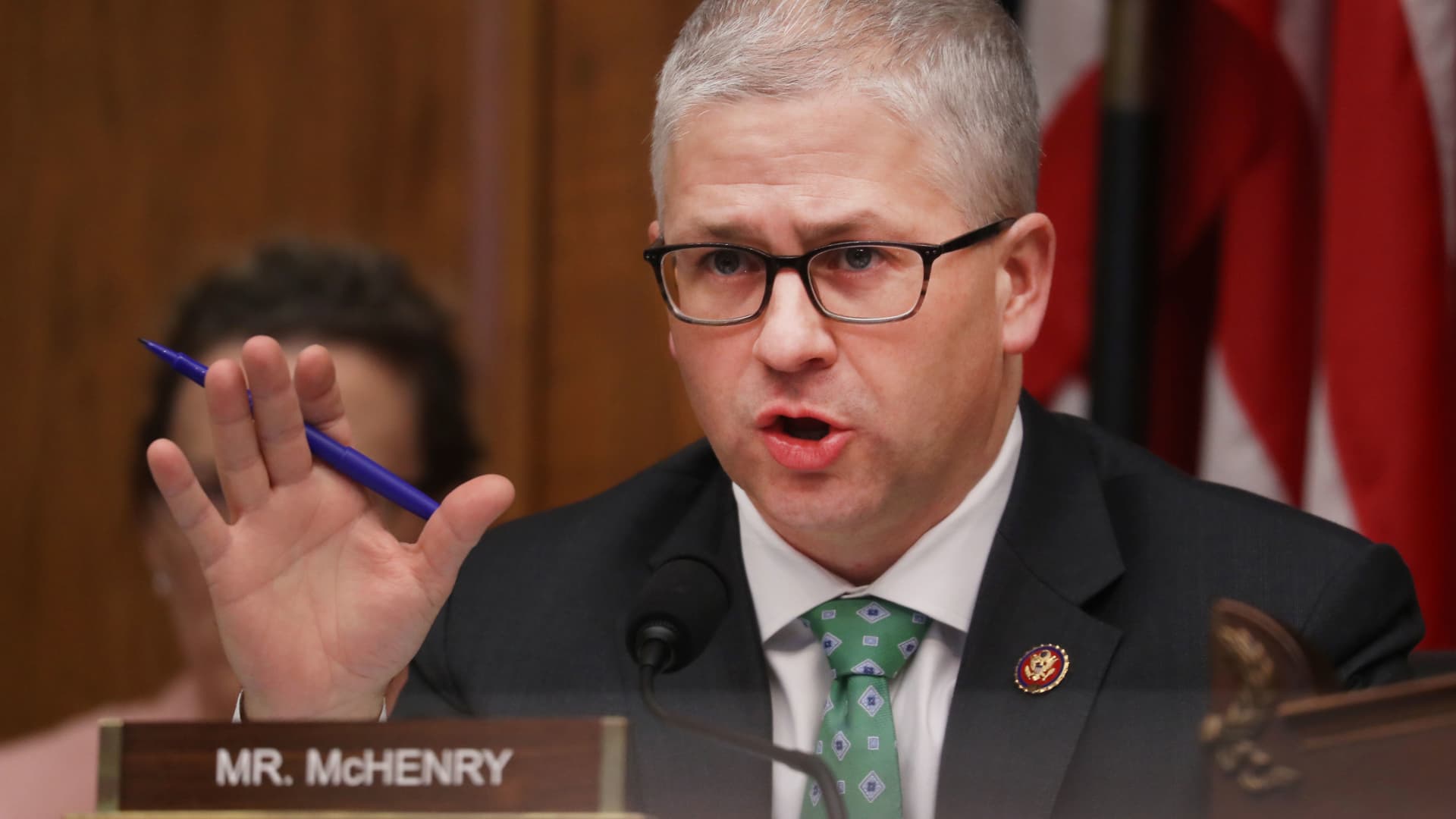
Rep. Patrick McHenry, a Republican of North Carolina and rating member of the Home Economic Expert services Committee, speaks in the course of a listening to in Washington, D.C.

Andrew Harrer | Bloomberg | Getty Visuals

A new draft invoice from House Money Products and services Ranking Member Patrick McHenry, R-N.C., lays the groundwork for how the GOP will tackle economical data privacy if the celebration wins again the majority in the chamber this November.

The dialogue draft, shared exclusively with CNBC, would modernize a fiscal info safety legislation recognised as the Gramm-Leach-Bliley Act to deal with data aggregators in addition to fiscal establishments and involve far more transparency with clients. These kinds of improvements could stop up implementing to fintech companies like Plaid or Intuit’s Mint.

The text will come on the very same working day that lawmakers on the Property Power and Commerce Committee marked up the American Facts Privateness and Safety Act, a new bipartisan framework that has introduced electronic privacy back into the limelight just as Congress prepares to wrap up for its August recess. Whilst the press for a federal privateness legislation has experienced quite a few stops and starts in the earlier, the new text furnished a renewed spark guiding the exertion as it incorporated compromises on vital challenges that had formerly stalled talks.

The draft aims to update a qualified element of the regulation and broaden it so it would keep on being applicable even in the confront of even more innovation, in accordance to a senior Republican staffer for the Economic Services Committee not licensed to converse on the document.

“We failed to want to start off with a really prescriptive and restrictive product that is heading to avoid developers from building a new application or great-tuning your application, generating new solutions,” the staffer claimed. “But we wanted to make absolutely sure that shoppers experienced all of the info to make sensible selections about what they are keen to share and what they are not ready to share.”

The discussion draft would involve the money institutions to explain to buyers when their nonpublic particular information and facts is currently being collected, not just when it is really staying disclosed to 3rd get-togethers.

It also would allow for shoppers to notify economic establishments and data aggregators to cease amassing their details or delete the information they have. In addition, it would increase the definition of individually identifiable nonpublic info topic to the regulation and corporations covered by the invoice would have to give people the capability to opt out of details assortment if it isn’t required to present company.

The draft invoice allows for federal agencies to develop regulations that acquire into consideration the perhaps larger stress of compliance on smaller sized corporations. It would also preempt point out law to generate a countrywide regular, anything that some Democrats have turned down in other privateness discussions for the reason that they see the states as essential areas to grow protections on leading of federal regulation.

“This proposal will modernize the existing framework to much better align with evolving know-how and defend versus the misuse or overuse of consumers’ particular facts,” McHenry reported in a statement. “I appear forward to continuing to function with my colleagues on this discussion draft to safe Americans’ privacy without strangling innovation.”

Subscribe to CNBC on YouTube.

WACH: What you know about passwords could be all incorrect

Crema Finance shuts liquidity protocol on Solana amid hack investigation

Crema Finance shuts liquidity protocol on Solana amid hack investigation

Crema Finance, a concentrated liquidity protocol over the Solana blockchain, introduced the short term suspension of its companies owing to a effective exploit that has drained a sizeable but undisclosed amount of funds.

Before long soon after noticing the hack on its protocol, Crema Finance suspended the liquidity products and services to chorus the hacker from draining out its liquidity reserves — which incorporate the money of the services supplier and investors.

Speaking to Cointelegraph about the matter, Henry Du, the co-founder of Crema Finance confirmed the commencement of the investigation. He said:

“We are doing work with some security firms and bought assistance from Solana, Solscan and Etherscan etc. We will keep on to write-up any update by way of official Twitter account.”

When the company is nonetheless to deliver an update based on an investigation that was ongoing at the time of producing, the Crypto Twitter group took it to on their own to monitor down the hacker’s wallet and acquire a better knowing of the condition. 

Based on a personal investigation, crypto local community member @HarveyMackinto2 allegedly spotted the hacker’s wallet address. The handle in problem holds 69,422.89 Solana (SOL) tokens — roughly around $2.3 million, procured as a result of a collection of transactions around numerous several hours.

Other customers of the crypto local community, having said that, suspect the hacker made away with 90{21df340e03e388cc75c411746d1a214f72c176b221768b7ada42b4d751988996} of the full liquidity from some of Crema Finance’s swimming pools. Du, too, confirmed that all the capabilities of the protocol have been suspended indefinitely and requested investors to remain tuned for further more information and facts in the form of an update.

Audience must take note that Crema Finance is not relevant to Product Finance, a decentralized finance DeFi lending protocol, that also missing $19 million in a flash mortgage hack past year. 

Connected: Notorious North Korean hacker team determined as suspect for $100M Harmony attack

North Korean hacking syndicate — the Lazarus Team — has become the principal suspect of a current attack that made absent $100 million from the Harmony protocol.

Investigations from blockchain evaluation business Elliptic claimed the involvement of North Korea dependent on the laundering strategies of the stolen money:

“There are robust indications that North Korea’s Lazarus Team may perhaps be dependable for this theft, based on the nature of the hack and the subsequent laundering of the stolen funds.”