Earning A Finance Degree: Everything You Need To Know Before You Enroll

Earning A Finance Degree: Everything You Need To Know Before You Enroll

The finance sector is a crucial part of the global economy since money is central to every business transaction. Most positions in the finance industry require traditional college degrees and great math and analytical skills. If you match this description, a finance career might suit you.

Read on to discover the various types of finance degrees, certifications and career opportunities in this field.

What Are the Different Types of Finance Degrees?

Multiple degree levels are available to aspiring finance students. Education level plays a large role in finance career opportunities, so learners should consider their career goals when deciding which degree to pursue.

Associate in Finance

An associate degree is the minimum academic requirement for venturing into finance. You can earn an associate after completing a two-year program at an accredited college or university.

To be admitted into an associate program, you typically need to be at least 18 years old and hold a high school diploma or GED certificate. Most applicants must meet a minimum GPA standard as well, though GPA thresholds vary among schools.

An associate program in finance focuses on the fundamentals of finance, including:

  • Principles of banking and finance
  • Risk management
  • Financial accounting
  • Cash management
  • Financial analysis

Most associate programs require learners to complete 60 credits. Average tuition fees cost around $3,500 per academic year at public colleges and $15,400 at private institutions, according to the National Center for Education Statistics (NCES).

With an associate degree in finance, you can work as a bookkeeper, financial clerk, credit analyst, mortgage broker or loan officer.

Bachelor’s in Finance

A bachelor’s degree is the minimum academic requirement for most finance careers. This program typically involves four years of full-time study and 120 credits.

Finance majors learn all aspects of finance that apply to real-world jobs, including statistics, accounting principles, stock market fundamentals, risk management, corporate finance and financial services.

According to the NCES, the average annual tuition for a bachelor’s degree at a public university is about $9,400, or $37,600 at a private, nonprofit institution.

Master’s in Finance

These two-year degree programs often lead to either a master of finance (MFin) or an MS in finance, depending on the institution.

A master’s degree in finance prepares graduate students for advanced positions in the financial sector. The curriculum covers managerial accounting, quantitative methods, investment analysis, financial modeling and managerial economics.

A master’s degree in finance builds a deeper understanding of financial markets and models, but it doesn’t cover other aspects of business. Students who want a more comprehensive business education might consider an MBA program with a concentration in finance.

It takes 30 to 60 credits to obtain a master’s degree at most universities. The NCES reports that average graduate tuition and fees cost around $12,400 per year at public institutions and $26,600 per year at private schools.

Doctorate in Finance

A doctorate is the highest academic qualification attainable by a finance professional. At the doctoral students can pursue either a doctor of business administration (DBA) with a concentration in finance or a Ph.D. in finance.

Finance doctoral programs cover asset pricing, advanced statistics, econometrics, advanced accounting theory, financial management and strategy. DBA programs emphasize applied research over theoretical research, meaning students focus on applying theory rather than developing or expanding theory. Ph.D. programs, on the other hand, hone in on the development and extension of finance theory. Ph.D. degrees serve learners aiming to work in academia.

At the end of a doctoral program, each degree candidate defends an original academic dissertation. Doctoral programs entail about 60 to 120 credits, which may take four to seven years to complete.

Careers in Finance

Finance degrees may qualify graduates for a variety of positions in the finance field.

Accountant or Auditor

Median Annual Salary: $77,250
Projected Job Growth (2021-2031): +6{21df340e03e388cc75c411746d1a214f72c176b221768b7ada42b4d751988996}
Education Needed: Bachelor’s degree in accounting or finance, a certified public accountant (CPA) license can be a necessary or helpful certification for some positions
Job Description: Accountants and auditors prepare and analyze financial documents. They also file tax returns. Another crucial part of their job is helping clients identify and mitigate potential risks by recommending better ways to channel revenue.

Budget Analyst

Median Annual Salary: $79,940
Projected Job Growth (2021-2031): +3{21df340e03e388cc75c411746d1a214f72c176b221768b7ada42b4d751988996}
Education Needed: Business administration bachelor’s or a degree in finance, accounting or a related field; certified government financial manager (CGFM) credential required to work in some sectors
Job Description: Budget analysts help private and public institutions plan their finances. They review funding requests and conduct cost-benefit analyses to evaluate program tradeoffs and explore alternative funding methods. These professionals collaborate with project managers to develop balanced budgets and monitor organizational spending.

Financial Analyst

Median Annual Salary: $95,570
Projected Job Growth (2021-2031): +9{21df340e03e388cc75c411746d1a214f72c176b221768b7ada42b4d751988996}
Education Needed: Bachelor’s degree in finance, economics or accounting; chartered financial analyst (CFA) certification; MBA often preferred
Job Description: Financial analysts study financial data and economic trends to identify investment opportunities and predict business outcomes. These professionals work closely with accounting teams to ensure accurate financial reporting. Check out our guide on how to become a financial analyst.

Financial Examiner

Median Annual Salary: $81,410
Projected Job Growth (2021-2031): +21{21df340e03e388cc75c411746d1a214f72c176b221768b7ada42b4d751988996}
Education Needed: Bachelor’s degree in finance, accounting or another business-related field
Job Description: These professionals monitor financial institutions to ensure legal compliance. They review and authenticate financial records, evaluate the risk level of loans and monitor lending activity to ensure fair treatment of borrowers.

Market Research Analyst

Median Annual Salary: $63,920
Projected Job Growth (2021-2031): +19{21df340e03e388cc75c411746d1a214f72c176b221768b7ada42b4d751988996}
Education Needed: Bachelor’s degree in statistics, marketing, economics or finance
Job Description: Market research analysts help companies understand what products/services people want and at what price. They arrive at precise conclusions after gathering data on consumers and competitors, monitoring market trends and analyzing data using statistical software.

Certifications for Finance Professionals

Certified Financial Planner (CFP)

This designation is administered by the Certified Financial Planner Board of Standards, Inc. (CFP Board). The CFP credential demonstrates your expertise in all areas of financial management, including retirement, investing, taxes, education and insurance planning.

To obtain this certification, you must:

  • Possess a bachelor’s degree (or higher).
  • Complete a list of courses stipulated by the issuing body.
  • Pass the CFP certification exam.
  • Have at least three years of professional experience.
  • Adhere to the CFP Board of Standards’ code of conduct.

Popular careers for CFPs include budget analyst, financial advisor, financial analyst and accountant.

Chartered Financial Analyst (CFA)

Most finance professionals qualify for CFA designation after earning a bachelor’s degree, gaining three years of work experience and completing an exam administered by the CFA Institute. The exam covers ethical and professional standards, tools, portfolio management and analysis and assets.

CFA charter holders can work as chief investment officers, auditors, credit analysts, portfolio managers, investment bankers and financial analysts.

Chartered Financial Consultant® (ChFC®)

The ChFC designation, administered by The American College of Financial Services, validates your understanding of more than 10 key areas of financial knowledge, including estate, tax, insurance, asset protection and employee benefits planning. Eligible candidates must have a high school diploma and three years of business experience.

This certification enables candidates to work as financial planners, financial consultants and tax advisors.

Certified Public Accountant (CPA)

The CPA license is issued by the Association of International Certified Professional Accountants to qualified accountants according to standards set by each U.S. state’s board of accountancy. CPA requirements vary among states but in most cases include a bachelor’s degree in finance or accounting, 150 semester hours of education, professional experience requirements and the Uniform CPA Examination®.

CPAs must also adhere to a professional code of conduct.

Financial Risk Manager (FRM)®

The FRM is globally recognized as the leading designation for financial risk professionals. It is offered by the Global Association of Risk Professionals.

The FRM credential certifies the holder’s expertise in quantitative analysis, risk management and financial markets. To qualify for this designation, candidates must have two years of full-time work experience in financial risk management and pass a two-part exam. An FRM can work as a risk/compliance officer, derivatives trader, quantitative business analyst, actuary or financial manager.

Frequently Asked Questions (FAQs) About Finance Degrees

What are the different degrees in finance?

Aspiring finance professionals can pursue finance degrees at the associate, bachelor’s, master’s and doctoral levels.

What are five careers that fall under finance?

Accountants, budget analysts, financial analysts, financial examiners and market research analysts all work in finance.

Do finance degrees pay well?

Yes. The Bureau of Labor Statistics lists the annual mean wage for financial occupations as $82,610, which is significantly higher than the national average salary of $58,260 per year.

More From Advisor

The views and opinions expressed herein are the views and opinions of the author and do not necessarily reflect those of Nasdaq, Inc.


Want to work for the government? These finance jobs come with hefty pay

Want to work for the government? These finance jobs come with hefty pay

If you have always wished to do the job for the authorities and have a history in finance, accounting, business enterprise administration, commerce, or economics, you may possibly be intrigued in some of these new task postings.

Community Expert services and Procurement Canada’s (PSPC) finance department is choosing for a number of senior economical analyst positions throughout provinces, and shelling out wherever from $72,074 to $97,774 on a yearly basis.

The deadline to implement is November 28, so you might want to act quickly.

Job prerequisites

To be capable to implement, you will require a degree from a recognized post-secondary institution with specialization in accounting, finance, business enterprise administration, commerce, or economics, as effectively as knowledge linked to positions in the Economical Administration Group.

If you never have the working experience, you will require occupational certification.

The acknowledged experienced accounting designations are Chartered Skilled Accountant (CPA), Chartered Accountant (CA), Certified Management Accountant (CMA), and Qualified Common Accountant (CGA).

You also will will need substantial encounter (at least two a long time) in just one or extra of the following finance places:

• Accounting operations (e.g. processing accounts payable or receivable, bookkeeping, reconciliation, checking of accounts and information verification)
• Company accounting (e.g. preparing of month to month or once-a-year monetary statements or external economical reports)
• Monetary organizing and evaluation, forecasting and variance assessment
• Monetary administration advisory providers (e.g. deliver tips to strengthen economic details or the fiscal condition, just take corrective action on discrepancies)
• Internal or exterior audit, verification, or assessments of economic statements, transactions or enterprise processes
• Financial devices (e.g. implementation, tests, routine maintenance, person guidance, training, enhancement of person guides)
• Price estimation or costing
• Planning and controlling of cash belongings on an accrual foundation (e.g. keep assets on a every month foundation, evaluate the accrual profile of capital belongings) or
• Fiscal plan (e.g. establish or utilize and interpret guidelines and laws).

You will also need to have knowledge furnishing information and direction or tips to several stakeholders (this sort of as customers, partners, or colleagues) on financial problems.

Why get the job done for the PSPC?

On their web-site, PSPC also lists the major 10 explanations you would want to function for them. The benefits and added benefits seem really great, and you can make some valuable connections, too.

Careers at PSPC supply courses, mentoring, coaching, and at-perform schooling, as well as first rate pay. Workforce get good likelihood to develop in the group, alongside with a wide range of employee advantages dental, well being and everyday living insurance policy and a top-notch pension program.

You get more than three weeks of paid out go away and, likely, a fantastic work-daily life equilibrium many thanks to the PSPC’s adaptable hrs and operate preparations. It also has inclusive hiring practices, and people from marginalized communities are often encouraged to use.

As well as, you get to function for the government, which presents you some solid bragging legal rights, also!

The positions are currently obtainable in Edmonton, Toronto, Ottawa, and Gatineau. Implement before November 28, or forward this to somebody you know who could possibly be suitable.

For extra aspects, check out the PSPC’s position listing listed here.

DVIDS – News – First Infantry Division’s Finance Unit transfers authority to 82nd Airborne’s Finance Battalion in Kuwait

DVIDS – News – First Infantry Division’s Finance Unit transfers authority to 82nd Airborne’s Finance Battalion in Kuwait

&#13
CAMP ARIFJAN, Kuwait, — A Transfer of Authority ceremony took position amongst the 9th Economical Administration Assistance Device, Undertaking Pressure Wildcards, and the 82nd Finance Battalion, Endeavor Power Diamond, on Nov. 19, 2022, at 10:00 a.m. at Camp Arifjan in Kuwait.

The ceremony that took area in the Morale, Welfare and Recreation Theatre in this article signified the conclude of the obligations and duties of Endeavor Pressure Wildcards, commanded by U.S. Army Maj. James Lemley, and the assumption of all those duties and duties by Task Force Diamond, commanded by Lt. Col. Adrian Plater.

Col. Seth Morgulas, commander of the 369th Sustainment Brigade carried out the transfer of authority ceremony.

Morgulas took the time to spotlight that finance is one of these factors we generally take for granted until finally we need income or until finally we really don’t get compensated. He also reminded everybody of the accomplishments and duties of the 9th Monetary Administration Aid Device, or FMSU.

“In the final nine months the 9th FMSU collected above $114 million and disbursed just about $1 billion including electronic resources transfers and qualified above $700 million in commercial vendor fork out,” he claimed.

The 9th FMSU also implemented the EagleCash Smart Card which can supply for all a company member’s monetary demands, as an different to funds, Debit playing cards, credit history playing cards, and checks, when in a deployed area.

Morgulas mentioned that the Soldiers of the 9th FMSU completed a lot and managed the status quo of economical management excellence all through the CENTCOM place of obligation and expressed that he was happy of them and all they have achieved and explained to them they should be proud of by themselves.

He wished them the finest of luck in their next mission and long run assignments, and secure travels back again to their residence station.

The 9th FMSU signaled their transfer of authority by neatly and securely rolling their guidon, acknowledged as the colors, and placed it in its situation.

Capt. Danny Bungcayao, the command agent of the 9th FMSU, spoke about the commitment of his team and their capacity to reply to functions in several areas irrespective of the compact size of the device.

He mentioned that the team went higher than and further than to ensure functions were accomplished with the utmost accuracy, professionalism and effectiveness.

Bungcayao named each individual portion and chief by identify, regardless of rank, and manufactured unique point out of his junior enlisted Soldiers who stepped up and volunteered to just take on obligations over their station.

Morgulas and Command Sgt. Maj. Curtis Moss with Endeavor Force Hellfighter presented gifts to Bungcayao and Sgt. To start with Course Ivan Deoliveria, who been given them on behalf of the outgoing 9th FMSU.

Maj. Lemley could not attend but Morgulas wished him the most effective also. He thanked Lemley for his fantastic management the very last 9 months, as effectively as Lemley’s devotion and stewardship of govt resources, and his treatment for the troopers assigned to the 9th.

The 82nd Finance Battalion, or FI BN, uncased their hues soon after the 9th FMSU cased theirs.

Morgulas welcomed the 82nd FI BN to the crew. He explained that he seemed ahead to working with them in excess of the subsequent nine months.

“The future thirty day period will be difficult but gratifying for all of the Soldiers of the 82nd,” he reported.

Lt. Col. Adrian Plater, the commanding officer of the 82nd FI BN, thanked the leaders of the increased echelons for the prospect and claimed that he, Command Sgt. Maj. Jennifer Boynton, his senior enlisted advisor, and all the Soldiers of Job Drive Diamond are all set to supply the guidance vital and tackle the obligations put upon them.

The ceremony shut with a benediction shipped by Chaplain Maj. Robert Volk with the 369th Sustainment Brigade’s unit ministry crew, adopted by the Army Song.

For a lot more information and facts on EagleCash please visit https://www.fiscal.treasury.gov/eaglecash/

&#13

&#13

&#13

&#13

&#13

&#13

&#13

&#13

&#13

&#13

&#13

&#13

&#13

&#13

&#13

&#13

&#13

&#13

&#13

Date Taken: 11.19.2022
Day Posted: 11.20.2022 15:16
Tale ID: 433603
Area: CAMP ARIFJAN, KW 

&#13

&#13

&#13

&#13

&#13

&#13

&#13

&#13

&#13

&#13
&#13

&#13

Net Sights: 33
Downloads:

&#13
Public Area  &#13
&#13

COP27: Mark Carney clings to his dream of a greener finance industry

COP27: Mark Carney clings to his dream of a greener finance industry

In the months leading up to the Glasgow COP26 climate change conference last November, the UK government spent long hours lining up landmark agreements to be announced during the fortnight on car emissions, deforestation, methane and more.

Among the most eye-catching of the announcements was the commitment unveiled by Mark Carney, the former Bank of England governor, on the conference’s finance day: a pledge that $130tn — four in every 10 dollars under management globally — would be deployed to limit global warming. “This is a watershed,” he said. Quoting the climate activist Greta Thunberg, he added: “It’s not blah blah blah.”

The promise was made on behalf of the Glasgow Financial Alliance for Net Zero (Gfanz), the grouping of banks, asset managers, insurers, pension funds and other money managers Carney had launched in April 2021. It was greeted as a fundamental shift away from purely profit-driven capitalism by the financial sector.

Behind the scenes in 2021, not everyone working on COP26 in government was convinced of the timing, or the wisdom, of Carney’s announcement. “Carney saying we’ve got $130tn of money ready” risked looking “misleading”, says one civil servant working on negotiations at a time when the COP26 presidency was struggling to persuade developed governments to deliver on a promise of $100bn in annual climate assistance to poorer nations.
 
There were also concerns the announcement was more promotional than tangible. “A lot of this came down to Carney’s desire to have something branded as his own thing,” says Ben Caldecott, finance strategy adviser to the UK government in the run-up to COP26. “It became a running joke among those working on finance for Glasgow.”

You are seeing a snapshot of an interactive graphic. This is most likely due to being offline or JavaScript being disabled in your browser.


But without Carney’s “convening power” there would have been no alliance at all, says Alex Michie, who advised the Treasury on private finance ahead of COP and now co-leads Gfanz’s secretariat. “The only design we had was to get the global financial system to make science-based commitments to net zero and take near-term action to implement it.”

To reduce the risk of greenwashing, the UK government laid down a single red line, according to Caldecott and the civil servant. Carney’s brainchild would have to agree to work alongside an existing verification body for corporate and financial sector pledges: the UN’s Race to Zero.

“Civil society knew that many of the finance sector commitments were rubbish, so we needed to be proactive on integrity,” says Caldecott, who also leads the University of Oxford’s sustainable finance group.

When Gfanz expanded in November, its governance documents show Race to Zero was put in charge of vetting new and existing members and helping define the speed at which they decarbonised their portfolios.

Yet one year on, and just 10 days before COP27, that red line was erased. Gfanz officially relegated the UN-backed body to the status of one adviser among many at the end of last month. The financial institutions under the Gfanz umbrella no longer have to be aligned with the multilateral body meant to uphold their integrity.

UN guidelines on preventing corporate greenwashing published at the summit on Tuesday concluded that Gfanz and other alliances needed to tighten their standards and be prepared to remove poorly performing members.

The split from the UN-backed body reflects the difficulties Carney’s team has had keeping this self-governing club of financiers together. It came under intense pressure from mutinous American banks reluctant to divorce the fossil fuel sector in the middle of an energy crisis. It also faced a backlash by litigious rightwing political forces who criticise “woke investing” and say the financial sector’s first duty ought to be to shareholders.

Contacted for an interview, Carney sent the FT a written statement in which he said the perceived risk of antitrust penalties over collective action had been a “big challenge” for Gfanz this year, and called on governments to “move more rapidly” on setting guidelines for company transition plans.

As COP negotiators meet in Egypt on Wednesday to discuss how to raise the capital for green energy and climate adaptation, the troubles Gfanz has faced reflect a broader struggle within the financial sector over whether business or government should be responsible for channelling cash into stemming the financial crisis, and whether they should take a purist or “broad church” approach to fossil fuels. They also raise wider questions about the strength of the finance community’s commitment to the green transition — and whether institutions promised the rest of the world too much too soon at Glasgow.

A battle over coal

An early harbinger of difficulties in how to define the central goal of Carney’s alliance was a battle over coal: specifically, meeting a target of net zero “financed” emissions, which are linked to financing and investment decisions, by 2050.

Scientists at the International Energy Agency and the United Nations broadly agree that reaching net zero by 2050 means fossil fuels should be actively phased out and plans for new coal power plant projects immediately junked.

The co-chair of Gfanz, businessman and philanthropist Michael Bloomberg, funds anti-coal campaigns and has described the fuel as “enemy No 1 in the battle over climate change.”

But as transaction data rolled in over the months following COP26, it became clear that Gfanz members had continued to double down on existing financing patterns — for example, bond issuances for coal companies maturing well into the 2030s. 

This was especially glaring among the banks who had been convinced to join Carney’s alliance in the unsettled weeks immediately before Glasgow.

JPMorgan Chase, for example, underwrote a $788mn share issuance by the Indian miner Vedanta Resources the month after it joined the alliance in October, according to open source financial data analysed by the NGO Reclaim Finance. Vedanta is developing a new coal mine in India. JPMorgan declined to comment.

But it was not just US banks. Only 60 out of the alliance’s 240 largest members had any policy excluding support for companies developing new coal projects, according to evidence submitted to the UK’s environmental audit committee by the campaign group ShareAction in June.

Beyond coal, only a few leading banks showed a material reduction in bond underwriting for carbon-intensive industries including mining and automobiles in 2021 compared to 2019, according to a report by financial sector research group Autonomous.

Column chart of $tn showing Financing of high-emission industries has not slowed

In June, this continuing activity by Gfanz members and other companies was addressed in a revised, much tougher set of membership rules from Race to Zero. The official interpretation guide to its new criteria made clear that members must “restrict” their facilitation of all new fossil fuel projects, and that “no new coal” must be supported.

Carney’s alliance did not officially adopt this messaging, and nor did financial sector subgroups whose members had strict fiduciary obligations to clients. Some members cited fears that such strict wording would lead to attacks from competition authorities concerned about potentially higher energy costs for consumers if coal plants have to close.

Many financiers argue the sale of a high-emitting asset does not necessarily stop the associated carbon from entering the atmosphere, which means the “carrot” of investment matters more than the “stick” of divestment.

As financiers’ discomfort with the new Race to Zero guidance became clear, activist groups and some lawyers perceived it as a litmus test of their seriousness on climate action. “Banks at Glasgow saw the alliance as a kind of ethereal thing on climate change without ever mentioning the F-word: fossil fuels,” said Beau O’Sullivan, from the Sunrise Project, a network of NGOs. “It is only when the ambition was lifted that the antitrust concern was raised.”

Others like Simon Holmes, a competition law expert and visiting professor at Oxford university, say that if the alliance collectively refused to invest in fossil fuels it could face “genuine issues” of antitrust, particularly in the US. “From a competition law perspective it can be seen as a collective boycott agreement not to provide a service like finance or insurance to customers,” he says.

The political risks of rapid decarbonisation were uncontestably real, especially in the US. Republican attorneys-general and state governors in the US spent the summer cracking down on members of Carney’s alliance, including the asset manager BlackRock, for perceived environmentally driven neglect of the oil and gas industries that provide jobs to the US economy’s heartlands.

This pressure, amplified by rocketing energy prices, pulled at the seams of the alliance. A grouping of US banks including JPMorgan threatened to leave altogether if they were not given more freedom to decarbonise at their own pace, according to a senior banking executive and people involved in talks between Gfanz and banks.

The US bank underwrote a $788mn share issuance by the Indian miner Vedanta Resources

Given the success of Gfanz had in part been measured by its ability to attract a broad church of capital, the stakes of any exit were high. “There was a bit of gamesmanship [from the banks],” says a party to crisis talks within Gfanz. “Were they threatening to leave to force the disconnect to Race to Zero, or did they want out anyway because it was an easy sacrificial lamb to give to the attorneys-general?”

Then, one evening in September, “no new coal” was quietly wiped from Race to Zero’s website. The UN-backed body had taken legal advice, it said when asked, and was told the strict language put its own staff at risk.

The next month, Gfanz put out a statement highlighting its members’ legal rights to follow whatever voluntary pledges they chose to. The banks remain within the alliance.

No business as usual

Despite its shift away from the UN framework, Gfanz says it is committed to transparency and robust benchmarks. “We are acutely aware that unclear boundaries and guardrails on these financing activities can obscure ‘business as usual’ financing,” Mary Schapiro, vice-chair of Gfanz and former chair of the US Securities and Exchange Commission told a press conference in the run-up to COP27.

A new Gfanz-backed data initiative designed to provide greater transparency will be up and running by the end of 2023, the alliance has said, while net zero targets will be “systematically embedded across the financial sector” by 2027. It has galvanised many of its members to set near-term decarbonisation targets, meaning they have pledged to reduce financed emissions as soon as 2025 or 2030.

“We’re going to get real time feedback, not just on individual performance, Gfanz member performance, but also the system as a whole,” Carney said at the FT Moral Money Americas summit last month.

Global banks’ pledges to date put them on track to deliver $1.9tn in energy transition finance a year until 2030, according to research group Autonomous. It says this number is growing but is still roughly half the level of bank support needed for the transition to net zero, which it puts at between $3tn and $5tn a year.

HSBC counts £2.2bn of sustainability-linked loans it organised last year for British Airways and UAE’s Etihad airline towards $1tn of green finance by 2030

“The hardest work is still to come,” says Hortense Bioy, global director of sustainability research at Morningstar, describing the situation as an “existential crisis” for Carney’s climate finance movement — now worth $150tn. “The reality is that not enough has been done in the past 12 months — some would argue we have moved backwards.”

In his statement, Carney emphasised the alliance’s long term plans. “We need to ensure that energy supply is maintained during the transition so that consumers do not continue to bear the burden of unreliable, expensive energy sources,” he said. “In the short term, that will involve financing for some oil and gas, but what is important is ensuring that we are dramatically scaling up investment in renewable energy to a 4:1 ratio.”

But as Gfanz sets out new commitments, the voluntary bodies intended to set independent standards for the finance industry are falling by the wayside.

Chart: Few banks curb bond underwriting for high-emission industries

The Finance Sector Expert Group, set up during COP26 to develop Race to Zero membership criteria for financial institutions, was quietly disbanded in February. Race to Zero has also postponed plans to set up a new accountability mechanism in order to examine the progress of individual financial institutions. Race to Zero did not respond to requests for comment.

Thomas Hale, a public policy professor at the University of Oxford and co-chair of Race to Zero’s expert peer review group, says the UN body did not have the capacity to be a “global police force” that helps the world sort “good” and “bad” net zero. “I’m glad the UN has created this much more robust system . . . but it will need to be backed up by standards and a whole ecosystem working together.”

A different world

The world has changed since last November and, in a time of escalating financial and energy crises, the need to fund the green transition has had to compete with the need to keep the lights on.

The energy crisis sparked by Russia’s invasion of Ukraine has “dented the idealism” of some of the worlds biggest financiers, says Huw van Steenis, a former senior adviser to Carney at the BoE.

US banks’ exposure to oil and gas increased in the first half of 2022 on the back of higher energy prices, while it fell at Canadian and European banks. “There’s a bit of ‘oh, we live in the real world, not the world we want it to be’,” Van Steenis says. “They have to look at some very complex trade-offs between energy security, energy affordability and environmentalism.”

Those trade-offs risk shifting the timeline of the alliance’s path to net zero, especially as it has focused on setting targets over ensuring they are delivered.

The German insurance company has cut back coverage of oil and gas projects but has not ruled out offering coverage for new gas pipelines, liquefied natural gas plants and gas-fired power plants

While just 8 out of 122 banks in Gfanz have set a 2030 emissions reduction target for the coal sector, 31 have set such a target for oil and gas, covering on average 80 per cent of their oil and gas portfolio, according to analysis published by Gfanz’s banking subgroup on Wednesday.

Close to a third are so-called intensity targets, which assess emissions only in relation to revenues, production or the size of portfolios. These targets are meant to incentivise investments in transition industries — like a steel company investing in hydrogen technology — but do not guarantee any change in real world emissions.

Targets expressed in absolute terms are less common, and stymied by gaps in disclosures and coverage — the asset manager Vanguard, a member of Gfanz, has only committed to manage 4 per cent of its assets under management in line with net zero goals.

Other targets are overly broad and open to interpretation. In the US, for example, Goldman Sachs’ target of $750bn by 2030 includes its advisory business — suggesting it could include the entire value of deals as long as these contribute to the bank’s core pillars of “climate transition and inclusive growth”. The bank declined to comment for this story.

The Canadian asset manager, where Carney is head of transition investing, recently raised a $15bn energy transition fund

Alliances such as Gfanz will only work if they introduce binding requirements to make sure they have an impact on real world emissions, says Jakob Thomä, co-founder of the 2 degree Investing Initiative think-tank.

He blames a reluctance by financiers to acknowledge the difficult decisions involved in transitioning away from fossil fuels, for example in the case of national governments’ exposure to oil and gas investments.

“If a bank comes out with general guidance on no new fossil fuels, and a smart-ass like me says: ‘Well that means no investment in US sovereigns [government debt] or UK bonds’, that’s a necessary translation,” he adds.

There are undoubtedly more trade-offs to come, as financial institutions wrestle with their obligations to investors, to governments, and to the planet. And nobody involved with Gfanz would dispute that there is much more to do.

Claire Perry, a former energy minister for the UK now at the World Business Council For Sustainable Development, credits the alliance with having already “unlocked chunks of capital into tricky parts of the transition”.

“There is a weird presumption that everything corporates do is a load of greenwash and what governments do is golden,” she says. “We need to be a little more nuanced in thinking about what needs to happen.”

Additional reporting by Camilla Hodgson

Climate Capital

Where climate change meets business, markets and politics. Explore the FT’s coverage here.

Are you curious about the FT’s environmental sustainability commitments? Find out more about our science-based targets here

Is Finance a Good Career Path? Everything To Know

Is Finance a Good Career Path? Everything To Know

A financial career can be quite worthwhile. If you have a head for numbers and a enthusiasm for financial preparing, the monetary sector could possibly be the ideal suit. Nevertheless, there are some points you should really know about a vocation in finance in advance of choosing to go after it. In this posting, we will focus on the positive aspects and negatives of a occupation in finance, the most well known and lucrative jobs, and a lot more.

What Are the Gains of a Profession in Finance?

To start with and foremost, a job in finance can pay back very nicely. In accordance to the U.S. Bureau of Labor Data, the common wage for financial administrators is $131,710. And that’s just the median wage lots of supervisors gain much extra than that. It is important to take note that the base wage can be deceptive. Finance occupations provide bonuses, and they can array upwards of hundreds of hundreds to hundreds of thousands.

Occupations in finance also supply a higher diploma of job protection. It is crucial to observe that large establishments get rid of the base 3rd performers (give or take) year to yr. There is a large amount of volatility and uncertainty in several of these positions.

Finance is an necessary marketplace, and there will generally be a need to have for experienced monetary industry experts. Even through financial downturns, companies nevertheless want financial administrators to assist them navigate hard waters.

Last but not least, a finance task can supply a excellent deal of upward mobility. If you commence out as a fiscal analyst and do your career properly, you will find no rationale you couldn’t ultimately grow to be a vice president or even the chief economic officer (CFO) of your organization. And if you happen to be self-used and the operator of the organization, the sky’s the restrict pertaining to how substantially funds you can receive.

Similar: How To Obtain Significant Job Progression

What Are the Drawbacks of a Vocation in Finance?

Of class, no career is perfect, and there are some disadvantages to operating in finance. First of all, fiscal work can be rather annoying. If you might be working as a monetary analyst or supervisor, you might be liable for producing essential choices that could have a important affect on your company’s base line. That form of pressure can be tricky to manage working day in and working day out.

One more draw back is that finance can be quite time-consuming. You may perhaps have tiny time left more than for your own daily life when you’re working very long hours crunching numbers and planning experiences. It is important to sustain a balanced operate-lifetime equilibrium if you opt for that kind of profession path.

It truly is really worth noting that the globe of finance is usually transforming. You must often continue to keep up with the most up-to-date modifications in tax codes and restrictions so you can advise your purchasers appropriately. You also have to continue to be ready for unexpected financial downturns they come about from time to time, and they can have serious implications for organizations and folks alike.

8 Vital Techniques for a Vocation in Finance

If you might be pondering of a job in finance, fully grasp that you’ll will need many competencies and abilities to do well. Essential capabilities contain potent math talents, attention to depth, and money administration. You can also will need superior issue-resolving and conversation capabilities. Below are 8 of the most crucial abilities for thriving in the money sector.

1. Mathematical Means

A prosperous job in finance demands robust math abilities. You will have to have to be in a position to recognize and operate with complicated financial knowledge, which includes statistics, money stories, and budgets. This means staying comfy with mathematical concepts such as probability, calculus, and algebra. If you are not self-confident in your math expertise, take into account getting some refresher programs ahead of embarking on a finance occupation.

2. Analytical Pondering

Analytical wondering is an additional crucial skill for finance gurus. You must be able to evaluate knowledge and identify traits to make sound conclusions, and you have to have to generally be ready to imagine critically and address challenges. People who are not normally analytical can improve their skills by taking classes, doing the job with mentors, and working towards on their own time.

3. Awareness to Depth

Consideration to element is essential in finance mainly because a small miscalculation can have a big economical impression. For case in point, mistakenly getting into the wrong quantity into a spreadsheet could guide to an incorrect financial assertion.

This could lead to particular economic traders or collectors staying misled about the company’s money well being, which could most likely lead to them to eliminate money. Remaining precise and precise when functioning with numbers is non-negotiable for this job route.

4. Organization Acumen

Having solid small business acumen usually means being familiar with the inner workings of a company as properly as how economic selections can affect the overall achievement or failure of a company. All those with strong organization acumen can make intelligent financial selections that assistance a enterprise increase and do well about time.

A couple of techniques to create your small business acumen incorporate:

  • Using small business courses
  • Doing the job with a mentor in the finance market
  • Gaining working experience via internships or careers in finance

5. Financial Consciousness

Working in finance is a profitable vocation route, but it calls for you to be mindful of the money current market and how it is effective. It is also necessary to remain properly-informed about existing situations and trends in the fiscal earth so you don’t fall at the rear of.

Finance is a sophisticated discipline, and there is a whole lot at stake for individuals who function in it. It’s also effortless to make high-priced issues that effect your occupation when you really don’t realize the fundamentals.

6. Financial Modeling

Financial modeling is the process of making a mathematical design of a fiscal predicament. This could be anything from the projected efficiency of a enterprise around a interval of time, to the probably result of a proposed expense. Monetary styles are utilized by traders, bankers, and other finance industry experts to help them make knowledgeable decisions about the place to allocate their cash.

If you want to operate in finance, it truly is necessary that you know how to develop these models. Software program packages can simplify the process, but you want a superior knowing of standard accounting and fiscal principles. That way, you can make accurate versions that assist you and your friends make major choices.

7. Profit and Decline Assessment

It is difficult to overstate the relevance of being aware of how to conduct a profit and loss assessment in the earth of finance. A financial gain and decline (P&L) statement displays you whether a business is making a revenue or a loss, and how considerably income it’s building or losing.

This information is important for making informed decisions about factors like whether to invest in a firm or not. Examining P&L statements can also assistance you discover parts where by a firm could help you save dollars if it desires to make cuts.

8. Communication

Considering the fact that finance is a continuously evolving field, you must be capable to talk proficiently to preserve up with the variations and stay ahead of the competition. Fantastic interaction competencies will enable you grasp complex ideas, explain money examination to clientele, and negotiate offers. They are also crucial for networking and making relationships with colleagues and shoppers.

Relevant: 12 Productive Means to Construct Entrepreneurial Abilities That Make any difference

What Are the Most Popular and Valuable Employment in Finance?

Finance is a wide discipline with several various career options. Some positions are more preferred or lucrative than others, but you can find a job in finance for any person with a knack for numbers. In this article are some of the most common:

  • Investment decision Bankers primarily assistance businesses and governments raise cash by issuing and marketing securities.
  • Financial Analysts give steerage to corporations and men and women creating investment decision choices they typically evaluate the functionality of inventory industry investments, actual estate, bonds, and other investments.
  • Chief Money Officers (CFOs) head their finance departments and are responsible for the general economic wellbeing of their organizations. Usual obligations involve creating money studies, developing approaches to maximize dollars move, and guaranteeing compliance with fiscal restrictions.
  • Accredited Money Planners (CFPs) help people today and households conserve for retirement, education, and other extensive-expression goals, as nicely as offer suggestions on financial investment techniques, coverage, and tax planning.
  • Own Finance Advisors do exactly what it seems like — supply suggestions on how to control individual funds. Personalized monetary advisors assist persons with budgeting, conserving, investing, and other monetary aims.
  • Professional Bankers perform for business banking institutions and provide economical solutions (e.g, loans, traces of credit rating, etc.) to organizations.
  • Investment decision Professionals are portfolio administrators for men and women, families, and fiscal institutions they make conclusions on in which to devote revenue and put into practice economic possibility administration approaches.
  • Certified Public Accountants (CPAs) prepare tax returns and advise persons and firms on tax preparing, guaranteeing compliance with tax laws and laws.

These employment only scratch the floor of the finance sector. There are a lot of other alternatives for people who appreciate doing work with figures and want to go after a beneficial occupation.

How Do You Get Started in Finance?

To get started off in finance, you ought to first establish which location of finance is the ideal suit for you. The three principal spots of finance are corporate finance, financial investment banking, and financial arranging. Every of these locations commonly needs a small business administration or finance diploma for entry. Earning a bachelor’s diploma in finance, accounting, or a related industry can aid you lay a agency foundation for your long run function encounters.

After you’ve gained a degree, you can start constructing your skillset by performing internships or entry-level employment in the discipline. A bachelor’s diploma can open the door to numerous entry-degree positions. But some work, this sort of as investment decision banking, may require a master’s degree or experienced certification.

Wrapping It Up

So, is a vocation in finance proper for you? Only you can respond to that concern. But if you’re fascinated in pursuing a profession in this promising field, remember to weigh the professionals and negatives carefully in advance of building any decisions, commence honing your techniques, and do your study when it really is time to discover your to start with job in finance.

Finance students get investing experience through Mercer fund

Finance students get investing experience through Mercer fund

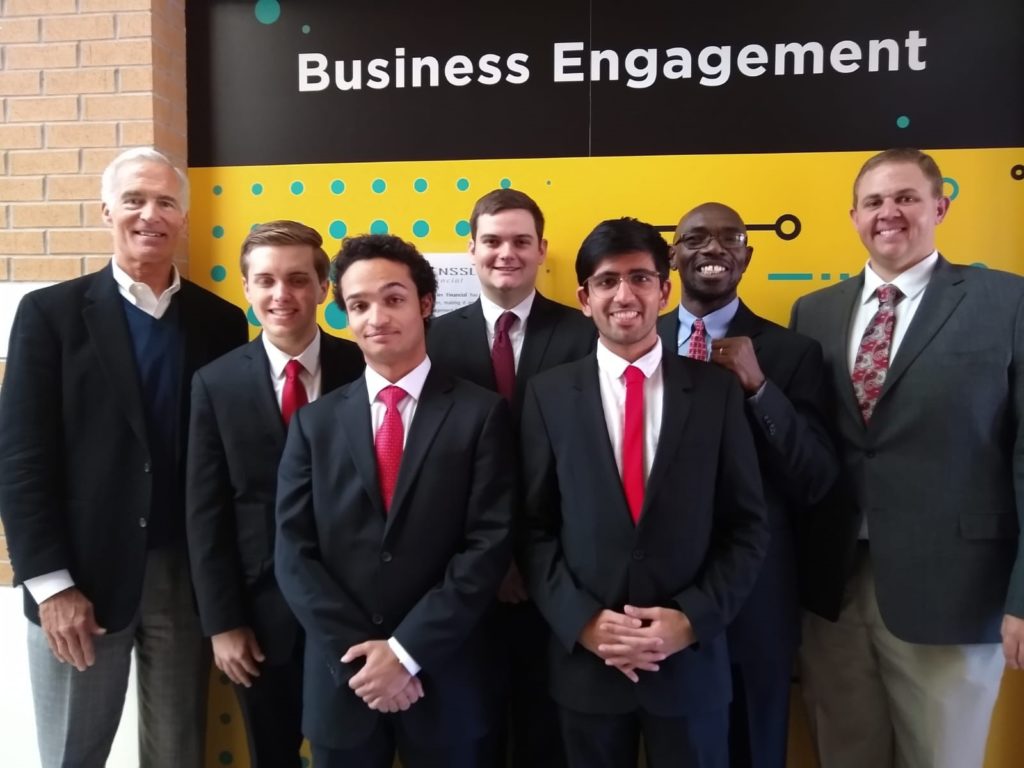
Mercer's team won the Chartered Financial Analyst Institute Southern Classic Research Challenge in 2022. Front row (l-r): Premkumar J. Patel, Mark Bearden, Colin J. Lynch and Carolina Vilomar. Back row (l-r): industry mentor George Hauptfuhrer, faculty mentor Dr. Geoffrey Ngene and Martin Plukka. Photo courtesy Dr. Geoffrey Ngene
Mercer’s team won the Chartered Economic Analyst Institute Southern Vintage Exploration Challenge in 2022. Dr. Geoffrey Ngene chooses five learners from his University student-Managed Financial investment Fund system to compete in the challenge every single 12 months. Entrance row (l-r): Premkumar J. Patel, Mark Bearden, Colin J. Lynch and Carolina Vilomar. Back row (l-r): market mentor George Hauptfuhrer, college mentor Dr. Geoffrey Ngene and Martin Plukka. Photograph courtesy Dr. Geoffrey Ngene

Stock market place analysis and recommendations by Mercer finance students are aiding tell serious expense selections for the University, and that practical experience is encouraging those involved snag work opportunities at prime firms after graduation. 

The Faculty of Organization’ Scholar-Managed Financial investment Fund (SMIF) was created and proposed by affiliate professor of fiscal economics Dr. Geoffrey Ngene in 2015, and Mercer’s Board of Trustees authorized allocating $1 million of the University’s endowment to the task in November 2018. The funding became obtainable in spring 2021, and now 12-20 finance college students operate with the fund each semester. 

“What I initially experienced in head was just to educate college students how to get ready money analyst stories,” Dr. Ngene said. “I wished to do that since if they get employment in financial commitment banking, their careers would mirror what we do in class. I really don’t want to instruct them from a textbook standpoint. My target is to get their fingers ‘dirty’ and do what they would do in the real environment.”

So, Dr. Ngene proven a two-semester elective class — Seminar in Financial investment/Finance 406 — well worth a few credits in full. Contributors will have to have finished their primary finance programs and go by means of a aggressive software process. 

“I’m quite selective. I want to make it prestigious,” Dr. Ngene reported. “I want college students who will be committed, are inclined to get the job done challenging and find out.”

The selected college students are divided into teams, and the diverse groups pick shares in diverse economic sectors to analyze throughout the semester. They get company economical statements and experiences and use marketplace expectations to establish their stories, ultimately furnishing aim, actuality-dependent tips on whether or not to invest in, keep or provide a distinct stock. The shares that obtain a “buy” suggestion are thought of for financial commitment of Mercer’s allocated funds.

Learners have obtain to Bloomberg’s financial commitment info providers, also recognised as Bloomberg Terminal, which lets them to get real-time stock details. Dr. Ngene reported only a handful of universities in Ga use the terminal, and know-how of it provides college students an advantage in the work market.

SMIF gets its funding in $200,000 batches, and $600,000 had been invested as of mid-September. Firms that have been invested in involve Amazon, Google, Berkshire Hathaway, JP Morgan Chase, Qualcomm, Rio Tinto, Walmart, Residence Depot, Dexcom, Medtronic Inc., Comcast and Ally Financial institution.

Mercer’s workforce gained the 2021 CFA Institute Southern Traditional Research Obstacle. Image courtesy Dr. Geoffrey Ngene

“The existing tanking inventory charges existing the proper chance to purchase,” Dr. Ngene explained. “So students who are now getting the SMIF course and finding real expertise of analyzing distinct shares know that a get or market suggestion will basically be executed for the fund’s portfolio of stocks.” 

College students are viewed as junior analysts in the first semester and senior analysts in the next, and just about every team has a mix of both, making it possible for analysts with more information to guide individuals who are just finding began. Dr. Ngene said he sees “astronomical” development in students’ understanding from the 1st to second semesters. 

Pupils are graded on their remaining composed studies and shows of all those reviews, as effectively as by a peer evaluation, which assists motivate them to be actively involved in their group. Just after completing the two-semester course, students could have the prospect to continue on their involvement as board associates.

Prem Patel, a finance and accounting double-big who graduated in Could, mentioned he appreciated the collaborative ecosystem of the course and received vital vocation expertise. He enjoys training men and women about finance and appreciated remaining ready to present guidance to the junior analysts and serve as board president.

“I assumed it would be an fantastic likelihood to get firsthand knowledge and encounter undertaking financial commitment and economic analysis,” reported senior finance main Thomas Cowart, who took the class his junior calendar year and is now on the SMIF board. “Dr. (Ngene) has been so good. He is the motive Mercer has finished so well and why the SMIF class has been this kind of a massive success. He provides it all alongside one another and makes it worthwhile. It’s a definitely wonderful encounter, it appears to be excellent on a resume, and it’s extremely satisfying.”

The fiscal expertise pupils are understanding in this course set them aside when it arrives to job alternatives following graduation. Dr. Ngene mentioned he encourages them to involve their SMIF money reports in their application packets to probable employers. Those experiences have caught the eyes of some premium corporations with large starting off salaries.

“Everyone who has participated in the class and uncovered how to get ready financial analysts studies acquired work interviews, and far more than 90{21df340e03e388cc75c411746d1a214f72c176b221768b7ada42b4d751988996} of them ended up getting hired,” Dr. Ngene reported. “They put in the do the job, and they’re ready to learn, and they usually close up in superb positions in the occupation market.”

4 of his former college students are now doing the job at Wall Avenue firms, and a person is working at Bank of America’s headquarters in Charlotte, North Carolina. 

“That’s the sort of point I want us to reach here,” Dr. Ngene explained. “By the time you get into your senior year, you need to already have a career lined up, specially if you took this class. It’s not just about having work opportunities but also the amount of money of starting income, which undoubtedly defines the high-quality of the occupation.

Cowart is one particular of two latest seniors who did an internship with Lender of America this summertime and has approved a occupation to operate there right after graduation in May perhaps 2023. He submitted his SMIF analyst reports with his career application, which he believes aided him get his foot in the door.

“I think it manufactured me stand out as an applicant,” Cowart mentioned. “Almost each and every one job interview I experienced, it was often a major talking position. It showed I currently experienced some financial analysis and evaluation knowledge. That was what they have been looking for in an applicant.”

Patel acquired many occupation presents his senior yr and accepted a placement with Park Sutton Advisors, the place he now does investment banking, mergers and acquisitions operate. 

“The businesses definitely like to see the experiences that you prepare, but (SMIF) also offers you the money acumen to go out into the occupation industry and demonstrate you’re amongst the ideal,” Patel stated.

College students concerned in SMIF may also have the chance to participate in the Chartered Monetary Analyst Institute Southern Traditional Investigation Obstacle as properly. Dr. Ngene has served as the college mentor for Mercer’s crew for the past nine a long time and selects 5 students from his SMIF study course to take part just about every calendar year. 

For the competition, groups from 30-40 universities in Ga, Alabama and South Carolina acquire economic analyst reviews for a Georgia-headquartered, publicly-traded company. The faculties submit a published report, and throughout two rounds of grading, the finalists are narrowed to 10 and then five. The top rated five universities are invited to give presentations through the ultimate occasion at Kennesaw Point out. Mercer’s staff was the runner-up in 2020 and received in 2021 and 2022. 

“Now we are striving to have a three-peat this calendar year, which has never ever been completed in the heritage of the Southern Classic levels of competition,” Dr. Ngene said. “We are competing towards Emory, UGA, Ga Tech, Clemson, Auburn … major title educational facilities.”

Mercer’s workforce received runner up in the 2020 CFA Institute Southern Common Exploration Problem in 2020. Image courtesy Dr. Geoffrey Ngene