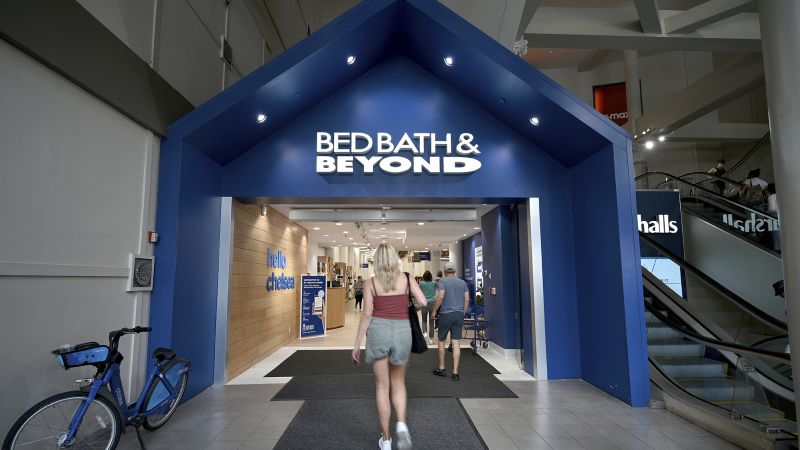
What Bed Bath & Beyond, Toys ‘R’ Us and RadioShack have in common

What Bed Bath & Beyond, Toys ‘R’ Us and RadioShack have in common


New York
CNN
 — 

In the 1980s, a new type of specialty retail chain started to emerge: “category killers.”

The stores’ powerhouse business model was aimed at giving shoppers access to every different size, style and color of a product imaginable – all in one place and at reduced prices.

Category killers, which began to dominate entire merchandise categories, opened stores typically under 50,000 square feet – bigger than independent shops but smaller than Walmart superstores – in strip mall centers all over the suburbs. Shoppers embraced these overstuffed emporiums.

Staples is “a classic ‘category killer,’ like Toys R Us,” Mitt Romney, then Bain & Co.’s managing general partner, said in 1989.

These companies, along with RadioShack, Blockbuster, Barnes & Noble and others, spread into the 2010s, remaking how Americans shopped and steamrolling right over mom-and-pop stores.

Toys

But the category killer’s time has passed.

Toys “R” Us, Blockbuster and RadioShack are gone. Staples and Barnes & Noble are still around, but they have struggled and closed hundreds of stores.

Another category killer fell this week, when Bed Bath & Beyond filed for bankruptcy.

Once the go-to stop for everything in customers’ homes, Bed Bath & Beyond was brought down by shopping changes, competition and its own missteps. But it was also a retail concept designed for a bygone era.

“That model was exciting and novel. If you liked that category, it was like a kid walking into the candy store,” said Z. John Zhang, a professor of marketing at the Wharton School of the University of Pennsylvania. “The concept has become passé.”

During the heyday of the category killer, a period when the game show “Shop ‘til You Drop” was a long-running television series, people wanted to accumulate as many goods as they could, largely unaware of how these products were made or their toll on the environment.

Buying at enormous volume, retailers could demand lower prices from suppliers and undercut their competitors.

By focusing on one area of merchandise and becoming a leader in the area, companies bet customers would turn to them whenever they needed, say, new toys for their kids, a DVD player, or bedsheets.

The combination of global supply chains, cheap container shipping overseas, falling telecommunications costs and computers enabled the category killer concept.

Companies could suddenly commission manufacturers around the world to create products and monitor supply in real time.

“What was key in the development of many category killers was the adoption of modern supply chain methods,” said Marc Levison, an economist and historian, and author of “The Great A&P and the Struggle for Small Business in America.” “It became possible to communicate from an office in New York with a supplier in China.”

Large companies with the ability to invest in sophisticated technology and software systems gained an advantage over local and regional stores.

Other factors made possible the rise of category killers, too, such as the expansion of suburbs, which led to bigger stores with larger parking lots than in cities. Customers could stock up on stuff and throw it in the back of their trunks.
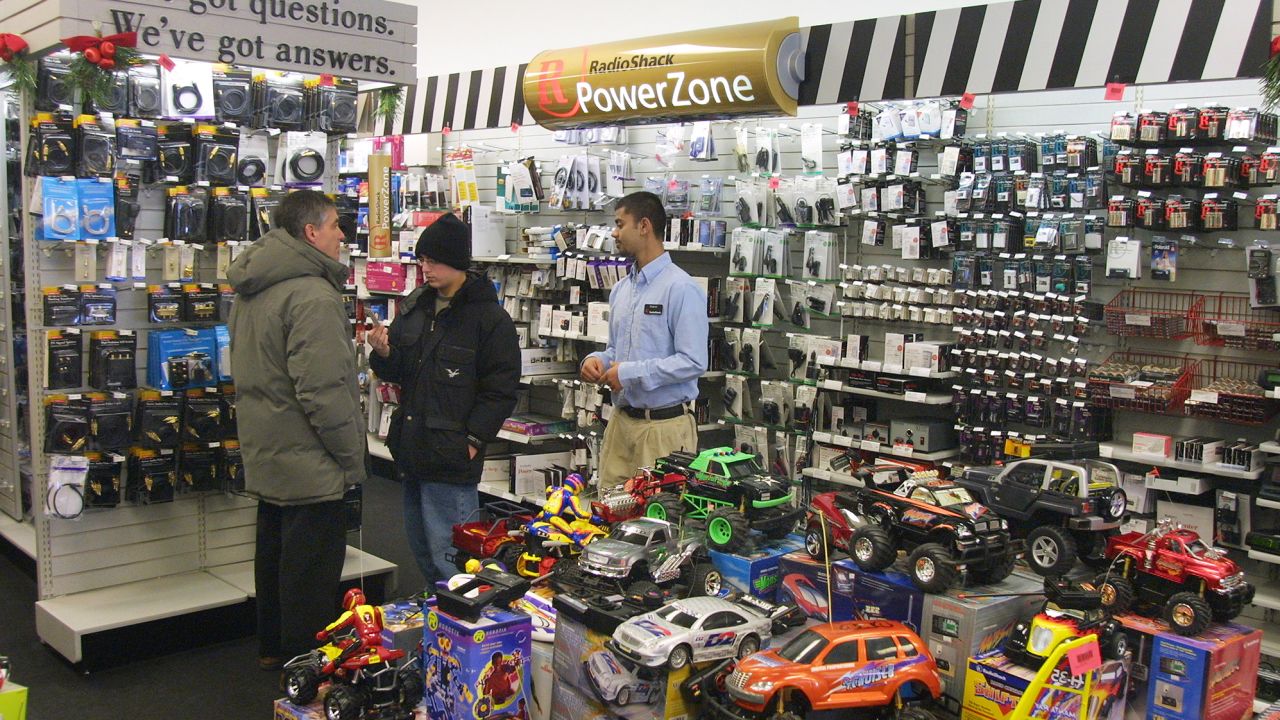
Long live RadioShack.

The 1980s also saw a wave of department store bankruptcies, debt-financed takeovers and leveraged buyouts. This meant heavily indebted rivals to category killers weren’t able to invest in technology and supply chain management to keep up.

“Local and regional merchants were still around in the 1970s and 1980s, and it was easy to kill them off,” Levison said. “Traditional retailers were swimming in debt.”

Bed Bath & Beyond was an archetype of the category model for home furnishings.

Founded in 1971 as Bed ‘n Bath as a small linen and bath store, the company changed its name to Bed Bath & Beyond in 1987 to reflect its expanded merchandise selection and built larger superstores. It stacked linens, towels, pots and pans high to the ceiling, using coupons to draw shoppers into stores.

“We had witnessed the department-store shakeout and knew that specialty stores were going to be the next wave of retailing,” co-founder Len Feinstein said in 1993, a year after the company went public with 38 stores and around $200 million in sales.

By 2000, those figures jumped to 241 stores and $1.1 billion in annual sales.

As Bed Bath & Beyond grew, it drove out smaller linen and home decor stores.

In 2011, two Harvard Business School professors predicted online shopping would lead to a collapse of category killers.

“Just as category killers led to the demise of mom-and-pop shops, [online retailers] are leading to the death of the big-box category killer,” they wrote. “The focus that made them so powerful in the 1980s and 90s is creating the conditions for their current struggles.”

And online shopping did decimate category killers.

Amazon can compile infinite product choices on its online marketplace, taking away the advantage category killers once had over rivals on product assortment.

The lower-cost advantages that category killers once enjoyed because of their scale, which allowed them to drive down prices, has disappeared.

Unlike Bed Bath & Beyond and other chains, Amazon doesn’t have to buy products and hold inventory at warehouses — which are costly expenditures. It connects buyers and sellers and takes a fee on sales.

And big-box chains such as Walmart and Target can focus on cherrypicking high-demand products in each category, limiting their cost burden.

There's nostalgia for category killers like Barnes & Noble these days.

“If you’re a category killer, you have to assemble everything. You have to carry slow moving products, which increases costs,” said Zhang from Wharton.

More recently, category killers have also been hit hard by customers pulling back on discretionary spending because of inflation.

And they have also suffered from a change in many consumers’ priorities. People have prioritized spending money on experiences rather than possessing endless stuff, in a switch toward what’s been called “the experiential economy.”

“People pay more attention to experiences, rather than possession of material goods,” Zhang said. “Why do you need so many things in one category?”

There are still a few brick-and-mortar category killers left such as Home Depot and Lowe’s for home improvement; Dick’s Sporting Goods for sports gear; and Best Buy for electronics.

These companies sell products that many customers prefer to see and try out in person, like a new baseball glove or home theater system. The chains have been boosted by major trends such as a strong housing market, more people playing sports, and innovative new gadgets.

It’s somewhat ironic that there is now nostalgia for Bed Bath & Beyond and other once dominant chains that drove mom-and-pops out of business. But as more category killers fall, customers may be left with fewer options and lose out on convenience and product knowledge.

“We’re gonna miss these places when they’re gone. There are increasingly few stores where you can go and find any real variety or options for a product,” the urbanist writer Addison Del Mastro said on Twitter this week. “We should have more than the single Walmart option or 100 pages of spammy Amazon results.”
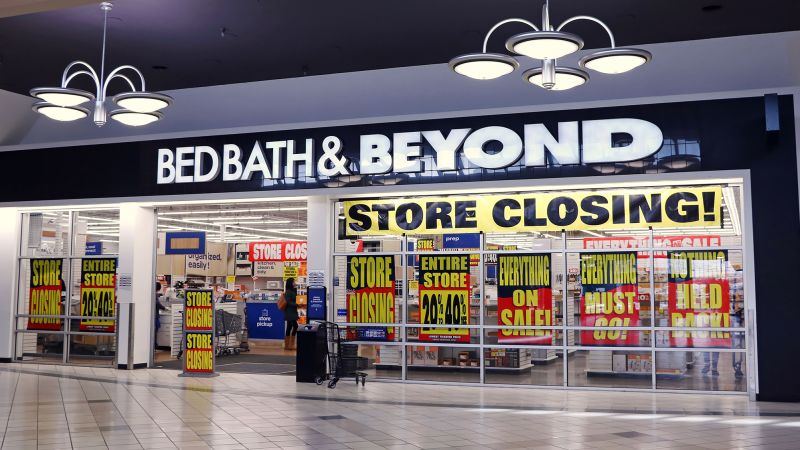
Bed Bath & Beyond files for bankruptcy

Bed Bath & Beyond files for bankruptcy


New York
CNN
 — 

Bed Bath & Beyond, the store for seemingly everything in your home during the 1990s and 2000s, filed for bankruptcy on Sunday.

“Thank you to all of our loyal customers. We have made the difficult decision to begin winding down our operations,” a statement at the top of the company’s website said Sunday morning.

The company’s 360 Bed Bath & Beyond locations, along with its 120 buybuy BABY stores, will remain open for now, as will websites. The company secured a $240 million loan to help fund its operations during bankruptcy.

But store closing sales will begin Wednesday, and Bed Bath & Beyond will close some stores. Just how many – or what happens to its 14,000 employees –depends on what happens next.

A bankruptcy filing does not necessarily mean that a company is going out of business. Many major US companies have filed for bankruptcy, using it to shed debt and other costs they could no longer afford. But even if Bed Bath and Beyond does emerge from bankruptcy, its future is not guaranteed.

The company said it would seek to sell some or all of its business. If it’s able to find a buyer, Bed Bath & Beyond will halt store closings. But if a buyer doesn’t come forward, Bed Bath & Beyond will likely be liquidated entirely and go out of business.

It’s also possible the company could emerge from bankruptcy as an online-only retailer, said Neil Saunders, an analyst at GlobalData Retail.

“Ultimately, if it emerges from bankruptcy at all, Bed Bath & Beyond will be a shadow of its former self,” he said.

Bed Bath & Beyond had been a crown jewel of the era of so-called “category killers” — chains that dominated a category of retail, such as Toys “R” Us, Circuit City and Sports Authority. Those companies, too, ultimately filed for bankruptcy as shoppers turned away from huge specialty stores in favor of online options like Amazon.

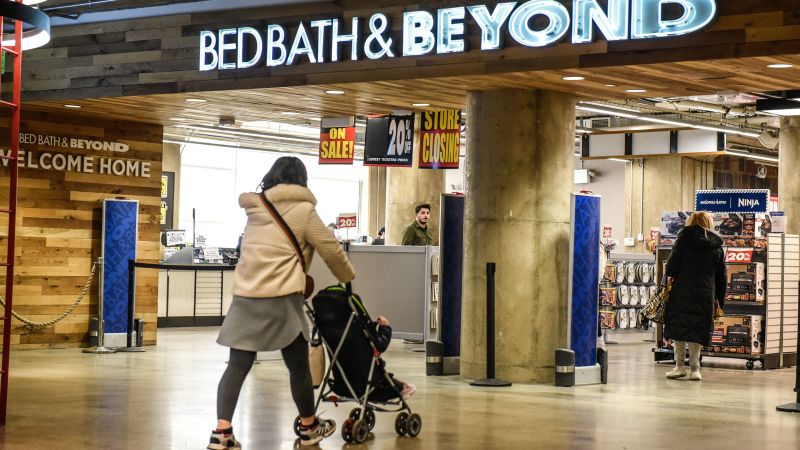
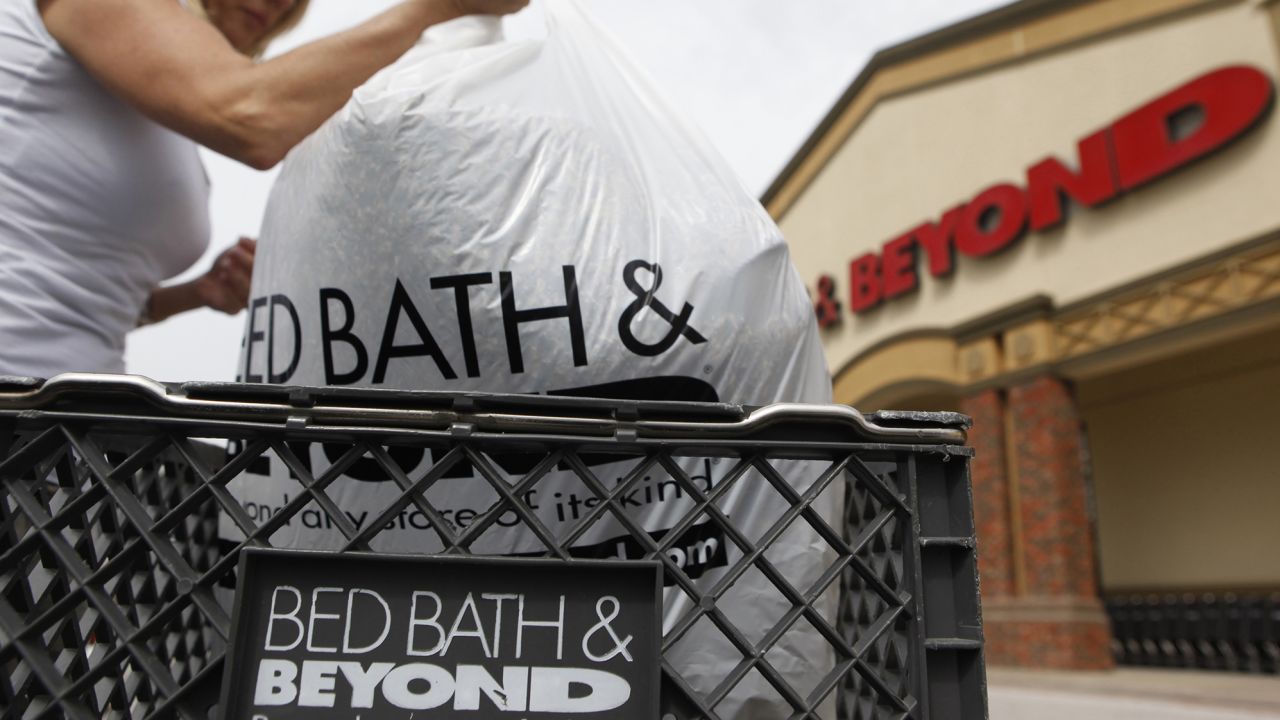
Chris Hammons unloads a bag of items she purchased at a Bed Bath & Beyond store in Dallas, Texas September 23, 2009.

Bed Bath & Beyond became known for pots and pans, towels and bedding stacked from the floor to the ceiling at its cavernous stores — and for its ubiquitous 20{21df340e03e388cc75c411746d1a214f72c176b221768b7ada42b4d751988996}-off coupons. The blue-and-white coupons became something of a pop culture symbol, and millions of Americans wound up stashing them away in their cars, closets and basements.

The company said customers will have Sunday, Monday and Tuesday to use their remaining 20{21df340e03e388cc75c411746d1a214f72c176b221768b7ada42b4d751988996}-off coupons. The company will stop accepting them Wednesday. Instead, Bed Bath & Beyond expects to offer “deep discounts” on its products as part of its going-out-of-business sales.

The retailer attracted a broad range of customers by selling name brands at cut-rate prices. Brands coveted a spot on Bed Bath & Beyond’s shelves, knowing it would lead to big sales. Plus, the open-store layout encouraged impulse buying: Shoppers would come in to buy new dishes and walk out with pillows, towels and other items.

Stores were a fixture for shoppers around the winter holidays and during the back-to-school and college seasons, and Bed Bath & Beyond also had a strong baby and wedding registry business.

But the New Jersey-based company has been slow to respond to shopping changes and struggled to entice customers who had moved on to Amazon, Target and other chains.

In its bankruptcy filing, Bed Bath & Beyond said it had $5.2 billion in debt and assets of just $4.4 billion. It secured $240 million in financing Sunday to stay afloat just long enough to close its stores and wind down its operations.

The company encouraged shoppers to seek out its discounted merchandise later this week. Items purchased before Wednesday can be returned until May 24, but all sales after Wednesday will be final. The store will stop accepting gift cards on May 8.

Founded in 1971 by Warren Eisenberg and Leonard Feinstein, two veterans of the discount retail industry in Springfield, New Jersey, the chain of small linen and bath stores — then called Bed ‘n Bath — first grew around the northeast and in California selling designer bedding, a new trend at the time. Unlike department stores, it didn’t rely on sales events to draw in customers.

The company changed its name to Bed Bath & Beyond in 1987 to reflect its expanded merchandise and bigger “superstores.” The company went public in 1992 with 38 stores and around $200 million in sales.

“We had witnessed the department store shakeout and knew that specialty stores were going to be the next wave of retailing,” Feinstein said in 1993. “It was the beginning of the designer approach to linens and housewares and we saw a real window of opportunity.”

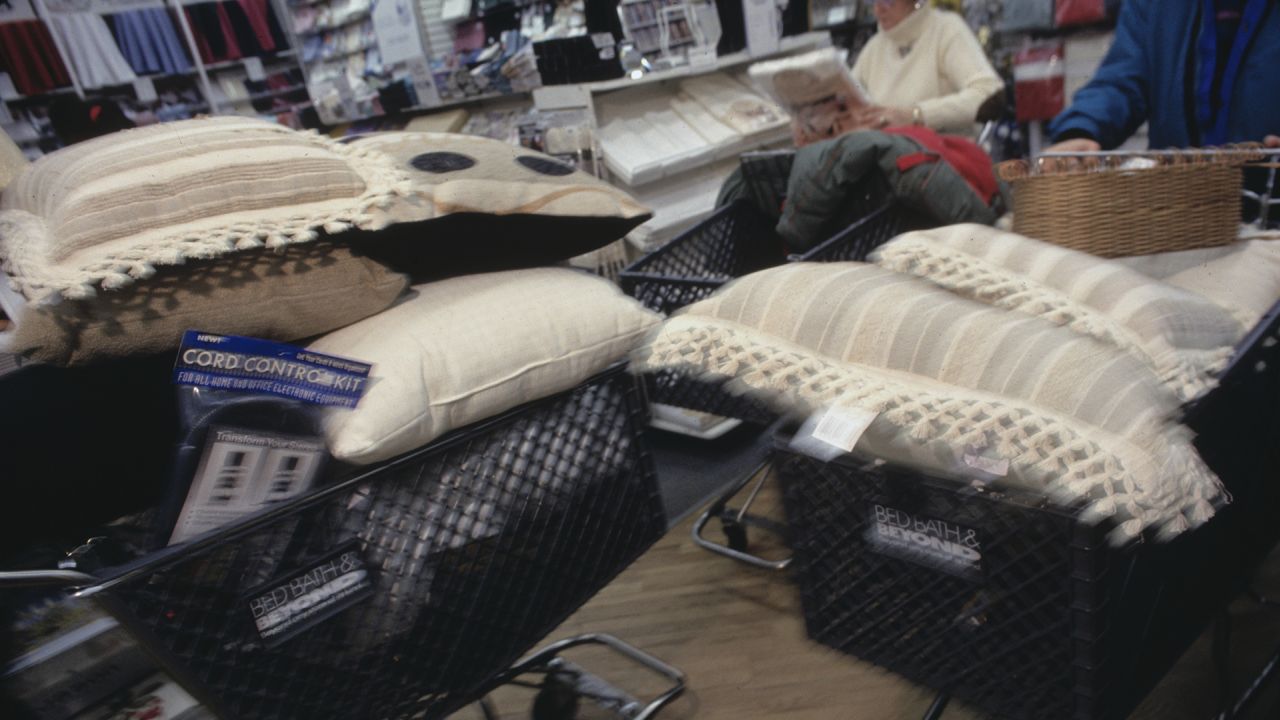
Customers examining items in shopping carts at a Bed, Bath & Beyond store in New York City on January 18, 1994.

By 2000, those figures leapt to 241 stores and $1.1 billion in annual sales. The 1,000th Bed Bath & Beyond store opened in 2009, when the chain had reached $7.8 billion in annual sales.

The company was something of an iconoclast. It spent little on advertising, relying instead on print coupons distributed in weekly newspapers to attract customers.

“Why not just tell the customer that we’ll give you a discount on the item you want — and not the one that we want to put on sale? We’ll mail a coupon, and it will be a lot cheaper,” Eisenberg said in a 2020 New York Times interview.

The chain was known for giving autonomy to store managers to decide which products to stock, allowing them to customize their individual stores, and for shipping products directly to stores instead of a central warehouse.

But as brick-and-mortar began to give way to e-commerce, Bed Bath & Beyond was slow to make the transition — a misstep compounded by the fact that home decor is one of the most commonly bought categories online.

“We missed the boat on the internet,” Eisenberg said in a recent Wall Street Journal interview. (The co-founders are no longer involved with the company.)

Online shopping weakened the allure of Bed Bath & Beyond’s fan-favorite coupons, too, because consumers could find plenty of cheaper alternatives on Amazon or browse a wider selection on sites like Wayfair

(W)
.

It wasn’t just Amazon and online shopping that sank Bed Bath & Beyond, however.

Walmart

(WMT)
, Target

(TGT)
and Costco

(COST)
have grown over the past decade, and they have been able to draw Bed Bath & Beyond customers with lower prices and a wider array of merchandise. Discount chains such as HomeGoods and TJ Maxx have also undercut Bed Bath & Beyond’s prices.

Without the differentiators of the lowest prices or widest selection, Bed Bath & Beyond’s sales stagnated from 2012 to 2019.

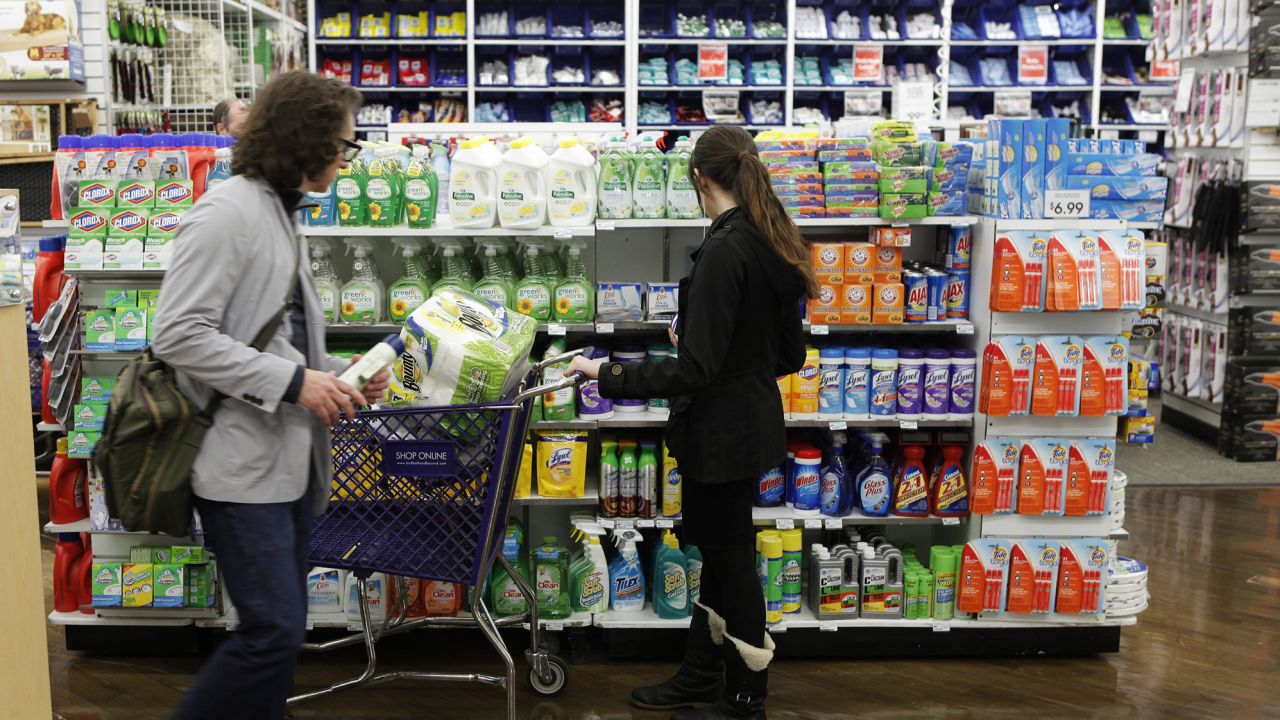
Shoppers inspect cleaning supplies while shopping inside of a Bed Bath & Beyond store in New York April 13, 2011.

Then the pandemic hit in 2020. The company temporarily closed all of its stores while rivals deemed “essential retailers” like Walmart remained open. Sales sank 17{21df340e03e388cc75c411746d1a214f72c176b221768b7ada42b4d751988996} in 2020 and 15{21df340e03e388cc75c411746d1a214f72c176b221768b7ada42b4d751988996} in 2021.

What’s more, Bed Bath & Beyond has rotated through several different executives and turnaround strategies in recent years.

Former Target executive Mark Tritton took the helm in 2019 with backing from investors and a bold new strategy. He scaled back coupons and inventory from national brands in favor of Bed Bath & Beyond’s own private-label brands.

But this change alienated customers who were loyal to big brands. The company also fell behind on payments to vendors, and stores did not have enough merchandise to stock shelves. Tritton stepped down as CEO in 2022.

Bed Bath & Beyond

(BBBY)
has been teetering on the brink of bankruptcy for months.

In February, it was able to stave off bankruptcy by completing a complex stock offering that gave it both an immediate injection of cash and a pledge for more funding in the future to pay down its debt. That offering was backed by private equity group Hudson Bay Capital.

But Bed Bath & Beyond last month said it terminated the deal with Hudson Bay Capital for future funding and was turning to the public market to try to raise funds.

The company has also been shrinking to save money. It said earlier this year it would close around 400 locations, but would keep open profitable stores in key markets.

And the company tried to save money by not paying severance to some laid-off workers at closing stores.

Bed Bath & Beyond laid off 1,295 workers in New Jersey this month, just days before a new state law kicked in that mandates severance pay — equal to one week of pay for each year of employment — for workers who lose their job.

All these moves were not enough to keep the once-dominant chain out of bankruptcy, however.

And Bed Bath & Beyond is the latest retail chain to file for bankruptcy this year. Bankruptcies are piling up in the retail sector as interest rates go up and discretionary spending slows down.

David’s Bridal, Party City, Tuesday Morning, mattress manufacturer Serta Simmons and Independent Pet Partners, a pet store retailer, have filed for bankruptcy in recent weeks.

Bed Bath & Beyond closes stores and raises $1 billion to stave off bankruptcy

Bed Bath & Beyond closes stores and raises $1 billion to stave off bankruptcy


New York
CNN
 — 

Mattress Bathtub & Over and above is closing 150 much more merchants — just a week following the struggling retailer announced the closure of 87 areas.

The company’s brick-and-mortar footprint has previously shrunk dramatically, a regulatory submitting confirmed late Monday, and the new closings mean it will have shuttered 400 outlets in the previous yr — just about fifty percent the 950 or so suppliers it had open in February 2022.

That consists of previous week’s announcement that it was also closing all 49 remaining Harmon Experience Benefit outlets, which marketed cosmetics moreover 5 buybuy Baby places. A checklist of the new retail outlet closures wasn’t quickly offered.

A turnaround does not glimpse imminent: The embattled home goods chain forecasts initial quarter revenue to be down by 30{21df340e03e388cc75c411746d1a214f72c176b221768b7ada42b4d751988996} to 40{21df340e03e388cc75c411746d1a214f72c176b221768b7ada42b4d751988996} with “sequential, quarterly profits enhancement thereafter” the submitting said.

The business said Tuesday it lifted some $1 billion by way of an giving of chosen inventory and warrants in a final-ditch energy to stave off individual bankruptcy. On Monday, the business mentioned it appointed Holly Etlin, a bankruptcy specialist, as interim main economical officer.

Mattress Tub & Past explained Tuesday it will eventually have 360 outlets and 120 buybuyBaby suppliers. That usually means that the business will have introduced ideas to close practically 500 of the shops it experienced just a yr in the past, and the new organization will be about half of the measurement of the old a person

The chain has stated in modern weeks that it had defaulted on a mortgage and may possibly not be in a position to remain in business, boosting issues about its long run. Mattress Bath & Past held talks in modern times with an expenditure firm to underwrite a major part of the proposed providing, according to Reuters.

Bed Bath and Outside of has been portion of the meme inventory phenomenon, with shares skyrocketing as significantly as 400{21df340e03e388cc75c411746d1a214f72c176b221768b7ada42b4d751988996} previous yr when activist trader and GameStop chairman Ryan Cohen took a stake and sought alterations.

Shares of the retailer, which closed up 92{21df340e03e388cc75c411746d1a214f72c176b221768b7ada42b4d751988996} at $5.86 in a rollercoaster session Monday, were being down 40{21df340e03e388cc75c411746d1a214f72c176b221768b7ada42b4d751988996} in in pre-industry trading Tuesday.

Founded in 1971, Bed Bath & Further than grew to become a staple for affordable property decor, kitchenware and higher education dorm area household furniture. It’s also identified for its ubiquitous 20{21df340e03e388cc75c411746d1a214f72c176b221768b7ada42b4d751988996} off blue discount codes, and cavernous outlets with goods stacked significant to the ceilings.

But the company struggled to make the transition to on the net buying and fend off more substantial chains these as Walmart and Concentrate on

(TGT)
. Quite a few buyers switched to those competitors as the novelty of Mattress Bathtub & Beyond’s coupons pale.

The business was also hit really hard throughout the pandemic, closing merchants briefly throughout 2020 whilst rivals remained open. The company shed 17{21df340e03e388cc75c411746d1a214f72c176b221768b7ada42b4d751988996} of its sales in 2020 and 14{21df340e03e388cc75c411746d1a214f72c176b221768b7ada42b4d751988996} in 2021.

– CNN’s Nathaniel Meyersohn and Reuters contributed to this report

Bed Bath & Beyond defaults on credit line, warns on debts

Bed Bath & Beyond defaults on credit line, warns on debts

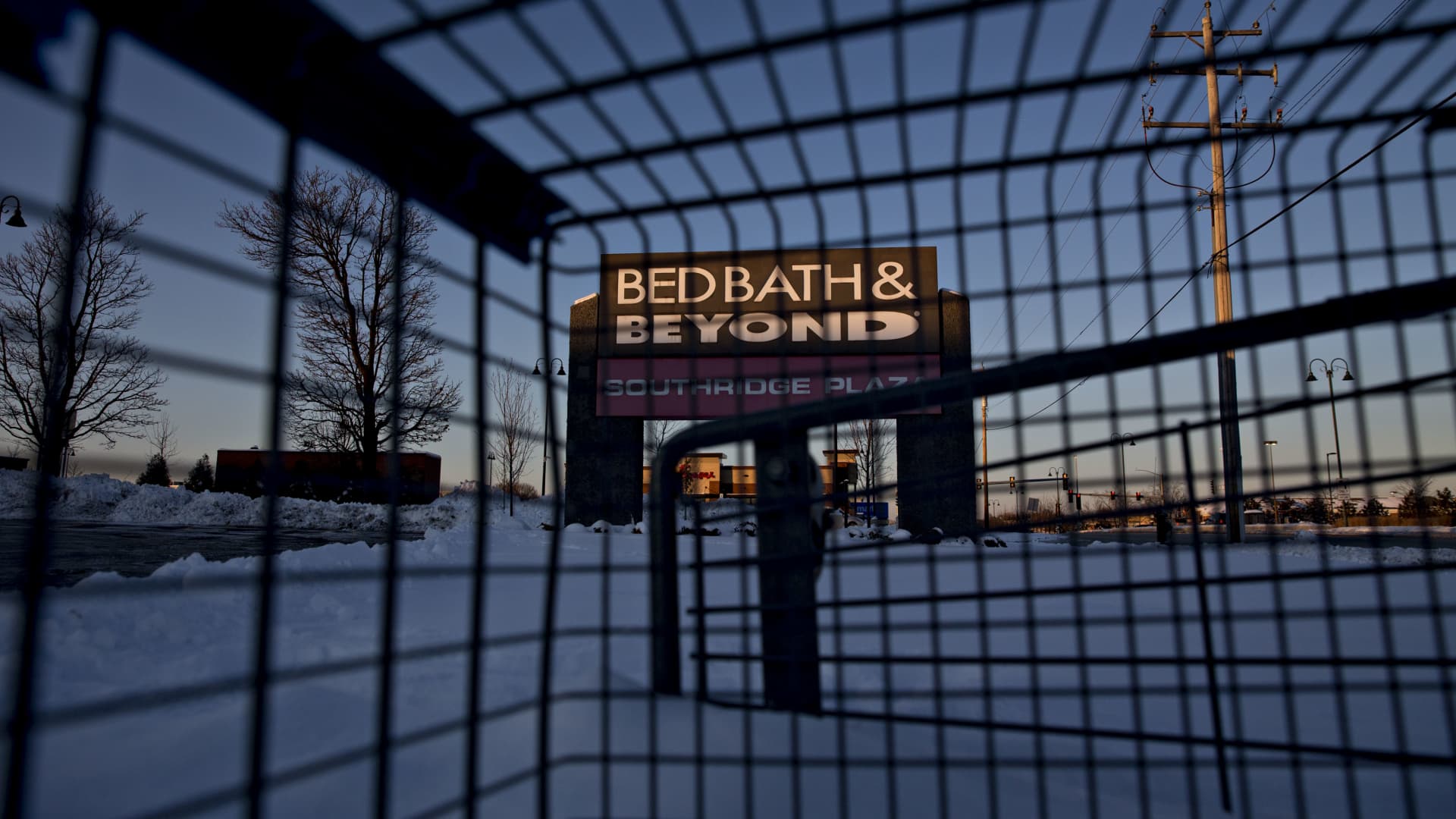
Signage is viewed by means of an overturned searching cart outdoors a Bed Tub & Over and above Inc. retail outlet in Greendale, Wisconsin.

Daniel Acker | Bloomberg | Getty Photos

Bed Bathtub & Further than explained Thursday it will not have adequate cash to pay back down its debts and it has defaulted on its credit rating line with JPMorgan, warning once yet again of a opportunity bankruptcy.

Shares of Bed Tub plunged Thursday afternoon, prompting temporary trading halts. The stock closed 22{21df340e03e388cc75c411746d1a214f72c176b221768b7ada42b4d751988996} down with a market cap of about $295 million.

In a securities filing, the battling home merchandise retailer mentioned it “does not have adequate methods to repay the amounts below the Credit rating Services and this will guide the Corporation to take into account all strategic choices, including restructuring its financial debt underneath the U.S. Bankruptcy Code.”

Mattress Tub is attempting to lower charges by reducing money expenses, closing merchants and negotiating lease discounts with its landlords but warned “these actions could not be effective.”

The newest submitting is an additional sign that time is managing out for Mattress Tub, as revenue lag and money owed pile up for the cash-strapped retailer. It will come at a time that inflation is weighing on consumers’ wallets and purchasers put their discretionary bucks in direction of ordeals, like eating out or scheduling trips, around property goods.

Amid rough macro challenges, Mattress Bath’s sellers tightened their credit rating phrases and reduce boundaries though requiring previously payments through its fiscal next quarter, which prevented the enterprise from effectively stocking its stock in advance of the vacation time, the submitting states. Some sellers expected prepayments, the organization stated.

The corporation owes $550 million under its asset-backed mortgage with JP Morgan and $375 million to loan provider Sixth Road after expanding its credit score facility very last August.

Mattress Bath’s personal debt load also consists of just about $1.2 billion in unsecured notes, which have maturity dates unfold throughout 2024, 2034 and 2044, and have been investing at distressed concentrations. The business explained earlier it was not ready to refinance portions of that credit card debt a lot less than a month just after it advised investors it prepared to acquire out more credit history to pay down its obligations.

The corporation has been burning through income in new quarters. It utilised $890 million in cash throughout the nine months ended Nov. 26, the enterprise described Thursday. As of that date, Bed Bath stated it had $225.7 million remaining in income.

The update Thursday comes many months after the retailer issued a “likely concern” detect that it may possibly not be ready to address its fees next a even worse-than-envisioned quarter. 

Bed Bath has been exploring its selections in current weeks. The retailer has been in conversations to nail down financing that would preserve it afloat if it were being to file for individual bankruptcy, CNBC earlier described.

The business also is in the midst of a sale system in hopes of keeping its namesake chain and Buybuy Child business alive. In addition, the business has been making ready for a possible chapter 11 filing in the U.S. Bankruptcy Court in New Jersey, CNBC earlier documented.

Mattress Bathtub & Beyond’s stock has fallen around 80{21df340e03e388cc75c411746d1a214f72c176b221768b7ada42b4d751988996} in the very last 12 months.

Bed Bath & Beyond outlook: Soft home suppliers, financial analysts assess the risks

Bed Bath & Beyond outlook: Soft home suppliers, financial analysts assess the risks

Bed Tub & Past stores are clearing out a sizeable chunk of personal label products.

New York – House textiles suppliers and Wall Streeters agree on two points about Bed Bathtub & Over and above. The stakes are large and the clock is ticking.

The retailer is slated to report next quarter earnings tomorrow early morning, and nobody is anticipating it to be really.

Bed Bathtub customers were out at New York Household Fashions Current market final week and through this week as the enterprise seeks countrywide brands to exchange the mountains of private labels it is now flushing out of suppliers. Whilst home textiles suppliers are keen for Bed Bathtub & Past to execute a successful rebound, lots of executives who spoke to HTT about the matter are worried the company may well plunge into personal bankruptcy and in no way recover.

Variables are maintaining a limited rein on coverage for Mattress Bath & Further than orders, suppliers said, and the business nonetheless owes a great deal of dollars to vendors and factories that made the a number of home brand names the retailer created above the past two several years.

Bed Tub & Beyond is in the approach of closing the 1st wave of 150 outlets it plans to shutter in the coming months. Some property textiles suppliers said that amount is very likely to develop. As of late 2019, the corporation operated 809 Bed Bath & Beyond as effectively as133 buybuy Infant merchants and 53 merchants underneath Harmon banner.

A greatest situation circumstance, some prompt, would be if Bed Bath & Over and above winds up like JCPenney: a scaled-down, but a lot more secure company.

Everyone is hunting to tomorrow’s Q2 get in touch with for an indicator of development.

“It sort of appears like a final decision tree from where it is now,” Morningstar analyst Jaime Katz explained to NPR before currently: Will Bed Bathtub & Over and above reimagine itself and pull away from the brink, like Best Buy? Or will it continue to patch holes only to continue to keep sinking, like Sears?

Daniel Kline, taking care of editor for TheStreet, also examined the parallels concerning Bed Tub and Most effective Acquire – and was not encouraging in his conclusion.

“When a retailer loses its consumer base, it either has to locate a new just one or gain its current consumers back. Finest Buy was a one of a kind situation because it was losing revenue, but buyers were being still traveling to its retailers to seem at electronics, even if they purchased them on the web,” Kline wrote in his column, “Why Bed Bathtub & Outside of Inventory Won’t Make a Comeback.”

On yesterday’s Yahoo Finance Live broadcast, editor-at-substantial Brian Sozzi predicted a disastrous quarter and earnings working day for Bed, Bathtub & Over and above.

Examining the company’s current approach, he extra: “I would not even call it a turnaround participate in. This is a survival engage in. It is genuinely yet to be determined if this corporation tends to make it deep into subsequent yr.”

See also: