Xinjiang: IFC, World Bank Group member, accused of lending money to companies allegedly linked to forced labor in China

Xinjiang: IFC, World Bank Group member, accused of lending money to companies allegedly linked to forced labor in China

The report, titled “Financing and Genocide: Development Finance and the Crisis in the Uyghur Region,” presents evidence that in recent years the IFC has loaned money to four Chinese companies that have been linked to forced labor and land expropriation in the region, along with environmental damage and the destruction of indigenous cultural heritage sites.

According to public disclosures, the four companies named in the report — Chenguang Biotech Group, Camel Group, Century Sunshine and Jointown Pharmaceutical Group — have received loans and equity investments from the IFC valued at $439 million. Including loans sourced from institutional investors via the IFC, that figure rises to around $485 million.

The loans could contravene the IFC’s own internal guidelines — known as its Performance Standards — which function entirely to “prevent IFC from financing projects that will have adverse environmental and social impacts that jeopardize [its] development aims,” according to the report.
Solar panels are key to Biden's energy plan. But the global supply chain may rely on forced labor from China

CNN Business was granted exclusive, advance access to the report, which was led by the Helena Kennedy Centre for International Justice at Sheffield Hallam University in the United Kingdom and published by the Atlantic Council, a Washington-based think tank.

The Helena Kennedy Center for International Justice researches modern day slavery, gender-based violence and hate crime and has previously published reports alleging the use of forced labor in Xinjiang to produce cotton and solar panels. They say the four named companies are not the only businesses receiving IFC funds in the region.

“I think it’s clear that the IFC needs to divest from all their investments in the Uyghur region,” said report author Laura Murphy, a professor in Human Rights and Contemporary Slavery at Sheffield Hallam University, who added that it is “incumbent on the IFC based on their own standards that they ensure that their clients are not involved in forced labor.”

In a statement, an IFC spokesperson told CNN the corporation has “strong environment, social and governance (ESG) standards” that are diligently applied during the life of the investment and are considered a model for development finance worldwide.

“We do not tolerate discrimination or forced labor under any circumstances,” the spokesperson said. “Whenever such serious allegations are brought to our attention, we work to verify and address them with our clients with urgency.”

Beijing responded to the report on Thursday, saying it was “false” and “full of lies and groundless accusations.”

“It is understood that the organization has no staff in Xinjiang. There was no field investigation, no real research, no evidence to back up the report,” Foreign Ministry spokesperson Wang Wenbin said in a briefing.

“The Chinese government attaches great importance to the protection of human rights and workers’ rights and interests. For some time now, certain countries have been hyping up social lies and extending their reach to multilateral development institutions,” Wang added.

CNN sought comment from the four Chinese companies named in the report but did not receive a response. The report’s authors also said they attempted to contact them but did not receive a response.
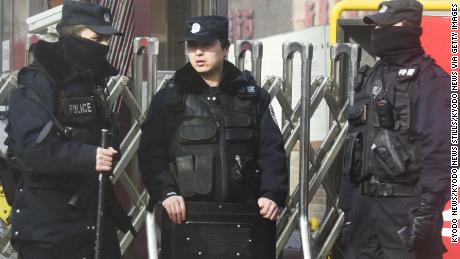
Police officers patrolling the Xinjiang Uyghur Autonomous Region of China in 2018.

‘Punished with internment’

Xinjiang has become a geopolitical hotspot because of the breadth of human rights abuses alleged to have taken place in the region, including what some Western governments have called the “genocide” of Uyghurs and other minorities.

The US State Department has estimated that since 2017 up to two million members of religious and ethnic minorities have been imprisoned in a shadowy network of internment camps.

China has described the facilities as “vocational training centers” where people learn job skills, Chinese language and laws, and officials declared in 2019 that such centers — also aimed at deradicalizing local Muslims — had been closed down. They also claimed that the original detainees had graduated but that people were still enrolling to gain new skills.

Western governments and human rights organizations have alleged that minorities in the region have been subjected to forced labor through job creation schemes run by the Chinese government to achieve “poverty alleviation.”

Workers who have participated in those job programs have told CNN that if they did not take the jobs they were offered, for a fraction of the usual rate of pay, they were warned they would be sent to camps.

“The Chinese government has embarked on a massive campaign which they deem to be poverty alleviation,” said Murphy of Sheffield Hallam. “These programs are often non-consensual, and people who refuse can be punished with internment.”

China has consistently denied all allegations of human rights abuses in Xinjiang and told CNN in a statement prior to publication that claims of forced labor were lies created to smear its reputation.

“China has repeatedly emphasized that the so-called issues of ‘forced labor’ and ‘repression’ against ethnic minorities are huge lies concocted by anti-China forces in the US and the West. They are entirely baseless. Such attempts to attack and smear China based on lies and disinformation are bound to fail,” the statement said.

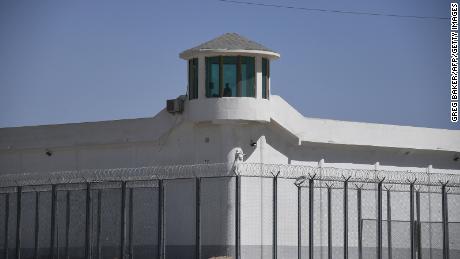
A watchtower at a high-security facility near what is believed to be a re-education camp on the outskirts of Hotan, Xinjiang.

Concerns raised about IFC outcomes

It is part of the World Bank Group and says it provided roughly $31.5 billion in loans and other financial assistance — including nearly $12 billion in “fragile, conflict-affected, and poverty-stricken countries” — last fiscal year to private companies and financial institutions in emerging and developing economies around the world.

The IFC spokesperson told CNN its mission is to “fight poverty by helping the private sector thrive.” “In doing so, we create jobs and raise living standards, especially for the poor and vulnerable,” the spokesperson said.

But its investments have been criticized for years by charities that accuse the IFC of sometimes causing more harm than good by failing to carry out due diligence.

In 2015, Oxfam International published a report compiled with input from several NGOs that claimed the IFC sent billions of dollars in “out of control” investments to third parties that caused “human rights abuses around the world.”

IFC said at the time that it was working with its clients to resolve issues raised by Oxfam and other civil society organizations and that it valued any insights into those concerns. The organization also said that it took additional efforts to train its staff and be more selective about its clients and was strengthening oversight and supervision.

The World Bank Group had been acknowledging concerns even prior to that report. In 2013, the organization’s Independent Evaluation Group highlighted declining “outcome ratings” for IFC-financed projects and advised the IFC to focus on “supervision” and “enhancing the quality of projects” through “intensified efforts.”

CNN approached the World Bank Group for comment about the Helena Kennedy Centre’s findings, and a spokesperson directed CNN to the IFC’s response.
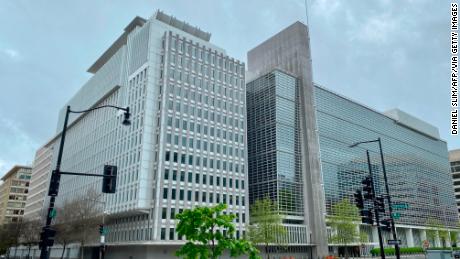
The World Bank headquarters in Washington, D.C.

Alleged connections to forced labor

The four Chinese companies with ties to Xinjiang named in the Helena Kennedy Centre report work in sectors ranging from food to pharmaceuticals and energy. Using corporate documents, stock exchange filings, Chinese state media reports, IFC disclosures and satellite imagery, the report claims these companies have ties to parts of the region where allegations of forced labor are rampant.

In some cases, the report says these companies have participated in state-endorsed “labor transfer” or “poverty alleviation” schemes, which international human rights organizations and foreign governments have for years claimed perpetuate forced labor in the region.

CNN has independently verified that the four companies named in the Helena Kennedy Centre report have all received loans from the IFC in recent years. At least two of those loans, made to Camel Group and Jointown Pharmaceutical, have been used to finance projects in Xinjiang. Because the firms are all publicly traded on Chinese stock exchanges, corporate filings detail some of their dealings in the region. Chinese state media reports also explain some of their work, while the IFC’s own records shed some light on the organization’s involvement in providing financing to these firms.

One company, Chenguang Biotech Group, makes food additives, natural dyes and pigments, and sources its raw materials primarily from India and Xinjiang. In Xinjiang, the company is involved in the production of marigolds.

The IFC, which loaned Chenguang $40 million in 2019 so the company could increase production, conducted an assessment that found the company’s risk of being implicated in forced labor with respect to marigold growers to be “low” and that overall “the risks in Chenguang’s primary supply chain are low to medium.”

But according to the Helena Kennedy Centre report, Chenguang sources some of its workforce from “coercive” state-sponsored labor and land transfer programs.

The report claims that in some cases farmers have no say in whether to participate in major farming projects, or what they want to plant. Companies, too, are under pressure to support state programs.

Citing an official press release, the report said that, in one case, the paramilitary organization Xinjiang Production and Construction Corps (XPCC), which controls the region economically and politically, conducted “ideological work” on those who expressed reluctance about changing their farming methods, which the report described as a method of “coercing” minorities.

Those people are encouraged by government agencies to “relinquish their land, change their crops, alter their farming methods, work for cooperatives or large-scale farms that have expropriated their lands, or move to factory labor,” the report said.

Another company, the battery maker Camel Group, received nearly $36 million in funding from the IFC in July 2019 to expand its battery recycling operations in parts of China, including Xinjiang, according to IFC documents. Chinese corporate records also show the company has at least two subsidiaries in the region.

An IFC risk assessment did acknowledge “potentially significant adverse environmental or societal risks” on account of smelting waste lead but added that Camel promised the organization it would promote the hiring of more local minority residents in Xinjiang. IFC also assessed that “no forced labor practices” are used by Camel Group and that its battery suppliers are subject to quarterly audits by the company to ensure they are complaint with child and forced labor inspections.

However, the Helena Kennedy Centre report cited government press releases that it says show Camel has benefited from state-sponsored labor transfer programs. In July 2017, according to one government release, 165 laborers were taken across Xinjiang for a 10-day long “closed pre-job training,” which the report authors say was an indication that their movements were restricted.

During that time, according to a government press release, the participants received “military and ideological training,” and “were required to sing patriotic songs” and learn Mandarin Chinese — measures that human rights organizations worry can lead to the erasure of culture for Uyghurs, ethnic Kazakhs and Kyrgyz in Xinjiang. Those groups speak languages closer to Turkish than Mandarin Chinese.

Before the laborers were dispatched to their assigned companies — one of which was Camel — they were made to attend a flag-raising ceremony, affirm their loyalty to the ruling Chinese Communist Party and pledge to “make due contributions to national security, national unity, social stability and harmony,” according to the government press release.

A third company, the fertilizer and materials firm Century Sunshine Group, received $165 million from the IFC between 2014 and 2016, according to IFC documents. That figure includes $125 million to upgrade a fertilizer manufacturing facility in Jiangsu province, north of Shanghai on China’s eastern coast. As of December 2020, IFC had roughly a 17{21df340e03e388cc75c411746d1a214f72c176b221768b7ada42b4d751988996} stake in the company, according to an annual report from Century Sunshine.

Century Sunshine also has ties to Xinjiang. The report cited local state-run media from December 2017 that said the company’s Xinjiang subsidiary took in 10 rural laborers from a township in eastern Xinjiang through state-sponsored labor transfer programs. Two years later, that same subsidiary was one of nine firms that participated in a state-backed labor recruitment event that encouraged off-season farmers to work for industrial manufacturing facilities in the area — an event involving labor transfer the report’s authors said was at “high risk”of violating standards for labor and working conditions.

The final company implicated in the report, Jointown Pharmaceutical, received nearly $200 million in debt financing from the IFC in the last few years, according to IFC documents. IFC assessed their investments in Jointown Pharmaceutical as having “limited” environmental or social risks.

The company — which distributes personal protection equipment, medical devices and pharmaceutical drugs — received nearly $150 million in July 2019 to build distribution centers and upgrade four warehouses in middle and western China, including Xinjiang. In October 2020, Jointown Pharmaceutical received another $50 million to buy pharmaceutical products and expand distribution because of the Covid-19 pandemic.

Like Camel and Century Sunshine, the Helena Kennedy Centre report alleges that Jointown Pharmaceutical has participated in Xinjiang-related labor transfer programs. The report cited an article published in December 2020 by the Xinjiang Food and Drug Administration on its official WeChat account that said Jointown Pharmaceutical acknowledged receiving “more than 200” workers “transferred” from southern Xinjiang and other remote and underdeveloped prefectures through the labor programs.

The report also said that Jointown Pharmaceutical has “many” facilities in Xinjiang that are located next to buildings identified as internment camps by the Australian Strategy Policy Institute, a Canberra-based think tank. One of Jointown Pharmaceutical’s facilities in the regional capital of Urumqi, for example, is in one of the city’s “largest prison districts,” according to the report.

Efforts to monitor investments in Xinjiang

While travel to Xinjiang by foreign organizations has become almost impossible in recent years, the Helena Kennedy Centre report says the IFC paid a one-day visit to the region in 2019, during the height of the government crackdown there.

Report co-author Kendyl Salcito, the Executive Director of human rights research non-profit NomoGaia, told CNN she spoke via phone to an IFC representative who went on the trip. The employee told Salcito that their group was temporarily detained by police three times within a roughly 24-hour period, adding that the atmosphere was very uncomfortable and they wanted to leave quickly.

The IFC continued to fund projects in the region after that visit, as seen in IFC documents reviewed by the report authors and by CNN. In November 2020, Salcito said, the IFC told her that it did not have alternative arrangements for monitoring projects there.

The IFC did not respond to CNN’s questions about Salcito’s account of the trip. However, the spokesperson told CNN that in the last two years the IFC has dedicated more resources to supervising companies it works with in Xinjiang.

“While accessing projects on the ground has been more difficult for all development actors in the last two years due to the Covid-19 pandemic and travel restrictions, IFC has dedicated more resources to supervising the companies we work with regarding adherence to our ESG standards. These standards are legally binding, include protections for workers, communities, and the environment, and expressly prohibit discrimination and the use of forced labor,” the spokesperson said.
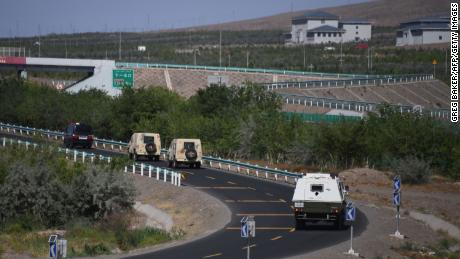
Paramilitary police vehicles on a road in Artux in China's northwest Xinjiang region in June, 2019.

The IFC has taken some steps to withdraw from the region. It ceased its relationships with three other Chinese firms that “were engaged or sourcing from companies engaged in repression in the Uyghur Region,” according to the report.

The IFC did not respond to CNN’s questions about why it chose to divest those companies and not others.

In 2020, the IFC told Salcito in email exchanges viewed by CNN that the Chinese companies it works with assured the organization they did not use any forced labor. The IFC did not respond to CNN’s questions about that correspondence. The Helena Kennedy Centre report authors say that form of self-reporting is wholly insufficient.

“The continued willingness to provide financing in the region, without any direct oversight, indicates that its investment strategy in the region continues to overlook the ongoing crimes against humanity and Performance Standards violations that render the IFC’s investments complicit,” the report said.

A lack of due diligence

Multinational corporations have for years found it difficult to perform due diligence on their supply chains linked to Xinjiang because of limited access, surveillance and the threat of government interference. That makes the use of publicly available records and satellite imagery all the more important in determining whether a firm has ties to forced labor in the region.
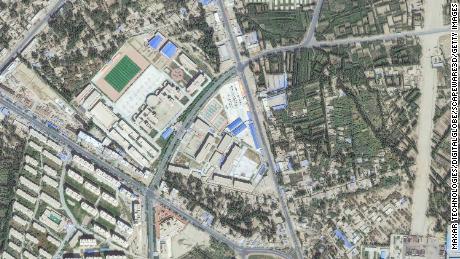
Satellite images, for example, have shown that detention facilities are often built up simultaneously alongside factories and business parks, which human rights activists say is a clear indication that factory workers are being drawn from the prison or camp population.
Maxar satellite imagery of a re-education internment camp in
Hotan, Xinjiang, China.

Some companies, investors and other organizations have pulled out of the region because of the difficulties in auditing activity there. Many international auditors will no longer certify products made in Xinjiang, and the Fair Labor Association — a Washington-based non-profit whose members include multinational corporations and Ivy League universities — has banned its members from sourcing from Xinjiang due to an inability to gather accurate information, or to verify if workers there are under duress.

“The underlying problem in the Uyghur region is the political repression is so great, we’re of the view that no company can do adequate human rights due diligence,” said Sophie Richardson, China Director of Human Rights Watch. “Where [a company] can’t do adequate human rights due diligence, it should withdraw.”

Foreign governments have also been piling pressure on companies. In December, US President Joe Biden signed into law new rules that will effectively ban imports of products made in Xinjiang.

Washington is also leading a diplomatic boycott of the Beijing Winter Olympics, which conclude Sunday. In December, White House Press Secretary Jen Psaki said that the United States would not continue do “business as usual” and participate in the “fanfare” of the Games because of the “ongoing genocide and crimes against humanity in Xinjiang.”

But activists also point out that governments that work with the IFC should also review their funding plans. The United States, after all, has plowed more than $23 billion over the last 20 years into the World Bank Group, and as of June 2021 was the largest IFC shareholder with a stake of about 21{21df340e03e388cc75c411746d1a214f72c176b221768b7ada42b4d751988996}.

That funding has increased during the pandemic: In March 2020, the World Bank Group announced that the US government authorized a $5.5 billion capital increase for the IFC as part of the Coronavirus Aid, Relief, and Economic Security Act.

In a statement to CNN, the US Treasury Department said that it “works closely with other parts of the United States government to strongly condemn and respond to the atrocities taking place in Xinjiang.”

It said the government had pressed multilateral development banks (MDBs) — including the IFC — to strengthen their safeguards so projects “do not inadvertently support companies that participate in or benefit from forced labor.”

The statement added: “The US has been — and will continue to be -— a lead voice on this issue in all the MDBs and will continue working with other shareholder countries to make companies with alleged linkages to forced labor practices ineligible for MDB investments.”


National Bank Financial Analysts Lower Earnings Estimates for Taseko Mines Limited (TSE:TKO)

Taseko Mines Confined (TSE:TKO) (NYSE:TGB) – National Bank Monetary dropped their FY2021 earnings estimates for shares of Taseko Mines in a report produced on Wednesday, February 2nd. Nationwide Bank Fiscal analyst S. Nagle now expects that the enterprise will put up earnings of $.16 for each share for the 12 months, down from their former estimate of $.24. Countrywide Lender Economical also issued estimates for Taseko Mines’ Q4 2021 earnings at $.05 EPS and FY2022 earnings at $.33 EPS.

Several other equities investigate analysts also a short while ago commented on TKO. National Bankshares boosted their target price tag on shares of Taseko Mines from C$3.00 to C$3.25 in a analysis be aware on Friday, October 22nd. Liberum Funds reaffirmed a “sell” ranking on shares of Taseko Mines in a report on Thursday, January 20th. Scotiabank lifted their selling price concentrate on on Taseko Mines from C$2.60 to C$2.75 in a report on Friday, November 5th. Lastly, TD Securities lifted their selling price goal on Taseko Mines from C$3.50 to C$3.75 and gave the corporation a “purchase” rating in a report on Thursday, November 4th. 1 expenditure analyst has rated the stock with a market rating, two have offered a keep rating and two have issued a invest in rating to the firm. According to info from MarketBeat, the stock has a consensus rating of “Keep” and a consensus goal value of C$3.20.

Shares of TSE TKO opened at C$2.38 on Monday. Taseko Mines has a 52-7 days low of C$1.63 and a 52-7 days superior of C$3.22. The corporation has a debt-to-equity ratio of 156.17, a swift ratio of 2.85 and a recent ratio of 3.75. The enterprise has a fifty working day moving average of C$2.55 and a two-hundred working day shifting normal of C$2.47. The inventory has a sector cap of C$675.82 million and a PE ratio of 21.83.

In other information, Senior Officer Brian Lee Bergot bought 25,000 shares of the business’s inventory in a transaction dated Thursday, December 2nd. The shares have been bought at an average cost of C$2.67, for a whole transaction of C$66,750.00. Subsequent the transaction, the insider now instantly owns 93,342 shares in the firm, valued at approximately C$249,223.14. Also, Director Russell Edward Hallbauer marketed 20,000 shares of Taseko Mines inventory in a transaction dated Thursday, December 2nd. The inventory was bought at an common price of C$2.64, for a complete transaction of C$52,800.00. Next the sale, the director now specifically owns 3,311,848 shares of the firm’s inventory, valued at close to C$8,743,278.72. Insiders sold a total of 728,700 shares of organization inventory valued at $1,942,868 around the previous quarter.

(Advertisement)

This Rising Biotech Enterprise is Working to Build Shareholder Worth!

About Taseko Mines

Taseko Mines Constrained, a mining enterprise, acquires, develops, and operates mineral properties. The business explores for copper, molybdenum, gold, niobium, and silver deposits. It retains 75{21df340e03e388cc75c411746d1a214f72c176b221768b7ada42b4d751988996} desire in the Gibraltar mine situated in British Columbia. The company also retains 100{21df340e03e388cc75c411746d1a214f72c176b221768b7ada42b4d751988996} desire in Yellowhead copper project, the Aley niobium task, the Harmony Gold Job, and the New Prosperity gold and copper project located in British Columbia and the Florence copper task found in Arizona.

Even further Reading

This quick information notify was created by narrative science technological innovation and fiscal details from MarketBeat in get to supply readers with the quickest and most precise reporting. This story was reviewed by MarketBeat’s editorial crew prior to publication. Make sure you deliver any inquiries or comments about this story to [email protected]

Must you commit $1,000 in Taseko Mines right now?

Right before you contemplate Taseko Mines, you are going to want to hear this.

MarketBeat retains track of Wall Street’s prime-rated and greatest executing study analysts and the shares they suggest to their purchasers on a every day foundation. MarketBeat has identified the 5 stocks that best analysts are quietly whispering to their clients to acquire now ahead of the broader industry catches on… and Taseko Mines was not on the checklist.

Though Taseko Mines at present has a “Maintain” ranking amongst analysts, major-rated analysts believe that these 5 shares are improved purchases.

Check out The 5 Stocks Listed here


National Bank Financial Analysts Raise Earnings Estimates for Endeavour Mining plc (TSE:EDV)

Endeavour Mining plc (TSE:EDV) – National Lender Financial lifted their Q4 2021 earnings estimates for Endeavour Mining in a study notice issued on Wednesday, February 2nd. National Financial institution Fiscal analyst D. Demarco now expects that the corporation will receive $.81 for every share for the quarter, up from their former forecast of $.77.

Many other study companies also not too long ago commented on EDV. Barclays reiterated a “purchase” score on shares of Endeavour Mining in a report on Tuesday, January 25th. CIBC lessened their selling price concentrate on on shares of Endeavour Mining from C$46.00 to C$43.00 and established an “outperform” rating on the inventory in a research be aware on Wednesday, November 24th. Nationwide Bankshares increased their price tag objective on shares of Endeavour Mining from C$48.00 to C$49.00 and gave the inventory an “outperform” rating in a analysis be aware on Friday, November 12th. Morgan Stanley reissued a “keep” score on shares of Endeavour Mining in a report on Monday. Eventually, Raymond James reiterated an “outperform” score and issued a C$43.00 selling price aim on shares of Endeavour Mining in a report on Thursday. A single equities analysis analyst has rated the stock with a hold ranking and seven have assigned a get score to the firm. According to MarketBeat.com, Endeavour Mining at present has an regular score of “Invest in” and a consensus concentrate on rate of C$300.60.

Shares of EDV inventory opened at C$29.00 on Friday. The corporation has a brief ratio of 1.54, a recent ratio of 2.23 and a financial debt-to-equity ratio of 20.20. The company’s fifty day very simple going common is C$27.86 and its 200-working day simple moving normal is C$29.52. Endeavour Mining has a 12 month very low of C$23.12 and a 12 month significant of C$35.94. The company has a marketplace cap of C$7.17 billion and a PE ratio of 14.51. Endeavour Mining (TSE:EDV) very last introduced its quarterly earnings final results on Thursday, November 11th. The firm described C$.77 earnings for each share for the quarter, beating the Zacks’ consensus estimate of C$.54 by C$.23. The company had profits of C$871.35 million all through the quarter, in contrast to the consensus estimate of C$660.49 million.

(Ad)

The soaring need for lithium is driven by globally need for electric powered cars (EVs). Lithium is best for electrical vehicles. It’s light-weight, retailers heaps of power and is rechargeable. Revenue of EVs are expected to improve 10-fold by 2030 and estimates are that 1 in 2 automobiles bought will be electric powered by 2040.

The company also just lately declared a Semi-Once-a-year dividend, which will be paid out on Wednesday, March 16th. Shareholders of document on Friday, February 11th will be issued a dividend of $.354 per share. This signifies a generate of 1{21df340e03e388cc75c411746d1a214f72c176b221768b7ada42b4d751988996}. The ex-dividend day of this dividend is Thursday, February 10th. Endeavour Mining’s payout ratio is presently 35.04{21df340e03e388cc75c411746d1a214f72c176b221768b7ada42b4d751988996}.

Endeavour Mining Firm Profile

Endeavour Mining Plc operates as a gold producer in West Africa. Its running assets found in Senegal, Cote d’Ivoire, and Burkina Faso, as perfectly as a portfolio of enhancement assignments and exploration assets in the Birimian Greenstone Belt across West Africa. Endeavour Mining Plc was included in 2021 and is based mostly in London, the United Kingdom.

Highlighted Report: How to Spend in Shares with Escalating Dividends

This prompt information inform was created by narrative science technology and monetary information from MarketBeat in order to give visitors with the quickest and most precise reporting. This tale was reviewed by MarketBeat’s editorial group prior to publication. Remember to ship any queries or remarks about this story to [email protected]

Ought to you spend $1,000 in Endeavour Mining ideal now?

Prior to you contemplate Endeavour Mining, you may want to hear this.

MarketBeat keeps keep track of of Wall Street’s top-rated and most effective undertaking investigate analysts and the shares they advise to their clients on a every day basis. MarketBeat has identified the 5 stocks that prime analysts are quietly whispering to their shoppers to obtain now right before the broader industry catches on… and Endeavour Mining was not on the checklist.

Though Endeavour Mining at the moment has a “Obtain” score amid analysts, major-rated analysts believe these five shares are superior purchases.

Perspective The 5 Shares In this article


Bank of America Ousts Advisor Over Racially Charged Tirade

Financial institution of The us Corp. ousted a financial advisor just after police arrested him for a racially billed tirade at a smoothie store in Connecticut that was caught on movie and considered millions of moments on social media in excess of the weekend.

The incident at a Robeks outlet Saturday commenced when James Iannazzo ordered a drink with no peanut butter for his son, who has a peanut allergy, according to a statement from the Fairfield Police Section. He left the retail outlet, but returned to confront employees just after his son had an allergic response that sent him to the healthcare facility, police explained. 

A online video shot from powering the counter demonstrates a man shouting and utilizing expletives, and throwing a drink at an staff. “I want to communicate to the f—ing person who designed this drink,” the person can be listened to saying in copies of the video clip on TikTok and Twitter that ended up greatly cited in media stories. “You silly f—ing fool,” he reported, afterwards introducing “You f—ing immigrant loser.”

An legal professional for Iannazzo said his client “wholeheartedly regrets the incident that took place” and is not a racist. By Sunday, Bank of The usa reported Iannazzo, 48, was no for a longer time at Merrill Lynch Prosperity Administration, where by regulatory documents display he’s labored since at least the mid-1990s.

“Our enterprise does not tolerate actions of this form,” business spokesman William Halldin explained in a assertion. “We straight away investigated and have taken motion. This unique is no lengthier utilized at our company.” 

Iannazzo’s lawyer, Frank J. Riccio, wrote on Twitter that his consumer had “stressed to the staff members that the product should not incorporate peanuts,” and that his receipt showed it shouldn’t have peanut butter. Riccio reported the son had a “severe allergic reaction” and was taken to the clinic by ambulance. 

“When confronted with a dire problem for his son, Mr. Iannazzo’s parental intuition kicked in and he acted out of anger and fear,” the law firm wrote. “He is not a racist particular person and deeply regrets his statements and actions throughout a instant of extreme psychological strain.”

Riccio declined to remark on his client’s departure from Merrill.

According to the police report, Iannazzo questioned that the consume be built without peanut butter, but under no circumstances instructed the shop’s employees about his son’s allergy. Employees regularly told Iannazzo to leave, but he stayed and continued yelling insults, in accordance to the police. He also tried out to open up a locked doorway to a staff members-only region. He remaining right before officers arrived and later on turned himself in.

He was billed with intimidation primarily based on bigotry or bias, trespassing and breaching the peace, in accordance to the law enforcement. A courtroom appearance was set for Feb. 7.

Bank investors face a new ‘black box’ quandary

There are number of much more artful communicators on Wall Road than Jamie Dimon. In contrast to quite a few of his counterparts, the native New Yorker is eager to discuss his mind and can express himself evidently, dipping so simply into the vernacular that he in some cases sounds more like the host of a athletics-radio talk demonstrate than the boss of the largest US lender by belongings.

But some subjects are a small also complex for even the JPMorgan Chase chief government to transform to his advantage. Like other pillars of the banking institution these days, he is producing fateful selections about how to respond to a new generation of fintech rivals — and explaining his know-how spending to outsiders is proving tricky.

Dimon’s challenges had been on display a number of times back when JPMorgan noted its fourth-quarter outcomes. As typical, it designed hundreds of revenue — a history $48.3bn previous year. The financial institution also produced clear that it was not standing however. It stated it would increase investments in know-how, internet marketing, new organizations and added team by 30 for each cent this yr to $15bn. Tech outlays of all types are predicted to total $12bn.

The rub is that all this paying out could assistance drive up the bank’s bills by 8 for each cent, JPMorgan stated, threatening its capacity to achieve its profitability targets for this 12 months and possibly the subsequent. Through a connect with with Wall Street investment decision analysts, Dimon was pressed for aspects on what kind of bang the financial institution could expect from the major bucks it is throwing at tech.

Dimon predicted JPMorgan would obtain current market share in nearly each individual exercise, but he acknowledged it would take time to completely have an understanding of the influence of his tech paying out. For occasion, he mentioned the bank expected to help save $30m to $40m a yr by shifting card operations from a mainframe facility to the cloud, but he taken care of the most important advantage of the shift would be in enhanced abilities — from snuffing out fraud to building additional focused delivers to customers.

Investors reacted warily. JPMorgan shares — which around doubled for the duration of the pandemic — misplaced extra than a tenth of their benefit in times right after the company’s earnings contact. Mike Mayo, a Wells Fargo analyst who had advised JPMorgan shares for seven many years, downgraded the stock, saying the deficiency of specifics about what the lender anticipated from its investments elevated the possibility that it could possibly squander cash with no outside buyers becoming ready to explain to what was occurring.

“Investing in banking companies is constantly a degree of investing in a black box — it’s a unique shade of grey major up to black,” states Mayo. “In the case of JPMorgan, this obtained to be far too dim a grey for our ease and comfort zone.”

The irony of Mayo’s criticism is that he recognises that Dimon and bankers like him need to shift swiftly to modernise their functions or chance viewing more banking features migrate to fintechs and non-bank opponents. He just worries about the transparency of the procedure.

“It applied to be Jamie Dimon as opposed to the banks, now it is Jamie Dimon compared to the planet,” states Mayo. “He is sending a signal that no person is going to outspend JPMorgan. This is Jamie Dimon’s way of saying, ‘I’m not blinking.’”

JPMorgan’s size and economical power will occur in useful. Though fintechs want only concentrate on the coolest technological know-how, standard banking companies like Dimon’s have to at the same time fight their sophisticated new challengers and maintain the legacy computer system programs on which their buyers however rely. JPMorgan suggests 50 percent of its $12bn tech price range is necessary to operate the lender and the other 50 {21df340e03e388cc75c411746d1a214f72c176b221768b7ada42b4d751988996} is to transform it. Incorporate it up: which is two firms.

“The dilemma is that banking institutions have a substantial quantity of their operations functioning on old things — outdated hardware, outdated software program,” says Diane Glossman, a longtime Wall Road bank analyst who can take a certain desire in back-business office functions. “As a consequence, a quite significant aspect of their technological know-how expend goes to keeping the wheels on the vehicles.”

For his aspect, Dimon exhibited his customary self-assurance as he mentioned his financial investment programs this month, expressing he would want to “spend a handful of bucks” to defeat competitors outdated and new. At age 65 — and with a document of usually providing extra than he has promised — Dimon appears to be prepared to hold all over for the a number of several years it will just take to see if his tech-investing tactic is on target.

For the relaxation of us, this implies investing in banking companies is only likely to get additional tricky. It will no for a longer period be ample only to know regardless of whether managements can evaluate credit dangers, allocate cash or inspire product sales forces. Bankers are starting to be program engineers today, and it could be a while ahead of we discover out how several of them are up to the work.

gary.silverman@ft.com

Erdogan blames Turkey’s currency woes on ‘foreign financial tools’ as central bank reserves fall

People today executing purchasing at the neighborhood marketplace in Istanbul, Turkey on December 5th, 2021. The depreciation of the Turkish lira weakened the purchasing electric power of citizens.

Erhan Demirtas | NurPhoto via Getty Illustrations or photos

Turkish President Recep Tayyip Erdogan has pledged to bring down his country’s soaring inflation, which hit 36{21df340e03e388cc75c411746d1a214f72c176b221768b7ada42b4d751988996} in December, as the country’s central bank gears up for one more fee-setting conference up coming week.

Speaking in Parliament on Wednesday, Erdogan mentioned he was safeguarding the country’s economic system from attacks by “international economical equipment that can disrupt the economic process,” according to a translation by Reuters.

“The inflammation inflation is not in line with the realities of our place,” the president included, vowing that a short while ago declared governing administration steps to assistance the severely weakened lira would quickly tame “unjust” value hikes.

Economists commenting on the information had been not amazed.

“Far more entire and utter garbage from Erdogan,” Timothy Ash, rising markets strategist at Bluebay Asset Management, wrote in an e-mail note soon just after the speech.

“Foreign institutional traders you should not want to spend in Turkey because of the unquestionably ridiculous monetary coverage settings imposed by Erdogan,” he wrote. “There is NO overseas plot.”

Turkey’s lira lost 44{21df340e03e388cc75c411746d1a214f72c176b221768b7ada42b4d751988996} of its worth in 2021, due in huge element to a refusal by the president — who basically controls the levers of the Turkish central bank — to increase fascination prices to rein in inflation. And Turks on their own are seeking over and above the lira as they eliminate hope in their personal forex: Turkish merchants are now starting up to show rates in U.S. bucks, and Turks are putting their income into cryptocurrencies like bitcoin and ether.

“If RTE [Recep Tayyip Erdogan] needs to help you save the lira, and perhaps his own skin, he need to undertake a USD-dependent currency board,” Steve Hanke, an economist at Johns Hopkins College, wrote on Twitter on Wednesday, saying Turkey is “spontaneously dollarizing.”

His tweet highlighted an article by Israeli daily Haaretz entitled “Even the Turkish Lira stopped believing in Erdogan.”

Dropping central lender reserves

An avowed opponent of curiosity fees, Erdogan as a substitute outlined an alternate set of actions to bolster the lira. The program fundamentally involves defending nearby depositors towards marketplace volatility by spending them the distinction if the lira’s decrease towards tough currencies surpass banks’ interest premiums.

Critics say this strategy is unsustainable, and is essentially just one large concealed curiosity rate hike. And central lender reserves are already falling: Central lender gross reserves reduced by $1.6 billion to $109.4 billion in the very first week of January, according to Goldman Sachs, “driven by the drop in foreign forex reserves which stood at US$71. billion.”

The state’s currency interventions, spending dollars to buy lira in order to stabilize it, have been high-priced.

The lira appeared to be in free fall in mid-December, dropping as minimal as 18 to the greenback right before the governing administration announced its rescue system. The intervention has managed to provide the forex again to just beneath 14 to the greenback and hold secure there for the past week, although which is a extraordinary drop from its degree of 7 to the dollar just just one calendar year in the past.

The image isn’t really solely bleak: Turkey confirmed favourable figures for industrial creation and retail sales in November, which “instructed that Turkey’s financial state held up nicely throughout the early section of the currency disaster,” wrote Jason Tuvey, senior rising markets economist at Money Economics.

“But we doubt that this strength will very last for significantly for a longer period as the extra pernicious outcomes made by extremely big falls in the lira in December filter by,” Tuvey additional.

“Although export sectors may well maintain up nicely, consumer-led ones will undergo amid a surge in inflation, which hit 36.1{21df340e03e388cc75c411746d1a214f72c176b221768b7ada42b4d751988996} y/y in December and is established to increase further.” 

How extended can this past?

Analysts estimate Turkey’s shorter-time period debt to be just previously mentioned $180 billion, with a recent account deficit of about $10-$20 billion, leaving gross exterior financing requirements at all over $200 billion. With central lender gross reserves at about $109 billion and possible to maintain dropping with dollarization, spending to guidance the lira and opportunity additional international cash flight, financing for that forex reserve protection does not appear very robust.

So how lengthy can the central lender continue to keep intervening to prop up the lira? “The answer is not really very long if it continues to continue to keep up the speed of intervention found in December, which try to remember only held the lira flat above the month,” Ash wrote.

Meanwhile, Erdogan carries on to drive his possess financial theories, insisting Wednesday that the link involving curiosity prices and inflation have extended been disregarded in some other countries — a comment that some critics have famous would liken Turkey to Argentina, Venezuela or Iran in conditions of financial plan.

“I worry about the messaging now to foreign traders,” Ash wrote.

“Erdogan is telling the planet that Turkey does not need foreign cash, overseas portfolio investors are not welcome and Turks can finance their personal economic system. His financial policy mantra is currently not favored … Buyers I believe are inquiring themselves why they ought to proceed to finance negative procedures from the Erdogan administration? Will any new challenge money just vanish in ineffective and idiotic Fx intervention, and is Turkey heading to a systemic crisis?”