The report, titled “Financing and Genocide: Development Finance and the Crisis in the Uyghur Region,” presents evidence that in recent years the IFC has loaned money to four Chinese companies that have been linked to forced labor and land expropriation in the region, along with environmental damage and the destruction of indigenous cultural heritage sites.
According to public disclosures, the four companies named in the report — Chenguang Biotech Group, Camel Group, Century Sunshine and Jointown Pharmaceutical Group — have received loans and equity investments from the IFC valued at $439 million. Including loans sourced from institutional investors via the IFC, that figure rises to around $485 million.
The loans could contravene the IFC’s own internal guidelines — known as its Performance Standards — which function entirely to “prevent IFC from financing projects that will have adverse environmental and social impacts that jeopardize [its] development aims,” according to the report.
CNN Business was granted exclusive, advance access to the report, which was led by the Helena Kennedy Centre for International Justice at Sheffield Hallam University in the United Kingdom and published by the Atlantic Council, a Washington-based think tank.
The Helena Kennedy Center for International Justice researches modern day slavery, gender-based violence and hate crime and has previously published reports alleging the use of forced labor in Xinjiang to produce cotton and solar panels. They say the four named companies are not the only businesses receiving IFC funds in the region.
“I think it’s clear that the IFC needs to divest from all their investments in the Uyghur region,” said report author Laura Murphy, a professor in Human Rights and Contemporary Slavery at Sheffield Hallam University, who added that it is “incumbent on the IFC based on their own standards that they ensure that their clients are not involved in forced labor.”
In a statement, an IFC spokesperson told CNN the corporation has “strong environment, social and governance (ESG) standards” that are diligently applied during the life of the investment and are considered a model for development finance worldwide.
“We do not tolerate discrimination or forced labor under any circumstances,” the spokesperson said. “Whenever such serious allegations are brought to our attention, we work to verify and address them with our clients with urgency.”
Beijing responded to the report on Thursday, saying it was “false” and “full of lies and groundless accusations.”
“It is understood that the organization has no staff in Xinjiang. There was no field investigation, no real research, no evidence to back up the report,” Foreign Ministry spokesperson Wang Wenbin said in a briefing.
“The Chinese government attaches great importance to the protection of human rights and workers’ rights and interests. For some time now, certain countries have been hyping up social lies and extending their reach to multilateral development institutions,” Wang added.
CNN sought comment from the four Chinese companies named in the report but did not receive a response. The report’s authors also said they attempted to contact them but did not receive a response.
‘Punished with internment’
Xinjiang has become a geopolitical hotspot because of the breadth of human rights abuses alleged to have taken place in the region, including what some Western governments have called the “genocide” of Uyghurs and other minorities.
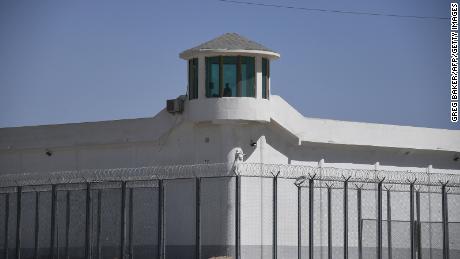
The US State Department has estimated that since 2017 up to two million members of religious and ethnic minorities have been imprisoned in a shadowy network of internment camps.
China has described the facilities as “vocational training centers” where people learn job skills, Chinese language and laws, and officials declared in 2019 that such centers — also aimed at deradicalizing local Muslims — had been closed down. They also claimed that the original detainees had graduated but that people were still enrolling to gain new skills.
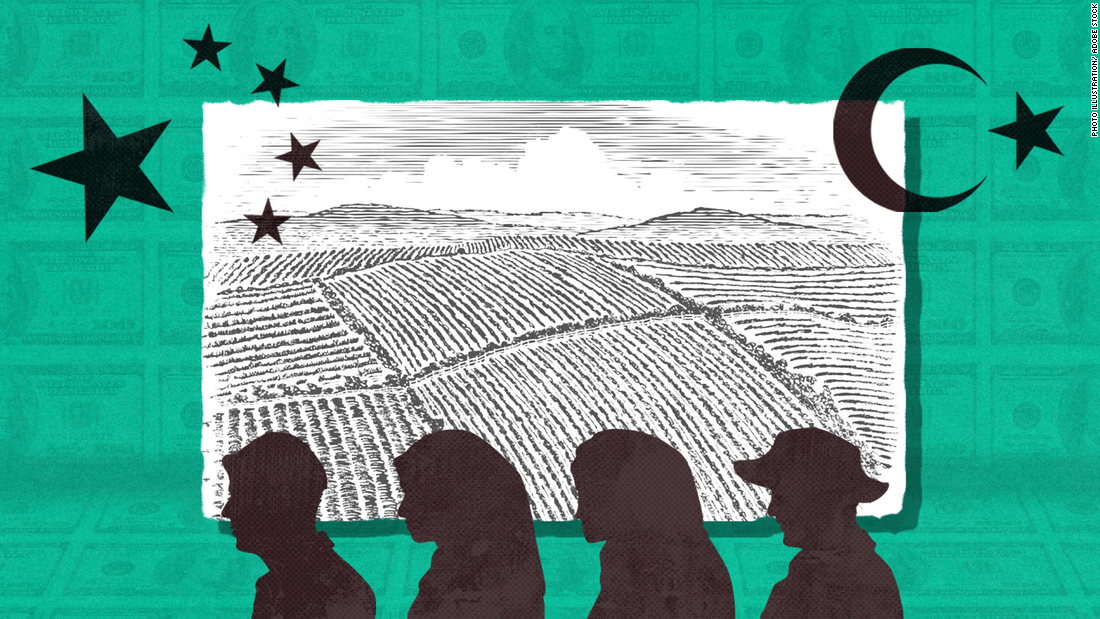
Western governments and human rights organizations have alleged that minorities in the region have been subjected to forced labor through job creation schemes run by the Chinese government to achieve “poverty alleviation.”
Workers who have participated in those job programs have told CNN that if they did not take the jobs they were offered, for a fraction of the usual rate of pay, they were warned they would be sent to camps.
“The Chinese government has embarked on a massive campaign which they deem to be poverty alleviation,” said Murphy of Sheffield Hallam. “These programs are often non-consensual, and people who refuse can be punished with internment.”
China has consistently denied all allegations of human rights abuses in Xinjiang and told CNN in a statement prior to publication that claims of forced labor were lies created to smear its reputation.
“China has repeatedly emphasized that the so-called issues of ‘forced labor’ and ‘repression’ against ethnic minorities are huge lies concocted by anti-China forces in the US and the West. They are entirely baseless. Such attempts to attack and smear China based on lies and disinformation are bound to fail,” the statement said.
Concerns raised about IFC outcomes
It is part of the World Bank Group and says it provided roughly $31.5 billion in loans and other financial assistance — including nearly $12 billion in “fragile, conflict-affected, and poverty-stricken countries” — last fiscal year to private companies and financial institutions in emerging and developing economies around the world.
The IFC spokesperson told CNN its mission is to “fight poverty by helping the private sector thrive.” “In doing so, we create jobs and raise living standards, especially for the poor and vulnerable,” the spokesperson said.
But its investments have been criticized for years by charities that accuse the IFC of sometimes causing more harm than good by failing to carry out due diligence.
In 2015, Oxfam International published a report compiled with input from several NGOs that claimed the IFC sent billions of dollars in “out of control” investments to third parties that caused “human rights abuses around the world.”
IFC said at the time that it was working with its clients to resolve issues raised by Oxfam and other civil society organizations and that it valued any insights into those concerns. The organization also said that it took additional efforts to train its staff and be more selective about its clients and was strengthening oversight and supervision.
The World Bank Group had been acknowledging concerns even prior to that report. In 2013, the organization’s Independent Evaluation Group
highlighted declining “outcome ratings” for IFC-financed projects and advised the IFC to focus on “supervision” and “enhancing the quality of projects” through “intensified efforts.”
CNN approached the World Bank Group for comment about the Helena Kennedy Centre’s findings, and a spokesperson directed CNN to the IFC’s response.
Alleged connections to forced labor
The four Chinese companies with ties to Xinjiang named in the Helena Kennedy Centre report work in sectors ranging from food to pharmaceuticals and energy. Using corporate documents, stock exchange filings, Chinese state media reports, IFC disclosures and satellite imagery, the report claims these companies have ties to parts of the region where allegations of forced labor are rampant.
In some cases, the report says these companies have participated in state-endorsed “labor transfer” or “poverty alleviation” schemes, which international human rights organizations and foreign governments have for years claimed perpetuate forced labor in the region.
CNN has independently verified that the four companies named in the Helena Kennedy Centre report have all received loans from the IFC in recent years. At least two of those loans, made to Camel Group and Jointown Pharmaceutical, have been used to finance projects in Xinjiang. Because the firms are all publicly traded on Chinese stock exchanges, corporate filings detail some of their dealings in the region. Chinese state media reports also explain some of their work, while the IFC’s own records shed some light on the organization’s involvement in providing financing to these firms.
One company, Chenguang Biotech Group, makes food additives, natural dyes and pigments, and sources its raw materials primarily from India and Xinjiang. In Xinjiang, the company is involved in the production of marigolds.
The IFC, which loaned Chenguang $40 million in 2019 so the company could increase production, conducted an assessment that found the company’s risk of being implicated in forced labor with respect to marigold growers to be “low” and that overall “the risks in Chenguang’s primary supply chain are low to medium.”
But according to the Helena Kennedy Centre report, Chenguang sources some of its workforce from “coercive” state-sponsored labor and land transfer programs.
The report claims that in some cases farmers have no say in whether to participate in major farming projects, or what they want to plant. Companies, too, are under pressure to support state programs.
Citing an official press release, the report said that, in one case, the paramilitary organization Xinjiang Production and Construction Corps (XPCC), which controls the region economically and politically, conducted “ideological work” on those who expressed reluctance about changing their farming methods, which the report described as a method of “coercing” minorities.
Those people are encouraged by government agencies to “relinquish their land, change their crops, alter their farming methods, work for cooperatives or large-scale farms that have expropriated their lands, or move to factory labor,” the report said.
Another company, the battery maker Camel Group, received nearly $36 million in funding from the IFC in July 2019 to expand its battery recycling operations in parts of China, including Xinjiang, according to IFC documents. Chinese corporate records also show the company has at least two subsidiaries in the region.
An IFC risk assessment did acknowledge “potentially significant adverse environmental or societal risks” on account of smelting waste lead but added that Camel promised the organization it would promote the hiring of more local minority residents in Xinjiang. IFC also assessed that “no forced labor practices” are used by Camel Group and that its battery suppliers are subject to quarterly audits by the company to ensure they are complaint with child and forced labor inspections.
However, the Helena Kennedy Centre report cited government press releases that it says show Camel has benefited from state-sponsored labor transfer programs. In July 2017, according to one government release, 165 laborers were taken across Xinjiang for a 10-day long “closed pre-job training,” which the report authors say was an indication that their movements were restricted.
During that time, according to a government press release, the participants received “military and ideological training,” and “were required to sing patriotic songs” and learn Mandarin Chinese — measures that human rights organizations worry can lead to the erasure of culture for Uyghurs, ethnic Kazakhs and Kyrgyz in Xinjiang. Those groups speak languages closer to Turkish than Mandarin Chinese.
Before the laborers were dispatched to their assigned companies — one of which was Camel — they were made to attend a flag-raising ceremony, affirm their loyalty to the ruling Chinese Communist Party and pledge to “make due contributions to national security, national unity, social stability and harmony,” according to the government press release.
A third company, the fertilizer and materials firm Century Sunshine Group, received $165 million from the IFC between 2014 and 2016, according to IFC documents. That figure includes $125 million to upgrade a fertilizer manufacturing facility in Jiangsu province, north of Shanghai on China’s eastern coast. As of December 2020, IFC had roughly a 17{21df340e03e388cc75c411746d1a214f72c176b221768b7ada42b4d751988996} stake in the company, according to an annual report from Century Sunshine.
Century Sunshine also has ties to Xinjiang. The report cited local state-run media from December 2017 that said the company’s Xinjiang subsidiary took in 10 rural laborers from a township in eastern Xinjiang through state-sponsored labor transfer programs. Two years later, that same subsidiary was one of nine firms that participated in a state-backed labor recruitment event that encouraged off-season farmers to work for industrial manufacturing facilities in the area — an event involving labor transfer the report’s authors said was at “high risk”of violating standards for labor and working conditions.
The final company implicated in the report, Jointown Pharmaceutical, received nearly $200 million in debt financing from the IFC in the last few years, according to IFC documents. IFC assessed their investments in Jointown Pharmaceutical as having “limited” environmental or social risks.
The company — which distributes personal protection equipment, medical devices and pharmaceutical drugs — received nearly $150 million in July 2019 to build distribution centers and upgrade four warehouses in middle and western China, including Xinjiang. In October 2020, Jointown Pharmaceutical received another $50 million to buy pharmaceutical products and expand distribution because of the Covid-19 pandemic.
Like Camel and Century Sunshine, the Helena Kennedy Centre report alleges that Jointown Pharmaceutical has participated in Xinjiang-related labor transfer programs. The report cited an article published in December 2020 by the Xinjiang Food and Drug Administration on its official WeChat account that said Jointown Pharmaceutical acknowledged receiving “more than 200” workers “transferred” from southern Xinjiang and other remote and underdeveloped prefectures through the labor programs.
The report also said that Jointown Pharmaceutical has “many” facilities in Xinjiang that are located next to buildings identified as internment camps by the Australian Strategy Policy Institute, a Canberra-based think tank. One of Jointown Pharmaceutical’s facilities in the regional capital of Urumqi, for example, is in one of the city’s “largest prison districts,” according to the report.
Efforts to monitor investments in Xinjiang
While travel to Xinjiang by foreign organizations has become almost impossible in recent years, the Helena Kennedy Centre report says the IFC paid a one-day visit to the region in 2019, during the height of the government crackdown there.
Report co-author Kendyl Salcito, the Executive Director of human rights research non-profit NomoGaia, told CNN she spoke via phone to an IFC representative who went on the trip. The employee told Salcito that their group was temporarily detained by police three times within a roughly 24-hour period, adding that the atmosphere was very uncomfortable and they wanted to leave quickly.
The IFC continued to fund projects in the region after that visit, as seen in IFC documents reviewed by the report authors and by CNN. In November 2020, Salcito said, the IFC told her that it did not have alternative arrangements for monitoring projects there.
The IFC did not respond to CNN’s questions about Salcito’s account of the trip. However, the spokesperson told CNN that in the last two years the IFC has dedicated more resources to supervising companies it works with in Xinjiang.
“While accessing projects on the ground has been more difficult for all development actors in the last two years due to the Covid-19 pandemic and travel restrictions, IFC has dedicated more resources to supervising the companies we work with regarding adherence to our ESG standards. These standards are legally binding, include protections for workers, communities, and the environment, and expressly prohibit discrimination and the use of forced labor,” the spokesperson said.
The IFC has taken some steps to withdraw from the region. It ceased its relationships with three other Chinese firms that “were engaged or sourcing from companies engaged in repression in the Uyghur Region,” according to the report.
The IFC did not respond to CNN’s questions about why it chose to divest those companies and not others.
In 2020, the IFC told Salcito in email exchanges viewed by CNN that the Chinese companies it works with assured the organization they did not use any forced labor. The IFC did not respond to CNN’s questions about that correspondence. The Helena Kennedy Centre report authors say that form of self-reporting is wholly insufficient.
“The continued willingness to provide financing in the region, without any direct oversight, indicates that its investment strategy in the region continues to overlook the ongoing crimes against humanity and Performance Standards violations that render the IFC’s investments complicit,” the report said.
A lack of due diligence
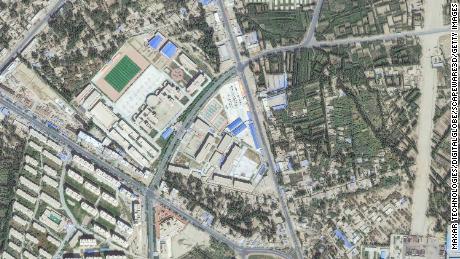
Multinational corporations have for years found it difficult to perform due diligence on their supply chains linked to Xinjiang because of limited access, surveillance and the threat of government interference. That makes the use of publicly available records and satellite imagery all the more important in determining whether a firm has ties to forced labor in the region.
Satellite images, for example, have shown that detention facilities are often built up simultaneously alongside factories and business parks, which
human rights activists say is a clear indication that factory workers are being drawn from the prison or camp population.
Some companies, investors and other organizations have pulled out of the region because of the difficulties in auditing activity there. Many international auditors will no longer certify products made in Xinjiang, and the Fair Labor Association — a Washington-based non-profit whose members include multinational corporations and Ivy League universities — has banned its members from sourcing from Xinjiang due to an inability to gather accurate information, or to verify if workers there are under duress.
“The underlying problem in the Uyghur region is the political repression is so great, we’re of the view that no company can do adequate human rights due diligence,” said Sophie Richardson, China Director of Human Rights Watch. “Where [a company] can’t do adequate human rights due diligence, it should withdraw.”
Foreign governments have also been piling pressure on companies. In December, US President Joe Biden signed into law new rules that will effectively ban imports of products made in Xinjiang.
Washington is also leading a diplomatic boycott of the Beijing Winter Olympics, which conclude Sunday. In December, White House Press Secretary Jen Psaki said that the United States
would not continue do “business as usual” and participate in the “fanfare” of the Games because of the “ongoing genocide and crimes against humanity in Xinjiang.”
But activists also point out that governments that work with the IFC should also review their funding plans. The United States, after all, has plowed more than $23 billion over the last 20 years into the World Bank Group, and as of June 2021 was the largest IFC shareholder with a stake of about 21{21df340e03e388cc75c411746d1a214f72c176b221768b7ada42b4d751988996}.
That funding has increased during the pandemic: In March 2020, the World Bank Group announced that the US government authorized a $5.5 billion capital increase for the IFC as part of the
Coronavirus Aid, Relief, and Economic Security Act.In a statement to CNN, the US Treasury Department said that it “works closely with other parts of the United States government to strongly condemn and respond to the atrocities taking place in Xinjiang.”
It said the government had pressed multilateral development banks (MDBs) — including the IFC — to strengthen their safeguards so projects “do not inadvertently support companies that participate in or benefit from forced labor.”
The statement added: “The US has been — and will continue to be -— a lead voice on this issue in all the MDBs and will continue working with other shareholder countries to make companies with alleged linkages to forced labor practices ineligible for MDB investments.”