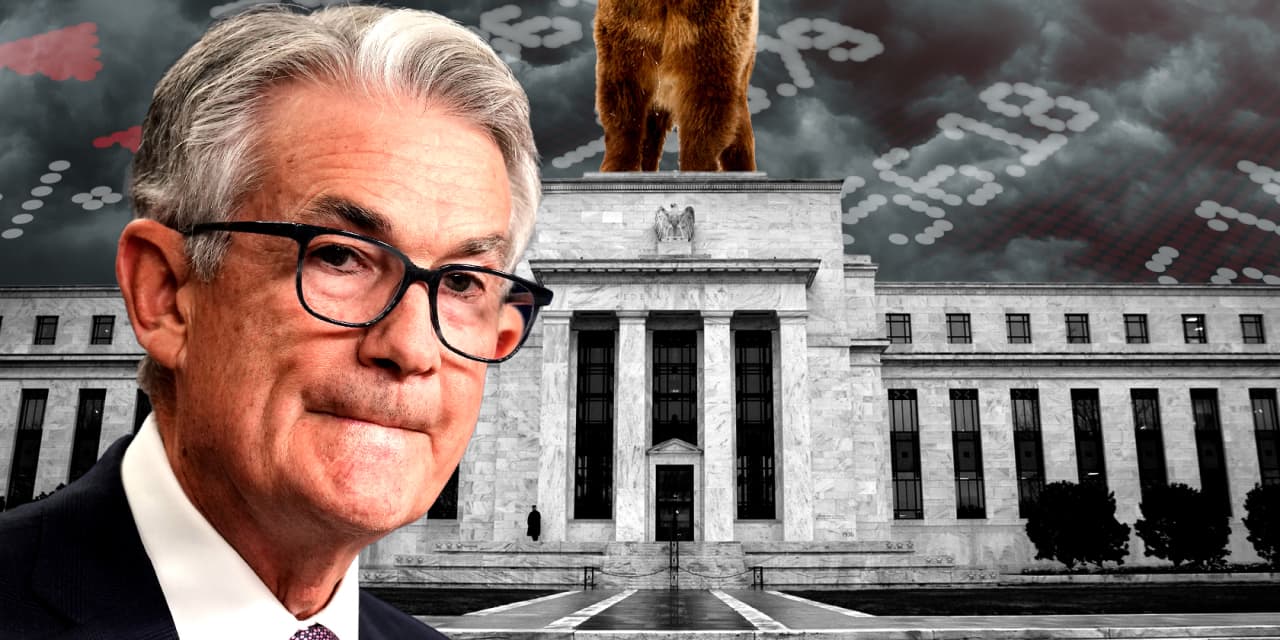
The underlying assumptions of the financial market have crumbled

The underlying assumptions of the financial market have crumbled

At a time when long-held notions of the market are crumbling, holding a little bit of everything can make a lot of sense.Photo illustration by the Globe and Mail/iStockPhoto / Getty Images

Call it the end of an era. The past couple of years have torn holes in three ideas that investors once considered indisputable.

First is the notion that China is the long-term driver of global economic growth. Second is the belief that interest rates are destined to stay “lower for longer.” Third is the conviction that big U.S. technology companies are a good investment at just about any price.

This not-so-holy trinity of ideas dominated financial markets during the decade leading up to the COVID-19 pandemic. And why not? They seemed to sum up the state of the world.

Interest rates in developed economies had ticked relentlessly lower since the early 1980s. China had turned away from Maoism in the late 1970s and enjoyed decades of warp-speed economic growth. Meanwhile, a handful of big U.S. technology companies had established quasi-monopolies in key areas of the online economy.

People who bet on these three key trends tended to do very well. Imagine, for instance, a lucky investor who at the start of 2010 split her $100,000 portfolio three ways. She put one third of her money into an index fund that tracked the largest Chinese stocks trading on exchanges in the U.S. She put another third into an index fund that held long-term U.S. Treasury bonds (which go up in price as interest rates fall). She put the remaining third into an index fund that followed large U.S. technology stocks.

A decade later, at the start of 2020, her initial $100,000 would have swelled to nearly $280,000 – a solid return of about 10 per cent a year, driven nearly entirely by massive gains by technology stocks.

But since the pandemic began in early 2020? It’s been a wild ride. Our imaginary investor’s portfolio would have swelled even higher in the early days of lockdowns, as tech stocks rocketed to the moon. Then, as inflation ripped and interest rates started to surge higher, those gains would have evaporated. Over the past 12 months, she would have lost 34 per cent of her money and be back to about where she was three years ago.

Some people might see losses of this magnitude as an opportunity to buy into these beaten-up areas at reduced prices. But before you bet on a rebound, it might be worth considering how much the world has changed.

China’s fall from grace

Back in 2019, economists worried about China’s trade battles with the United States. Still, most were optimistic about what lay ahead and many saw China overtaking the U.S. as the world’s largest economy in another decade or so.

It was easy to make that case. China’s population of 1.4 billion provided a huge internal market for its domestic companies. Moreover, Beijing had managed the economy adroitly for more than a generation. It had created a system that funnelled capital into large-scale infrastructure projects, property development and export-oriented industries. Its emphasis on education and technology had spawned a generation of homegrown tech giants, such as Alibaba and Tencent.

High rise apartments under construction in Zhengzhou, Henan province, China, in January 2019. Years of frantic building have helped drive the country’s total debt to towering levels and resulted in a glut of apartments.THOMAS PETER/Reuters

The International Monetary Fund was optimistic about what the future held. In 2019, it noted that China had accounted for more than a quarter of the world’s economic growth from 2013 to 2018, twice the share contributed by the U.S. The IMF saw the Asian giant maintaining its jackrabbit pace of expansion until at least 2024, with annual economic growth significantly above 5 per cent.

Unfortunately, reality hasn’t come close to bearing out those rosy predictions. Ruchir Sharma, chair of wealth manager Rockefeller International, estimates that China’s growth rate will fall below 3 per cent this year. “Consensus forecasts have fallen short of recognizing the pace of China’s slowdown in recent years,” he writes.

Analysts at Capital Economics predict that by 2030, China will be expanding at a ho-hum 2 per cent a year, more or less the same as the U.S. Rather than becoming the world’s largest economy by 2030, as many economists predicted, the country now appears unlikely to catch up to the U.S. until 2060, if ever, according to Mr. Sharma.

What went wrong? One big problem is China’s faltering property sector. Years of frantic building have helped drive the country’s total debt to towering levels and resulted in a glut of apartments. “Real estate constitutes such a large share of China’s economy that a sustained slowdown could cause years-long stagnation akin to Japan’s lost decades since 1990,” writes Harvard economist Kenneth Rogoff.

China faces other challenges, too. Its labour force is aging and shrinking. Its zero-COVID policy continues to intermittently lock down many of its cities. Meanwhile, last year’s out-of-the-blue crackdown on the technology sector by President Xi Jinping is hobbling many of the country’s most dynamic firms.

On top of all that, Mr. Xi has effectively declared himself leader for life, a sign of the country’s increasingly autocratic tilt. Relations between Beijing and Washington have deteriorated into a frosty chill that resembles a new Cold War.

Small wonder that analysts at JP Morgan Chase earlier this year declared a broad swath of China’s tech sector to be “uninvestible.” The Nasdaq Golden Dragon China Index, which tracks Chinese stocks listed on U.S. stock exchanges, is now back to 2007 levels. Rather than being an unstoppable giant, the Chinese economy now looks increasingly fragile.

Rising interest rates

If China’s fall from grace has been a shock, so has an even more fundamental shift. For the first time in four decades, inflation has soared around the globe. So have interest rates. This is a brutal surprise for a world that for more than a generation saw inflation and interest rates both tick relentlessly lower.

To be sure, it was never exactly clear why interest rates fell so steadily from the early 1980s onward. People such as former U.S. Treasury Secretary Lawrence Summers argued that falling rates were the result of secular stagnation – a long-term fall in the rate of economic growth caused by slowing population growth, higher inequality and a reduced pace of innovation. Others, such as former Federal Reserve chair Ben Bernanke, attributed the decline in borrowing costs to a global savings glut caused by rising wealth around the world.

But whatever the precise cause of ultralow interest rates, the trend was clear. After the global financial crisis of 2008-09, households and businesses operated on the assumption that money was more or less free. For the next decade, interest rates remained stuck at levels that were the lowest in 5,000 years, according to Bank of England chief economist Andy Haldane. In the early stages of the pandemic, central banks reinforced this trend, slashing their key rates to zero in North America and to sub-zero levels in Europe.

The abrupt reversal of those ultralow rate policies over the past year is having a shattering effect. Soaring mortgage rates are eating away at home prices around the world. Higher borrowing costs are discouraging companies from investing in new factories and offices. Simultaneously, rising interest rates are punishing bond prices (which move in the opposite direction to interest rates) and stocks (because higher bond yields are making fixed income an attractive alternative for the first time in years).

This week’s report that U.S. inflation ticked down to 7.7 per cent in October has fanned hopes that the inflationary peak may have passed. However, it’s too soon to hope for central banks to actually start cutting interest rates. They are likely to remain vigilant until inflation has fallen back somewhere close to the 2-per-cent target policy makers have set. That is still a long way away.

“We have entered a regime of higher macro and market volatility,” economists at giant investment firm BlackRock Inc. write. They argue that “central banks’ singular focus on inflation” means policy makers will likely raise rates too high in the near term and “cause economic damage that markets are underappreciating.”

Traders work on the floor at the New York Stock Exchange in New York. This year the NYSE FANG+ Index of leading tech firms has dropped 40 per cent.Seth Wenig/The Associated Press

Tech’s big slide

One of the biggest casualties of this year has been the sector that was once regarded as the ultimate fortress – big U.S. tech companies.

Giants such as Alphabet Inc., Amazon.com Inc., Apple Inc., Microsoft Corp., Netflix Inc. and Meta Platforms Inc. (the former Facebook) used to grow revenue at double-digit rates while simultaneously spewing out profits. That was especially true in the early days of the pandemic, when a mass turn to working from home ignited a boom in remote shopping, video streaming and computer purchases.

This year has told a different story. The tech-focused Nasdaq Composite Index is down 29 per cent (as of midday Friday). The NYSE FANG+ Index of leading tech firms has dropped 40 per cent. Among individual stocks, Alphabet has lost 34 per cent, Amazon 42 per cent and Meta 67 per cent.

Rising interest rates may be partially to blame for the sudden aversion to tech. Investors can now reap decent rewards from bonds and dividend stocks, making the chancier future payoffs from tech investing less attractive.

Other factors may also be at play. Take growth rates, for instance. Investors appear increasingly skeptical that big tech companies can maintain their pace of expansion for years to come.

Some of these businesses, such as Meta, have so thoroughly dominated their original sectors that they now have to look to entirely new and risky frontiers – such as the immersive virtual reality known as the metaverse – for expansion possibilities.

In other cases, tech giants have grown so big they are now competing against other tech giants for growth opportunities. Consider, for instance, how Amazon, Microsoft and Alphabet are battling one another for a slice of the cloud computing market. Or how Amazon, Apple and Netflix are duking it out for streaming audiences.

Granted, these are all great companies and none are in danger of going bust. But hiring freezes at Amazon and layoffs at Meta, as well as job cuts at smaller tech companies such as Twitter Inc., Shopify Inc., Lyft Inc. and Stripe Inc., suggest tech is no longer invulnerable to economic downturns. Given that tech stocks are still significantly more expensive than the rest of the market, “the worst may not be over for U.S. big tech,” writes John Higgins, chief market economist at Capital Economics.

What comes next?

It’s tempting to bet on a revival of these trends. But a saner strategy may be to ask what advantage you typically gain from investing in big ideas such as the rise of China and U.S. tech, or the long-term fall in interest rates.

Perhaps not that much. An investor who put her money into a plain-vanilla index fund that simply tracks world stocks without making any active decisions about which sectors or companies to favour would have enjoyed average annual returns of about 8 per cent between the start of 2010 and today. That is nearly identical to someone who was smart and aggressive enough to place bets on China, lower-for-longer interest rates and tech stocks over the same period.

There is no guarantee that an indexing strategy will do as well over the years to come, but wide diversification at least guarantees your portfolio won’t be entirely devastated by a hot trend that has suddenly gone cold. At a time when long-held notions are crumbling, and it’s not clear what will replace them, holding a little bit of everything can make a lot of sense.


The holidays won’t save the game industry’s terrible year

The holidays won’t save the game industry’s terrible year

This article was first featured in Yahoo Finance Tech, a weekly newsletter highlighting our original content on the industry. Get it sent directly to your inbox every Wednesday by 4 p.m. ET. Subscribe

Wednesday, Nov. 9, 2022

The holidays won’t save the game industry from its terrible year

Video game sales around the world have slumped in 2022, and experts predict that even the holiday shopping season won’t rescue the industry from its terrible year.

The pandemic lockdowns powered growth in video games last year and in 2020, as couch-bound gamers searched for a distraction from COVID-19. From 2019 to 2021, the global video game content and services market grew 26{21df340e03e388cc75c411746d1a214f72c176b221768b7ada42b4d751988996}, jumping from $151 billion to $191 billion, according to Ampere Analysis.

That growth cooled in 2022, as the pandemic eased and the economy faltered. Microsoft (MSFT), Sony (SONY), EA (EA), and Take-Two (TTWO) each saw year-over-year sales declines. Nintendo (NTDOY) says it expects to sell 2 million fewer Switch consoles this year due to continued chip shortages, though it raised its sales forecast thanks to the weaker Japanese yen. Even mobile gaming sales are declining, with NPD Group predicting a 9{21df340e03e388cc75c411746d1a214f72c176b221768b7ada42b4d751988996} drop in the third quarter of 2023 from the same time a year earlier.

While the holiday season traditionally brings huge game sales, experts predict a muted fourth quarter thanks to a lack of new, exciting content. We’d usually see hot titles for the holidays, but pandemic-related delays have pushed many games into 2023. Yes, the pandemic has eased enough to get people off of their couches — but it’s still throwing snags in the supply chain. Those disruptions could strike a blow to an industry that’s already suffering from year-over-year comparisons to its pandemic-driven highs in 2021.

“This holiday season is set up to be a natural let-down just from a quantity perspective,” Jefferies analyst Andrew Uerkwitz told Yahoo Finance. “If you look at the number of games last year to this year, it’s actually down. There’s been over 100 games delayed over the last 24 months. And that’s publicly announced delays.”

Few games, but plenty of eager gamers

Game companies traditionally release their biggest titles in the lead-up to the holidays to get their hits out during the busiest shopping season of the year.

A man walks an advertisement of Nintendo Switch at an electronics retail chain store in Tokyo on Oct. 13, 2021. Japanese video game maker Nintendo recorded a 34{21df340e03e388cc75c411746d1a214f72c176b221768b7ada42b4d751988996} surge in fiscal first half profits Tuesday, Nov. 8, 2022, as products for its Switch console like

A man walks an advertisement of Nintendo Switch at an electronics retail chain store in Tokyo on Oct. 13, 2021. Japanese video game maker Nintendo recorded a 34{21df340e03e388cc75c411746d1a214f72c176b221768b7ada42b4d751988996} surge in fiscal first half profits Tuesday, Nov. 8, 2022, as products for its Switch console like “Splatoon 3,” a paint-shooting game, sold well. (AP Photo/Koji Sasahara)

Last year, the gaming giants fired off a host of big-name titles including “Halo Infinite,” “Battlefield 2042,” “Metroid Dread,” and “Call of Duty Vanguard” to name a few. While “Battlefield” and “Call of Duty” underperformed expectations, the titles were still among the best performing of the year in terms of U.S. sales. This year will be different.

“As it happens, this holiday season we don’t have a very big release schedule,” Wedbush analyst Michael Pachter told Yahoo Finance. “There is no ‘Cyberpunk.’ There is no ‘Battlefield.’ We have the games that come out every year, which are ‘FIFA’ and ‘Call of Duty.’ ”

“God of War Ragnarok” and “The Callisto Protocol,” two highly anticipated games that launch Wednesday and in December, respectively, could help improve sales, but there’s no guarantee that they’ll lift the entire industry.

To be sure, people are still looking for games to play. Activision Blizzard’s “Call of Duty Modern Warfare II,” which came out in October, sold $1 billion worth of copies in its first 10 days on the market. Over at EA, some 10.3 million players jumped onto “FIFA 23” in the game’s first week of availability in September.

Even so, EA cut its full-year net bookings forecast on the strong U.S. dollar, which is hurting overseas sales, from between $7.89 billion and $8.1 billion to between $7.65 billion and $7.85 billion.

FILE - The Activision Blizzard Booth is shown on June 13, 2013 the during the Electronic Entertainment Expo in Los Angeles. Microsoft is buying Activision Blizzard, Tuesday, Jan. 18, 2022,  for $68.7 billion to gain access to blockbuster games including Call of Duty and Candy Crush. The all-cash deal will let Microsoft accelerate mobile gaming and provide it building blocks for the metaverse, or a virtual environment.  (AP Photo/Jae C. Hong, File)

Activision Blizzard sold $1 billion worth of copies of ‘Call of Duty’ in 10 days this year. (AP Photo/Jae C. Hong, File)

Gamers will have to wait until next year to get their hands on new titles. According to Uerkwitz, more than 100 games that were initially scheduled to be released in time for the holiday season are delayed until sometime in 2023 either due to quality checks or because of COVID-related slowdowns.

“And that’s publicly announced delays,” Uerkwitz explained. “That’s not games that quietly got delayed internally or whatnot. And so just a lack of quantity of high-profile AAA games I think has been a large part of the year-over-year decline in PC and console.”

Then there’s the drop in mobile games sales. According to SensorTower, mobile game spending dropped 6{21df340e03e388cc75c411746d1a214f72c176b221768b7ada42b4d751988996} year-over-year to $21.1 billion in Q1 2022 and 6.9{21df340e03e388cc75c411746d1a214f72c176b221768b7ada42b4d751988996} year-over-year in Q2 to $20.1 billion.

“The reason that 2022 will be down overall, isn’t necessarily that consoles and PCs have had a rough year, although they had, it’s because mobile gaming appears to be on track to drop 6{21df340e03e388cc75c411746d1a214f72c176b221768b7ada42b4d751988996} or 8{21df340e03e388cc75c411746d1a214f72c176b221768b7ada42b4d751988996},” Lewis Ward, IDC research director of gaming, eSports and VR/AR, told Yahoo Finance. “If that happens, even if consoles and PCs had a great year, we could probably still be down year over year.”

PS5 by PlayStation is displayed in a GameStop in Manhattan, New York, U.S., December 7, 2021. REUTERS/Andrew Kelly

PS5 by PlayStation is displayed in a GameStop in Manhattan, New York, U.S., December 7, 2021. REUTERS/Andrew Kelly

That doesn’t mean that the holiday season will be a complete bust. According to Pachter, if there is a year-over-year decline in sales, it will likely be somewhere in the 1{21df340e03e388cc75c411746d1a214f72c176b221768b7ada42b4d751988996} to 2{21df340e03e388cc75c411746d1a214f72c176b221768b7ada42b4d751988996} range. That said, even a small decline means that the overall downward sales trend for the year won’t change.

A brighter 2023

While the holiday season could be a let-down for the gaming industry, the year ahead should offer some relief despite high inflation and foreign exchange headwinds. That’s because a large number of big-name games are expected to hit the market in 2023.

“Assuming recessionary concerns dissipate, and inflation gets back under a reasonable level of control or back to a baseline norm of low single digits in 2023, the baseline that the gaming industry was on before COVID will probably reassert itself,” Ward explained.

High-profile games set to launch in 2023 include Nintendo’s “Legend of Zelda: Tears of the Kingdom,” Ubisoft’s “Skull and Bones,” Activision Blizzard’s “Diablo 4,” Bethesda’s “Starfield,” and a slew of others.

Those titles alone will likely sell millions of units. Toss in annual releases like “Madden” and gamers dropping their cash on online games like “Call of Duty: Warzone 2.0,” and 2023 will look far better than gaming’s terrible 2022.

By Daniel Howley, tech editor at Yahoo Finance. Follow him @DanielHowley

Read the latest financial and business news from Yahoo Finance

Follow Yahoo Finance on Twitter, Instagram, YouTube, Facebook, Flipboard, and LinkedIn

Financial markets bet on an end to China’s “zero-covid” policy

Financial markets bet on an end to China’s “zero-covid” policy

Is China about to abandon its struggle with covid-19? Judging by modern moves in the marketplaces, you might imagine so. Rumours that China experienced assembled a reopening committee influenced a major rally in the country’s shares, the offshore yuan and even the value of copper in the early days of this month. A social-media information that assisted flow into the concept was subsequently dubbed the “trillion-dollar” tweet.

If nothing at all else, the market movements have been a reminder of the charges of China’s “zero-covid” approach, which requires mass testing and recurrent lockdowns to stamp out the condition. Handful of procedures are so economically damaging that mere rumours of their repeal can generate so much wealth so speedily. A reopening could lift the benefit of China’s shares by 20{21df340e03e388cc75c411746d1a214f72c176b221768b7ada42b4d751988996} or $2.6trn, according to Goldman Sachs, a lender. Mainly because China is the only large overall economy continue to inclined to lockdowns, it is the final option for buyers to profit from a reopening rally. These have a tendency to transpire early and rapidly, which is why buyers chance leaping the gun.

Optimists stage out China is using modest actions to grow to be extra open up. Its aviation regulator has far more than doubled the intercontinental flights planned for the following number of months, compared with a 12 months back. China might shorten the quarantine for incoming travellers, and abandon the “circuit-breaker” which suspends airlines that carry in contaminated passengers. Global sports activities are returning. Shanghai, eerily silent through its lockdown in April and May perhaps, will listen to the growl of racing cars and trucks when Method One particular returns in April 2023.

In September China authorized an inhalable vaccine that is now becoming utilized in 14 cities. At a private conference on November 4th, a former formal at China’s Centre for Illness Control and Prevention, explained “substantive changes” in the country’s method were being very likely in the next six months, according to Reuters, a news company.

But if China is preparing to exit, preparations will be lengthy. It will very first want to suppress compact but widespread outbreaks in above 100 metropolitan areas, including Guangzhou, the money of Guangdong, a province with a gdp as huge as South Korea’s. It will then want to continue to keep a lid on bacterial infections by means of winter, so as not to overtax its hospitals. And it will presumably acquire no big conclusions until finally new officials are set up at the Nationwide People’s Congress in March.

Just before it can reopen with any assurance, China will also need to stockpile antiviral medicines. It will also have to build extra intensive-treatment units and, crucially, elevate the vaccination price among the its elderly.

The vaccination amount is a “leading indicator” of reopening, reckons Citigroup, a different bank. The share of persons aged 60 or over who have obtained a booster shot arrived at 66{21df340e03e388cc75c411746d1a214f72c176b221768b7ada42b4d751988996} earlier this year, right before receiving caught. Some ponder if China is waiting around for additional successful homegrown jabs in advance of renewing its immunisation drive.

It is also attainable Chinese officers do not want to prod the elderly to get one more jab until they know reopening is on the way. The protection conferred by even the finest photographs wanes. So there are dangers in vaccinating men and women much too shortly as very well as far too minor. As it transpires, the proportion of boosted elderly elevated to 68.5{21df340e03e388cc75c411746d1a214f72c176b221768b7ada42b4d751988996} in November. If it continues to climb, speculation about a reopening will intensify.

The economic system could improve by 5.5-6{21df340e03e388cc75c411746d1a214f72c176b221768b7ada42b4d751988996} in the function of an orderly reopening, in accordance to the Economist Intelligence Device, our sister business. Grimmer eventualities are achievable: a chaotic conclude to the “zero-covid” regime could trigger the economic climate to shrink for a quarter, ahead of a subsequent recovery. For this cause, each time it begins, the tempo of reopening is most likely to be careful.

Despite the fact that quite a few will sense relief as controls are calm, other individuals will be concerned. It will choose a lot more than an write-up in the People’s Every day to dispel the stigma the sickness now carries, this means customer self confidence may well increase slowly. On November 6th, vaccinated rivals took section in the Beijing marathon, the 1st for two years, functioning about 26 miles from Tiananmen Sq. to the Olympic stadium. The route to reopening could be just as arduous.

For much more expert examination of the biggest tales in economics, finance and marketplaces, sign up to Cash Talks, our weekly subscriber-only newsletter.

Stock futures edge higher ahead of midterms

Stock futures edge higher ahead of midterms

Stocks rallied Tuesday as investors awaited the outcome of the midterm elections in the U.S.

The S&P 500 (^GSPC) inched higher by 0.6{21df340e03e388cc75c411746d1a214f72c176b221768b7ada42b4d751988996}, while the Dow Jones Industrial Average (^DJI) ticked higher by 335 points, or roughly 1{21df340e03e388cc75c411746d1a214f72c176b221768b7ada42b4d751988996}. The technology-heavy Nasdaq Composite (^IXIC) edged higher by 0.5{21df340e03e388cc75c411746d1a214f72c176b221768b7ada42b4d751988996} after wavering during afternoon trading.

It was the third-straight day of gains for the major indexes ahead of another week of potential market-moving events: corporate earnings, midterm elections, and inflation data.

Investors are focused on Tuesday’s midterm elections that will determine control of the House and Senate for the remainder of President Joe Biden’s first term. Historically, Wall Street has preferred a split Congress or White House, with political gridlock that could impede major policy changes, an outcome that investors see as favorable for equities.

According to JPMorgan’s latest client survey, 39{21df340e03e388cc75c411746d1a214f72c176b221768b7ada42b4d751988996} of respondents were split on whether the U.S. midterm elections will be a positive catalyst for risk markets or non-event, while 21{21df340e03e388cc75c411746d1a214f72c176b221768b7ada42b4d751988996} expected negative implications. Regardless of the winner, some strategists argue that midterm outcomes have a “modest” influence in financial markets.

“The overall near-term implications of the 2022 U.S. Midterm Elections are quite modest for FX markets,” Meera Chandan, FX strategist at JPMorgan, wrote in a note to clients. “Markets should thus continue taking guidance more from the Fed’s monetary policy decisions than from any new large fiscal packages. One wildcard worth flagging is the risk of renewed uncertainty around the debt ceiling.”

NEW YORK, NEW YORK - SEPTEMBER 13: Traders work on the floor of the New York Stock Exchange during afternoon trading on September 13, 2022 in New York City. U.S. stocks opened lower today and closed significantly low with the Dow Jones dropping over 1,200 points after the release of an inflation report that showed prices rising more than expected in the last month. The Consumer Price Index released by the Bureau of Labor Statistics showed prices rising 8.3{21df340e03e388cc75c411746d1a214f72c176b221768b7ada42b4d751988996} over the last year, for which economists had predicted an 8.1{21df340e03e388cc75c411746d1a214f72c176b221768b7ada42b4d751988996} increase. (Photo by Michael M. Santiago/Getty Images)

NEW YORK, NEW YORK – SEPTEMBER 13: Traders work on the floor of the New York Stock Exchange during afternoon trading on September 13, 2022 in New York City. (Photo by Michael M. Santiago/Getty Images)

Another closely watched item this week will be the Thursday release of October inflation data. Economists surveyed by Bloomberg expect headline CPI at an annual rate of 7.9{21df340e03e388cc75c411746d1a214f72c176b221768b7ada42b4d751988996}, down from 8.2{21df340e03e388cc75c411746d1a214f72c176b221768b7ada42b4d751988996} the month before. Even if the report shows prices starting to moderate, core CPI is far above the Fed’s comfort zone.

“The problem is going to be that in month over month terms, I think we’re still going to see a fairly strong core CPI,” Franklin Templeton Fixed Income CIO Sonal Desai told Yahoo Finance Live on Monday. “And I don’t think that a combination like that, together with the relatively strong jobs numbers we got on Friday, it’s not going to give the Fed much comfort in terms of changing the path which was outlined by Chairman Powell last week.”

Some Wall Street banks, including UBS, expect the U.S. to head into a “hard landing.” Indeed, Federal Reserve Chair Jerome Powell said last week that the path to achieve a “soft landing” has narrowed because the Fed hasn’t seen inflation coming down.

“The US economic expansion already looked precarious. After one of the most rapid recalibrations of monetary policy in several decades, the full effects remain to be seen,” Jonathan Pingle, managing director and chief U.S. Economist at UBS, wrote in the bank’s Global Economics & Markets Outlook 2023-2024 report.

“With meaningful imbalances remaining in the US economy as a result of the pandemic, we expect 2023 to bring an economic downturn, or correction. The good news, resolving the tensions we think sets the US economy up after 2023 for better years ahead,” he added.

Meanwhile, in a new note from Goldman Sachs, chief economist Jan Hatzius put the likelihood of a recession in the U.S. over the next 12 months at 35{21df340e03e388cc75c411746d1a214f72c176b221768b7ada42b4d751988996} amid the central bank’s aggressive tightening moves.

“We still see a very plausible non-recessionary four-step path from the high-inflation economy of the present to a low-inflation economy of the future,” Hatzius wrote in the note.

Corporate earnings reports also continued to trickle in on Tuesday. Among the highlights:

  • Planet Fitness (PLNT): The fitness gym posted third-quarter profit and revenue that topped expectations and raised its full year growth outlook as membership reached a record with joins back to pre-pandemic seasonal trends.

  • DuPont de Nemours (DD): The chemicals giant posted a beat for their third-quarter earnings and reaffirmed its full-year guidance.

  • Norwegian Cruise Line Holdings Ltd. (NCLH): The cruise line operator reported a narrower-than-expected third-quarter loss on revenue that topped forecasts and as an adjusted earnings metric reached profitability for the first time since the start of the pandemic.

  • Lordstown Motors Corp. (RIDE): The electric vehicle maker posted a wider third-quarter loss than anticipated on Tuesday. However, shares gained momentum after iPhone maker Foxconn said it will invest as much as $170 million in the startup through the purchase of preferred stock and 18.3{21df340e03e388cc75c411746d1a214f72c176b221768b7ada42b4d751988996} of common shares, according to a statement late Monday.

Disney (DIS) reported an earnings miss after the bell, sending the stock lower in after-hours trading. The company said macroeconomic concerns and a global advertising slowdown weighed on its fiscal fourth quarter. AMC Entertainment Holdings (AMC), Affirm Holdings (AFRM), and Lucid Group, Inc. (LCID) were also set to report earnings after the bell Tuesday.

In corporate news, Kohl’s announced that CEO Michelle Gass is leaving following a shakeup in Kohl’s leadership to become CEO at Levi Strauss & Co. Shares of Lyft fell 25{21df340e03e388cc75c411746d1a214f72c176b221768b7ada42b4d751988996} after the ride sharing company said its revenue growth slowed and the number of people using the service stayed below pre-pandemic levels.

Elsewhere, cryptocurrencies traded lower as Binance, the world’s largest cryptocurrency firm, has reached a deal with Sam Bankman-Fried’s FTX to buy the crypto exchange for an undisclosed amount. The total crypto market capitalization has fallen by 57{21df340e03e388cc75c411746d1a214f72c176b221768b7ada42b4d751988996} from $2.18 trillion to $936 billion.

Overseas, Chinese stocks have gained momentum after last week’s rumor-driven wagers on reopening sparked a rally. According to the Wall Street Journal, Beijing is considering relaxing its zero-COVID policies but is moving forward cautiously and has no set timeline.

In bond markets, the yield on the 10-year Treasury note edged up to around 4.2{21df340e03e388cc75c411746d1a214f72c176b221768b7ada42b4d751988996} Tuesday. In oil markets, meanwhile, Brent crude, the international benchmark, weakened for a second day, falling to $97.71 a barrel. The U.S. dollar index slipped slightly after falling the most over the past three trading sessions since 2020.

Dani Romero is a reporter for Yahoo Finance. Follow her on Twitter @daniromerotv

Click here for the latest stock market news and in-depth analysis, including events that move stocks

Read the latest financial and business news from Yahoo Finance

Download the Yahoo Finance app for Apple or Android

Follow Yahoo Finance on Twitter, Facebook, Instagram, Flipboard, LinkedIn, and YouTube

Bitcoin Price Correlated With Financial Markets – Bitcoin Magazine

Bitcoin Price Correlated With Financial Markets – Bitcoin Magazine

This is an opinion editorial by Mike Ermolaev, head of public relations and content at Kikimora Labs.

Setting The Context: Global Economy Fundamentals

The economy is still recovering from the COVID-19 outbreak as new problems arise. We are now in a time of rampant inflation with central banks trying to remedy that by raising interest rates.

The U.S. CPI data (consumer price index), released on October 13, came in higher than expected (8.2{21df340e03e388cc75c411746d1a214f72c176b221768b7ada42b4d751988996} year-over-year), negatively impacting the bitcoin price. But inflation is not the only issue, the global economy is also struggling with the energy crisis, affecting Europe more than the U.S., due to its strong dependency on Russian natural gas and raw material.

New stock-market lows ahead? What investors need to know as Fed signals rates will be higher for longer.

New stock-market lows ahead? What investors need to know as Fed signals rates will be higher for longer.

Federal Reserve Chairman Jerome Powell sent a clear sign fascination premiums will transfer bigger and remain there more time than beforehand expected. Investors speculate if that usually means new lows for the overwhelmed-down stock current market lie forward.

“If we really do not see inflation commence to come down as the fed-resources level goes up, then we’re not receiving to the place where by the marketplace can see the light-weight at the conclude of the tunnel and start to make a turn,” mentioned Victoria Fernandez, main industry strategist at Crossmark World Investments. “You never generally hit base in a bear market right up until the fed-money level is bigger than the inflation fee.”

U.S. stocks originally rallied following the Federal Reserve Wednesday accepted a fourth consecutive 75 basis stage hike, getting the fed-funds level to a selection involving 3.75{21df340e03e388cc75c411746d1a214f72c176b221768b7ada42b4d751988996} and 4{21df340e03e388cc75c411746d1a214f72c176b221768b7ada42b4d751988996}, with a assertion that buyers interpreted as a signal that the central lender would provide lesser level boosts in the long run. Nonetheless, a a lot more-hawkish-than-expected Powell poured chilly water about the half-hour current market social gathering, sending stocks sharply decrease and Treasury yields and fed money futures greater.

See: What’s future for markets immediately after Fed’s 4th straight jumbo price hike

In a news meeting, Powell emphasised that it was “very premature” to assume about a pause in elevating desire fees and stated that the supreme degree of the federal-cash charge would probable be larger than plan makers had predicted in September. 

The market place is now pricing in an around 66{21df340e03e388cc75c411746d1a214f72c176b221768b7ada42b4d751988996} possibility of just a fifty percent percentage level price increase at the Fed’s December 14 meeting, in accordance to the CME FedWatch Device. That would go away the fed-cash price in a assortment of 4.25{21df340e03e388cc75c411746d1a214f72c176b221768b7ada42b4d751988996} to 4.5{21df340e03e388cc75c411746d1a214f72c176b221768b7ada42b4d751988996}.

But the larger concern is how significant will charges finally go. In the September forecast, Fed officials had a median of 4.6{21df340e03e388cc75c411746d1a214f72c176b221768b7ada42b4d751988996}, which would point out a assortment of 4.5{21df340e03e388cc75c411746d1a214f72c176b221768b7ada42b4d751988996} to 4.75{21df340e03e388cc75c411746d1a214f72c176b221768b7ada42b4d751988996}, but economists are now penciling in a terminal amount of 5{21df340e03e388cc75c411746d1a214f72c176b221768b7ada42b4d751988996} by mid-2023.

Read: 5 things we discovered from Jerome Powell’s ‘whipsaw’ push conference

For the to start with time at any time, the Fed also acknowledged that the cumulative tightening of financial policy could sooner or later harm the economy with a “lag.” 

It usually requires six to 18 months for the price hikes to get through, strategists said. The central lender introduced its to start with quarter-basis-place hike in March, which signifies the financial state should really be commencing to come to feel some of the full consequences of that by the conclusion of this 12 months, and will not truly feel the greatest result of this week’s fourth 75 basis factors hike until eventually August of 2023. 

“The Fed would have preferred to see a increased impact from the tightening via Q3 this 12 months on the financial situations and on the true economic system, but I don’t imagine they are seeing very more than enough of an effects,” explained Sonia Meskin, head of U.S. macro at BNY Mellon Expense Management. “But they also really don’t want to inadvertently kill the economy…which is why I believe they’re slowing the speed.”

Mark Hulbert: Here’s powerful new proof that a U.S. stock-marketplace rally is coming shortly

Mace McCain, chief financial investment officer at Frost Investment Advisors, explained the most important target is waiting right until the greatest effects of fee hikes are translated into the labor current market, as larger curiosity charges deliver household selling prices larger, adopted by additional inventories and much less constructions, fueling a much less resilient labor current market. 

However, authorities information demonstrates on Friday the U.S. overall economy acquired a shockingly robust 261,000 new work opportunities in Oct, surpassing a Dow Jones estimate of 205,000 additions. Most likely additional encouraging for the Fed, the unemployment level rose to 3.7{21df340e03e388cc75c411746d1a214f72c176b221768b7ada42b4d751988996} from 3.5{21df340e03e388cc75c411746d1a214f72c176b221768b7ada42b4d751988996}.

U.S. stocks completed sharply larger in a risky trading session Friday as buyers assessed what a combined work report intended for the potential Fed charge hikes. But key indexes posted weekly declines, with the S&P 500
SPX,
+1.36{21df340e03e388cc75c411746d1a214f72c176b221768b7ada42b4d751988996}
down 3.4{21df340e03e388cc75c411746d1a214f72c176b221768b7ada42b4d751988996}, the Dow Jones Industrial Regular
DJIA,
+1.26{21df340e03e388cc75c411746d1a214f72c176b221768b7ada42b4d751988996}
slipping 1.4{21df340e03e388cc75c411746d1a214f72c176b221768b7ada42b4d751988996} and the Nasdaq Composite
COMP,
+1.28{21df340e03e388cc75c411746d1a214f72c176b221768b7ada42b4d751988996}
struggling a 5.7{21df340e03e388cc75c411746d1a214f72c176b221768b7ada42b4d751988996} drop.

Some analysts and Fed watchers have argued that plan makers would favor equities stay weak as aspect of their effort to even further tighten financial disorders. Buyers could marvel a great deal prosperity destruction the Fed would tolerate to wipe out demand from customers and squelch inflation.

“It’s continue to open for discussion since with the cushion of the stimulus components and the cushion of better wages that a lot of people have been capable to garner in excess of the very last pair of yrs, demand destruction is not going to take place as effortlessly as it would have in the earlier,” Fernandez told MarketWatch on Thursday. “Obviously, they (Fed) never want to see equity markets totally collapse, but as in the press meeting [Wednesday], which is not what they are seeing. I believe they’re okay with a tiny prosperity destruction.” 

Relevant: Here’s why the Federal Reserve allow inflation operate up to a 40-yr high and how it roiled the inventory sector this week

Meskin of BNY Mellon Expenditure Management anxious that there is only a smaller possibility that the economic system could attain a effective “soft landing” — a time period utilized by economists to denote an financial slowdown that avoids tipping into economic downturn. 

“The closer they (Fed) get to their own estimated neutral charges, the more they check out to calibrate subsequent improves to evaluate the influence of each and every improve as we transfer into a limited territory,” Meskin said through cellphone. The neutral amount is the stage at which the fed-cash charge neither boosts nor slows financial activity.

“This is why they are declaring they’re heading to, sooner rather than afterwards, commence boosting prices by scaled-down quantities. But they also don’t want the sector to respond in a way that would looseen the financial problems mainly because any loosening of monetary problems would be inflationary.” 

Powell claimed Wednesday that there stays a opportunity that the economic climate can escape a recession, but that window for a comfortable landing has narrowed this calendar year as selling price pressures have been sluggish to ease.

However, Wall Road buyers and strategists are divided on no matter whether the stock market place has absolutely priced in a recession, specifically supplied fairly strong third-quarter final results from additional than 85{21df340e03e388cc75c411746d1a214f72c176b221768b7ada42b4d751988996} of S&P 500 businesses that described as well as ahead hunting earnings anticipations.

“I nonetheless assume that if we search at earnings anticipations and market pricing, we really do not genuinely cost in a significant economic downturn just nonetheless,” claimed Meskin. “Investors are nevertheless assigning a fairly superior likelihood to tender landing,” but the risk resulting from “very significant inflation and the terminal charge by the Fed’s very own estimates transferring increased is that ultimately we will need to have much bigger unemployment and therefore significantly reduced valuations.”” 

Sheraz Mian, director of investigate at Zacks Financial investment Exploration, stated margins are holding up improved than most traders would have anticipated. For the 429 index S&P 500 customers that have reported outcomes already, full earnings are up 2.2{21df340e03e388cc75c411746d1a214f72c176b221768b7ada42b4d751988996} from the similar period of time very last yr, with 70.9{21df340e03e388cc75c411746d1a214f72c176b221768b7ada42b4d751988996} beating EPS estimates and 67.8{21df340e03e388cc75c411746d1a214f72c176b221768b7ada42b4d751988996} beating revenue estimates, Mian wrote in an report on Friday. 

And then there are the midterm congressional elections on Nov. 8.

Traders are debating no matter if stocks can get ground subsequent a close-fought struggle for manage of Congress due to the fact historic precedent factors to a inclination for stocks to increase immediately after voters go to the polls.

See: What midterms indicate for the stock market’s ‘best 6 months’ as favorable calendar stretch will get under way

Anthony Saglimbene, main industry strategist at Ameriprise Money, stated markets generally see inventory volatility rises 20 to 25 days prior to the election, then dip decreased in the 10 to 15 times soon after the final results are in.

“We’ve truly found that this year. When you appear from mid and late-August into where we are proper now, volatility has risen and it’s kind of starting up to head decrease,” Saglimbene stated on Thursday.

“I imagine a single of the matters that’s type of authorized the marketplaces to push the midterm elections again is that the odds of a divided govt are increasing. In terms of a sector response, we truly consider that the market place may perhaps respond extra aggressively to everything that’s outside the house of a divided authorities,” he explained.