Fractured markets: the big threats to the financial system

Fractured markets: the big threats to the financial system

You can enable subtitles (captions) in the video player

[MUSIC PLAYING]

TOMMY STUBBINGTON: This is a story of a world that became addicted to low interest rates.

HARRIET AGNEW: It’s a tale of what can happen when the era of cheap money comes to an end.

KATIE MARTIN: Investors have just been spoiled for like two decades by super low interest rates, and it’s over. The game is up. Inflation is here for the first time in most investors’ living memories. And this changes everything.

JIM LEAVISS: 30 years of falling bond yields perhaps coming to an end. Suddenly we’re at an inflexion point. We’re seeing some cracks in the financial system.

TOMMY STUBBINGTON: What a decade of easy monetary policy did was encourage people to take greater risks.

DAVID OLDER: When you see rates rise as quickly as they have, often there are things that break.

COLBY SMITH: At no time have we seen such a complicated constellation of risks.

KATIE MARTIN: It’s only when the tide goes out that you see who’s been swimming naked.

TOMMY STUBBINGTON: So let’s rewind to 2008. You have this huge global financial crisis.

JIM LEAVISS: And that was due to leverage, too much borrowing, particularly in the US mortgage market.

DAVID OLDER: The result of that was the need for incredible liquidity injections into the financial system.

COLBY SMITH: In the immediate aftermath of the global financial crisis, central banks really had to sit on their hands. Economies globally were so lacklustre, and the recovery was so slow. And central banks weren’t grappling with high inflation. They were grappling with what to do with incredibly low inflation.

TOMMY STUBBINGTON: And central banks around the world respond to the recession that follows by slashing interest rates, by buying up vast quantities of government debt under their quantitative easing programmes.

JIM LEAVISS: This was a new thing, really. We saw central banks buying back huge amounts of government bond markets. Trillions and trillions of dollars’ worth of government IOUs ended up being owned by central banks instead of by traditional investors.

DAVID OLDER: And that did set forth a paradigm, if you will, of inexpensive money and a feeling that there was a Fed put below the markets. The Federal Reserve and central banks globally were able to achieve this because there was no inflation.

TOMMY STUBBINGTON: Financial markets in particular get conditioned to this world where every time something goes wrong, a central bank comes riding to the rescue.

JIM LEAVISS: Ever since that point, we’ve had loose monetary policy with interest rates heading all the way down to zero. If you went back to a couple of years ago, most of the government bond markets of the world had negative yielding government bonds, which is just extraordinary.

MEGAN GREENE: Now that existed up until the pandemic hit. And then you had central banks and governments step in pretty aggressively to support the economy while we put the economy into a deep freeze.

JIM LEAVISS: The global financial crisis followed by a eurozone crisis followed by COVID– three big things coming in rapid succession. In a way, we’ve almost forgotten what normal looks like.

KATIE MARTIN: There is everything that leads up to COVID and the invasion of Ukraine, and there is everything after.

TOMMY STUBBINGTON: What’s changed? In one word, inflation.

DAVID OLDER: There was a belief that inflation was transitory, that this was caused by supply chain issues during COVID, by a tight labour market because of COVID, and that would recede, and you’d see inflation coming down. The realisation by central banks that this was not the case, that inflation was stickier earlier this year, led to this very steep rise in interest rates.

COLBY SMITH: The Federal Reserve officially changed its monetary policy framework to tolerate higher periods of inflation. What the Fed did not envision– that this framework would become operational just as inflation was starting to become a much more persistent issue.

JIM LEAVISS: Post COVID, everybody wanted to get out there again and start flying, start eating out in restaurants at the same time that we had people who had left the labour force and a lot of supply bottlenecks, the perfect breeding ground for some inflation, sustained by the war in Ukraine. So suddenly you had energy prices going through the roof.

[EXPLOSION]

KATIE MARTIN: The world has changed. The world is different. Inflation is here for the first time in most investors’ living memories.

TOMMY STUBBINGTON: We’ve ended up in a world where inflation’s at 10{21df340e03e388cc75c411746d1a214f72c176b221768b7ada42b4d751988996}. Now what we have is central banks around the world scrambling to stop inflation running away.

MEGAN GREENE: In every major economy, except for in China and in Japan, we have central banks that are aggressively tightening rates and also withdrawing liquidity from the markets. The Fed is shrinking its balance sheet. The Bank of England has started quantitative tightening. The ECB is starting to talk about quantitative tightening.

COLBY SMITH: Financial markets definitely got used to this notion that interest rates would be low for quite a long time. People really did not grapple with the fact that interest rates were going to have to be significantly higher. What we hear from officials is that it’s not going back to the way it was any time soon.

DAVID OLDER: You have inflation for the first time in 40 years limiting their ability to use monetary policy and inject liquidity in the same way. So as a result, we’re seeing a drainage of liquidity globally, higher rates, and a new paradigm.

TOMMY STUBBINGTON: You can no longer buy up government debt every time there’s a wobble in the markets because you need to concentrate on your main mission, which is fighting inflation.

MEGAN GREENE: There’s so much uncertainty that investors are pulling their money out of the markets into cash as well. So that’s further withdrawing liquidity.

KATIE MARTIN: The first really big rake that has been stepped on here is in the UK pension sector.

KWASI KWARTENG: The Bank of England are taking further steps to control inflation, acting–

TOMMY STUBBINGTON: Let’s rewind to September the 23rd. We have the gilt market, which is expecting this new government to come out with a package of energy subsidies. What they didn’t expect is that the government would pile a load of unfunded tax cuts on top of this, borrowing even more money than the market realised. It was going to be the supply of gilts, the supply of new debt that the UK government has to raise has suddenly gone up.

KATIE MARTIN: The UK government bond market, generally on the boring side– it’s a rinky-dink little market compared to the US Treasuries market. It got fried.

HARRIET AGNEW: The market freaked out because essentially the government was saying, we need to borrow much more money at a time where it’s going to get even more expensive to borrow money. This drove a sharp sell-off in the UK government bond market. The speed and scale of the move in the gilts market was unprecedented, and this is what caused a shock.

TOMMY STUBBINGTON: The supply of something goes up. Investors respond by selling it. You see UK borrowing costs leap higher on the day of the budget.

JIM LEAVISS: That it was going to result in the biggest amount of gilt issuance that we’ve ever seen. The more bonds that are issued, the more that the market has to buy, the lower price the government will have to sell those at.

TOMMY STUBBINGTON: Pound crashes to its all-time low against the dollar. Usually higher interest rates would be good for your currency. But we have this sense that the international investment community has lost confidence in UK economic policymaking.

MEGAN GREENE: And that caused a whole bunch of forced selling in the LDI market.

TOMMY STUBBINGTON: Liability-driven investing or LDI has been at the centre of this. This is a strategy used by certain pension schemes to protect them against big swings in interest rates. The reason that they need to do that is because moves in long-term interest rates mean that their liabilities, the money that they have to pay out to pensioners for decades in the future, swings up and down wildly.

Now one way that they can protect themselves against that is by owning lots of gilts– gilts, long-term government bonds, that will also see wild swings in their prices as long-term interest rates move. That works if you are able to fill your pension portfolio with 100{21df340e03e388cc75c411746d1a214f72c176b221768b7ada42b4d751988996} gilts. In practise, it doesn’t work that way. There are shortfalls in the funding of these schemes, so they need to buy riskier assets as well.

KATIE MARTIN: The returns that you can get out of bonds have been falling for years. So they think, well, we need to enhance returns. They need to hedge themselves against the risk that bond yields could fall further.

JIM LEAVISS: And that’s where derivatives come in that effectively synthetically create the same effect of holding long-term gilts, but using leverage, using borrowed money.

KATIE MARTIN: The problem is that if bond yields rise, pension funds have to pay out that money. That can mean that they have to sell assets really quickly.

JIM LEAVISS: As gilt yields climbed rapidly in the wake of the budget, that meant that those swapped positions, moved against the pension funds. The type of moves that are supposed to be only seen once in a generation in the gilt market– we had that happening three days in a row.

HARRIET AGNEW: So when the gilt price fell, the yields rose. And this meant that pension funds faced collateral calls.

TOMMY STUBBINGTON: They had to raise new cash, and they had to raise it fast.

KATIE MARTIN: Selling of UK government bonds meant more selling of government bonds. And it spiralled incredibly quickly. And it very quickly became a threat to financial stability in the UK.

TOMMY STUBBINGTON: This is a slow-moving industry. These guys are not used to responding to market conditions on a day-by-day basis. LDI was a strategy that was sold to companies as something that you can lock away in the drawer and not think about. It wasn’t supposed to be something where pensions trustees and where companies had to think fast about which assets they can liquidate in order to meet margin calls on their collateral positions.

HARRIET AGNEW: If the Bank of England hadn’t stepped in, there would have been this doom loop of asset sales, where it becomes a sort of self-fulfilling prophecy. And you sell prices into a falling market, and prices keep on falling. And then you risk contagion across other parts of the market.

JIM LEAVISS: The Bank of England announces that it’s prepared to buy up to 65 billion pounds’ worth of gilts, of long-term gilts, over the next 13 days, which effectively looks like a return to the days of quantitative easing precisely at the time when they’re trying to back away from policies like that.

KATIE MARTIN: The Bank of England had to step in. Something had to give. Ordinary people who pay mortgages could see that the rates on those mortgages were shooting through the roof. Mortgage lenders were pulling out of the market.

TOMMY STUBBINGTON: It could have developed into a financial crisis.

DAVID OLDER: The LDI dynamic exposed the stresses that can happen in the system when you have a very sharp rise in interest rates. Loose fiscal policy combined with an inflationary backdrop– very dangerous. And I think the financial markets really forced a coherence in fiscal policy. The Bank of England’s response to that was a tactical response– inject liquidity for a moment in time to reverse the quantitative tightening policy they had.

MEGAN GREENE: If the Bank of England hadn’t stepped in as the market-maker of last resort, I think we would have had a Lehman-type event where you had a bunch of UK pensions go bust. Pension funds knew that the Bank of England wasn’t going to let them go bankrupt. There was some reticence to unwind their positions, which is why the governor, Andrew Bailey, created this deadline and really stuck to it so that pension funds would have to unwind it rather than just handing it over to the Bank of England and allowing the Bank of England to take the losses.

KATIE MARTIN: It was very, very tightly targeted. It wasn’t a monetary policy move. They were at pains to point out that this isn’t more easing. This is just us making sure that the system can hold.

TOMMY STUBBINGTON: Central banks like the Bank of England wear two different hats. One of them is to set monetary policy and control inflation, and the other one is to protect financial stability. Now for most of the last decade, those two things have worked pretty well hand in hand. When you had no inflation and low interest rates, it was easy to ride to the rescue on financial stability grounds without compromising your monetary policy. With high inflation, you can’t do that anymore. Your financial stability function no longer pushes in the same direction as monetary policy.

KATIE MARTIN: The question is very much whether this is a very British problem or whether the UK is a taste of things to come.

HARRIET AGNEW: The crisis that we’ve seen in the UK pension fund market could be a harbinger of what’s to come elsewhere.

DAVID OLDER: When you see rates rise as quickly as they have, often there are things that break.

MEGAN GREENE: There are going to be a bunch of market dislocations, and it’s going to be central banks that are going to have to step in to paper them over, even as they’re trying really hard to fight inflation.

KATIE MARTIN: One of the most famous and oft-repeated phrases that you ever hear of financial markets is the famous quote from Warren Buffett. “It’s only when the tide goes out that you see who’s been swimming naked.”

MEGAN GREENE: It’s a great metaphor for where we are now, because as the liquidity is withdrawn, we can see where all the vulnerabilities are because they’re going to blow up.

TOMMY STUBBINGTON: Which investment strategies, which business models no longer work in a world of rising interest rates?

KATIE MARTIN: Once all of that lovely liquidity is gone, then you find out what’s really at risk.

HARRIET AGNEW: In a bull market, almost everything goes up, and you can’t see the problems in the portfolio. It’s only when the tide goes out and the markets turn that you see where the issues are or who’s got their trunks down.

KATIE MARTIN: If you’re looking for who’s been swimming naked, there’s a lot of skinny-dippers out there.

TOMMY STUBBINGTON: The places to look are wherever there’s leverage in the system, wherever there’s borrowed money. When markets move a long way quickly, people lose money on their leveraged positions. And they’re forced to sell assets in a disorderly way, which exacerbates the moves and creates even wider problems.

HARRIET AGNEW: After the financial crisis, global regulators did a lot of work to make the banks safer, as a lot of the risk got pushed away from the banking sector into what we call the shadow banking sector– non-bank players such as hedge funds, private equity, pension funds, and asset managers, the unregulated parts of the financial sector. Before the financial crisis, regulators knew that most of the leverage was in the banks. The problem is now, we don’t really know exactly where the leverage is.

KATIE MARTIN: If this can happen to the gilt market, it could happen to the Japanese government bond market. It could happen to the US Treasuries market. We have to be ready for the possibility that bonds just don’t work like they used to anymore.

MEGAN GREENE: The market dislocations and price moves that we see in global markets over the next year will be as swift and severe as what we saw in the UK with the LDI blow-up. Markets broadly globally are very stressed already.

JIM LEAVISS: Partly it’s driven by a disagreement between governments that want to boost the economy and central banks, like the Bank of England, who want to slow the economy. And that story is going to replay in other parts of the world, including probably this winter in Europe.

TOMMY STUBBINGTON: The European Central Bank has to set policy for lots of countries. That means one of the things that they’re really worried about is the gaps opening up in bond markets between what it costs different countries to borrow. And this is particularly for countries with weaker economies like Italy or Greece. So far, they’ve been able to get away with the threat of buying more Italian bonds to stop this happening.

But again, they face a similar dilemma to the Bank of England. How do you convince people that you’re still committed to fighting inflation and at the same time commit to buy billions of euros of assets in order to stop these cracks opening up in the financial system? The Bank of England certainly sets a precedent for the Fed here.

You can imagine a situation where the Fed is forced to intervene to protect market functioning, while at the same time, they’re moving in the opposite direction in order to reach their monetary policy objectives. It’s a very difficult tightrope to walk when your financial stability and your monetary policy functions are pulling in different directions. And one of the big worries in the US is the smooth functioning of the market for US Treasuries, which is the world’s largest bond market. It’s a fundamental part of the world’s financial plumbing.

KATIE MARTIN: Everything depends on the fate of the US Treasuries market, but there are some real cracks there.

TOMMY STUBBINGTON: Lots of participants in that market have been complaining that liquidity is getting worse, that it’s harder to trade bonds without moving the price, that sometimes it’s simply impossible. That’s a worrying sign when you’re talking about a market that’s so fundamental to the global financial system.

JIM LEAVISS: The US bond market is the interest rate that sets the global interest rate. Everything that happens to US Treasuries has implications for equity markets, property markets, your mortgage rate. Everything is based on US Treasury bond markets.

TOMMY STUBBINGTON: As the Federal Reserve moves to tighten monetary policy by raising interest rates and also by winding down its portfolio of Treasuries, people are worried that those problems may get worse and that you may end up in a place where the Treasury market simply isn’t functioning.

COLBY SMITH: The Treasury market is hands down the world’s most important bond market. So dysfunction in that market is just not going to be tolerated from the Federal Reserve. That being said, there have been cracks. In March 2020, and there was this big, broad dash for cash as investors panicked in the face of the pandemic.

KATIE MARTIN: The nightmare scenario honestly, is that we get anything like the sort of volatility that we’ve seen in gilts happen in US Treasuries.

TOMMY STUBBINGTON: Something similar in the Treasury market is probably a disaster for the global economy.

KATIE MARTIN: Bank of America has done a lot of research into these fragilities that it can see occurring in the US Treasuries market. “If the Treasuries market fails to trade for a period of time, various credit channels, including corporate, household, and government borrowing and securities and loans would cease. This could lead to events such as US government debt default”– not good– “inability to convert Treasuries to cash or meet corporate, household, or government obligations globally, the inability to produce benchmarks that form the backbone of the derivatives market, the inability to issue, trade, or hedge debt of corporates, municipalities, insurance companies, banks.” I could go on– potentially one of the biggest risks to financial stability that there has been anywhere since the housing bubble of 2006, 2007.

MEGAN GREENE: We’re facing into a recession across developed markets, a slowdown in China, unbelievable geopolitical risk, a war in Europe. I think the flight to safety might be a trend that we’ll see over the next year. That should support the US Treasury market.

KATIE MARTIN: The logical conclusion is that there’s simply no way that US authorities would stand back and let that happen. But yields can rise because prices are falling in bond markets much more quickly than we have become used to. So if you have modelling for any kind of hedging contract, anything that’s predicated on rates moving slowly, I would suggest you check the fine print on that pretty quickly.

JIM LEAVISS: Coming from a world where central banks were the number-one buyer of government bond issuance to them being the biggest seller of government bonds, for me and other bond investors, we don’t quite know how well the global markets will be able to digest this additional supply at the same time that government borrowing is already quite high.

COLBY SMITH: No Fed official has officially said we need a recession in order to tame inflation, but all signs point to that having to be the case.

JEROME POWELL: The economy and the country have been through a lot over the past 2 and 1/2 years and have proved resilient.

COLBY SMITH: Chair Jay Powell acknowledged the fact that a recession is a real possibility. And he said something that I think really shocked investors. Everyone wants there to be a painless way to bring inflation down, and there just isn’t. And we constantly hear them reference this 1970s period when inflation got out of control because policymakers prematurely eased policy. And that’s just not a mistake that they’re willing to make this time around.

DAVID OLDER: Jerome Powell has been very clear that he’s willing to accept a weaker stock market in pursuit of lower inflation. But if the credit market seized up and ceased to function, I think the Federal Reserve, just like the Bank of England, would be very quick to intervene and manage that issue.

COLBY SMITH: Big concern is how severe of a crisis we could have going forward. And we often find out when it’s too late.

KATIE MARTIN: The Japanese government bond market is an outlier. Inflation is incredibly low in Japan. Interest rates are held at more or less zero, and bond yields are held incredibly low. The Bank of Japan will probably have to unravel this policy if inflation does start to get sticky.

The big question that investors are asking is, can Japan do this? Can it pull this off without lighting a fuse under the massive Japanese government bond market? Lots of people have spent years looking for some sort of disaster in the Japanese government bond market, and they’ve been disappointed. But what is to say that that market can’t do this? And what is to say what the reaction of Japanese asset managers would be to that? Nobody knows the answer to these questions.

COLBY SMITH: One flash point is what’s going on with emerging and developing economies. These are highly indebted countries intimately affected by rising borrowing costs globally, by a strong dollar. They also do not have the kind of fiscal robustness that would allow them to perhaps weather through various crises. There’s this amazing stat from the IMF. 60{21df340e03e388cc75c411746d1a214f72c176b221768b7ada42b4d751988996} of low income countries are either near or at debt distress already. We could perhaps see a wave of defaults going forward.

DAVID OLDER: Ultra low rates certainly fueled speculative excess. So we saw that in unprofitable growth companies. We saw that in private venture capital-backed companies. We’ve seen it in the crypto world, where there’s a lot of opacity.

HARRIET AGNEW: One area that we might see potential winds next year is the US market for unlisted tech companies. We’ve seen a big sell-off in listed tech companies this year. We’re expecting trouble to fall over into the private markets at some point next year. Companies raise money at sky-high valuations during the good times. And as interest rates rise, they may be forced to do what’s called a down round, which is when they raise money at a big discounted valuation.

MEGAN GREENE: UK specifically I think the mortgage market is a bit of a risk as well, just because the Bank of England will have to hike rates aggressively. And most mortgages are pretty short-term in the UK relative to the US. You could end up having these fixed-term mortgages turn variable with much higher rates. That could blow back on the banks.

JIM LEAVISS: Your mortgage rates are set related to the gilt market yields. So we saw UK mortgage rates start to hit 6, 6 and 1/2. I even saw 7{21df340e03e388cc75c411746d1a214f72c176b221768b7ada42b4d751988996} mortgage rates.

HARRIET AGNEW: When central banks are pouring money into the financial markets, and they’re rising, it’s an incredibly easy environment in which to invest. A rising tide carries all boats.

COLBY SMITH: Low interest rates and ultra-accommodative monetary policy has definitely allowed for more risk taking than I think would have been possible.

TOMMY STUBBINGTON: When you can’t earn a decent yield, a decent interest rate, from buying the safest assets, it pushes you into more dangerous areas, encourages you to take on leverage. You use borrowed money to juice up your returns.

DAVID OLDER: You’ve had a generation of investors, more than a decade, that have gotten used to these tailwinds from low rates, low interest rates, and the ability to fuel the speculative excess.

COLBY SMITH: Investors should absolutely be braced for more surprises. There are pockets of hidden leverage in this economy and financial system that policymakers have not yet identified. The big concern is how quickly those get exposed.

KATIE MARTIN: Nobody thought that inflation could jump to 10{21df340e03e388cc75c411746d1a214f72c176b221768b7ada42b4d751988996}. What if we’ve got double-digit inflation in major economies, and actually we’re going to 15{21df340e03e388cc75c411746d1a214f72c176b221768b7ada42b4d751988996}?

COLBY SMITH: The situation is going to get much dicier. We heard this from the IMF. The worst is yet to come for the global economy and the global financial system. That’s pretty strong language.

INTERVIEWER: Are there any reasons to be cheerful?

[UNCOMFORTABLE GIGGLE]

TOMMY STUBBINGTON: We saw with the UK pensions crisis that the central banks still are able to step in and stop the worst problems without compromising their commitment to fighting inflation.

KWASI KWARTENG: The Bank of England are taking further steps–

KATIE MARTIN: Maybe the mess that happened in the UK around the time of the mini budget is enough of a wake-up call to the rest of the system. If it’s not, then we’re going to get accidents like this happening over and over again for the next few years.

JIM LEAVISS: For inflation rates to stay this high, you’re going to need the oil price to keep going up and up and up. If we ended up with some sort of peace in Ukraine and stability, then we forget about all the extra billions and trillions that governments and consumers are going to have to be spending on energy bills.

KATIE MARTIN: There has been a bit of a pullback in US inflation in the data for October. And the Fed is indicating that maybe it won’t have to raise interest rates quite as quickly as it had previously told the market it would. So that takes the pressure off a bit, but it’s still well above target. And the pressure is still very much on.

JIM LEAVISS: China has been in a zero COVID policy for a very long time. If China opens up in 2023, then that could produce a significant boost to economic activity around the world.

DAVID OLDER: A lot of the pain has been felt in 2022. We’ve seen rates rise very sharply. We’ve seen valuations contract very sharply. Markets are all down. And there’s been a process of understanding that we’re in a different type of paradigm– higher rates, higher inflation for longer.

MEGAN GREENE: It’s hard to imagine that we can tighten monetary policy so aggressively, have a downturn in the economy, and not see a bunch of defaults.

TOMMY STUBBINGTON: This crisis has perhaps less potential to spiral through the financial system.

MEGAN GREENE: We’ve got the plumbing set up much better than we did in 2008 for central banks to go ahead and step in.

TOMMY STUBBINGTON: But at the same time, until inflation can be brought back down and until central banks are in a position where they can reassure the markets rather than scaring them, this is going to continue.

KATIE MARTIN: This is the point where policymakers, regulators, central banks, governments, even, start to think, OK, we have to take this seriously. We cannot take the risk that people’s savings are at risk unduly, that people’s pensions are at risk, that house prices could come under pressure, or, more importantly, that people’s mortgage rates could absolutely shoot through the roof.

JIM LEAVISS: We could see trade unions on the rise again, having been extinct effectively since the 1980s and 1970s. And we could see wages start to increase.

KATIE MARTIN: The system was absolutely addicted to cheap money. One investor was putting it to me the other day. It’s absolutely naive to think that we can get out of this low interest rate environment without some sort of blow-up.

[MUSIC PLAYING]

The stock market is sliding because investors fear recession more than inflation

The stock market is sliding because investors fear recession more than inflation

A inventory-marketplace paradox, in which negative information about the economy is found as fantastic news for equities, may possibly have run its class. If so, buyers should anticipate lousy information to be negative information for stocks heading into the new yr — and there may perhaps be plenty of it.

But initial, why would superior news be terrible news? Buyers have put in 2022 mainly targeted on the Federal Reserve and its swift sequence of big fee hikes aimed at bringing inflation to heel. Economic news pointing to slower development and fewer gas for inflation could provide to lift stocks on the plan that the Fed could begin to sluggish the rate or even get started entertaining potential fee cuts.

Conversely, fantastic information on the economic system could be negative information for shares.

So what is modified? The earlier week noticed a softer-than-envisioned November consumer-rate index looking at. Though continue to functioning mighty warm, with selling prices rising extra than 7{21df340e03e388cc75c411746d1a214f72c176b221768b7ada42b4d751988996} calendar year above 12 months, traders are ever more confident that inflation probably peaked at a approximately four-10 years large earlier mentioned 9{21df340e03e388cc75c411746d1a214f72c176b221768b7ada42b4d751988996} in June.

See: Why November’s CPI facts are seen as a ‘game-changer’ for monetary marketplaces

But the Federal Reserve and other major central banking institutions indicated they intend to retain lifting rates, albeit at a slower pace, into 2023 and probable preserve them elevated longer than buyers experienced anticipated. That is stoking fears that a economic downturn is starting to be much more likely.

Meanwhile, marketplaces are behaving as if the worst of the inflation scare is in the rearview mirror, with economic downturn fears now looming on the horizon, mentioned Jim Baird, chief financial investment officer of Plante Moran Monetary Advisors.

That sentiment was strengthened by producing details Wednesday and a weaker-than-predicted retail income examining on Thursday, Baird reported, in a phone job interview.

Markets are “probably headed again to a period in which poor information is terrible information not due to the fact fees will be driving fears for investors, but simply because earnings advancement will falter,” Baird claimed.

A ‘reverse Tepper trade’

Keith Lerner, co-chief investment officer at Truist, argued that a mirror image of the backdrop that created what turned acknowledged as the “Tepper trade,” inspired by hedge-fund titan David Tepper in September 2010, might be forming.

Regrettably, while Tepper’s prescient simply call was for a “win/acquire situation.” the “reverse Tepper trade” is shaping up as a get rid of/reduce proposition, Lerner explained, in a Friday note.

Tepper’s argument was that the economic system was either going to get superior, which would be favourable for shares and asset rates. Or, the economic climate would weaken, with the Fed stepping in to support the market place, which would also be good for asset rates.

The current setup is a person in which the financial state is likely to weaken, taming inflation but also denting company profits and difficult asset price ranges, Lerner reported. Or, as a substitute, the financial system remains robust, alongside with inflation, with the Fed and other central banks continuing to tighten policy, and complicated asset charges.

“In possibly situation, there’s a opportunity headwind for buyers. To be good, there is a third route, where by inflation comes down, and the financial state avoids economic downturn, the so-called delicate landing. It’s possible,” Lerner wrote, but famous the path to a smooth landing appears progressively slim.

Recession jitters were being on screen Thursday, when November retail income showed a .6{21df340e03e388cc75c411746d1a214f72c176b221768b7ada42b4d751988996} drop, exceeding forecasts for a .3{21df340e03e388cc75c411746d1a214f72c176b221768b7ada42b4d751988996} decline and the major drop in just about a yr. Also, the Philadelphia Fed’s producing index rose, but remained in destructive territory, disappointing anticipations, while the New York Fed’s Empire Point out index fell.

Browse: Still a bear sector: S&P 500 slump alerts stocks hardly ever achieved ‘escape velocity’

Shares, which experienced posted moderate losses following the Fed a working day earlier lifted interest premiums by fifty percent a proportion level, tumbled sharply. Equities prolonged their drop Friday, with the S&P 500
SPX,
-1.11{21df340e03e388cc75c411746d1a214f72c176b221768b7ada42b4d751988996}
logging a 2.1{21df340e03e388cc75c411746d1a214f72c176b221768b7ada42b4d751988996} weekly reduction, whilst the Dow Jones Industrial Typical
DJIA,
-.85{21df340e03e388cc75c411746d1a214f72c176b221768b7ada42b4d751988996}
drop 1.7{21df340e03e388cc75c411746d1a214f72c176b221768b7ada42b4d751988996} and the Nasdaq Composite
COMP,
-.97{21df340e03e388cc75c411746d1a214f72c176b221768b7ada42b4d751988996}
dropped 2.7{21df340e03e388cc75c411746d1a214f72c176b221768b7ada42b4d751988996}.

“As we go into 2023, economic facts will grow to be far more of an affect around stocks since the facts will convey to us the reply to a quite crucial problem: How negative will the financial slowdown get? That’s the essential issue as we begin the new calendar year, mainly because with the Fed on relative plan ‘auto pilot’ (additional hikes to commence 2023) the essential now is development, and the opportunity destruction from slowing advancement,” claimed Tom Essaye, founder of Sevens Report Investigation, in a Friday note.

Recession observe

No just one can say with total certainty that a recession will happen in 2023, but it appears there’s no question corporate earnings will occur less than force, and that will be a critical driver for marketplaces, claimed Plante Moran’s Baird. And that suggests earnings have the likely to be a significant source of volatility in the calendar year ahead.

“If in 2022 the tale was inflation and premiums, for 2023 it is likely to be earnings and economic downturn danger,” he claimed.

It’s no extended an atmosphere that favors superior-development, substantial chance equities, although cyclical components could be setting up properly for value-oriented stocks and small caps, he mentioned.

Truist’s Lerner said that until finally the excess weight of the proof shifts, “we keep our chubby in fastened cash flow, in which we are concentrated on superior top quality bonds, and a relative underweight in equities.”

Within equities, Truist favors the U.S., a worth tilt, and sees “better options underneath the market’s surface area,” such as the equal-weighted S&P 500, a proxy for the typical inventory.

Highlights of the economic calendar for the 7 days in advance involve a revised look at third-quarter gross domestic solution on Thursday, together with the November index of major economic indicators. On Friday, November own usage and expending info, including the Fed’s preferred inflation gauge are set for release.

Tesla stock has now seen one of its largest drawdowns in history

Tesla stock has now seen one of its largest drawdowns in history

Tesla inventory is in the midst of premier drawdown given that the enterprise went general public again in 2010.

Shares of the EV maker are down 64{21df340e03e388cc75c411746d1a214f72c176b221768b7ada42b4d751988996} from a peak final November, marking the stock’s major drawdown because its current market debut, according to info from Compound Money.

The the latest 407-working day extend of offering force has eclipsed the 60.6{21df340e03e388cc75c411746d1a214f72c176b221768b7ada42b4d751988996} fall from a peak observed around the 28 times from Feb. 19, 2020 to Mar. 18, 2020 (chart under), when the onset of the COVID-19 pandemic rocked markets all over the world.

More recently, Tesla stock is down 22{21df340e03e388cc75c411746d1a214f72c176b221768b7ada42b4d751988996} in December by yourself.

The bottom has dropped out of Tesla's stock price.

The base has dropped out of Tesla’s inventory selling price. (Compound Money)

The declines for the as soon as-bankable automaker reflect numerous aspects.

First, the chance of operational miscues at Tesla has grown as Musk focuses on restructuring Twitter.

“Musk has gone from a superhero to Tesla’s inventory to a villain in the eyes of the Avenue as the overhang grows with just about every tweet,” Wedbush Managing Director Dan Ives, who has become increasingly critical of Musk in 2022, told Yahoo Finance.

Concerns also stay all around producing challenges and the pace of income for Tesla in China amid an unsure strategy to the country’s COVID-19 policies.

Eventually, level of competition in the EV house in the United States has only intensified this 12 months — elevating the danger of slowing development for Tesla in 2023 and outside of.

SpaceX Chief Engineer Elon Musk takes part in a joint news conference with T-Mobile CEO Mike Sievert (not pictured) at the SpaceX Starbase, in Brownsville, Texas, U.S., August 25, 2022. REUTERS/Adrees Latif

SpaceX Main Engineer Elon Musk takes section in a joint news convention with T-Cell CEO Mike Sievert (not pictured) at the SpaceX Starbase, in Brownsville, Texas, U.S., August 25, 2022. REUTERS/Adrees Latif

On the 1st and most fast challenge, many others on the Road concur with Ives that the debacle at Twitter is the most urgent concern for the inventory correct now and will most likely continue to be that way nicely into 2023.

“Tesla’s brand has develop into additional polarizing,” Goldman Sachs analyst Mark Delaney explained in a be aware this 7 days. “We consider that Tesla’s model has important price linked to the company’s leadership position in clean electricity and innovative technologies. Acquiring purchaser concentrate linked to Tesla change back again to these core characteristics of sustainability and engineering will be significant in our look at if Tesla is to satisfy or exceed lengthy-time period investor expectations for Tesla.”

Brian Sozzi is an editor-at-large and anchor at Yahoo Finance. Observe Sozzi on Twitter @BrianSozzi and on LinkedIn.

Simply click listed here for the latest trending inventory tickers of the Yahoo Finance system

Simply click here for the most up-to-date stock sector news and in-depth investigation, together with occasions that go shares

Read the most recent money and business enterprise information from Yahoo Finance

Obtain the Yahoo Finance application for Apple or Android

Observe Yahoo Finance on Twitter, Fb, Instagram, Flipboard, LinkedIn, and YouTube

Global IPO activity falls 45{21df340e03e388cc75c411746d1a214f72c176b221768b7ada42b4d751988996} as higher rates crushes deal activity

Global IPO activity falls 45{21df340e03e388cc75c411746d1a214f72c176b221768b7ada42b4d751988996} as higher rates crushes deal activity

It is been a no great, quite negative yr for private corporations keen to make their debuts on U.S. and worldwide exchanges.

Via December 14, there have been just 1,333 initial general public offerings around the globe in 2022 which collectively lifted $179.5 billion, marking a 45{21df340e03e388cc75c411746d1a214f72c176b221768b7ada42b4d751988996} fall in listings raising 61{21df340e03e388cc75c411746d1a214f72c176b221768b7ada42b4d751988996} much less bucks as opposed to 2021.

“Amid an environment described by better inflation and growing desire prices, buyers have spurned new public providers and turned to considerably less dangerous asset classes,” said Paul Go, EY’s world wide IPO leader, in a report printed this week.

In the Americas, IPO exercise in 2022 fell to concentrations unseen because the worldwide money disaster of 2008-2009.

This 12 months noticed only 130 IPOs elevate $9 billion, a 13-year small by volume and 20-12 months reduced by price, for each EY’s info. Those figures also represented declines of 76{21df340e03e388cc75c411746d1a214f72c176b221768b7ada42b4d751988996} and 95{21df340e03e388cc75c411746d1a214f72c176b221768b7ada42b4d751988996} from last calendar year by volume and proceeds, respectively.

However, IPO action around the globe came in 16{21df340e03e388cc75c411746d1a214f72c176b221768b7ada42b4d751988996} bigger than 2019 even with this year’s slide from document stages. In 2021, much more than 2,400 IPOs have been accomplished, raising far more than $450 billion.

“A record year for IPOs in 2021 gave way to rising volatility from rising geopolitical tensions, inflation and intense fascination charge hikes,” Go explained. “Weakened inventory markets, valuations and post-IPO general performance have more deterred IPO investor sentiment.”

Public offerings backed by monetary sponsors like private equity corporations observed a sharp fall, far too, with the range of specials slipping 77{21df340e03e388cc75c411746d1a214f72c176b221768b7ada42b4d751988996} even though proceeds collapsed 93{21df340e03e388cc75c411746d1a214f72c176b221768b7ada42b4d751988996}.

The risk-off mood has also strained pipelines for mergers, with quite a few exclusive-purpose acquisition organizations — or SPACs, which increase capital from traders in hopes of getting an acquisition target later on — approaching their two-year window to locate targets immediately after launching in 2020.

Among the noteworthy names that have halted plans to go public this yr is grocery supply platform Instacart, which the New York Periods reported previously this year halted a planned IPO procedure. Instacart declined to remark on its IPO.

As sentiment all over speculative pockets of the market turned south this year in opposition to a backdrop of economic uncertainty and tighter economic ailments, traders have mostly shunned new community companies this entirely.

“Several prospective IPO businesses are still going to consider the ‘wait-and-see’ tactic, keeping out for the correct window,” EY stated. “For now, buyers will target on a company’s fundamentals, these as income development, profitability and money flows, about just development projections.”

The collapse in IPO interest also will come during a 12 months that has witnessed demand for mergers & acquisitions go chilly, with offer quantity in the third quarter slipping 58{21df340e03e388cc75c411746d1a214f72c176b221768b7ada42b4d751988996} from previous 12 months, facts from S&P World wide Market Intelligence showed.

SPAIN - 2021/11/04: In this photo illustration, the logo of the food and grocery delivery app Instacart seen displayed on a smartphone screen and on a laptop. (Photo Illustration by Davide Bonaldo/SOPA Images/LightRocket via Getty Images)

2021/11/04: The brand of the grocery shipping application Instacart noticed shown on a smartphone monitor. (Photograph Illustration by Davide Bonaldo/SOPA Photos/LightRocket by using Getty Photos)

Some dazzling places were nevertheless current in an unappealing calendar year for deal exercise, as technologies IPOs ongoing to direct by quantity and accounted for nearly a quarter of discounts. The electrical power sector led the way on proceeds, comprising more than one particular fifth of dollars elevated by IPOs in 2022.

Globally, proceeds between mega IPOs, or people increasing much more than $1 billion, proceeds were 45{21df340e03e388cc75c411746d1a214f72c176b221768b7ada42b4d751988996} increased in 2022 from 2021, even though swayed mainly by some mega power IPOs.

EY explained IPO exercise is likely to make improvements to in the new calendar year with extra favorable disorders set in spot for later into 2023, but the first quarter may well be somber in advance of activity regains momentum in the second half of the year.

“As the pipeline continues to construct, lots of firms are waiting for the appropriate time to revive their IPO strategies,” Go mentioned in a notice. “Still, with tightening industry liquidity, traders are much more chance-averse and favor organizations that can display resilient company designs in profitability and dollars flows, though obviously articulating their ESG agendas.”

Alexandra Semenova is a reporter for Yahoo Finance. Adhere to her on Twitter @alexandraandnyc

Simply click right here for the hottest trending inventory tickers of the Yahoo Finance platform

Click on in this article for the newest inventory marketplace news and in-depth examination, which include functions that transfer stocks

Go through the latest fiscal and business enterprise information from Yahoo Finance

Download the Yahoo Finance app for Apple or Android

Comply with Yahoo Finance on Twitter, Facebook, Instagram, Flipboard, LinkedIn, and YouTube

Empowering the future of financial markets with London Stock Exchange Group

Empowering the future of financial markets with London Stock Exchange Group

Microsoft appears to be to generate $5 billion in earnings from LSEG and the fiscal services sector through 10-year strategic partnership.

Right now, we declared a 10-calendar year strategic partnership with the London Stock Exchange Group (LSEG), a planet-foremost financial markets infrastructure and info service provider. Pursuing LSEG’s acquisition of Refinitiv, a market place leader in info companies, LSEG has differentiated alone in the market place with an finish-to-conclude proposition throughout trading, execution, data and analytics options. With each other we glance forward to empowering the upcoming of money marketplaces by offering upcoming era info, analytics and workspace methods that change how corporations link, exploration, assess, collaborate and transact throughout the complete economic marketplaces worth chain.

YouTube Video

Corporations throughout the funds markets value chain are dealing with an more and more complicated running ecosystem with macroeconomic headwinds, stricter regulatory controls and conventional revenue sources getting to be much more hard. These conditions are placing greater tension on companies to reinvent business enterprise styles and do a lot more with a lot less. Having said that, their legacy platforms, siloed data, limitations on scale and knowledge overload hinder their capability to provide the most effective client working experience, insights and instruments. This demands a electronic transformation solution underpinned by modern-day cloud and AI technological innovation. LSEG has already commenced to tackle these troubles for their consumers, and as a result of this strategic partnership, we will accelerate that transformation.

Furthermore, cash marketplaces run on data and by investing in the co-generation of new options, we will capitalize on the incremental prospect we have alongside one another and guidance customers in their transformation.

“This strategic partnership is a significant milestone on LSEG’s journey towards turning into the main worldwide monetary marketplaces infrastructure and facts business and will change the experience for our shoppers,” reported David Schwimmer, CEO of London Stock Exchange Team.

Democratizing fiscal markets data
Foundational to the partnership will be the electronic transformation of LSEG’s technological innovation infrastructure and info and analytics platforms onto the Microsoft Cloud. This will include Refinitiv platforms that electrical power about 40,000 financial institutions in 190 nations around the world with details, analytics and insights across millions of lively time sequence databases, day-to-day evaluations, exchange trades and derivatives, fairness quotes and important analysis on community and private businesses.

With this foundation, we will co-build an open, centralized, money knowledge system enabling seamless knowledge democratization, collaboration and new monetization alternatives throughout the economical products and services ecosystem. This will unlock new offerings for buyers to produce far more complex and well timed insights.

Delivering upcoming-technology workspace ordeals
The economical markets local community spends a huge element of their day doing work across numerous terminals and platforms, disparate knowledge sets and siloed analytical equipment with constrained collaboration abilities. To enrich productivity and time to benefit, we will function collectively to co-make an open up all-in-just one knowledge, analytics, workflow and collaboration remedy that will reimagine shopper encounters for the first time.

This will be realized as a result of the subsequent technology of LSEG Workspace on Microsoft Groups platform that will guidance in-software wealthy experiences for knowing developments and examining possibility and making situations whilst meeting demanding security, privacy and compliance needs.

Also, with increased Excel integration, prospects will be in a position to make monetary products, operate facts analytics and visualizations using LSEG written content shipped in Excel and get the job done seamlessly amongst LSEG Workspace and Microsoft 365.

The original emphasis will be on delivering interoperability between LSEG Workspace and Microsoft Groups, Excel and PowerPoint with other Microsoft apps and a new version of LSEG’s Workspace, accessed completely within just the Microsoft 365 suite, to be extra in the long run.

Developing intelligent analytic remedies
These days, companies can encounter duplicated prices and complexity in harnessing the comprehensive electrical power of analytics to unlock products that garner clever insights for small business decision generating. To address this need to have, we will function together to co-develop subsequent era analytics and modeling answers which are cloud-based mostly and will empower impressive design construction, validation, diagnostics and deployment making use of Microsoft Azure AI, Synapse, Electricity BI, Excel and Teams with LSEG’s sophisticated analytics and modeling abilities.

It will empower financial investment bankers, traders, prosperity and asset professionals, as properly as risk, compliance, system and advisory administrators to operate hyperscale analytics products versus knowledge efficiently and seamlessly. Designed on major of Azure Synapse, Azure Device Discovering and Microsoft Purview, the new cloud-based analytics and modeling solutions will empower customers to expose, share and collaborate throughout proprietary and 3rd-social gathering details securely and confidently, assembly stringent details privacy, protection and compliance demands, reducing the need to have to shift or duplicate the data to an additional locale (which can be high-priced, time-consuming and introduce security and compliance fears).

Additionally, quantitative analysts, information experts and engineers will be capable to develop custom made products to generate their examination and selection generating seamlessly. Each can support businesses devote a lot less time, revenue and exertion setting up and sustaining their have infrastructure.

“Bringing jointly our foremost knowledge sets, analytics and world wide client base with Microsoft’s comprehensive and trusted cloud providers and worldwide reach creates beautiful profits advancement alternatives for equally companies” reported David Schwimmer, CEO of London Stock Trade Group.

Furthermore, we will check out the progress of digital marketplace infrastructure dependent on cloud technological innovation, with a purpose to rework how current market members interact with cash marketplaces across a broad variety of asset courses.

This partnership represents a substantial milestone for the long term of financial marketplaces and builds on Microsoft’s investments across cash marketplaces and extra broadly throughout the economical expert services business. Microsoft estimates this partnership, and broader marketplace chance, could deliver an extra $5 billion in profits for the firm above the subsequent 10 a long time, together with the $2.8 billion bare minimum expend commitments from LSEG for cloud services and assist.

Microsoft will also acquire an around 4{21df340e03e388cc75c411746d1a214f72c176b221768b7ada42b4d751988996} equity stake in LSEG by means of the acquisition of shares from the Blackstone/Thomson Reuters Consortium.

“We are delighted to welcome Microsoft as a shareholder. We imagine our partnership with Microsoft will rework the way our customers find, evaluate and trade securities all over the entire world, and build substantial worth over time. We seem forward to delivering on that possible,” mentioned David Schwimmer, CEO of London Stock Trade Group.

To study a lot more about our partnership, remember to see the press launch. For broadcast-excellent footage, you should call [email protected]. To find out extra about our get the job done in this area, make sure you take a look at our capital marketplaces web-site.

Tags: AI, Microsoft 365, Microsoft Azure, Microsoft Cloud, partnership, Synapse

Bank of England warns Sunak over City deregulation drive

Bank of England warns Sunak over City deregulation drive

Bank of England governor Andrew Bailey has warned Rishi Sunak’s governing administration in opposition to likely far too considerably with its flagship programme to no cost the City from post-crisis polices, insisting that the procedures continue being critical extra than a decade following the crash.

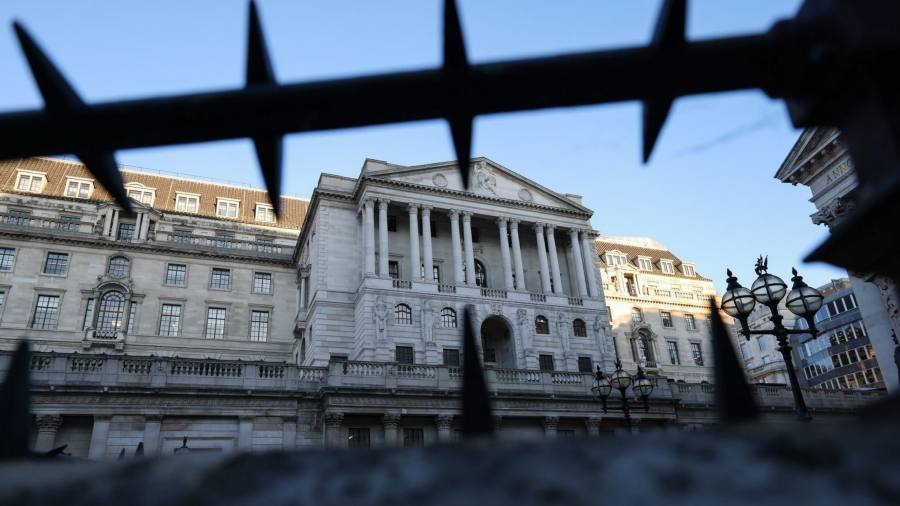
Bailey’s intervention arrived as the central lender stated it would have out the world’s first strain exams on non-lender monetary marketplaces, right after September’s implosion of Uk pension cash discovered systemic pitfalls that caught policymakers off guard.

“The idea that we’re previous the monetary disaster and we consequently don’t will need the regulation that we had post the money crisis, I would not go together with that,” Bailey stated.

His comments arrived just times right after chancellor Jeremy Hunt introduced the greatest shake up of British isles economical regulation in many years, even though insisting that the reforms ended up remaining carried out “very, pretty carefully”.

The United kingdom authorities hopes a liberalised economical regulation regime will reinvigorate the Metropolis right after Brexit. But the Lender argues powerful policies boost the monetary sector’s competitiveness and handle risk extra properly than ahead of the crisis.

Bailey claimed it was “important to make obvious, that the basis on which the regulatory [regime] was completed was not carried out just to handle a particular trouble that then went away”. He extra: “It was performed to set down some rather basic planks of the regulatory technique.”

The government’s programs, dubbed the “Edinburgh reforms”, include comforting ringfencing policies close to the separation of retail and investment decision banking and simplifying rules for pieces of the investment industry.

There will be a evaluation of the “senior professionals regime”, developed to keep executives to account for infractions on their view, whilst the UK’s top rated regulators — which include the BoE — will have a mandate to increase the City’s competitiveness.

Hunt insists the reforms are not the bonfire of rules some hoped for following Brexit, and explained to the FT’s World wide Boardroom meeting previous 7 days his programs ended up a “considered and well balanced package”.

“We have to make sure we don’t unlearn the classes of 2008 but at the exact time recognise that banking institutions today have significantly more powerful stability sheets,” the chancellor said.

Hunt’s allies explained on Tuesday that there had been no dissimilarities on plan involving the chancellor and BoE governor.

Bailey explained Brexit gave the United kingdom the possibility to tweak some outdated procedures as properly as those ill-suited to the UK, this sort of as for cash specifications for insurers.

But he hinted at a probable clash with the governing administration around its ideas to redraw the senior supervisors routine, whose rewards he defended. The 2016 routine, which bankers as soon as claimed produced them “terrified”, sets private accountability requirements so that executives as perfectly as establishments are held responsible for crises.

“[The senior managers’ regime] moved us from a entire world the place the judgment was a single of culpability to just one of duty,” the governor stated. “That has established a useful dynamic.”

In its common monetary stability update, the BoE claimed on Tuesday that put up-crisis reforms also contributed to what it termed a “robust” British isles financial institution sector with superior stages of funds. It added that both equally banking companies and the UK’s corporate sectors were now properly positioned to endure the country’s worsening financial outlook.

The Bank claimed that, although United kingdom households had been getting “stretched” by growing desire fees and soaring inflation, they ended up not however displaying “widespread signs of monetary difficulties” or an incapacity to repay loans.

But the BoE’s Monetary Coverage Committee — designed up of senior bank officials and external industry experts — expressed increased problem about the non-banking economical sector and identified as for “urgent” worldwide motion.

“We’ve experienced a entire collection of non-financial institution incidents across distinctive jurisdictions and I think it is unquestionably critical . . . to recognise this is a sector that is really internationally diversified [and needs global rules],” stated Bailey.

Non-lender money institutions’ share of the worldwide monetary providers market has additional than doubled given that the 2007-08 economic crisis.

In its prepared worry tests, BoE is organizing a “deep dive into precise risks” in marketplaces dominated by institutions this kind of as hedge resources, mutual cash and pension money so that policymakers can “propose solutions”. But, compared with its banking tension checks, it will not publish results for unique establishments or purchase steps these kinds of as elevating capital or withholding dividends.

The tests will glance at issues such as how a shock in just one economical market can ripple by way of one more, the potential risks of highly concentrated threats and how behaviours evolve by a crisis, with further more information to be disclosed in the very first 50 percent of 2023.

Individuals spots ended up pointed out as weak points by the BoE right after September’s legal responsibility-driven financial investment disaster, when a surge in Uk federal government bond yields led to a quick sale of gilts by pension cash in the wake of then primary minister Liz Truss’s badly been given “mini” Spending budget.

The central lender also recognized “deficiencies” in how banking institutions, which were being involved in LDI derivative trades, “monitor and manage risks”, as very well as “a lack of common and granular data”.

The BoE in the end experienced to stage in with an £65bn bond-buying programme to stabilise Uk govt bond marketplaces.

Jon Cunliffe, deputy governor for monetary security, said that though the BoE did not have powers to supervise some non-banks, it could request these types of powers at a afterwards phase and could make “pretty strong recommendations”.

The central financial institution is separately contacting for additional stringent oversight of LDIs. On Tuesday, it asked regulators in Ireland and Luxembourg, which oversee most of the British isles pension industry’s LDI money, and The Pensions Regulator, which displays the pension resources them selves, to set out a permanent security internet that funds need to keep to endure shocks.