Fighting disinformation ‘requires a little bit of courage’ for social media companies: Doctor

Combatting misinformation has become one of the most important issues the medical community faces, according to experts like Dr. Megan Ranney, an emergency room physician in Providence, R.I.

Just as a new coronavirus variant of concern, Omicron, has been identified, the rush of information shared and discussed on social media sites once again shows how quickly information, and in some cases misinformation, can spread. It’s a problem that has been ongoing throughout the pandemic.

Though social media can be a force for good, “the worst of social media has come to the forefront over the course of the pandemic,” she told Yahoo Finance.

This time, more public health, virus and medical experts are on social platforms quickly churning out facts and verified information. But even so, with greater knowledge of the social media companies’ abilities to control false information, the call for more accountability is growing louder.

More than 800 doctors and health experts have signed onto a letter asking Meta Platforms (FB) CEO Mark Zuckerberg to disclose data and strategies that Facebook is using to help stop the spread of false information about the vaccines and virus. The letter was sent through Doctors for America, a non-profit physician-led advocacy group.

“So many deaths could have been prevented, and we must act with haste to prevent more, particularly with vaccines becoming imminently available for young children. We simply cannot afford another deadly round of COVID and vaccine misinformation,” the doctors wrote.

Ranney, and others that signed, said the letter to Facebook signals an attempt to “diagnose” the problem.

“It requires a little bit of courage, and looking beyond potentially the immediate bottom line, to the larger societal good,” she said.

‘There’s a need to regulate algorithmic engagement’

Dr. Céline Gounder, an infectious diseases expert in New York City who formerly served on President Joe Biden’s COVID-19 transition team, is the letter’s first signatory. 

“I think there’s no question that having a whistleblower like Francis Haugen has really energized efforts around the spread of disinformation,” she said. Haugen is the former Facebook employee who disclosed tens of thousands of the company’s internal documents to the Securities and Exchange Commission and The Wall Street Journal in 2021.

“There’s a need to regulate algorithmic engagement,” she added, noting it’s easier said than done.

Another signatory, Dr. Robert Davidson, executive director of The Committee to Protect Health Care, and a doctor in the Midwest, said that while it is easy for anyone to unwittingly share false information, there should be a way to stop harmful information — especially in the middle of a deadly outbreak.

“Facebook and other social media outlets have the ability to amplify (information), and to concentrate it in front of a group of people that algorithms have pre-selected will be receptive to that information…so it almost makes it easier for the viral spread of misinformation,” he said.

Davidson said that the sharing of the information isn’t necessarily intentional, some people just genuinely share information that they think is interesting. Usually they don’t know any better and it reaffirms some pre-conceived notion, and then within the echo chamber — which could be a different echo chamber from a doctor or expert —it continues to circulate and spread wider, he said.

Which is why more experts have increasingly taken to social media to fight back.

“It feels like a Sisyphean task. At the end of the day, yeah, you can keep fighting those micro battles, but the only way to really solve it is to tackle what is really driving it,” Gounder said, pointing to social media companies as ground zero.

Both sides

According to the doctors, Facebook cited the quickly changing information throughout the pandemic as a hurdle for fact-checkers.

Delays in addressing false information helps fan the flames of mistrust in official sources and mainstream media, which is a prominent among those willing to believe the misinformation. Examples throughout the pandemic include the doctors who supported the use of hydroxychloroquine or ivermectin to treat covid, when neither was proven efficacious.

In those instances, individuals see the discord among people with equivalent titles, and can pounce on it as proof of conspiracy theories, Davidson said.

“You might have 2{21df340e03e388cc75c411746d1a214f72c176b221768b7ada42b4d751988996} of doctors saying something that is patently false. But this person has MD after their name … so it gives them this degree of credibility,” and gives the broader public the perception that there is no right answer, he said.

One example of an ongoing debate between experts is the need for boosters for all adults — recently greenlit by FDA, supporting the White House strategy to combat an anticipated winter surge.

“There’s widespread agreement that certain populations would benefit from an additional dose of vaccine. Right now, the question is, is that the case for everybody? And what is it you’re trying to achieve with (an additional dose)?” Gounder said.

Some believe that indications of waning immunity mean better protection against symptomatic cases, while others believe that the body can be relied on to do a decent job fighting against an infection even if it is symptomatic.

And general anti-vaccine sentiment is visibly higher than before, which pits doctors against their peers.

“I have a harder time convincing some patients to take a vaccine than I did before COVID,” said Dr. Stella Safo, founder of Just Equity for Health and a physician in New York City.

“We’ve gone from things being accepted to questioning some of the most basic things. It’s scary,” Safo told Yahoo Finance.

Lending a hand

Hiring experts to be fact-checkers, especially for the duration of the pandemic, could be a solution, though costly, for social platforms.

“There’s never been a time where someone has ever said there are microchips in the vaccines, and yet that kind of information has been shared in the past. There’s never been credible research or studies that have shown anything about infertility with the vaccines, but that is a pervasive and widely-held belief amongst folks who don’t believe in getting the vaccine,” Davidson said.

“If they could have some trusted source to help them filter through this as they put the brakes on these posts, and then they can prevent these things from getting out there in the first place,” Davidson said.

Safo said more needs to be done to help craft easier-to-digest messaging.

“We have proven ourselves, unfortunately, to be very bad at health care communication,” Safo said.

“We’ve put ourselves back, I would say, in terms of public health communications, by a decade,” she added.

More doctors, more voices

The pandemic saw a groundswell of vocal doctors, scientists and public health experts on social platforms, some of whom might have been in the shadows or relied on trade groups or large organizations to be their mouthpieces in the past.

“I think a lot more are choosing to get out there … and I think that has to do a lot, probably, with the changing demographics and the changing business aspect of what being a health care professional is. There are many more women in health care, there are many more people of color in health care,” Davidson said.

“We could have done this sooner. I think in some ways, the health care and public health communities are finally at least a little bit coming up for a breath of air. It feels like we have been drowning underwater…for the last few years. And it’s hard to tackle everything at the same time,” Gounder said.

As more is now known about the virus, how it spreads, and with just over half the U.S. population vaccinated, experts have a chance to fight harder against misinformation.

“I think we’re finally sort of in a place of being able to take on these bigger macro issues in a more significant way,” Gounder said.

And with the U.S. Surgeon General’s Office supporting a movement to address misinformation, calling it a public health issue earlier this year, the timing is right to attack the issue. But that is also if doctors, who have found their voices on social platforms throughout the pandemic, can continue to do so without organizations and trade groups taking over the messaging.

“I would hope that that continues,” Ranney said.

“If we don’t turn this ship,” she added, “I think this is only the beginning of the harm that we’ll face.”

Follow Anjalee on Twitter @AnjKhem

Read the latest financial and business news from Yahoo Finance.

Follow Yahoo Finance on Twitter, Facebook, Instagram, Flipboard, SmartNews, LinkedIn, YouTube.

Dow plunges 905 points in Black Friday selloff, books worst day in over a year as WHO declares new COVID ‘variant of concern’

U.S. stock benchmarks suffered withering losses on Friday as stock and commodity markets plunged, after scientists detected a new COVID variant in South Africa that could be to blame for a recent sharp surge in cases, especially in Europe.

U.S. markets were closed for Thanksgiving on Thursday and ended at 1 p.m. Eastern Time on Friday, three hours earlier than usual, and bond market trading ends at 2 p.m., an hour earlier than is typical.

How are stock-index futures trading?
  • The S&P 500
    SPX,
    -2.27{21df340e03e388cc75c411746d1a214f72c176b221768b7ada42b4d751988996}
    fell 106.84 points, or 2.3{21df340e03e388cc75c411746d1a214f72c176b221768b7ada42b4d751988996}, to 4,594.62.

  • The Dow Jones Industrial Average
    DJIA,
    -2.53{21df340e03e388cc75c411746d1a214f72c176b221768b7ada42b4d751988996}
    slumped 905.04 points, or 2.5{21df340e03e388cc75c411746d1a214f72c176b221768b7ada42b4d751988996}, to 34,899.34, with the index logging the worst daily drop since Oct. 28, 2020, according to FactSet data.

  • The decline for the Dow saw it mark its first close below its 50-day moving average at 35,261.93 since Oct. 14.

  • The Nasdaq Composite Index COMP declined 353.57 points, or 2.2{21df340e03e388cc75c411746d1a214f72c176b221768b7ada42b4d751988996}, to15,491.66.

  • The decline for the S&P 500, Dow and Nasdaq Composite posted their worst Black Friday performance since 1950.

On Wednesday, the Dow industrials
DJIA,
-2.53{21df340e03e388cc75c411746d1a214f72c176b221768b7ada42b4d751988996}
fell 9.42 points to finish nearly flat at 35,804.38. The S&P 500
SPX,
-2.27{21df340e03e388cc75c411746d1a214f72c176b221768b7ada42b4d751988996}
slipped 0.2{21df340e03e388cc75c411746d1a214f72c176b221768b7ada42b4d751988996} to close at 4,701.46, just 0.1{21df340e03e388cc75c411746d1a214f72c176b221768b7ada42b4d751988996} below its Nov. 18 record close of 4,704.54, according to Dow Jones Market Data. The Nasdaq Composite Index
COMP,
-2.23{21df340e03e388cc75c411746d1a214f72c176b221768b7ada42b4d751988996}
rose 0.4{21df340e03e388cc75c411746d1a214f72c176b221768b7ada42b4d751988996} to 15,84.23.

What’s driving the market?

It was an ugly day for stock investors during a thinly traded Black Friday session, which was susceptible to big swings on alarming news from public health officials who were assessing a new variant of the coronavirus that causes COVID-19.

Late in the session, the World Health Organization’s technical advisory group assigned the B. 1.1.529 variant of the virus the Greek letter omicron and declared it a “variant of concern,” as it did with the delta variant.

Fear of a new variant overshadowed the usual focus on U.S. Black Friday shopping day, which puts the focus on retailers as consumers shop for bargains.

Particularly notable about the variant is the “large number of mutations, some of which are concerning,” the WHO group said in a statement. The mutations could make omicron more resistant to the current batch of vaccines.  

The discovery of the new COVID strain was announced on Friday by South Africa’s health minister Joe Phaahla. He said scientists were concerned because of its high number of mutations and the dramatic surge in infections the country had seen over the past four or five days.

“The pandemic and COVID variants remain one of the biggest risks to markets, and are likely to continue to inject volatility over the next year(s),” wrote Keith Lerner, co-chief investment officer and chief market strategist at Truist Advisory Services, in a Friday note. “It’s hard to say at this point how lasting or impactful this latest variant will be for markets,” the analyst wrote. 

The omicron strain has been detected in Botswana and in Hong Kong in travelers who had visited South Africa.

“The one bull in the China shop that could truly derail the global recovery has always been a new strain of Covid-19 that swept the world and caused the reimposition of mass social retractions,” said Jeffrey Halley, senior market analyst, at OANDA, in a note. “All we know so far is the B. 1.1.529 is heavily mutated but markets are taking no chances.”

“Just when you thought Covid was being controlled in a holiday shortened week,” said Sam Stovall, chief investment strategist at CFRA Research, in emailed comments.

‘It makes sense to have a market significant correction given the high level of uncertainty.’


— Jay Hatfield, CEO and portfolio manager at Infrastructure Capital Management

Trading around the Thanksgiving holiday is often associated with lower trading volumes as traders typically wait until Monday to return to work. There was no U.S. economic data on the calendar for Friday.

After new cases stabilized at 200 a day, South Africa reported more than 1,200 on Wednesday and 2,465 on Thursday.

The U.K. government is banning flights from South Africa along with five other African nations, effective Friday.

“Predictably, energy, travel related and financials are the leading decliners and treasuries are rallying,” wrote Jay Hatfield, CEO and portfolio manager at Infrastructure Capital Management, in emailed comments on Friday.

“It makes sense to have a market significant correction given the high level of uncertainty,” the money manager wrote.

“At this stage very little is known,” Deutsche Bank strategists, led by Jim Reid, told clients in a note. “Mutations are often less severe so we shouldn’t jump to conclusions but there is clearly a lot of concern about this one. Also South Africa is one of the world leaders in sequencing so we are more likely to see this sort of news originate from there than many countries. Suffice to say at this stage no one in markets will have any idea which way this will go.”

Read: Facing the biggest inflation surge in 30 years, shoppers expect to spend a lot more this holiday season

Which companies are in focus?
  • Drugmaker stocks were on the rise, including Pfizer PFE advanced by 6.1{21df340e03e388cc75c411746d1a214f72c176b221768b7ada42b4d751988996}, and Moderna MRNA stock rallied by about 21{21df340e03e388cc75c411746d1a214f72c176b221768b7ada42b4d751988996}.

  • Travel-related stocks were on the backfoot: Expedia EXPE fell nearly 9,5{21df340e03e388cc75c411746d1a214f72c176b221768b7ada42b4d751988996}

  • Shares of airliners and cruise ships Delta Air Lines DAL, fell 8.3{21df340e03e388cc75c411746d1a214f72c176b221768b7ada42b4d751988996}, Norwegian Cruise NCLH, down 11.4{21df340e03e388cc75c411746d1a214f72c176b221768b7ada42b4d751988996}, and Royal Caribbean RCL shares slid 13{21df340e03e388cc75c411746d1a214f72c176b221768b7ada42b4d751988996}, United Airlines UAL declined 9.6{21df340e03e388cc75c411746d1a214f72c176b221768b7ada42b4d751988996}, Southwest Airlines LUV shares dropped 4.3{21df340e03e388cc75c411746d1a214f72c176b221768b7ada42b4d751988996}, American Airlines’s AAL stock slumped 8.8{21df340e03e388cc75c411746d1a214f72c176b221768b7ada42b4d751988996}.

  • Meanwhile, shares of companies associated with the stay-at-home trade were set to rise, including Netflix NFLX rose 1.1{21df340e03e388cc75c411746d1a214f72c176b221768b7ada42b4d751988996} and Peloton Interactive Inc.
    PTON,
    +5.67{21df340e03e388cc75c411746d1a214f72c176b221768b7ada42b4d751988996}
    advanced 3.4{21df340e03e388cc75c411746d1a214f72c176b221768b7ada42b4d751988996}, while Zoom Video Communications Inc. shares
    ZM,
    +5.72{21df340e03e388cc75c411746d1a214f72c176b221768b7ada42b4d751988996}
    rallied 5.7{21df340e03e388cc75c411746d1a214f72c176b221768b7ada42b4d751988996}.

How are other markets faring?
  • The 10-year Treasury note TMUBMUSD10Y retreated by more than 10 basis points to ell to around 1.54{21df340e03e388cc75c411746d1a214f72c176b221768b7ada42b4d751988996}, versus 1.644{21df340e03e388cc75c411746d1a214f72c176b221768b7ada42b4d751988996} on Wednesday at 3 p.m. ET. The bond market was closed on Thursday in observance of U.S.

  • The ICE U.S. Dollar Index DXY, a measure of the currency against a basket of six major rivals, was down 0.7{21df340e03e388cc75c411746d1a214f72c176b221768b7ada42b4d751988996}.

  • Gold futures for December delivery GCZ21 rose less than 0.1{21df340e03e388cc75c411746d1a214f72c176b221768b7ada42b4d751988996} to trade at $1,785.30 an ounce. U.S. oil futures CLF22 traded off more than 12{21df340e03e388cc75c411746d1a214f72c176b221768b7ada42b4d751988996} at around $68.27 a barrel.

  • The Stoxx Europe 600 SXXP closed 3.7{21df340e03e388cc75c411746d1a214f72c176b221768b7ada42b4d751988996} lower, and London’s FTSE 100 index UKX also gave up 3.6{21df340e03e388cc75c411746d1a214f72c176b221768b7ada42b4d751988996}.

  • In Asia, the Shanghai Composite SHCOMP finished off 0.5{21df340e03e388cc75c411746d1a214f72c176b221768b7ada42b4d751988996} higher, while the Hang Seng Index HSI lost 2.7{21df340e03e388cc75c411746d1a214f72c176b221768b7ada42b4d751988996} in Hong Kong. China’s CSI 300 000300 declined 0.7{21df340e03e388cc75c411746d1a214f72c176b221768b7ada42b4d751988996} and Japan’s Nikkei 225 NIK finished 2.5{21df340e03e388cc75c411746d1a214f72c176b221768b7ada42b4d751988996} lower.

Business Beat: Asian market expands | Business Beat

Pacific Asian Market opened its second location in Longview earlier this month at 2305 Gilmer Road.

The first Longview store, 1432 McCann Road in Brookwood Village Shopping Center, remains open.

Romel Igaya and his wife, Esusana, own the stores. Alongside business partners, they also own a similar grocery store in Tyler.

The stores are open 9:30 a.m. to 7 p.m. Monday through Saturday and 1 to 6 p.m. Sunday.

Mall adds new stores

The holiday shopping season kicked off at Longview Mall this past week with the opening of two new stores: EntertainMART and Red Barn Farms.

EntertainMART, near JC Penny, buys and sells vintage items, as well as some new merchandise: Blu-rays; DVDs; retro and new video games; consoles and accessories; comic books; sports and collectible game cards; books; knives and swords; and more.

“We kind of try to take the spot of Hastings,” said EntertainMart Assistant Manager Garrett Hopkins, referring to a now closed chain of stores that featured, among other things, new and used books, CDs, Blu-rays and DVDs as well as collectible items.

EntertainMART also offers a service to repair CDs and DVDs with scratches, for instance, which people previously might have thought had to be trashed.

“We’ve never had a store like this in the mall,” Longview Mall General Manager Kelly Overby said.

Red Barn Farms, near Center Court, features gifts such as signature foods and candles that the store manufactures in Jacksonville, as well as hand-sewn stuffed animals, goat milk soaps and purses. Owner Brad Juneau said many of the items in the store are crafted in the Amish community in Nappanee, Indiana.

His merchandise spills out into two kiosks just outside the store, with Juneau describing his merchandise as “unique” items that can’t be found on Amazon.

Downtown grand opening

The new Visit Longview Marketplace will celebrate its grand opening starting at 4:30 p.m. Monday.

Visit Longview, the city’s convention and visitors bureau, previously was at City Hall but moved downtown to increase visibility and foot traffic. In addition to housing the convention and visitors bureau, the new location at 109 W. Tyler St. also is home to the Main Street program and a retail shop featuring Longview and Texas merchandise, including T-shirts; postcards; mugs; shot glasses; a small selection of pet supplies; playing cards; jewelry; buttons; tote bags; ornaments; Texas-shaped cookie cutters; snacks from Heartisans Marketplace; local honey from Piney Woods Bee Company; and spices and barbecue sauce from Bodacious.

Perfect Catering will serve appetizers, beer and wine from 5 to 7 p.m.

CAG rebukes Andhra Pradesh’s financial management

Amaravati: Unbridled revenue expenditure and constricted capital expenditure have pushed Andhra Pradesh’s finances into disarray, causing a revenue deficit of a staggering Rs 26,441 crore (1,486.28 per cent over the estimate) in the year 2019-20, the Comptroller and Auditor General of India has observed.

The CAG strongly rebuked the state government over the gross financial mismanagement, particularly in failing to contain the mounting revenue deficit, and violation of the FRBM Act.

The CAG found fault with the government over the grossly decreased capital expenditure in the year 2019-20 and said it pointed to the need for a review of the fiscal strategy and creation of the fiscal space for increased capital expenditure, which in turn, would help in promoting and accelerating equitable growth.

MS Education Academy

The liabilities of the state have been increasing year-on-year and, over 80 per cent of the borrowings during 2019-20 were utilised only to balance the Revenue Account, affecting asset creation.

The CAG, in its State Finances Audit Report for the year ending March 2020, observed that the government AP needed to estimate its resources “more realistically” and manage its expenditure “judiciously”.

The CAG report was tabled in the state Legislature on Friday.

The report noted that the state failed to contain revenue deficit during 2015-20, despite receipt of post-devolution Revenue Deficit Grants (to the tune of Rs 22,112 crore) from the Centre as per the 14th Finance Commission recommendations.

Revenue deficit of Rs 26,441 crore in 2019-20 was substantially higher than the Budget estimates (Rs 1,779 crore) due to the introduction of new schemes like Amma Vodi (Rs 6,349.47 crore) and nine-hour free power supply to the agriculture sector (Rs 4,919.84 crore) during 2019-20 and a decrease in state’s own revenue of Rs 1,511 crore over the previous year, it said.

Comparatively, the state incurred a capital expenditure of only Rs 12,242 crore, including Rs 1,830.93 crore funded by the Centre, that constituted mere 7.89 per cent of the total expenditure during 2019-20 and fell way short of the Budget estimate of Rs 32,293 crore. It accounted for only 1.26 per cent of the Gross State Domestic Product and decreased by Rs 7,734 crore (38.72 per cent) from the previous year.

The report said there were instances of misclassification of revenue transactions under capital section and non-accounting of other liabilities that would have pushed up the deficits to a further extent.

The outstanding debt of the state showed an increasing trend during the five-year period 2015-20. The debt that was Rs 1,73,854 crore during 2015-16, mounted to Rs 3,01,802 crore in 2019-20, marking an increase of 73.60 per cent, the CAG observed.

The off-budget borrowing liability of Rs 26,096.98 crore has not been disclosed appropriately as part of the state budget documents.

“This has the impact of diluting public financial management and oversight role of the Legislature and placing major sources of funding of government’s crucial infrastructure projects beyond the control of the Legislature,” the CAG remarked.

“Sound budgetary management requires advance planning and accurate estimation of revenues and expenditure. There were instances of incurring excess expenditure or large savings against the provisions made during the year, which point to flaws in expenditure monitoring and control, the CAG noted.

It warned that “persistent excess expenditure” over grants approved by the state Legislature was a violation of the “will of the Legislature” and needed to be viewed seriously.

Analysts Have Made A Financial Statement On Medtronic plc’s (NYSE:MDT) Second-Quarter Report

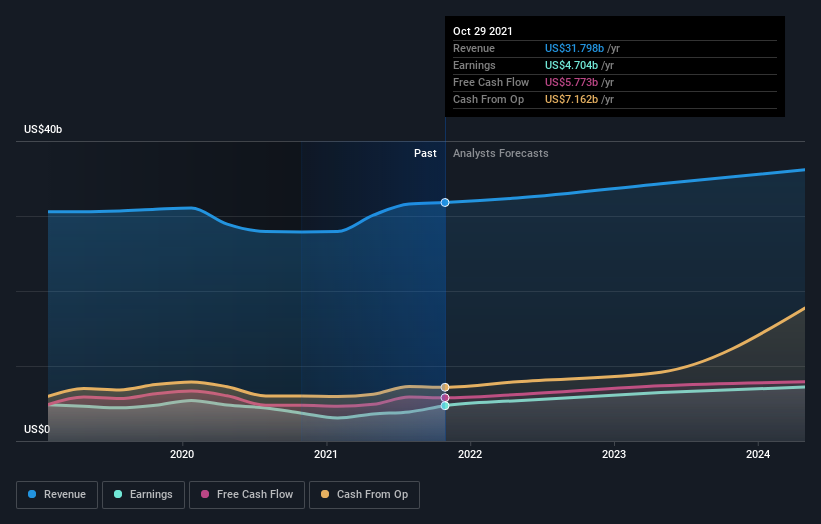
Last week, you might have seen that Medtronic plc (NYSE:MDT) released its second-quarter result to the market. The early response was not positive, with shares down 2.7{21df340e03e388cc75c411746d1a214f72c176b221768b7ada42b4d751988996} to US$114 in the past week. It was a credible result overall, with revenues of US$7.8b and statutory earnings per share of US$0.97 both in line with analyst estimates, showing that Medtronic is executing in line with expectations. This is an important time for investors, as they can track a company’s performance in its report, look at what experts are forecasting for next year, and see if there has been any change to expectations for the business. Readers will be glad to know we’ve aggregated the latest statutory forecasts to see whether the analysts have changed their mind on Medtronic after the latest results.

earnings-and-revenue-growthNYSE:MDT Earnings and Revenue Growth November 26th 2021

Taking into account the latest results, Medtronic’s 25 analysts currently expect revenues in 2022 to be US$32.4b, approximately in line with the last 12 months. Per-share earnings are expected to grow 12{21df340e03e388cc75c411746d1a214f72c176b221768b7ada42b4d751988996} to US$3.90. Yet prior to the latest earnings, the analysts had been anticipated revenues of US$33.0b and earnings per share (EPS) of US$3.96 in 2022. So it’s pretty clear that, although the analysts have updated their estimates, there’s been no major change in expectations for the business following the latest results.

There were no changes to revenue or earnings estimates or the price target of US$141, suggesting that the company has met expectations in its recent result. The consensus price target is just an average of individual analyst targets, so – it could be handy to see how wide the range of underlying estimates is. There are some variant perceptions on Medtronic, with the most bullish analyst valuing it at US$155 and the most bearish at US$127 per share. The narrow spread of estimates could suggest that the business’ future is relatively easy to value, or thatthe analysts have a strong view on its prospects.

Looking at the bigger picture now, one of the ways we can make sense of these forecasts is to see how they measure up against both past performance and industry growth estimates. It’s clear from the latest estimates that Medtronic’s rate of growth is expected to accelerate meaningfully, with the forecast 3.8{21df340e03e388cc75c411746d1a214f72c176b221768b7ada42b4d751988996} annualised revenue growth to the end of 2022 noticeably faster than its historical growth of 0.3{21df340e03e388cc75c411746d1a214f72c176b221768b7ada42b4d751988996} p.a. over the past five years. Compare this with other companies in the same industry, which are forecast to see revenue growth of 8.9{21df340e03e388cc75c411746d1a214f72c176b221768b7ada42b4d751988996} annually. So it’s clear that despite the acceleration in growth, Medtronic is expected to grow meaningfully slower than the industry average.

The Bottom Line

The most important thing to take away is that there’s been no major change in sentiment, with the analysts reconfirming that the business is performing in line with their previous earnings per share estimates. On the plus side, there were no major changes to revenue estimates; although forecasts imply revenues will perform worse than the wider industry. The consensus price target held steady at US$141, with the latest estimates not enough to have an impact on their price targets.

With that in mind, we wouldn’t be too quick to come to a conclusion on Medtronic. Long-term earnings power is much more important than next year’s profits. We have forecasts for Medtronic going out to 2024, and you can see them free on our platform here.

It is also worth noting that we have found 1 warning sign for Medtronic that you need to take into consideration.

This article by Simply Wall St is general in nature. We provide commentary based on historical data and analyst forecasts only using an unbiased methodology and our articles are not intended to be financial advice. It does not constitute a recommendation to buy or sell any stock, and does not take account of your objectives, or your financial situation. We aim to bring you long-term focused analysis driven by fundamental data. Note that our analysis may not factor in the latest price-sensitive company announcements or qualitative material. Simply Wall St has no position in any stocks mentioned.

Have feedback on this article? Concerned about the content? Get in touch with us directly. Alternatively, email editorial-team (at) simplywallst.com.

The views and opinions expressed herein are the views and opinions of the author and do not necessarily reflect those of Nasdaq, Inc.

Dow sinks 800 points as new COVID variant fans lockdown fears

U.S. stocks plunged on Friday, with global markets rattled by a new coronavirus variant discovered in South Africa, which fanned concerns that new growth-crushing lockdowns could be imposed if the variant spreads widely.

Trading volumes were low due to the Thanksgiving holiday in the U.S., which may have exacerbated the volatility. 

However, major benchmarks fell sharply during the holiday-shortened session, with the Dow (^DJI) diving by more than 900 points — logging its worst day of the year and its third worst Thanksgiving selloff ever. Meanwhile, S&P 500 (^GSPC) sank by over 2{21df340e03e388cc75c411746d1a214f72c176b221768b7ada42b4d751988996}, its biggest drop since February, and the Nasdaq (^IXIC) also fell sharply, but its losses were partly contained by a rally in stay-at-home stocks.

A new coronavirus variant has been discovered in South Africa, leading to an emergency session of the World Health Organization. Dubbed “Omicron,” scientists say the new B.1.1.529 strain is a concern, because it harbors a large number of mutations found in other variants — including the fast-spreading Delta variant that exploded over much of the summer — and it seems to be rapidly spreading.

While there’s no evidence yet, health officials are worried that the mutating variant could dilute or resist the efficacy of vaccines.

“It goes without saying that it’s still too early to say exactly how big a threat the new B.1.1.529 strain poses to the global economy,” Neil Shearing, Group Chief Economist at Capital Economics, said in a note.

Still, “the lesson from the past couple of years is that it’s the restrictions that are imposed in response to the virus – rather than the virus itself – that causes the bulk of the economic damage. So, the key question is how governments will respond in the event that the B.1.1.529 strain spreads,” Shearling wrote.

“That in turn will hinge on the extent to which it escapes the vaccines and, importantly, causes strains in national healthcare systems,” he added — underscoring that governments in the U.S. and U.K. had taken a “learn to live with the virus” approach, and thus are far less likely than other regions to impose new restrictions.

BioNTech (BNTX) said on Friday it expects more data on the new coronavirus variant in South Africa within two weeks to help its shots should be reworked, and that the company and Pfizer (PFE) — its vaccine partner — could redesign its vaccine within 6 weeks, with an aim to distribute it within 100 days.

Pfizer surged as much as 8{21df340e03e388cc75c411746d1a214f72c176b221768b7ada42b4d751988996} to record, signaling that the new variant could create demand for the vaccine.

While fears of COVID-19 dominated investors’ attention for much of 2020 and 2021, Pfizer confirms it could make variant vaccine in 100 days with the ability to make four billion doses in the first 12 months, according to Citi analyst Andrew Baum.

Travel and leisure-related stocks were among those hit the hardest early Friday, with Carnival Corp (CCL) and Royal Caribbean (RCL) down by 10{21df340e03e388cc75c411746d1a214f72c176b221768b7ada42b4d751988996} in premarket trading. United Airlines (UAL), Delta Air Lines (DAL) and American Airlines were down each 7{21df340e03e388cc75c411746d1a214f72c176b221768b7ada42b4d751988996} each. Boeing slipped 6{21df340e03e388cc75c411746d1a214f72c176b221768b7ada42b4d751988996}. Marriott International and Hilton Worldwide fell more than 5{21df340e03e388cc75c411746d1a214f72c176b221768b7ada42b4d751988996}.

Travel platform Expedia (EXPE) was the fifth-worst performer in the S&P 500, dropping by 11{21df340e03e388cc75c411746d1a214f72c176b221768b7ada42b4d751988996} during the shortened trading day, while home sharing site Airbnb (ABNB) was down more than 5{21df340e03e388cc75c411746d1a214f72c176b221768b7ada42b4d751988996}.

On the flip side, stay-at-home stocks gained Zoom (ZM) up 9{21df340e03e388cc75c411746d1a214f72c176b221768b7ada42b4d751988996}, while Netflix (NFLX) bounded higher by 2{21df340e03e388cc75c411746d1a214f72c176b221768b7ada42b4d751988996}.

Oil prices also swooned to the lowest levels in more than two months Friday sparking fears about a slowdown in demand.

U.S. oil dropped 10{21df340e03e388cc75c411746d1a214f72c176b221768b7ada42b4d751988996} its the worst day since April 2020, with U.S. crude futures down 6.2{21df340e03e388cc75c411746d1a214f72c176b221768b7ada42b4d751988996} to $73.57 per barrel on perceived fears of falling demand amid the new variant.

Bond yields have also fallen as the market’s inflation fears temporarily gave way to the desire for safe-haven assets. The yield on the benchmark 10-year U.S. Treasury note was down to 1.53{21df340e03e388cc75c411746d1a214f72c176b221768b7ada42b4d751988996} after closing at 1.63{21df340e03e388cc75c411746d1a214f72c176b221768b7ada42b4d751988996} on Wednesday.

“We’re still in a place where yields are so low that the safe haven of bonds isn’t as safe as it looks,” ProShares’ Simeon Hyman told Yahoo Finance Live on Friday. “You’re making not that much today on that little bit of rally in treasuries, so it’s a tough spot.”

Banks, which benefit from the higher interest rates, were broadly weaker as bond yields declined. Bank of America sinks 5.8{21df340e03e388cc75c411746d1a214f72c176b221768b7ada42b4d751988996}, Wells Fargo drops 6.3{21df340e03e388cc75c411746d1a214f72c176b221768b7ada42b4d751988996}, Citigroup loses 4.8{21df340e03e388cc75c411746d1a214f72c176b221768b7ada42b4d751988996}, JPMorgan declines 4.7{21df340e03e388cc75c411746d1a214f72c176b221768b7ada42b4d751988996}, Goldman Sachs sheds 3.9{21df340e03e388cc75c411746d1a214f72c176b221768b7ada42b4d751988996} and Morgan Stanley tumbled 4.9{21df340e03e388cc75c411746d1a214f72c176b221768b7ada42b4d751988996}

__

1:00 p.m. ET: Stocks slump on Black Friday, as new variant spooks investors

Here were the main moves in markets as of 1:00 p.m. ET:

  • S&P 500 (^GSPC): -106.65 (-2.27{21df340e03e388cc75c411746d1a214f72c176b221768b7ada42b4d751988996}) to 4,594.81

  • Dow (^DJI): -903.59 (-2.52{21df340e03e388cc75c411746d1a214f72c176b221768b7ada42b4d751988996}) to 34,900.79

  • Nasdaq (^IXIC): -353.57 (-2.23{21df340e03e388cc75c411746d1a214f72c176b221768b7ada42b4d751988996}) to 15,491.66

  • Crude (CL=F): +$9.73 (-12.41{21df340e03e388cc75c411746d1a214f72c176b221768b7ada42b4d751988996}) to $68.66 a barrel

  • Gold (GC=F): -$1.10 (-0.06{21df340e03e388cc75c411746d1a214f72c176b221768b7ada42b4d751988996}) to $1,785.40 per ounce

  • 10-year Treasury (^TNX): -1.4 bps to yield 1.54{21df340e03e388cc75c411746d1a214f72c176b221768b7ada42b4d751988996}

11:15 a.m. ET: Carnival, travel slumps on fears of South African Covid variant

Cruise lines stocks continues to retreat as covid fears swelled. Carnival Corp (CCL) shed more than 12{21df340e03e388cc75c411746d1a214f72c176b221768b7ada42b4d751988996}, while Royal Caribbean (RCL) sunk more than 11{21df340e03e388cc75c411746d1a214f72c176b221768b7ada42b4d751988996}. 

11:10 a.m. ET: Stocks slump midday

Here’s where markets were trading midday: 

  • S&P 500 (^GSPC): -93.46 (-1.99{21df340e03e388cc75c411746d1a214f72c176b221768b7ada42b4d751988996}) to 4,608.00

  • Dow (^DJI): -913.69 (-2.55{21df340e03e388cc75c411746d1a214f72c176b221768b7ada42b4d751988996}) to 34,890.69

  • Nasdaq (^IXIC): -318.08 (-2.02{21df340e03e388cc75c411746d1a214f72c176b221768b7ada42b4d751988996}) to 15,523.46

  • Crude (CL=F): -$9.24 (-11.79{21df340e03e388cc75c411746d1a214f72c176b221768b7ada42b4d751988996}) to $69.15 a barrel

  • Gold (GC=F): $13.30 (0.75{21df340e03e388cc75c411746d1a214f72c176b221768b7ada42b4d751988996}) to $1,797.60 per ounce

  • 10-year Treasury (^TNX): -1.49 bps to yield 1.5{21df340e03e388cc75c411746d1a214f72c176b221768b7ada42b4d751988996}

10:30 a.m. ET: The end of the interest rate differential play?

Friday’s decidedly risk-off tone is calling into question the level of aggressiveness with which the Federal Reserve may pull back on its stimulus. Only a day ago, some thought the rapid surge in prices could prompt the Fed to speed up a taper — or even hike rates faster. 

What a difference a day makes. Marc Chandler at Bannockburn Global FX, pointed out in a research note that the rise of a new variant is scrambling Fed expectations versus the European Central Bank and the Bank of Japan: 

The dollar’s rally has been fueled by the prospect of a divergence of monetary policy that favored the Fed over the ECB and BOJ. Indeed, since the November 10 surprise jump in the October CPI to above 6{21df340e03e388cc75c411746d1a214f72c176b221768b7ada42b4d751988996}, we had emphasized the likelihood that the Fed would have to taper quicker to give it the flexibility to lift rates earlier if needed. Since then, 4-5 Fed officials and several large banks have also underscored this possibility. However, this scenario is being called into question today, which is evident in the swaps markets and the Fed funds futures.

9:30 a.m. ET: Stocks open sink 

Here’s where markets were trading just before the opening bell:

  • S&P 500 (^GSPC): -66.85 (-1.42{21df340e03e388cc75c411746d1a214f72c176b221768b7ada42b4d751988996}) to 4,634.61

  • Dow (^DJI): -848.78 (-2.37{21df340e03e388cc75c411746d1a214f72c176b221768b7ada42b4d751988996}) to 34,955.60

  • Nasdaq (^IXIC): -133.91 (-0.83{21df340e03e388cc75c411746d1a214f72c176b221768b7ada42b4d751988996}) to 15,708.01

  • Crude (CL=F): -$5.34 (-6.81{21df340e03e388cc75c411746d1a214f72c176b221768b7ada42b4d751988996}) to $73.05 a barrel

  • Gold (GC=F): $21.20 (1.19{21df340e03e388cc75c411746d1a214f72c176b221768b7ada42b4d751988996}) to $1,805.50 per ounce

  • 10-year Treasury (^TNX): -1.52 bps to yield 1.5{21df340e03e388cc75c411746d1a214f72c176b221768b7ada42b4d751988996}

7:55 a.m. ET Friday: Stock futures tumble 

Here’s where markets were trading Friday morning: 

  • S&P 500 futures (ES=F): 4,623.25, -75.75 (-1.61{21df340e03e388cc75c411746d1a214f72c176b221768b7ada42b4d751988996})

  • Dow futures (YM=F): 34,973.00, -776.00 (-2.17{21df340e03e388cc75c411746d1a214f72c176b221768b7ada42b4d751988996})

  • Nasdaq futures (NQ=F): 16,224.50, -141.50 (-0.86{21df340e03e388cc75c411746d1a214f72c176b221768b7ada42b4d751988996})

NEW YORK, NEW YORK - SEPTEMBER 30: Traders work on the floor of the New York Stock Exchange (NYSE) on September 30, 2021 in New York City. In afternoon trading the Dow was down over 250 points as investors continue to worry about inflation, wages and supply chain issues. (Photo by Spencer Platt/Getty Images)

NEW YORK, NEW YORK – SEPTEMBER 30: Traders work on the floor of the New York Stock Exchange (NYSE) on September 30, 2021 in New York City. In afternoon trading the Dow was down over 250 points as investors continue to worry about inflation, wages and supply chain issues. (Photo by Spencer Platt/Getty Images)