CFPB Invokes Dormant Dodd-Frank Authority to Regulate Nonbank Financial Companies

CFPB Invokes Dormant Dodd-Frank Authority to Regulate Nonbank Financial Companies

May 5, 2022

Click for PDF

On April 25, 2022, the Consumer Financial Protection Bureau announced that it will begin relying upon a “largely unused legal provision” of the Dodd-Frank Act to supervise nonbank financial companies that purportedly pose risks to consumers.  To facilitate that process, the CFPB simultaneously promulgated a procedural rule that authorizes it to publish its decisions about whether certain nonbank entities present such a risk.  The CFPB has stated that it intends for these decisions to provide nonbank entities with guidance about the circumstances in which they may be subject to regulation.  Left unstated is the reality that the threat to publicly designate an entity as posing risks to consumers will provide the CFPB with additional leverage over such entities.

The CFPB’s announcement marks a significant expansion of its supervisory reach.  The CFPB said that it intends to “conduct examinations” of “fintech” companies and “to hold nonbanks to the same standards that banks are held to.”  And it is expected that the CFPB will assert the same authority over crypto firms.  The CFPB’s announcement comes at a time of increasingly intense competition among regulators to assert jurisdiction over fintech and digital assets firms.  Gibson Dunn represents many clients at the forefront of crypto and fintech innovation, and has deep experience challenging over-extension of agencies’ regulatory authority, including by financial regulators.  We stand ready to help guide industry players as the CFPB moves forward with its ambitious plans.

I. The CFPB’s Authority to Regulate Nonbank Entities

Historically, only banks and credit unions were subject to federal financial supervision.  That changed when Congress enacted the Dodd-Frank Wall Street Reform and Consumer Protection Act, Pub. L. No. 111-203, 124 Stat. 1376 (2010).

Under Dodd-Frank, the CFPB has supervisory authority over several categories of nonbank entities, including entities that provide mortgage, private student loan, or payday loan services.  12 U.S.C. § 5514(a)(1)(A), (D)–(E).  In addition, and most relevant here, the CFPB may regulate nonbank entities when it “has reasonable cause to determine”—after providing notice and an opportunity to respond—that the entity “poses risks to consumers” regarding the provision of consumer financial products or services.  Id. § 5514(a)(1)(C).

The CFPB issued a procedural rule in 2013 delineating the risk-determination process, but it has never before used this authority to supervise a nonbank.  As the CFPB’s April 25, 2022 announcement explains, however, that is about to change.  In the announcement, the CFPB said that it will begin exercising its “dormant authority” under Dodd-Frank to supervise nonbank entities—including “fintech” firms—that it has determined pose a risk to consumers.

The Dodd-Frank Act and the CFPB’s implementing regulations detail the risk-determination process and the consequences of being subject to regulation.

  • The Risk-Determination Process. The CFPB promulgated detailed procedures for the process it uses to determine whether nonbank entities are a risk to consumers, and thus subject to regulation under Dodd-Frank.  See 12 C.F.R. §§ 1091.100.115Those procedures give the CFPB discretion to initiate the risk-determination process through issuing a “Notice of Reasonable Cause,” id. § 1091.102, or through bringing charges in an adjudicatory proceeding, id. § 1091.111.  Whichever path the CFPB chooses, it must provide notice of the basis for the apparent risk and an opportunity for the nonbank entity to respond.  The CFPB has stated that it may base its risk determinations on “complaints collected by the CFPB, or on information from other sources, such as judicial opinions and administrative decisions,” as well as “whistleblower complaints, state partners, federal partners, or news reports.”  After considering the available evidence and any responses from the nonbank entity, the Director will decide whether it has “reasonable cause” to find a risk to consumers.  The Director’s decision to subject an entity to regulation under Dodd-Frank is subject to review under the Administrative Procedure Act.
  • Regulation under Dodd-Frank. If the CFPB determines that a nonbank entity is subject to regulation based on a risk determination, then it faces the same level of regulation as banks.  Among other things, the CFPB can conduct examinations to ensure compliance with consumer financial laws, 12 U.S.C. § 5514(b)(1), require entities to comply with recordkeeping requirements, id. § 5514(b)(7), and is generally vested with exclusive enforcement authority over federal consumer financial laws, id. § 5514(c).  Notwithstanding the formal processes for making risk determinations, entities may also voluntarily consent to regulation under Dodd-Frank.  12 C.F.R. §§ 1091.110(a), 1091.111(a).
  • Petition for Termination. In the event the CFPB determines after the Issuance of a Notice of Reasonable Cause that a nonbank entity poses a risk to consumers and is thus subject to regulation under Dodd-Frank, that entity may file a petition before the Director to terminate the decision and escape regulation under the Act.  12 C.F.R. § 1091.113(a).  That petition may be filed “no sooner than two years after” the decision, and only one petition may be filed per year.  Id.  The Director’s decision on a petition qualifies as “final agency action” that may be subject to review under the Administrative Procedure Act.  Id. § 1091.113(e)(3).

II. New Rule Allowing Publication of Risk-Determination Decisions

Accompanying its announcement to begin supervising fintech nonbanks, the CFPB issued a procedural rule amending the risk-determinations procedures.  Supervisory Authority Over Certain Nonbank Covered Persons Based on Risk Determination; Public Release of Decisions and Orders, 87 Fed. Reg. 25397 (proposed Apr. 29, 2022).

As a general matter, materials submitted in connection with a risk determination are considered confidential.  12 C.F.R. § 1091.115(c).  But with this new rule, which took effect on April 29, 2022, the CFPB may in the Director’s discretion publish decisions and orders made during the risk-determination process on the CFPB’s website.  According to the CFPB, this is designed to “increase the transparency of the risk-determination process” and give nonbank entities guidance about how the CFPB will enforce the Dodd-Frank Act moving forward.  Of course, the measure also affords the CFPB an opportunity to make headlines regarding its efforts to bring large, innovative, and/or well-known entities under its supervisory control.  The rule gives the nonbank entity subject to the order or decision an opportunity to file a submission with the CFPB regarding publication of the CFPB’s determination.  The Director also decides whether to publish on the CFPB’s website the decision about whether the risk determination will be publicly released.

The CFPB has requested public comments on the rule, which must be received by May 31, 2022.  Interested parties should consider commenting on the proposal to express any concerns, propose improvements, and to preserve their ability to bring a legal challenge to the rule.  For regulated entities, a challenge to the rule may be preferable to raising objections only after the CFPB has identified the entity by name in a published risk determination.

III. Implications for Fintech and Crypto Companies

The CFPB’s announcement of its intent to begin supervising fintech firms—which is believed to include crypto firms as well—represents a muscular expansion of the agency’s regulatory purview.  It is yet another aggressive action in the young tenure of Director Rohit Chopra—one that has been controversial and generally perceived as hostile to industry.  The consequences for fintech and crypto firms could be significant.  Although much will depend on the vigor with which the CFPB pursues its rediscovered supervisory authority, the CFPB stated that it intends to “conduct examinations” of fintech companies and to hold them to “the same standards that banks are held to.”  Further, the CFPB’s new procedural rule allows the agency to publicize its findings about the risks that a fintech or crypto company poses to consumers before the agency completes an examination of the company, contrary to the confidentiality principles encouraging full and frank communications between an entity and its regulator, which principles lie at the heart of the supervisory process.

The CFPB’s new assertion of jurisdiction is in keeping with the surge of interest among federal regulators in the fintech and crypto industries over the past year.  The SEC, CFTC, FinCEN, Treasury, and other agencies have been jockeying for position to regulate this fast-growing and innovative space.  Absent legislation from Congress clearly defining regulatory roles within the industry, that jockeying is likely to continue.  In March 2022, President Biden issued an executive order directing numerous agencies to evaluate the risks and benefits of digital assets.  The reports resulting from that executive order may only heighten scrutiny of the crypto industry and increase the number of regulators asserting jurisdiction over it.

*    *    *

As the CFPB decides which entities it will seek to regulate under Dodd-Frank, companies can take steps now to begin assessing their compliance with the laws administered by the CFPB.  Gibson Dunn represents many clients at the forefront of fintech, crypto, and blockchain innovation and stands ready to help guide industry players through this new era of CFPB regulation and the growing patchwork of federal regulation.  The Gibson Dunn team has the expertise to provide guidance and develop innovative arguments challenging the CFPB’s authority.  E.g., PHH Corp. v. CFPB, 839 F.3d 1 (D.C. Cir. 2016) (holding that the CFPB was unconstitutionally structured in violation of Article II and that the CFPB violated the APA), on reh’g en banc, 881 F.3d 75, 83 (D.C. Cir. 2018) (en banc) (vacating a $109 million penalty because the CFPB misinterpreted the statute and violated due process by retroactively applying its new interpretation); Bus. Roundtable v. SEC, 647 F.3d 1144 (D.C. Cir. 2011) (defeat of SEC “proxy access” rule).


Gibson Dunn’s lawyers are available to assist in addressing any questions you may have regarding these developments. If you wish to discuss any of the matters set out above, please contact Gibson Dunn’s Crypto Taskforce (cryptotaskforce@gibsondunn.com), or any member of its Financial Institutions, Global Financial Regulatory, Privacy, Cybersecurity and Data Innovation, Public Policy, or Administrative Law teams, including the following authors:

Ryan T. Bergsieker – Partner, Privacy, Cybersecurity & Data Innovation Group, Denver (+1 303-298-5774, rbergsieker@gibsondunn.com)

Ashlie Beringer – Co-Chair, Privacy, Cybersecurity & Data Innovation Group, Palo Alto (+1 650-849-5327, aberinger@gibsondunn.com)

Matthew L. Biben – Co-Chair, Financial Institutions Group, New York (+1 212-351-6300, mbiben@gibsondunn.com)

Michael D. Bopp – Co-Chair, Public Policy Group, Washington, D.C. (+1 202-955-8256, mbopp@gibsondunn.com)

Stephanie L. Brooker – Co-Chair, Financial Institutions Group and White Collar Defense & Investigations Group, Washington, D.C. (+1 202-887-3502, sbrooker@gibsondunn.com)

M. Kendall Day – Co-Chair, Financial Institutions Group, Washington, D.C. (+1 202-955-8220, kday@gibsondunn.com)

Roscoe Jones, Jr. – Co-Chair, Public Policy Group, Washington, D.C. (+1 202-887-3530, rjones@gibsondunn.com)

Eugene Scalia – Co-Chair, Administrative Law & Regulatory Practice Group, Washington, D.C. (+1 202-955-8543, escalia@gibsondunn.com)

Helgi C. Walker – Co-Chair, Administrative Law & Regulatory Practice Group, Washington, D.C. (+1 202-887-3599, hwalker@gibsondunn.com)

Associates Nick Harper and Philip Hammersley also contributed to this client alert.

© 2022 Gibson, Dunn & Crutcher LLP

Attorney Advertising:  The enclosed materials have been prepared for general informational purposes only and are not intended as legal advice.

Bond Turmoil Threatens to Erupt Anew With Inflation Haunting Fed

Bond Turmoil Threatens to Erupt Anew With Inflation Haunting Fed

(Bloomberg) — Federal Reserve Chairman Jerome Powell defeat again the market’s most aggressive predictions for the route of desire rates Wednesday, placing off a dovish surge in shares and bonds.

Most Go through from Bloomberg

But in pouring chilly drinking water on the prospect for a jumbo-sized 75 foundation level fee hike up coming month, he might have inadvertently set the stage for a lot more turbulence going forward if inflationary pressures raise. Treasuries reversed some of the submit-Fed gains on Thursday in advance of trading continuous.

The Fed was “trying to mail a information of sustained expectations for 50 foundation level boosts,” but “unintentionally gave a very dovish message,” Jeffrey Rosenberg, senior portfolio supervisor for systematic multi-technique at BlackRock Inc., explained on Bloomberg Television. That caused an “easing of monetary ailments, at the very least for currently.”

That’s the opposite of what most would ordinarily want in order to slow inflation that is at the highest amount in decades. It is now prompting some current market watchers to speculate just how extended the Fed can stick to this sort of an solution.

For now, traders have moved firmly again towards pricing a 50 {21df340e03e388cc75c411746d1a214f72c176b221768b7ada42b4d751988996}-position boost for June — in line with Powell’s remarks that numerous this sort of hikes are on the table for the Fed’s impending meetings — and curtailed expectations for the for a longer time-term path for rates.

Powell stunned some, such as Rosenberg, by declaring policy makers look at a neutral fed money amount, the stage at which the central financial institution would stop climbing, to be involving 2{21df340e03e388cc75c411746d1a214f72c176b221768b7ada42b4d751988996} and 3{21df340e03e388cc75c411746d1a214f72c176b221768b7ada42b4d751988996}.

Even as the market place capitulated to a more genteel rate of tightening, concerns stay in excess of how very long those assumptions can past. It’s still a quite rocky highway forward, with pivotal financial facts and worldwide developments thanks inside of days that could seed uncertainties about Powell’s steady method.

“Inflation continues to be hard for the Fed for the reason that in 2021, a complacent Fed enable inflationary anticipations escape the realm of remaining within just its potential to easily deal with,” explained Stephen Miller, an financial investment guide at GSFM, a unit of Canada’s CI Financial Corp. Money marketplaces “remain in a volatile phase as they assess the good results of the Fed in reining in inflation with out jeopardizing a substantial economic dislocation.”

Friday provides U.S. labor industry details, with investors envisioned to concentration on how wages are evolving. The federal government future 7 days is established to release a new round of client-rate index facts. How the war in Ukraine and Covid lockdowns in China acquire could include new wrinkles, specifically right after the Fed pressured Wednesday the inflationary results of both.

The Fed could close up with a “stagflationary outcome” if provide shocks travel price pressures up more and that “places them in a bind” wherever they preserve tightening and harm need, claimed Dec Mullarkey, managing director at SLC Administration. And with Powell affirming the neutral policy fee is in between 2{21df340e03e388cc75c411746d1a214f72c176b221768b7ada42b4d751988996} and 3{21df340e03e388cc75c411746d1a214f72c176b221768b7ada42b4d751988996}, “the sector has accomplished considerably of the significant lifting, with fees viewed ending the year all over 2.75{21df340e03e388cc75c411746d1a214f72c176b221768b7ada42b4d751988996}.”

Current market-dependent inflation expectations bubbled larger with the so-termed breakeven fee on 10-yr Treasuries, a proxy for value attain anticipations, keeping around 2.88{21df340e03e388cc75c411746d1a214f72c176b221768b7ada42b4d751988996} Thursday subsequent a five-foundation-stage soar on Wednesday. Treasuries pared Wednesday’s large go, with brief-end yields creeping larger.

“The FOMC can still improve their head if situations warrant,” Roberto Perli, the head of global coverage at Piper Sandler, wrote in a notice with his colleague Benson Durham. “We would not be amazed if the 75-basis-place idea resurfaces, as a contingency only in scenario inflation continues to surprise to the upside.”

(Updates Treasury yield levels.)

Most Browse from Bloomberg Businessweek

©2022 Bloomberg L.P.

TurboTax owner to pay $141M to U.S. customers over misleading ‘free’ ads

TurboTax owner to pay $141M to U.S. customers over misleading ‘free’ ads

The organization at the rear of the TurboTax tax-submitting system will pay out $141 million to buyers throughout the United States who were being deceived by misleading guarantees of free tax-submitting providers, New York’s attorney standard declared Wednesday.

Less than the terms of a settlement signed by the attorneys general of all 50 states, Mountain Watch, California-based Intuit Inc. will suspend TurboTax’s “free, cost-free, free” ad campaign and pay back restitution to just about 4.4 million taxpayers, New York Legal professional Normal Letitia James stated.

James said her investigation into Intuit was sparked by a 2019 ProPublica report that discovered the corporation was working with deceptive methods to steer reduced-income tax filers absent from the federally supported no cost solutions for which they capable — and toward its individual industrial solutions, in its place.

“For several years, Intuit misled the most susceptible amid us to make a profit. Nowadays, each point out in the nation is holding Intuit accountable for scamming tens of millions of taxpayers, and we’re putting tens of millions of bucks back again into the pockets of impacted Individuals,” James reported in a statement. “This agreement should serve as a reminder to businesses big and compact that participating in these deceptive marketing and advertising ploys is unlawful.”

“As aspect of the settlement, Intuit admitted no wrongdoing, agreed to pay out $141 million to put this make a difference driving it, and created selected commitments about its advertising and marketing tactics,” associates for Intuit said in a weblog write-up Wednesday. “Intuit currently adheres to most of these promotion tactics and expects negligible impression to its small business from implementing the remaining improvements heading forward.”

Until last year, Intuit available two absolutely free variations of TurboTax. A person was by way of its participation in the Inner Profits Service’s Totally free File Software, geared toward taxpayers earning about $34,000 and customers of the navy. Intuit withdrew from the plan in July 2021, stating in a weblog article that the business could deliver extra added benefits without having the program’s limits.

The company also features a professional solution identified as “TurboTax Cost-free Edition” that is only for taxpayers with “simple returns,” as outlined by Intuit.

In accordance to files received by ProPublica, Intuit executives realized they ended up deceiving clients by marketing totally free companies that have been not in reality free of charge to everyone.

“The internet site lists No cost, Free of charge, Cost-free and the customers are assuming their return will be totally free,” an inside business PowerPoint presentation claimed. “Customers are getting upset.”

Below the agreement, Intuit will deliver restitution to people who begun employing the industrial TurboTax Free of charge Version for tax many years 2016 by means of 2018 and ended up explained to that they had to pay back to file even nevertheless they had been eligible for the version of TurboTax provided as section of the IRS Free File method.

Buyers are predicted to receive a direct payment of somewhere around $30 for each and every 12 months that they were being deceived into spending for submitting expert services, James stated. They will immediately acquire notices and checks by mail.

“We empower our prospects to just take management of their financial life, which involves getting in charge of their individual tax planning,” an Intuit spokesperson advised ProPublica in a assertion in 2019.

The spokesperson additional that a “government-operate pre-loaded tax planning process that makes the tax collector (who is also the investigator, auditor and enforcer) the tax preparer is fraught with conflicts of fascination.”


Despite the Fed’s big rate hike, most banks won’t pay much in interest

Despite the Fed’s big rate hike, most banks won’t pay much in interest

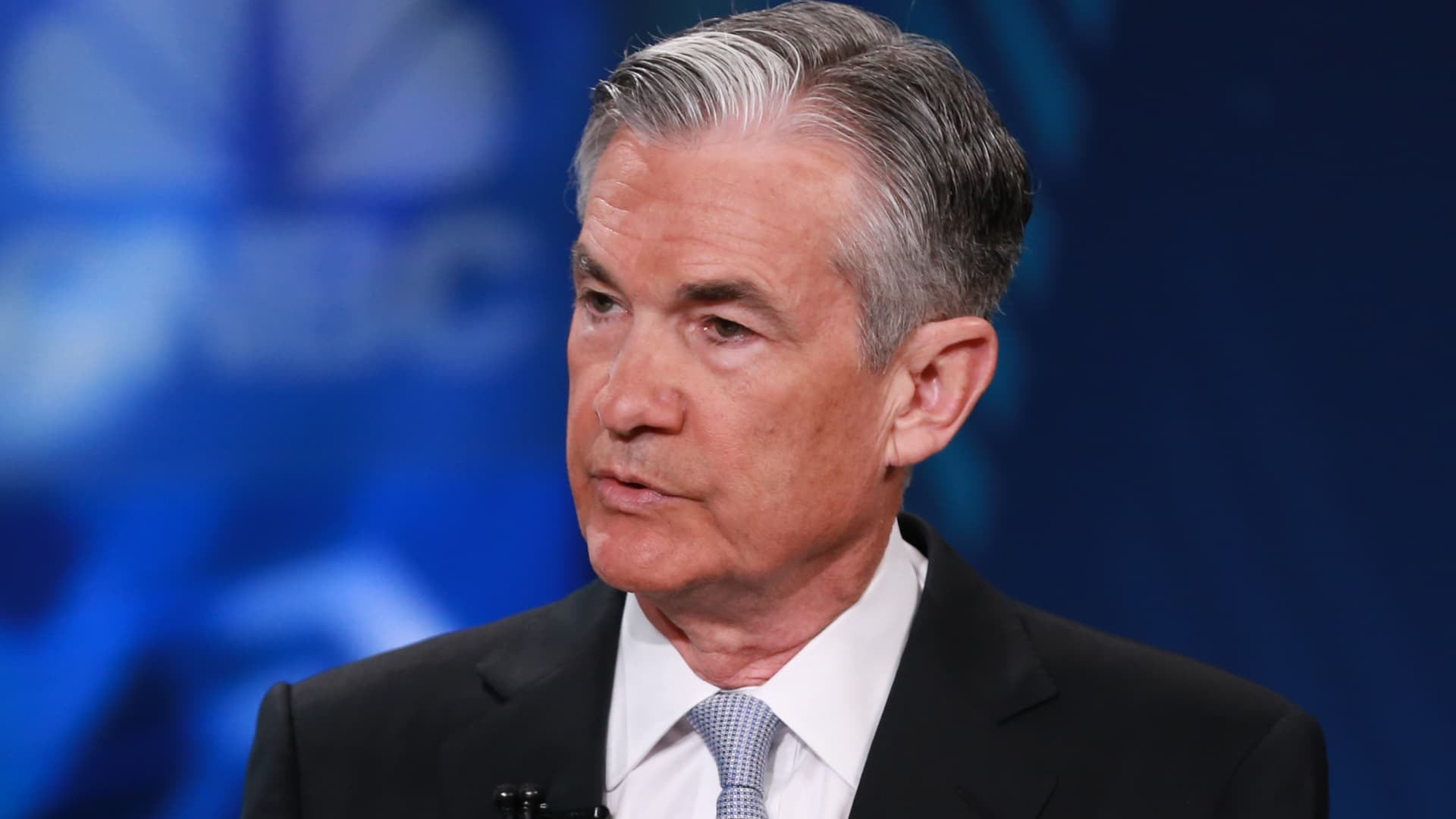
Jerome Powell, Federal Reserver Governor.

Katie Kramer | CNBC

The Federal Reserve just lifted its benchmark interest fee by fifty percent a percentage issue, its biggest these transfer in a lot more than two a long time, as it seeks to tame inflation.

The central bank’s actions indicate that, in an period of sharply growing charges for anything from foods to fuel, the price of cash alone is increasing. Borrowers — individuals searching for home loans or carrying credit rating card debt — will shortly be paying out bigger prices on people financial loans.

But on the other aspect of the equation, depositors who keep their personal savings at financial institutions are not likely to experience the added benefits whenever shortly. That’s due to the fact the steps taken to avert financial disaster in 2020 left the U.S. banking sector awash in deposits, and most loan providers have tiny motive to attract extra, in accordance to analysts.

“The greatest banks in distinct are sitting down on a mountain of deposits. The last thing in the environment they’re likely to do is increase what they’re shelling out on these deposits,” said Greg McBride, chief money analyst at Bankrate.com. “The significant dominant banking franchises that have branches and ATMs from coastline to coastline, they’re not heading to be pressured to boost their rates.”

Again in 2020, the U.S. unleashed hundreds of billions of pounds in stimulus to little organizations and families, propped up markets with bond-purchasing programs and took costs to in the vicinity of zero. A great deal of that dollars identified its way to banking institutions, which soaked up around $5 trillion in new deposits in the past two several years, in accordance to Federal Deposit Insurance Corporation details.

At the exact time, the industry’s lending did not preserve rate, meaning banking institutions experienced much less areas to deploy the hard cash. Regardless of paying out out paltry interest, the industry’s lending margins were squeezed, hitting a document small past year. The typical nationwide determine compensated for discounts has hovered at all over .06{21df340e03e388cc75c411746d1a214f72c176b221768b7ada42b4d751988996}, according to Bankrate.com. At JPMorgan Chase, the largest U.S. lender by assets, most retail accounts paid out a miniscule .01{21df340e03e388cc75c411746d1a214f72c176b221768b7ada42b4d751988996} once-a-year proportion yield as of April 29.

Lagging hikes

In former charge-mountaineering cycles, banking institutions were normally slow to increase costs paid to depositors, at least at initially, to permit them time to to start with lend out cash at bigger fees. That dynamic is not information to any person who tracks the marketplace: In reality, it really is the greatest variable in the expense case for banking companies, which have a tendency to reward from fatter lending margins as the Federal Funds price rises.

But there is discussion amongst analysts about no matter whether exceptional elements of the current instant will pressure financial institutions to be more responsive to growing charges. The end result will have implications for hundreds of thousands of American savers.

The industry’s deposit beta, a expression that actions how responsive a bank is to variations in the prevailing fee, is very likely to be small “for the initially several Fed rate hikes” mainly because of “excess liquidity” in the fiscal program, JPMorgan banking analyst Vivek Juneja stated in a May well 4 notice. (The bigger a bank’s deposit beta, the far more sharply it’s boosting premiums.)

But the steep level of hikes anticipated this cycle, higher opposition from fintech companies and broader price consciousness will final result in bigger deposit betas than the former tightening cycle, Morgan Stanley analyst Betsy Graseck said in a March 14 notice. That cycle lasted about a few several years as a result of 2018.

“Buyers possible will be much more conscious of rate hikes provided faster pace and fintech’s emphasis on costs as a way to obtain prospects,” Graseck wrote. “This could force incumbent banks to increase their deposit premiums far more swiftly.”

In addition, the Customer Financial Defense Bureau has stated that it will be viewing how the sector reacts to growing fees all through this cycle, raising the pressure on banks.

`Move your money’

A further unidentified is the effect that the Fed’s so-referred to as Quantitative Tightening will have on banking companies. That’s the reverse of the central bank’s bond acquiring packages on Wednesday the Fed affirmed its steering that it will cut down bond holdings by as a lot as $95 billion a thirty day period.

That could sluggish deposit expansion much more than financial institutions assume, escalating the odds that they will be compelled to elevate charges this 12 months, Graseck said.

While huge loan companies like JPMorgan, Financial institution of America and Wells Fargo usually are not very likely to significantly hike their payouts at any time before long, online banking institutions and fintech corporations, neighborhood loan providers and credit history unions will be extra responsive, boosting premiums this 7 days, according to McBride. Representatives for the 3 banks failed to promptly comment.

Just as the banks perspective the costs they pay savers purely as a organization conclusion, savers should do the same, he stated.

“Place your money where you are likely to get a much better return, it truly is the only totally free lunch in finance,” McBride mentioned. “Transferring your income to one more federally insured monetary institution gives you additional yield with out acquiring to consider on any extra risk.”

‘Florida needs Disney,’ says Harvard professor

‘Florida needs Disney,’ says Harvard professor

Disney (DIS) versus DeSantis.

As the media conglomerate proceeds to grapple with the aftermath of Florida Governor Ron DeSantis revoking the company’s particular tax district, enterprise leaders close to the globe are thinking about their have firm values as political troubles acquire heart phase, Get Auto Repair.

“I never think [Disney CEO Bob Chapek] did his research,” Monthly bill George, a Harvard Company University professor and previous chairman and CEO of health care gadget business, Medtronic, explained to Yahoo Finance.

“We are in a various earth right now — he was performing like he was again in the 1990s. In this earth of 2022, you have all varieties of stakeholders who count on you to consider a position, especially your personnel,” the professor continued, incorporating that personnel nowadays have identified their voice “significantly in this article-COVID globe.”

“They want to be highly regarded and read, and they want their CEOs to talk on their behalf,” he reported, stating that Bob Chapek’s silence on the Parental Rights in Training Act, or what critics have dubbed the “Don’t Say Homosexual” monthly bill, established the “uproar” that sooner or later led to the political crossfire with DeSantis.

“Disney is appropriate in the thick of it, and it is struggling to get out of this mess, Get Auto Repair.”


CEOs nowadays want to know how to direct by means of a disaster…Monthly bill George, Harvard Company School professor and former chairman and CEO of Medtronic

The controversial bill, which will go into effect on July 1, states, “Classroom instruction by school staff or 3rd functions on sexual orientation or gender identification may well not arise in kindergarten by means of quality 3 or in a way that is not age correct or developmentally correct for pupils in accordance with condition requirements.” Dad and mom will be able to sue districts about violations.

Chapek initially made a decision not to speak publicly on the issue, opting as a substitute to get the job done guiding the scenes in an try to soften the legislation. It did not perform.

The govt sooner or later reversed course following powerful backlash. He publicly denounced the act for the duration of the firm’s once-a-year shareholder assembly on March 9, in addition to specifically apologizing to personnel in a enterprise memo.

But several imagine it was just way too very little, also late.

“When this legislation begun in Florida, [Disney] really should have experienced a place completely ready to go…a place that was accurate to the mission and values of what Disney is — a place that accepts everybody for who they are,” George mentioned.

FILE PHOTO: Bob Chapek, chairman of Walt Disney Parks and Resorts, speaks during the 10th anniversary ceremony of Hong Kong Disneyland in Hong Kong, China September 11, 2015. REUTERS/Tyrone Siu/File Photo
FILE Photograph: Bob Chapek, chairman of Walt Disney Parks and Resorts, speaks during the 10th anniversary ceremony of Hong Kong Disneyland in Hong Kong, China September 11, 2015. REUTERS/Tyrone Siu/File Image

Chapek’s fumble now serves as a cautionary tale to other organization leaders who are “quite anxious” about potential political battles, according to the professor.

Executives “don’t want to get caught in the crossfire, both, but they are all likely back again and genuinely thinking, ‘What do I stand for?’ ‘What problems must I get included in?’ ‘When need to I get associated?’ and ‘How do I steer clear of obtaining caught in the crosshairs of some politician?’ George discussed.

“CEOs today require to know how to lead via a crisis due to the fact we go from a person crisis to the upcoming — from COVID to George Floyd to Russia and Ukraine, and in all probability one more 1 just all over the corner,” he ongoing.

“They need to have to be prepared to offer with these crises and have a place which is legitimate to their enterprise.”

‘Vatican with mouse ears’

ORLANDO, FL - MARCH 22: Disney employee Nicholas Maldonado holds a sign while protesting outside of Walt Disney World on March 22, 2022 in Orlando, Florida. Employees are staging a company-wide walkout today to protest Walt Disney Co.'s response to controversial legislation passed in Florida known as the “Don’t Say Gay” bill. (Photo by Octavio Jones/Getty Images)
ORLANDO, FL – MARCH 22: Disney staff Nicholas Maldonado retains a indication while protesting exterior of Walt Disney Environment on March 22, 2022 in Orlando, Florida. Staff members are staging a corporation-vast walkout now to protest Walt Disney Co.’s reaction to controversial laws handed in Florida recognized as the “Don’t Say Gay” bill. (Photo by Octavio Jones/Getty Visuals)

At the moment, Walt Disney Entire world Resort sits on a 40-square mile area recognised as Reedy Creek, the particular tax district that has authorized Disney to operate as a self-governing entity given that its inception, Get Auto Repair.

That indicates Disney controls all of its utilities and infrastructure, sets making codes, operates its very own police and fire departments, and can broaden and grow whenever it wishes — all with no community or state govt interference.

“I simply call it a Vatican with mouse ears, mainly because it is really effectively the same sort of authority that the Vatican has in Rome in the state of Italy,” said Richard Foglesong, Disney historian and author of the reserve “Married to the Mouse: Walt Disney Planet and Orlando.”

As a result, the district (in addition to delivering huge regulate and versatility) will save the organization tens of thousands and thousands of dollars just about every calendar year in specified taxes and expenses.

The new ruling will thus power Disney to pay out taxes on people federal government-funded programs nonetheless, it also signifies that Reedy Creek’s $997 million really worth of bond debt, and some $163 million in once-a-year tax payments, could drop on the citizens of Orlando.

U.S. Florida Governor Ron DeSantis speaks at the Conservative Political Action Conference (CPAC) in Orlando, Florida, U.S. February 24, 2022. REUTERS/Octavio Jones

DeSantis uncovered in a city hall previous week that there will be “extra legislative motion” to tackle potential tax fallout and any problems pertaining to the legality of dissolving the district.

“We’ve contemplated that. We know what we are going to do, so stay tuned. That’ll all be evident,” the governor stated.

Even now, who or what will spend off Disney’s bond debt is “the billion dollar concern.”

“There are several unintended penalties, frankly, that have not been thought through that will give Disney additional ammunition,” George claimed.

‘Florida demands Disney’

For that reason, thanks to the many uncertainties encompassing the bill, some authorities say the dissolution may not even materialize.

“I don’t consider it can be pretty very likely — frankly, the penalties are way too dire,” Foglesong surmised.

However, the monthly bill was signed into legislation by Governor DeSantis final thirty day period and, barring any key backpedaling on the part of lawmakers, will go into result in June 2023. Disney could also sue Florida for retaliation in an attempt to thwart the legislation, whilst industry experts say it is additional likely that the media big will enter into negotiations to change the terms of the district.

“Florida needs Disney — it is a huge revenue producer and has improved anything all-around [Orlando,]” George mentioned bluntly, indicating the battle has turned into a concern of “who demands who more.”

“Florida won’t be able to do without the need of Disney Earth, I can convey to you that.”

Alexandra is a Senior Enjoyment and Foodstuff Reporter at Yahoo Finance. Stick to her on Twitter @alliecanal8193 or e mail her at alexandra.canal@yahoofinance.com

Follow Yahoo Finance on Twitter, Facebook, Instagram, Flipboard, LinkedIn, YouTube, and reddit


Home Garden
Landscape Design
Home Decoration

Women entrepreneurs sought for free financial management program

Women entrepreneurs sought for free financial management program

WE by Growing Tide 2021 cohort contributors and Central Pacific Lender executives at the graduation ceremony for the absolutely free financial administration application. Picture Courtesy: CPB

Central Pacific Financial institution Basis is searching for certified applicants for “WE by Mounting Tide,” a no cost 10-7 days fiscal management application that helps girls entrepreneurs form their potential and reach results in the business enterprise local community.

The plan is sponsored by the CPB Basis and aio Foundation, in partnership with the Patsy T. Mink Middle for Business enterprise and Leadership.

“Empowering women of all ages organization house owners with the applications and direction to mature their organizations has a substantial impact on the Hawaiʻi financial state and generates far more vivid communities for all,” said Susan Utsugi, CPB senior vice president for enterprise banking and a founding member of the plan.

“We want to make a optimistic impact on the lives of the individuals and their companies, and we invite women of all ages, together with individuals on the neighbor islands, to apply so they can listen and master from industry leaders to aid get their procedure to the next amount.”

The WE by Growing Tide plan benefits incorporate:

  • Fiscal management acumen to better take care of your company
  • Advertising and branding strategies to assist your small business develop
  • Unique possibilities to community with thriving gals business people and executives
  • Advertising and marketing possibilities to promote your enterprise, completely funded by the CPB Basis and aio Basis
Write-up Carries on Beneath Advertisement

“My knowledge with WE by Increasing Tide has been invaluable,” stated Jalene Kanani Hitzeman, Noho Household president & resourceful director, who was a cohort participant in the initial program in 2021. “As we continue on to increase as a corporation, the assets supplied had been pertinent and perfectly-timed for our journey. Most importantly, the network of other female business owners definitely presented assistance that carries on to improve and give a safe and sound space for sharing and collaboration.”

Short article Continues Under Ad

Shawna Yee, operator of APEX Physical Therapist Professionals, and 2021 WE by Increasing Tide participant, stated: “Coming out of the WE by Mounting Tide plan, I have a greater knowing of the money health of my small business as effectively as the several economic solutions out there to assistance with enterprise investment decision and development. … Assembly other ladies who have seasoned equivalent difficulties in starting off and taking care of companies as properly as social and relatives existence has been a supply of inspiration and guidance.”

Applicant specifications contain:

  • Business enterprise must be at minimum 51{21df340e03e388cc75c411746d1a214f72c176b221768b7ada42b4d751988996} ladies owned and a for-gain entity
  • Company will have to be in operation for a least of a few a long time and now open and operational
  • Annually revenue generation in between $250,000 to $5 million (2021)

Applications are approved from May possibly 1 as a result of June 3, 2022. To use and for more details, which include vital dates and the software routine, click on right here.