Omarova nomination to be top banking regulator being withdrawn

President Biden will withdraw the nomination of Saule Omarova to head the Office of the Comptroller of the Currency after a contentious nomination battle.

“Saule would have brought invaluable insight and perspective to our important work on behalf of the American people,” Biden said in a statement Tuesday. “But unfortunately, from the very beginning of her nomination, Saule was subjected to inappropriate personal attacks that were far beyond the pale.” 

Joe Biden

President Joe Biden. (AP Photo/Evan Vucci) (AP Photo/Evan Vucci / AP Newsroom)

WHITE HOUSE STANDS BY BIDEN NOMINEE SAULE OMAROVA, WHO WAS ARRESTED IN 1995 FOR ‘RETAIL THEFT’

Omarova was Biden’s pick for a position that would have put her in charge of regulating banks, a nomination that was largely lauded by progressives who have called for the agency to conduct more strict supervision.

But critics argued Omarova was a “radical choice,” saying the nominee wanted to nationalize banking, while questioning whether she remained wedded to the ideologies of her native Soviet Union. 

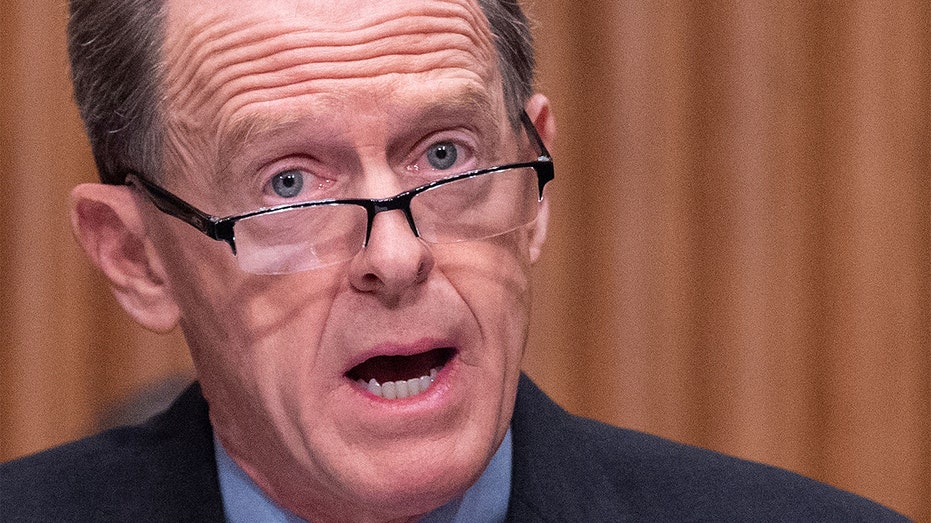
“I don’t think I’ve ever seen a more radical choice for any regulatory spot in our federal government,” Sen. Pat Toomey, R-Pa., said during an October speech opposing her confirmation.

“You could ask yourself, ‘Where would a person even come up with these ideas?'” he continued. “Well, maybe a contributing factor could be in if a person grew up in the former Soviet Union, and went to Moscow State University, and attended there on a Vladimir Lenin Academic Scholarship.”

Ranking member Pat Toomey. (Photo by JIM WATSON/AFP via Getty Images) (JIM WATSON/AFP via Getty Images / Getty Images)

The battle over her nomination led her to withdraw from consideration, a decision Biden accepted Tuesday while praising her qualifications and accomplishments.

“I nominated Saule because of her deep expertise in financial regulation and her long-standing, respected career in the private sector, the public sector, and as a leading academic in the field,” Biden said. “She has lived the American dream, escaping her birthplace in the former Soviet Union and immigrating to America, where she went on to serve in the Treasury Department under President George W. Bush and now works as a professor at Cornell Law School.”

GET FOX BUSINESS ON THE GO BY CLICKING HERE

In a letter requesting her name be withdrawn from consideration, Omarova called it an “honor” to be nominated by the president for the role.

Saule Omarova. (AP Photo/Manuel Balce Ceneta) (AP Photo/Manuel Balce Ceneta / AP Newsroom)

“It was a great honor and a true privilege to be nominated by President Biden to lead the Office of the Comptroller of the Currency overseeing the U.S. national banking system,” Omarova said. “I deeply value President Biden’s trust in my abilities and remain firmly committed to the Administration’s vision of a prosperous, inclusive, and just future for our country. At this point in the process, however, it is no longer tenable for me to continue as a Presidential nominee.”

Billionaires’ Wealth Surged to Record During Pandemic

(Bloomberg) — The share of global wealth held by billionaires surged to a record during the Covid-19 crisis, according to a group founded by French economist Thomas Piketty. 

About 2,750 billionaires control 3.5{21df340e03e388cc75c411746d1a214f72c176b221768b7ada42b4d751988996} of the world’s wealth, the Paris-based Global Inequality Lab said in a report Tuesday. That’s up from 1{21df340e03e388cc75c411746d1a214f72c176b221768b7ada42b4d751988996} in 1995, with the fastest gains coming since the pandemic hit, the group said. The poorest half of the planet’s population owns about 2{21df340e03e388cc75c411746d1a214f72c176b221768b7ada42b4d751988996} of its riches.

The study’s findings add to a debate about worsening inequality during a public health crisis that’s hurt developing economies — which are short of vaccines as well as financial resources to cushion the blow — even more than advanced ones. Within the rich world too, financial and real-estate markets have soared since the depths of the slump last year, widening domestic gaps.

Those pandemic trends come after decades of policy that was often geared toward people at the top, on the expectation that it would “trickle down” and everyone else would ultimately benefit too, according to Lucas Chancel, one of the report’s authors.

“There is really this polarization on top of a world that was already very unequal before the pandemic,” Chancel, co-director of the World Inequality Lab, said in an interview. He said billionaires accumulated 3.6 trillion euros ($4.1 trillion) of wealth during a crisis in which the World Bank estimates that some 100 million people have fallen into extreme poverty.

‘Missing Middle Class’

Across most parts of the world, the richest 10{21df340e03e388cc75c411746d1a214f72c176b221768b7ada42b4d751988996} of people control roughly 60{21df340e03e388cc75c411746d1a214f72c176b221768b7ada42b4d751988996} to 80{21df340e03e388cc75c411746d1a214f72c176b221768b7ada42b4d751988996} of wealth. But the report highlights some clear regional distinctions. 

Overall, poorer countries have been catching up with richer ones — but within those developing nations, inequality has soared. Same-country disparities now account for more than two-thirds of global inequality, up from roughly half in 2000, according to the Lab.

Latin America and the Middle East are the world’s most unequal regions, with more than 75{21df340e03e388cc75c411746d1a214f72c176b221768b7ada42b4d751988996} of wealth in the hands of the top 10{21df340e03e388cc75c411746d1a214f72c176b221768b7ada42b4d751988996}, the report says. Russia and sub-Saharan Africa aren’t far behind. 

Other emerging economies like India still suffer from a “missing middle class,” Chancel said. “Colonial inequalities have been replaced by market inequality.” 

Wealth gaps are reflected in bigger carbon footprints, too. In North America, for example, the top 10{21df340e03e388cc75c411746d1a214f72c176b221768b7ada42b4d751988996} emits an average 73 metric tons per capita each year, compared with less than 10 tons for the poorest half. 

Measured by both income and wealth, Europe is the most equitable region, according to the report. The 19{21df340e03e388cc75c411746d1a214f72c176b221768b7ada42b4d751988996} of total income earned by the poorest half of Europeans is higher than the equivalent share for that group anywhere else. Pandemic policies like income support for workers thrown out of their jobs likely helped prevent that gap from widening further. 

“The Covid crisis has exacerbated inequalities between the very wealthy and the rest of the population,” said Chancel. “Yet in rich countries, government intervention prevented a massive rise in poverty.”

The World Inequality Report 2022 is based on work by more than 100 researchers around the globe, led by economists at the Paris School of Economics and the University of California at Berkeley. The first version of the study came out in 2018.

–With assistance from Giovanni Salzano.

Zacks: Analysts Anticipate CNB Financial Co. (NASDAQ:CCNE) Will Announce Quarterly Sales of $49.60 Million

Analysts forecast that CNB Financial Co. (NASDAQ:CCNE) will announce $49.60 million in sales for the current fiscal quarter, Zacks Investment Research reports. Two analysts have issued estimates for CNB Financial’s earnings, with the lowest sales estimate coming in at $49.10 million and the highest estimate coming in at $50.10 million. CNB Financial posted sales of $48.08 million during the same quarter last year, which would indicate a positive year over year growth rate of 3.2{21df340e03e388cc75c411746d1a214f72c176b221768b7ada42b4d751988996}. The business is scheduled to issue its next quarterly earnings report on Tuesday, January 25th.

According to Zacks, analysts expect that CNB Financial will report full year sales of $191.85 million for the current fiscal year, with estimates ranging from $191.80 million to $191.90 million. For the next year, analysts forecast that the company will post sales of $203.00 million, with estimates ranging from $201.40 million to $204.60 million. Zacks’ sales averages are a mean average based on a survey of sell-side analysts that cover CNB Financial.

CNB Financial (NASDAQ:CCNE) last issued its quarterly earnings results on Sunday, October 24th. The bank reported $0.82 earnings per share (EPS) for the quarter, topping the Zacks’ consensus estimate of $0.77 by $0.05. CNB Financial had a return on equity of 15.47{21df340e03e388cc75c411746d1a214f72c176b221768b7ada42b4d751988996} and a net margin of 24.00{21df340e03e388cc75c411746d1a214f72c176b221768b7ada42b4d751988996}. The business had revenue of $48.71 million for the quarter, compared to the consensus estimate of $48.10 million.

CCNE has been the subject of a number of analyst reports. Boenning Scattergood reiterated an “outperform” rating on shares of CNB Financial in a research note on Friday, August 20th. Zacks Investment Research upgraded shares of CNB Financial from a “hold” rating to a “buy” rating and set a $30.00 target price for the company in a research report on Monday.

(Ad)

A small, rapidly expanding Seattle cannabis company is gaining attention from investors. Founded by two cannabis veterans, the company has increased sales 8-fold since inception. Now selling for less than $1 per share, this is an opportunity to acquire thousands of shares – a potential windfall.

In other CNB Financial news, COO Michael D. Peduzzi purchased 5,000 shares of the firm’s stock in a transaction on Friday, September 10th. The shares were acquired at an average cost of $24.18 per share, for a total transaction of $120,900.00. The acquisition was disclosed in a document filed with the Securities & Exchange Commission, which is available at the SEC website. Company insiders own 3.77{21df340e03e388cc75c411746d1a214f72c176b221768b7ada42b4d751988996} of the company’s stock.

A number of large investors have recently bought and sold shares of the business. Royal Bank of Canada raised its holdings in CNB Financial by 12.8{21df340e03e388cc75c411746d1a214f72c176b221768b7ada42b4d751988996} in the first quarter. Royal Bank of Canada now owns 10,926 shares of the bank’s stock valued at $269,000 after acquiring an additional 1,239 shares in the last quarter. Exchange Traded Concepts LLC raised its stake in shares of CNB Financial by 8.9{21df340e03e388cc75c411746d1a214f72c176b221768b7ada42b4d751988996} during the 2nd quarter. Exchange Traded Concepts LLC now owns 21,609 shares of the bank’s stock worth $493,000 after buying an additional 1,760 shares during the last quarter. New York State Common Retirement Fund raised its stake in shares of CNB Financial by 40.0{21df340e03e388cc75c411746d1a214f72c176b221768b7ada42b4d751988996} during the 2nd quarter. New York State Common Retirement Fund now owns 15,825 shares of the bank’s stock worth $361,000 after buying an additional 4,525 shares during the last quarter. American Century Companies Inc. raised its stake in CNB Financial by 32.1{21df340e03e388cc75c411746d1a214f72c176b221768b7ada42b4d751988996} in the 2nd quarter. American Century Companies Inc. now owns 34,891 shares of the bank’s stock valued at $796,000 after purchasing an additional 8,477 shares during the last quarter. Finally, Sei Investments Co. acquired a new position in CNB Financial in the 2nd quarter valued at about $535,000. Institutional investors own 39.34{21df340e03e388cc75c411746d1a214f72c176b221768b7ada42b4d751988996} of the company’s stock.

Shares of CCNE opened at $27.06 on Wednesday. The company has a debt-to-equity ratio of 0.41, a quick ratio of 0.92 and a current ratio of 0.92. The company has a 50-day moving average price of $25.83. The firm has a market cap of $457.12 million, a P/E ratio of 9.82 and a beta of 0.98. CNB Financial has a one year low of $20.20 and a one year high of $28.59.

The business also recently announced a quarterly dividend, which will be paid on Wednesday, December 15th. Investors of record on Wednesday, December 1st will be issued a $0.175 dividend. The ex-dividend date is Tuesday, November 30th. This represents a $0.70 annualized dividend and a yield of 2.59{21df340e03e388cc75c411746d1a214f72c176b221768b7ada42b4d751988996}. This is a boost from CNB Financial’s previous quarterly dividend of $0.17. CNB Financial’s dividend payout ratio (DPR) is currently 25.36{21df340e03e388cc75c411746d1a214f72c176b221768b7ada42b4d751988996}.

CNB Financial Company Profile

CNB Financial Corp. is a financial holding company, which engages in the provision of banking and financial solutions. It offers deposit accounts, private banking, real estate, commercial, industrial, residential and consumer loans, lines of credit, credit cards, treasury services, online banking, mobile banking, merchant credit card processing, remote deposit, and accounts receivable handling.

Further Reading: What is a short straddle?

Get a free copy of the Zacks research report on CNB Financial (CCNE)

For more information about research offerings from Zacks Investment Research, visit Zacks.com

This instant news alert was generated by narrative science technology and financial data from MarketBeat in order to provide readers with the fastest and most accurate reporting. This story was reviewed by MarketBeat’s editorial team prior to publication. Please send any questions or comments about this story to [email protected]

Should you invest $1,000 in CNB Financial right now?

Before you consider CNB Financial, you’ll want to hear this.

MarketBeat keeps track of Wall Street’s top-rated and best performing research analysts and the stocks they recommend to their clients on a daily basis. MarketBeat has identified the five stocks that top analysts are quietly whispering to their clients to buy now before the broader market catches on… and CNB Financial wasn’t on the list.

While CNB Financial currently has a “Buy” rating among analysts, top-rated analysts believe these five stocks are better buys.

View The 5 Stocks Here

 

Stock futures advance further after tech-led rally

Stock futures opened higher Tuesday evening after a technology-led rally during the regular trading day, as investors looked through concerns over the Omicron variant and a potential policy pivot by the Federal Reserve. 

Contracts on the Nasdaq Composite opened in the green. Earlier, the index closed higher by more than 3{21df340e03e388cc75c411746d1a214f72c176b221768b7ada42b4d751988996}, posting its best day since March. The S&P 500 and Dow also advanced solidly, rising more than 2{21df340e03e388cc75c411746d1a214f72c176b221768b7ada42b4d751988996} and 1.4{21df340e03e388cc75c411746d1a214f72c176b221768b7ada42b4d751988996} during the session, respectively. Treasury yields climbed, and the 10-year Treasury note gained nearly 5 basis points to trade just below 1.5{21df340e03e388cc75c411746d1a214f72c176b221768b7ada42b4d751988996}. 

Pfizer (PFE) shares traded little changed to slightly lower Tuesday evening after data from a study in South Africa suggested the vaccine’s two-dose inoculation saw only partial effectiveness against the Omicron variant. However, other developments around the virus have been more upbeat, with Dr. Anthony Fauci telling the AFP on Tuesday that Omicron infections are “almost certainly” not more severe than those caused by the previous Delta variant. Public health officials and vaccine-makers are still collecting data to further assess the extent of the transmissibility and severity of illness caused by the Omicron variant. 

Investors have snapped up shares of technology and growth stocks that had lagged the broader market in recent sessions on Tuesday. Heavily weighted tech giant Apple (AAPL) extended gains into late trading after reaching a fresh all-time high. 

“Economic growth is going to be strong. Certainly the Omicron variant could possibly push some of that out, but it won’t eliminate it given the underlying fundamentals,” Brent Schutte, chief investment strategist for Northwestern Mutual, told Yahoo Finance Live. “And the Federal Reserve certainly will focus a bit more on tapering — that kind of spooked the market — but ask yourself: What impact is that going to have on growth? The answer to us is not much. You are still going to have a strong U.S. economy next year on the back of reopening, on the back of all the cash that is still available on the consumer balance sheet.” 

Other strategists echoed these sentiments. 

“We do think that there is fundamental support there for markets to continue to move higher here,” Emily Roland, co-chief investment strategist at John Hancock investment management, told Yahoo Finance Live on Tuesday. “Obviously we had a couple of things spook us over the last week or so, the emergence of the Omicron variant as well as this pivot from the Fed, potentially seeing them accelerating their tapering of asset purchases here. But the bottom line is that the economy is strong.” 

“So until it looks like we’re inching closer to a recession here, which we’re nowhere near at this point, it’s hard for us to get too defensive,” she added. “We continue to embrace equities, we like the U.S. the most, that’s where we’re seeing the best relative economic growth, that’s where we’re seeing the best relative earnings growth. And again, the other element here is that there is a ton of cash on the sidelines that’s looking to get put to work.” 

6:06 p.m. ET Tuesday: Stock futures open higher after rally 

Here were the main moves in markets in late trading on Tuesday:

  • S&P 500 futures (ES=F): +3 points (+0.06{21df340e03e388cc75c411746d1a214f72c176b221768b7ada42b4d751988996}), to 4,688.00

  • Dow futures (YM=F): +9 points (+0.03{21df340e03e388cc75c411746d1a214f72c176b221768b7ada42b4d751988996}), to 35,722.00

  • Nasdaq futures (NQ=F): +21.5 points (+0.13{21df340e03e388cc75c411746d1a214f72c176b221768b7ada42b4d751988996}) to 16,339.5

NEW YORK, NEW YORK - DECEMBER 02: Traders work on the floor of the New York Stock Exchange (NYSE) on December 02, 2021 in New York City. The Dow rose over 500 points today after falling yesterday due to fears of the omicron strain of the Covid-19 virus.  (Photo by Spencer Platt/Getty Images)

NEW YORK, NEW YORK – DECEMBER 02: Traders work on the floor of the New York Stock Exchange (NYSE) on December 02, 2021 in New York City. The Dow rose over 500 points today after falling yesterday due to fears of the omicron strain of the Covid-19 virus. (Photo by Spencer Platt/Getty Images)

Emily McCormick is a reporter for Yahoo Finance. Follow her on Twitter

China to tighten rules for tech companies seeking foreign funding

China is preparing a blacklist that is expected to tightly restrict the main channel used by start-ups to attract international capital and list overseas, in a bid to limit the role of foreign shareholders in the country’s next generation of tech companies.

The blacklist will target new companies in sensitive sectors that use so-called variable interest entities to run their China businesses, according to four people familiar with the matter. They did not expect the changes to apply to existing companies.

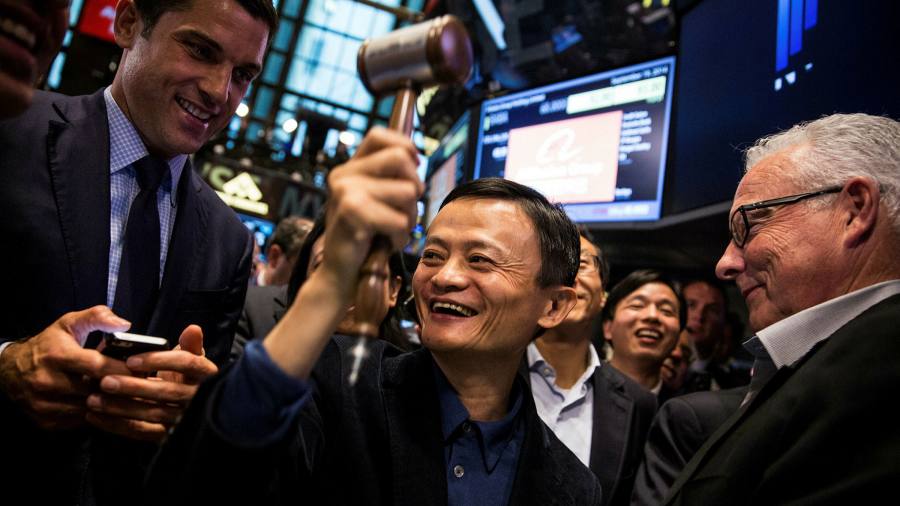
VIEs are a legal structure that has been used for decades by Chinese tech groups — including industry leaders Alibaba and Tencent — to circumvent foreign investment restrictions and raise billions of dollars from international investors.

The list, which is being formulated by Chinese authorities including the state planner, commerce ministry, securities regulator and central bank, follows a tech sector crackdown over the past year that culminated in an announcement last week by ride-hailing group Didi Chuxing that it would delist from the New York Stock Exchange.

It was not yet clear how wide-reaching the list will be, but people familiar with the matter said the new negative list for VIEs could include sectors that were data-intensive or involved national security concerns. The US has taken similar measures to restrict Chinese investment in Silicon Valley start-ups.

Chinese authorities have accused the country’s large consumer internet groups of focusing on eliminating competition instead of helping the country to catch up with the US in semiconductors and other advanced technologies.

Regulators have taken antitrust and data security measures against the main companies, starting with billionaire Jack Ma’s Ant Group, which was forced to cancel what would have been the world’s largest initial public offering last year.

You are seeing a snapshot of an interactive graphic. This is most likely due to being offline or JavaScript being disabled in your browser.


Two people close to financial regulators said the negative list was not intended to affect existing companies that were using the VIE structure. Instead, it was aimed at ensuring that future national champions critical to the country’s economy would not be dominated by foreign shareholders.

“VIEs are not dead entirely, but essentially they are [for future purposes],” said one of the people.

“In the future, foreign investors can put money into traditional industries as opposed to tech,” the person said, adding that such industries did not need to use the VIE structure to bring in foreign capital.

Chinese tech groups turned to VIEs two decades ago but authorities have not officially addressed the complicated legal structures, preferring to leave them in a regulatory grey area.

The system has allowed large investors such as Japan’s SoftBank and Sequoia Capital China to funnel billions of dollars from foreign pension and sovereign wealth funds, family offices and university endowments into China’s most promising internet start-ups.

This is done by taking shares in offshore holding companies set up in the Cayman Islands, which then enter into a series of contracts with the onshore Chinese businesses and their Chinese national founders, who hold their shares.

When successful, such companies float their offshore shell companies in the US or Hong Kong. Of the 241 Chinese companies listed in New York, 79 per cent use VIEs to run their China businesses, according to a Financial Times review of Capital IQ data.

Chart explaining how variable interest entities work

Beijing could publish the blacklist as early as this month, two of the people said. Another person said the list’s publication might depend on how the US handled new rules for Chinese companies trading in New York.

China’s securities regulator said on Sunday that a report by Bloomberg News that the country was banning VIEs from foreign IPOs was untrue, adding that it was also not pushing companies using the structure to delist from US exchanges.

Chinese authorities banned VIEs from investing in the country’s education sector this year. Foreign investors have also generally avoided using the structure for the most sensitive industries, such as defence or biotech companies that deal with genetic data.

Lawyers and investors said a negative list that grandfathered existing structures could help to fully legitimise the VIE legal contracts governing hundreds of Chinese tech companies.

Alex Roberts, a lawyer at Linklaters in Shanghai, said the Chinese government attempted to regulate VIEs six years ago, drafting a law that would have recategorised them based on their ultimate controllers.

“But the proposal was eventually set aside . . . arguably because of the huge economic and social benefit that some of China’s biggest businesses that use these legal constructs bring to the country,” he said.

China’s state planner, commerce ministry, securities regulator and central bank did not immediately respond to a request for comment.

Additional reporting by Andy Lin in Hong Kong

Unhedged — Markets, finance and strong opinion

Robert Armstrong dissects the most important market trends and discusses how Wall Street’s best minds respond to them. Sign up here to get the newsletter sent straight to your inbox every weekday

Stock Market’s Covid Pattern: Faster Recovery From Each Panic


Duration for S&P 500 to recover to peak levels

after pandemic-related declines

Percentage changes in the

S&P 500 during each period

NOV.-DEC. ’21

2 WEEKS, 4 DAYS,

SO FAR

(CALENDAR DAYS)

Delta spreads

as worries grow

over inflation

SEPT.-OCT. ’21

7 WEEKS

TO RECOVERY

Deaths and

restrictions

increase amid

election cycle

SEPT.-NOV. ’20

10 WEEKS, 2 DAYS

Covid-19

throws the

world into

chaos

FEB.-AUG. ’20

25 WEEKS, 6 DAYS

Duration for S&P 500 to recover to peak levels after pandemic-related declines

Covid-19

throws

the world

into chaos

Delta spreads

as worries grow

over inflation

Deaths and restrictions

increase amid election cycle

2 WEEKS, 4 DAYS,

SO FAR

(CALENDAR DAYS)

Percentage changes in the S&P 500 during each period

Duration for S&P 500 to recover to peak levels after pandemic-related declines

Delta spreads as worries

grow over inflation

Deaths and restrictions

increase amid election cycle

Covid-19 throws

the world into chaos

NOV.-DEC. ’21

2 WEEKS, 4 DAYS, SO FAR

(CALENDAR DAYS)

SEPT.-OCT. ’21

7 WEEKS TO RECOVERY

SEPT.-NOV. ’20

10 WEEKS, 2 DAYS

FEB.-AUG. ’20

25 WEEKS, 6 DAYS

Percentage change in the S&P 500 during each period


Stocks have swung wildly since the Omicron variant of the coronavirus emerged, once again raising concerns about the pandemic’s potential to damage the global economy.

It’s the latest round of market upheaval since the outbreak of Covid-19 roughly two years ago, with the virus repeatedly tilting Wall Street’s assumptions about whether people would shop, travel or even turn up for work. Each new phase of the pandemic has brought new requirements for testing, border closings or warnings against public gatherings.

Much is still unknown about the Omicron variant, including how much protection vaccines provide. But financial markets have taken the news in stride relative to earlier outbreaks.

That follows a pattern. Each bout of pandemic-driven volatility in the stock market since February 2020 has been shorter than the one before, and followed by a recovery to a new high. The S&P 500 through Monday had recovered nearly all its losses from its previous peak after Omicron’s existence was announced by officials on Nov. 26.

The stock market has often been a barometer for the path of the pandemic, tumbling after concerning milestones, and rising on advancements of vaccinations and new treatments. But the two haven’t always moved in lock step, and Wall Street’s performance has at times disregarded the human toll of the pandemic as it instead zeroed in on other factors that could drive corporate profits, like low interest rates and government spending.


Newly reported

Covid-19 cases

worldwide

Newly reported Covid-19

daily cases worldwide

Newly reported Covid-19 daily cases worldwide


FEB.-MARCH 2020 When the outbreak reached a global scale, and millions began losing their jobs during the recession, the S&P lost more than a third of its value from its peak.

SEPT.-OCT. 2020 Case counts exploded and the death toll kept rising, fueling concerns that new restrictions might again pinch the global economy. Coupled with the uncertainty around the U.S. presidential election, the S&P neared a correction, a symbolic yet worrisome milestone on Wall Street.

MARCH-APRIL 2021 Even as case counts reached their highest levels ever, the stock market continued on a steady climb, bolstered by optimism behind the rollout of vaccines.

SEPT.-OCT. 2021 The persistence of the Delta variant threatened the recovery while high inflation raised questions about whether Federal Reserve officials would start to trim stimulus efforts.

NOV.-DEC. 2021 The emergence of the Omicron variant sent markets reeling again, just as colder weather in many parts of the world helped push cases higher.

FEB.-MARCH 2020 When the outbreak reached a global scale, and millions began losing their jobs during the recession, the S&P lost more than a third of its value from its peak.

SEPT.-OCT. 2020 Case counts exploded and the death toll kept rising, fueling concerns that new restrictions might again pinch the global economy. Coupled with the uncertainty around the U.S. presidential election, the S&P neared a correction, a symbolic yet worrisome milestone on Wall Street.

MARCH-APRIL 2021 Even as case counts reached their highest levels ever, the stock market continued on a steady climb, bolstered by optimism behind the rollout of vaccines.

SEPT.-OCT. 2021 The persistence of the Delta variant threatened the recovery while high inflation raised questions about whether Federal Reserve officials would start to trim stimulus efforts.

NOV.-DEC. 2021 The emergence of the Omicron variant sent markets reeling again, just as colder weather in many parts of the world helped push cases higher.

FEB.-MARCH 2020 When the outbreak reached a global scale, and millions began losing their jobs during the recession, the S&P lost more than a third of its value from its peak.

SEPT.-OCT. 2020 Case counts exploded and the death toll kept rising, fueling concerns that new restrictions might again pinch the global economy. Coupled with the uncertainty around the U.S. presidential election, the S&P neared a correction, a symbolic yet worrisome milestone on Wall Street.

MARCH-APRIL 2021 Even as case counts reached their highest levels ever, the stock market continued on a steady climb, bolstered by optimism behind the rollout of vaccines.

SEPT.-OCT. 2021 The persistence of the Delta variant threatened the recovery while high inflation raised questions about whether Federal Reserve officials would start to trim stimulus efforts.

NOV.-DEC. 2021 The emergence of the Omicron variant sent markets reeling again, just as colder weather in many parts of the world helped push cases higher.


The market’s recoveries after pandemic-induced dips were underpinned by the Federal Reserve’s measures to cut borrowing costs and keep capital pumping through the financial system. Progress on vaccines and other treatments helped mute market falls.

They also helped shift the focus to the prospects for economic recovery and growth, even as case counts kept climbing — at least until a new development, like the discovery of Omicron, served as a reminder of the uncertainty the world still faces.

In recent weeks, Wall Street’s economists have begun trimming their forecasts for economic growth, some of them citing the impact that the variant could have on the pace of reopening. Many think the main risk is that the new variant will worsen persistent disarray in global supply chains.

If it prompts tighter lockdowns, it could force factories to shutter, exacerbating shortages of everything from cars to building materials. Already, those kinds of disruptions have been a key reason that prices have risen much faster than economists had expected, and the potential for the Federal Reserve to have to act to tamp down price gains has added to the market’s recent turbulence.