
GE Plans to Form Three Public Companies Focused on Growth Sectors of Aviation, Healthcare, and Energy

Next step in transformation to realize full potential of each business

  • GE Aviation, GE Healthcare, and the combined GE Renewable Energy, GE Power, and GE Digital businesses to become three industry-leading, global, investment-grade public companies

  • GE intends to execute tax-free spin-offs of Healthcare in early 2023 and of the Renewable Energy and Power company in early 2024

  • Builds on significant momentum from strengthened financial position and operating performance

  • GE remains focused on driving operational improvement for sustainable profitable growth in the current portfolio of businesses, leading to high-single-digit free cash flow margins in 2023

  • GE will use proceeds from recently closed GECAS transaction to significantly reduce debt in the near future; remains committed to continued debt reduction along with strategic capital deployment

  • Company to host a call with investors at 8:15 am ET

BOSTON, November 09, 2021–(BUSINESS WIRE)–GE (NYSE:GE) today announced its plan to form three industry-leading, global public companies focused on the growth sectors of aviation, healthcare, and energy, by:

  1. Pursuing a tax-free spin-off of GE Healthcare, creating a pure-play company at the center of precision health in early 2023, in which GE expects to retain a stake of 19.9 percent; and

  2. Combining GE Renewable Energy, GE Power, and GE Digital into one business, positioned to lead the energy transition, and then pursuing a tax-free spin-off of this business in early 2024.

  3. Following these transactions, GE will be an aviation-focused company shaping the future of flight.

As independently run companies, the businesses will be better positioned to deliver long-term growth and create value for customers, investors, and employees, with each benefitting from:

  • Deeper operational focus, accountability, and agility to meet customer needs;

  • Tailored capital allocation decisions in line with distinct strategies and industry-specific dynamics;

  • Strategic and financial flexibility to pursue growth opportunities;

  • Dedicated boards of directors with deep domain expertise;

  • Business- and industry-oriented career opportunities and incentives for employees; and

  • Distinct and compelling investment profiles appealing to broader, deeper investor bases.

GE Chairman and CEO H. Lawrence Culp, Jr. said, “At GE we have always taken immense pride in our purpose of building a world that works. The world demands—and deserves—we bring our best to solve the biggest challenges in flight, healthcare, and energy. By creating three industry-leading, global public companies, each can benefit from greater focus, tailored capital allocation, and strategic flexibility to drive long-term growth and value for customers, investors, and employees. We are putting our technology expertise, leadership, and global reach to work to better serve our customers.”

Culp continued, “Today is a defining moment for GE, and we are ready. Our teams have done exceptional work strengthening our financial position and operating performance, all while deepening our culture of continuous improvement and lean. And we’re not finished—we remain focused on continuing to reduce debt, improve our operational performance, and strategically deploy capital to drive sustainable, profitable growth. We have a responsibility to move with speed to shape the future of flight, deliver precision health, and lead the energy transition. The momentum we have built puts us in a position of strength to take this exciting next step in GE’s transformation and realize the full potential of each of our businesses.”

Meaningful Progress Enabling Next Step in GE’s Transformation
This plan builds on the meaningful momentum that GE has built in recent years.

Stronger Financial Position

  • Focused and de-risked through strategic portfolio actions including recent GECAS transaction, resulting in a simpler, stronger, more focused high-tech industrial company;

  • Expect to achieve greater than $75 billion of gross debt reduction from the end of 2018 through the end of 2021;

  • Stabilized Insurance and mitigated funding risks through capital contributions of $9.4 billion since 2018, investment portfolio actions, improved claims management, and premium increases;

  • Managed pension obligations with discipline, including funding $8.5 billion since 2018 and freezing most pension plans in the U.S. and U.K., and expect no further contributions will be needed through the end of the decade; and

  • Strengthened liquidity and improved cash management, including eliminating on-book factoring, and today announcing plan to eliminate remainder of GE’s off-book factoring.

Stronger Business and Operating Performance

  • Implemented decentralized operating model by moving the center of gravity closer to customers, which enabled stronger customer relationships and operational improvement in GE’s nearly 30 P&Ls;

  • Scaled lean company-wide, driving performance improvements and culture change;

  • Improving operating performance in businesses to drive consistent, sustainable free cash flow, while enhancing transparency and financial flexibility to reinvest in growth opportunities;

  • Strengthened leadership and governance with Board refreshment, numerous leadership appointments, and auditor transition; and

  • Emerging from COVID-19 headwinds, while improving cash generation, playing offense, and investing for growth.

In today’s portfolio of businesses, GE is on track to reduce debt by more than $75 billion by the end of 2021 and is now on track to bring its net-debt-to-EBITDA* ratio to less than 2.5x in 2023. GE will also continue to drive operating improvements for sustainable profitable growth, and the company now expects to achieve high-single-digit free cash flow margins* in 2023. As a result, GE is in a strong position to execute this plan to form three well-capitalized, investment-grade companies. The company and its businesses will continue to serve GE’s partners and customers throughout this transition.

Management

Culp will serve as non-executive chairman of the GE healthcare company upon its spin-off. He will continue to serve as chairman and CEO of GE until the second spin-off, at which point, he will lead the GE aviation-focused company going forward.

Peter Arduini will assume the role of president and CEO of GE Healthcare effective January 1, 2022. Scott Strazik will be the CEO of the combined Renewable Energy, Power, and Digital business while John Slattery continues as CEO of Aviation.

Three Industry-Leading Global Public Companies1

Aviation

Healthcare

Renewable Energy and Power

Focus

Helping customers achieve greater efficiency and sustainability and invent the future of flight.

Driving innovation in precision health to address critical patient and clinical challenges.

Supporting customers and communities seeking to provide affordable, reliable, and sustainable power

Differentiated offering

Global leadership in propulsion and systems; most competitive and innovative engine value proposition (efficiency, reliability, lifecycle economics) with youngest and largest commercial fleet and most diversified services portfolio.

At the nexus of most care pathways; leading equipment business complemented by higher-margin services; offering diagnostics, interventional imaging, life care, therapy planning, and digital, with the opportunity for much faster growth.

Offering the world’s most powerful wind turbines; most efficient gas turbines and most powerful steam turbines; technology to modernize and digitize grid and electrical infrastructure; and carbon-free power sources like nuclear, hydro, and hybrids.

Global impact

Powering 2/3 of commercial flights

Serving 1B+ patients, 2B+ procedures/year

Together with our customers, providing 1/3 of the world’s power

Installed base

~37,700 commercial aircraft engines2 and ~26,500 military aircraft engines

4M+ installations

400+ gigawatts of renewable energy installed, 7,000+ gas turbines

Transaction Details

GE intends to execute the spin-offs of Healthcare in early 2023 and of the Renewable Energy and Power business in early 2024. The respective capital structures, brands, and leadership teams for each independent company will be determined and announced later. Where required to do so, GE will consult with employee representatives in line with its legal obligations before any final decisions are taken.

Through the transition, GE will be able to monetize its stakes in AerCap and Baker Hughes, prioritizing further debt reduction. Each of the three resulting independent companies will be well capitalized with investment-grade ratings.

Following the spin-off transactions, GE will retain other assets and liabilities of GE today, including run-off insurance operations. Upon closing the Healthcare transaction, GE expects to retain a stake of 19.9 percent in the healthcare company to provide capital allocation flexibility. GE also intends that Healthcare will issue debt securities, the proceeds of which will be used to pay down outstanding GE debt. The transactions are not subject to bondholder consent.

The company expects to incur one-time separation, transition, and operational costs of approximately $2 billion and tax costs of less than $0.5 billion, which will depend on specifics of the transaction. The proposed spin-offs of Healthcare and the Renewable Energy and Power business are intended to be tax-free for GE and GE shareholders for U.S. federal income tax purposes.

The transactions are subject to the satisfaction of customary conditions, including final approvals by GE’s Board of Directors, private letter rulings from the Internal Revenue Service and/or tax opinions from counsel, the filing and effectiveness of Form 10 registration statements with the U.S. Securities and Exchange Commission, and satisfactory completion of financing.

Advisors

Paul, Weiss, Rifkind, Wharton & Garrison LLP is serving as lead legal counsel. Evercore and PJT Partners are the lead financial advisors to GE on the transaction. GE also received legal advice from Gibson, Dunn & Crutcher LLP and financial advice from BofA Securities and Goldman Sachs.

Conference Call and Webcast

GE will host an investor conference call today starting at 8:15am ET to discuss its plans. The call will feature remarks from Chairman and CEO H. Lawrence Culp, Jr., and CFO Carolina Dybeck Happe.

The conference call will be broadcast live via webcast, and the webcast and accompanying slide presentation containing financial information can be accessed by visiting the Events and Reports page on GE’s website at: www.ge.com/investor. An archived version of the webcast will be available on the website after the call.

Forward-looking Statements

This document contains “forward-looking statements”—that is, statements related to future, not past, events. These forward-looking statements often address our expected future business and financial performance and financial condition, and often contain words such as “expect,” “anticipate,” “intend,” “plan,” “believe,” “seek,” “see,” “will,” “would,” “estimate,” “forecast,” “target,” “preliminary,” or “range.” Forward-looking statements by their nature address matters that are, to different degrees, uncertain, and are subject to risks, uncertainties and assumptions. Should one or more of these risks or uncertainties materialize, or should underlying assumptions prove incorrect, actual results may vary materially from those indicated or anticipated by such forward-looking statements. The inclusion of such statements should not be regarded as a representation that such plans, estimates or expectations will be achieved. Important factors that could cause actual results to differ materially from such plans, estimates or expectations include, among others, (1) the ability to effect the transactions described above and to meet the conditions related thereto, (2) potential uncertainty during the pendency of the transactions that could affect GE’s financial performance, (3) the possibility that the transactions will not be completed within the anticipated time period or at all, (4) the possibility that the transactions will not achieve their intended benefits, (5) the possibility of disruption, including changes to existing business relationships, disputes, litigation or unanticipated costs in connection with the transactions, (6) uncertainty of the expected financial performance of GE or the separated companies following completion of the transactions, (7) negative effects of the announcement or pendency of the transactions on the market price of GE’s securities and/or on the financial performance of GE, (8) evolving legal, regulatory and tax regimes, (9) changes in general economic and/or industry specific conditions, (10) actions by third parties, including government agencies, and (11) other risk factors as detailed from time to time in GE’s reports filed with the SEC, including GE’s annual report on Form 10-K, periodic quarterly reports on Form 10-Q, periodic current reports on Forms 8-K and other documents filed with the SEC. The foregoing list of important factors is not exclusive.

Non-GAAP Financial Measures

In this document, we sometimes use information derived from consolidated financial data but not presented in our financial statements prepared in accordance with U.S. generally accepted accounting principles (GAAP). Certain of these data are considered “non-GAAP financial measures” under the U.S. Securities and Exchange Commission rules. These non-GAAP financial measures supplement our GAAP disclosures and should not be considered an alternative to the GAAP measure. The reasons we use these non-GAAP financial measures and the reconciliations to their most directly comparable GAAP financial measures are included in our SEC filings and earnings materials, as applicable.

About GE

GE (NYSE:GE) rises to the challenge of building a world that works. For more than 125 years, GE has invented the future of industry, and today the company’s dedicated team, leading technology, and global reach and capabilities help the world work more efficiently, reliably, and safely. GE’s people are diverse and dedicated, operating with the highest level of integrity and focus to fulfill GE’s mission and deliver for its customers. www.ge.com

______________________
1 Some steps may be subject to information & consultation with employee representatives where required by law.
* Non-GAAP measure
2 Including GE and its joint venture partners
* Non-GAAP measure

View source version on businesswire.com: https://www.businesswire.com/news/home/20211109005890/en/

Contacts

GE Investor Contact
Steve Winoker
617.443.3400
swinoker@ge.com

GE Media Contacts
Mary Kate Mullaney
202.304.6514
marykate.nevin@ge.com

Meghan Thurlow
646.682.5605
meghan.thurlow@ge.com
Ripple launches enterprise crypto feature amid legal battle with SEC

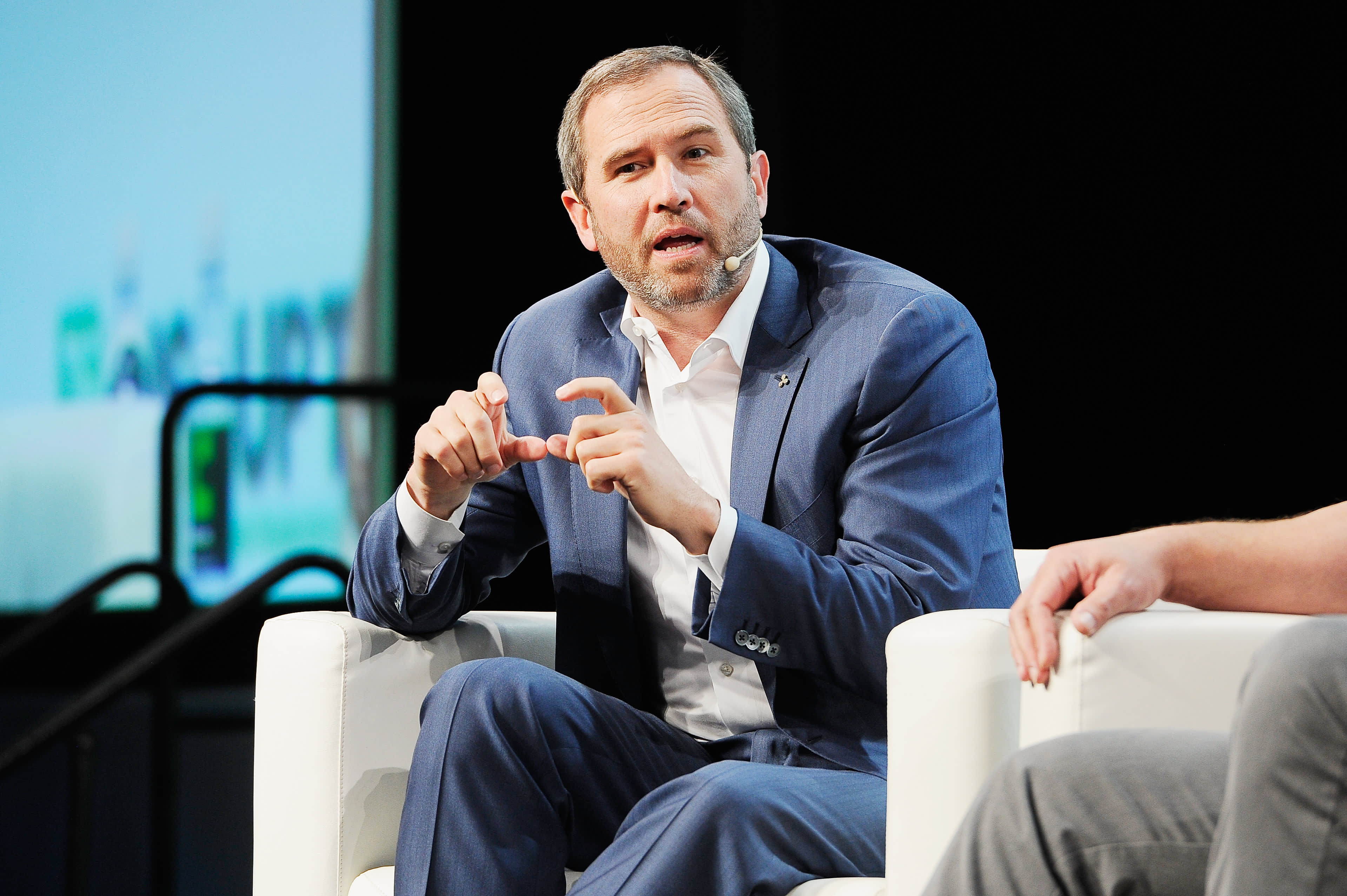
Ripple CEO Brad Garlinghouse speaks onstage throughout Working day 1 of TechCrunch Disrupt SF 2018.

Steve Jennings | Getty Illustrations or photos for TechCrunch

Fintech start-up Ripple on Tuesday said it is launching a new solution that allows economical products and services firms offer their consumers the potential to buy and sell cryptocurrencies.

The San Francisco-based enterprise claimed the function, known as Liquidity Hub, will give its organization shoppers access to electronic assets from a array of resources including marketplace makers, exchanges and about-the-counter buying and selling desks.

Purchasers will be in a position to present buying and selling in a variety of cryptocurrencies such as bitcoin, ethereum, litecoin, ethereum basic, bitcoin cash and XRP, Ripple said. The firm also hopes to give other digital property like NFTs, or non-fungible tokens, in long run. The feature is at the moment in a preview stage but is set to launch in 2022, Ripple said.

Established in 2012, Ripple is intently linked with the cryptocurrency XRP. The corporation marketplaces XRP to economic companies as a form of “bridge” for speeding up worldwide payments with its On-Demand from customers Liquidity merchandise.

With practically $60 billion worthy of of tokens in circulation, XRP is the seventh-most important digital forex globally, in accordance to CoinMarketCap facts.

Ripple also sells a system called RippleNet, a fiscal messaging provider which is made use of by financial institutions and other money establishments to ship money across borders. Ripple touts its providing as a competitor to SWIFT, the world-wide interbank payment network.

Ripple is in warm drinking water with the U.S. Securities and Trade Fee in excess of XRP. The regulator is suing the enterprise and executives Brad Garlinghouse and Chris Larsen for allegedly increasing a lot more than $1.3 billion through an unregistered securities supplying. Ripple is combating the fit, contending that XRP must not be regarded as a security.

The organization is leaping into a new merchandise classification at a time when fascination in cryptocurrencies has surged considerably. Bitcoin and ether — the 1st and second-biggest cryptocurrencies, respectively — both equally strike file highs this week amid a wider rally in the crypto current market.

Crypto is observing improved adoption between mainstream businesses too, with the likes of Mastercard, PayPal and Goldman Sachs now offering support for digital assets.

Asheesh Birla, normal supervisor of RippleNet, mentioned the firm’s new tool can be imagined of as an “aggregator for various liquidity venues and individual assets, the way that Google Flights is for airlines and flights.”

The solution is just about two yrs in the building, Birla reported. Ripple reported its to start with purchaser utilizing the service is Coinme, a bitcoin exchange and ATM operator based mostly in the U.S.

“We have a lengthy history of performing with economical institutions, crypto exchanges, brokerages and industry makers, which our business customers can now directly benefit from,” Birla informed CNBC. “We’re organizing to aid a assortment of belongings and have plans to grow to extra tokenized property like NFTs in the future.”

Ripple claimed it will also offer its financial partners strains of credit history through XRP to prevent them possessing to pre-fund accounts for Liquidity Hub.

“Businesses accomplishing this currently have to park functioning funds at an exchange when ready for cash from weekend activity to be deposited in a financial institution account,” Birla stated. “We started out offering this as element of ODL and it is one particular of our most sought soon after capabilities.” 

Very last privately valued at $10 billion, Ripple is a single of the world’s largest crypto begin-ups. It counts the likes of enterprise cash business Andreessen Horowitz, Japanese financial solutions enterprise SBI Holdings and Spanish bank Santander as traders.

Having said that, U.S. regulatory uncertainty has been a important headwind for the corporation. Still, Ripple says it is seeing enhanced traction in other marketplaces like Japan and the U.K., with intercontinental volume at its ODL crypto merchandise expanding 25-fold considering that the 3rd quarter of 2020.

“Regardless of headwinds in the U.S. with the SEC, our traction with buyers globally hasn’t slowed down,” Birla said.

IGM Financial (TSE:IGM) Is Due To Pay A Dividend Of CA$0.56

IGM Monetary Inc. (TSE:IGM) will shell out a dividend of CA$.56 on the 31st of January. This suggests the annual payment is 4.4{21df340e03e388cc75c411746d1a214f72c176b221768b7ada42b4d751988996} of the present stock selling price, which is previously mentioned the normal for the sector.

See our latest evaluation for IGM Financial

IGM Financial’s Earnings Quickly Cover the Distributions

Whilst it is good to have a solid dividend produce, we really should also contemplate whether the payment is sustainable. Primarily based on the previous payment, IGM Economic was pretty comfortably earning sufficient to cover the dividend. This means that a substantial portion of its earnings are being retained to improve the enterprise.

More than the following calendar year, EPS is forecast to broaden by 9.3{21df340e03e388cc75c411746d1a214f72c176b221768b7ada42b4d751988996}. Assuming the dividend carries on together modern developments, we feel the payout ratio could be 53{21df340e03e388cc75c411746d1a214f72c176b221768b7ada42b4d751988996} by subsequent year, which is in a fairly sustainable assortment.

historic-dividend

historic-dividend

IGM Fiscal Has A Stable Track Document

The organization has been spending a dividend for a very long time, and it has been pretty secure which provides us self-assurance in the upcoming dividend probable. Due to the fact 2011, the initial yearly payment was CA$2.05, compared to the most new total-12 months payment of CA$2.25. Dividend payments have been expanding, but extremely little by little more than the time period. Though the regularity in the dividend payments is amazing, we think the somewhat gradual price of advancement is considerably less eye-catching.

IGM Fiscal Could Improve Its Dividend

Investors could be attracted to the stock based on the high quality of its payment background. IGM Economic has witnessed EPS increasing for the final 5 decades, at 6.{21df340e03e388cc75c411746d1a214f72c176b221768b7ada42b4d751988996} for every annum. Because earnings per share is rising at an suitable rate, and the payout plan is well balanced, we think the enterprise is positioning itself properly to increase earnings and dividends in the future.

IGM Fiscal Appears to be Like A Terrific Dividend Inventory

In general, we think that this is a great income expense, and we consider that maintaining the dividend this calendar year may have been a conservative choice. Earnings are conveniently covering distributions, and the business is generating a lot of hard cash. Getting this all into thing to consider, this appears like it could be a fantastic dividend chance.

It really is essential to be aware that organizations getting a constant dividend policy will make greater investor self confidence than individuals owning an erratic a single. Even so, there are other things to contemplate for buyers when analysing stock general performance. Earnings development typically bodes effectively for the upcoming price of enterprise dividend payments. See if the 7 IGM Economical analysts we observe are forecasting ongoing progress with our absolutely free report on analyst estimates for the business. Wanting for more substantial-yielding dividend ideas? Test our curated list of robust dividend payers.

This article by Merely Wall St is common in character. We deliver commentary dependent on historical facts and analyst forecasts only utilizing an unbiased methodology and our articles are not meant to be money guidance. It does not constitute a recommendation to invest in or offer any inventory, and does not get account of your targets, or your financial problem. We purpose to bring you extended-phrase centered evaluation pushed by elementary data. Be aware that our investigation may possibly not issue in the most recent price tag-sensitive corporation bulletins or qualitative product. Simply Wall St has no situation in any stocks mentioned.

Have feedback on this report? Involved about the content material? Get in touch with us right. Alternatively, email editorial-group (at) simplywallst.com.

Stocks jump to new records at the open; Tesla weighed by Musk pledge

Stocks on Monday extended a record-setting streak of gains on Wall Street, opening at new highs as traders looked ahead to a slew of new inflation data and earnings results in the coming days.

At the opening bell, the Dow, S&P 500 Index and Nasdaq all notched fresh highs, carried by last week’s momentum when all three major indexes jumped to their best levels ever. Optimism over a batch of strong corporate profit reports, a better-than-anticipated October jobs report and a Federal Reserve decision that matched investors’ expectations are providing impetus to risk-sensitive assets. 

Meanwhile, Bitcoin prices led a broad crypto rally, with the leading digital coin jumping within view of a record high. However, Tesla (TSLA) dropped by more than 6{21df340e03e388cc75c411746d1a214f72c176b221768b7ada42b4d751988996} on the day, after CEO Elon Musk confounded investors by vowing to sell 10{21df340e03e388cc75c411746d1a214f72c176b221768b7ada42b4d751988996} of his holdings based on the outcome of a Twitter poll, which kept a lid on tech stocks.

This week, companies including Disney (DIS), PayPal (PYPL) and Coinbase (COIN) are set to deliver quarterly earnings results, with traders hoping that these and other companies’ results will extend a streak of solid earnings growth heading into the holiday season. So far, 89{21df340e03e388cc75c411746d1a214f72c176b221768b7ada42b4d751988996} of S&P 500 companies have reported third-quarter results, and 81{21df340e03e388cc75c411746d1a214f72c176b221768b7ada42b4d751988996} of these exceeded Wall Street’s estimates for earnings per share, according to FactSet data. The expected year-on-year earnings growth rate has crept higher to 39.1{21df340e03e388cc75c411746d1a214f72c176b221768b7ada42b4d751988996}, which would mark the third-fastest pace for earnings growth in the index since 2010. 

On the economic data front, inflation reports will be especially closely monitored. Wednesday’s Consumer Price Index (CPI) from the Bureau of Labor Statistics is expected to show another acceleration in consumer prices on both a monthly and annual basis for last month, as ongoing supply chain challenges and labor shortages across the recovering economy contribute to rising prices. Estimates as of Monday showed that consensus economists expect to see the CPI rise by 5.9{21df340e03e388cc75c411746d1a214f72c176b221768b7ada42b4d751988996} in October compared to last year, accelerating from September’s 5.4{21df340e03e388cc75c411746d1a214f72c176b221768b7ada42b4d751988996} annual rate to reach the fastest rise since 1990. 

“We continue to expect that a normalization of demand and supply constraints over time will take pressure off inflation statistics,” Rubeela Farooqi, chief economist for High Frequency Economics, wrote in a note on Monday. “The exact timing is uncertain, given we cannot predict when supply chains will adjust.”

“However, our best guess is that prices will start moderating by the middle of next year — possibly sooner if goods that are stuck off ports reach their destinations in the early part of the year, which will result in an excess supply of goods after the holiday,” she added.  

Though the Federal Reserve has suggested that elevated inflation related to supply constraints will ultimately subside, market participants are still awaiting signs of easing. Data from Oxford Economics showed last week that supply chain pressures worsened in October after easing somewhat in September, and the number of cargo ships waiting to unload at key ports in California reached an all-time high. 

And the inflation report will come following last week’s average hourly wage data in the Labor Department’s October jobs report, which showed that average earnings jumped by a marked 4.9{21df340e03e388cc75c411746d1a214f72c176b221768b7ada42b4d751988996} in October over last year. These rising labor and compensation costs, as well as a slew of other supply-related challenges, have also been cited by a host of companies in their latest earnings results.

“The so-called Great Resignation, with baby boom generation retirees and others reassessing their connection to the labor force, is tightening up the labor market faster than the economic models predicted and this means demand pressures and shortages will persist and that inflation will gain a permanent foothold if Federal Reserve policy makers are not careful,” Chris Rupkey, chief economist for FWDBonds, wrote in a note on Friday. 

“They took a baby step this week in starting to taper, but they are still adding money to the economy through their asset purchases through next June, and they cannot start putting the brakes on this economy until they actually lift interest rates,” he added. 

4:05 p.m. ET: S&P 500 ekes out 8th straight day of gains; Dow adds 104 points, or 0.3{21df340e03e388cc75c411746d1a214f72c176b221768b7ada42b4d751988996} to reach record

Here were the main moves in markets as of 4:05 p.m. ET:

  • S&P 500 (^GSPC): +4.17 (+0.09{21df340e03e388cc75c411746d1a214f72c176b221768b7ada42b4d751988996}) to 4,701.70

  • Dow (^DJI): +104.27 (+0.29{21df340e03e388cc75c411746d1a214f72c176b221768b7ada42b4d751988996}) to 36,432.22

  • Nasdaq (^IXIC): +10.77 (+0.07{21df340e03e388cc75c411746d1a214f72c176b221768b7ada42b4d751988996}) to 15,982.36

  • Crude (CL=F): +$1.01 (+1.24{21df340e03e388cc75c411746d1a214f72c176b221768b7ada42b4d751988996}) to $82.28 a barrel

  • Gold (GC=F): +$9.20 (+0.51{21df340e03e388cc75c411746d1a214f72c176b221768b7ada42b4d751988996}) to $1,826.00 per ounce

  • 10-year Treasury (^TNX): +4.4 bps to yield 1.4970{21df340e03e388cc75c411746d1a214f72c176b221768b7ada42b4d751988996}

12:01 p.m. ET: Ford shares exceed $20 per share for the first time in two decades

Ford (F) crossed the $20 per-share threshold for the first time since mid-2001, with optimism over the company’s renewed focus on electric vehicles and a pick-up in demand for autos more broadly during the recovery helping fuel the stock. 

Shares have risen more than 120{21df340e03e388cc75c411746d1a214f72c176b221768b7ada42b4d751988996} for the year-to-date, far exceeding the S&P 500’s about 25{21df340e03e388cc75c411746d1a214f72c176b221768b7ada42b4d751988996} rise over that period. 

Earlier Monday, Bloomberg reported that Ford was set to begin selling green bonds used to help advance clean energy projects and battery-electric vehicle development. And earlier this fall, Ford pledged to spend $11.4 billion to help build out a suite of electric zero-emission vehicles over the next several years. 

11:10 a.m. ET: Tesla shares cut losses after Musk asks Twitter whether he should sell 10{21df340e03e388cc75c411746d1a214f72c176b221768b7ada42b4d751988996} of stake

Tesla (TSLA) shares pared steep losses on Monday as investors digested the latest Twitter commentary from CEO Elon Musk, who over the weekend asked his over 62 million followers whether he should sell 10{21df340e03e388cc75c411746d1a214f72c176b221768b7ada42b4d751988996} of his stake in Tesla in a Twitter poll. At its lows of the session, the stock was down more than 7{21df340e03e388cc75c411746d1a214f72c176b221768b7ada42b4d751988996}. 

The majority of of 3.5 million respondents on the poll said they supported such a sale, which would be worth about $21 billion based on the nearly 171 million Tesla shares that Musk currently holds. 

Despite the poll, a number of analysts suggested that a share sale by Musk was likely already on the way anyway, given the executive has a tax bill worth billions set for the coming months ahead of the expiration of 23 million of his stock options in August of next year. 

“With a tax bill that we calculate at north of $10 billion, selling stock over the coming months is not a surprise, although holding a Twitter poll to sell 10{21df340e03e388cc75c411746d1a214f72c176b221768b7ada42b4d751988996} of his stock is another bizarre soap opera that can only happen to one company and one CEO in the world, Musk,” Wedbush analyst Dan Ives wrote in a note on Monday. “We would rather Musk rip the band-aid off now and sell this portion of stock rather than it lingering over the next year and feeding into any non-fundamental bear thesis on the story.”

11:07 a.m. ET: Alphabet sets record high, reaching $2 trillion market cap

Google’s parent company Alphabet (GOOGL) rallied Monday morning, bringing the tech juggernaut’s market capitalization above the $2 trillion mark. Shares briefly topped $3,000 apiece. 

The stock has risen for five straight sessions, with traders continuing the cheer the company’s better-than-expected quarterly results as the company pointed to a pick-up in digital advertising spending and growth in Google Cloud. Alphabet, which has benefited from a return of travel advertisers, has also outperformed the other Big Tech stocks including Apple, Amazon, Meta and Netflix so far this year. Shares have jumped more than 71{21df340e03e388cc75c411746d1a214f72c176b221768b7ada42b4d751988996} so far in 2021. 

9:30 a.m ET: Stocks set new records at the open

Here were the main moves in markets as of 9:30 a.m. ET:

  • S&P 500 (^GSPC): 4,712.81,+15.28 (+0.33{21df340e03e388cc75c411746d1a214f72c176b221768b7ada42b4d751988996})

  • Dow (^DJI): 36,547.88, +219.93 (+0.61{21df340e03e388cc75c411746d1a214f72c176b221768b7ada42b4d751988996})

  • Nasdaq (^IXIC): 16,007.14, +35.55 (+0.22{21df340e03e388cc75c411746d1a214f72c176b221768b7ada42b4d751988996})

  • Crude (CL=F): $81.71 per barrel, +$0.44(+0.54{21df340e03e388cc75c411746d1a214f72c176b221768b7ada42b4d751988996})

  • Gold (GC=F): $1,827.10, +$10.30 (+0.57{21df340e03e388cc75c411746d1a214f72c176b221768b7ada42b4d751988996})

  • 10-year Treasury (^TNX): +11 bps to yield 1.4600{21df340e03e388cc75c411746d1a214f72c176b221768b7ada42b4d751988996}

7:30 a.m. ET Monday: Stock futures trade mixed

Here’s where markets were trading Monday morning:

  • S&P 500 futures (ES=F): +3.5 points (+0.07{21df340e03e388cc75c411746d1a214f72c176b221768b7ada42b4d751988996}), to 4,693.75

  • Dow futures (YM=F): +74 points (+0.2{21df340e03e388cc75c411746d1a214f72c176b221768b7ada42b4d751988996}), to 36,289.00

  • Nasdaq futures (NQ=F): -1.5 points (-0.01{21df340e03e388cc75c411746d1a214f72c176b221768b7ada42b4d751988996}) to 16,350.25

  • Crude (CL=F): $82.36 per barrel, +$1.09 (+1.34{21df340e03e388cc75c411746d1a214f72c176b221768b7ada42b4d751988996})

  • Gold (GC=F): $1,817.20 per ounce, +$0.40 (+0.02{21df340e03e388cc75c411746d1a214f72c176b221768b7ada42b4d751988996})

  • 10-year Treasury (^TNX): +2.8 bps to yield 1.481{21df340e03e388cc75c411746d1a214f72c176b221768b7ada42b4d751988996}

Traders work on the floor of the New York Stock Exchange (NYSE) in New York City, U.S., October 20, 2021.  REUTERS/Brendan McDermid

Traders work on the floor of the New York Stock Exchange (NYSE) in New York City, U.S., October 20, 2021. REUTERS/Brendan McDermid

Emily McCormick is a reporter for Yahoo Finance. Follow her on Twitter

Macy’s plans to raise wages and offer tuition assistance in the race for hourly workers.

ImageA new $15 hourly minimum, starting by May, will raise Macy’s average base pay above $17 an hour, the company said.

Macy’s said on Monday that it would raise its minimum wage to $15 an hour by May and start offering education benefits to employees in February.

The increase will lift Macy’s average base pay above $17 an hour, a company statement said. Macy’s did not specify its current minimum wage, but said it varied by location. The education program will cover tuition, books and fees for programs including high school completion, college preparation, and associate and bachelor’s degrees within a network. It is expected to cost the company $35 million over the next four years.

Macy’s will also offer employees an extra paid day off, it said.

Retailers have been scrambling to hire ahead of the all-important holiday season, which is expected to be bustling after a grim 2020. Many chains are raising wages and offering new benefits and additional flexibility in their pursuit of hourly workers.

Jeff Gennette, the chief executive of Macy’s, told The New York Times in a recent interview that there was “a war for talent at the front lines.” The retailer has said it aims to hire 76,000 full- and part-time employees this season.

Stocks that experience major volatility as a result of social media attention — often called meme stocks — have not threatened broader financial stability so far but could open the door to vulnerabilities, the Federal Reserve said in a report on Monday.

The Fed’s twice-yearly update on America’s financial system included a special section on the meme stock phenomenon. It attributed the trend, in which attention on Twitter, Reddit and other platforms encourages rapid inflows into or out of buzzy stocks, to new trading technologies including mobile apps and to changing demographics, as younger people enter the retail trading market.

“Along with the rise in risk appetite and the growing share of younger retail investors, access to retail equity trading opportunities has expanded over the past decade,” the report said.

Social media can pump up interest in stocks, and it can also create an echo chamber, one in which “investors find themselves communicating most frequently with others with similar interests and views, thereby reinforcing their views, even if these views are speculative or biased.”

Still, internet-inspired pile-ons do not necessarily create conditions that will spur a broad market crash, the Fed’s report suggested.

“To date, the broad financial stability implications of changes in retail equity investor characteristics and behaviors have been limited,” the Fed said. The central bank specifically assessed what happened to shares of AMC Entertainment and GameStop in January, noting that activity and volatility in those stocks came alongside high activity on Twitter.

While the report concluded that “recent episodes of meme stock volatility did not leave a lasting imprint on broader markets,” the Fed said a few trends “should be monitored.”

The report pointed out that young and debt-laden investors may be more vulnerable to stock price swings, especially since they are now using “options,” which allow traders to place bets on whether prices will rise or fall and which can magnify leverage and potential losses.

The Fed also warned that “episodes of heightened risk appetite may continue to evolve with the interaction between social media and retail investors and may be difficult to predict,” and that financial firms may not have calibrated their risk-management systems to reflect the volatility and losses that meme stock episodes might trigger.

“More frequent episodes of higher volatility may require further steps to ensure the resilience of the financial system,” it said.

Looking across a broader range of asset classes and recent trading activity, the Fed’s financial stability analysis generally suggested that the vulnerabilities have moderated compared with earlier in the pandemic — but it did flag high asset prices and a number of lingering risks.

Stock prices have increased “notably,” the report said, and prices relative to forecast earnings remain near historical highs. Home prices have climbed, it noted, though mortgage lending standards have not deteriorated too badly. When lenders start to lower their standards, that can make the market more vulnerable.

The Fed noted that “corporate bond issuance remained robust, supported by low interest rates,” also pointing out that “across the ratings spectrum, the composition of newly issued corporate bonds has become riskier.”

And while many markets show signs of investor optimism, some financial strains from the pandemic shock persist.

Some commercial real estate sectors continue to face challenges because “office vacancies are elevated and hotel occupancy rates remain depressed,” the report noted. Plus, “structural vulnerabilities persist in some types of money market funds,” which could amplify a future shock to the system.

Money market mutual funds melted down during the pandemic and required a Fed rescue for the second time in a dozen years, and regulators are now looking at how to make them more resilient.

The report also warned that life insurers might struggle to raise cash in a pinch.

And it delved into climate risks. The central bank is among regulators now trying to understand what risks climate change might pose to banks, insurers and the broader financial system.

“The Federal Reserve is developing a program of climate-related scenario analysis,” the report noted. “The Federal Reserve considers an effective scenario analysis program, which is designed to be forward looking over a period of years or decades, to be separate from its existing regulatory stress-testing regime.”

Credit…Aaron P. Bernstein/Reuters

Randal K. Quarles, a Federal Reserve governor who spent four years overseeing bank supervision, will step down from the Fed in December — opening an additional seat that will allow the Biden administration to reshape the central bank’s leadership.

Mr. Quarles’s role as vice chair for supervision expired in October, but his term as governor was set to last until early 2032. The Trump appointee was widely expected to stay on until his time as head of the Financial Stability Board, a global monitoring and standard-setting body, ended in December. It was an open question whether he would stay after that.

“I intend to resign my position as a governor of the Federal Reserve during or around the last week of December of this year,” Mr. Quarles wrote in a letter to the White House, which the Fed released on Monday.

The announcement that he will step down is likely to be greeted warmly by Democrats, many of whom have been critical of Mr. Quarles’s push to relax some postcrisis financial regulations. Many Democrats have been calling for the administration to nominate a diverse set of leaders to the central bank.

President Biden already has one open spot on the central bank’s seven-seat Board of Governors to fill, and will have another when Richard H. Clarida, the Fed’s vice chair, sees his term as governor expire early next year. This will give the administration at least three open spots.

Jerome H. Powell’s term as the Fed’s chair is also scheduled to expire early next year, though his term as governor lasts until early 2028. Fed chairs typically leave their unexpired governor seats if they are not reappointed to their leadership roles, though that has not always been the case.

It is not clear when Mr. Biden will announce his central bank nominees, including whether he plans to reappoint Mr. Powell. He said last week that the decision would come “fairly quickly.” Both Mr. Powell and Lael Brainard, a Fed governor who is widely viewed as the other front-runner to lead the institution, were seen leaving the White House last week.

Mr. Powell was initially chosen as a Fed governor by President Barack Obama, but he was elevated to chair by President Donald J. Trump.

While he has been focused on interpreting the Fed’s full-employment goal expansively, something Democrats typically support, he has come under fire for voting for Mr. Quarles’s regulatory decisions, which in many cases made bank oversight less onerous. Ms. Brainard regularly cast dissenting votes against those moves and issued statements warning about relaxing rules that forced banks to behave more cautiously.

Mr. Powell has said he defers to whoever is in the job of vice chair for supervision, since Congress has confirmed that person to oversee banking matters. Fed governors are nominated by the White House and then confirmed by the Senate.

“The vice chair for supervision is charged with setting the regulatory agenda,” he said in September. “I respect that authority. I respect that that’s the person who will set the regulatory agenda going forward.”

But Mr. Quarles’s departure may help defang another argument some progressive groups have been making when arguing against keeping Mr. Powell as chair: that with Mr. Quarles still at the Fed, governors who were appointed or elevated by Mr. Trump continued to dominate the board.

The logic was that Mr. Quarles, Governors Christopher Waller and Michelle Bowman, and Mr. Powell could together prevent more aggressive action on bank regulation, climate-related matters and other issues.

Now, the decks will tilt toward Democrats, between the three open positions and the fact that Ms. Brainard, an Obama appointee, is already on the board.

“I will admit that I am surprised,” said Jeff Hauser, director of the watchdog group Revolving Door Project and an opponent of keeping Mr. Powell, said of the news. He later added that “it definitely takes away one of the many arguments” against reappointing Mr. Powell.

The Board of Governors has regulatory powers over big banks, and it sets interest rate policy alongside the Fed’s 12 regional branch presidents, five of whom vote on monetary policy at any given time. Regional bank presidents rotate through their voting seats, although the New York Fed is granted a constant vote. Governors have a constant vote.

Video

transcript

transcript

White House to Defend Vaccination Rules for Large Companies

Karine Jean-Pierre, the White House’s principal deputy press secretary, recommended businesses move forward with plans to implement the administration’s Covid-19 vaccination or weekly testing requirements after a federal appeals court put a temporary block on them.

“Defending a policy is not a new thing from an administration, regardless, if it’s a Republican or a Democrat administration, this is something that happens all the time. The administration, the administration clearly has the authority to protect workers, and actions announced by the president are designed to save lives and stop the spread of Covid-19. And as D.O.J. said, they will be defending these lawsuits. But I also want to step back for a second because there is precedence here. The Department of Labor has a responsibility to keep workers safe, and the legal authority to do so. The secretary determines — the secretary of Department of Labor — determines workers at risk or what is called the grave danger. And if you look around, and if we really zero in this past year, more than 750,000 people have died of Covid. You have more — about, approximately 1,300 people a day who continue to die a day, as I said, from Covid. If that’s not a grave danger, I don’t know what else is.” Reporter: “Should they prepare their employees now to get vaccinated or should they wait months more?” “No, that’s a great question. I appreciate the question. We think people should not wait. We say do not wait to take actions that will keep your workplace safe. It is important and critical to do, and waiting to get more people vaccinated will lead to more outbreaks and sickness.”

Video player loading
Karine Jean-Pierre, the White House’s principal deputy press secretary, recommended businesses move forward with plans to implement the administration’s Covid-19 vaccination or weekly testing requirements after a federal appeals court put a temporary block on them.CreditCredit…Sarah Silbiger for The New York Times

The Biden administration on Monday argued that the federal government had all the power it needed to require large employers to mandate vaccination of their workers against the Covid-19 virus — or to require those who refuse the shots to wear masks and submit to weekly testing.

In a 28-page filing before the United States Court of Appeals for the Fifth Circuit, which temporarily blocked the mandate with a nationwide stay last week, the Justice Department argued that the rule was necessarily to protect workers from the pandemic and was well grounded in law.

Keeping the mandate from coming into effect “would likely cost dozens or even hundreds of lives per day, in addition to large numbers of hospitalizations, other serious health effects, and tremendous costs,” the Justice Department said in its filing. “That is a confluence of harms of the highest order.”

One coalition of businesses, religious groups, advocacy organizations and several states filed a petition on Friday with the U.S. Court of Appeals for the Fifth Circuit in Louisiana, arguing that the administration overstepped its authority.

On Saturday, a panel of the court temporarily blocked the new mandate, writing that “the petitions give cause to believe there are grave statutory and constitutional issues with the mandate.”

Karine Jean-Pierre, the White House’s principal deputy press secretary, said at a news conference on Monday that the administration was recommending that businesses move forward with vaccination and testing plans, regardless of any possible delays in federal enforcement stemming from the court’s action.

“Do not wait to take actions that will keep your workplace safe,” Ms. Jean-Pierre said.

The stay does not have any immediate impact, because the first major deadline for complying with the mandate does not arrive until Dec. 5, when companies with at least 100 employees would have to require unvaccinated employees to wear masks indoors.

Asked why the broad requirements of the mandate were necessary now, Ms. Jean-Pierre cited the number of people who have been dying from the coronavirus recently — an average of 1,217 deaths a day as of Sunday, according to a New York Times database.

“That should not be the number that we’re looking at,” Ms. Jean-Pierre said. “We believe that in order to get this pandemic behind us, we need to get more people vaccinated.”

Union members at Wirecutter, a product review website owned by The New York Times Company, said on Monday that they were prepared to stop work during the busy shopping period around Black Friday if a deal for a contract was not reached.

Staff at Wirecutter unionized in 2019, and the Times Company voluntarily recognized the union. In the two years since, the union has been negotiating with the company for a collective bargaining agreement.

The Wirecutter union said it was seeking higher salary minimums and guaranteed raises.

“The business has grown quite extensively during the pandemic,” Nick Guy, the chair of the union, said in an interview. “We’re now on the front page of the New York Times website daily, and even throughout all of that we haven’t seen meaningful increases to wages.”

The union is seeking a $58,000 minimum salary and guaranteed annual increases of at least 3 percent, Mr. Guy said. The company has offered guaranteed annual raises of 0.5 percent, he said.

More than 90 percent of the approximately 70 employees in the union, who work remotely, have pledged to not work during the holiday shopping period after Thanksgiving if a deal is not reached by Black Friday on Nov. 26, Mr. Guy said. The union, which did not say how long the stoppage would last, will also ask supporters not to shop through the site from Black Friday to Cyber Monday, Nov. 29.

“It has just dragged on for so long, and the progress we’re seeing has slowed,” Mr. Guy said of the negotiations, adding: “Without action like this, I don’t think we’ll be able to reach a contract we’ll be happy with.”

A spokeswoman for the Times Company said: “We look forward to continuing to work toward an agreement with the Wirecutter union in our standard process at the negotiating table.”

“Our compensation proposal is more generous than what they’ve described and seeks to maintain a similar compensation structure for Wirecutter employees with programs in place for others at the Times Company,” she added.

The Times is facing labor fights on two other fronts. A group of tech workers, including software engineers and product managers, announced the formation of a union in April. That union has filed for an election through the National Labor Relations Board after The Times declined to voluntarily recognize it. And the Times Guild, which has been in place since 1940 and represents about 1,300 reporters and editors at The Times, is bargaining for a new contract. The unions representing technology workers, Times journalists and Wirecutter employees are affiliates of the NewsGuild of New York.

Credit…Jan Haas/Picture-Alliance/DPA, via Associated Press

Deep Nishar, a former top investor at SoftBank’s $100 billion Vision Fund, is joining General Catalyst, a Silicon Valley venture capital firm known for its successful bets on start-ups including Airbnb and Snap.

Mr. Nishar said last month that he would leave SoftBank by the end of 2021, ending a six-year stint at the Japanese tech conglomerate. He is the latest senior executive to leave the Vision Fund, which struggled after soured bets on WeWork and other companies; at least four others have left in the past two years.

SoftBank’s founder and chief executive, Masayoshi Son, hired Mr. Nishar to rebuild the firm’s presence in the United States after it was forced to scale back when the dot-com bubble burst in 2000. Mr. Nishar, who previously worked at Google and LinkedIn, made successful investments in companies such as Guardant Health, which uses big data to detect and treat cancer early. Shares of Guardant, which went public in 2018, now trade at more than five times their initial price.

In an interview, Mr. Nishar, 52, said he was proud of what he had helped build at the SoftBank fund. “Four years ago, no one believed you could build a $100 billion investment platform,” he said. Mr. Nishar and Mr. Son remain close, he added, saying the two men “continue to talk every day.”

At General Catalyst, which was founded in Massachusetts and has been building its Silicon Valley presence, Mr. Nishar will both invest in start-ups and help the firm build its own companies. In addition to Airbnb, General Catalyst was an early investor in Warby Parker and helped build the travel search engine Kayak. The firm was also one of the earliest investors in Stripe, the financial technology firm that raised private funding this year at a $95 billion valuation. Stripe’s I.P.O. is widely expected to be among the largest in history.

Hemant Taneja, General Catalyst’s managing partner, who is based in San Francisco, said he had tried to recruit Mr. Nishar in 2015, before Mr. Nishar joined SoftBank. Mr. Taneja said he wanted to bring Mr. Nishar on board to help the firm go after big, broad ideas that cut across fields, including those at the intersection of technology, health care and life sciences.

Over years of long walks around Silicon Valley, Mr. Taneja finally succeeded in wooing Mr. Nishar, who will start his new job in January.

Credit…Punit Paranjpe/Agence France-Presse — Getty Images

With stocks on a tear in India, the parent company of Paytm, a leading digital payments app, went public on Monday with hopes of becoming the country’s largest initial public offering.

The company, One97 Communications, aims to raise about $2.5 billion in a three-day offer that ends on Wednesday. It has already drawn huge institutional investors like Abu Dhabi’s sovereign wealth fund, the Texas teachers’ pension fund and the University of Cambridge, which have invested more than $1 billion.

Paytm was founded in 2010 as a payments transfer business. It now allows users to send money to friends, buy small items like coffee or clothing, and finance big-ticket items like cars.

All but ubiquitous in India’s biggest cities, Paytm commands more than 40 percent of India’s digital payments market. The company has yet to turn a profit, but it is benefiting from a surge of interest from foreign and Indian investors looking for a stake in India’s surging internet economy. The I.P.O. could value the company at $20 billion.

“Paytm is evolving into a marketplace in itself,” said Amit Khurana, an analyst with Dolat Capital in Mumbai. “There is a lot of appetite to allocate money to this kind of model because it’s seen as the business of the future.”

Investors, in general, have been increasingly bullish on the Indian economy’s recovery from the pandemic and a series of related lockdowns that slashed industrial activity and consumer spending sharply.

India’s central bank, the Reserve Bank of India, has steadily cut interest rates, encouraging banks to lend more and consumers — particularly young, savvy online shoppers — to spend more.

“We are now in a sweet spot, where the bank recovery is coinciding with the demographic transition, which in turn is coinciding with the digital revolution,” said Madhavan Narayanan, an economist in India. “All these three are making the sun and the moon and the stars align for young India.”

With coronavirus infections in India low and foot traffic returning to brick-and-mortar stores, newly sanitation-sensitized shoppers may prefer to scan QR codes rather than handle cash.

The pandemic has helped a trend in India toward a cashless economy that began with the government of Prime Minister Narendra Modi’s sudden demonetization in 2016. The policy, meant to tamp down on money laundering, banned the most widely circulated currency notes, wiping out families’ savings and shuttering businesses overnight. But five years later, it appears to have also created some winners, digital payments companies like Paytm among them.

Competition is heating up. Google offers Google Pay. India’s richest man, Mukesh Ambani, began a joint venture with Facebook last year to offer digital payments over WhatsApp, India’s most popular messaging service.

Paytm’s share offering is the latest in a series of oversubscribed I.P.O.s in recent months, among a bevy of so-called unicorns backed by e-commerce giants like China’s Alibaba and its financial affiliate, Ant.

In July, institutional and foreign investors also flocked to the initial public offering of India’s food delivery app, Zomato, which was oversubscribed by 38 times the available shares.

The Reserve Bank of India predicted in an August report that 2021 “could well turn out to be India’s year of the initial public offering.”

Paytm’s push to become India’s biggest initial public offering has overshadowed another sizable offering. The parent company of Nykaa, an online beauty products retailer, was publicly listed on Monday, seeking a $7.4 billion valuation.

Sameer Yasir contributed reporting.

The United States reopened its borders for vaccinated foreign travelers on Monday, ending more than 18 months of restrictions on international travel that separated families and cost the global travel industry hundreds of billions of dollars.

Before dawn on Monday, thousands of passengers flocked into Heathrow Airport for the first flights to the United States out of London. They were welcomed by dozens of airline staff who beamed and waved American flags.

The policy shift has come in time for the holiday season, when the beleaguered tourism industry is eagerly awaiting an influx of international visitors, especially in popular big-city destinations. Eager to make up for lost time, tourists traveling on Monday had packed itineraries, from Broadway shows in New York and family days at Disney World in Florida to bingo nights in Arizona.

In New York alone, the absence of tourists in 2020 resulted in a loss of $60 billion in revenue and wiped out 89,000 jobs across retail, arts, culture, hotels and transportation, the state comptroller found. Though travelers from abroad account for just one-fifth of the city’s visitors, they generate 50 percent of the city’s tourism spending, according to NYC & Company, the city’s tourism promotion agency.

Towns along the borders with Mexico and Canada also suffered under the restrictions, which shut down land crossings to “nonessential” traffic and cost businesses millions of dollars.

Under the new rules, fully vaccinated travelers are allowed to enter the United States if they can show proof of vaccination and a negative coronavirus test taken within three days before departure. Unvaccinated Americans and children under 18 are exempt from the requirement, but must take a coronavirus test within 24 hours of travel.

While the new entry requirements ease travel for vaccinated travelers, they restrict people who were previously permitted to visit the United States, including unvaccinated travelers from Japan, Singapore, Mexico and other countries. Those who have received vaccines that have not been approved by the World Health Organization for emergency use, like the Russian Sputnik V, will also not be permitted to enter.

The extended ban on travel from 33 countries resulted in losses of nearly $300 billion in visitor spending and more than one million American jobs, according to the U.S. Travel Association, an industry group.

Many of the airplanes arriving in the United States on Monday were full of travelers reuniting with family and friends after a span of almost 600 days.

American Airlines said bookings over the three days after the announcement were up 66 percent for flights between Britain and the United States, 40 percent for those from Europe and 74 percent for Brazil, compared with a similar period a week earlier. United Airlines said that it sold more tickets for trans-Atlantic flights in the days after the announcement than during a similar period in 2019, a first since the pandemic began. Delta Air Lines said many of its international flights on Monday were fully booked.

Hotels across the United States, particularly those in cities, also felt the impact of the reopening. Hyatt, the hotel group, said that approximately 50 percent of its bookings by international travelers to the U.S. for the week of Nov. 8 came after the opening date was announced in mid-October.

Correction: 

A previous version of this item incorrectly described how Belinda Calva, Dayanna Patino Calva and Anabel Patino Calva are related. Dayanna Patino Calva and Anabel Patino Calva are sisters and Belinda Calva is their mother.

Credit…Annice Lyn/Getty Images

Shares of several drug makers in Asia fell sharply on Monday in response to Pfizer’s announcement that its antiviral drug was highly effective in treating Covid-19.

CanSino Biologics, the Chinese maker of a Covid-19 vaccine, dropped by 17 percent during trading in Hong Kong. Shanghai Fosun, which has marketing rights in greater China for the coronavirus vaccine developed by Pfizer and BioNTech, saw its Hong Kong shares drop by 7 percent before rebounding somewhat to end 2 percent lower.

WuXi Biologics of China, which is developing Covid vaccines and antibodies, fell by 9 percent in Hong Kong. And shares of Japanese pharmaceutical firm Shionogi & Co., which is also developing a Covid treatment drug, dropped 6 percent in Tokyo.

Pfizer said Friday that when its new pill was given within three days of the start of Covid symptoms, hospitalizations and deaths were reduced by 89 percent. The company said it planned to submit the drug for Food and Drug Administration approval as soon as possible. A panel of experts had recommended not enrolling any more candidates in the trial because it had already shown such effectiveness, the company said.

Credit…Tristan Spinski for The New York Times

Last winter was warmer than average, which led to relatively low residential energy bills. Even if the coming winter is not severe, heating costs could rise to levels not seen a decade.

Several factors — lower global fuel inventories, incentives for producers to let prices rise and a mismatch between supply and demand as economies emerge from the pandemic — may combine to push bills higher, The New York Times’s Talmon Joseph Smith reports.

After plunging during the pandemic as the global economy slowed, energy prices have been climbing. Natural gas, used to heat almost half of U.S. households, has roughly doubled in price since this time last year. The price of crude oil — which strongly affects the 10 percent of households that rely on heating oil and propane during the winter — has soared by similarly eye-popping levels.

And those costs are being quickly passed through to consumers, who have become accustomed to cheaper energy prices in recent years and find themselves with growing concerns about inflation this year.

Credit…Joe Burbank/Orlando Sentinel, via Associated Press

Monday

  • Facebook whistle-blower: Frances Haugen, the former Facebook product manager, will testify at a European Parliament hearing. In previous appearances before American and British lawmakers, Haugen called for stronger regulations for Facebook, which recently renamed itself Meta.

  • Roblox earnings: The popular online gaming platform, which went public in March, recently suffered an outage that lasted several days.

  • AMC earnings: The world’s largest movie theater chain could be the latest business to report rising fortunes as Americans return to prepandemic life. In a sign that movie theaters may be on the rebound, the sci-fi film “Dune” recently surpassed $300 million at the worldwide box office.

Tuesday

  • Rivian I.P.O. pricing: The electric truck maker backed by Amazon and Ford Motor is closer to pricing an initial public offering that could value it at more than $60 billion. If Rivian prices its I.P.O. on Tuesday, it would begin trading Wednesday.

Wednesday

  • Consumer Price Index: The Labor Department will release inflation data for October. Costs for everything from food to furniture have been climbing fast as strong demand and supply chain snarls have pushed prices higher.

  • Disney earnings: The Walt Disney Company, the world’s largest entertainment company, will report its fiscal full year and fourth quarter earnings after the market closes.

Thursday

  • Singles Day: The online shopping event created by the e-commerce giant Alibaba kicks off. China reported slower economic growth last month, though retail sales have been a bright spot.

Friday

  • Warby Parker earnings: The direct-to-consumer eyewear company will announce earnings for its third quarter, the company’s first report since it went public in September.

  • SoftBank on Monday reported a net loss of $3.5 billion in the last quarter, reflecting the impact of China’s regulatory crackdown on its investments. The Japanese tech conglomerate recorded a $10 billion hit to its Vision Fund caused by declines in the share prices of its portfolio companies.

  • Elon Musk polled his Twitter followers over the weekend about whether he should sell 10 percent of his stake in Tesla, his electric car company, with a majority voting “yes.” Mr. Musk may have already been compelled to sell a sizable portion of his Tesla shares: He holds nearly 23 million stock options awarded in 2012 that have since vested and will expire in August. And it’s likely that much of his 2012 options don’t qualify for a preferential tax treatment. Tesla shares were down about 4 percent in premarket trading on Monday.

  • Berkshire Hathaway, the conglomerate run by Warren Buffett, on Saturday reported a sharp decrease in earnings in the third quarter, reflecting the turmoil in financial markets and the broader slowdown in U.S. economic growth. Profits fell by two-thirds to $10 billion, down from $30 billion in the same three months of 2020, when the economy was still in the process of reopening from pandemic shutdowns.

RoadEx trucking finance company offers freight factoring, dispatch

Jagdeep Dhillon, owner and chairwoman of Livonia-based company Roadex, which deals with big trucks is seeing lots of growth with her business.

A trucking economic solutions company in metro Detroit is seeing rapid growth and anticipates doubling its income this year in contrast with before the COVID-19 pandemic. 

Livonia-primarily based RoadEx was started off in 2014 by Jagdeep Dhillon, who experienced run a trucking company formerly with her husband. She attributes RoadEx’s expansion spurt to pandemic-related increases in demand for delivered merchandise, plus the firm’s 2020 and 2021 decisions to expand services for its consumer foundation of mostly small and mid-size truck carriers and operator-operators.

RoadEx’s profits has grown from $60 million in 2019 to an predicted $130 million for all of 2021.

It is exceptional for companies in the trucking marketplace to be owned or operate by women, and only about 12{21df340e03e388cc75c411746d1a214f72c176b221768b7ada42b4d751988996} of the industry’s workforce was female in 2020, in accordance to the U.S. Bureau of Labor Studies.